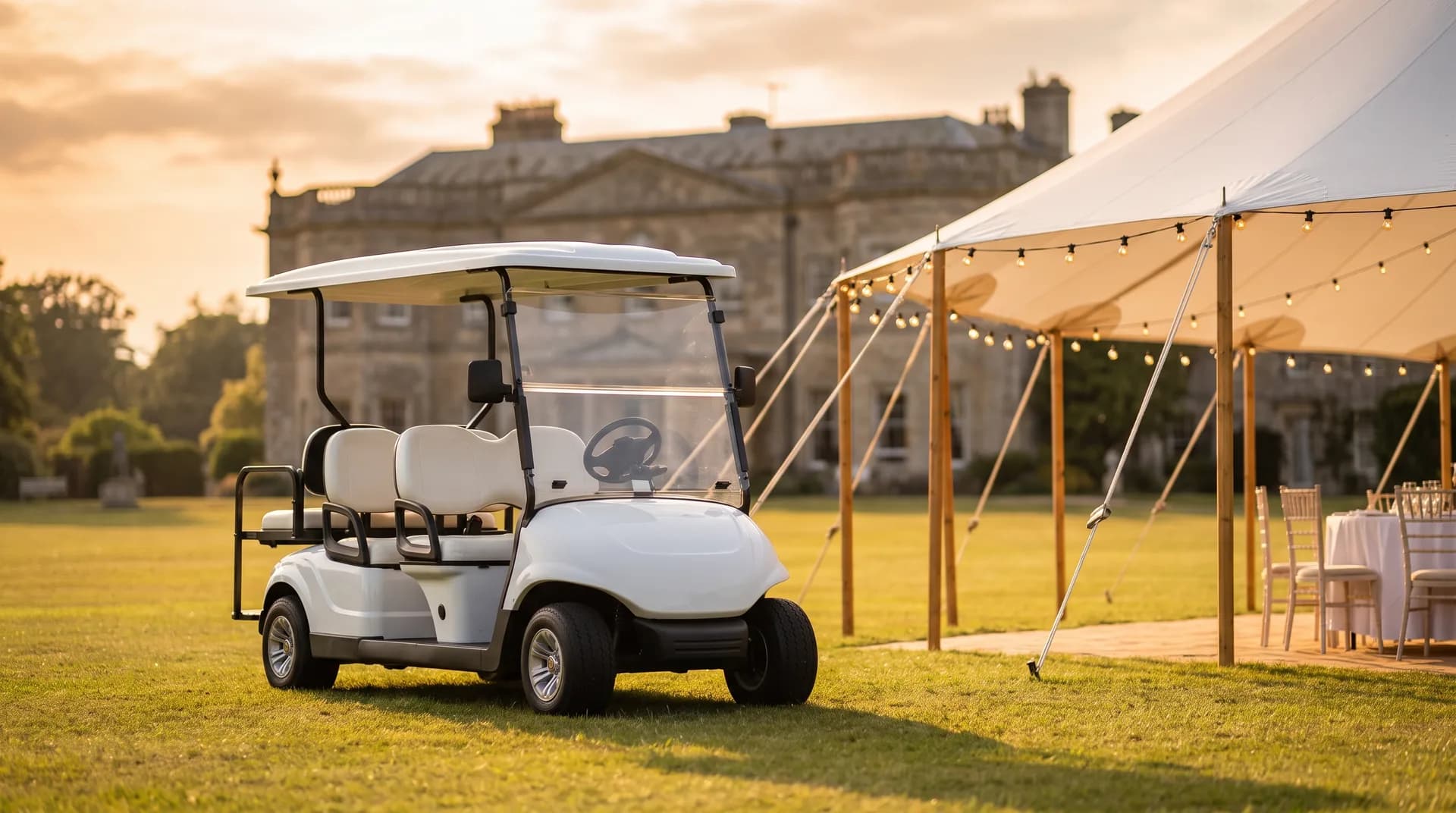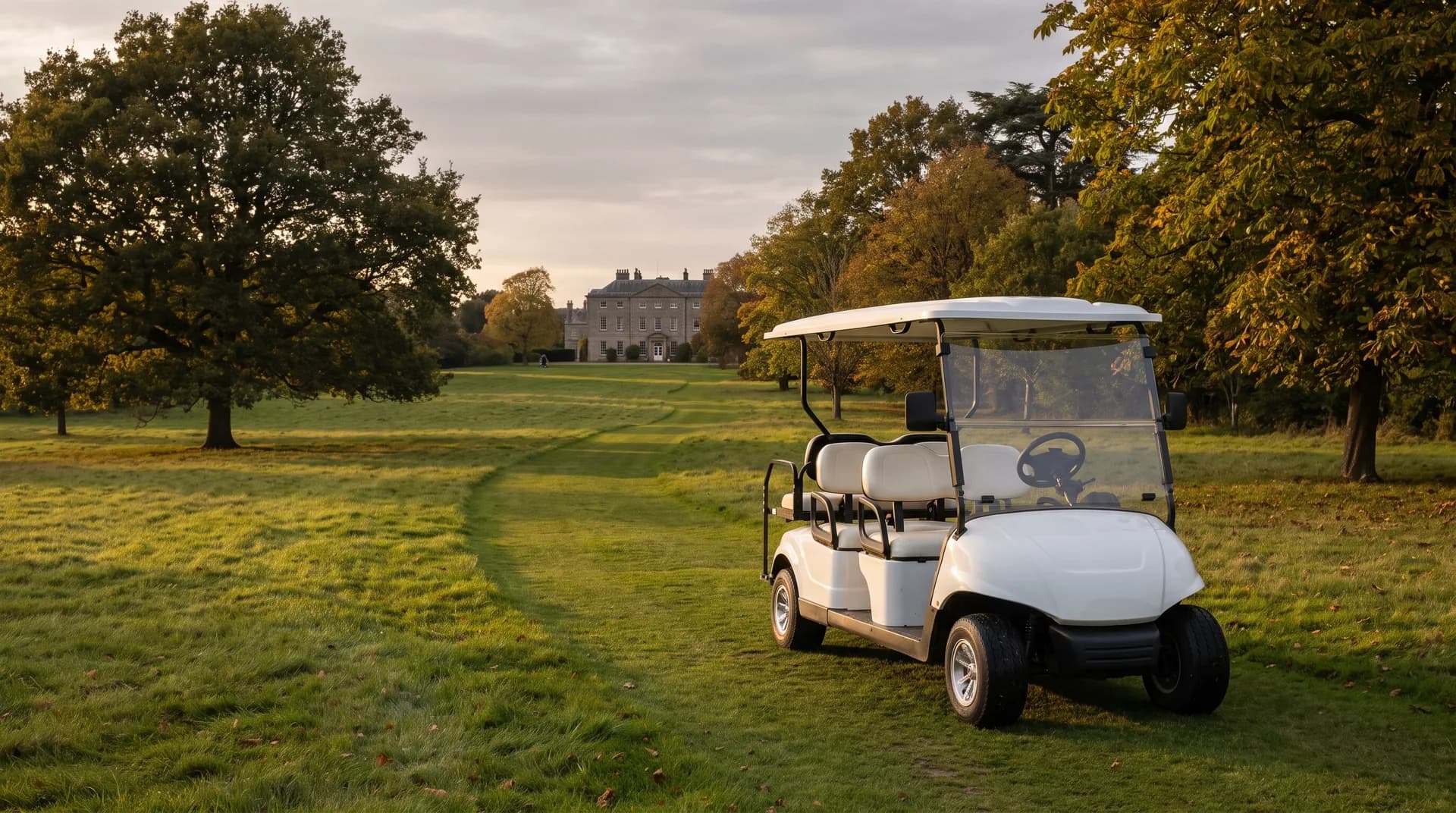
Film set buggy hire solves a problem every production recognises: the unit base is never where the set is. Trailers, catering, costume and make-up sit wherever there is hardstanding and space, while the set is wherever the story needs it, down a track, across a field, deep inside a studio complex, and the gap between the two is crossed dozens of times a day by people who are needed on set five minutes ago. Electric buggies close that gap quietly, which matters more on a production than anywhere else, because a petrol engine idling near a live set is a take ruined. This guide covers how productions use buggies, why quiet running is the deciding factor, and how hire works across a long shoot.
- The core job is the unit base to set shuttle: cast, crew, kit, all day, both directions.
- Electric running matters on set: near-silent vehicles can work through takes and inside stages.
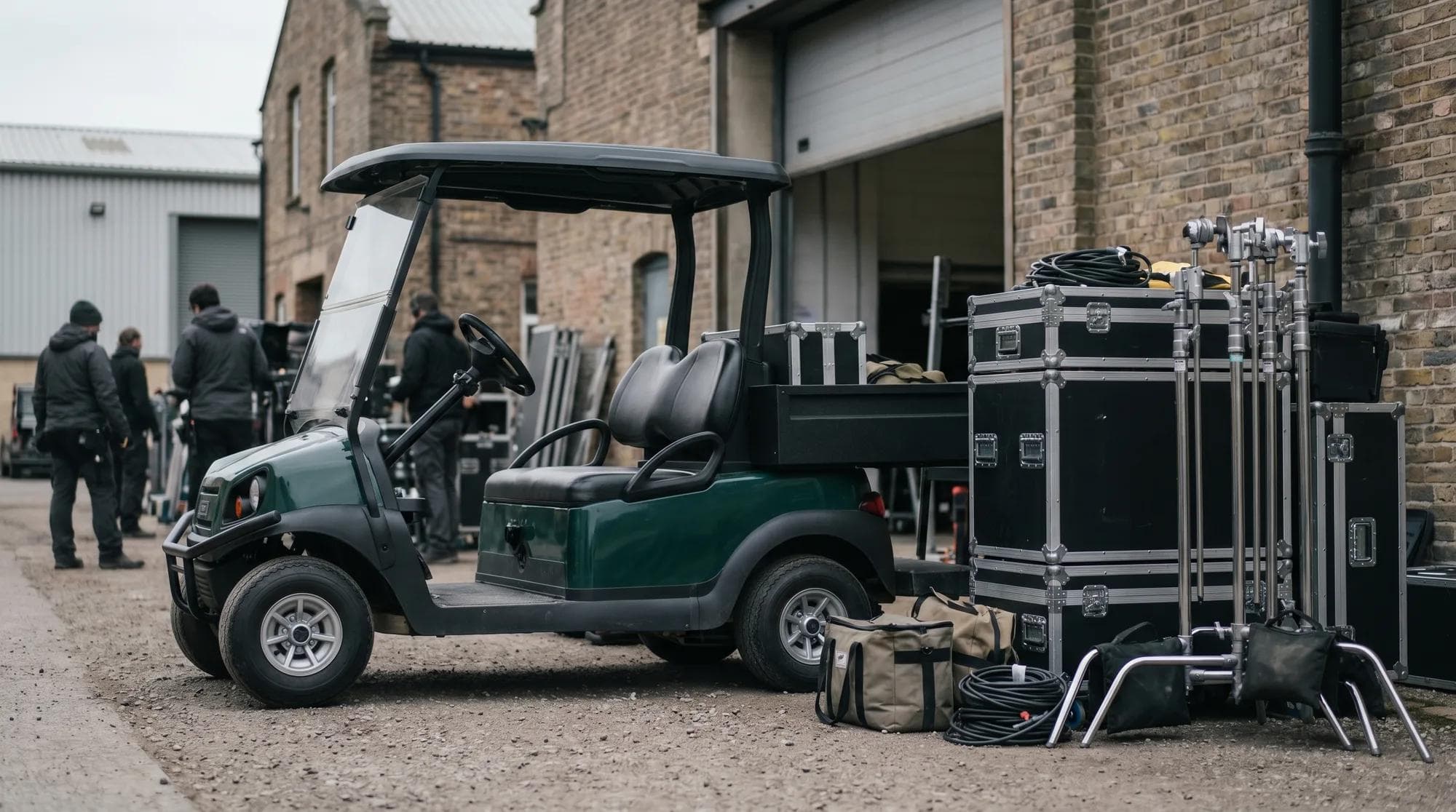
- Utility vehicles carry the loads, camera kit, art department builds, cable runs, that crew otherwise carry by hand.
- Long shoots hire by the week or month, with servicing and swap-outs handled by the hirer.
- Specify for the location: studio lots, country estates and night shoots each ask different things of the fleet.
How film set buggy hire fits a production day
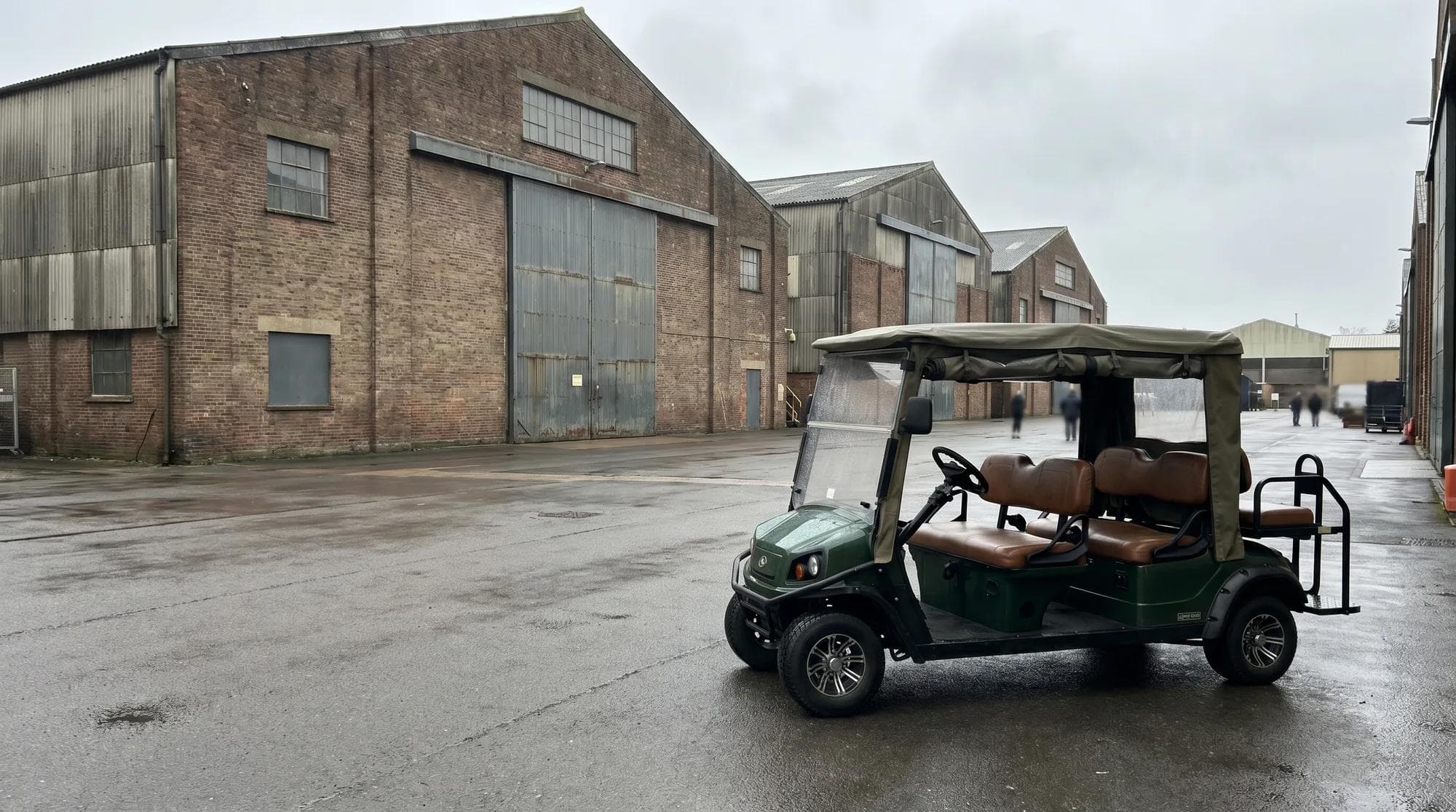
The pattern is set by the call sheet. Early morning, buggies run cast from trailers to set through make-up and costume checks; through the day they shuttle crew, video village kit, batteries and lenses; at wrap they reverse the whole flow, and on a night shoot they do it all in the dark with lights on. A production assistant with a buggy covers the base-to-set run in a fraction of the walking time, which is exactly what a schedule built in six-minute increments needs. Studio complexes use them as internal transport between stages, workshops and production offices, a use our film studio buggies guide covers in its own right, while location shoots use them to make a field behave like a lot. Either way the buggy earns its place by saving minutes that cost more than it does.
Quiet on set: why productions specify electric
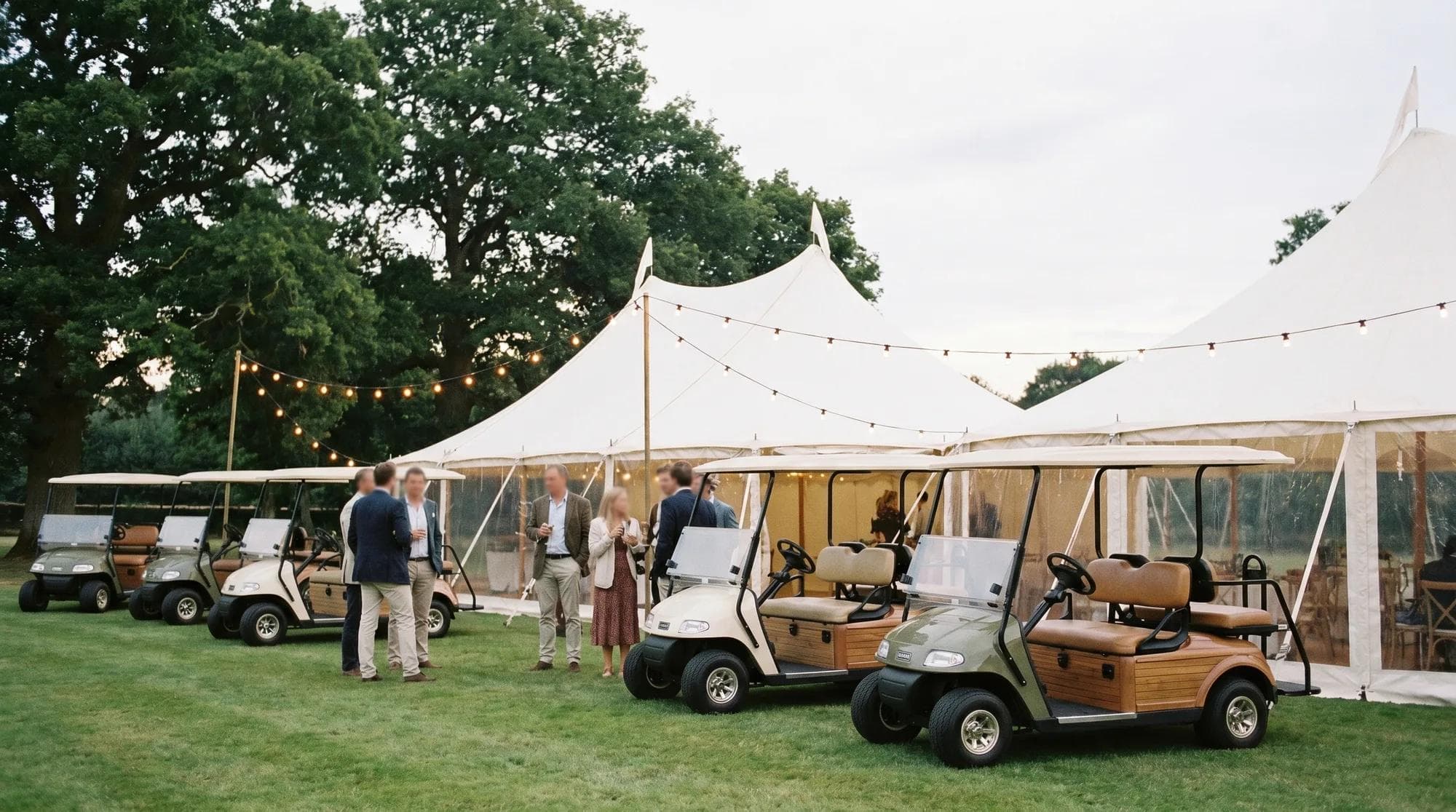
Sound is the discipline that settles the electric question. A combustion engine anywhere near a live microphone is a problem, and a vehicle that cannot move during a take is a vehicle that spends half the day parked. Electric buggies are near-silent at working speed, so they can operate around a live set without putting a take at risk, and having no exhaust means they can work inside stages, backlots and heritage buildings where fumes are unacceptable. Locations feel the same benefit: a country estate that welcomes a film unit does not welcome engine noise across its grounds, and the quiet-running case made in our guide to quiet electric vehicles for private estates applies verbatim to a unit on location. For night shoots in residential areas, quiet vehicles are not a courtesy, they are how the shoot keeps its permission.
Film set buggy hire: choosing the vehicle mix
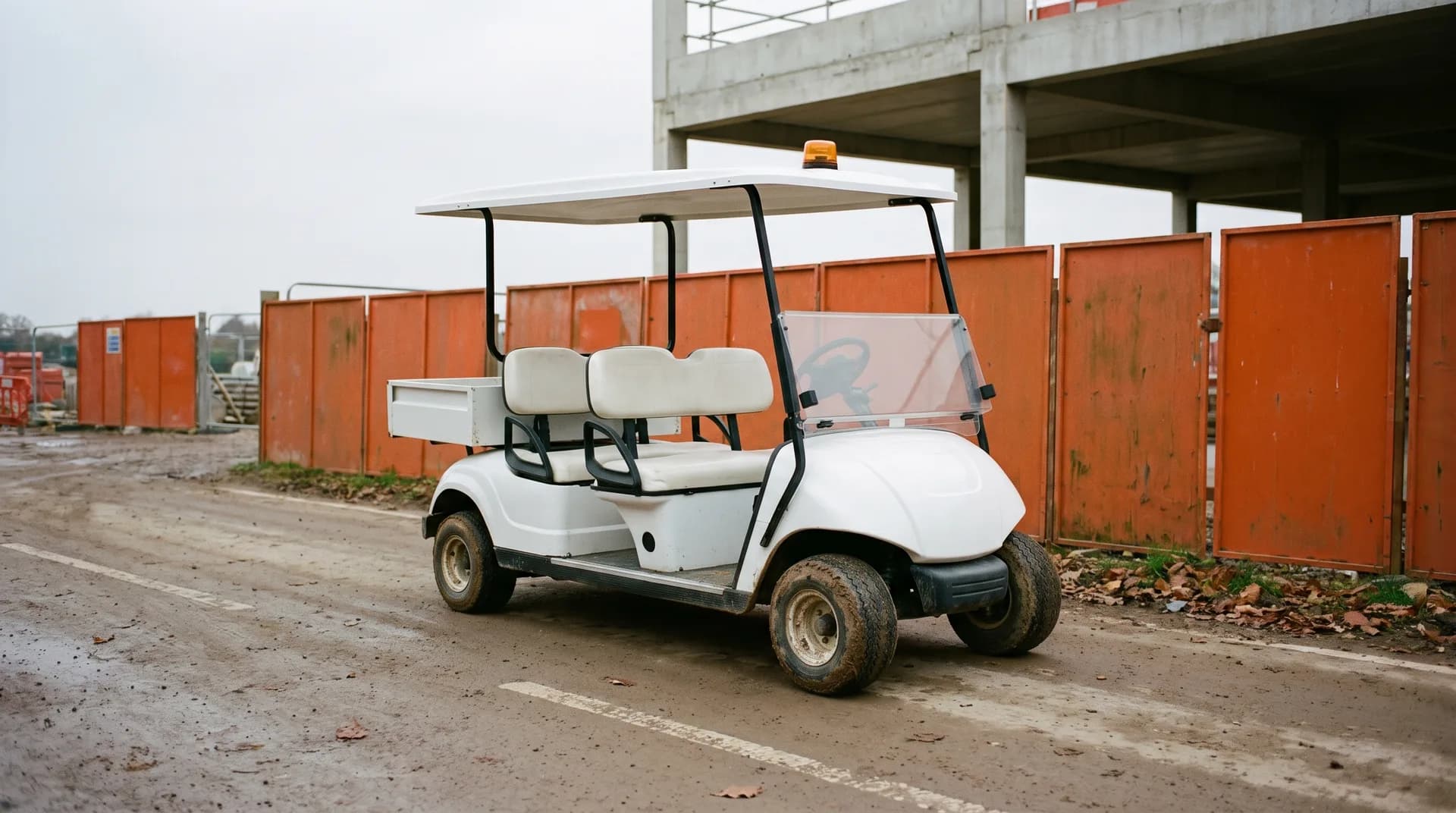
Productions need two kinds of vehicle, and the mix is worth getting right at the budgeting stage. Passenger buggies, from two-seaters for runners to six-seaters for moving a cast group with costumes intact, handle people. Utility vehicles with load beds handle everything the grip, camera and art departments would otherwise carry: camera cases, track, flags and stands, set dressing, tools and cable runs. An enclosed or covered bed is worth specifying for camera kit and costume in British weather. Most units land on a small mixed fleet, a couple of people-movers and a couple of load-carriers, scaled up for large builds or sprawling locations. The film and TV buggy hire page sets out the options, and our broader guide to electric buggies for film and TV covers the production use cases in more depth.
- Passenger buggies
- Cast and crew moves, base to set
- Utility vehicles
- Camera, grip and art department loads
- Passenger buggies
- ADs, runners, cast, visitors
- Utility vehicles
- Grips, sparks, art department, riggers
- Passenger buggies
- Seats, canopy, quiet running
- Utility vehicles
- Load bed, towing, covered storage
- Passenger buggies
- Lights, quiet operation
- Utility vehicles
- Lights, cable and kit capacity
| Passenger buggies | Utility vehicles | |
|---|---|---|
| Main job | Cast and crew moves, base to set | Camera, grip and art department loads |
| Typical users | ADs, runners, cast, visitors | Grips, sparks, art department, riggers |
| Key specification | Seats, canopy, quiet running | Load bed, towing, covered storage |
| Night shoot needs | Lights, quiet operation | Lights, cable and kit capacity |
Long shoots: how hire works across weeks and months
A feature or returning drama holds vehicles for weeks or months, and hire terms follow the schedule rather than the day rate mindset. Vehicles arrive with the unit, stay through principal photography and leave at wrap; servicing during the hire is the hirer's job, not the production's, and if a vehicle develops a fault it is swapped rather than repaired on your time. Charging fits production hours neatly, buggies charge overnight from standard supplies at the unit base or stage, ready for a full day by call time. As for cost, it is quote-based like all hire: rates vary with vehicle size, dates, season and distance, and the length of the booking shapes the terms, so give the full shoot window when you enquire rather than pricing week by week. Transport captains comparing hire against purchase for a long production can borrow the logic in our event buggy hire guide: hire wins while the need has an end date.
Frequently asked questions
Why do productions use electric buggies rather than petrol vehicles?+
Sound and air. Electric buggies are near-silent, so they can work near a live set without ruining takes, and with no exhaust they can operate inside stages and historic buildings where fumes are unacceptable.
What vehicles does a typical unit take?+
A small mixed fleet: passenger buggies for cast and crew moves between unit base and set, and utility vehicles with load beds for camera, grip and art department kit. The split scales with the size of the build and the distance between base and set.
How is film set buggy hire priced?+
By quote, shaped by fleet size and mix, the length of the shoot, specification and delivery distance. Rates vary with vehicle size, dates, season and distance; sharing the full shoot window gets you the right terms first time.
Who maintains the vehicles on a long shoot?+
The hirer. Servicing during the hire is included, and a vehicle with a fault is swapped out rather than repaired on production time.
Can buggies work on a night shoot?+
Yes. Specify lights when booking, charge overnight or between blocks, and quiet electric running is an asset in residential locations where noise conditions are part of the filming permission.
Put buggies on your call sheet
Tell us the studio or location, the shoot dates and the departments the fleet has to serve, and we will spec a mix that keeps base and set five minutes apart.
Related solutions
Ready to explore what we build?
See the vehicles and the setting this applies to, or get a tailored quote built around your site.

Ready to find the right buggy?
Tell us how and where it will work and we will specify a vehicle and a tailored quote built around you. Every build comes with a 3-year warranty and a 24-hour priority call-out.
Our guides are written and reviewed by the Hawke Electric Vehicles team, the people who specify, build, deliver and support the vehicles. We focus on honest, practical advice and flag where a figure depends on the build rather than guessing.
More guides by Hawke