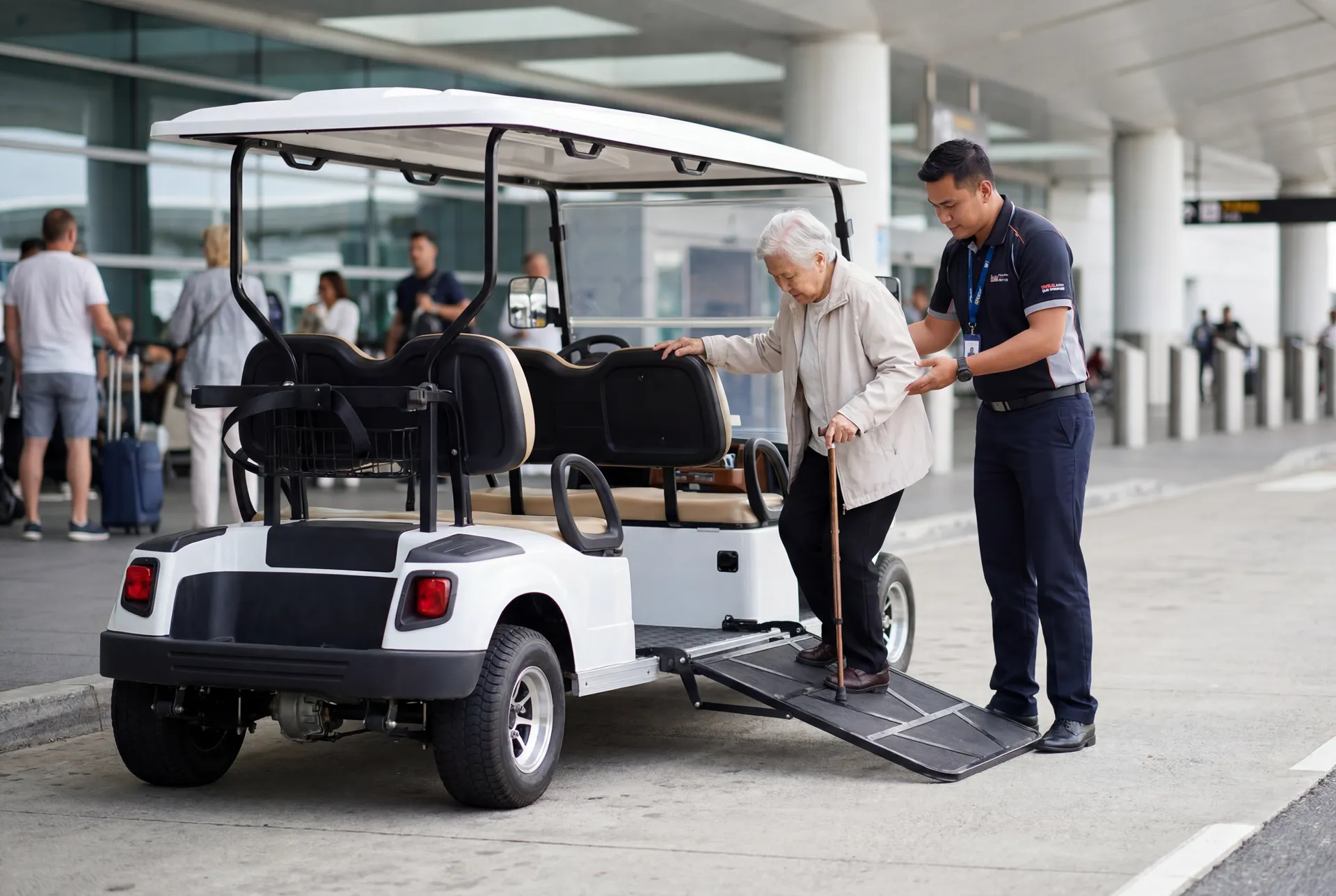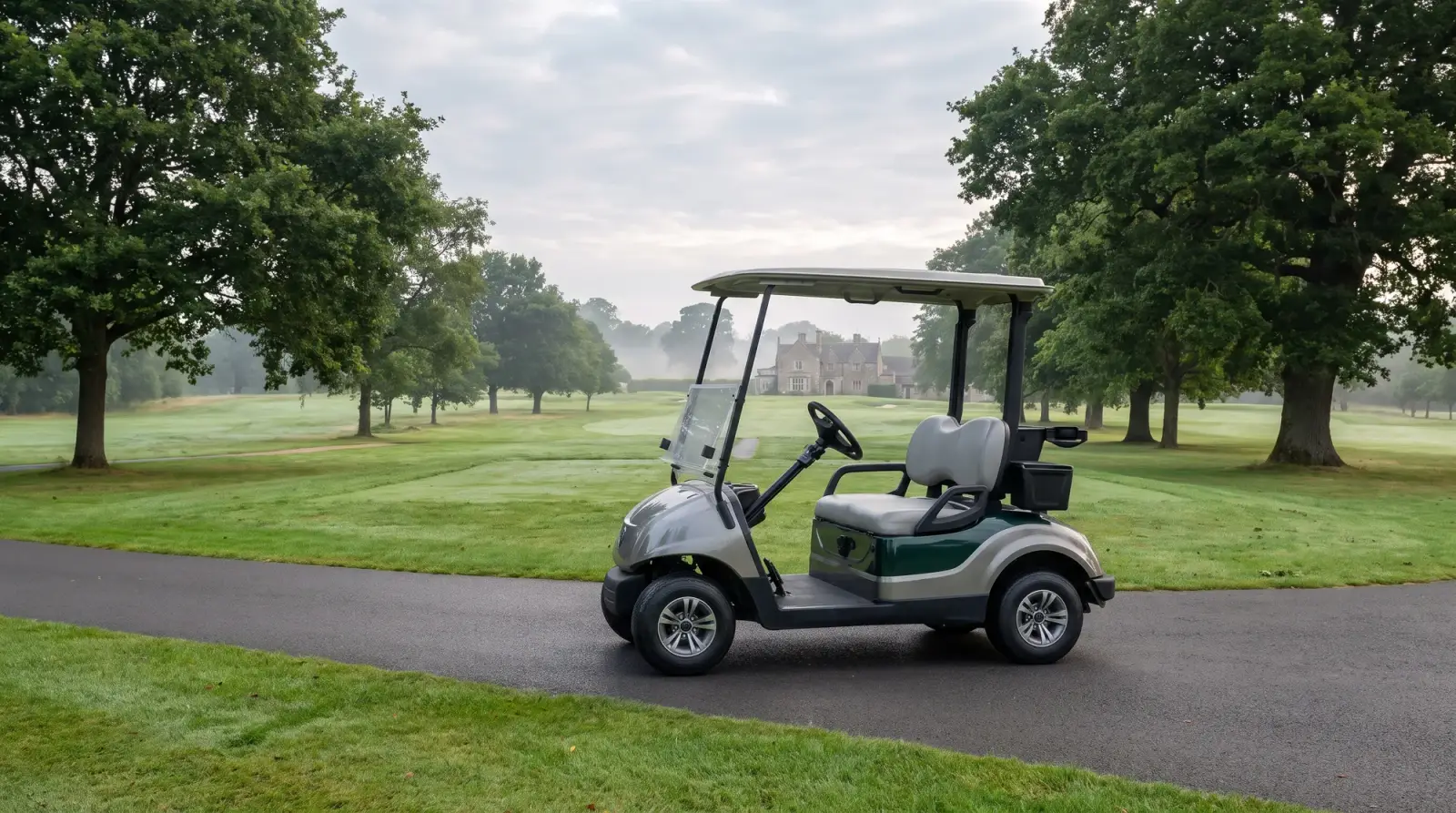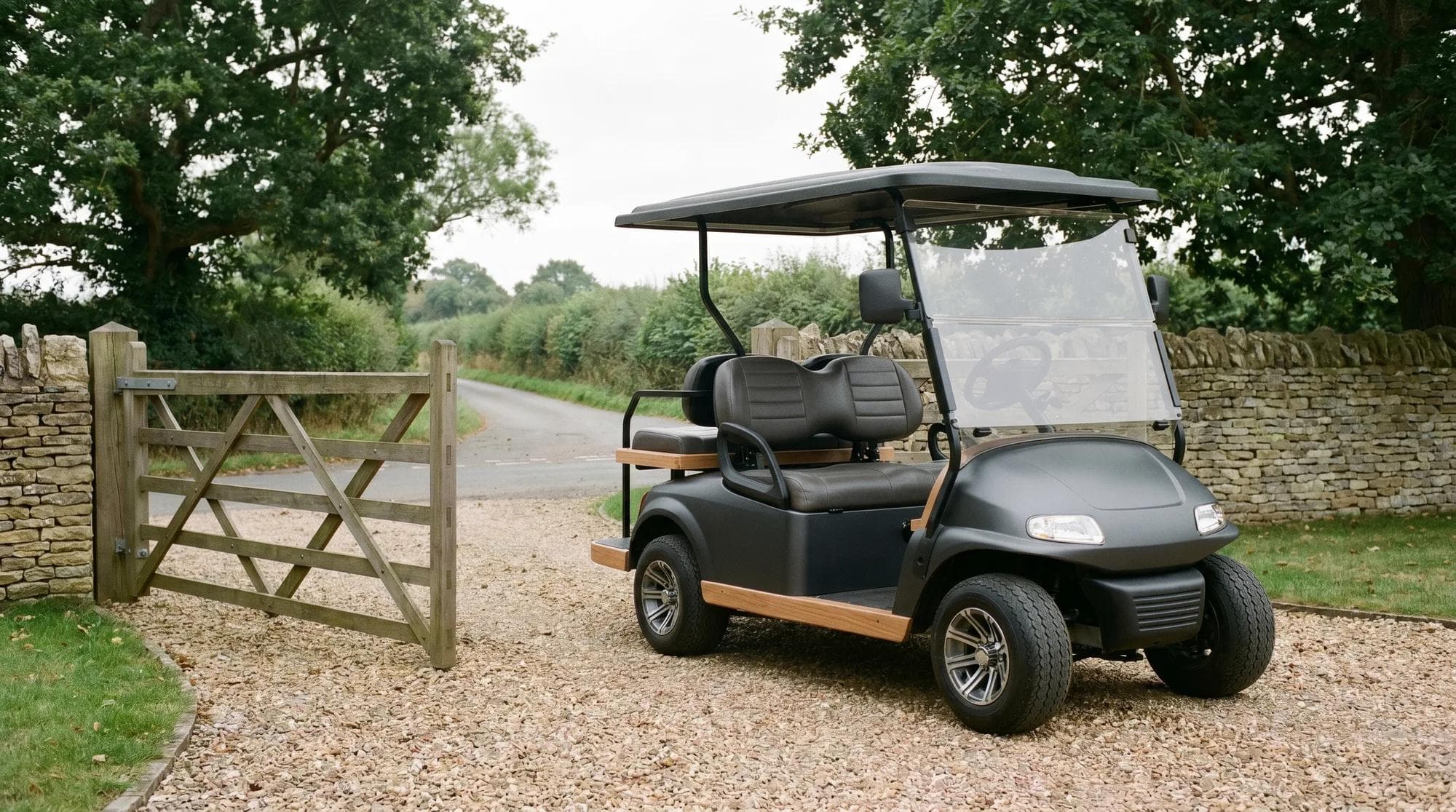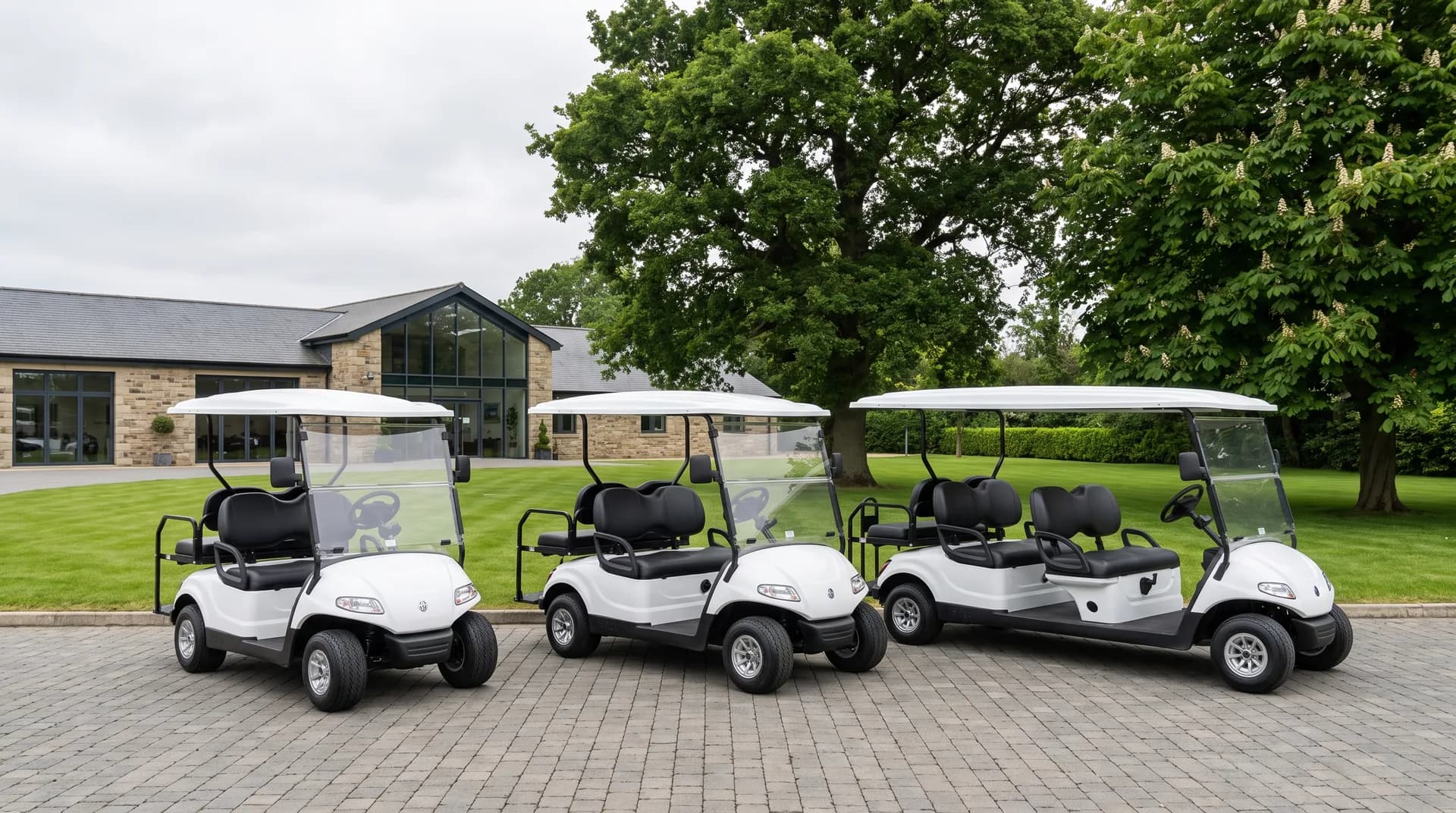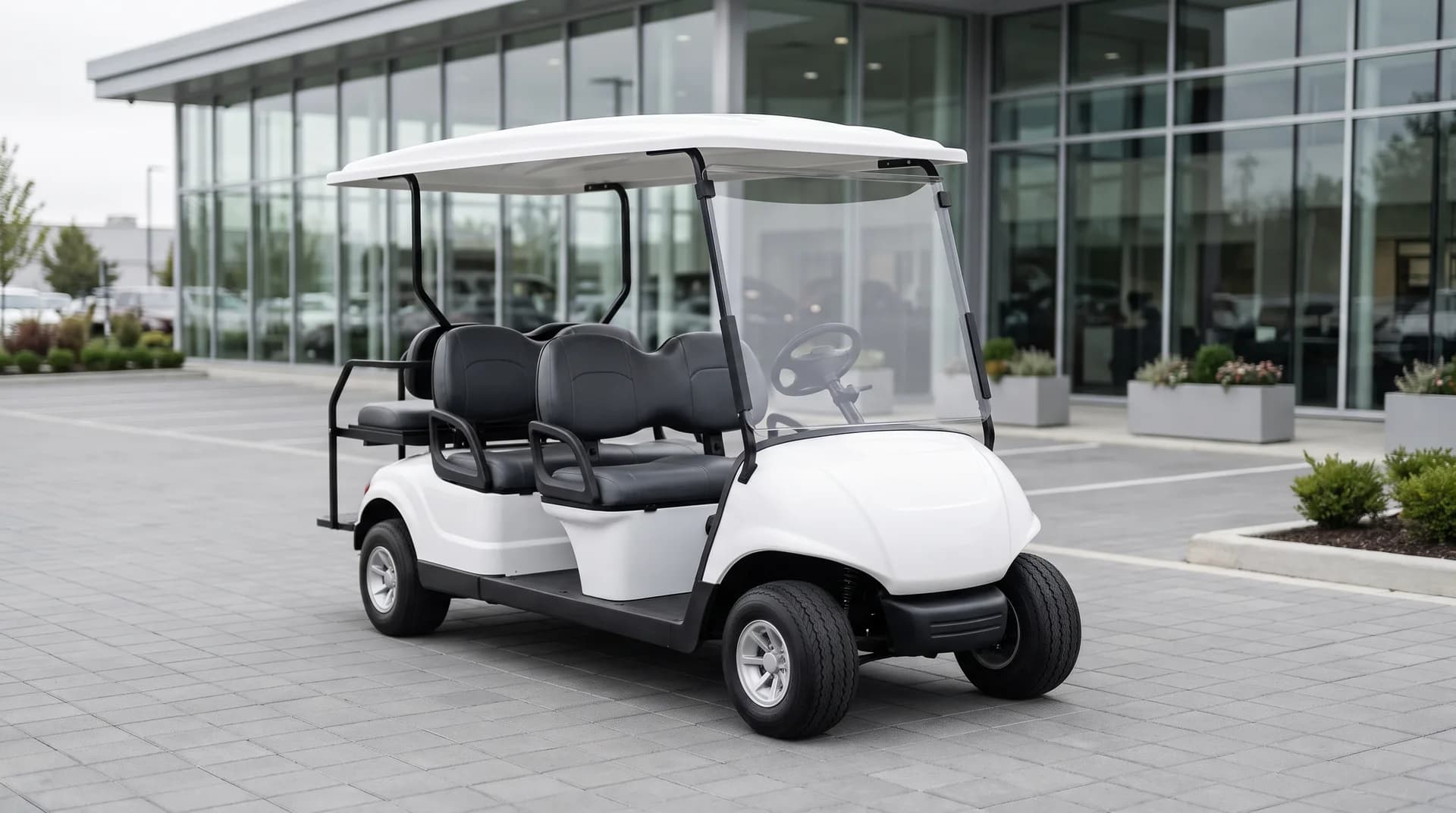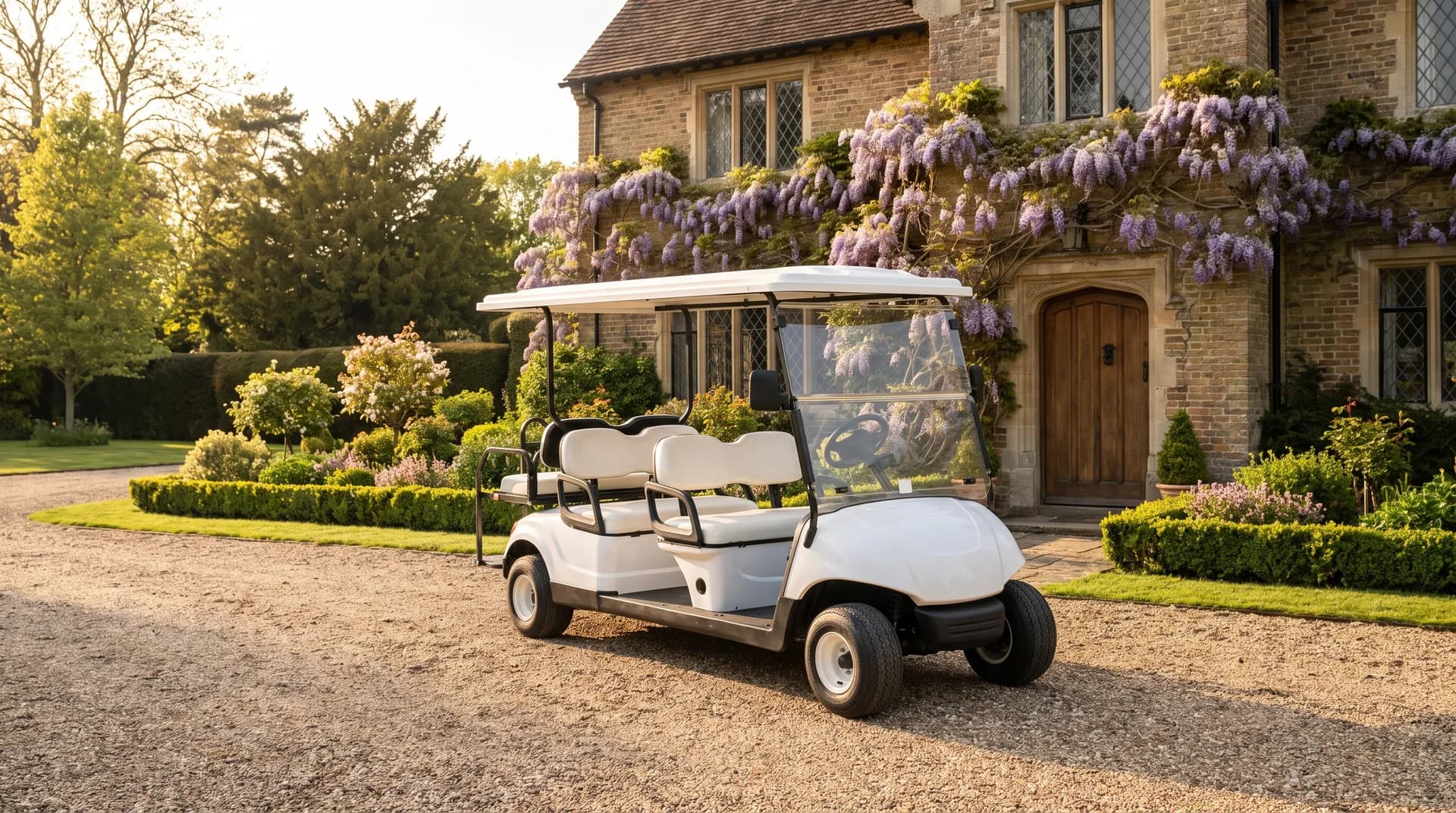
If you need to get along pavements to the shops, a mobility scooter is the right vehicle; if you need to move around a garden, estate, course or site, often with a passenger or a load, a golf cart is. They look like neighbours in a catalogue but they belong to different vehicle classes under UK rules, with different rights about where they can go, and choosing on comfort alone leads people to buy a machine they cannot legally use where they intended. This guide, which uses cart and buggy interchangeably as UK sellers do, compares the two honestly: the legal position in outline, comfort and terrain, passengers, and a straightforward steer on who should pick which.
- They are different vehicle classes: mobility scooters have public pavement rights that golf carts do not.
- A golf cart is the stronger vehicle on private ground: more comfort, more terrain ability, and it carries a passenger.
- A mobility scooter is the only one of the two designed for pavements, shops and public places.
- Rules on both change and have detail we cannot cover exhaustively: check current official guidance before buying.
- Many people with land and a mobility need end up correctly owning one of each, they are not substitutes.
Golf cart vs mobility scooter: two different vehicle classes
A mobility scooter is designed and regulated as a personal mobility aid for one person with limited mobility. UK rules recognise classes of these vehicles and give them rights ordinary vehicles do not have, including use of pavements at restricted speeds, with larger classes allowed on roads under conditions. A golf cart is regulated as a vehicle like any other: it has no special access rights, cannot be driven on pavements, and can only use public roads if it has been through road registration, which is a specific build and paperwork exercise covered in our road legal guide. On private land, the position flips: a cart is unrestricted on your own ground, while a scooter's small wheels and low ground clearance limit where it can physically go. The rules for both carry detail and change over time, so treat this as orientation and check current government guidance before committing money.
Where each can legally go in the UK
In outline: a mobility scooter of the appropriate class can use pavements, pedestrian areas and shops, which is exactly what it exists for, and certain classes can also use roads within the rules that apply to them. A golf cart can be used freely on private land with the landowner's permission, golf courses, estates, parks, campuses, farms, and on public roads only if road-registered, never on pavements. So the honest question is not which vehicle is better but where your journeys actually are. If the journey is house to high street, only the scooter does it. If the journey is house to the far paddock with a passenger and a load of tools, only the cart does it well. If your golf club is the destination, note that clubs set their own rules on private buggies and scooters alike; our guide for disabled golfers covers that conversation.
Comfort, terrain and passengers
On any ground rougher than a paved path, the cart wins comfortably. Larger wheels, real suspension and higher ground clearance handle grass, gravel, slopes and wet ground that would stop or strand a scooter, and a canopy or fully enclosed cab makes year-round use realistic. A cart also carries at least one passenger and usually luggage or kit, which no scooter does. The scooter's strengths are the mirror image: it is smaller, lighter, cheaper, needs no shed, charges from any socket indoors, and many models dismantle or fold to travel in a car boot, which almost no cart does. Range on both is battery-dependent; scooters typically cover shorter distances per charge than carts, though ample for their intended journeys.
- Golf cart
- Ordinary vehicle, no special rights
- Mobility scooter
- Recognised mobility classes with access rights
- Golf cart
- No
- Mobility scooter
- Yes, within class rules
- Golf cart
- Only if road-registered
- Mobility scooter
- Certain classes, within the rules
- Golf cart
- Strong: suspension, clearance, weather kit
- Mobility scooter
- Limited: small wheels, low clearance
- Golf cart
- 1 to 7 passengers plus kit
- Mobility scooter
- Rider only
- Golf cart
- Needs shed or trailer
- Mobility scooter
- Fits indoors, many fold for car boots
| Golf cart | Mobility scooter | |
|---|---|---|
| Vehicle class | Ordinary vehicle, no special rights | Recognised mobility classes with access rights |
| Pavements and shops | No | Yes, within class rules |
| Public roads | Only if road-registered | Certain classes, within the rules |
| Private land and rough ground | Strong: suspension, clearance, weather kit | Limited: small wheels, low clearance |
| Passengers and load | 1 to 7 passengers plus kit | Rider only |
| Transport and storage | Needs shed or trailer | Fits indoors, many fold for car boots |
Who should pick which, and the cost picture
Pick the mobility scooter if your need is personal mobility on pavements and public places: it is the only vehicle of the two designed and permitted for that, and buying a cart for those journeys is a mistake however comfortable it looks. Pick the golf cart if your journeys are on private ground, garden, estate, course, site, especially if you carry a passenger, tools or shopping, or the terrain would defeat small wheels. Plenty of people with both a mobility need and land to cover own one of each, because they are not substitutes. On money: scooters run from a few hundred pounds to several thousand; our carts start at £11,500 for the two-seat S2, and you can browse the golf carts available in the UK to see the range. One caution on tax: VAT relief for disabled buyers is tightly drawn, and a standard golf cart does not qualify, only substantially and permanently adapted vehicles can; our VAT relief guide explains the rules before anyone promises you a discount they cannot deliver.
Frequently asked questions
Can a golf cart be used like a mobility scooter on pavements?+
No. Mobility scooters of the appropriate class have specific rights to use pavements; golf carts have no such rights and cannot be driven on pavements regardless of the driver's mobility. Check current official guidance for the detail.
Which is better for a large garden or estate?+
The golf cart, clearly: better on grass, gravel and slopes, carries passengers and loads, and weather protection makes it usable year round. A scooter is limited off smooth paths.
Is a golf cart cheaper than a mobility scooter?+
No, generally the opposite. Scooters run from a few hundred pounds to several thousand; new carts start around £11,500 in our range. They also do different jobs, so the comparison should start with where you need to travel.
Can I get VAT relief on a golf cart if I am disabled?+
Not on a standard cart. UK VAT relief applies to vehicles substantially and permanently adapted for a disabled user, and ordinary buggies do not qualify. Be wary of any seller who suggests otherwise.
I play golf and struggle to walk. Which do I need?+
For the course itself, a golf cart or a single-seater buggy is the right tool, and your club's buggy policy will shape the choice. A mobility scooter is the answer for pavements and town, not fairways.
Talk through which vehicle fits your ground
Tell us where you need to travel and what you need to carry, and we will give you an honest steer, including when a mobility scooter, not a cart, is the right answer.
Related solutions
Ready to explore what we build?
See the vehicles and the setting this applies to, or get a tailored quote built around your site.

Ready to find the right buggy?
Tell us how and where it will work and we will specify a vehicle and a tailored quote built around you. Every build comes with a 3-year warranty and a 24-hour priority call-out.
Our guides are written and reviewed by the Hawke Electric Vehicles team, the people who specify, build, deliver and support the vehicles. We focus on honest, practical advice and flag where a figure depends on the build rather than guessing.
More guides by Hawke