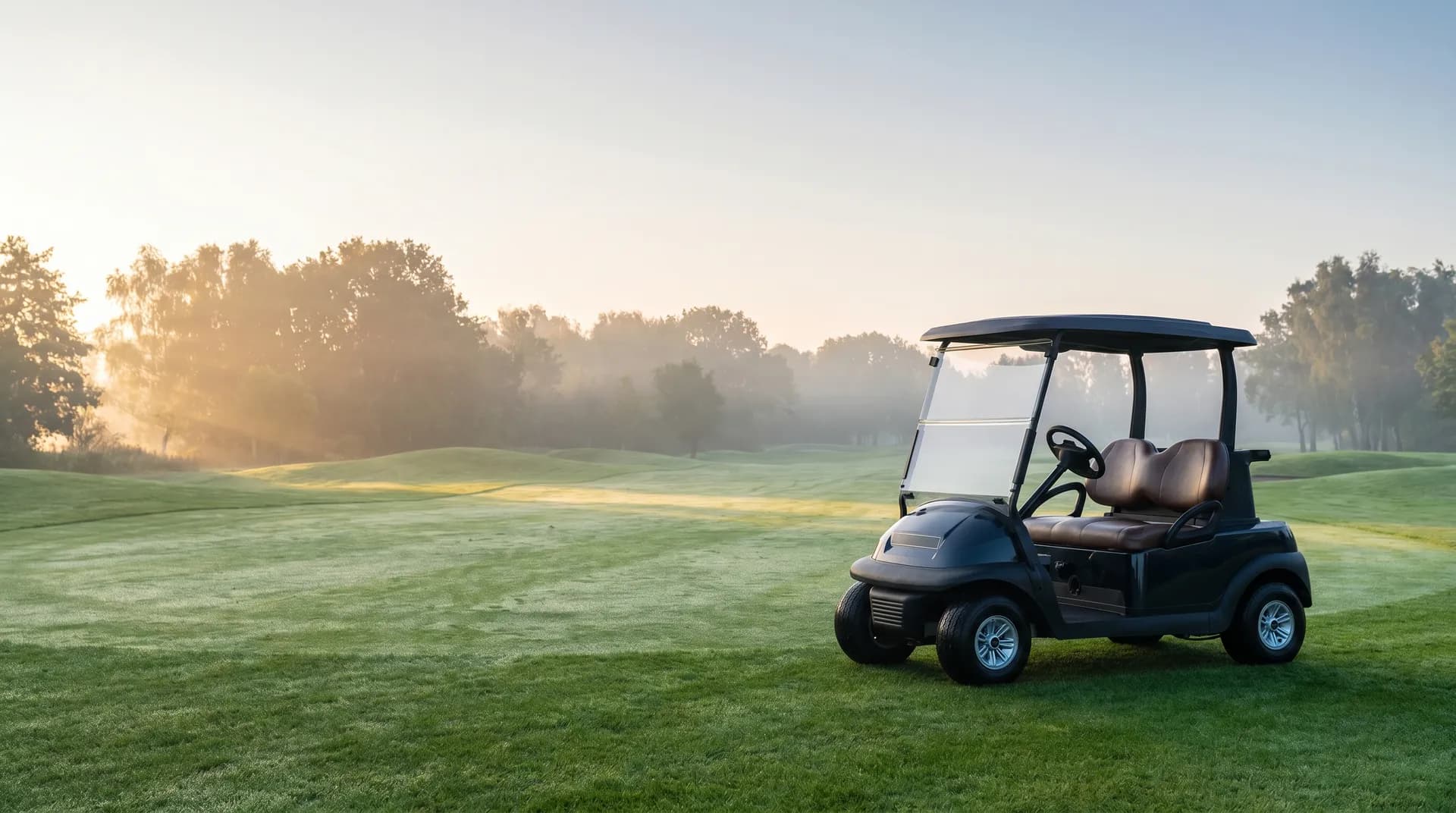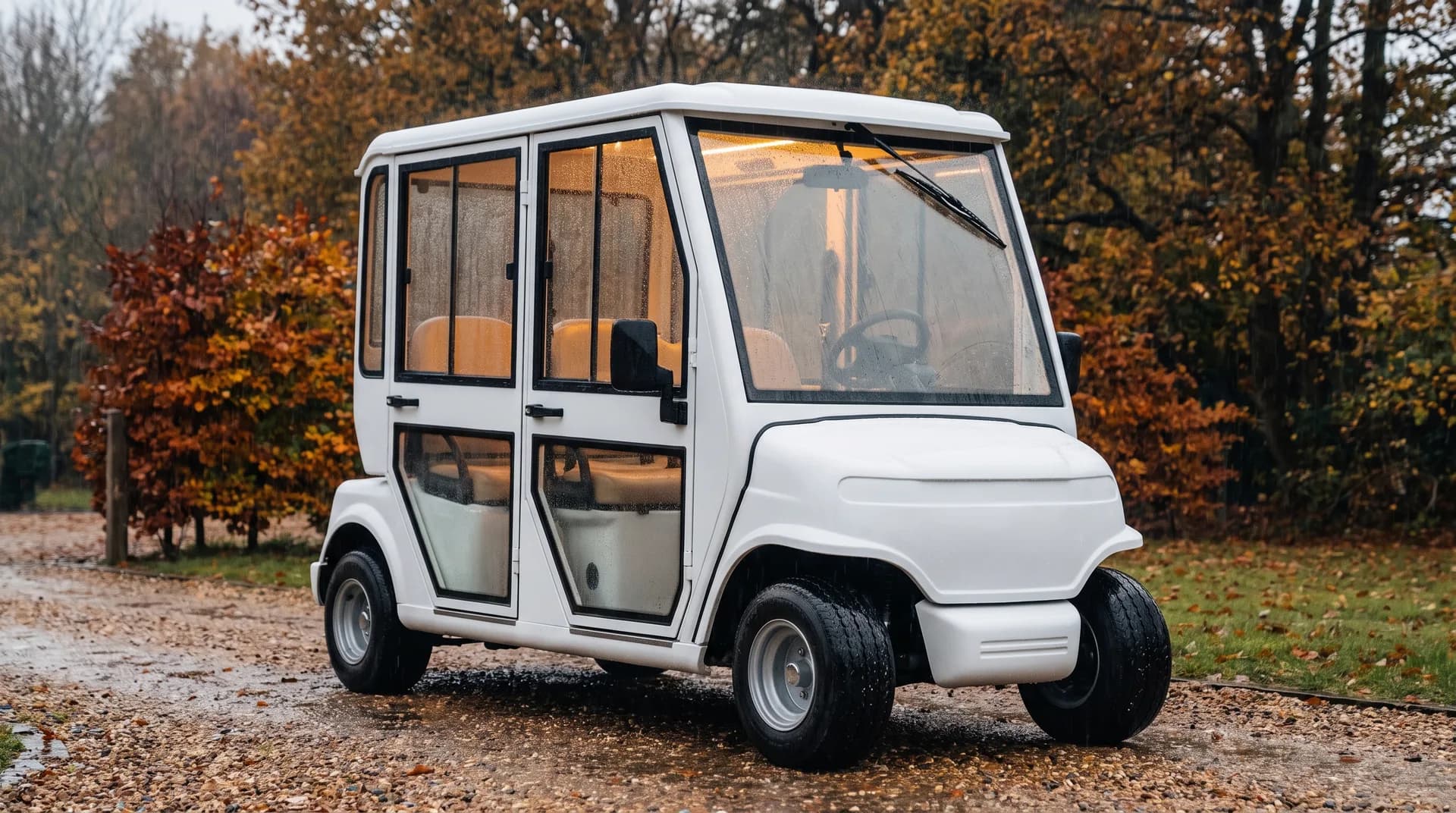
Every golf buggy on the UK market can be placed on four axes: how many it seats, what job it is built for, how enclosed the body is, and what powers it. Once you can name your position on each axis, comparing models becomes simple, and you stop being sold whatever a dealer has in stock. This guide walks the full taxonomy, and a note on words before we start: buggy and cart are the same vehicle, buggy being the traditional British term and cart the American one that UK buyers increasingly use. This is the map of the types; if you already know the type and are deciding between sizes, our sizing guide handles that decision.
- Seats run from single-seaters to 8 and beyond; 2 and 4 are the volume sellers, 6 and 8 are people-movers.
- By job: course buggies, passenger shuttles, utility and pickup carts, and patrol vehicles are distinct builds.
- By body: open, canopy and fully enclosed, and in the UK climate the body choice matters as much as the size.
- Electric dominates new UK sales; petrol survives mainly in older used stock and some high-mileage niches.
- Road-legal versions exist as a factory option for buggies that must use public roads between sites.
Types of golf buggy by seats
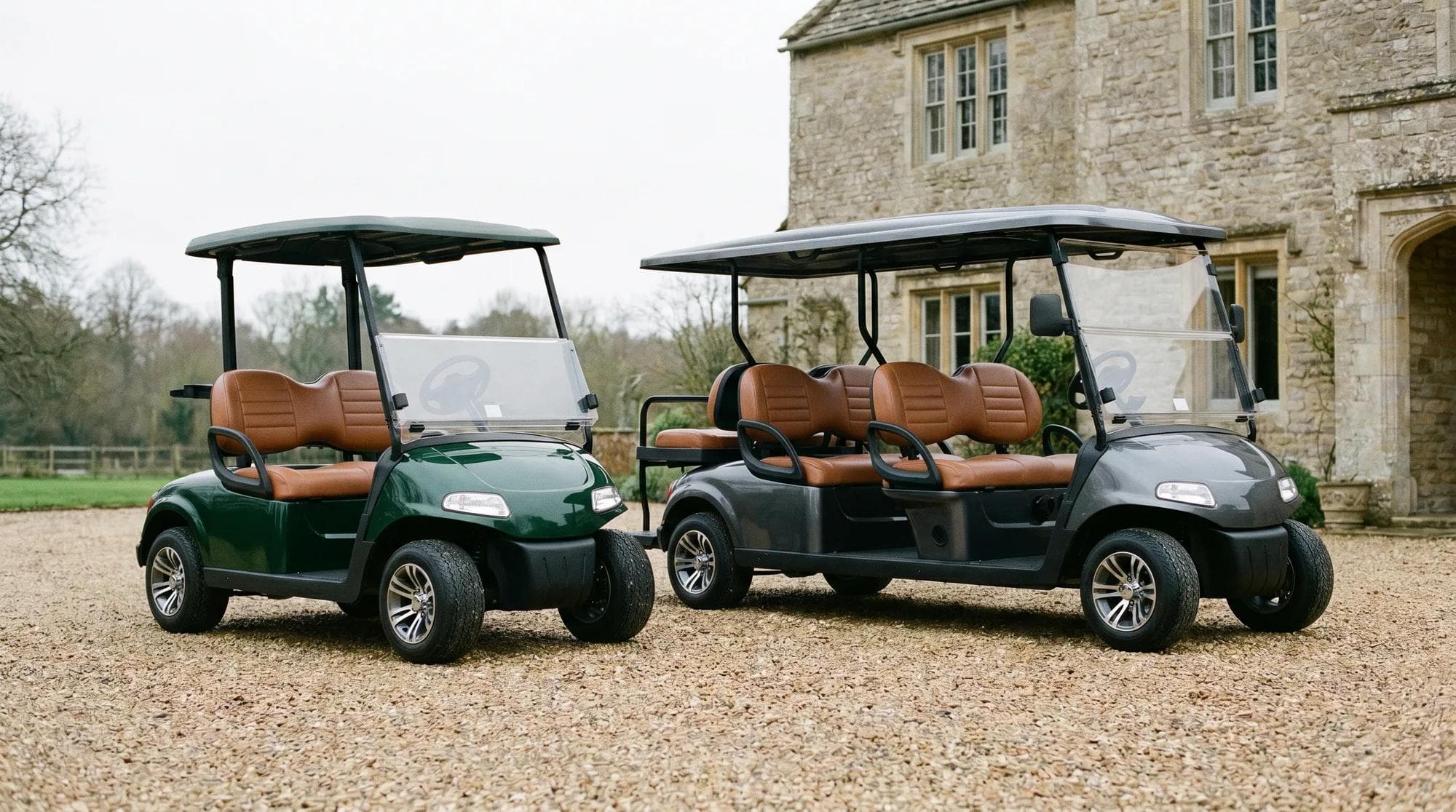
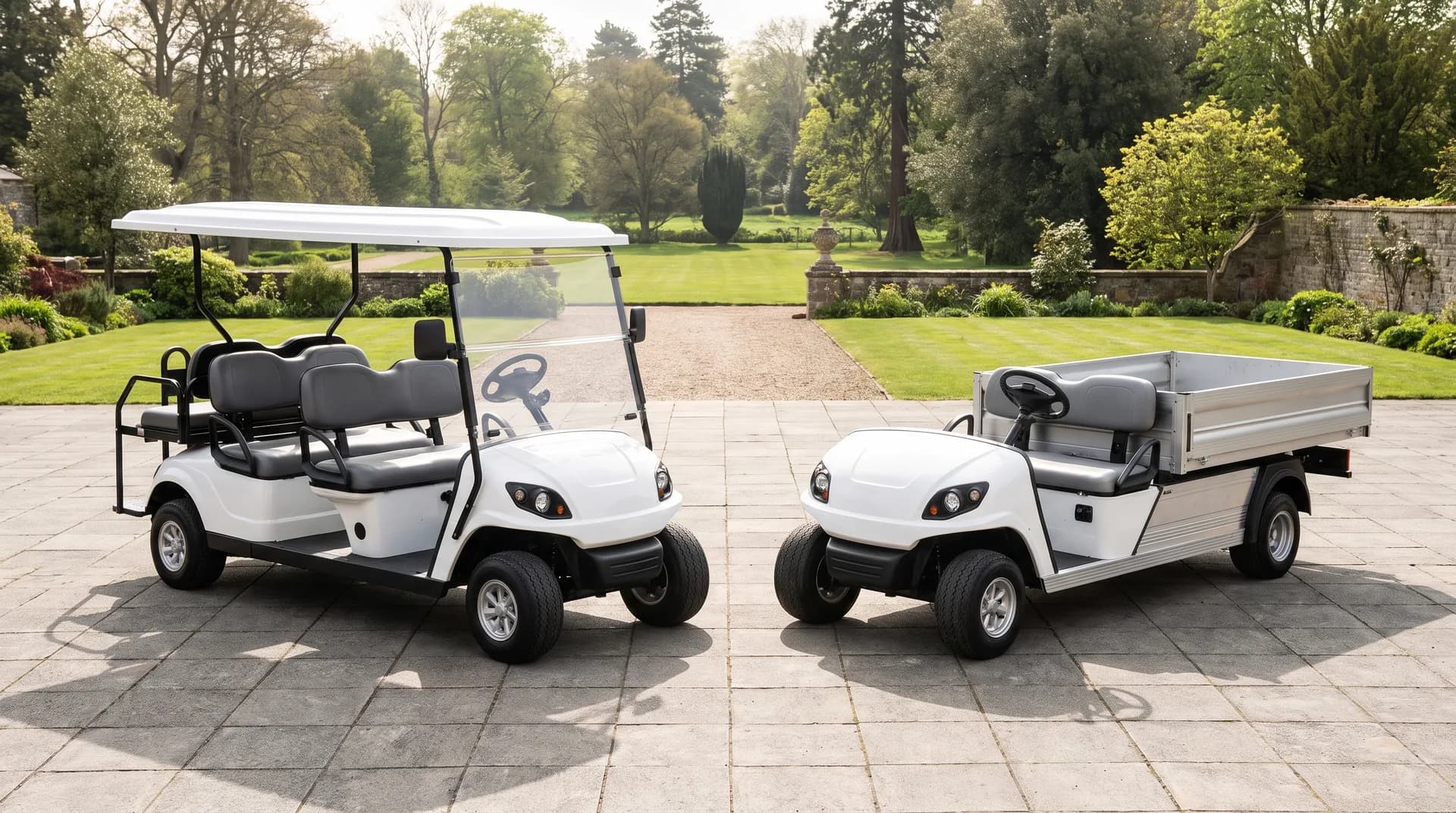
Single-seaters are compact personal machines, mostly bought by golfers who want independence on the course. Two-seaters are the classic buggy: a bench for two plus bags, the course workhorse and the entry point for private buyers, our S2 starts at £11,500. Four-seaters add a rear bench, often one that flips to become a cargo deck, and are the default for estates, families and small venues; our S4 starts at £14,900. Six and eight-seaters are people-movers for hotels, weddings, campuses and events, with our S6 from £18,900 and S8 from £23,500. Beyond eight seats you are into towed trailers and true shuttle trains, which are specialist territory. As a rule the step up in seats also brings a longer wheelbase and more battery, so bigger buggies are not just longer, they are more vehicle.
Types of golf buggy by job
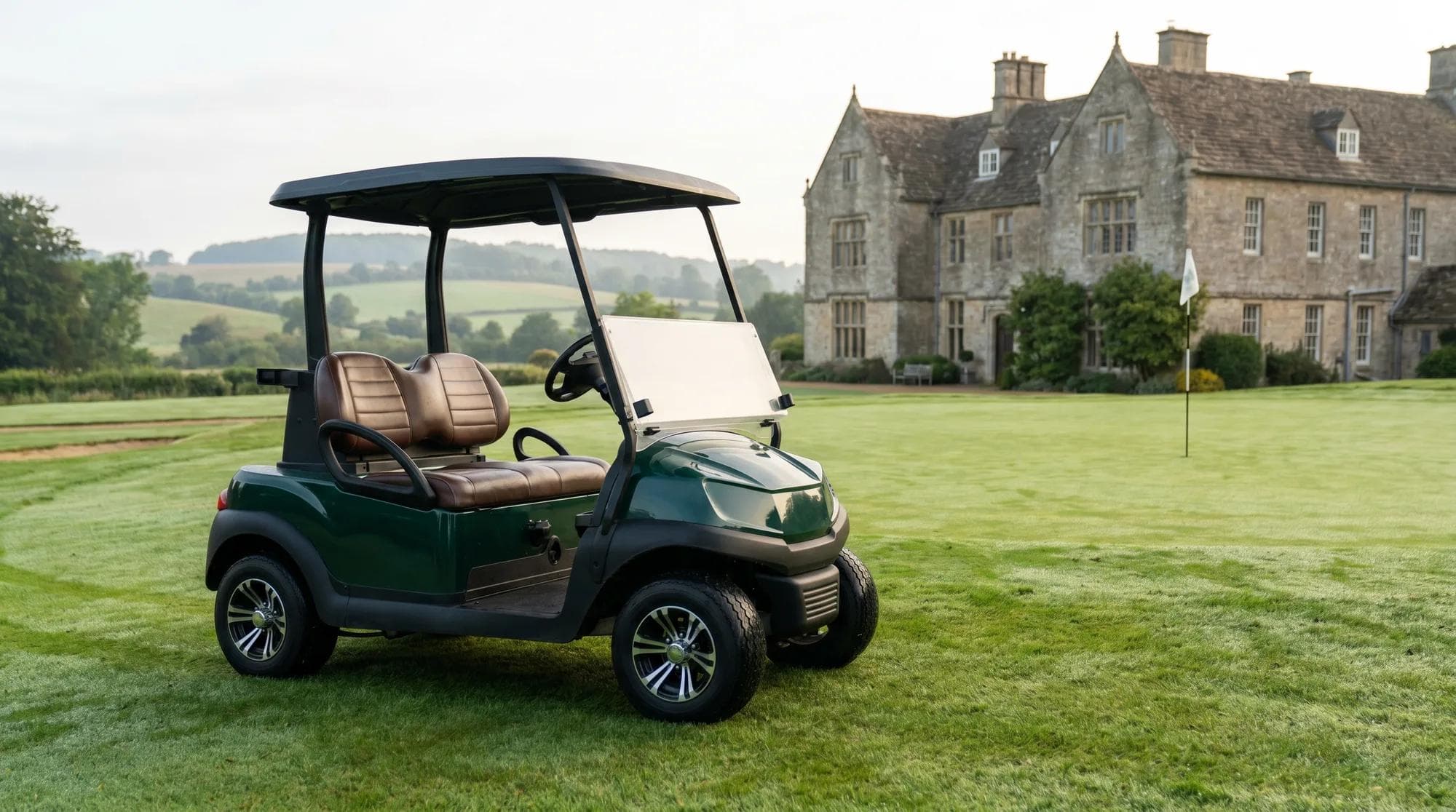
The course buggy is the original: two seats, bag wells, turf tyres that protect greens. The passenger shuttle is a people-carrier tuned for loops: grab rails, easy step-in, weather protection, six or eight seats. The utility or pickup buggy swaps rear seating for a load bed, ours is the S2 Pickup, from £15,900, and becomes a site vehicle for grounds teams, hotels moving linen and luggage, and farms doing light carrying; where the load matters more than people, the comparison shifts to a full utility vehicle, which our buggy vs utility vehicle guide covers. The patrol buggy is a two-seater specified for security and marshalling: lights, high visibility, sometimes enclosed for night shifts. The vehicles overlap mechanically, the job dictates the fit-out.
By build: open, canopy or fully enclosed
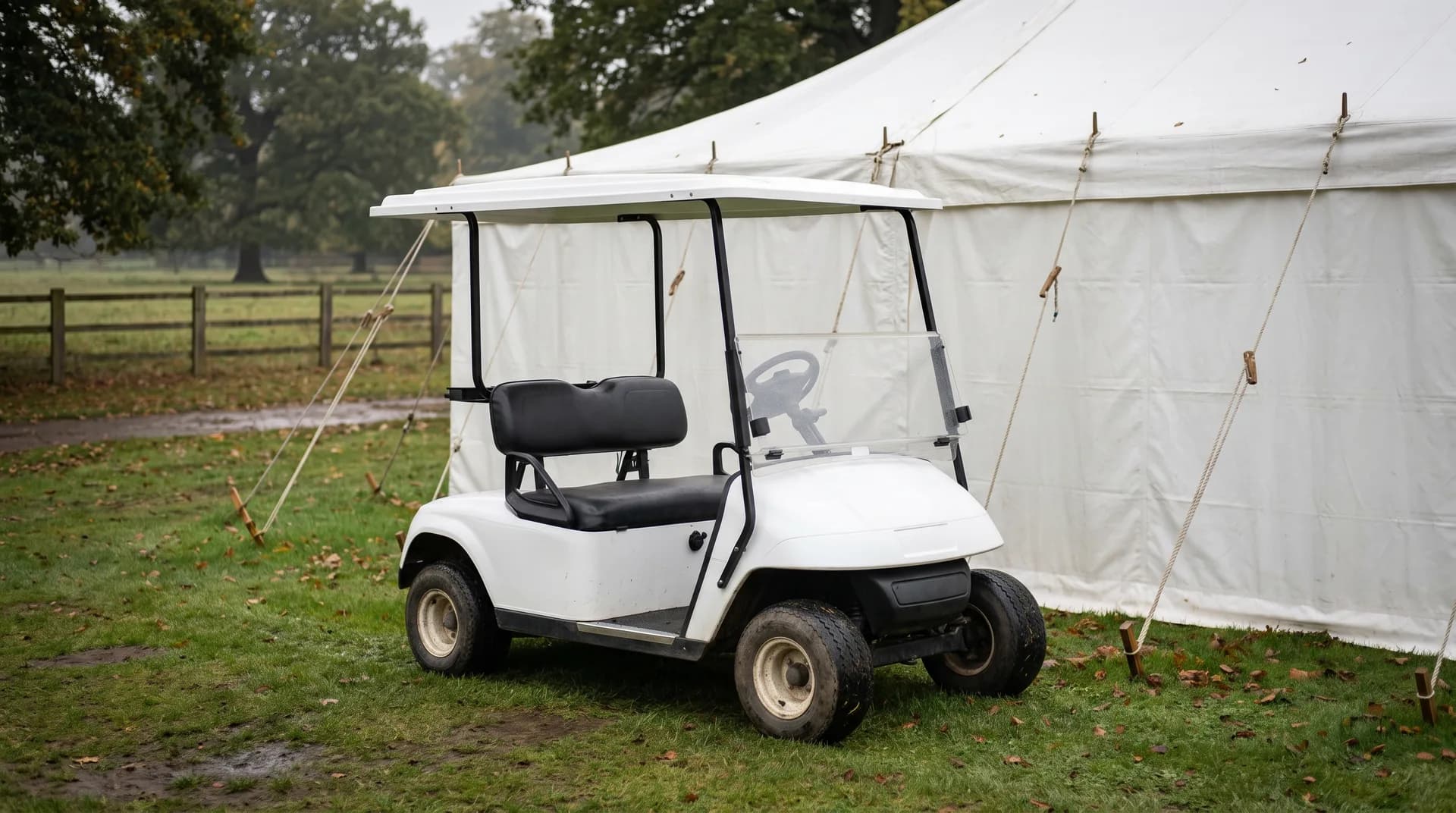
An open buggy is the lightest and lowest-cost form and fine for summer courses. A canopy roof, with or without a windscreen, is the sensible UK minimum and what most buyers order. The fully enclosed buggy adds doors, glazing, a wiper and often heating, turning a seasonal vehicle into a year-round one, and it is the configuration that transforms ownership in a British winter; our enclosed buggy guide covers the options and trade-offs. Enclosure is mostly independent of size and job: you can enclose a two-seat course buggy or an eight-seat shuttle. If your buggy must work through the winter, decide the body first and the badge second.
- Seats
- 2
- Built for
- Golfers and bags, turf-friendly tyres
- Seats
- 2 to 4
- Built for
- Private ground, mixed passengers and carrying
- Seats
- 6 to 8
- Built for
- Hotels, venues, events, campus loops
- Seats
- 2 + load bed
- Built for
- Grounds work, deliveries, site carrying
- Seats
- 2
- Built for
- Security and marshalling, lights and visibility
| Seats | Built for | |
|---|---|---|
| Course buggy | 2 | Golfers and bags, turf-friendly tyres |
| Estate / leisure buggy | 2 to 4 | Private ground, mixed passengers and carrying |
| Passenger shuttle | 6 to 8 | Hotels, venues, events, campus loops |
| Utility / pickup | 2 + load bed | Grounds work, deliveries, site carrying |
| Patrol buggy | 2 | Security and marshalling, lights and visibility |
Power, and where road-legal builds fit
Electric power dominates new UK buggy sales, and for good reasons: quiet running, low cost per mile, little servicing, and batteries, increasingly lithium, that cover a full day's work. Petrol buggies still exist, mostly in older used stock and a few high-mileage applications where refuelling in seconds matters, but they bring noise, emissions and engine servicing, and most UK venues now specify electric; the electric golf buggies page covers the case in full. The final type worth knowing exists across all the categories above: the road-legal buggy. Any of these vehicles can be built and registered for public-road use, lights, plates, the registration paperwork, which matters for estates and venues whose routes cross public highways. It is a factory specification decided at order, not a bolt-on later, so raise it early if your routes need it. You can see how the types translate into actual models among the golf carts for sale in the UK.
Frequently asked questions
What are the main types of golf buggy?+
By seats: single, 2, 4, 6 and 8-seaters. By job: course buggies, passenger shuttles, utility or pickup carts, and patrol vehicles. By build: open, canopy and fully enclosed. By power: electric, which dominates new sales, and petrol, mostly in older stock.
What is the difference between a golf buggy and a golf cart?+
Nothing. Buggy is the traditional British word and cart the American one; UK suppliers use both for the same vehicles.
Which type do most UK buyers choose?+
Two and four-seat electric buggies with a canopy are the volume of the private market; venues and hotels buy six and eight-seat shuttles; grounds teams buy pickup-bodied utility carts.
Can any golf buggy be made road legal?+
Road-legal versions are a build option across the types, adding the lighting and equipment needed for registration. It is specified at order rather than retrofitted, so mention public-road use when you enquire.
Should I buy petrol or electric?+
Electric for almost all UK buyers: cheaper to run, quiet, low maintenance and welcome at venues that restrict engines. Petrol survives in niches where instant refuelling outweighs those advantages.
Name the type, then get it priced
Tell us the seats, the job and the body you need, and we will match the type to a model and price it to your specification.
Related solutions
Ready to explore what we build?
See the vehicles and the setting this applies to, or get a tailored quote built around your site.
Ready to find the right buggy?
Tell us how and where it will work and we will specify a vehicle and a tailored quote built around you. Every build comes with a 3-year warranty and a 24-hour priority call-out.
Our guides are written and reviewed by the Hawke Electric Vehicles team, the people who specify, build, deliver and support the vehicles. We focus on honest, practical advice and flag where a figure depends on the build rather than guessing.
More guides by Hawke