For thousands of UK golfers, a buggy is not a luxury, it is the only way the game stays possible. Arthritis, joint replacements, MS, heart and lung conditions, the reasons vary, but the situation is the same: you can play, you cannot walk four miles doing it. The good news is that the path is well trodden. There is paperwork that unlocks competition use and often cheaper hire, there are legal duties on clubs, there is a VAT saving if you qualify, and there is a sensible way to decide between hiring every round and buying your own machine. This guide is the roadmap, in the order to tackle it.
- Get a medical exemption certificate first: it unlocks buggy use in competitions and often hire priority or discounts.
- Clubs have reasonable-adjustment duties under the Equality Act; blanket refusals are challengeable.
- A standard buggy does not qualify for disabled VAT relief; only one substantially and permanently adapted for your disability can.
- At typical hire rates, regular players can reach purchase-price territory within a couple of seasons.
- Storage, transport and how the machine looks all matter; choose something you are proud to arrive on.
Step one: the medical exemption certificate
Before you think about machines, get the paperwork. A medical exemption certificate, typically a letter or form from your GP or physiotherapist confirming that you need a buggy to play, is the document that unlocks the golfing world for a disabled player. It is what allows buggy use in competitions run under most club and county rules, it is what many clubs ask for before registering a private buggy, and at plenty of venues it brings hire priority or a discount on the buggy fee. It also puts your club conversation on a completely different footing, because you are no longer asking a favour, you are presenting evidence. Our full guide to medical exemption certificates covers who to ask, what it should say and how clubs treat it.
Know your rights: the Equality Act at the club
Golf clubs are covered by the Equality Act 2010, which means they owe disabled members and visitors reasonable adjustments. That does not give you an absolute right to drive a buggy anywhere in any weather, genuine safety and ground-condition restrictions that apply to everyone are usually lawful, but it does mean a club that refuses buggy use outright, with proper medical evidence in front of it and no reasoned explanation, is on shaky ground. Most disputes dissolve the moment you ask for the refusal in writing. Know where the line sits before you need it: our guide to golf buggies and the Equality Act sets out what clubs must do, what they may lawfully restrict, and how to escalate calmly if you have to.
The money: VAT relief and the hire-versus-buy sums
Two pieces of arithmetic matter. First, VAT, and the honest answer is narrower than most sellers imply: a standard buggy does not qualify for disabled VAT relief, because zero-rating requires equipment designed solely for disabled people and a buggy is designed for golfers generally. Only a buggy substantially and permanently adapted for your disability can be zero-rated, so plan on paying the VAT unless you are taking that route; our VAT relief guide explains where the line sits. Second, the payback question. Club buggy hire in the UK typically runs somewhere around £20 to £45 a round depending on the venue. Play twice a week at those rates and hire money can reach the price of a decent machine within roughly a couple of seasons, sometimes quicker, sometimes slower depending on your club's fees and how often you really play; treat any such figure as a rough sum to run for yourself, not a promise. The honest version of the calculation also includes ownership costs, storage fees, insurance, a battery eventually, servicing, and the flip side: hire needs no storage, no transport and no maintenance, and at some clubs an exemption certificate discounts it further. Our guide to hiring versus buying works the numbers properly.
Storage and transport when mobility is limited
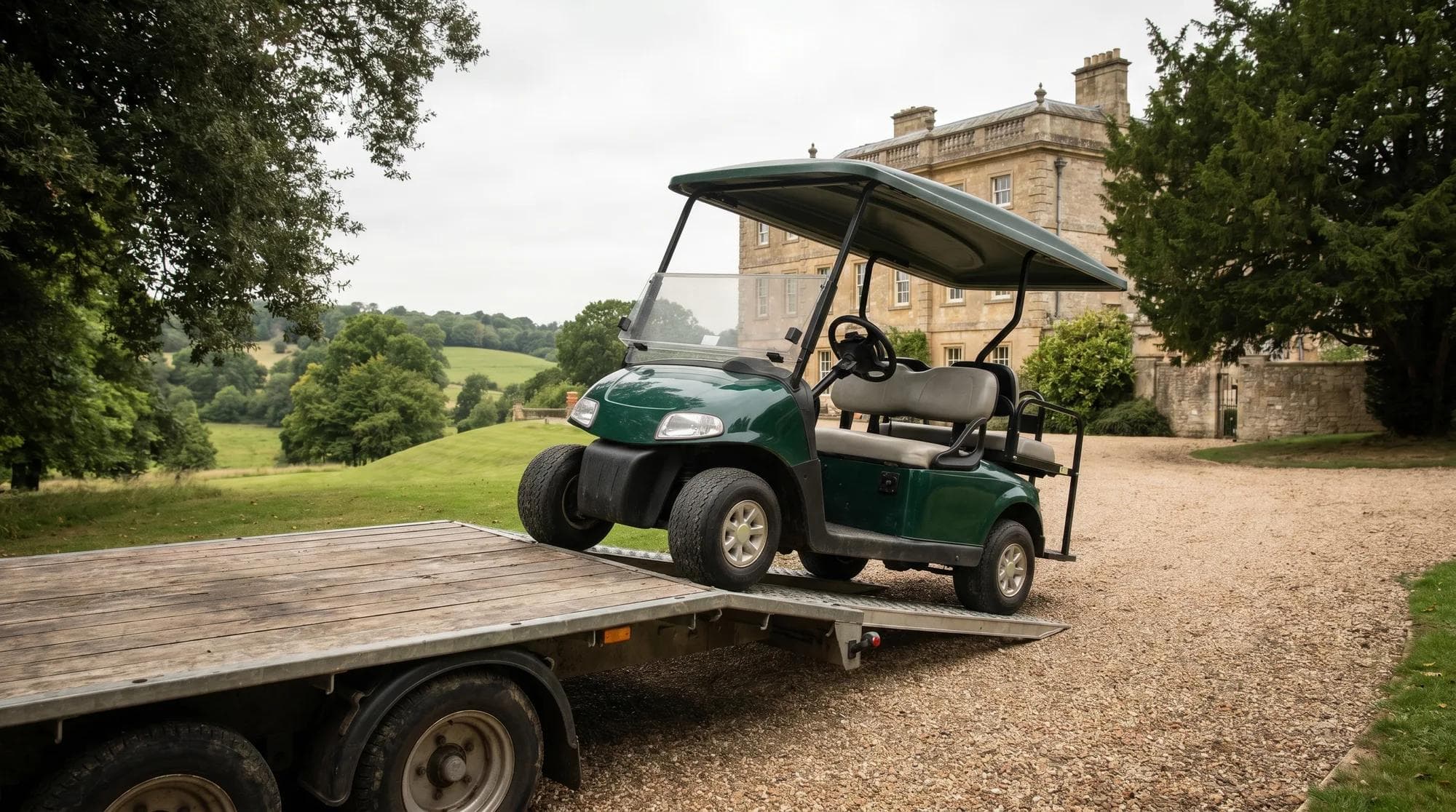
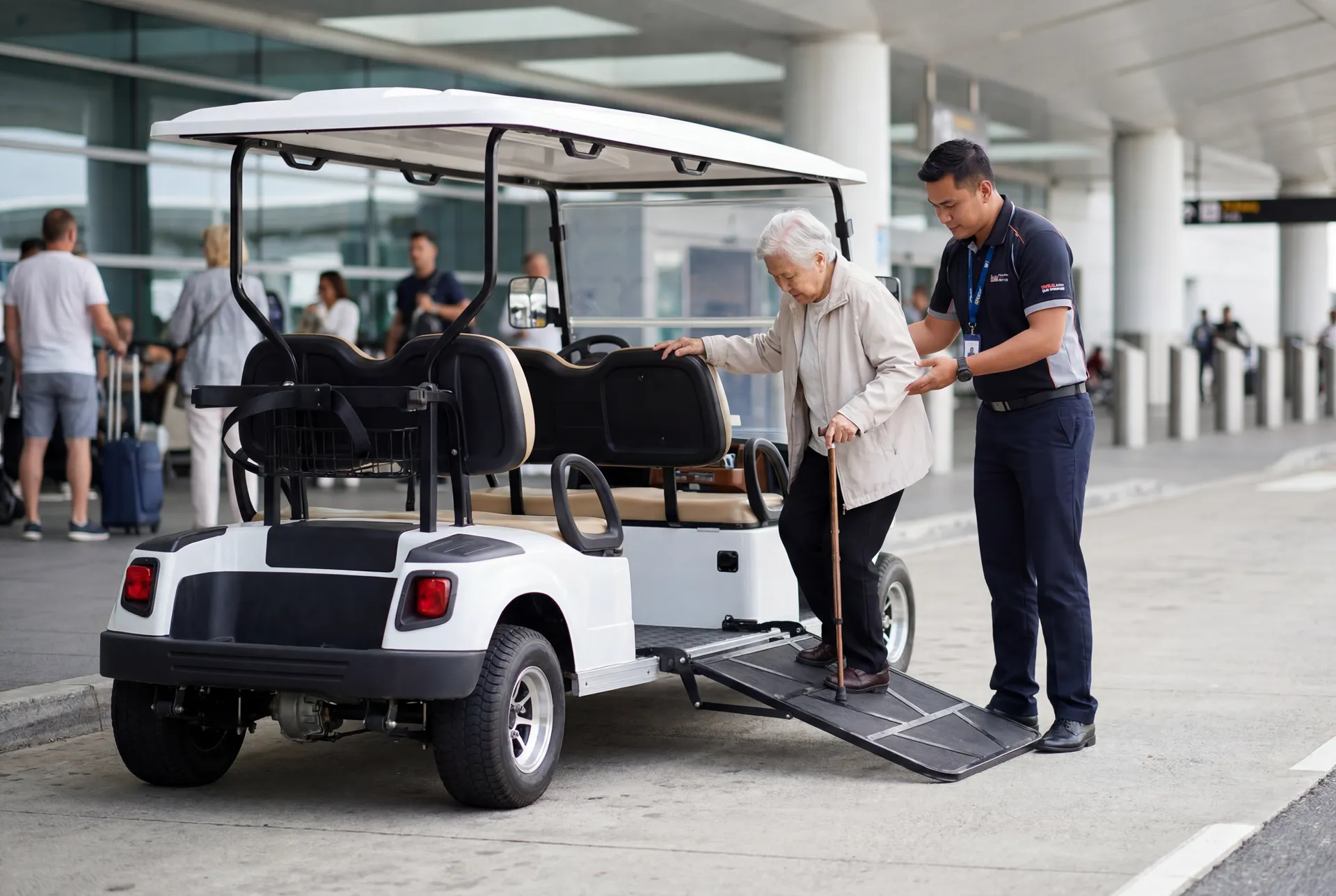
The machine has to live somewhere and get to the course, and if lifting is exactly what your body will not do, this decides more than any brochure spec. The best answer is storage at the club, a buggy shed space with charging, so the machine never travels at all; ask early, because waiting lists at popular clubs are real and sometimes run to years. If it must travel with you, be ruthless about weight: some single-seaters split into around three pieces, and what matters is whether you, on a bad day, can lift the heaviest piece over your boot lip. Lithium-battery machines are dramatically easier here than lead-acid ones, whose battery weight is concentrated exactly where you have to lift. Ramps and hoists help but add cost and faff. If neither club storage nor car transport works, that points back towards hiring, or towards a machine that stays at the one club where you play, and it is worth settling before you buy, as our guide to taking your own buggy to the club explains.
Dignity matters: choose a machine you are proud of
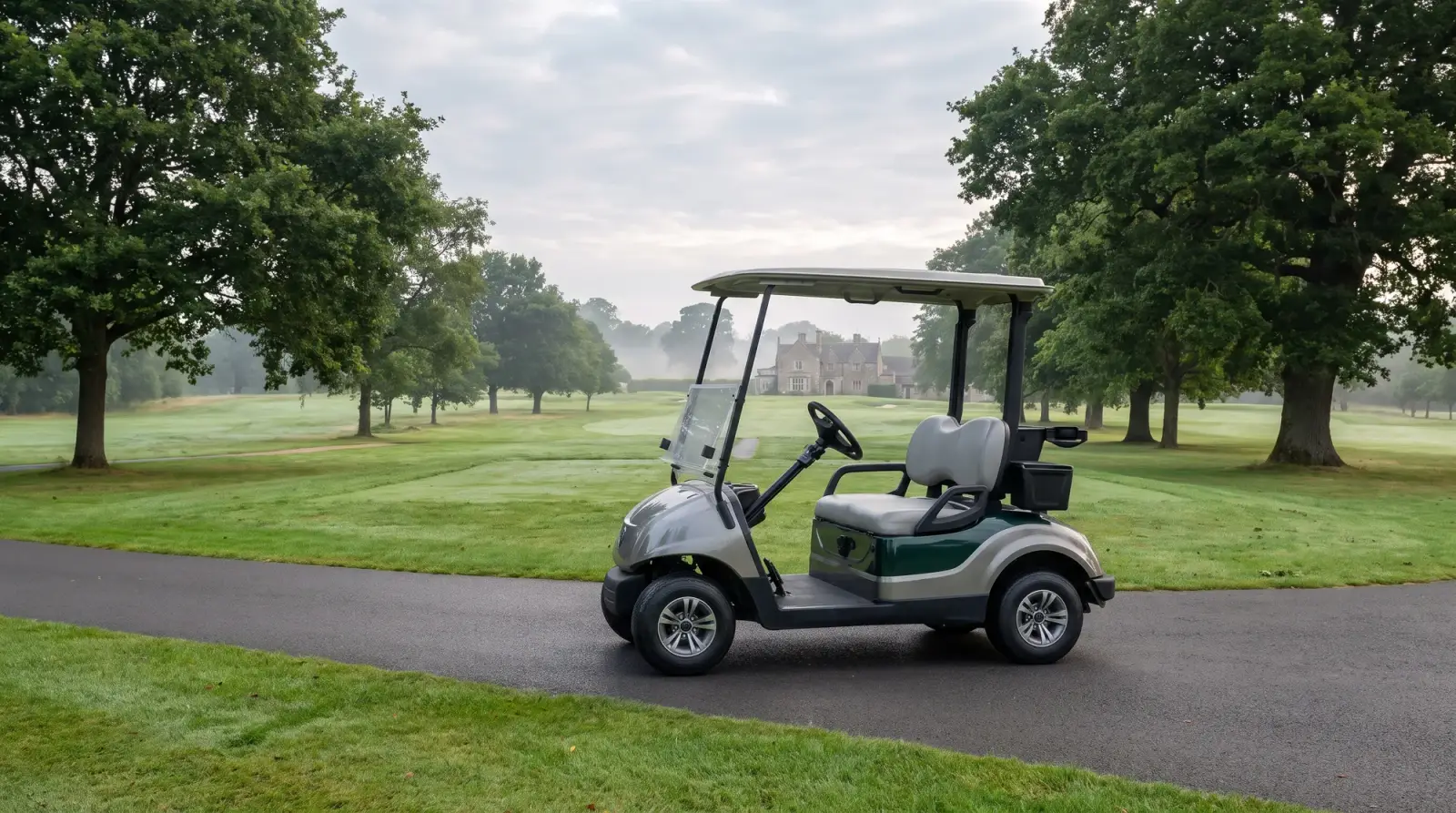
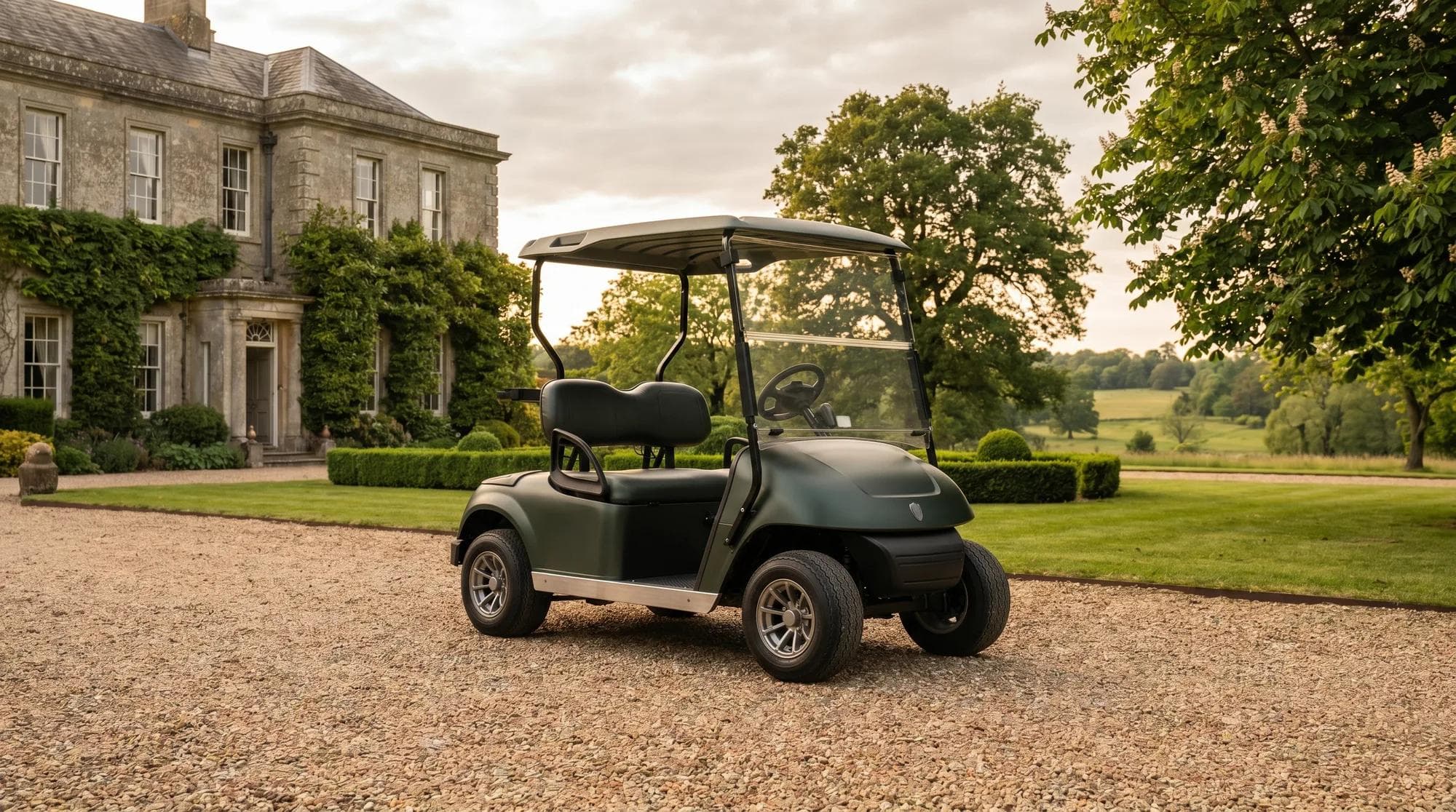
Golfers say this quietly on the forums but they all say it: nobody wants to arrive on something that looks like a mobility aid. It is not vanity, it is about still feeling like a golfer among golfers, and it affects whether the machine actually gets used. The market splits into single-seaters built for exactly this niche, brands like Grasshopper and Patterson are the names members recommend to each other, and proper golf buggies scaled down. A well-styled machine in a smart colour, with golf-course looks rather than clinical ones, changes how the whole thing feels. If you want something that simply reads as a golf buggy, because it is one, a compact two-seater such as our S2 does that job with room for a playing partner, a 3-year warranty and a service network behind it; the trade-off is that it needs storing rather than folding into a car. There is no single right answer, but choose with your pride as well as your knees.
Frequently asked questions
What does a medical exemption certificate actually get me?+
It is the accepted evidence that you need a buggy to play. It typically permits buggy use in club and county competitions, supports registering a private buggy at your club, and at many venues brings hire priority or a discounted buggy fee.
Can a golf club refuse to let me use a buggy?+
It can lawfully restrict buggies for genuine safety or ground-condition reasons that apply to everyone. A blanket refusal in the face of proper medical evidence, with no reasoned explanation, may breach its Equality Act duties and is worth challenging in writing.
Do I pay VAT on a golf buggy if I am disabled?+
Usually yes. HMRC's manual states that standard golf buggies are not eligible for disabled VAT relief, because zero-rating requires equipment designed solely for disabled people and a buggy is designed for golfers in general. A buggy substantially and permanently adapted for your disability can qualify. Signing an eligibility declaration does not make an ineligible product eligible, so confirm the position with HMRC or your accountant before you rely on it.
Is it cheaper to hire a buggy or buy one?+
It depends on how often you play. At typical hire rates of roughly £20 to £45 a round, a regular player can spend the price of a machine in around a couple of seasons, but ownership adds storage, insurance and maintenance. Run your own numbers over two or three years.
What if I cannot lift a buggy into my car?+
Prioritise storage at your club so the machine never travels, choose a lithium model whose heaviest section you can genuinely manage, or lean towards hiring. Lead-acid single-seaters are the hardest to load and the wrong choice if lifting is the problem.
Talk to people who specify for accessibility
Tell us about your golf and your mobility, and we will give you an honest steer, including when hiring or a specialist single-seater serves you better than anything we sell.
Related solutions
Ready to explore what we build?
See the vehicles and the setting this applies to, or get a tailored quote built around your site.

Ready to find the right buggy?
Tell us how and where it will work and we will specify a vehicle and a tailored quote built around you. Every build comes with a 3-year warranty and a 24-hour priority call-out.
Our guides are written and reviewed by the Hawke Electric Vehicles team, the people who specify, build, deliver and support the vehicles. We focus on honest, practical advice and flag where a figure depends on the build rather than guessing.
More guides by Hawke