Every technology drags its early reputation behind it, and the electric buggy drags a heavier one than most, because plenty of people's only experience is a tired hire machine on lead-acid batteries a decade past its prime. The myths that grew from those machines, they cannot climb, they crawl, they hate rain, the batteries die in a year, get repeated as if they described a modern buggy, and they do not. But dismissing them outright is as lazy as repeating them: almost every myth contains a kernel of truth about older machines or poor buying decisions. Here are seven handled honestly, the fair kernel first, then the reality.
- Most buggy myths were true-ish of old lead-acid machines and are wrong about modern ones.
- Electric motors are strong climbers: torque from a standstill is exactly what hills reward.
- Well-kept batteries last years, not months; neglect, not chemistry, kills them early.
- Rain is fine, buggies are built for outdoor life; careless pressure-washing causes the trouble.
- Used can be a bargain or a battery bill in disguise: the pack's age and health decide which.
Golf buggy myths about performance
Myth one: electric buggies can't handle hills. The kernel of truth: a worn-out machine on a fading battery genuinely does labour uphill, and many people have ridden exactly that. The reality is the opposite of the myth: electric motors produce their maximum pulling force from a standstill, which is precisely what a climb rewards, and a modern buggy in good health takes normal course slopes without drama and sustained gradients when specified with the torque and battery for them. If a buggy struggles on hills, it is telling you about its condition, not about electric power.
Myth two: they're painfully slow. The kernel: buggies are deliberately limited to walking-friendly speeds on the course, and hire fleets are often governed lower still, so the sedate reputation is earned in that setting. The reality: the limit is a choice, not a ceiling. Buggies are geared for their environment, and machines for private sites and estates can be specified to move at a brisker working pace where it is safe and permitted. On the course, a buggy comfortably outpaces the walking four-ball anyway.
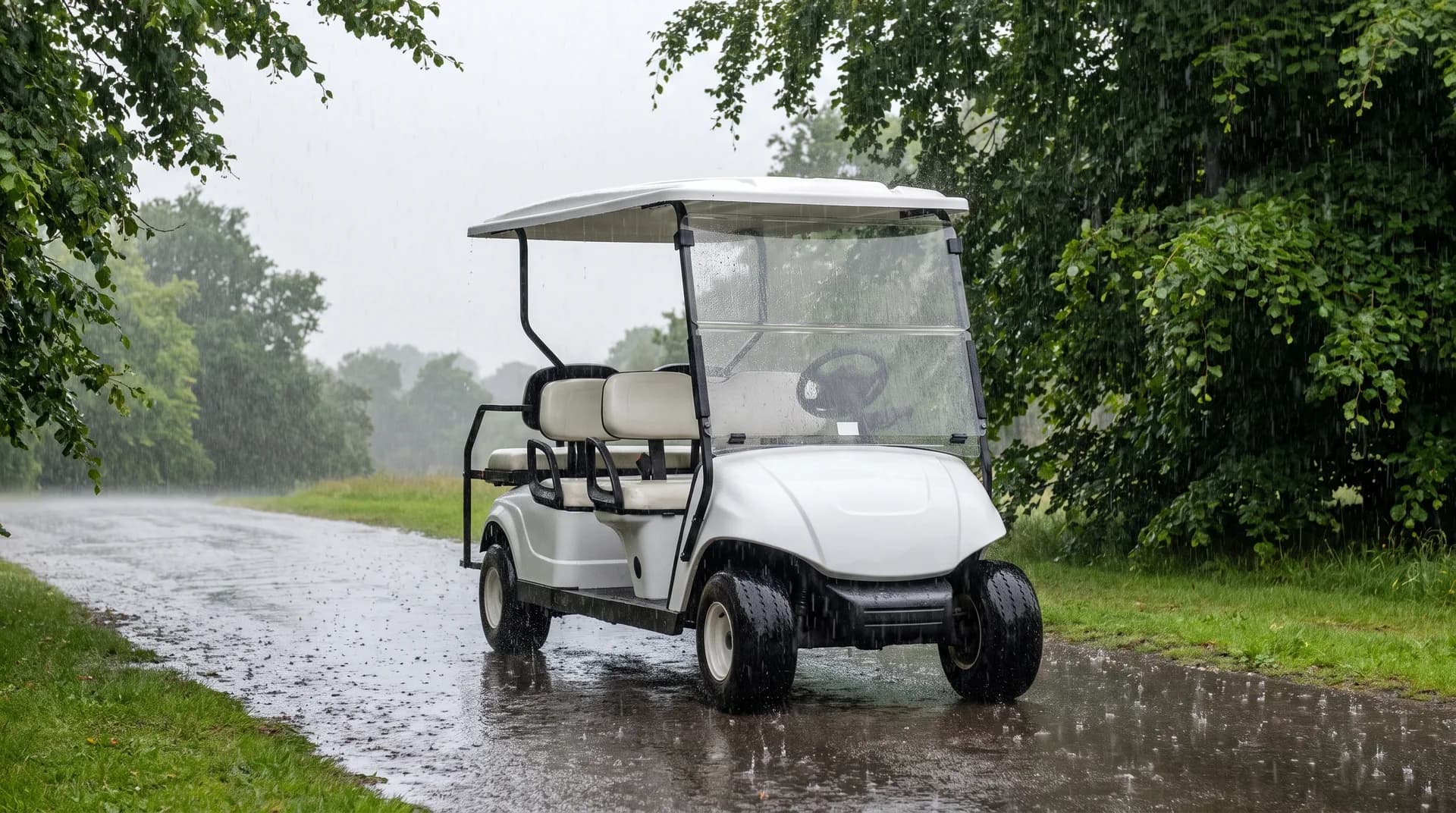
Myth three: electric can't work in the rain. The kernel: electricity and water sound like a bad pairing, and drivers are right to be careful with chargers and connectors. The reality: an electric buggy is designed for outdoor life in a wet climate, sealed where it matters, and entirely happy being driven in British rain, as our rain guide sets out. The genuine cautions are charging with dry hands under cover and never blasting a pressure washer directly at electrical components. Weather is not the enemy; careless washing is.
Golf buggy myths about batteries and charging
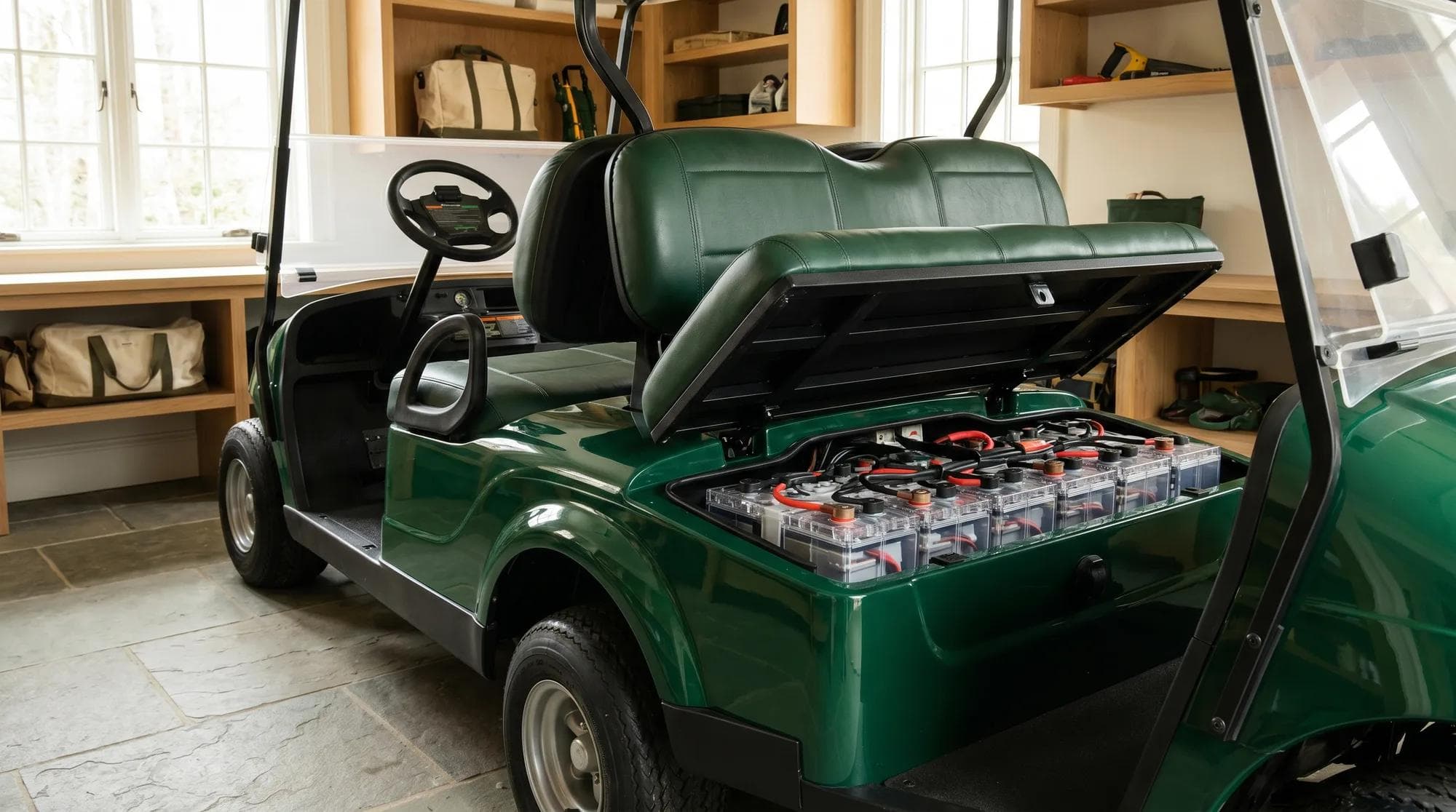
Myth four: the batteries die in a year. The kernel: a battery can be ruined inside a year, by leaving it flat over winter, chronically undercharging it, or running it empty repeatedly, and plenty have been. The reality: chemistry is not the culprit, care is. Looked-after lead-acid packs give years of service, and modern lithium packs last considerably longer again with almost no routine attention. The gap between a neglected pack and a cared-for one is the entire myth. Our guide on how long buggy batteries last puts honest lifespans on both chemistries.
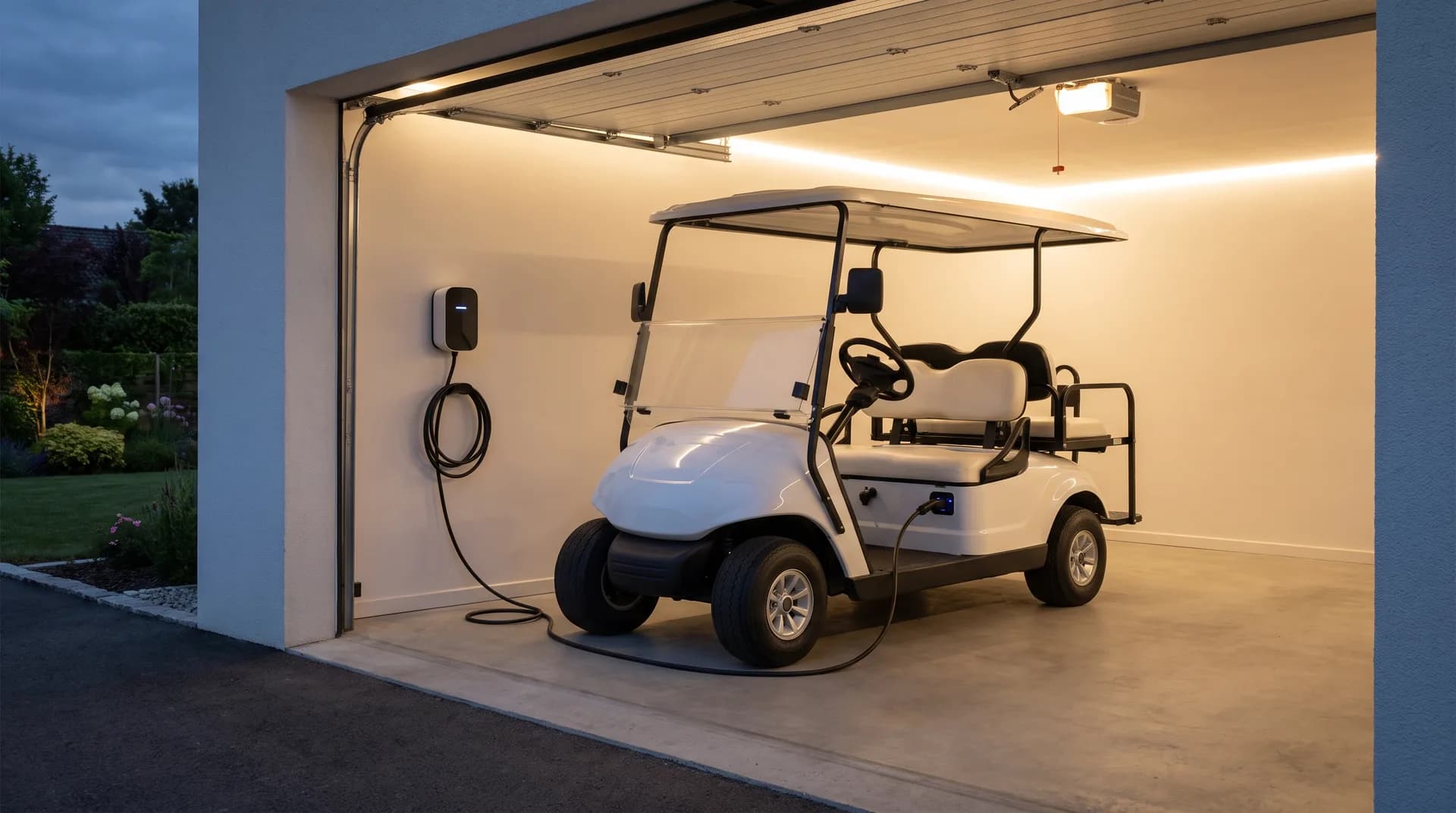
Myth five: they take forever to charge. The kernel: old lead-acid packs on basic chargers really did need all night, and still do. The reality: overnight charging suits how buggies are actually used, the machine sleeps, the battery fills, but modern lithium packs charge far faster, take partial top-ups without complaint, and turn a lunchtime hour into meaningful extra range. For details, see our guide to charging times.
Golf buggy myths about buying and using
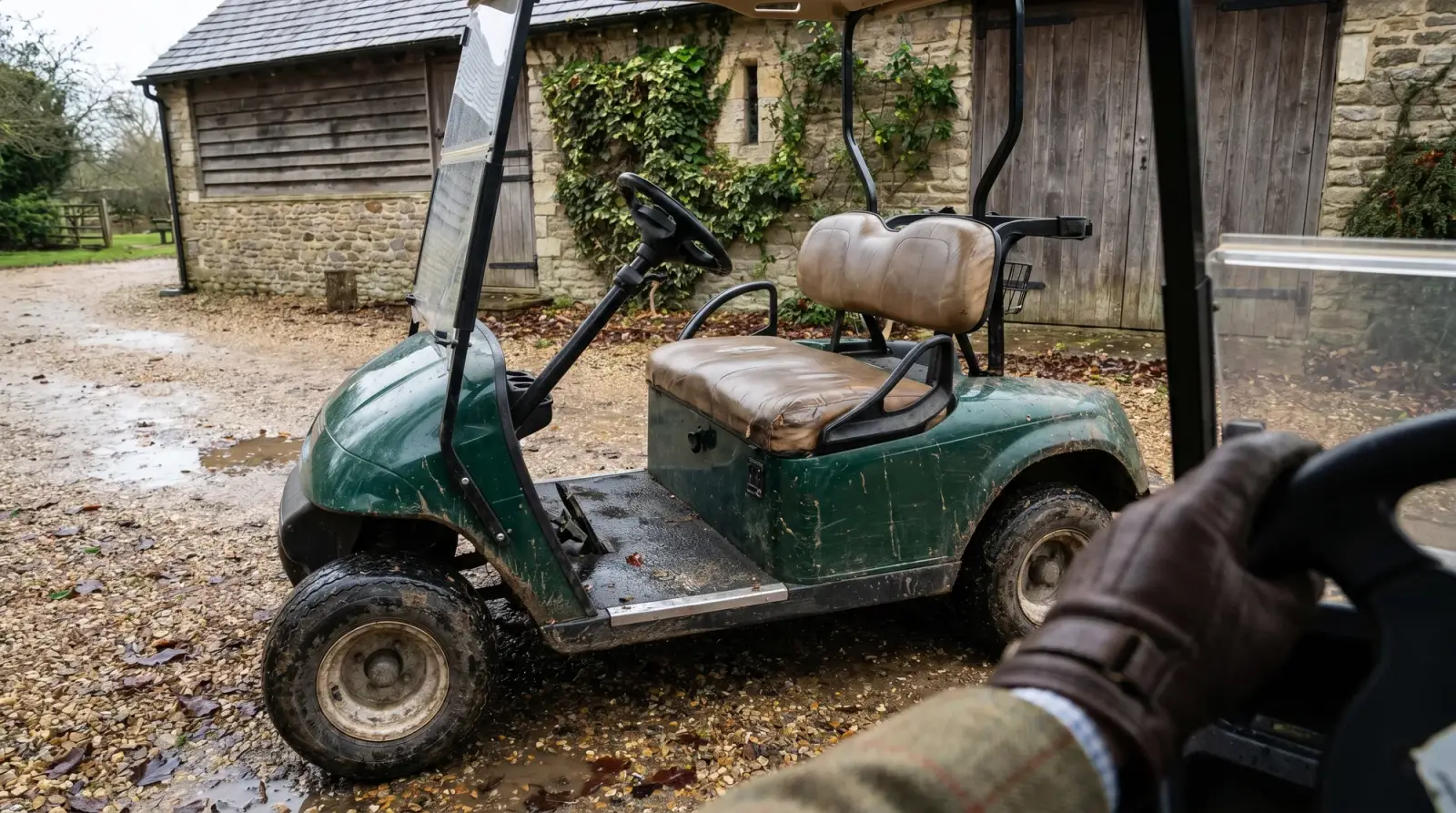
Myth six: they're only for golf. The kernel: the name does not help, and the golf course is where most people meet one. The reality: golf is now one market among many. The same platforms move guests at hotels and weddings, patrol estates, carry tools and materials for grounds teams, shuttle crews at festivals and film sets, and work daily at schools, hospitals and visitor attractions. Browse our electric golf buggies and the buyers are as often venues and estates as golfers. Myth seven: used is always a bargain. The kernel: a well-chosen used buggy genuinely is excellent value. The reality: the battery pack is a large share of a buggy's value, so a cheap machine on a tired pack can cost more than a dearer one on a fresh pack the moment replacement falls due. Price the battery's age and health into every used deal, our used buying guide shows how, and the bargain question answers itself either way.
- The kernel of truth
- Tired machines do labour uphill
- The reality
- Electric torque suits climbing; healthy buggies climb well
- The kernel of truth
- Course and hire limits are sedate
- The reality
- Speed is a setting for the setting, not a ceiling
- The kernel of truth
- Care needed with chargers
- The reality
- Built for outdoor life; driving in rain is fine
- The kernel of truth
- Neglect can kill a pack that fast
- The reality
- Cared-for packs last years; lithium longer still
- The kernel of truth
- Old lead-acid needed all night
- The reality
- Lithium charges fast and takes top-ups happily
- The kernel of truth
- The name and the setting stick
- The reality
- Venues, estates, events and sites buy the same machines
- The kernel of truth
- Good used value genuinely exists
- The reality
- The battery's age decides whether it is a bargain
| The kernel of truth | The reality | |
|---|---|---|
| Can't handle hills | Tired machines do labour uphill | Electric torque suits climbing; healthy buggies climb well |
| Painfully slow | Course and hire limits are sedate | Speed is a setting for the setting, not a ceiling |
| Can't work in rain | Care needed with chargers | Built for outdoor life; driving in rain is fine |
| Batteries die in a year | Neglect can kill a pack that fast | Cared-for packs last years; lithium longer still |
| Slow to charge | Old lead-acid needed all night | Lithium charges fast and takes top-ups happily |
| Only for golf | The name and the setting stick | Venues, estates, events and sites buy the same machines |
| Used is always a bargain | Good used value genuinely exists | The battery's age decides whether it is a bargain |
Why the myths persist, and what to do instead
The pattern across all seven is the same: each myth describes an old, neglected or badly bought machine, then blames the category. The defence is simple. Judge modern machines on a modern test drive, ask about the battery first on any used purchase, and buy from a supplier who will still be there when you need a part or a warranty honoured.
Frequently asked questions
Are electric golf buggies actually good on hills?+
Yes. Electric motors deliver maximum pulling force from a standstill, which is exactly what climbing rewards. A modern buggy in good health takes normal course slopes easily; a machine that labours uphill is showing its condition, usually a tired battery, not a weakness of electric power.
Can you drive an electric buggy in the rain?+
Yes. Buggies are designed for outdoor life and are sealed where it matters. The sensible cautions are charging under cover with dry hands and never aiming a pressure washer directly at electrical components.
How long do golf buggy batteries really last?+
Cared-for lead-acid packs give years of service, and lithium packs last considerably longer again. The batteries that die in a year were left flat, chronically undercharged or repeatedly run empty. Care, not chemistry, decides lifespan.
Is a used golf buggy a good buy?+
It can be excellent value, but the battery pack is a large share of the vehicle's worth. A cheap buggy on a tired pack can cost more overall than a dearer one on a fresh pack, so always price the battery's age and health into the deal.
Are golf buggies only used on golf courses?+
No. The same vehicles work daily at hotels, weddings, festivals, film sets, estates, schools, hospitals and visitor attractions. Golf is now one market among many for what is really a versatile light electric vehicle.
Judge a modern buggy for yourself
The fastest way past the myths is a real machine and a straight answer. Tell us what you need it to do and we will spec it, price it and tell you honestly if it is not the right fit.
Related solutions
Ready to explore what we build?
See the vehicles and the setting this applies to, or get a tailored quote built around your site.

Ready to find the right buggy?
Tell us how and where it will work and we will specify a vehicle and a tailored quote built around you. Every build comes with a 3-year warranty and a 24-hour priority call-out.
Our guides are written and reviewed by the Hawke Electric Vehicles team, the people who specify, build, deliver and support the vehicles. We focus on honest, practical advice and flag where a figure depends on the build rather than guessing.
More guides by Hawke