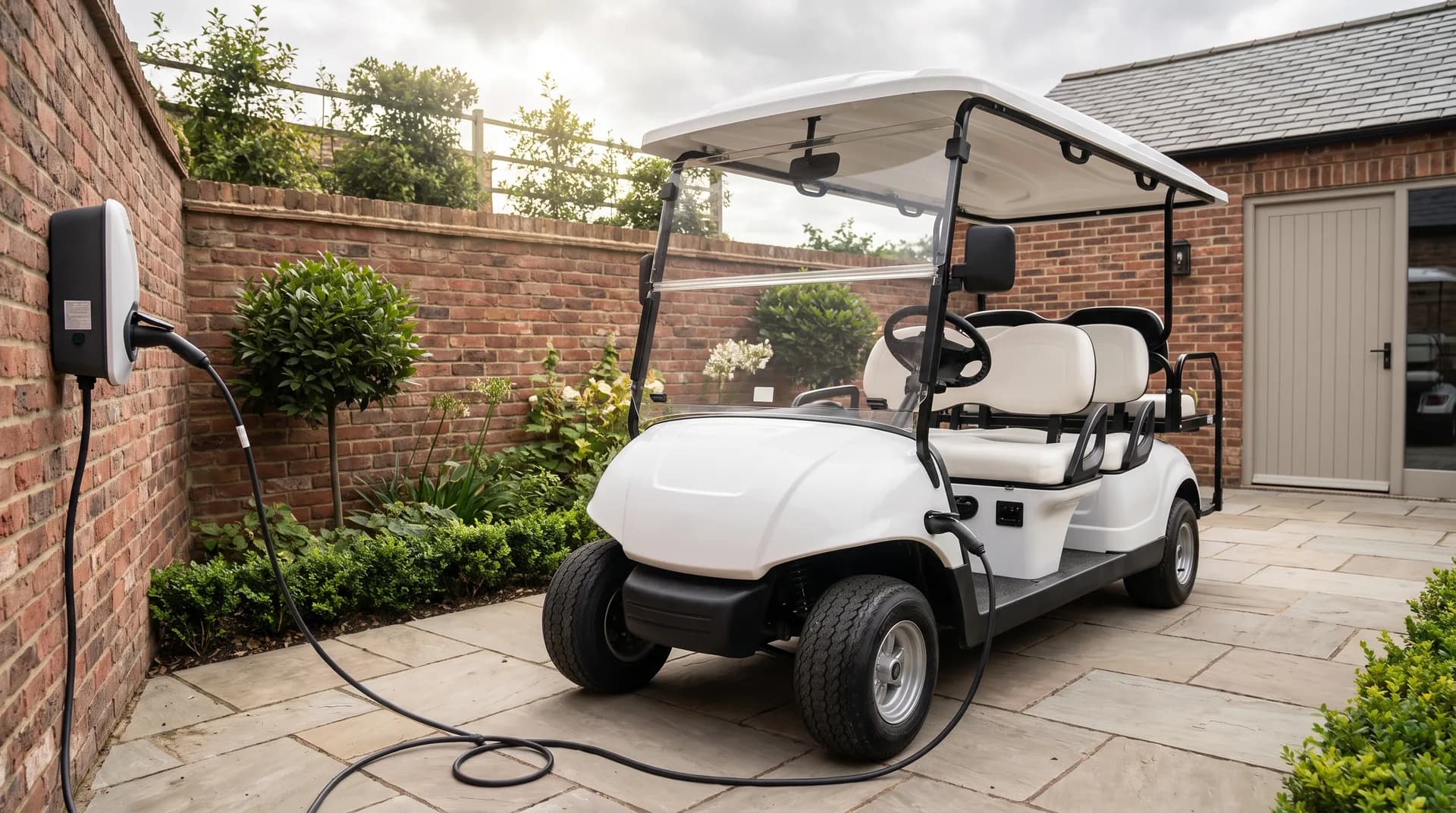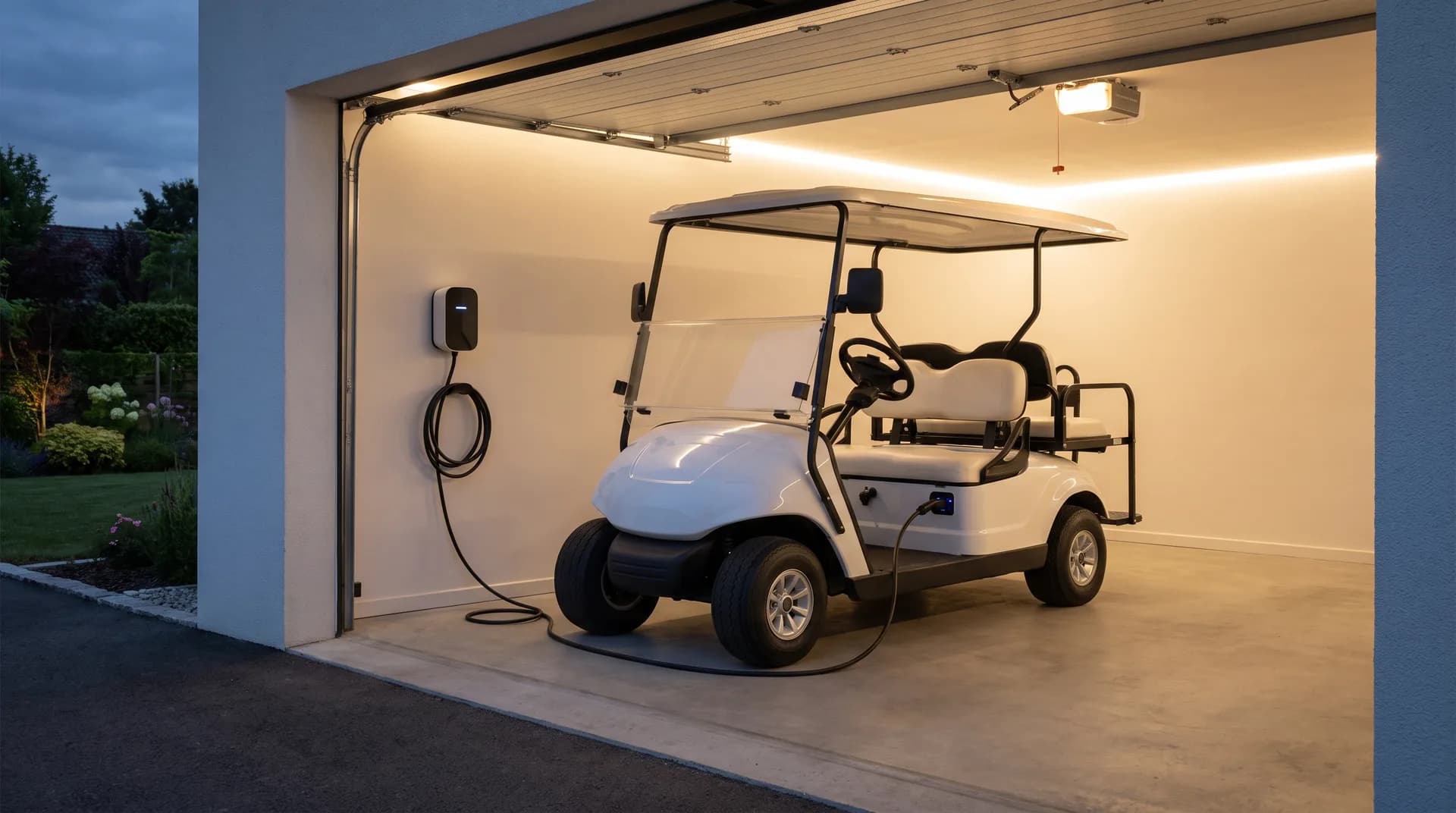
For most owners, charging is the part they never have to think about: the buggy comes back to the yard or garaging in the evening, goes on charge from a standard supply, and is ready in the morning. That overnight rhythm suits the way most sites work, so charge time rarely becomes a constraint. This guide explains what affects it, why overnight charging is usually enough, and when a fast-charge option earns its place.
- Most electric buggies charge overnight from a standard supply and are ready by morning.
- Charge time depends on battery size and chemistry and how flat the battery is.
- Lithium charges faster than lead-acid and is happy with partial top-ups.
- No special infrastructure is needed for the typical single-shift site.
- Fast-charge options exist for exceptional use, discussed at the survey.
Why overnight charging suits most sites
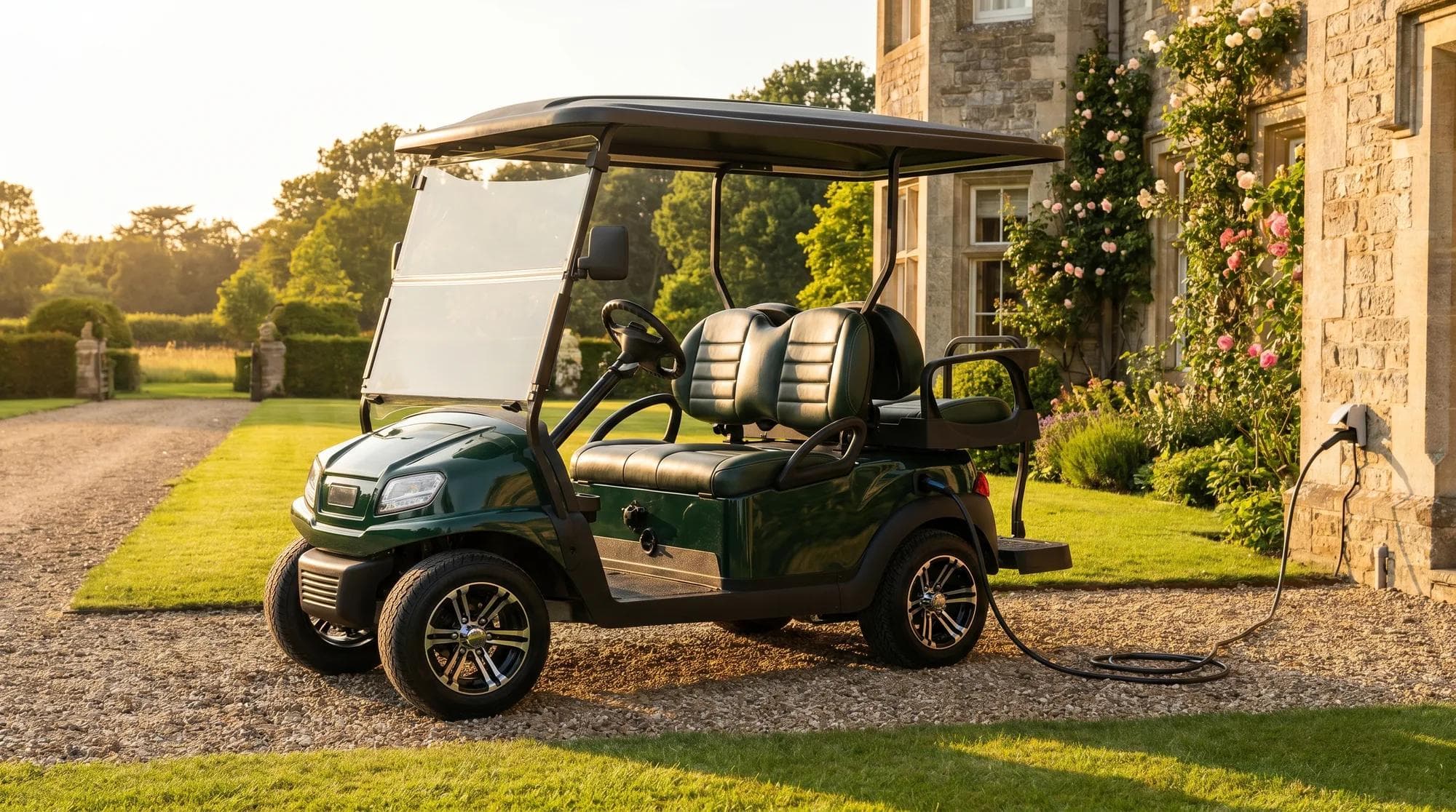
A buggy that works a normal day and rests overnight has all night to charge, which is far longer than it needs, so charge time is not a limiting factor for the typical single-shift site. It returns in the evening, charges from an ordinary supply, and is ready the next morning without anyone planning around it. This is why most estates, clubs and resorts need no special charging infrastructure at all.
What affects the charge time
The main factors are the battery size, its chemistry and how flat it is when you plug in. A larger battery holds more and takes longer to fill; a partial top-up takes less. Lithium charges faster than lead-acid and is happy with partial top-ups without harm, which suits a stop-start day, while lead-acid prefers a full, regular charge. We confirm the charge time for the specification we recommend so you know what to expect.
When a fast-charge option is worth it
Where a vehicle runs double shifts or covers exceptional daily mileage, the overnight window may be too short, and a fast-charge option or a second charge point can keep it available. This is the exception rather than the rule, so we discuss it at the survey against your actual pattern rather than fit it by default. For most sites, a standard overnight charge is all that is needed.
Frequently asked questions
How long does it take to charge an electric golf buggy?+
Most charge overnight from a standard supply and are ready by morning. The exact time depends on the battery size and chemistry and how flat it is, and we confirm it for the specification we recommend. Overnight charging means the time rarely matters in practice.
Do I need special charging equipment?+
For a typical single-shift site, no. The buggy charges from an ordinary supply in the yard or garaging. Only double-shift or exceptional-mileage use calls for a fast-charge option or a second point, which we discuss at the survey.
Can I top up a lithium battery partway?+
Yes. Lithium is happy with partial top-ups without harm, which suits a stop-start day. Lead-acid prefers a full, regular charge, one of the differences covered in our lithium versus lead-acid guide.
Will charging cost much?+
No. Charging overnight from a standard supply costs a fraction of petrol per mile, which is a large part of why electric running costs are low. Our running-costs guide sets out the ongoing side.
What if I run the buggy on double shifts?+
Then the overnight window may be too short, and a fast-charge option or a second charge point keeps it available. We size charging to your shift pattern at the survey.
Plan charging for your site
Tell us how you use the buggy and your shift pattern, and we will plan charging so it is ready when you need it, and prepare an honest quote.
Related solutions
Ready to explore what we build?
See the vehicles and the setting this applies to, or get a tailored quote built around your site.

Ready to find the right buggy?
Tell us how and where it will work and we will specify a vehicle and a tailored quote built around you. Every build comes with a 3-year warranty and a 24-hour priority call-out.
Our guides are written and reviewed by the Hawke Electric Vehicles team, the people who specify, build, deliver and support the vehicles. We focus on honest, practical advice and flag where a figure depends on the build rather than guessing.
More guides by Hawke