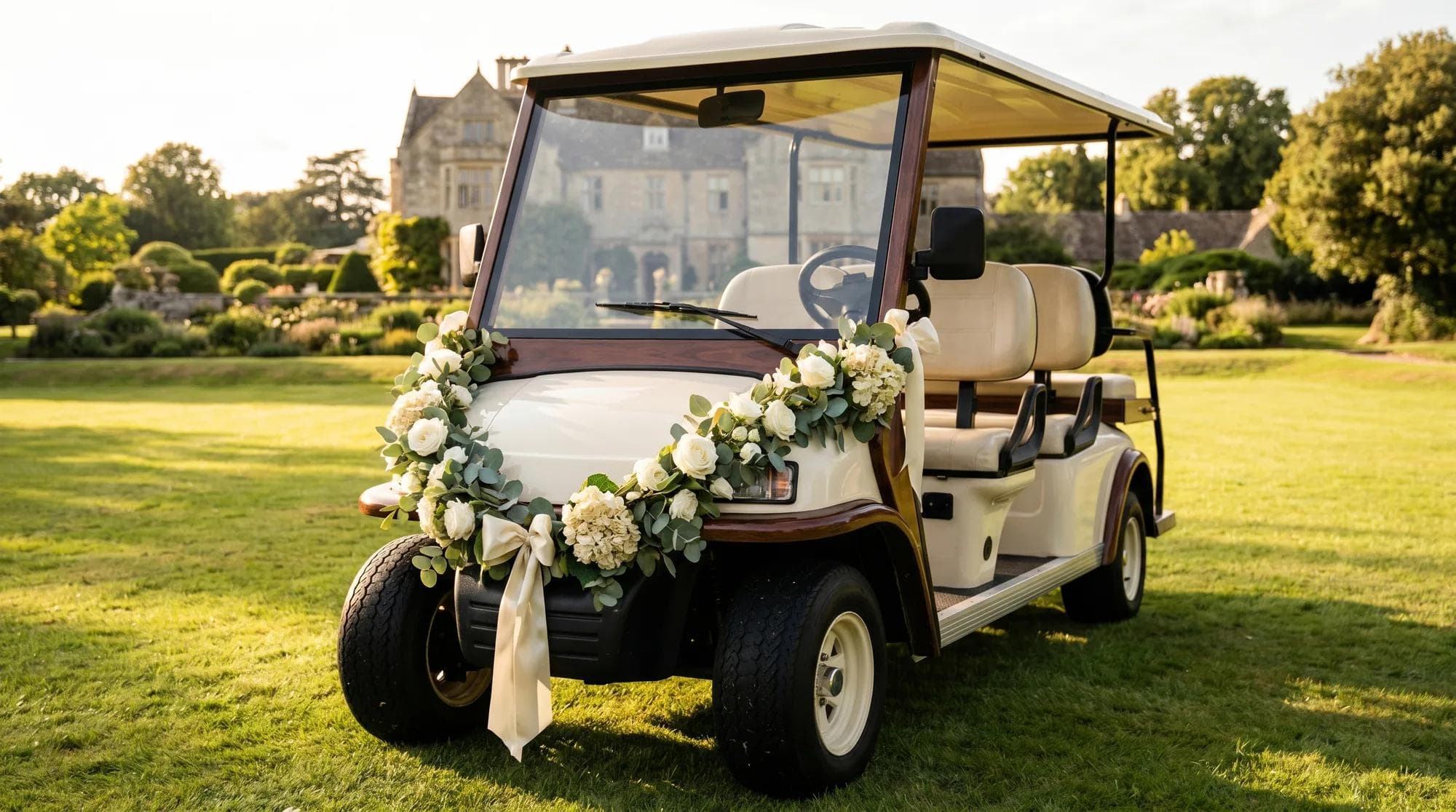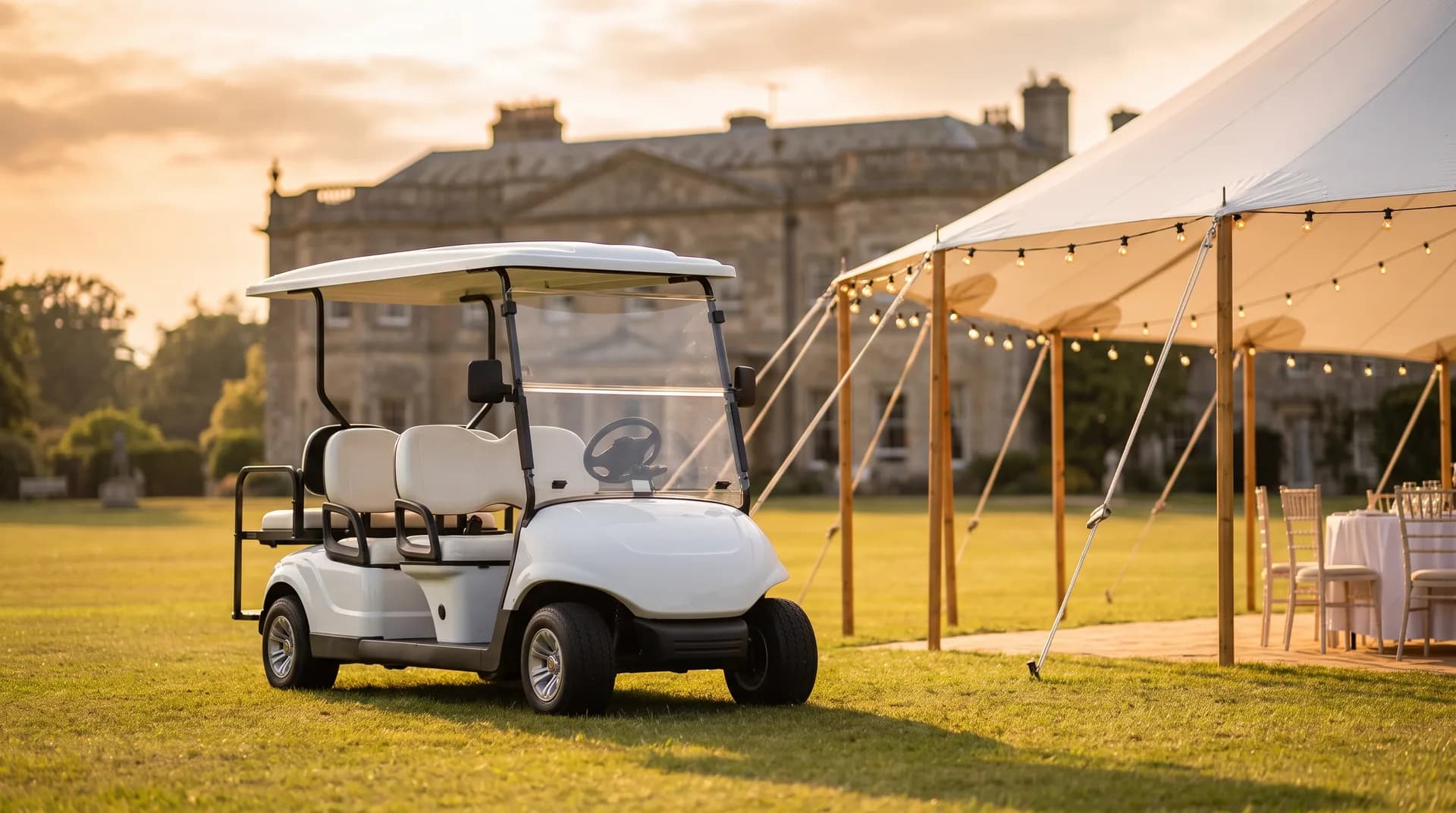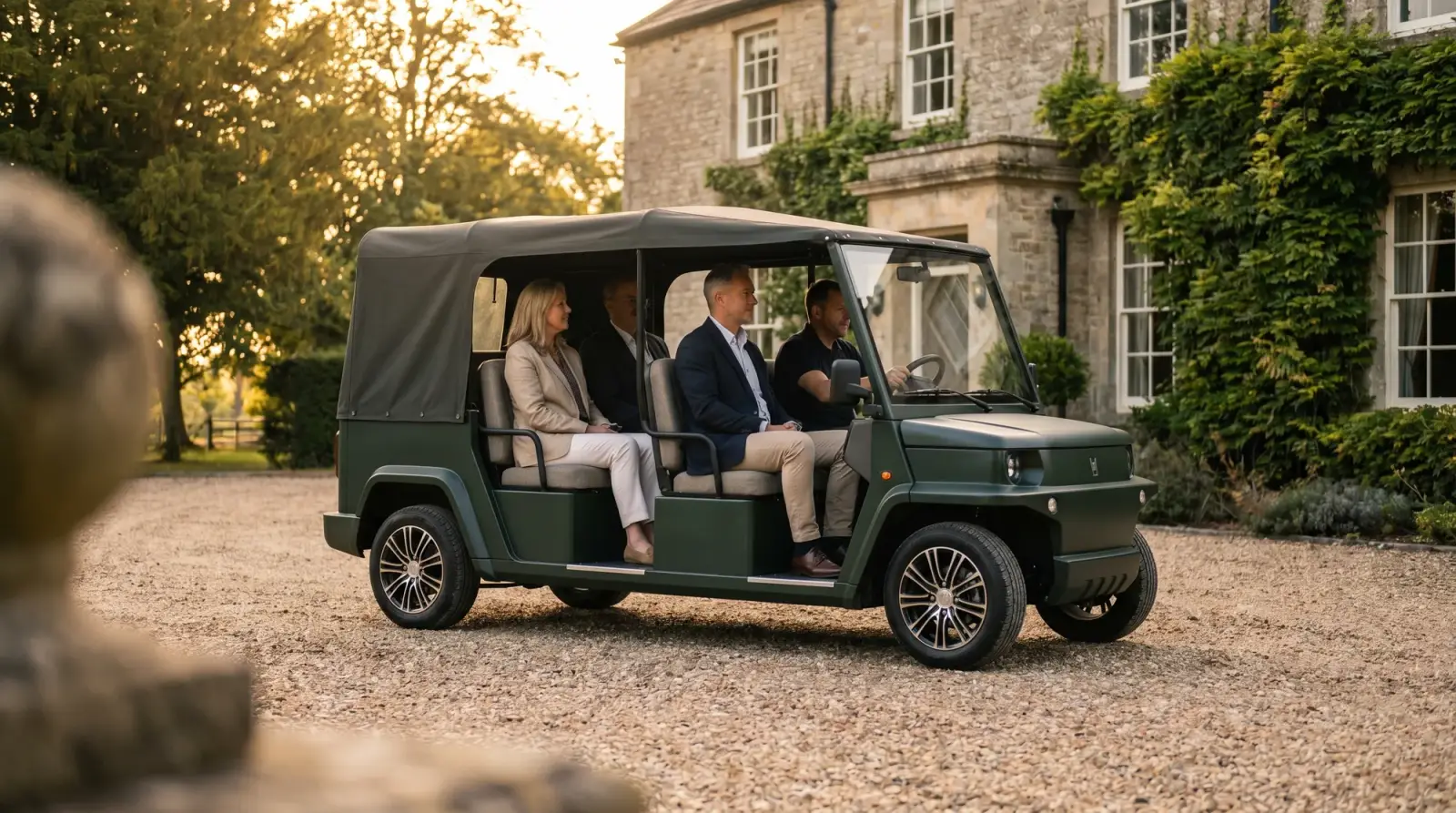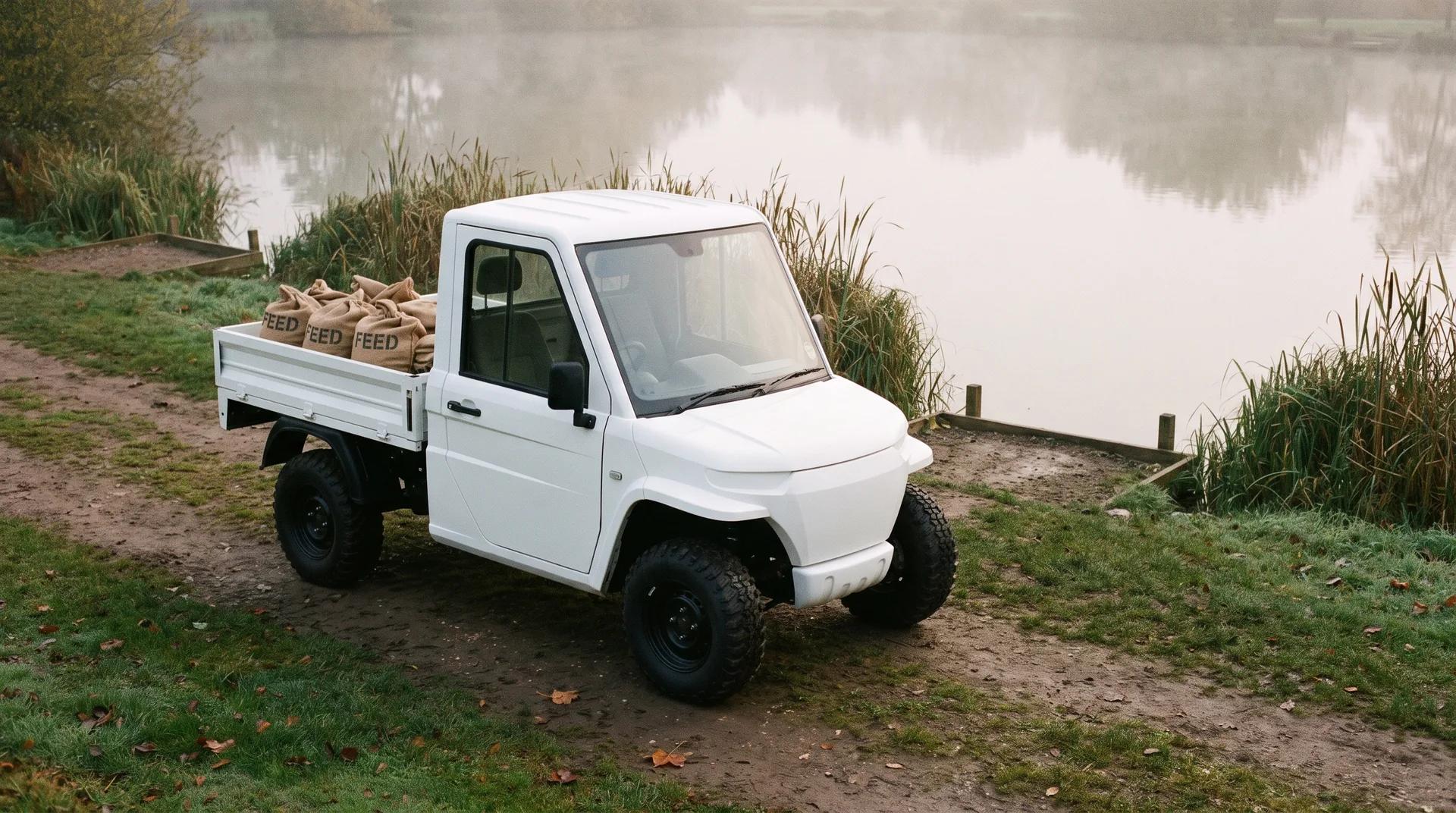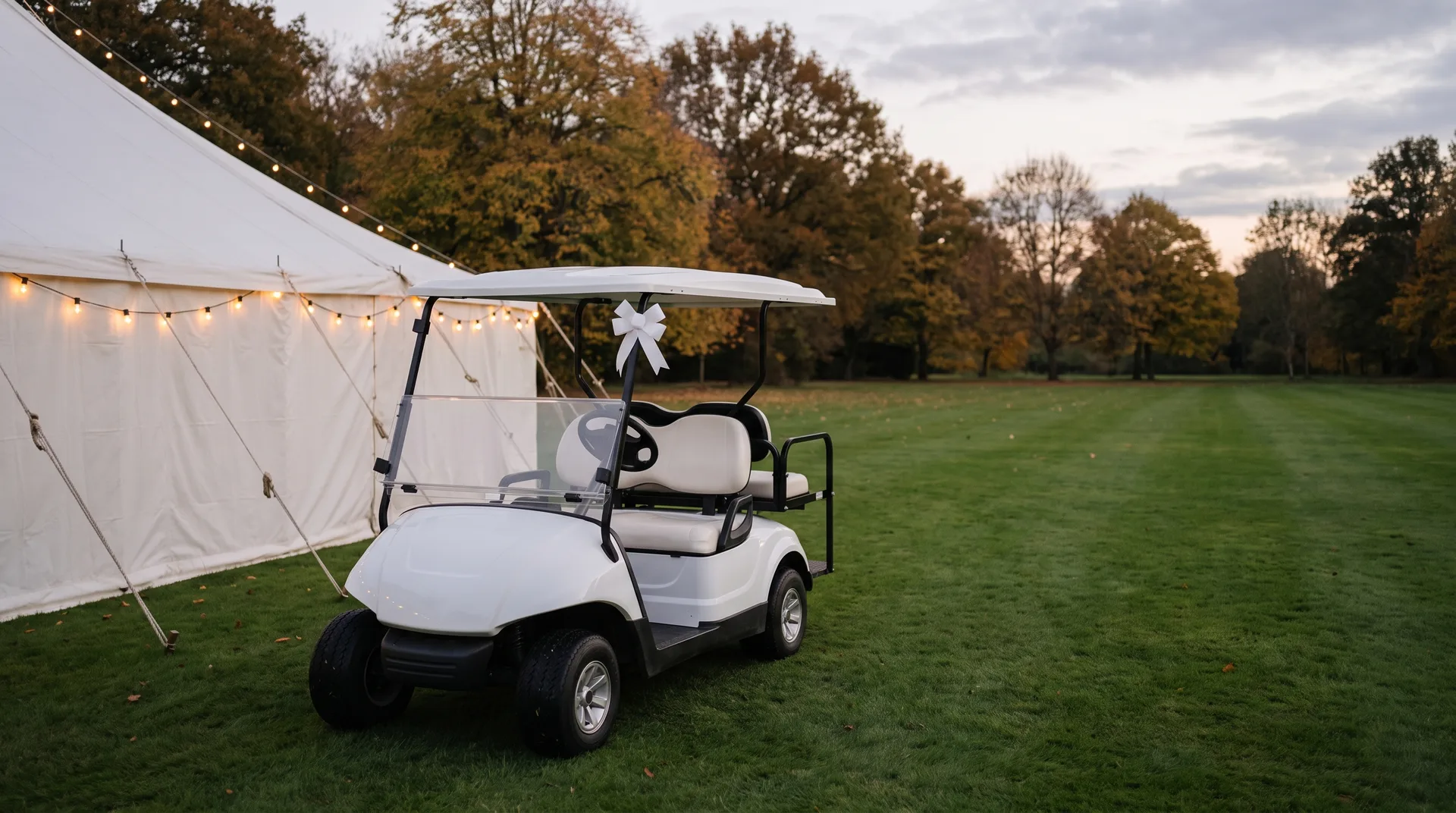
This guide is for the people who own and run wedding venues, not the couples who book them. If you are a planner or a couple looking at buggies for one day, ribbons, styling, a bridal arrival, our guide to electric buggies for weddings covers that world. Here the question is different: does a buggy earn its place as a permanent piece of venue kit, alongside the marquee, the generator and the golf-course-grade lawnmower? For venues with any real distance between car park, ceremony spot and reception, the answer is usually yes, because a wedding venue buggy solves the same four problems every single event: getting guests from gate to ceremony on time, moving people who cannot manage the walk, putting the photographer where the light is, and keeping the show running when the weather turns.
- A venue-owned buggy is operating kit that works every wedding, not styling for one: shuttles, accessibility, photographer runs and logistics.
- Accessibility is the strongest single argument: elderly and less mobile guests reach a far ceremony lawn with dignity.
- Weather protection turns a summer nicety into a year-round tool, winter weddings are where a buggy earns most.
- Buy the core capability you use every event; top up with hired buggies for peak-season volume.
- Between weddings the same vehicle does grounds work, setup and turnaround, which is where the sums quietly improve.
What a wedding venue buggy does on the day
Walk through a typical Saturday. From mid-morning the buggy is a runner: florist boxes to the ceremony arch, cases of wine to the marquee, the celebrant's PA system to the lawn. From guest arrival it becomes a shuttle, meeting cars at the gate or overflow field and running guests to the ceremony, which on estates with a long drive is the difference between a 2pm start and a 2:20 shuffle. During drinks it is the photographer's vehicle, and this is worth dwelling on: golden-hour portraits happen in a fifteen-minute window, often a quarter of a mile from the terrace, and a buggy is how the couple gets there and back without a hem dragged through a field. Through the evening it runs elderly guests back to cars and taxis. And on Sunday morning it hauls the empties, the linen and the lost property back to the house. One vehicle, six jobs, every event.
Accessibility, and why it books you more weddings
Every couple has a grandparent, and the venues that win their booking are the ones with a confident answer to how Grandma gets to the ceremony oak. A buggy is that answer. It moves guests with limited mobility, wheelchairs folded on the back where specified, from car to ceremony to reception with dignity and without singling anyone out, and it lets you say yes to the far lawn, the lakeside spot and the woodland clearing for every guest list, not just the able-bodied ones. Venues within the scope of accessibility law will want their own advice on what reasonable adjustments require of them; commercially, the point is simpler, the venues that can promise door-to-ceremony transport sell the whole estate, not the accessible corner of it. Our guide to estate event and wedding transport covers the larger-estate version of the same thinking.
Winter weddings and weather: the underrated case
Summer justifies a buggy; winter is where it becomes indispensable. A December wedding means guests in evening dress crossing a dark, wet estate, a ceremony barn a long way from the car park, and a couple who still want portraits by the frosted avenue. A buggy specified with a roof, windscreen, doors and lights carries all of that: dry guests, on-time ceremonies, and a photographer who can chase the last of the light at 3:45pm. Electric drive helps in ways couples notice without naming, no engine idling outside the ceremony, no fumes by the doorway, just a quiet vehicle that appears and disappears. For the venue, lithium batteries charge overnight from a standard supply, cost pence per mile to run, and are unbothered by the stop-start duty cycle of event days. Winter care is routine, covered in our winter storage guide for the quiet weeks in January.
Buy the core, hire the peak: fleet shape for wedding venues
Most venues do not need to own a fleet. The pattern that works is to own the capability you use at every event, typically one four or six-seat passenger buggy, with doors for winter, and add hired vehicles for the big days: the 200-guest summer wedding, the festival weekend, the corporate season. Owning the core vehicle means it is always there, liveried in your colours, driven by staff who know the ground, and available between weddings for grounds work, setup runs and turnaround days, which is where the economics quietly improve, one machine doing venue-kit duty seven days a week. Hiring the peak means you never pay for capacity that sits idle from November to March; our guide to wedding buggy hire costs sets out that side. As a marker of the buying side, four-seat passenger models start from £14,900 and six-seaters from £18,900 in our electric golf buggy range, specified to venue duty rather than golf.
- Own a venue buggy
- Always on site, every event and viewing
- Hire per event
- Booked per date, subject to season
- Own a venue buggy
- Purchase plus pence-per-mile running
- Hire per event
- Per-event fee, no capital
- Own a venue buggy
- Your livery, permanently
- Hire per event
- Generic, or temporary decals
- Own a venue buggy
- Grounds work, setup, viewings
- Hire per event
- Not there
- Own a venue buggy
- Venues running events most weeks
- Hire per event
- Occasional events and peak top-ups
| Own a venue buggy | Hire per event | |
|---|---|---|
| Availability | Always on site, every event and viewing | Booked per date, subject to season |
| Cost shape | Purchase plus pence-per-mile running | Per-event fee, no capital |
| Branding | Your livery, permanently | Generic, or temporary decals |
| Between weddings | Grounds work, setup, viewings | Not there |
| Best for | Venues running events most weeks | Occasional events and peak top-ups |
Specifying it well
Seats first: four moves a couple and photographer, six moves a family, and venues with long drives often settle on six. Doors, roof and screen unless your season genuinely ends in September. Turf tyres to protect the lawns the whole business is photographed on. Lights for winter evenings. A rear rack or small bed for the runner duties, luggage, florist boxes, the PA. Livery in venue colours, because the buggy appears in the background of wedding photographs for the next decade. And a proper handover for the staff who will drive it, with house rules on routes and drivers set by you, keys with staff, not guests.
Frequently asked questions
Is a buggy worth it for a venue that runs weddings weekly?+
Usually, yes. It works every event, shuttles, accessibility, photographer runs, logistics, and between events it does grounds and setup work. Venues with real distance between car park, ceremony and reception get the most from one.
Should a venue buy or hire?+
Own the core capability you use at every event, typically one four or six-seat buggy with weather protection, and hire additional vehicles for peak dates. That keeps capital modest and capacity flexible.
What about couples who want a styled buggy for their day?+
That is the one-day world our separate weddings guide covers, styling, ribbons, arrivals. A venue-owned buggy can be dressed for any given wedding, which is a selling point when couples ask.
Can it carry guests with mobility needs?+
Yes, and for many venues that is the strongest argument: elderly and less mobile guests reach far ceremony spots with dignity. Specify wheelchair carriage at the outset, and take your own advice on what accessibility law asks of your venue.
What does a venue buggy cost?+
As a marker, four-seat passenger models start from £14,900 and six-seaters from £18,900, with weather protection, tyres and livery specified to your site. We quote to specification, so tell us about your estate.
Specify a buggy for your venue
Tell us about your estate, the distances, the ground and your winter season, and we will specify and price a wedding venue buggy that earns its keep every event.
Ready to find the right buggy?
Tell us how and where it will work and we will specify a vehicle and a tailored quote built around you. Every build comes with a 3-year warranty and a 24-hour priority call-out.
Our guides are written and reviewed by the Hawke Electric Vehicles team, the people who specify, build, deliver and support the vehicles. We focus on honest, practical advice and flag where a figure depends on the build rather than guessing.
More guides by Hawke