Who invented the golf buggy? No single person owns the credit cleanly, but the machine as we know it is widely credited to American inventors and small workshops of the early 1950s, who built simple battery-powered carts so that golfers who found walking difficult could keep playing. From that modest, practical beginning the buggy spread across American golf within a generation, crossed the Atlantic rather more slowly into Britain's walking-first club culture, survived a long argument between petrol and electric power, and has ended up somewhere its inventors never imagined: working daily at hotels, festivals, film studios and country estates as a general-purpose light electric vehicle. This is the story in brief.
- Motorised golf carts emerged in the United States around the early 1950s, initially as mobility aids for golfers.
- Electric power was there at the start; petrol variants grew alongside it, and the two competed for decades.
- Fleets transformed golf operations from the 1960s onwards, making carts a revenue line as well as a convenience.
- Britain adopted the buggy later and more selectively, hire-first, within a culture that still prizes walking golf.
- Lithium batteries and diversification beyond golf define the current chapter of the machine's history.
The history of the golf buggy begins in mid-century America
The earliest motorised carts on golf courses appeared in the United States in the years around and after the Second World War, home-built and experimental more often than not, and the first machines produced in any real numbers followed in the early 1950s. The detail of who was truly first is genuinely contested, several inventors and small firms have fair claims, which is why careful histories credit the era rather than a name. What is not contested is the original purpose: these were mobility machines, built so that older golfers and those with limited walking ability could complete eighteen holes. The able-bodied convenience market came second. Early carts were crude, three or four small wheels, a bench, a tiller or simple wheel, lead-acid batteries and modest range, but the essential formula, a quiet, compact, low-speed electric runabout, was there from the first, and it has never fundamentally changed, as our plain-English guide to what a golf buggy is shows.
Petrol versus electric, and the rise of the fleet
Through the 1960s and 1970s the cart moved from novelty to institution in American golf. Purpose-built manufacturers scaled up, courses discovered that a cart fleet was not just a convenience but a revenue line, and course architecture itself began to accommodate the machine, with paths, longer distances between greens and layouts that assumed riding. Petrol-powered carts grew alongside electric through this era, favoured where range and hill work demanded more than the batteries of the day could give, and the two chemistries competed for decades. The long arc, though, ran electricity's way: quieter, cleaner, cheaper to run and mechanically simpler, electric carts suited the enclosed, stop-start world of a golf course, and as battery and motor technology improved the balance tipped steadily until electric became the default and petrol the exception. The technology inside that shift is the subject of our guide to how electric buggies work.
The history of the golf buggy in Britain
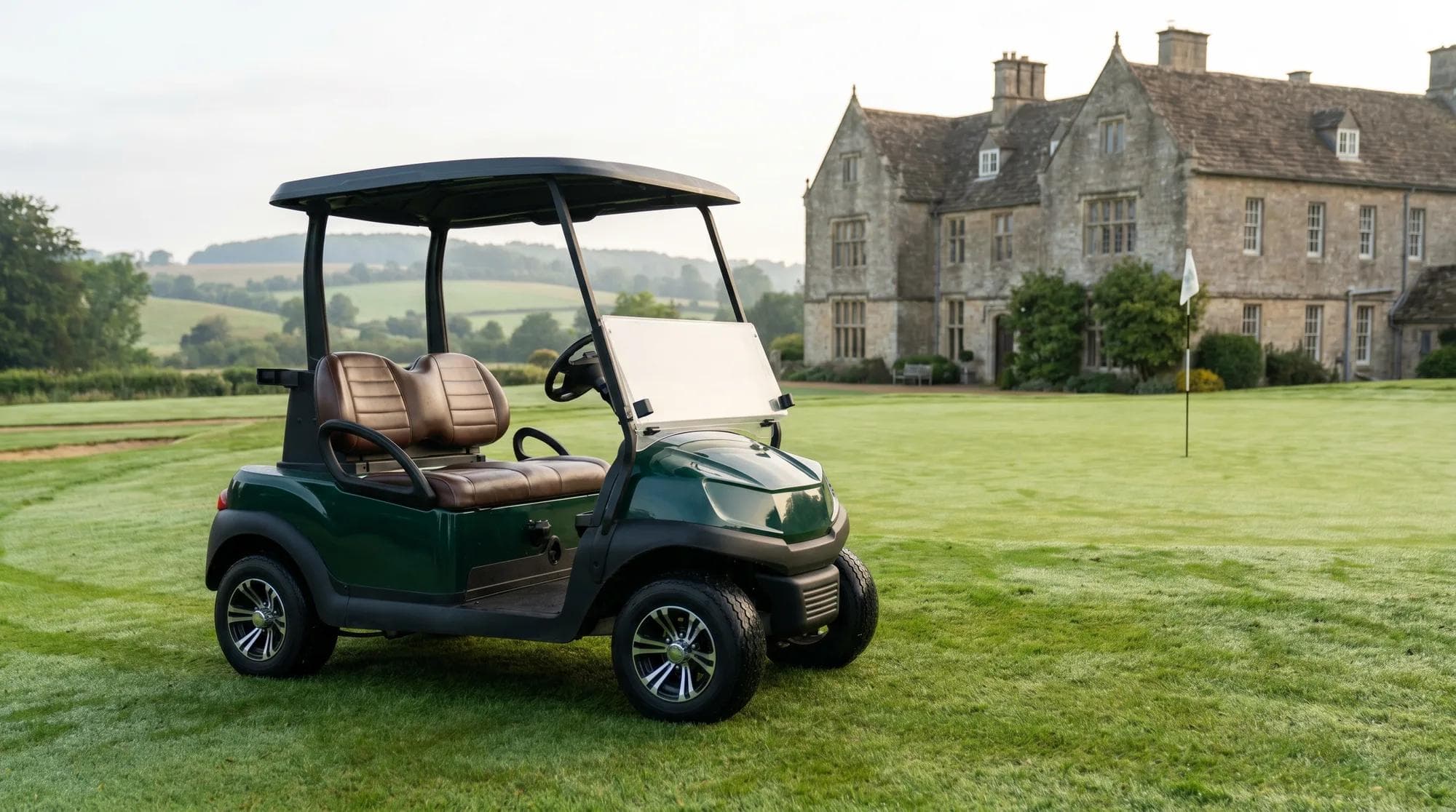
Britain took to the buggy later, more slowly and more selectively than America, and the reason is cultural as much as practical. British golf grew up as a walking game, many members' clubs and classic links regard walking as part of the sport, and wetter turf on older, tighter courses gave greenkeepers honest reasons for caution. So the buggy arrived here mostly as a hire machine, a small fleet by the pro shop for members who needed one, for visitors, and for hot summer weekends, rather than as something every golfer owned. Terminology diverged along the way too: what America calls a golf cart, Britain came to call a buggy, a small linguistic split our buggy versus cart guide untangles. Over time the machine's accessibility role, the very purpose it was invented for, became central to its British life, keeping thousands of golfers playing who could not otherwise manage the course, and buggy fleets are now a normal part of club operations at the majority of venues, even where walking remains the badge of honour.
- Power and technology
- Early battery-electric carts, lead-acid, basic controls
- Where it worked
- US courses, as mobility aids
- Power and technology
- Mass production; petrol variants grow alongside electric
- Where it worked
- Fleets across American golf
- Power and technology
- Better controllers and chargers; electric overtakes petrol
- Where it worked
- UK hire fleets become commonplace
- Power and technology
- Lithium batteries, efficient motors, longer range
- Where it worked
- Venues, estates, events and sites beyond golf
| Power and technology | Where it worked | |
|---|---|---|
| 1950s | Early battery-electric carts, lead-acid, basic controls | US courses, as mobility aids |
| 1960s-1970s | Mass production; petrol variants grow alongside electric | Fleets across American golf |
| 1980s-2000s | Better controllers and chargers; electric overtakes petrol | UK hire fleets become commonplace |
| 2010s onwards | Lithium batteries, efficient motors, longer range | Venues, estates, events and sites beyond golf |
Beyond the course: the buggy's second career
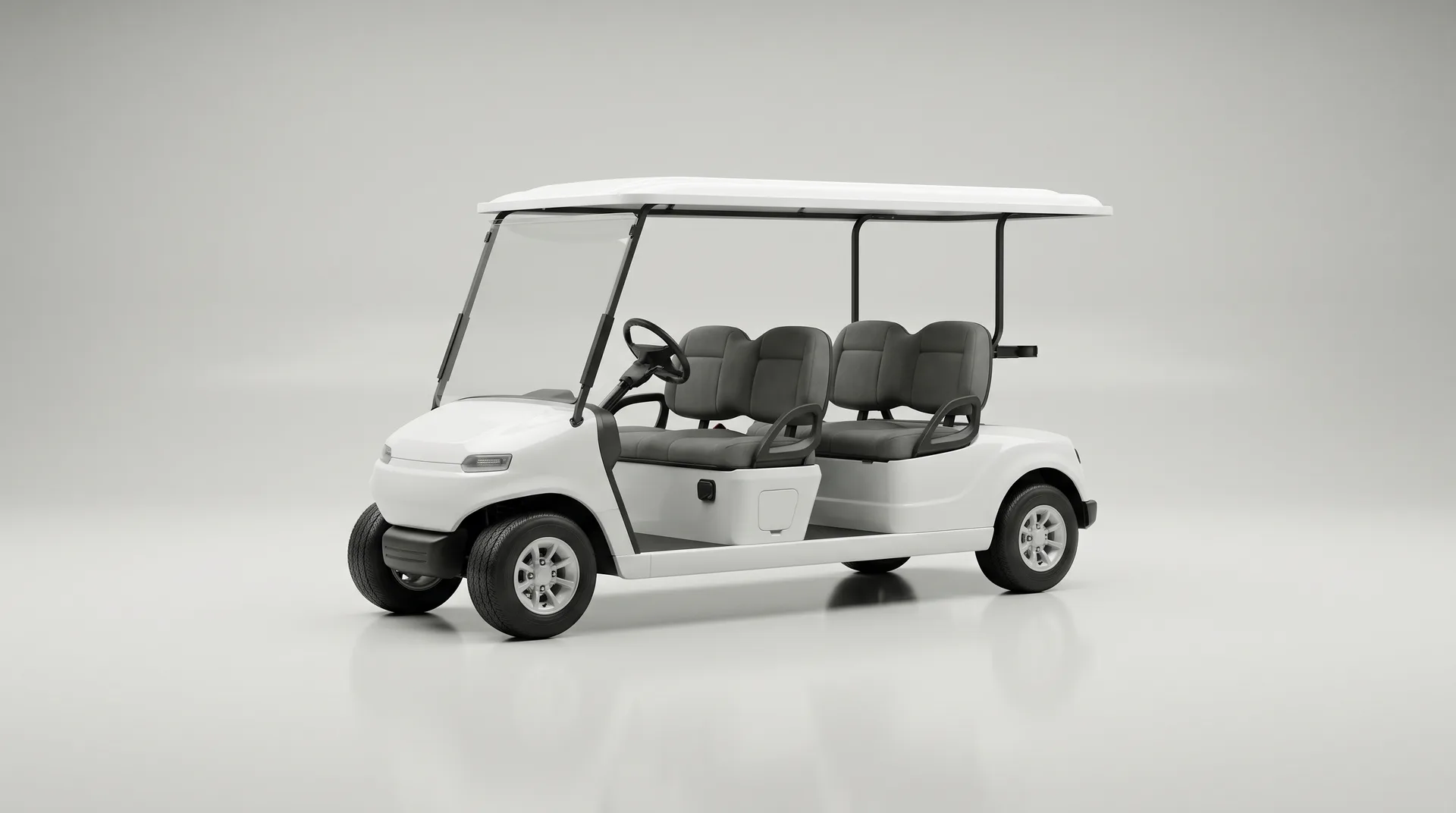
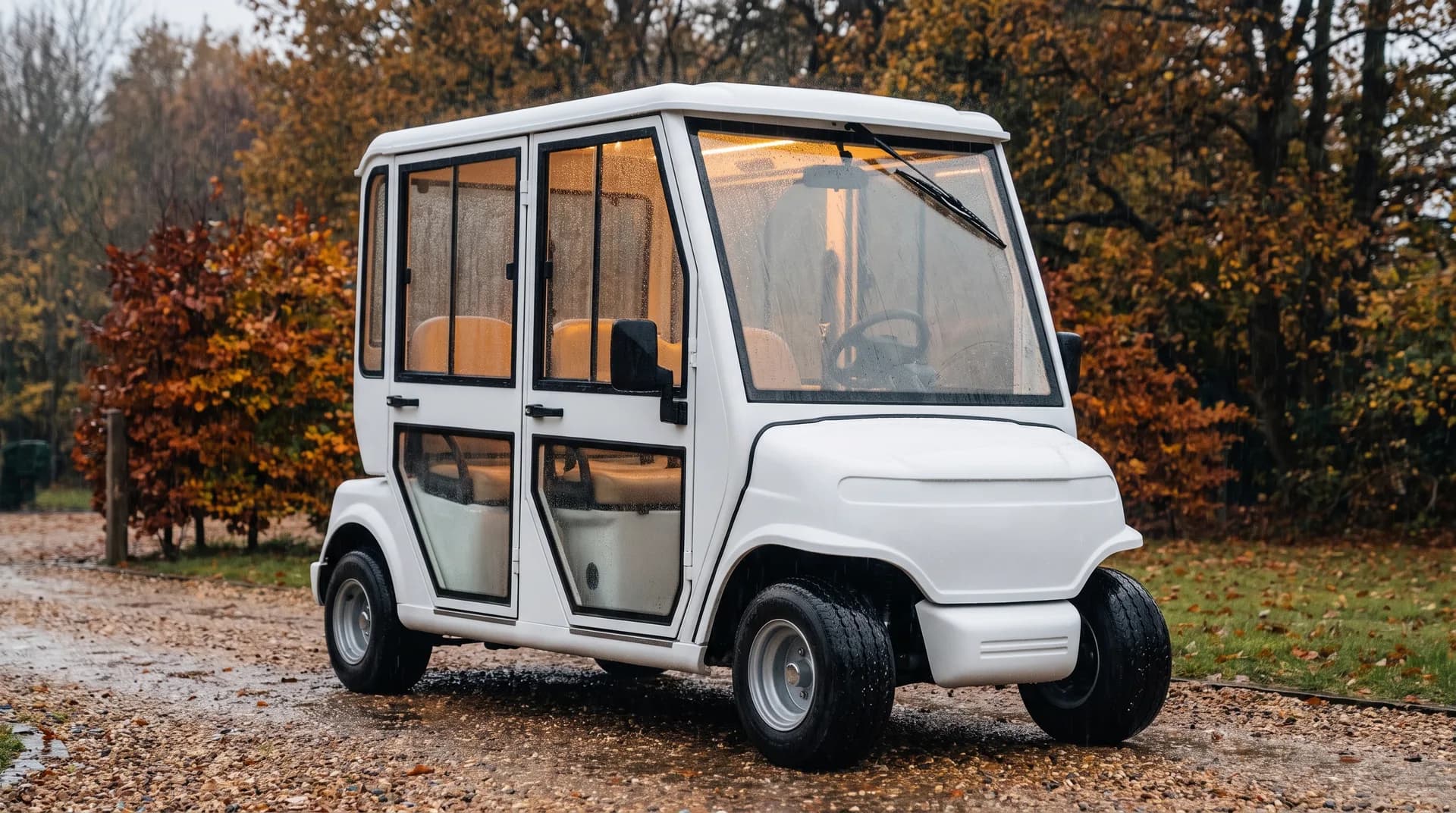
The most recent chapter is the machine outgrowing its name. Two changes drove it. Lithium batteries removed the old compromises, more range, faster charging, less weight, minimal maintenance, at the same time as organisations of every kind started looking for quiet, zero-tailpipe-emission transport for their sites. The buggy, refined by decades of golf duty into a cheap, reliable, low-speed people-mover, was exactly the right machine at the right moment. Today the same platforms that serve a golf club also shuttle wedding guests, patrol estates, carry maintenance crews at stadiums and theme parks, move patients across hospital sites and run production teams around film studios, and the model range has diversified to match, from two-seaters to multi-seat shuttles and load-carrying utility variants, as our guide to the types of golf buggy lays out. A machine invented so a few Americans could keep playing golf has become general-purpose site transport, and you can see its modern descendants in our electric golf buggies.
Frequently asked questions
Who invented the golf buggy?+
No single inventor owns the credit cleanly. Motorised carts appeared on US courses around the mid-20th century, and the machines produced in real numbers are widely credited to American inventors and small firms of the early 1950s, several of whom have fair claims to being first.
Why were golf buggies invented?+
As mobility aids. The earliest carts were built so that older golfers and players with limited walking ability could complete a round. The convenience market for able-bodied golfers came afterwards, and accessibility remains a core role of buggy fleets today.
Were the first golf buggies electric or petrol?+
The early machines of the 1950s were mostly battery-electric, with petrol variants growing alongside them in the following decades. The two competed for years before electric became the clear default as battery and motor technology improved.
When did golf buggies become common in the UK?+
Gradually, and later than in America. British golf's walking culture meant buggies arrived mainly as small hire fleets rather than personal purchases, becoming a normal part of club operations over recent decades while walking golf remained the norm.
Why are golf buggies now used outside golf?+
Because decades of golf duty produced a cheap, quiet, reliable low-speed electric vehicle at exactly the moment venues, estates and event sites wanted zero-tailpipe-emission transport. Lithium batteries removed the old range and maintenance compromises, and the same platforms now work far beyond the course.
The modern chapter starts here
Seventy years of refinement produced today's machines: quiet, capable and at home far beyond the golf course. Tell us what yours needs to do and we will build the quote.
Related solutions
Ready to explore what we build?
See the vehicles and the setting this applies to, or get a tailored quote built around your site.
Ready to find the right buggy?
Tell us how and where it will work and we will specify a vehicle and a tailored quote built around you. Every build comes with a 3-year warranty and a 24-hour priority call-out.
Our guides are written and reviewed by the Hawke Electric Vehicles team, the people who specify, build, deliver and support the vehicles. We focus on honest, practical advice and flag where a figure depends on the build rather than guessing.
More guides by Hawke