For a facilities manager, the case for electric site vehicles comes down to one metric and two disciplines. The metric is response time: on a multi-building campus, the distance between the FM workshop and the failed door, leaking valve or stranded lift is walked many times a day, and an engineer with a buggy carrying their tools and parts reaches the job in a fraction of the time and arrives ready to fix it, not to survey it and walk back. The disciplines are uptime and compliance, keeping the vehicles themselves available, charged and inspected within a regime an FM audit will recognise. This guide covers how facilities management vehicles earn their place on hospitals, business parks, universities, retail estates and industrial campuses, and how to run them properly once they arrive.
- The core value is engineer response: ride to the fault with tools and parts aboard, fix on first visit more often.
- A load bed matters more than seats for FM work, parts, ladders, consumables and waste travel with the engineer.
- PPM rounds by vehicle cover more assets per shift, and the buggy carries the kit the round needs.
- Compliance is manageable: routine inspection, planned maintenance and driver rules sit naturally inside an FM regime.
- Charging infrastructure is modest, standard supplies at the workshop cover most fleets overnight.
Why facilities management vehicles cut response times
Take an honest look at where an FM engineer's shift goes on a large site. A meaningful slice is transit: workshop to job, job to stores for the part nobody carried, stores back to job. A site buggy attacks all three legs. The engineer rides rather than walks, the common parts and the toolbox travel on the vehicle, and the trip back to stores often disappears because the fix was aboard. Reactive tickets close faster, and the gap between response time, when someone arrived, and rectification time, when it was fixed, narrows, which is the number your service-level reporting actually cares about. On sprawling sites, hospitals, airports landside, logistics parks, universities, the effect is largest, but even a business park of a few connected buildings sees the transit slice shrink. Our guide to staff transport on large sites covers the people-moving side of the same estate.
Parts, tools and PPM: the load bed does the work
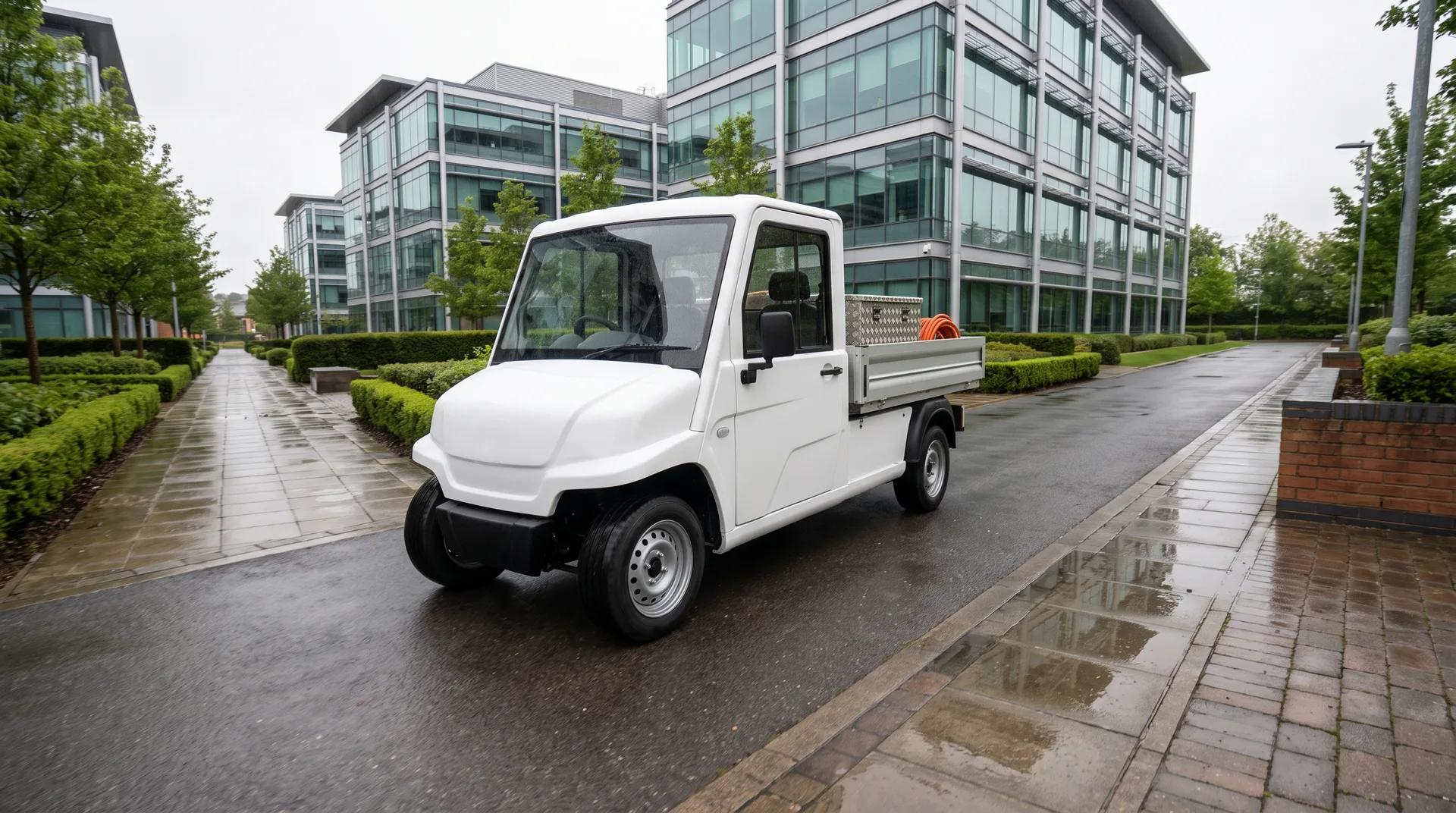
FM buyers sometimes reach for a passenger buggy because it looks like the familiar thing, then discover the real workhorse is the load bed. An engineer's day involves ladders, tool chests, spares, filters, lamps, consumables and waste, and a compact utility vehicle, two seats and a half-tonne bed, our S2 Pickup starts at £15,900, carries all of it. Planned preventative maintenance rounds change shape too: a PPM round by vehicle covers more assets per shift, carries the filters and belts the round will consume, and brings the old parts back for disposal in the same pass. Fit-out is worth specifying properly, lockable weatherproof boxes for tools left aboard, racking sized to your standard crates, a tow hitch if you shift waste cages or gritting trailers, and lights for plant compounds and early winter shifts. For grounds-heavy estates, our estates and grounds maintenance vehicles guide covers the outdoor end of the same fleet.
Compliance: running fm site vehicles an audit will pass
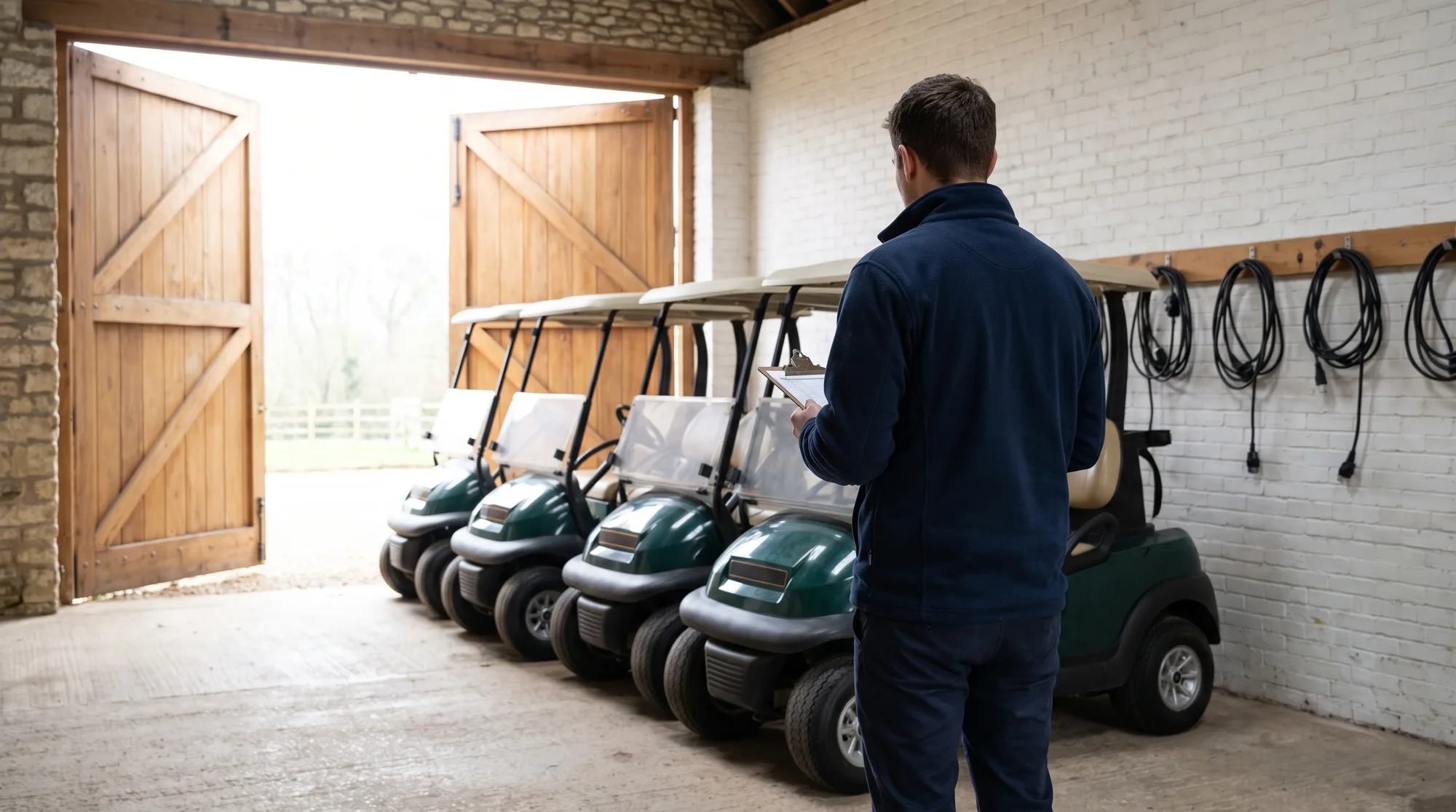
Site vehicles used at work fall within workplace equipment duties, so run them like the rest of your maintained asset base: pre-use checks recorded, defects reported and quarantined, planned maintenance on schedule, chargers inspected within your electrical testing regime, and drivers authorised and inducted with site rules on speed, routes and pedestrian areas set by you as the operator. Our guide to buggy fleet compliance, PUWER and PAT sets out the framework in detail. None of this is exotic to a facilities manager, it is the same discipline you apply to access equipment, and an electric fleet makes parts of it easier: no fuel storage on site, no exhaust emissions in loading bays or covered walkways, and low noise that lets vehicles work around occupied buildings, early shifts and hospital wards without complaint. Where vehicles never touch the public road, licensing is generally not the issue, site rules are, but hedge anything route-specific to your own site's arrangements and your insurer.
- On foot with a trolley
- Slow, limited kit carried
- Vans between buildings
- Fast on roads, poor at doors and paths
- Electric utility buggy
- Fast, door to door on site paths
- On foot with a trolley
- What fits on a trolley
- Vans between buildings
- Full load, often parked far from the job
- Electric utility buggy
- Half-tonne bed, parked at the job
- On foot with a trolley
- Fine
- Vans between buildings
- Emissions and size rule most out
- Electric utility buggy
- Quiet, zero-emission, compact
- On foot with a trolley
- Engineer time
- Vans between buildings
- Fuel, servicing, parking pressure
- Electric utility buggy
- Pence per mile, light servicing
- On foot with a trolley
- Minimal
- Vans between buildings
- Full road fleet regime
- Electric utility buggy
- Workplace equipment regime, easily absorbed
| On foot with a trolley | Vans between buildings | Electric utility buggy | |
|---|---|---|---|
| Response to a fault | Slow, limited kit carried | Fast on roads, poor at doors and paths | Fast, door to door on site paths |
| Parts and tools | What fits on a trolley | Full load, often parked far from the job | Half-tonne bed, parked at the job |
| Indoor and covered areas | Fine | Emissions and size rule most out | Quiet, zero-emission, compact |
| Running cost | Engineer time | Fuel, servicing, parking pressure | Pence per mile, light servicing |
| Compliance burden | Minimal | Full road fleet regime | Workplace equipment regime, easily absorbed |
Charging infrastructure and fleet uptime
The charging question is smaller than most FM teams expect. These vehicles charge from standard supplies, so a typical fleet needs little more than dedicated, tested sockets at the workshop or plant compound, one per vehicle, with charging overnight covering a full shift of site work. Lithium batteries suit FM duty cycles, stop-start running with long parked periods, and support opportunity charging over lunch where a vehicle works double shifts. Plan uptime the way you plan it for any critical plant: a named keeper per vehicle or per shift, state-of-charge on the handover checklist, planned maintenance scheduled in quiet periods, and, on larger fleets, one vehicle's worth of headroom so an inspection never takes your response capability to zero. Electric drivetrains have few consumables, which keeps planned downtime short; the running costs guide sets out what upkeep actually involves. When you are ready to shape a fleet, the utility range shows the platforms and bodies available.
Frequently asked questions
What is the best vehicle type for an FM team?+
Usually a compact two-seat utility vehicle with a load bed, not a passenger buggy: the engineer's tools, parts and waste travel with them, which is where the response-time gain comes from. Add passenger models only where moving people is a distinct need.
Do site buggies need an MOT or road licensing?+
Not for use on private sites that never touch the public road, there the governing regime is workplace equipment duties and your own site rules. Any public-road crossing changes the picture, so map your routes and take advice before specifying.
What compliance regime should FM vehicles sit in?+
The one you already run: recorded pre-use checks, defect reporting, planned maintenance, charger testing within your electrical regime, and authorised, inducted drivers. Our PUWER and PAT fleet compliance guide sets out the detail.
What charging infrastructure does a fleet need?+
Modest: dedicated, tested standard sockets where the vehicles park, one per vehicle, with overnight charging covering a normal shift. Lithium fleets can opportunity-charge during breaks where vehicles work extended hours.
How many vehicles does a site need?+
Size to your engineer shifts and estate, not your building count: a common starting point is one utility vehicle per mobile engineer team on shift, plus headroom on larger fleets so maintenance never removes your last vehicle. Start small; utilisation data will tell you quickly.
Shape an FM fleet for your site
Tell us about your estate, buildings, distances, engineer shifts and what travels with them, and we will specify and price facilities management vehicles for the way your site actually works.

Ready to find the right buggy?
Tell us how and where it will work and we will specify a vehicle and a tailored quote built around you. Every build comes with a 3-year warranty and a 24-hour priority call-out.
Our guides are written and reviewed by the Hawke Electric Vehicles team, the people who specify, build, deliver and support the vehicles. We focus on honest, practical advice and flag where a figure depends on the build rather than guessing.
More guides by Hawke