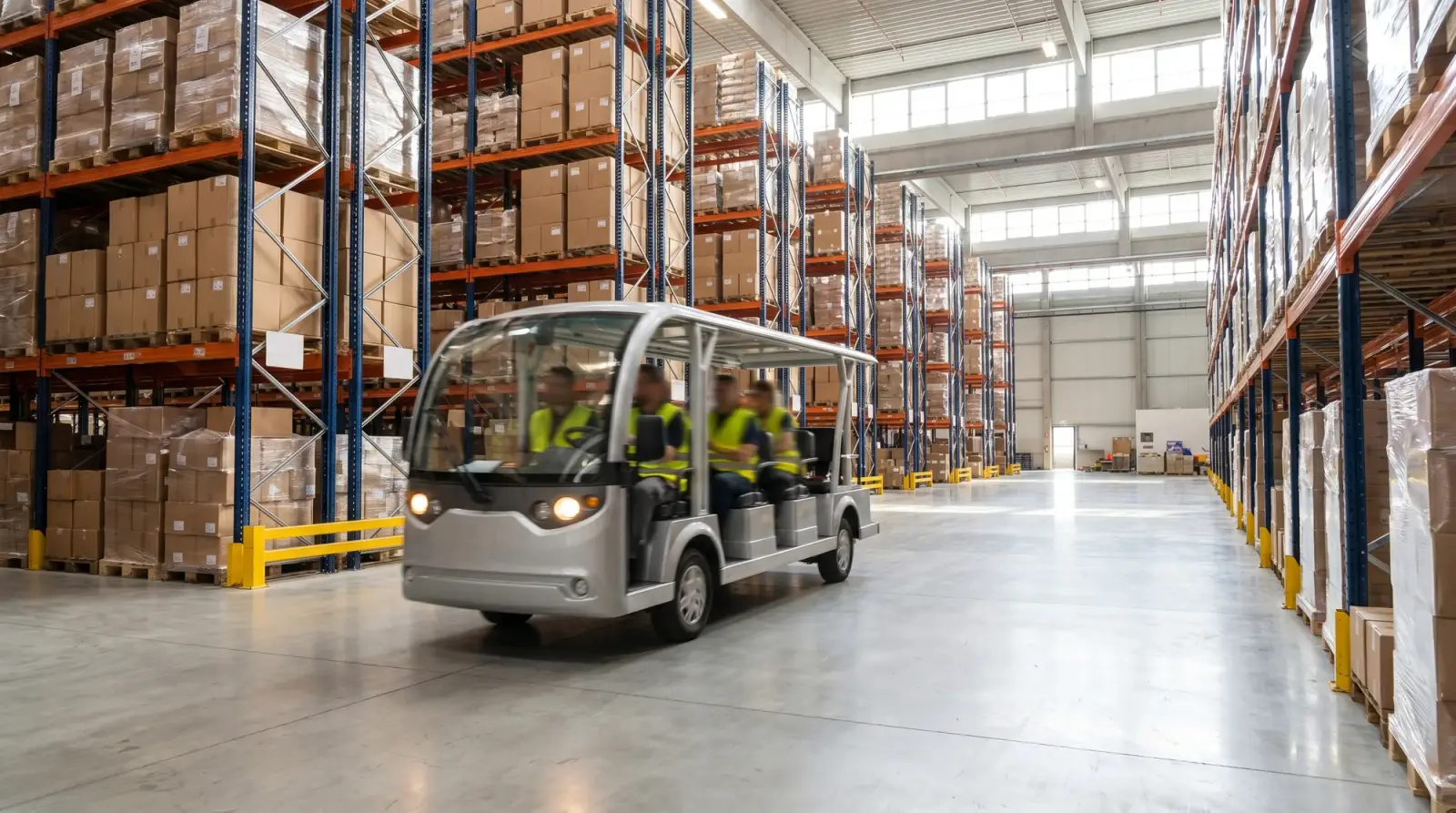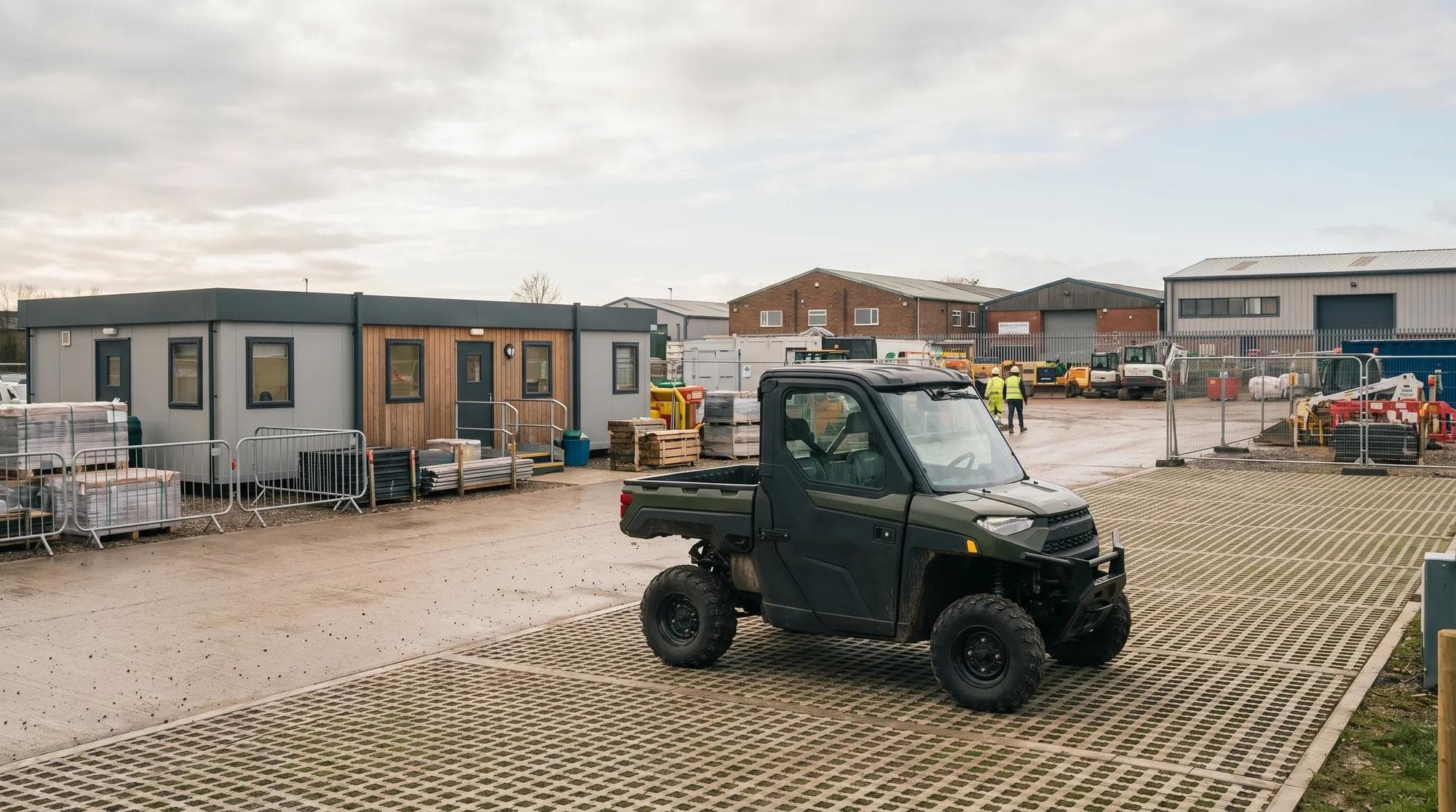
Big sites eat time. A foreman who needs to get from the gate to the far corner, a visitor who has to be walked to a meeting, a welfare run at break time: on a spread-out works that's a lot of minutes lost to walking. An electric buggy fixes that. It carries people and light kit across the site quietly, with no fumes and very little to service. Let's be clear up front about what it is and isn't: this is construction site transport for personnel and light loads, not a stand-in for excavators, dumpers or anything that lifts and digs. Heavy plant isn't us. People and light transport is.
What construction site transport actually does on site
Think of it as the site's runabout. It moves the people and the small stuff so the big machines and the workforce can get on with the job. On a large or linear site, the distances add up fast, and a quiet electric vehicle covers them without adding noise or exhaust to an already busy environment.
- Personnel transport. Move site managers, trades and supervisors between compound, stores and the work face without the long walk.
- Visitor and client runs. Collect a visitor from the gate, run them to the site office or a viewing point, and back, without leaving them to find their own way across an active site.
- Welfare runs. Shuttle teams to and from canteens, drying rooms and toilets at break, which on a big site can be a long way from where people are working.
- Light kit and materials. Carry tools, fixings, small materials, surveying gear, samples and PPE, the things that don't need a forklift but are a nuisance to carry by hand.
If your interest is moving groups quickly between fixed points, like gate to compound to office, that's shuttle work, and our guide to electric people movers and shuttles goes deeper on sizing and routes.

Where we stop: people and light kit, not heavy plant
An honest dealer tells you what a vehicle can't do. A buggy is not plant. It won't lift, dig, tip or shift the heavy loads a telehandler or dumper handles, and you shouldn't try to make it. What it does well is carry people and light loads across distance, reliably and quietly, all day. So it sits alongside your plant rather than replacing any of it. Get the job right and it earns its keep; ask it to do plant's work and it won't.
It's the vehicle that moves people and the small stuff so your plant and your trades can crack on.
Is it safe to run a buggy on a live site?
Safety on a working site is the first question, and it's the right one. A buggy shares space with pedestrians, plant and traffic, so it has to be managed like any other site vehicle, not treated as a toy. The good news is that an electric buggy brings a few safety advantages of its own.
It's slow and predictable by nature, so it's easy to drive carefully in tight or busy areas. It's quiet, which is a comfort win, though it also means you can't rely on engine noise to announce it, so a beacon, horn and good visibility matter. And with no exhaust, it's far better in enclosed or partially enclosed spaces than a petrol vehicle. None of that removes the need for sensible rules.
We can specify the practical safety kit to suit your site, from a flashing beacon and reversing aid to hi-vis branding and weather protection, so the vehicle fits your traffic management plan rather than fighting it. Tell us how the site is laid out and we'll build it around that.
Load and terrain: matching the buggy to the ground
Construction ground is rarely a smooth car park. You've got hardstanding, compacted hardcore, mud, slopes and the odd kerb, and the surface changes as the job moves on. For that, the utility model is usually the right call. The Hawke S2 Pickup is built for year-round work and rougher going, with the payload to carry kit as well as people. The passenger models suit sites that are mostly on firm, finished surfaces.
Two honest pointers. First, size to your heaviest regular day, not the average one. A buggy always working at its limit wears faster and lets you down sooner. Second, be realistic about the ground: very soft mud or steep, loose slopes are tough on any wheeled vehicle, and that's where plant or a proper site 4x4 belongs. For the in-between, a utility buggy specified for your terrain does the job well.
- Best for
- The default for site work: people plus light kit, rougher ground, year-round use
- Best for
- Personnel and visitor runs on mostly firm, finished surfaces
- Best for
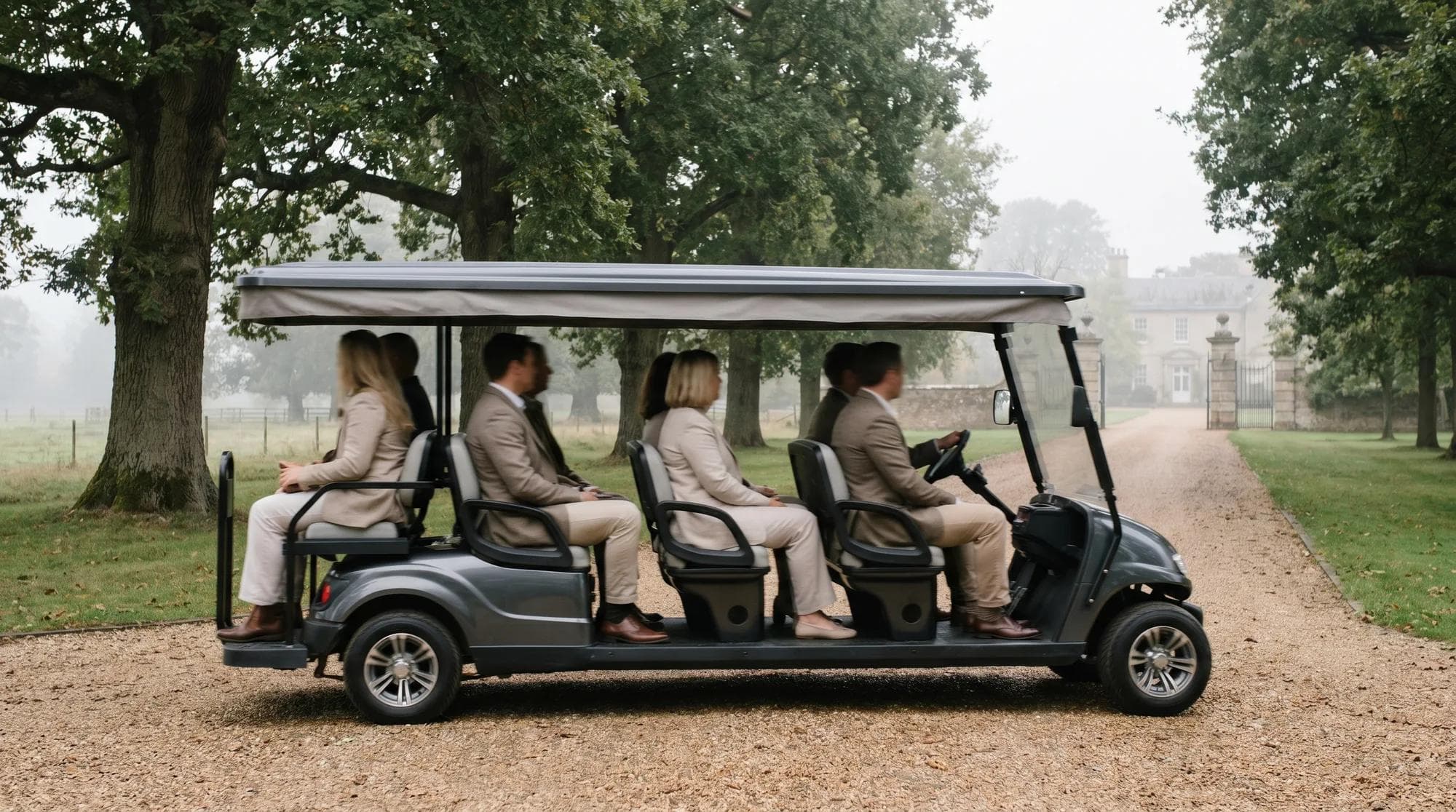
- Bigger welfare runs and group transport across a large site
- Best for
- Shuttle work between fixed points on a large compound
- Best for
- A vehicle specified around your exact site and kit
| Best for | |
|---|---|
| Utility (the Hawke S2 Pickup) | The default for site work: people plus light kit, rougher ground, year-round use |
| Four seater (the Hawke S4) | Personnel and visitor runs on mostly firm, finished surfaces |
| Six seater (the Hawke S6) | Bigger welfare runs and group transport across a large site |
| Eight seater (the Hawke S8) | Shuttle work between fixed points on a large compound |
| Bespoke | A vehicle specified around your exact site and kit |
Not sure which way to lean? The utility model page sets out what the Hawke S2 Pickup is built for, and you can always tell us the job and let us recommend the size.
Why electric, on a site of all places
Sites are already noisy, dusty and full of fumes, so adding a quiet, clean vehicle to the mix is a genuine win. No exhaust means it's usable in enclosed areas where a petrol vehicle would be a problem. Low noise is kinder on the workforce and on neighbours, which matters on urban and residential jobs with hours restrictions. Running costs are low, charging is cheap compared with fuel, and there's far less to service than a petrol engine. For a vehicle doing short, repeated runs all day, electric suits the pattern of use almost perfectly.
Hire or buy for a project?
Construction work is often fixed-term, so the buy-or-hire question matters more here than in most sectors. The rule of thumb is simple. If the buggy is for one project, or a run of short jobs, hire keeps it off your books and hands it back when the site closes. If you run sites continuously, or you want a branded vehicle that follows your projects, buying (with finance if it helps the cash flow) usually works out better over time.
- Hire
- A single project or short, one-off jobs
- Buy
- Continuous work across many sites
- Hire
- Low, paid as you go
- Buy
- Higher, or spread with finance
- Hire
- Hand it back
- Buy
- Move it to the next job
- Hire
- Usually plain
- Buy
- Full custom livery
- Hire
- Higher if used for years
- Buy
- Lower for ongoing use
| Hire | Buy | |
|---|---|---|
| Best for | A single project or short, one-off jobs | Continuous work across many sites |
| Up-front cost | Low, paid as you go | Higher, or spread with finance |
| When the site closes | Hand it back | Move it to the next job |
| Branding | Usually plain | Full custom livery |
| Long-run cost | Higher if used for years | Lower for ongoing use |
Plenty of contractors do both: own a core vehicle or two and hire extra capacity when a big job lands. If you want cover for a fixed period, our hire service is built for exactly that, and we'll talk you through whether hire or a build makes more sense for how you actually work.
Branding and fitting it to your operation
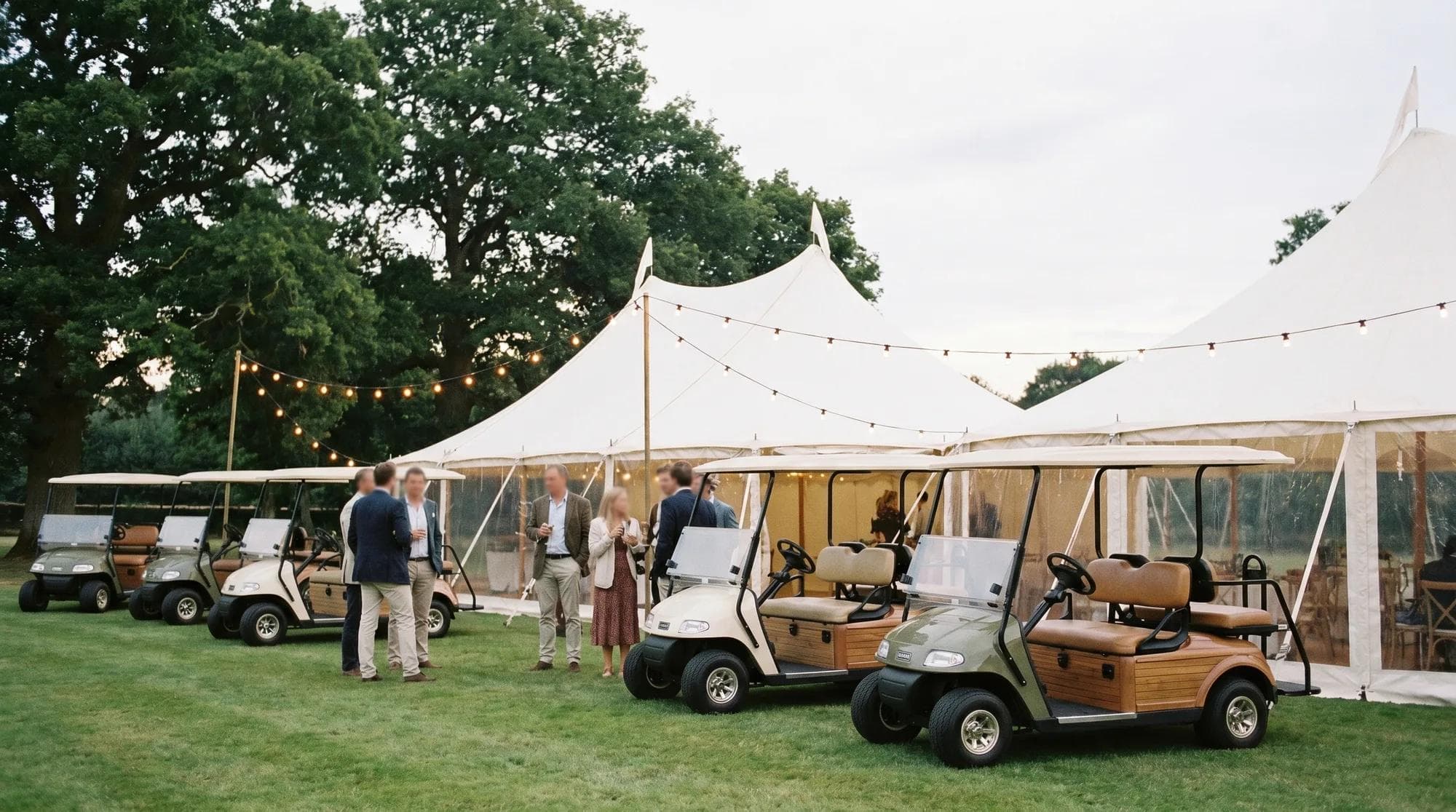
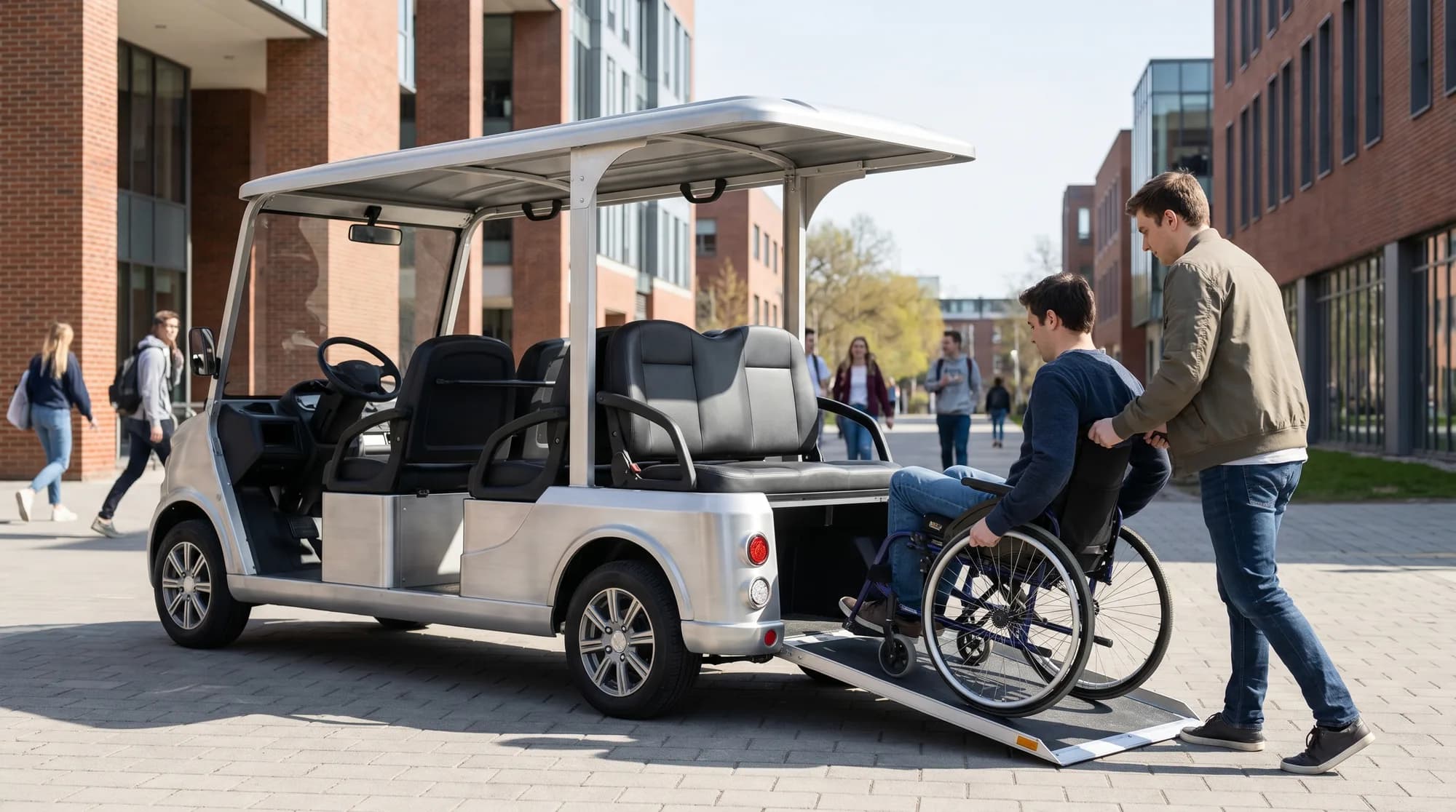
Every vehicle is built to order, so we can finish it in your colours and livery and spec the practical extras a site needs: weather protection for UK winters, a beacon and reversing aid, a cargo bed or rack for kit, and seating that suits personnel runs. A branded buggy looks the part for visitor and client transport, and it's clearly your vehicle on a busy compound. If you also run warehousing or yard space, the same thinking applies, and our warehouses and work sites sector page covers that side.
How to get the right vehicle
Tell us about the site. How big, how spread out, what the ground is like, how many people and what kit you need to move, and whether it's one project or ongoing work. From that we'll recommend the model, the safety and weather kit, and whether hire or a build fits better, then confirm a tailored price. Every build comes with a 3-year warranty and a 24-hour VIP call-out.
Move people and kit across your site
Tell us about the site and how you'll use the buggy, and we'll recommend the right model and whether to hire or buy, with a tailored quote built around the job.
Frequently asked questions
Can you use an electric buggy on a construction site?+
Yes, for moving personnel, visitors and light kit across the site. It's quiet, clean and easy to manage as a site vehicle. It is not a replacement for heavy plant like excavators or dumpers, so use it for people and light transport, not lifting or digging.
Is a buggy safe to drive on a live site?+
It can be, if you manage it like any other site vehicle. Use trained, authorised drivers, keep speeds sensible, segregate from pedestrians where possible, and fit a beacon and good lighting. A buggy is slow, predictable and fume-free, which helps, but it still needs to sit inside your traffic management plan.
What ground can a site buggy handle?+
A utility model copes well with hardstanding, compacted hardcore, slopes and rougher going when it's specified for the terrain. Very soft mud or steep, loose ground is tough on any wheeled vehicle and is really a job for plant or a site 4x4. Tell us your conditions and we'll match the model and tyres.
Should I hire or buy a buggy for a construction project?+
Hire suits a single project or short, one-off jobs: low up-front cost and you hand it back when the site closes. Buying suits continuous work across many sites and lets you brand the vehicle. Many contractors own a core vehicle and hire extra capacity for big jobs.
How much does a site utility buggy cost?+
Pricing is on request and follows the build: safety kit, weather protection, branding and battery choice all move the figure. Every vehicle is built to order, so we confirm a tailored price for your spec.
Related solutions
Ready to explore what we build?
See the vehicles and the setting this applies to, or get a tailored quote built around your site.

Ready to find the right buggy?
Tell us how and where it will work and we will specify a vehicle and a tailored quote built around you. Every build comes with a 3-year warranty and a 24-hour priority call-out.
Our guides are written and reviewed by the Hawke Electric Vehicles team, the people who specify, build, deliver and support the vehicles. We focus on honest, practical advice and flag where a figure depends on the build rather than guessing.
More guides by Hawke