Here is the honest answer up front: most UK sites do not need four-wheel drive. A well-specified two-wheel-drive utility buggy on tyres matched to the ground will handle the great majority of estates, campuses, parks and yards, because most working routes are hard paths, mown grass and moderate gradients. 4WD is not a status upgrade, it is a tool for specific conditions: slopes combined with wet grass, genuine mud, rutted tracks and winter work that has to happen regardless of the weather. It costs more to buy and adds complexity, so the sensible question is not which is better but which your ground actually demands. This guide walks the decision honestly, including the advice suppliers give too quietly: sort the tyres before you pay for the drivetrain.
- Most estates, campuses and yards are well served by 2WD on the right tyres.
- 4WD earns its cost where slopes meet wet grass, in mud, and for all-weather winter duty.
- Tyres first: the right tread on 2WD often beats the wrong tread on 4WD.
- 4WD adds purchase cost and mechanical complexity, so buy it for conditions, not comfort.
- Describe your worst regular route to your supplier and let the ground make the call.
When a 2WD utility buggy genuinely suffices
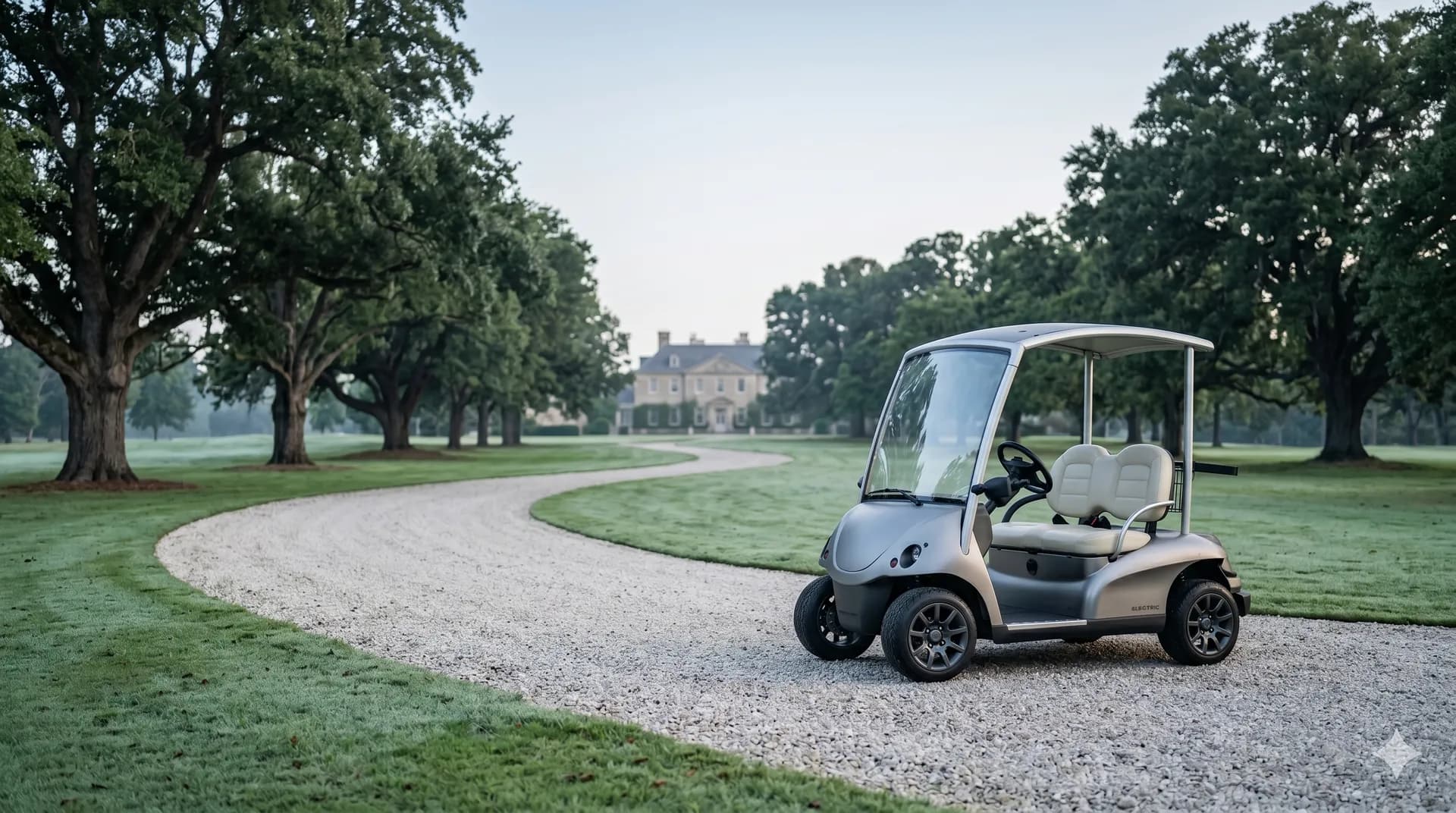
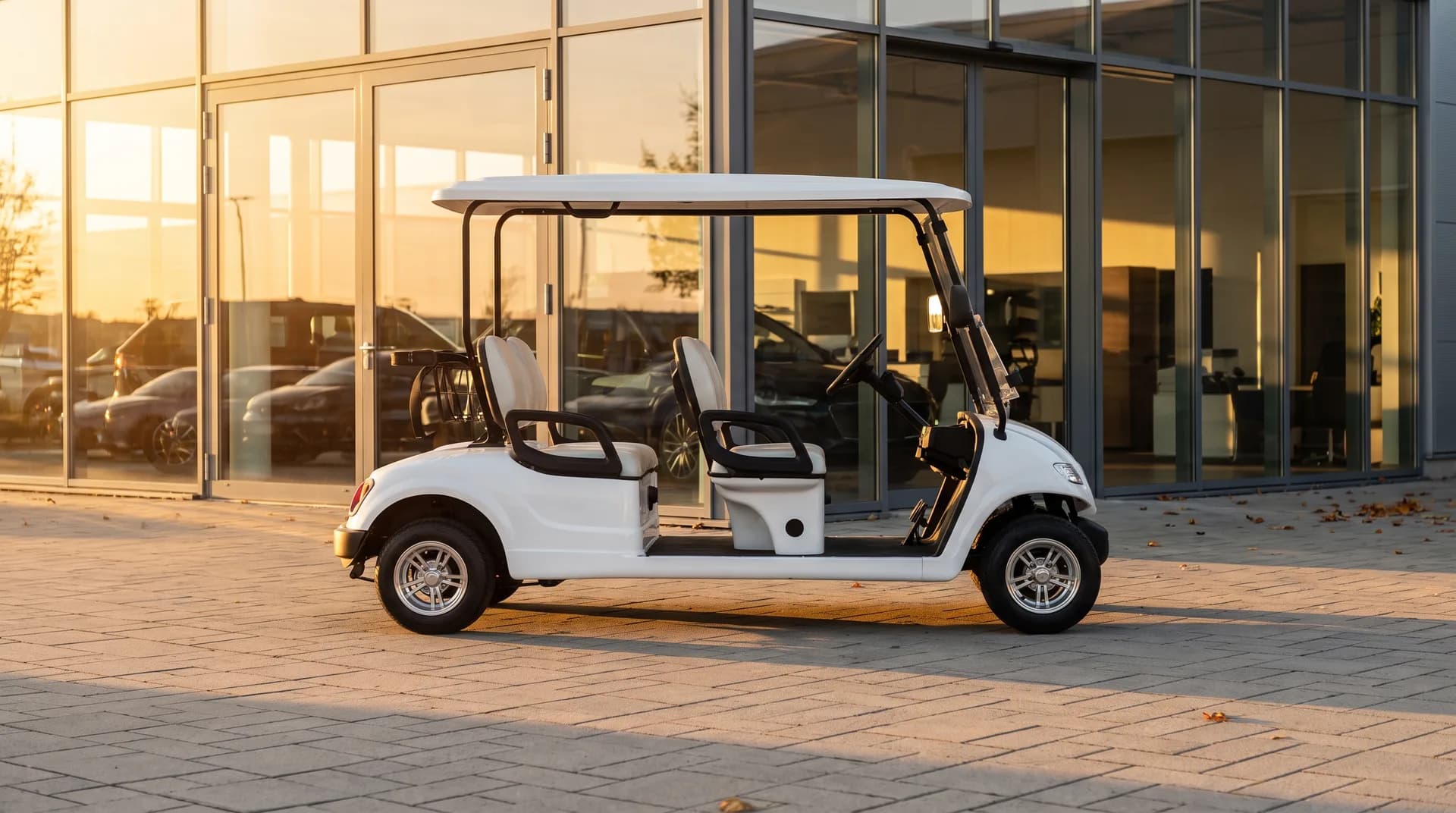
Two-wheel drive gets an unfair reputation from vehicles sent out on the wrong tyres. On hard paths, compacted gravel, tarmac and firm mown grass, a 2WD electric utility vehicle with a decent load in the bed has plenty of traction, because the weight over the driven axle does the work. That describes most of the mileage on most UK sites: the groundsman's loop, the campus delivery run, the hotel back-of-house circuit, the yard shuttle. Moderate slopes are fine too, provided the surface is firm. Electric drive actually helps here, delivering torque smoothly from a standstill without the wheel-spin a clumsy clutch produces. If your routes stay on made surfaces and reasonable grass for eleven months of the year, the money 4WD would cost is usually better spent on the right tyres, a bigger battery or a tipping bed.
Where a 4WD utility buggy earns its keep
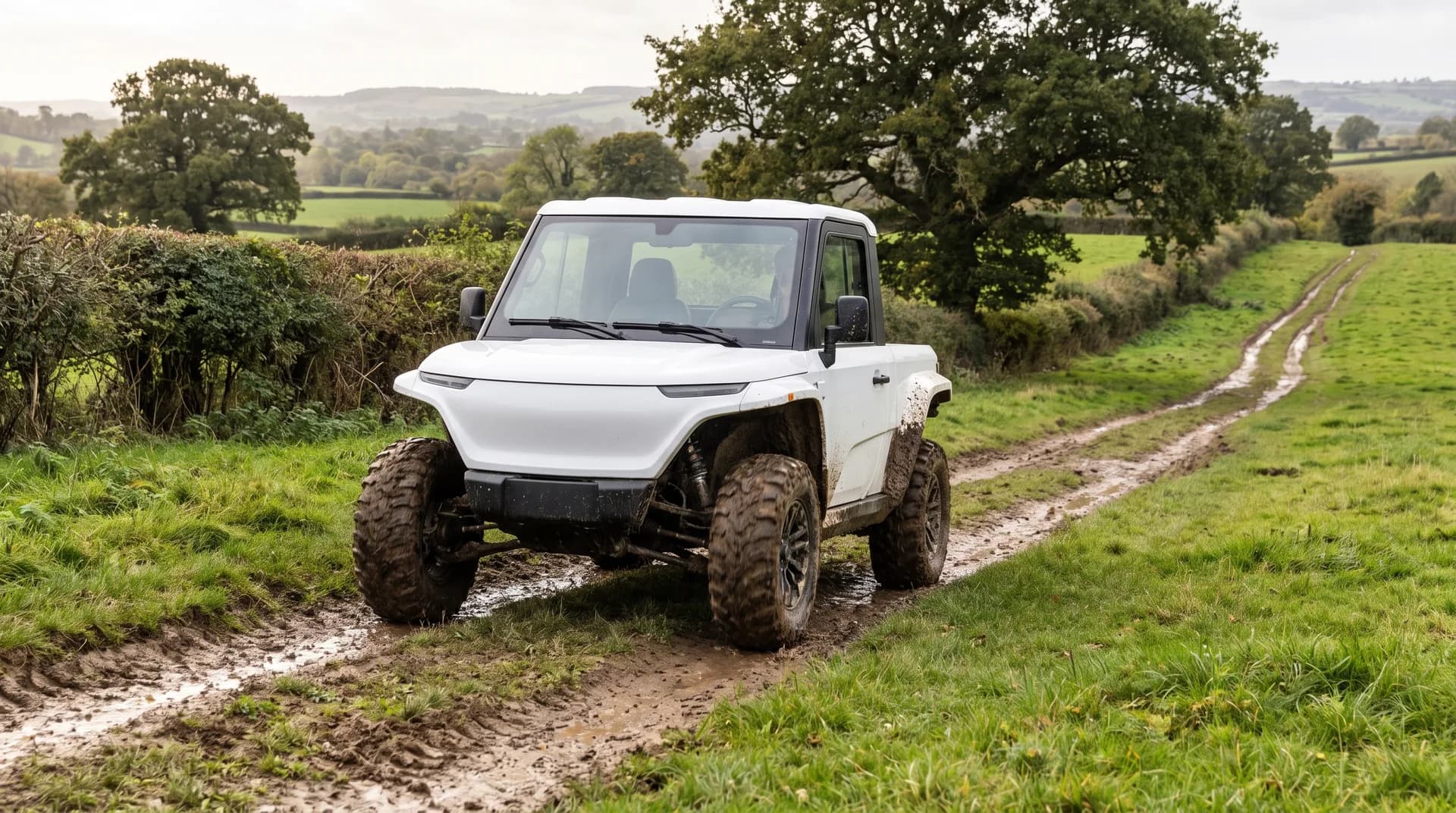
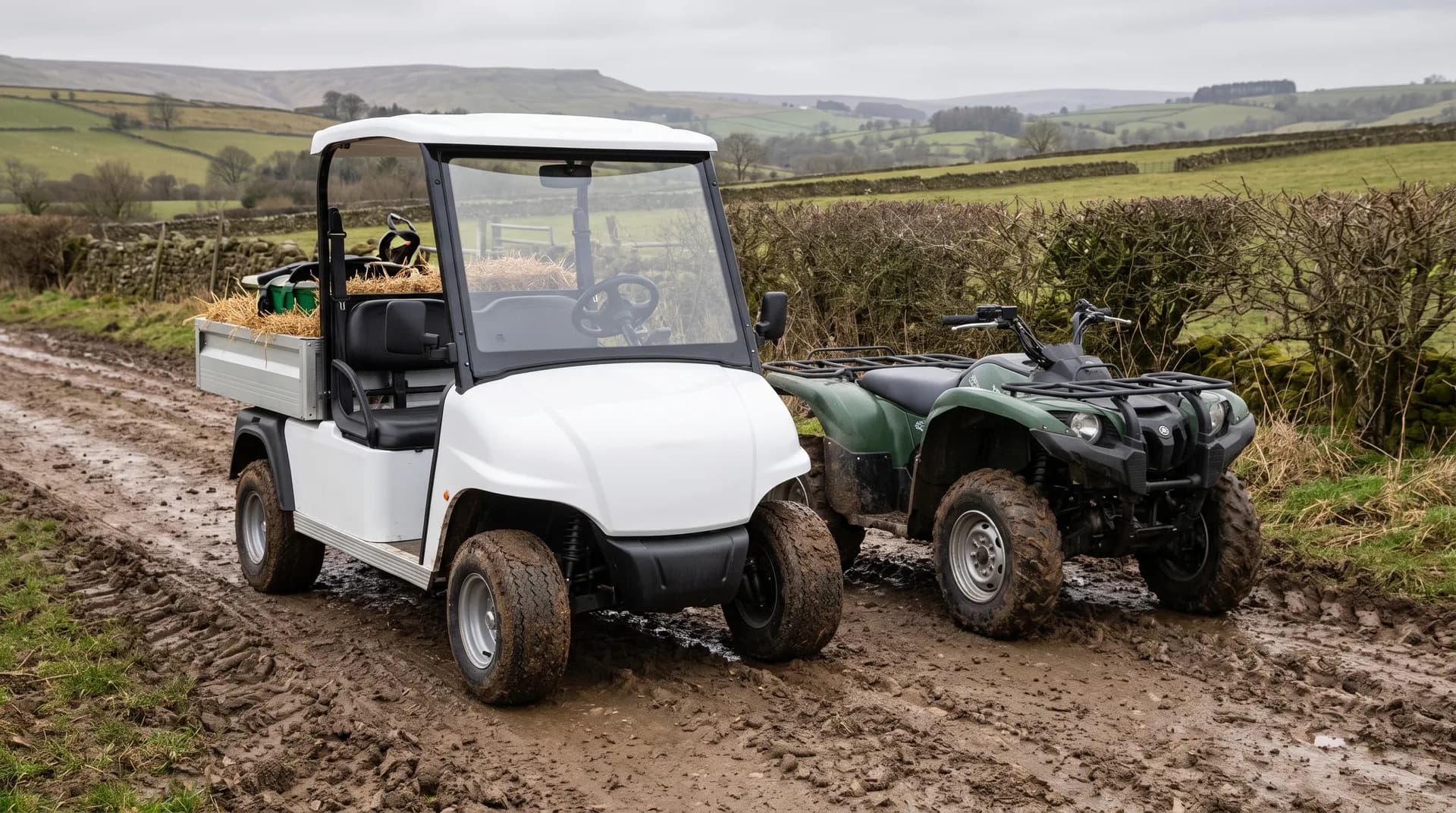
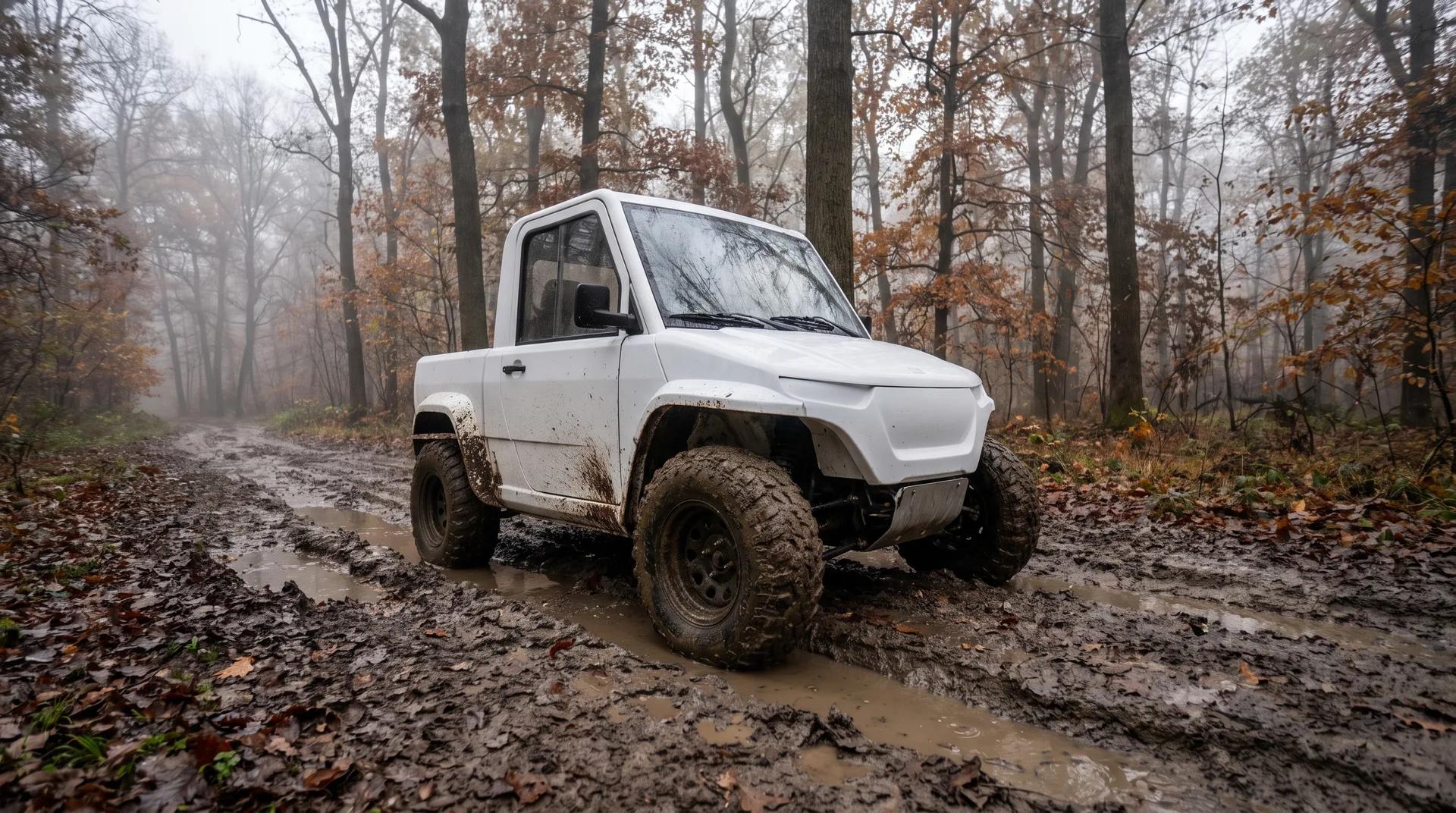
The case for 4WD is written in the conditions, and it is a real case where they apply. The classic trigger is the combination of slope and wet grass: either alone is manageable, together they defeat two driven wheels, and a vehicle that must climb a wet bank every day of a British winter needs drive at both ends. Mud is the second trigger, gateways, tracks and livestock areas that churn from October to March. The third is duty that cannot wait for conditions: gritting rounds, stock feeding, emergency access, fallen-branch clearance, work where the vehicle going out is not optional. Farms and working smallholdings sit squarely in this territory, and our guide on whether a buggy copes with farm and yard work covers that boundary in detail. If you recognise your winter in this paragraph, specify 4WD and do not look back.
- 2WD
- Lower
- 4WD
- Higher, for the extra drivetrain
- 2WD
- Simpler, less to maintain
- 4WD
- More components, more to service
- 2WD
- Fully capable
- 4WD
- Capable, but the extra drive sits unused
- 2WD
- The known weakness
- 4WD
- The reason it exists
- 2WD
- Struggles when churned
- 4WD
- Keeps working through winter
- 2WD
- Slightly lower
- 4WD
- Slightly higher under drive to both axles
- 2WD
- Estates, campuses, parks, yards on made routes
- 4WD
- Farms, steep wet ground, all-weather duty
| 2WD | 4WD | |
|---|---|---|
| Purchase cost | Lower | Higher, for the extra drivetrain |
| Mechanical complexity | Simpler, less to maintain | More components, more to service |
| Hard paths and firm grass | Fully capable | Capable, but the extra drive sits unused |
| Wet grass on slopes | The known weakness | The reason it exists |
| Mud and rutted tracks | Struggles when churned | Keeps working through winter |
| Energy use | Slightly lower | Slightly higher under drive to both axles |
| Best fit | Estates, campuses, parks, yards on made routes | Farms, steep wet ground, all-weather duty |
Tyres first: the cheaper half of traction
Before you specify a drivetrain, look down. Traction is a partnership between drive and rubber, and the rubber is the cheaper partner to get right. A 2WD vehicle on all-terrain tread, at the right pressure, will out-grip a 4WD on hard-worn turf tyres in most British conditions, because tread bite on the surface matters more than how many axles are turning. The reverse is also true: 4WD on the wrong tyres simply digs four ruts instead of two. So the specification order is ground, then tyres, then drivetrain. Describe the surfaces your vehicle will actually cross, choose the tread that suits the worst of them, and only then ask whether the remaining conditions still call for drive at both ends. A surprising number of 4WD enquiries end as 2WD orders with the right tyres, and those customers are not the ones who ring back disappointed.
Making the call for your site
Walk your worst regular route in your head, in February, in the rain. If it stays on made paths and firm grass, 2WD with matched tyres will serve, and the saving goes into battery or body. If it crosses a wet slope, a churned gateway or a track that ruts, or if the work must go out in any weather, price the 4WD and treat it as bought insurance against the mornings that matter. Terrain-heavy estates sit on this line more than most, and our estate terrain guide is the companion read. Both drivetrains are available across the utility vehicle range, with our S2 Pickup starting from £15,900, and the specification conversation starts with your ground, not our brochure: tell us the surfaces, the slopes and the season, and we will tell you honestly which drivetrain the site demands.
Frequently asked questions
Is 4WD worth it on a utility buggy?+
Only if your conditions demand it. Where slopes meet wet grass, where tracks churn to mud, or where winter work cannot wait for conditions, yes. On made paths, firm grass and moderate gradients, a 2WD vehicle on the right tyres does the job for less money and less complexity.
Can a 2WD electric buggy handle slopes?+
On firm surfaces, yes, moderate gradients are well within 2WD capability, and electric drive delivers torque smoothly without wheel-spin. The problem case is slope plus a slippery surface, which is where 4WD starts to earn its cost.
Do better tyres really substitute for 4WD?+
Often, within limits. All-terrain tread at correct pressures transforms 2WD grip on mixed ground and beats 4WD on the wrong tyres. It does not substitute in genuine mud or on steep wet grass, which remain 4WD territory.
Does 4WD use more battery?+
Driving both axles draws somewhat more energy when engaged, and the vehicle carries a little more weight. On a correctly sized battery the difference is manageable; mention 4WD and your terrain when specifying so the pack is sized for it.
What does a 4WD utility buggy cost compared with 2WD?+
Expect a meaningful premium for the additional drivetrain, varying by platform and specification. Because our pricing is quote-based, the practical step is to describe your site and let us price both options against your actual conditions.
Let the ground make the decision
Describe your routes, slopes and winter conditions, and we will give you a straight answer on 2WD or 4WD, with tyres specified to match.
Related solutions
Ready to explore what we build?
See the vehicles and the setting this applies to, or get a tailored quote built around your site.

Ready to find the right buggy?
Tell us how and where it will work and we will specify a vehicle and a tailored quote built around you. Every build comes with a 3-year warranty and a 24-hour priority call-out.
Our guides are written and reviewed by the Hawke Electric Vehicles team, the people who specify, build, deliver and support the vehicles. We focus on honest, practical advice and flag where a figure depends on the build rather than guessing.
More guides by Hawke