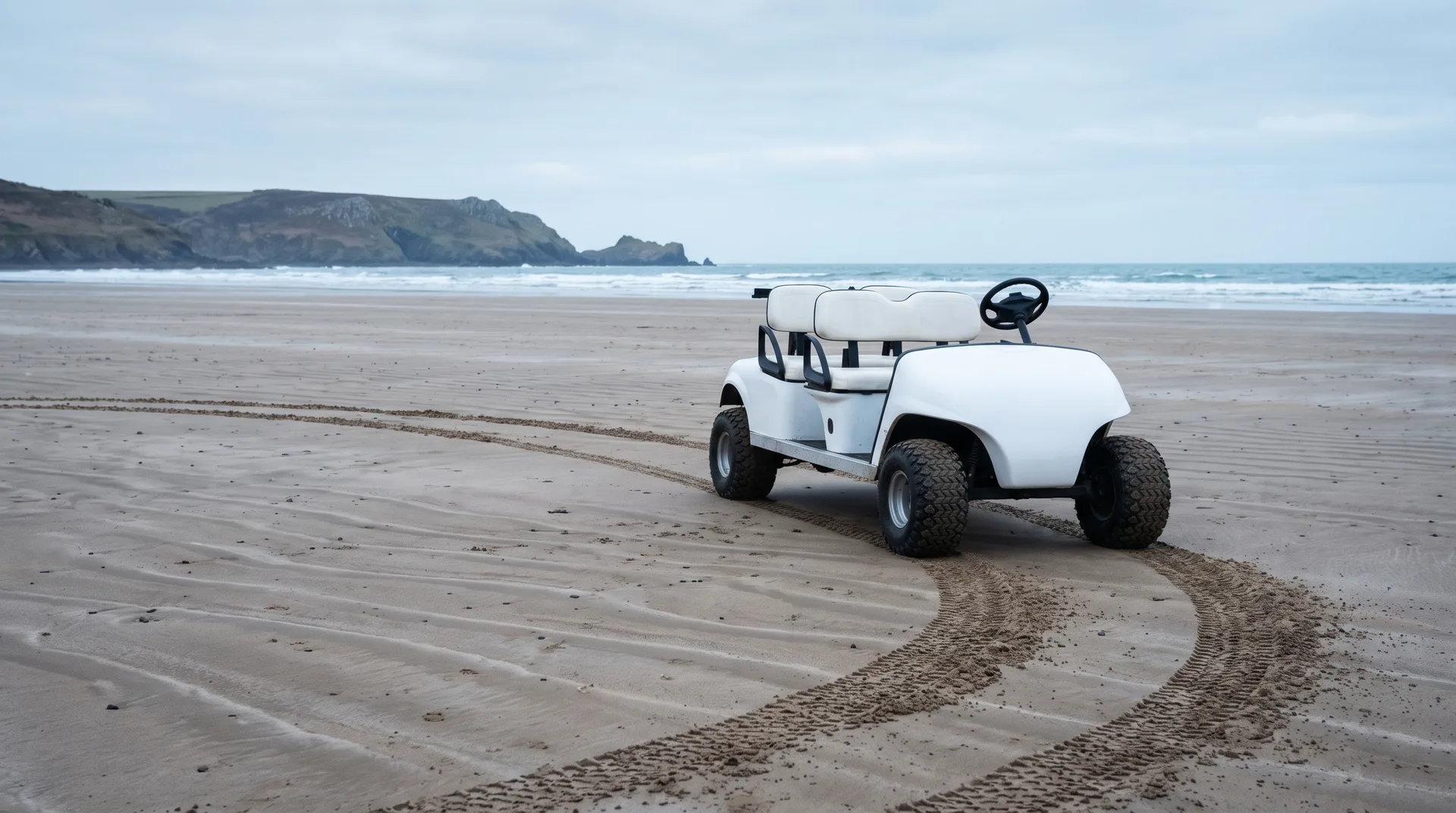
Can a golf buggy go on the beach? Yes, in the right conditions, and no, in the wrong ones, and knowing which is which saves an embarrassing recovery. Firm, wet sand near the waterline at low tide is a surprisingly good surface, and a buggy on suitable tyres will cross it happily. Soft, dry sand above the high-tide line is a different material altogether: it swallows narrow tyres, works the motor hard and bogs a standard machine within yards. Add two further complications, salt, which attacks anything metal it touches, and access rules, which vary enormously from one UK council to the next, and the honest answer becomes: it can be done, but plan it rather than improvise it.
- Firm, wet sand at low tide is workable; soft, dry sand will bog a standard buggy.
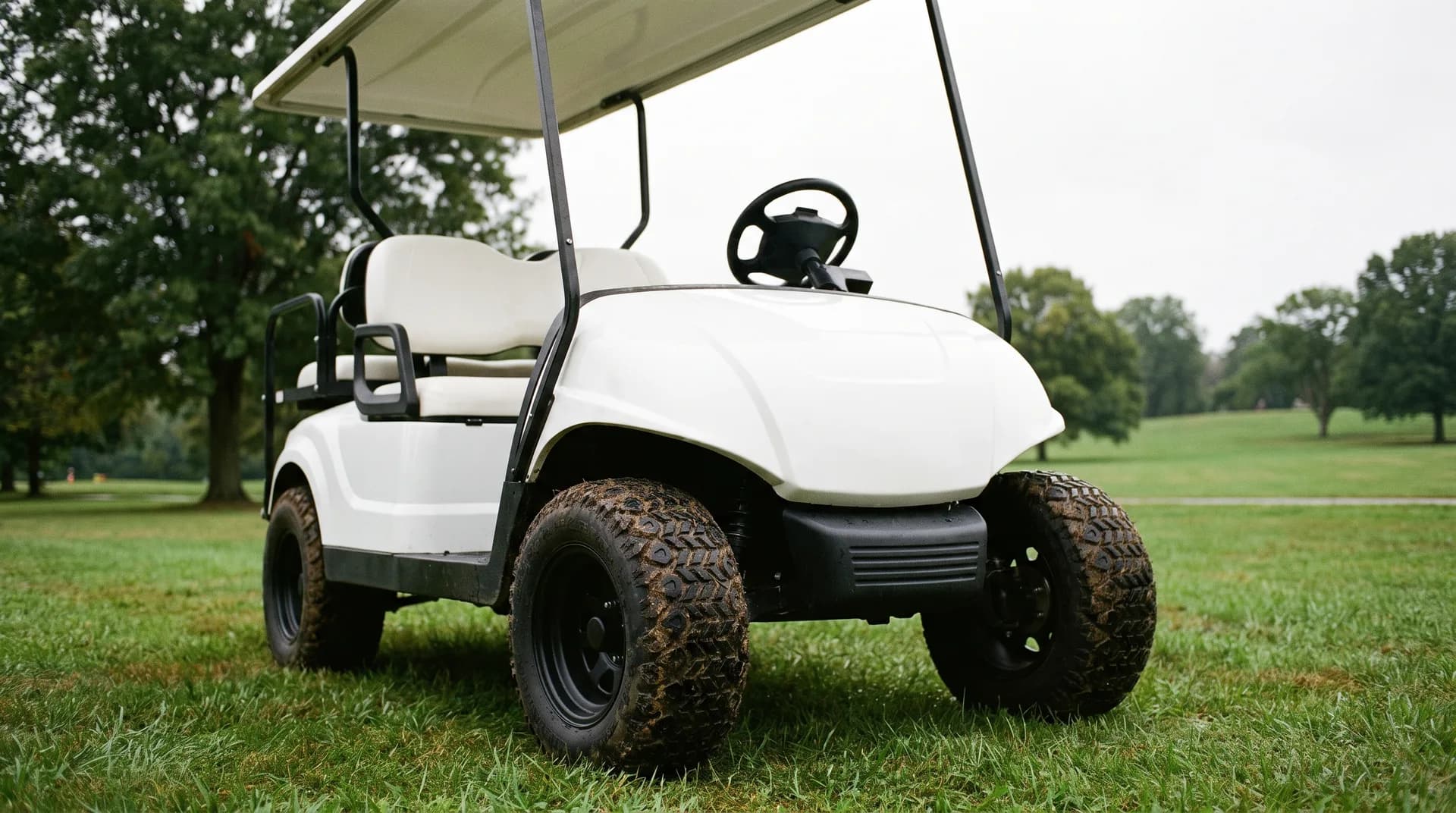
- Wide, low-pressure all-terrain tyres make the difference; narrow turf tyres dig in.
- Drop tyre pressures towards the low end of the recommended range for sand, then reinflate after.
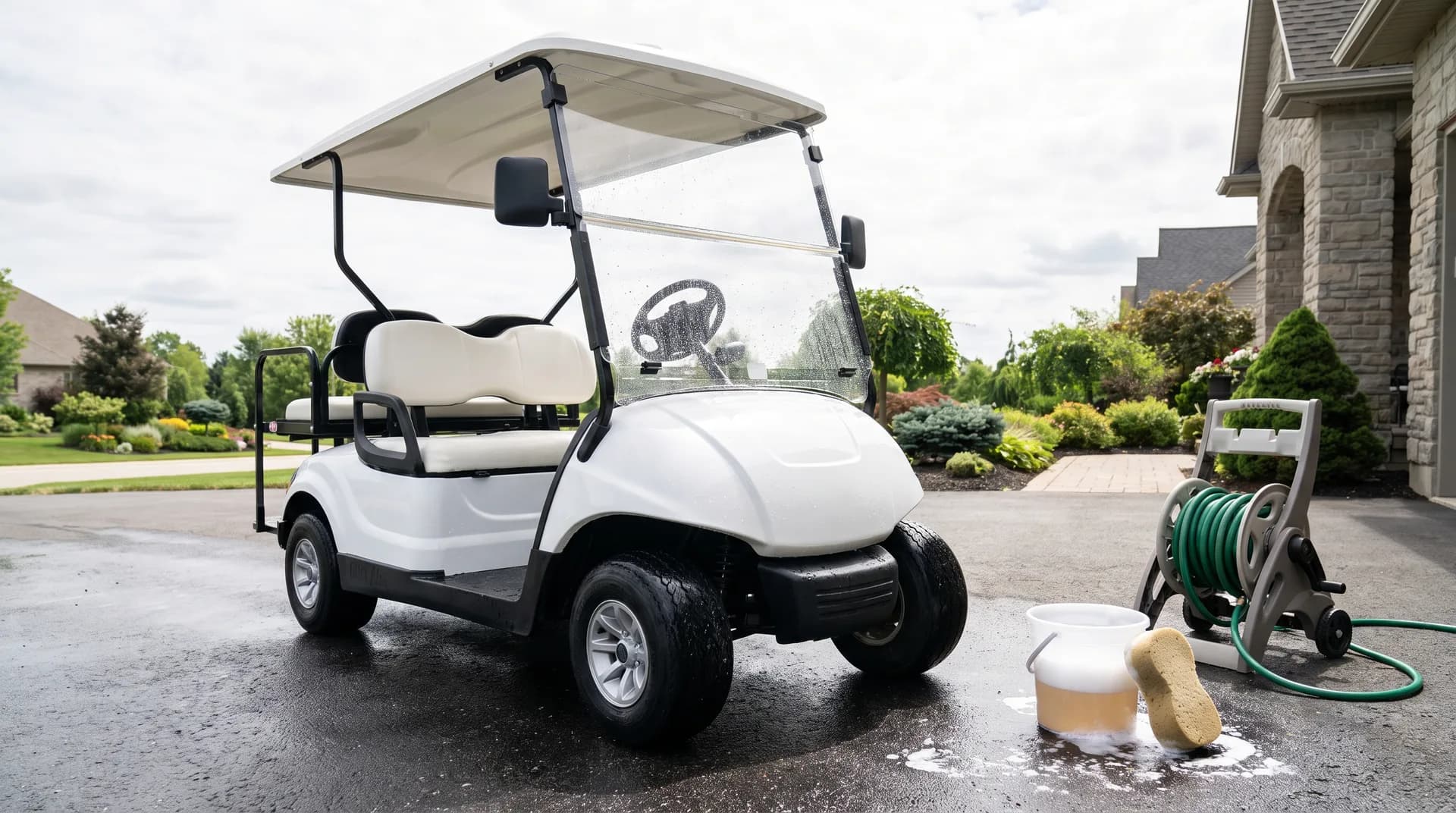
- Salt is corrosive: rinse the underside and metalwork with fresh water after every beach outing.
- UK beach vehicle access varies hugely by council, so always check locally before you drive on.
When a golf buggy can go on the beach, and when it cannot
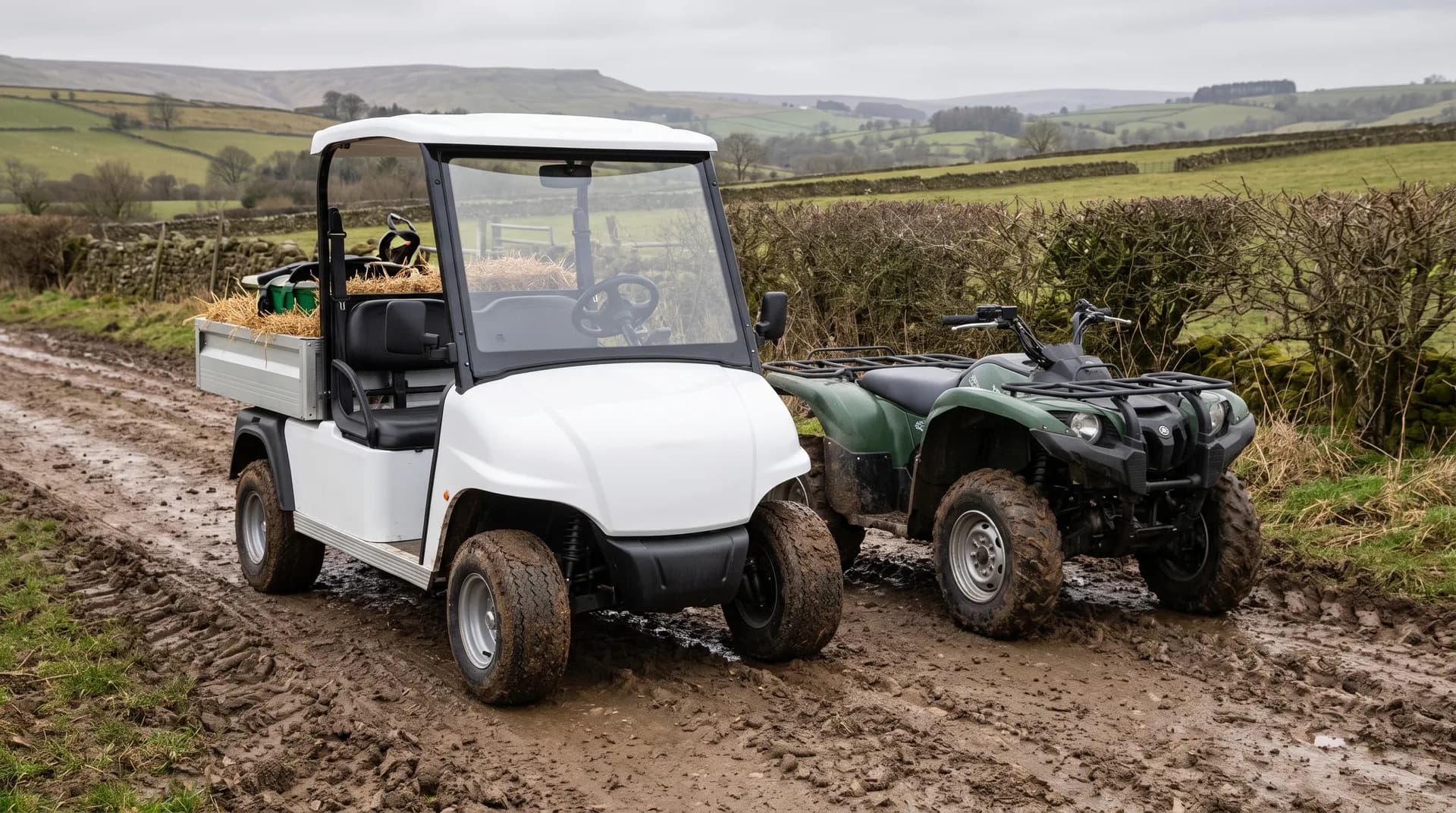
The tide decides more than the buggy does. At low tide, the sand that has just been underwater is compacted and damp, and it carries weight well, which is why events, lifeguard services and beach operators run vehicles across it routinely. As you move up the beach the sand dries, loosens and stops supporting the tyre, and a buggy that was cruising a moment earlier starts to dig. Slopes of loose sand, the top of the beach and dune edges, are the worst case: the driven wheels trench themselves in quickly, and pushing on simply buries the machine deeper. If a job genuinely needs to cross soft sand regularly, that is specialist territory closer to the machines in our off-road buggies guide, not a standard course buggy.
Tyres and pressure: what sand asks of a golf buggy
Sand rewards footprint. A wide tyre at a lower pressure spreads the buggy's weight over more ground, floats rather than cuts, and keeps momentum; a narrow, firmly inflated turf tyre concentrates the weight and slices in. If beach or dune-adjacent ground is part of your working life, specify all-terrain or turf-plus tyres from the start, and before driving onto sand let the pressures down towards the lower end of the manufacturer's recommended range, then reinflate to normal once you are back on firm ground, because running low on tarmac wears tyres quickly and dulls the handling. Keep your speed steady and your steering gentle on sand: momentum is your friend, and sharp turns scrub it off. Our tyres explained guide covers the tyre types and trade-offs in full.
- Firm wet sand (low tide)
- Usually fine, taken steadily
- Soft dry sand
- Digs in and bogs quickly
- Shingle and pebbles
- Poor grip, harsh ride
- Firm wet sand (low tide)
- Good
- Soft dry sand
- Short crossings possible with momentum
- Shingle and pebbles
- Workable at low speed
- Firm wet sand (low tide)
- The workable window
- Soft dry sand
- Avoid in a standard buggy
- Shingle and pebbles
- Possible but punishing
| Firm wet sand (low tide) | Soft dry sand | Shingle and pebbles | |
|---|---|---|---|
| Standard turf tyres | Usually fine, taken steadily | Digs in and bogs quickly | Poor grip, harsh ride |
| All-terrain tyres, lowered pressure | Good | Short crossings possible with momentum | Workable at low speed |
| Verdict | The workable window | Avoid in a standard buggy | Possible but punishing |
Check the rules: UK beach access varies hugely
There is no single national rule on driving a buggy on a British beach. Some councils permit vehicles on certain beaches at certain times, some issue permits for traders and event operators, many prohibit vehicles outright, and private or estate-owned foreshore adds another layer again. Nature designations matter too: driving anywhere near dunes, nesting areas or protected foreshore can be an offence regardless of the council's general position. The only safe advice is to check locally, with the council, the landowner or the beach operator, before wheels touch sand, and to get permission in writing if the buggy is working commercially. For organised events on a beach, the venue or licence holder will normally tell you exactly where vehicles may run.
Salt aftercare: rinse the buggy every time
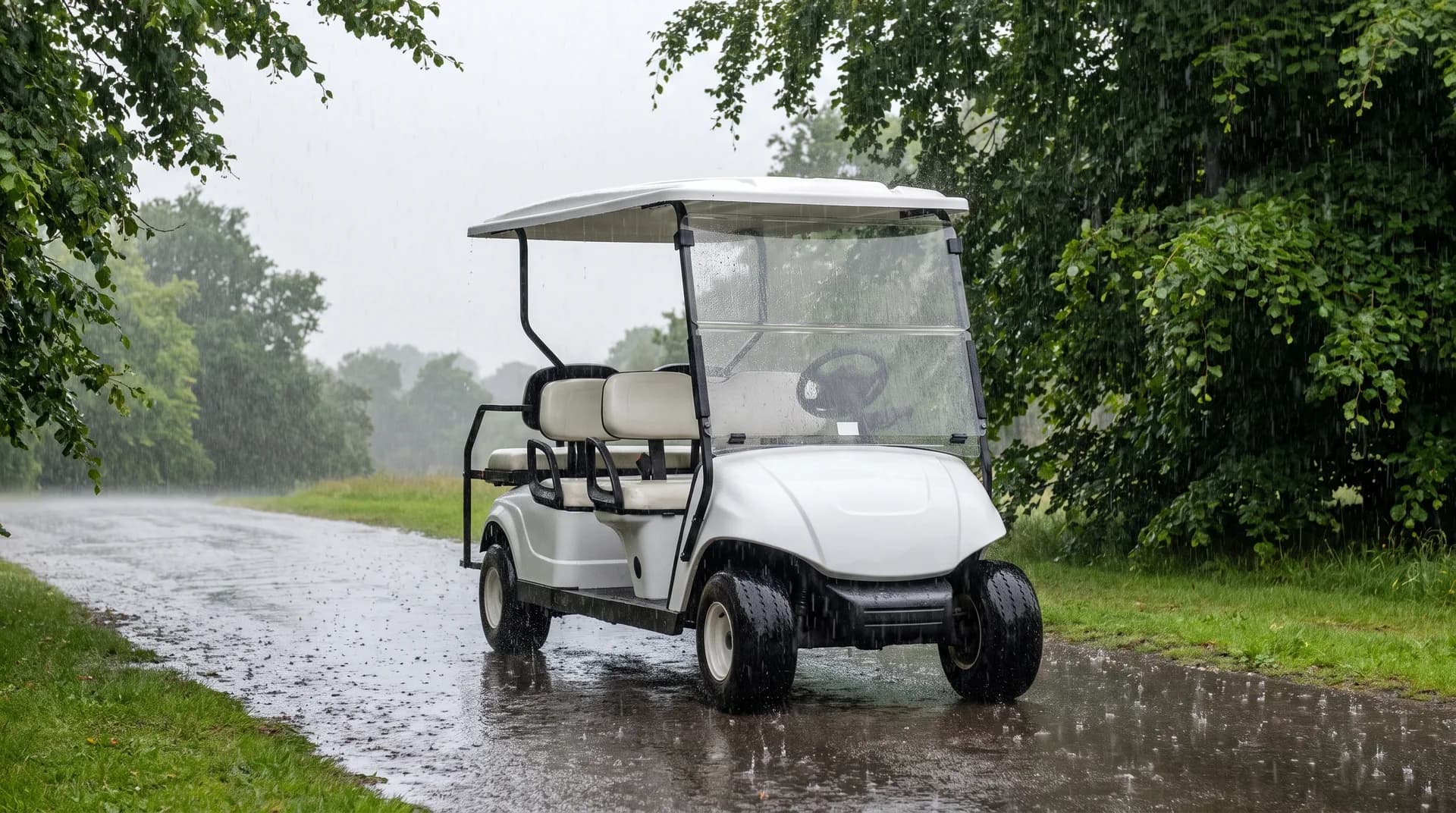
Salt is the tax the beach charges. Spray and damp sand carry it into every crevice of the underside, and left there it corrodes fasteners, brake components, wiring connections and bare metal far faster than ordinary rain ever would, an electric buggy is fine in wet weather, as our rain guide explains, but salt is a different order of aggression. After every beach outing, rinse the underside, wheels, arches and lower bodywork thoroughly with fresh water, avoiding pressure-washing directly at electrical connectors, let the machine dry, and check that sand has not packed around brakes or suspension. Done every time, this takes ten minutes; skipped for a season, it shortens the vehicle's life measurably. Our cleaning guide sets out the full routine.
Specifying a buggy for coastal work
If a beach or coastal site is the day job, a beachfront venue, a links course, a seaside events operation, tell us that at the quote stage. Tyre choice, sealed connections and sensible accessory choices can all be specified from the start, which is far cheaper than retrofitting after the first winter of salt. Browse the range to see the platforms, and we will spec the right one for the ground it has to work on.
Frequently asked questions
Can you drive a golf buggy on soft sand?+
Not reliably in a standard buggy. Soft, dry sand does not support a narrow tyre, so the driven wheels dig in and the machine bogs. Wide all-terrain tyres at lowered pressure can manage short crossings with momentum, but regular soft-sand work needs a specialist off-road machine.
What tyre pressure should I use on sand?+
Lower than normal, towards the bottom of the manufacturer's recommended range, to widen the tyre's footprint so it floats rather than digs. Reinflate to the normal pressure as soon as you are back on firm ground.
Is it legal to drive a golf buggy on a UK beach?+
It depends entirely on the beach. Councils, private landowners and conservation designations all set different rules, from outright bans to permit schemes. Check with the council or landowner before driving on, and get written permission for commercial use.
Does salt water damage electric golf buggies?+
Salt attacks metal fasteners, brake parts and electrical connections much faster than fresh water. The buggy itself copes with damp, but you must rinse the underside and lower bodywork with fresh water after every beach outing to stop corrosion taking hold.
Should I buy a special buggy for beach use?+
For occasional firm-sand use, a standard buggy on all-terrain tyres is usually enough. For daily coastal or soft-sand work, specify the vehicle for it from the start: tyres, protection and accessories chosen at build are cheaper and better than retrofits.
Working near the coast?
Tell us about the ground your buggy has to cover, sand, shingle, promenade or links turf, and we will specify tyres and protection to match, then price it to your specification.
Related solutions
Ready to explore what we build?
See the vehicles and the setting this applies to, or get a tailored quote built around your site.

Ready to find the right buggy?
Tell us how and where it will work and we will specify a vehicle and a tailored quote built around you. Every build comes with a 3-year warranty and a 24-hour priority call-out.
Our guides are written and reviewed by the Hawke Electric Vehicles team, the people who specify, build, deliver and support the vehicles. We focus on honest, practical advice and flag where a figure depends on the build rather than guessing.
More guides by Hawke