A large corporate campus has the same problem as a small town: the car park is a long way from the desk, and the building you need is rarely the one you parked next to. A corporate campus vehicle closes that gap. It carries staff and visitors between buildings and car parks quietly, without fumes, and reads as part of a well-run, modern site. This guide is honest about where an electric buggy fits on a business park, and where it doesn't.
Where a buggy fits, and where it doesn't
Let's be straight first. Moving hundreds of commuters from a station on a fixed timetable is a shuttle-bus job with its own rules, and a buggy fleet isn't that. What it does well is the close-in work on your own land: lifts from overflow and visitor car parks, short hops between buildings, moving a client from reception to a meeting block, and getting facilities staff and post around the estate. It's the vehicle for the runs a van is too big for and walking is too slow for.
On a compact campus, or for inter-building runs on a sprawling one, the maths is simple. A quiet electric vehicle carrying four to eight people across private roads and paths saves real time every day and removes a friction point for staff and guests. For the people-moving end, our electric people movers and shuttles guide sets out where a multi-seat buggy stops and a true shuttle begins.
Staff and visitor transport between buildings
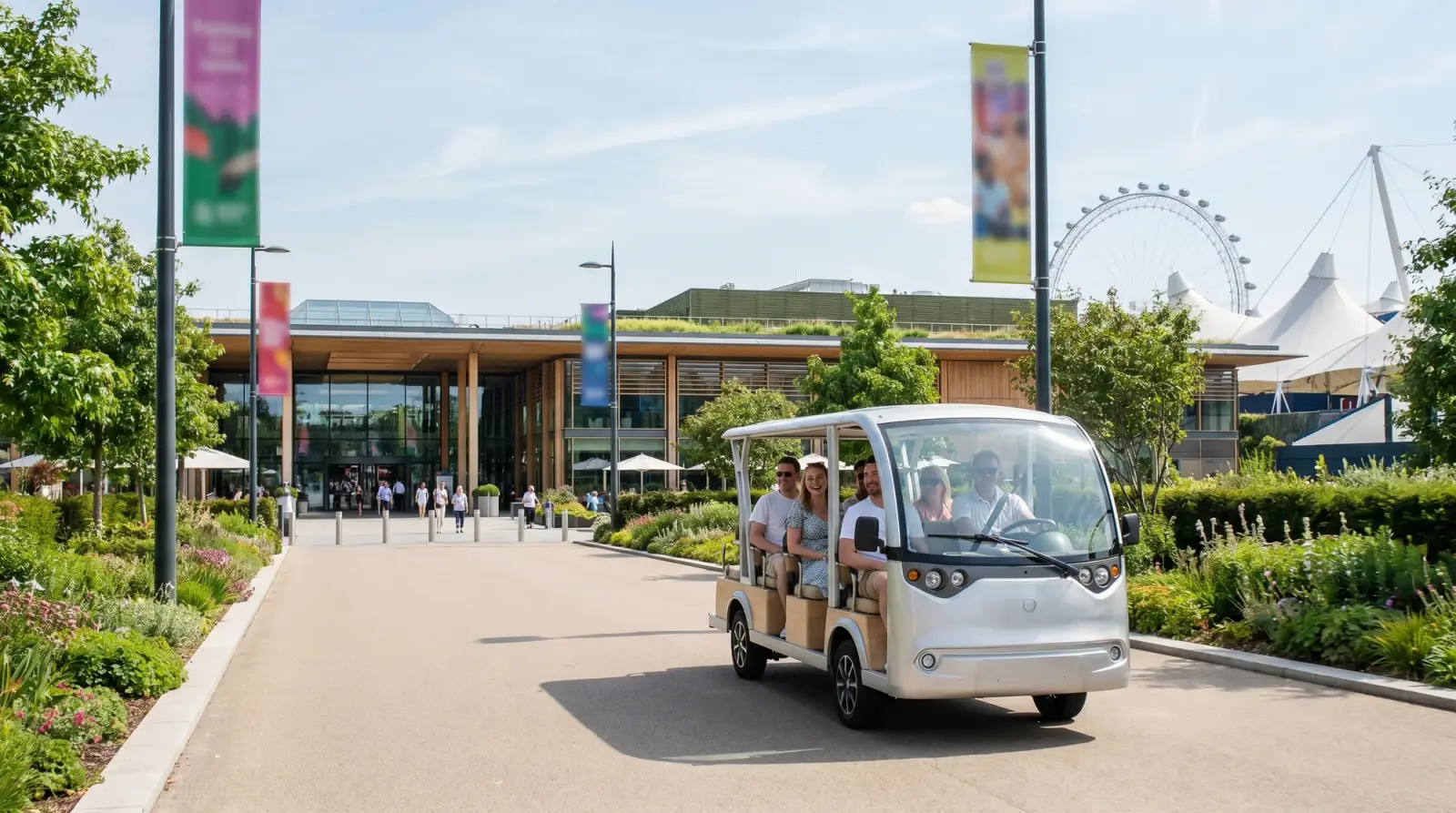
This is the job most corporate buggies are bought for. The walk from the far car park to the right entrance can be ten minutes in the rain, and a buggy turns that into a two-minute lift. For visitors it's better still: a branded vehicle waiting at the car park, taking a client straight to the meeting room, sets the tone before the first handshake. First impressions on a campus start in the car park, not in reception.

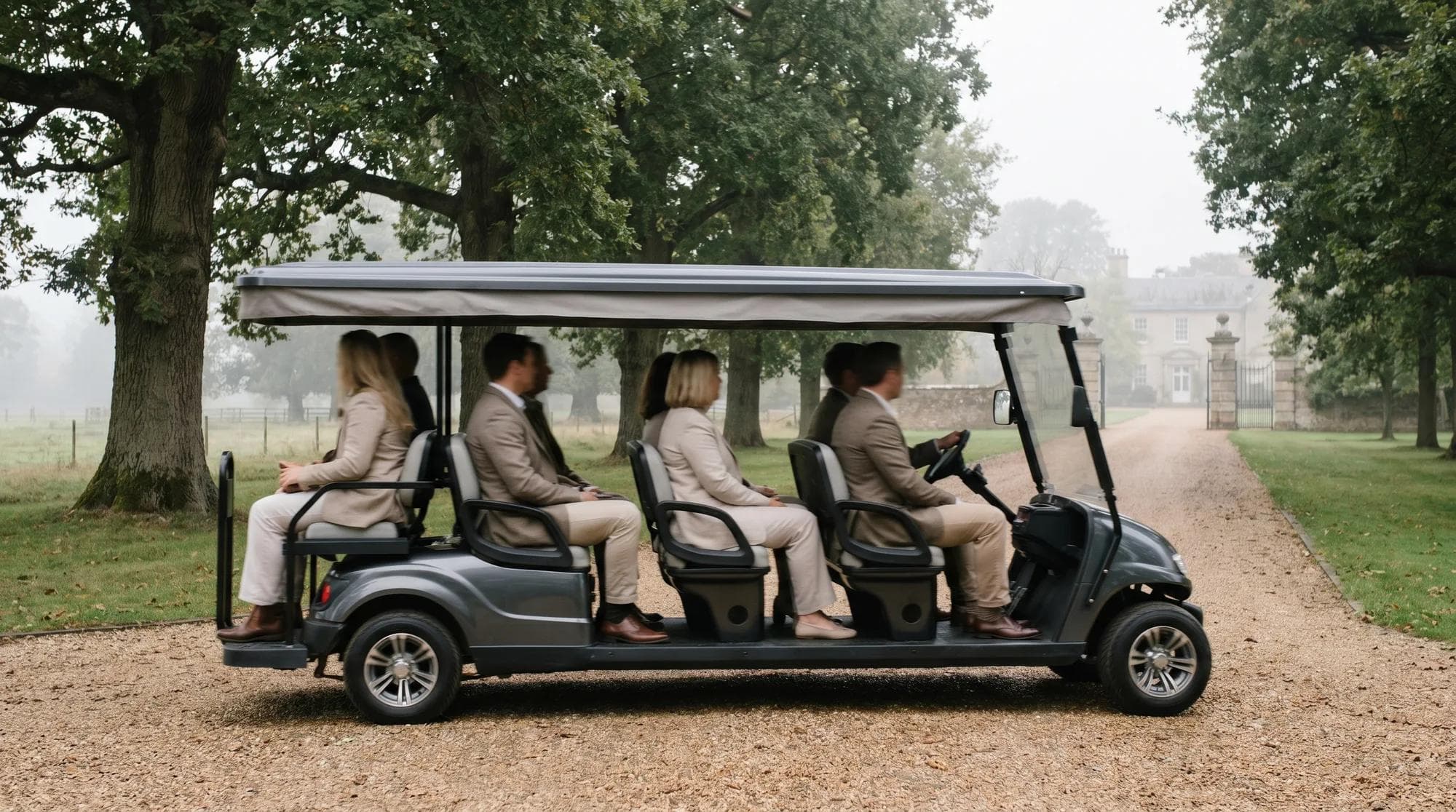
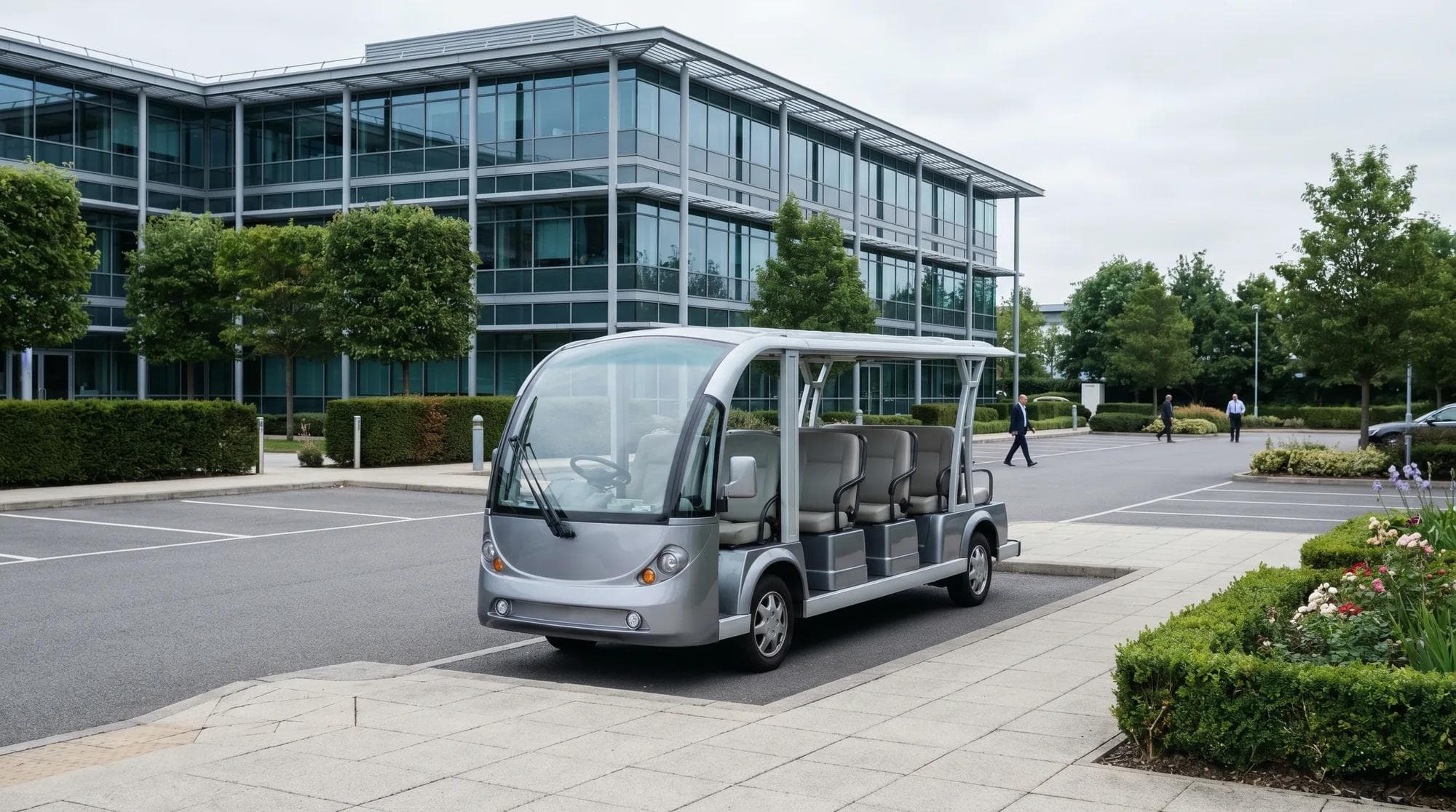
For this work, a multi-seat passenger model does the heavy lifting. The Hawke S4 (four seats) suits small groups and quieter sites. The Hawke S8 (eight seats) is the inter-building workhorse for a busy campus, moving a meeting's worth of people in one run. You can see the larger passenger end on the Hawke S8 page. Match the seat count to your peak demand, not your quiet Tuesday.
First impressions on a campus start in the car park, not in reception.
Accessibility: getting everyone in comfortably
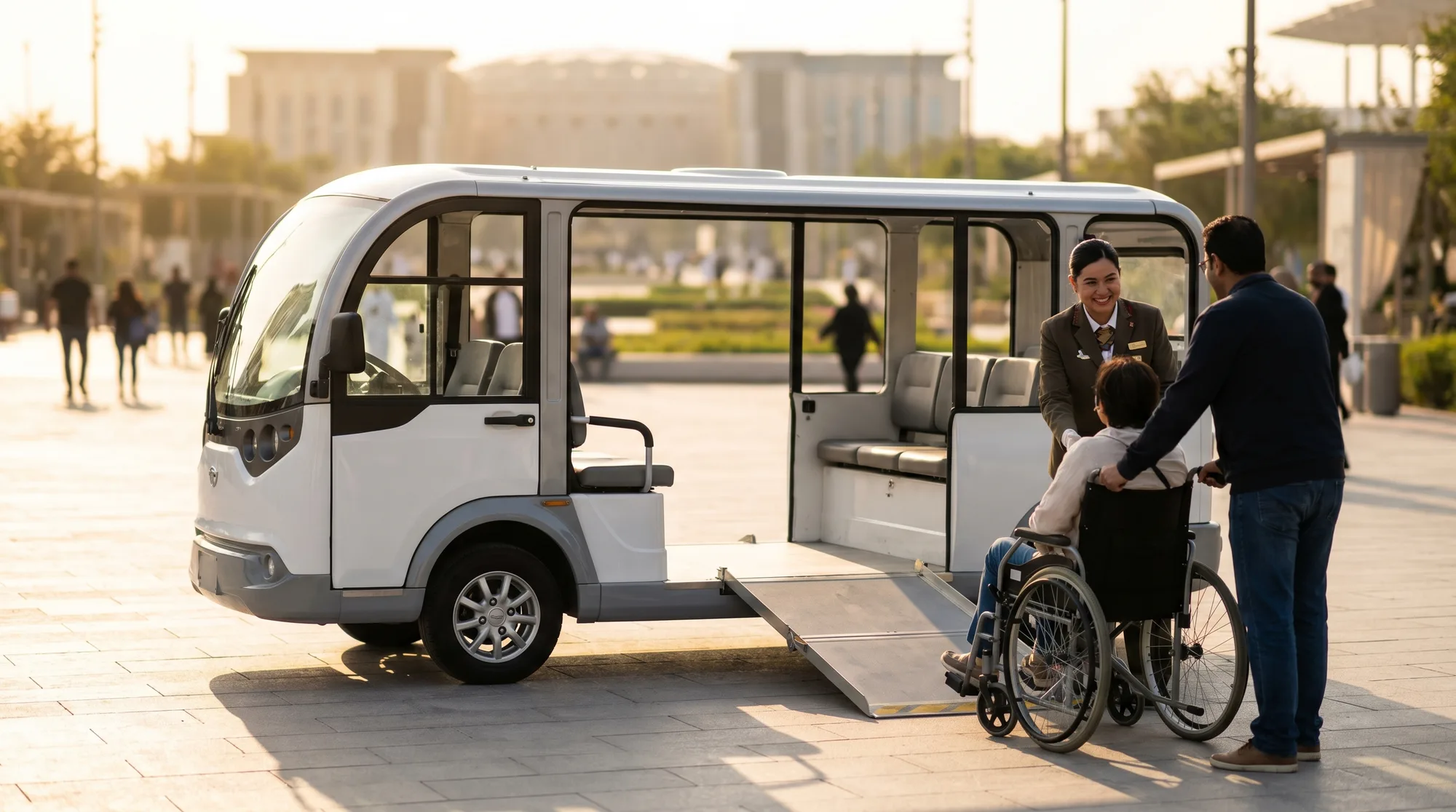
A long, open campus is a real barrier for staff and visitors with limited mobility, and the kind that quietly puts people off coming in. An accessible buggy turns a daunting walk into a short, dignified lift from the car park to the door. It matters for daily staff travel, and more so on the days you host clients, candidates and partners who may have access needs you don't know about in advance.
If wheelchair access is part of the brief, design it in from the start. A vehicle with a ramp and a proper securing position is a different build from a standard passenger buggy, not a bolt-on. Our accessible and wheelchair electric buggies guide explains what to specify and the questions to ask. Get it right up front and the same fleet that runs staff at 9am moves a wheelchair user with ease at 11.
Sustainability, ESG and the brand story
Corporate occupiers take ESG seriously, partly because tenants, investors and staff increasingly ask about it. An electric buggy fleet is a small but visible piece of that picture. It removes an on-site source of emissions and noise, and replaces it with something clean and quiet that people see working every day. That visibility is the point: a tangible action, not a line in a policy document.
Be careful not to oversell it. The honest claim is no exhaust emissions where the buggy operates, lower noise, and cleaner air around the buildings, not a precise carbon figure you haven't measured. Our environmental benefits guide sets out the defensible version of the case, the one that survives a hard question from a sustainability lead.
Branding the fleet
A campus buggy is a moving billboard whether you plan it or not, so plan it. Custom fleet branding in your corporate colours, with the company logo, turns a working vehicle into part of the visual identity across the estate. It also reads as official, which helps when staff direct visitors to it or when it's moving guests around a busy site. We build branding in at the factory rather than wrapping it on afterwards, so it looks right and lasts.
Charging across a business park
Charging is the question that decides how smoothly a fleet runs. Most campuses charge buggies overnight at a central facilities point or in a vehicle store from a standard supply, so each one is ready in the morning. For a fleet that runs hard across a long working day, plan a charging point or two near reception or the main car park, where the vehicles rest between runs, so a top-up is easy.
Battery choice shapes all of this. Lithium charges faster, takes a partial top-up between runs without harm, and lasts far longer, which suits a passenger fleet that can't always wait for a full overnight charge. Lead-acid is cheaper to buy but heavier, slower and shorter-lived. For a working corporate fleet, lithium almost always wins once you count the replacement cycles.
Sizing the fleet: a quick guide
There's no single right buggy for a campus, because the jobs differ. Most estates end up with a small mix. Here's a rough way to map use to model and budget.
- Best for
- Quick staff and facilities runs
- Best for
- Visitor and small-group transport
- Best for
- Post, supplies and facilities work
- Best for
- Conference and group runs
- Best for
- Inter-building transport, busy campuses
- Best for
- Accessible and wheelchair builds
| Best for | |
|---|---|
| Two seater (the Hawke S2) | Quick staff and facilities runs |
| Four seater (the Hawke S4) | Visitor and small-group transport |
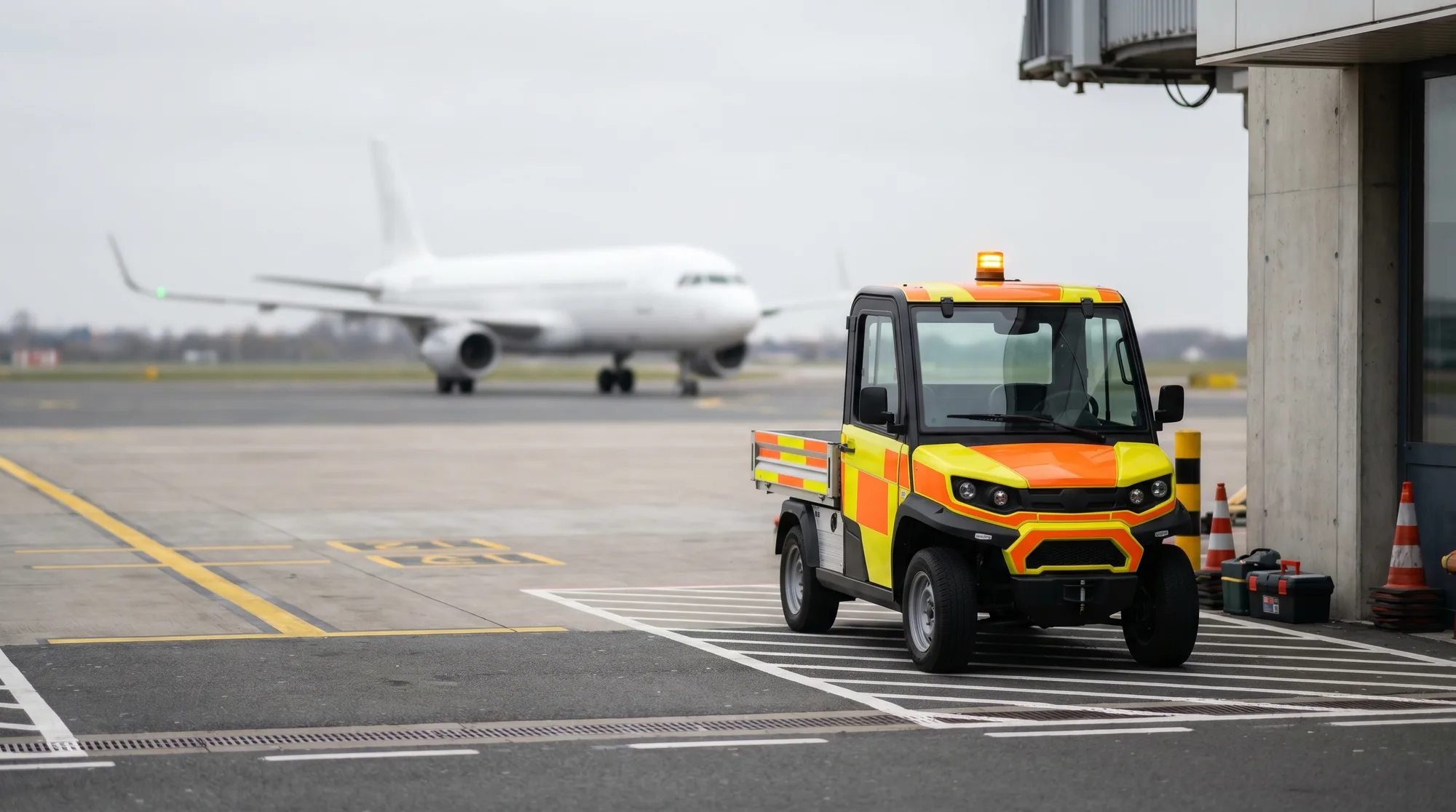
| Utility (the Hawke S2 Pickup) | Post, supplies and facilities work |
| Six seater (the Hawke S6) | Conference and group runs |
| Eight seater (the Hawke S8) | Inter-building transport, busy campuses |
| Bespoke | Accessible and wheelchair builds |
Every vehicle is built to order, so the fleet is specified around your site rather than picked off a shelf. You can see the larger passenger end of the range on the Hawke S8 page, and we'll help you balance the mix when you enquire.
How to get a campus fleet specified
Buying starts with a conversation, not a checkout. Tell us the size of your site, the runs the fleet has to do, whether accessibility is in scope, and how you'd like it branded. We'll specify the vehicles, confirm a tailored price, and arrange delivery and commissioning. Every build comes with a 3-year warranty and a 24-hour VIP call-out.
Build a corporate campus fleet around your site
Tell us your campus, your runs and your branding and we'll specify an electric fleet built around you, with a tailored quote. Every vehicle is built to order.
Frequently asked questions
What is a corporate campus vehicle?+
It's a small electric vehicle used to move staff and visitors between buildings and car parks on a large corporate site or business park. It handles short inter-building hops, lifts from overflow and visitor car parks, and accessible transport, jobs a van is too big for and walking is too slow for. It runs on private estate roads and paths rather than public roads.
Can a buggy replace a corporate shuttle bus?+
Not for a high-volume, timetabled service moving hundreds of commuters from a station; that's a different product with different rules. A multi-seat buggy works well as a business park shuttle for inter-building transport on your own land and for visitor and group runs. For the difference, see our electric people movers and shuttles guide.
Can a campus buggy carry wheelchair users?+
It can, but it has to be designed for it. An accessible buggy with a ramp and a proper securing position is a different build from a standard passenger model, so specify it up front rather than adding it later. Our accessible buggies guide covers what to ask for.
How does an electric buggy help our ESG reporting?+
It removes an on-site source of exhaust emissions and noise, and it does so visibly, which is exactly the kind of tangible action a sustainability commitment needs. The honest claim is no exhaust emissions where it operates and cleaner, quieter surroundings, rather than a precise carbon figure you haven't measured.
How do you charge a fleet of campus buggies?+
Most campuses charge overnight at a central facilities point from a standard supply, so each vehicle is ready in the morning. For fleets that run long days, add a charging point or two near reception or the main car park. Lithium suits this because it charges faster and takes partial top-ups between runs.
Can the buggies be branded in our corporate colours?+
Yes. We build custom fleet branding in your colours with your company logo at the factory, not as an afterthought wrap. A clearly branded fleet reads as official, which helps visitor-facing work, and it reinforces your brand across the estate.
Related solutions
Ready to explore what we build?
See the vehicles and the setting this applies to, or get a tailored quote built around your site.

Ready to find the right buggy?
Tell us how and where it will work and we will specify a vehicle and a tailored quote built around you. Every build comes with a 3-year warranty and a 24-hour priority call-out.
Our guides are written and reviewed by the Hawke Electric Vehicles team, the people who specify, build, deliver and support the vehicles. We focus on honest, practical advice and flag where a figure depends on the build rather than guessing.
More guides by Hawke