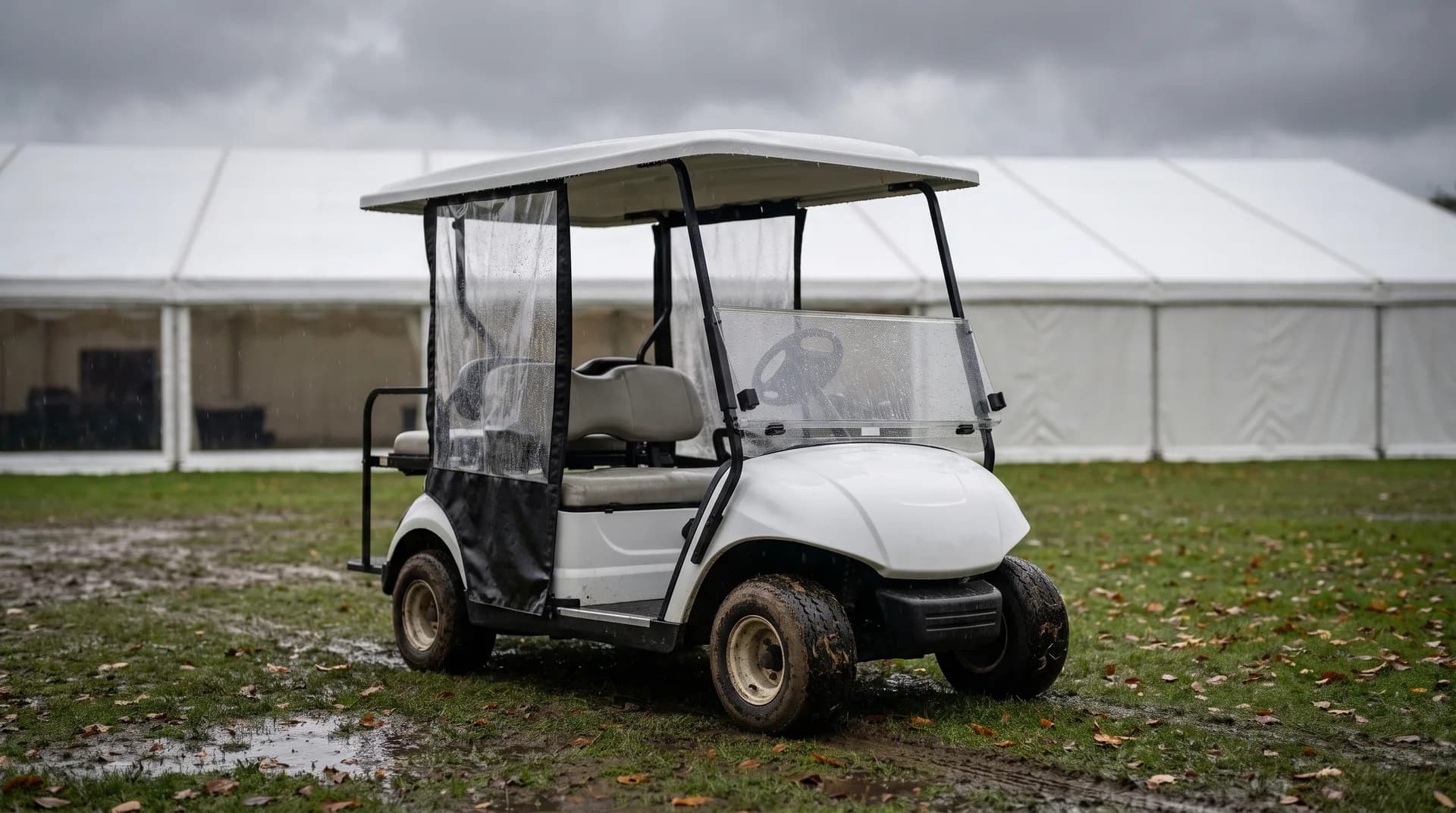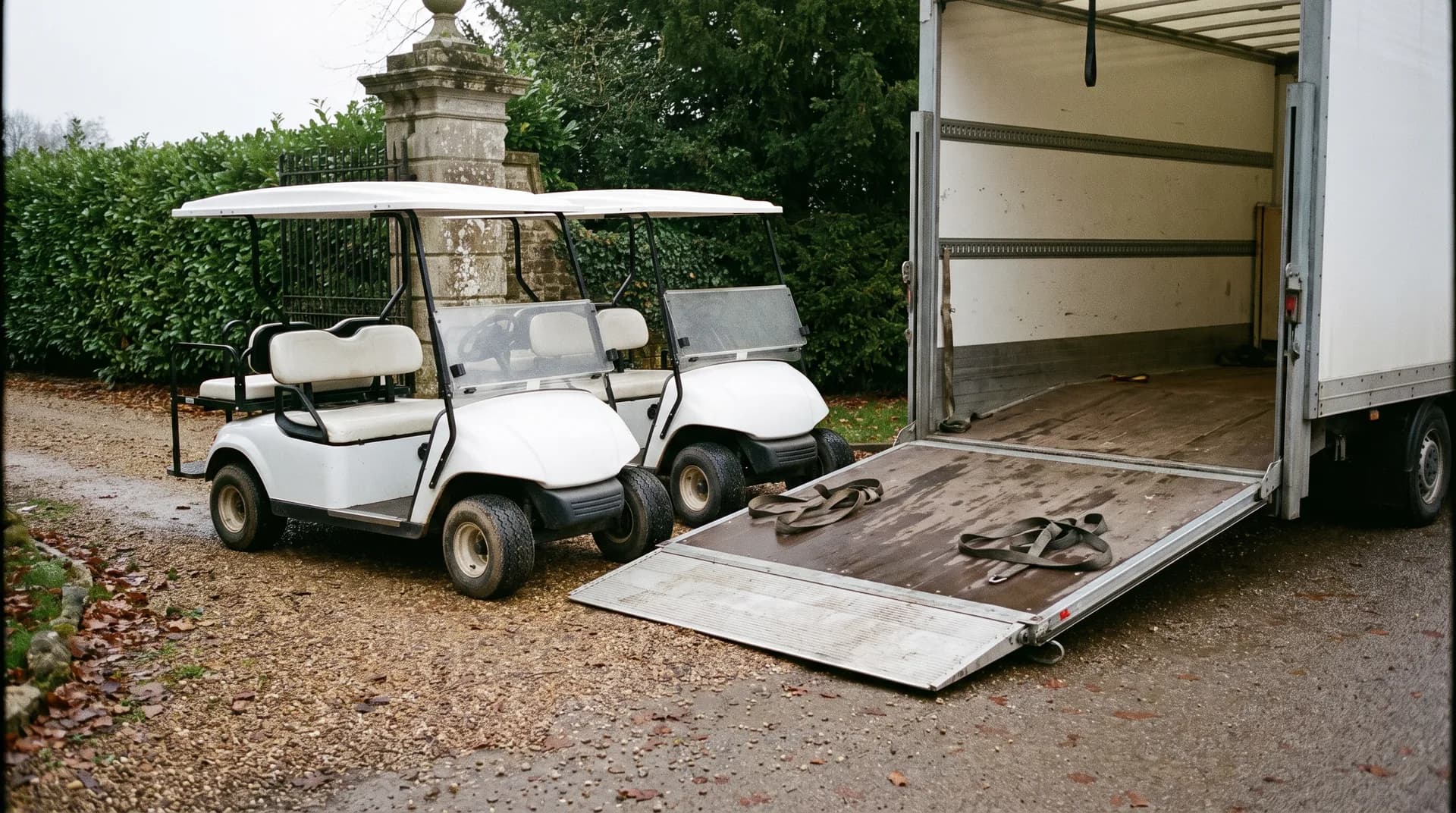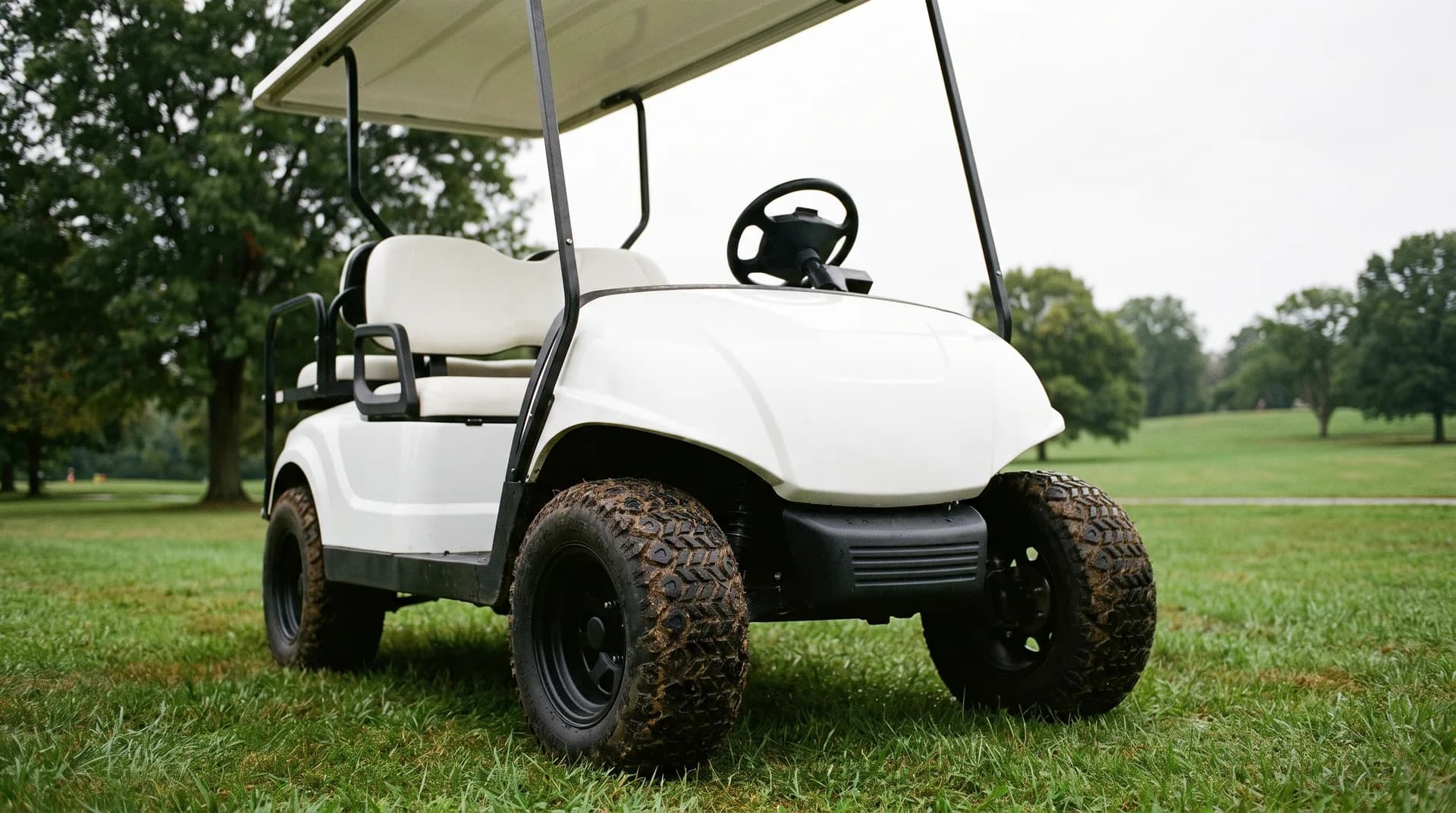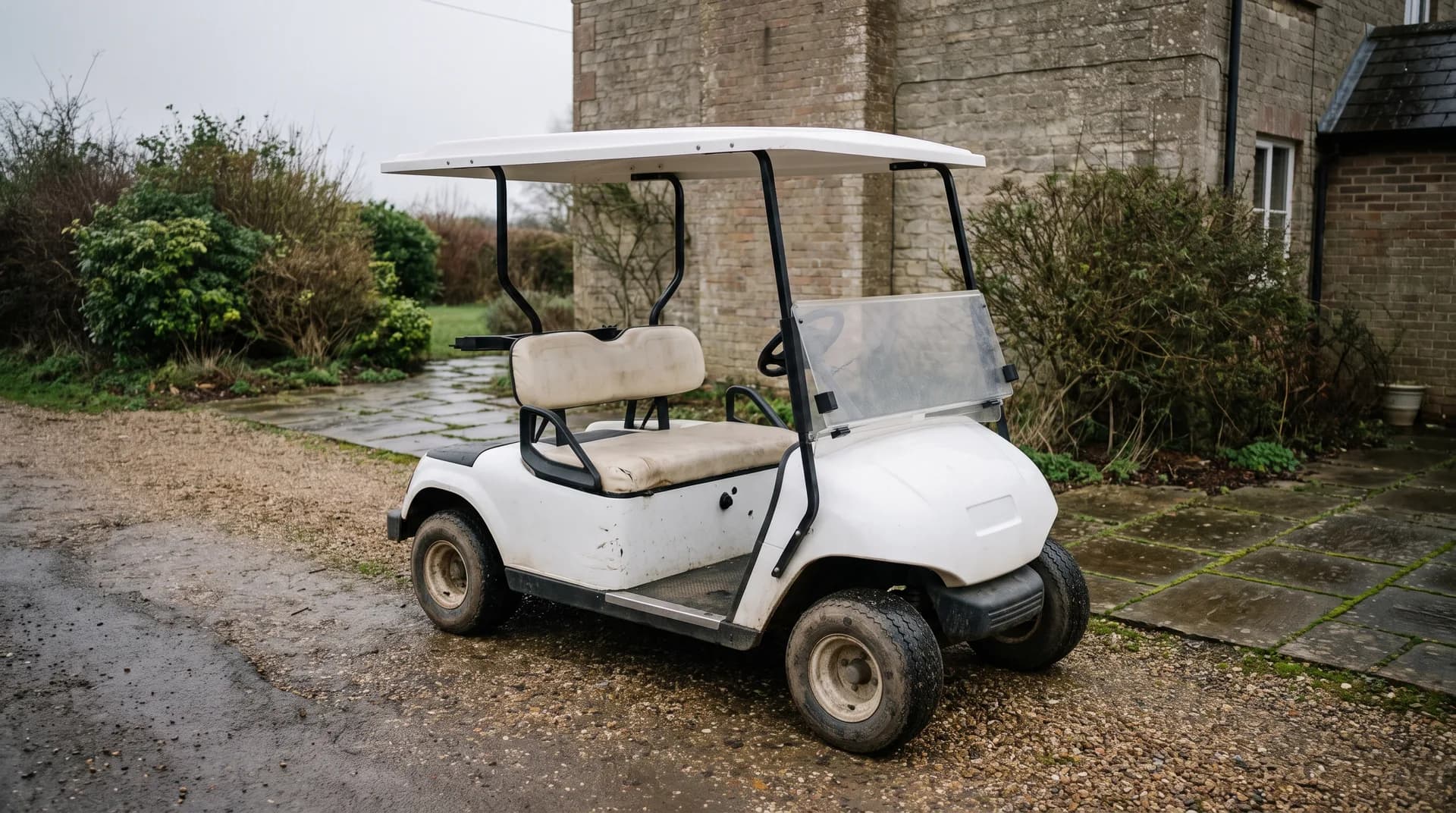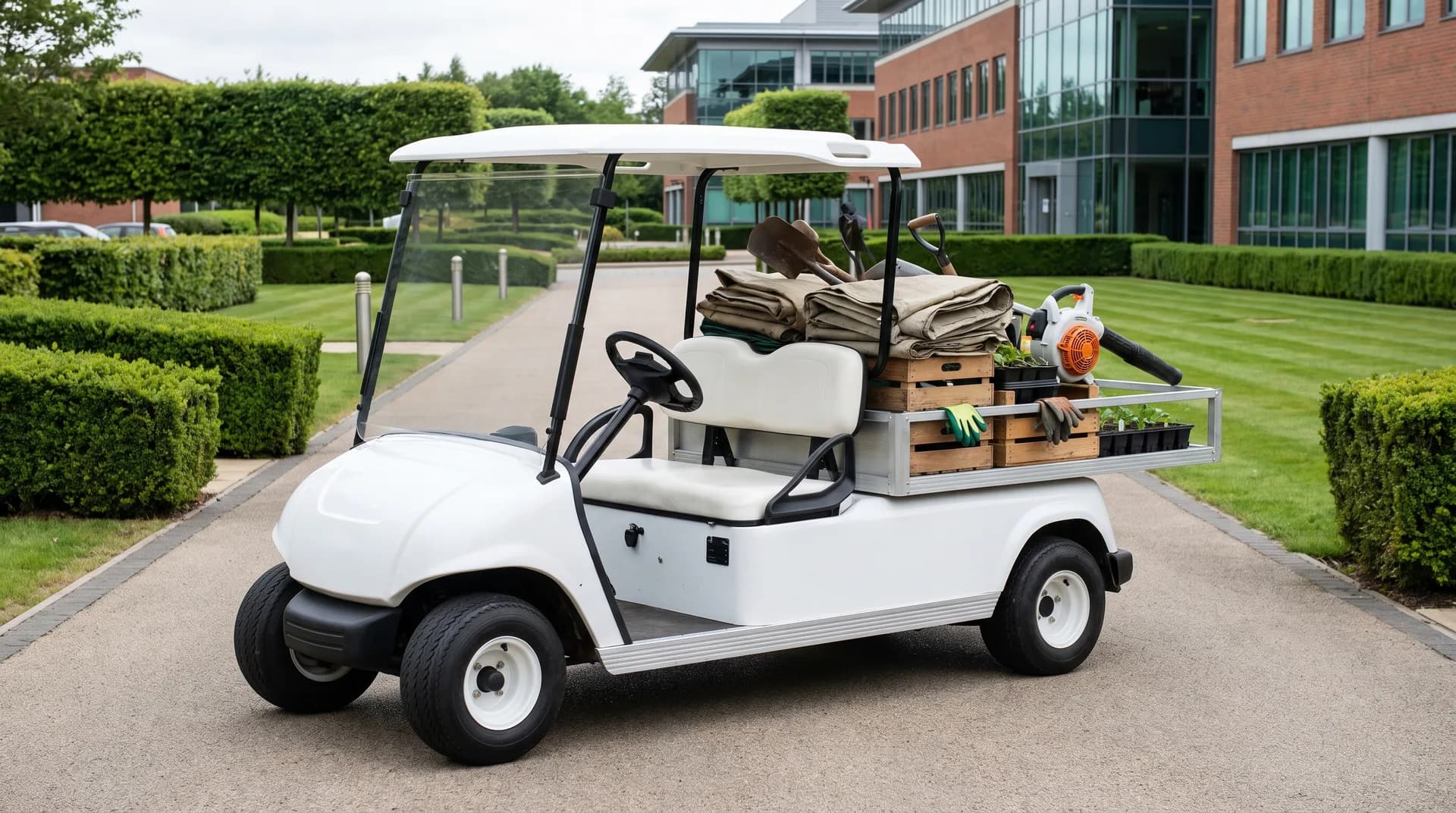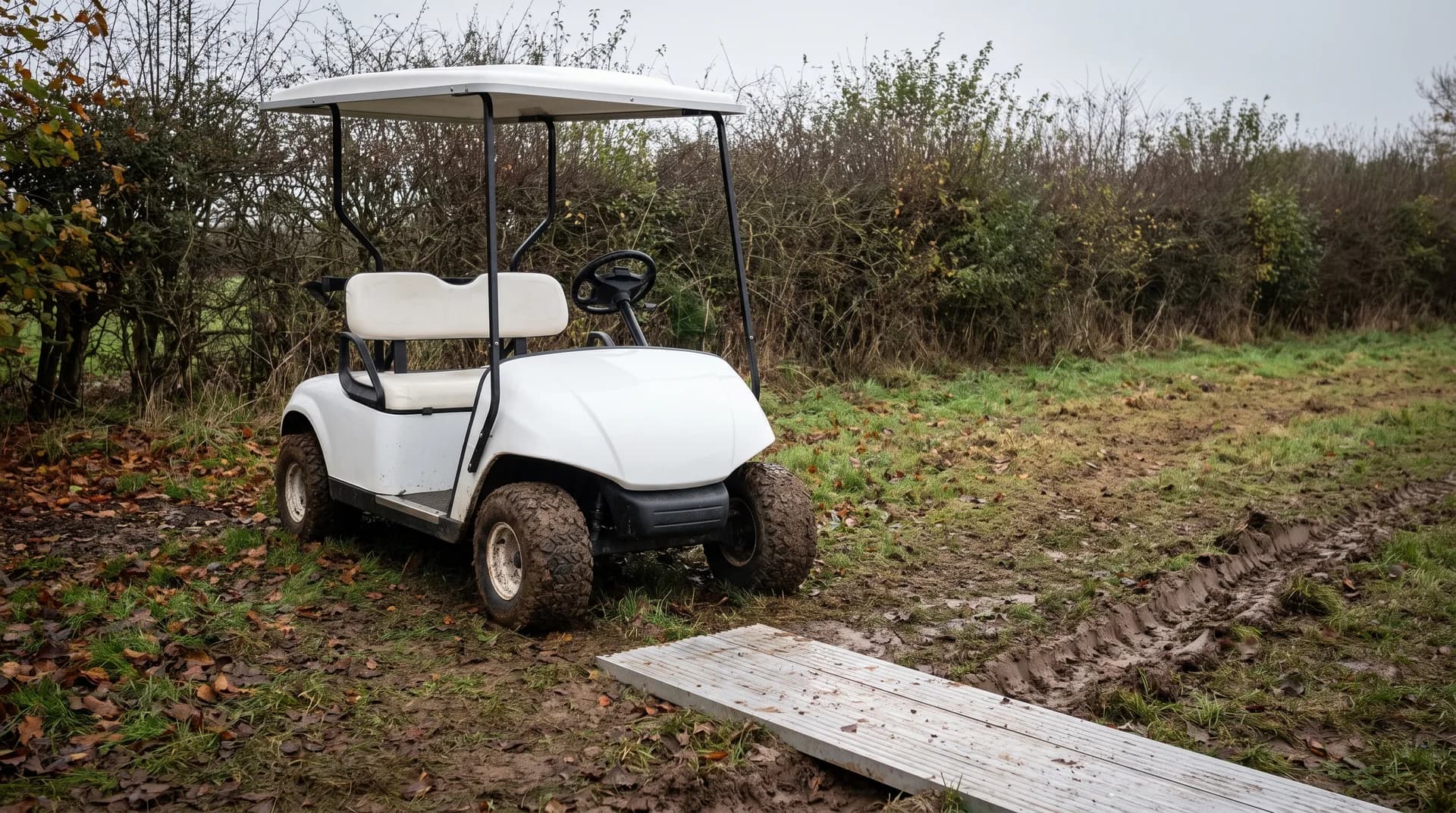
Ground decides more about an event buggy hire than the vehicles do, and it is the thing organisers describe least accurately. Buggies on muddy ground are the case everyone worries about and the one most often described optimistically. Everyone says the site is a flat field. Almost no site is a flat field. It has a slope nobody mentions because they have walked it a hundred times, a boggy corner by the gate, a gravel drive that eats momentum, a cobbled courtyard that rattles teeth, and a section that turns to soup after two days of rain. None of this makes buggies unworkable; it makes them a specification problem rather than a catalogue purchase. This guide walks through the surfaces you actually encounter at UK events, what each demands of a vehicle, and the access questions that determine whether the fleet can even be delivered.
- Traction, not power, is what fails on wet grass; tyre choice matters more than motor size.
- Describe your ground honestly, including the bad corner, because the supplier specifies from what you tell them.
- Gradient plus load is the combination that catches people out, not gradient alone.
- Access for the delivery transporter is a separate question from whether the buggies can work on your site.
- Trackway on the two or three critical runs is usually cheaper than a recovery or a failed shuttle.
Buggies on muddy ground, and the other surfaces you meet at UK events
Six, in rough order of how often they cause problems. Dry grass is the easy case and the one everyone plans for. Wet grass is the common case and the one that catches people out, because it changes gradually: a field that carried vehicles happily on Thursday is greasy on Friday and rutted by Saturday afternoon, especially where every vehicle takes the same line. Mud is the wet-grass case after it has been worked, and it is a traction and rutting problem rather than a power problem. Gravel is generally fine but soft, deep gravel drags noticeably and is hard work on a long shuttle. Cobbles and setts, common at historic venues, are stable but uncomfortable and unkind to a vehicle over a full day. Hard standing is the best surface there is, and the reason most well-run shuttles route along service roads wherever they can. Our tyres guide covers what each surface asks of the rubber.
- How it behaves
- Reliable, forgiving
- What to specify
- Standard turf tyres, normal routing
- How it behaves
- Greasy, degrades where lines repeat
- What to specify
- All-terrain tyres, vary the line, avoid cross-slopes
- How it behaves
- Traction loss and rutting
- What to specify
- All-terrain tyres, trackway on key runs, route changes
- How it behaves
- Drags, saps range on long shuttles
- What to specify
- Wider tyres, accept slower round trips
- How it behaves
- Stable but harsh, tiring over a day
- What to specify
- Lower speeds, comfort seating, shorter shifts
- How it behaves
- Best case for grip and range
- What to specify
- Route along it wherever possible
| How it behaves | What to specify | |
|---|---|---|
| Dry grass | Reliable, forgiving | Standard turf tyres, normal routing |
| Wet grass | Greasy, degrades where lines repeat | All-terrain tyres, vary the line, avoid cross-slopes |
| Churned mud | Traction loss and rutting | All-terrain tyres, trackway on key runs, route changes |
| Deep or soft gravel | Drags, saps range on long shuttles | Wider tyres, accept slower round trips |
| Cobbles and setts | Stable but harsh, tiring over a day | Lower speeds, comfort seating, shorter shifts |
| Hard standing | Best case for grip and range | Route along it wherever possible |
Slopes: gradient plus load is the real test
A gradient that a buggy climbs easily when empty is a genuine test when it is carrying five adults and their coats, and that difference is where estate and parkland venues catch organisers out. The specific hazards are cross-slopes, where a vehicle traverses a hill rather than climbing it directly, and wet descents, where control rather than power is the issue. The practical rules are straightforward: route directly up and down slopes rather than across them, keep loads honest, and brief drivers to descend steadily using the motor's braking rather than riding the brake pedal. If your site has a serious climb on the main run, say so at quote stage so the specification allows for it. Our guide on how steep a hill a buggy can climb sets out what changes with load and gradient.
Access is a separate question from ground
This distinction is worth making explicitly because it causes real problems. Whether a buggy can work on your grass is one question. Whether a transporter can get onto your site to deliver it is an entirely different one, and a site can pass the first test and fail the second. The delivery vehicle is long, wide and heavy, and it needs a legal place to stop, a firm surface to unload onto and room to turn. A narrow lane, a low bridge, a height barrier at the car park entrance, a soft verge, a gate with stone piers, or a village with a weight restriction can each stop a delivery that the buggies themselves would have handled fine. Work through both questions separately when you enquire, and send a photograph of the entrance; our delivery and collection guide sets out exactly what suppliers need to know.
When to spend money on the ground instead of the vehicles
Sometimes the honest answer is that no specification of buggy solves your site, and the money is better spent on the ground. Trackway or matting on the two or three critical runs, the accessibility route, the gate approach, the crossing that everything funnels through, transforms a marginal site and is routinely cheaper than a recovery, a failed shuttle or a day of complaints. The same logic applies to routing: moving a shuttle onto a service road adds distance and removes risk, and the distance almost always costs less. And it applies to timing: on a site that degrades under use, running the heaviest movements early rather than late preserves the ground for when the public are there. Think of ground as a resource you spend over the event, because on a wet British field, that is exactly what it is.
How to describe your ground so the quote is right
- The main surface, honestly: grass, hard standing, gravel, cobbles or a mix
- What the ground does after two days of rain, in your own words
- The worst section on the route, and whether it can be avoided
- Any slope on the main run, and whether the route climbs it or crosses it
- Whether trackway or matting is planned, and where
- The entrance: width, height restrictions, gate piers, surface, and a photograph
- Where a transporter can legally stop and turn
- The distance from the unloading point to where the buggies are needed
Get the ground right and the rest follows
Almost every event buggy operation that struggled did so because the ground was described optimistically at the quote stage. Nobody was being dishonest; sites simply look different in August than they do in the mind of someone who last walked them in a dry June. The fix costs nothing: describe the ground as it is at its worst, name the bad corner, photograph the entrance, and let the supplier specify for reality. Tell us what your site does when it rains, and we will specify the tyres, the vehicles and the delivery around it, and price it properly in your hire quote rather than discovering it on the morning. Grass sites are where this matters most: county shows, equestrian events and festivals all live or die on ground conditions.
Frequently asked questions
Will golf buggies work on a muddy field?+
Usually yes, with the right tyres and sensible routing, though heavily churned mud is a traction and rutting problem rather than a power one. Tell your supplier the surface is grass and what it does after rain, and consider trackway on the two or three most critical runs.
Do buggies cope with wet grass at events?+
They do, but grip rather than power is the limit, and wet grass degrades where every vehicle takes the same line. All-terrain tyres, varying the route line, avoiding cross-slopes and briefing drivers to be smooth with the throttle all make a real difference.
Can buggies handle slopes at an event site?+
Modern buggies climb normal event gradients comfortably, but load changes everything, and a slope that is trivial when empty is a real test with five adults aboard. Route directly up and down rather than across, and tell the supplier about any serious climb at quote stage.
What do I need to tell a hire company about my site?+
The main surface and what it does when wet, the worst section on the route, any slopes, the entrance width and any height restrictions, where a transporter can stop and turn, and the distance from unloading to where the buggies are needed. A photo of the entrance answers most of it.
Is trackway worth it for a buggy shuttle?+
On a marginal site, very often. Trackway or matting on two or three critical runs, typically the accessibility route, the gate approach and the main funnel, costs less than a recovery, a failed shuttle or a day of complaints, and it protects the ground for the rest of the event.
Tell us what the ground really does
Describe your site at its worst and we will specify tyres, vehicles and delivery to suit it, then price the whole thing properly.
Related solutions
Ready to explore what we build?
See the vehicles and the setting this applies to, or get a tailored quote built around your site.

Ready to find the right buggy?
Tell us how and where it will work and we will specify a vehicle and a tailored quote built around you. Every build comes with a 3-year warranty and a 24-hour priority call-out.
Our guides are written and reviewed by the Hawke Electric Vehicles team, the people who specify, build, deliver and support the vehicles. We focus on honest, practical advice and flag where a figure depends on the build rather than guessing.
More guides by Hawke