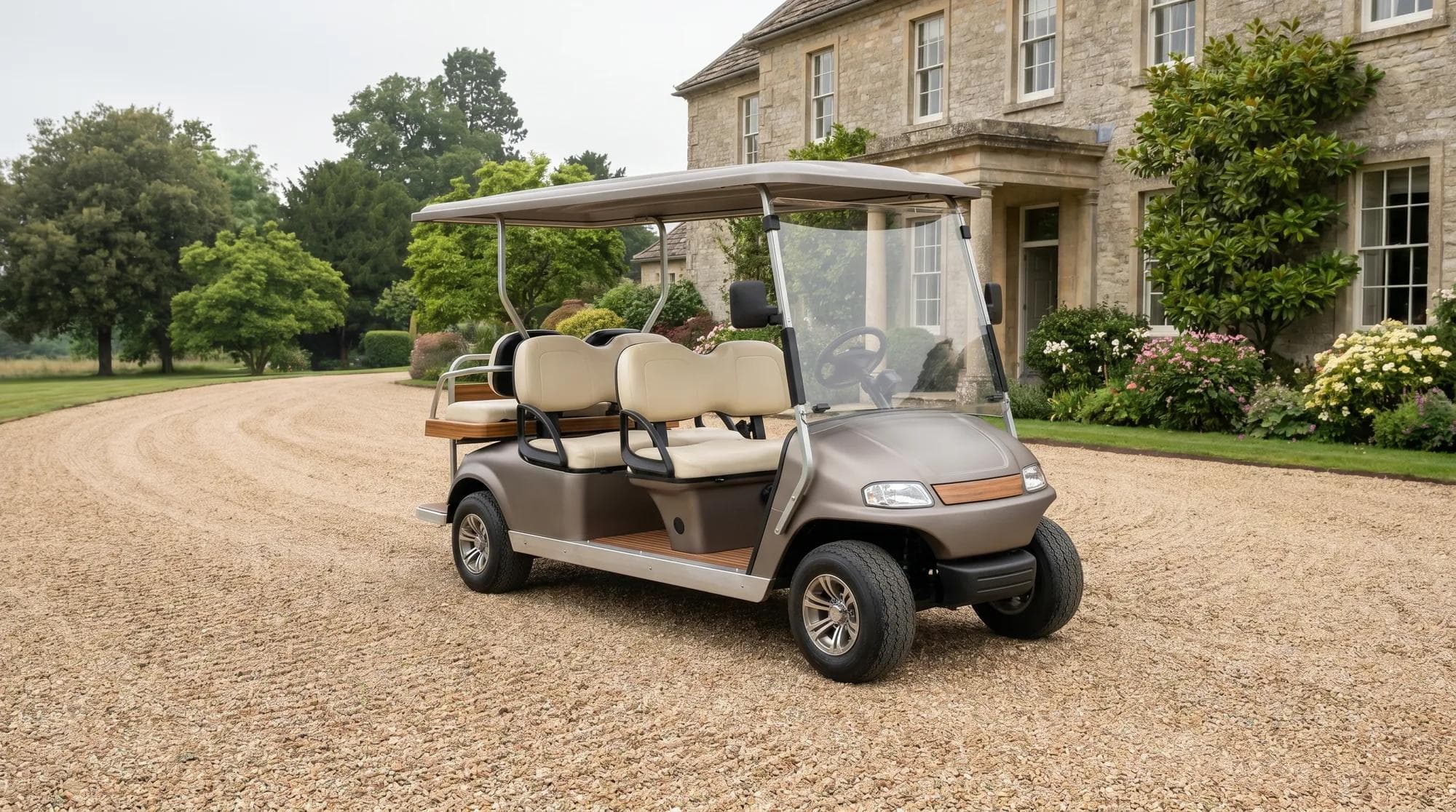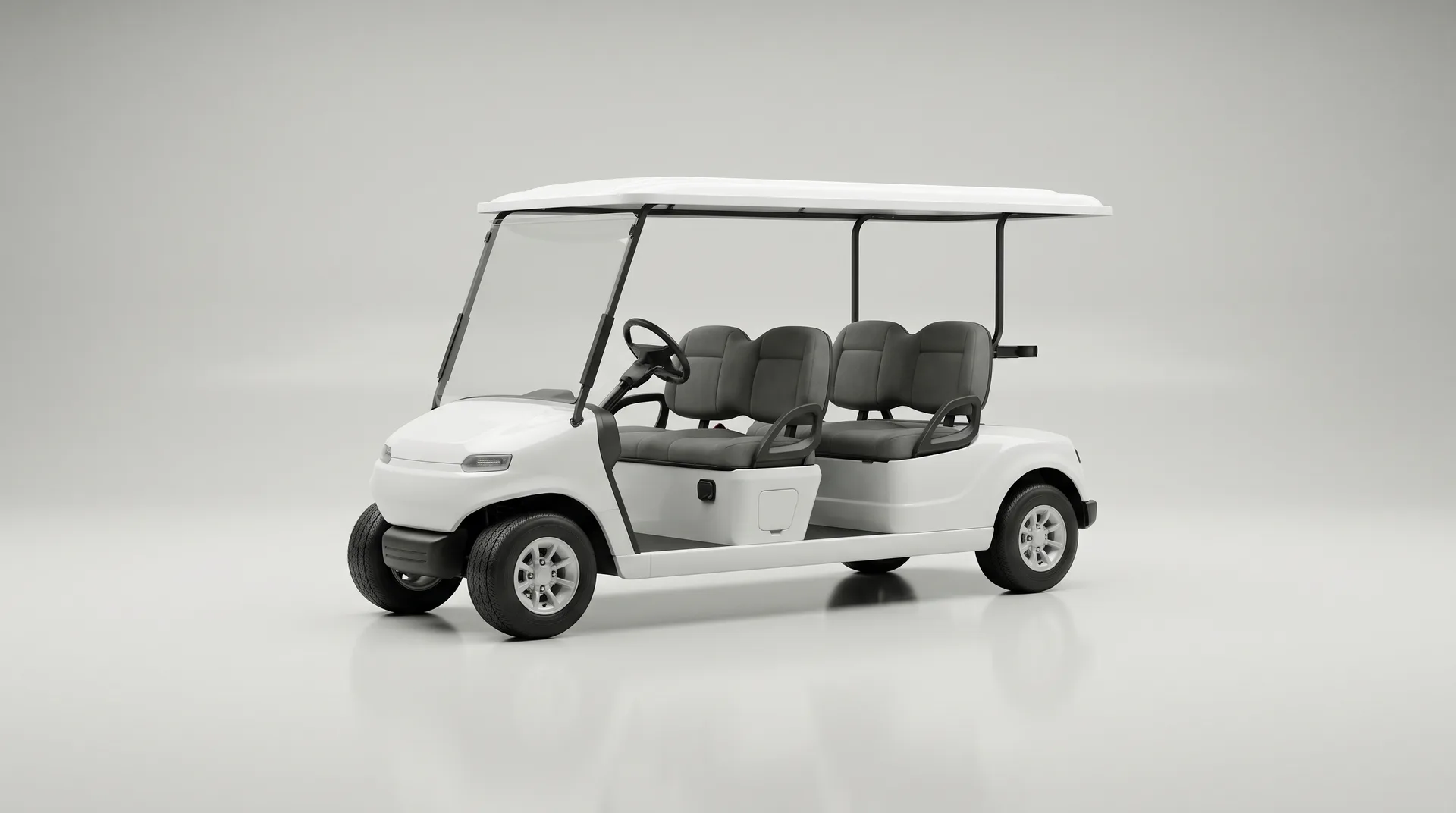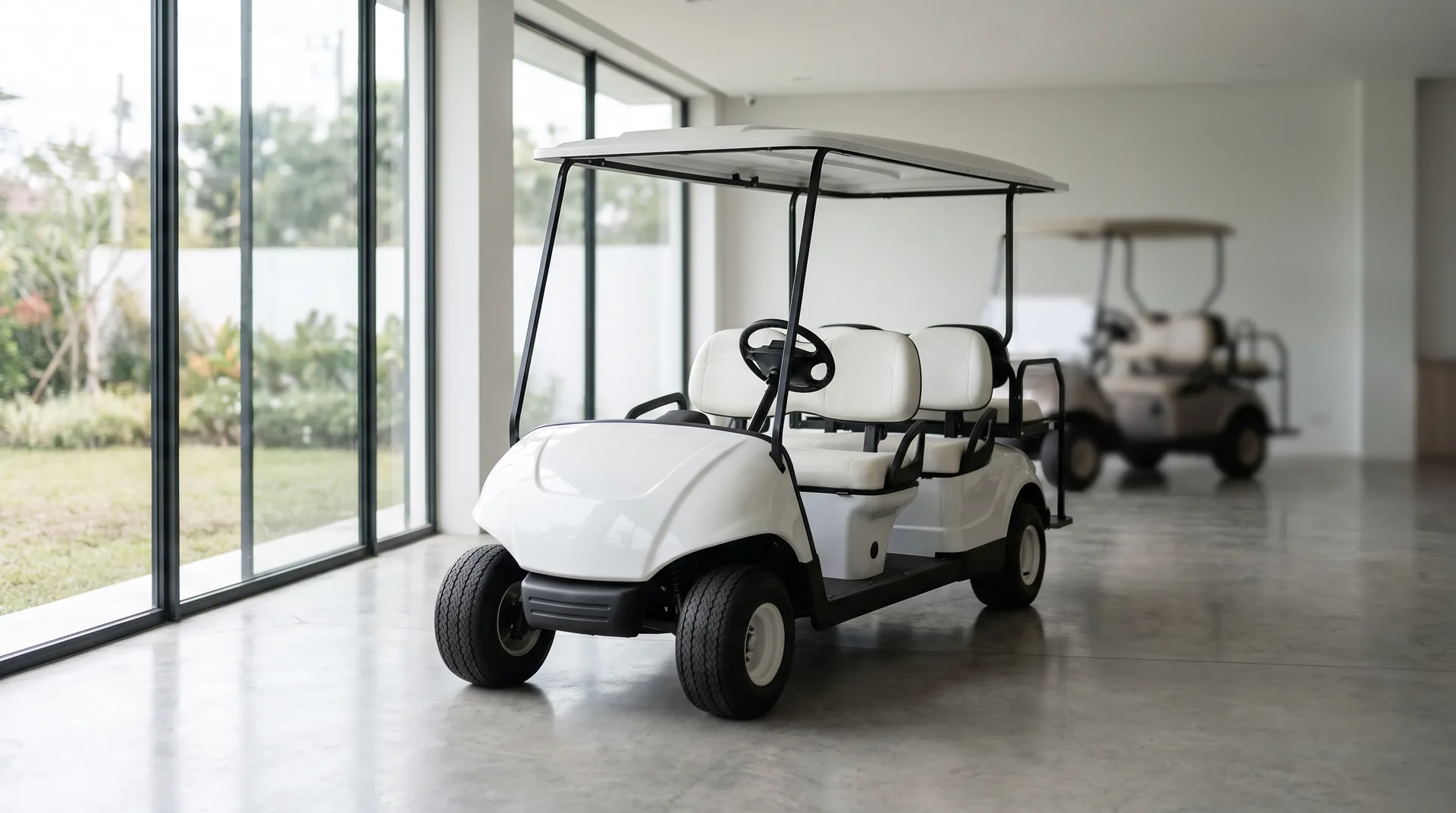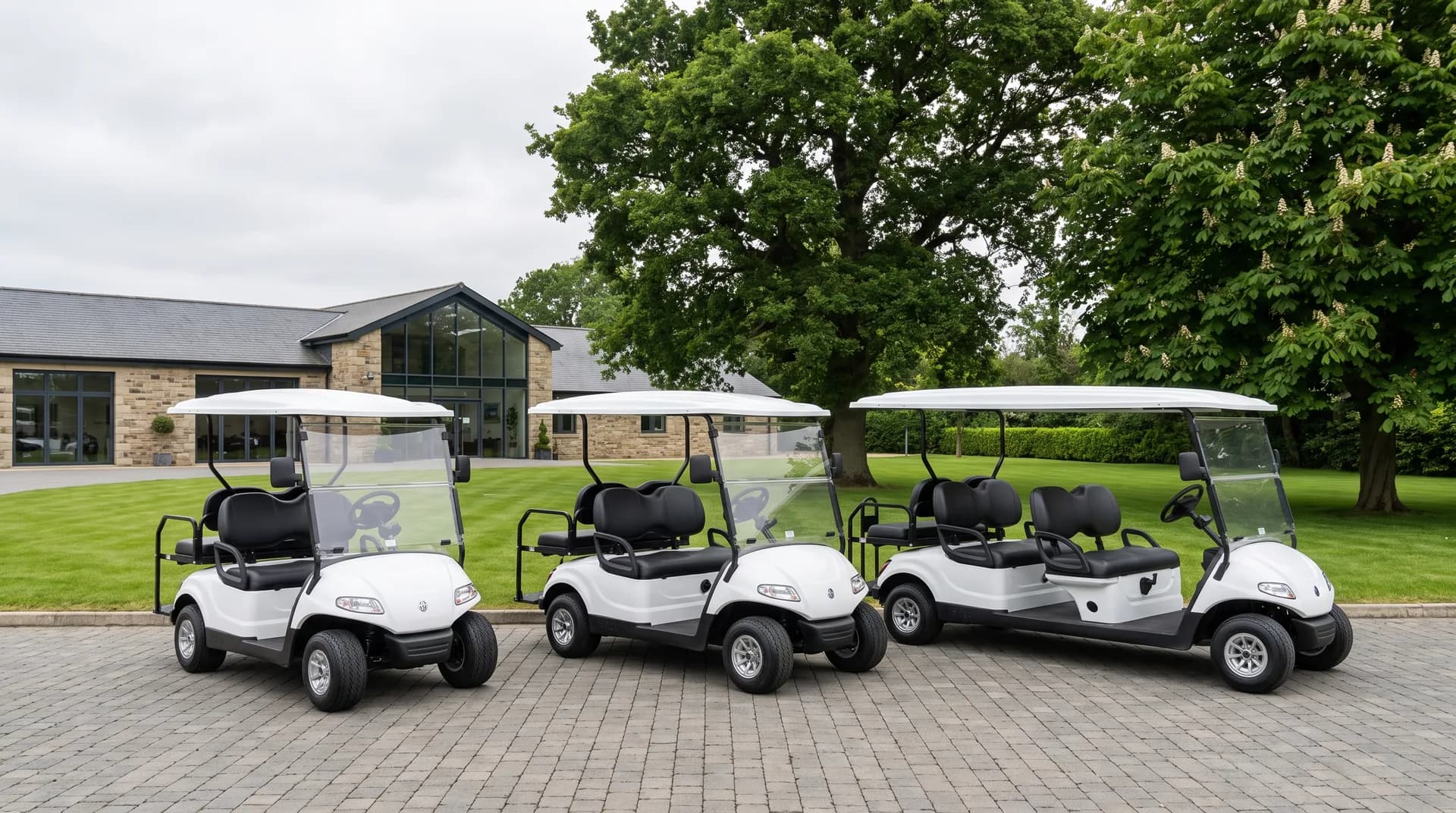
The short answer first: a new eight-seat electric buggy starts from around £23,500 in the UK. Our S8 opens at that figure, and specification takes the price up from there rather than down. An eight-seater is the largest passenger machine most sites ever run, a shuttle in all but name, so its price is driven by the same things that drive any people-mover: platform size, battery, weather protection and how many you are buying at once. This guide sets out what actually moves an 8 seater golf buggy price, what the used market honestly looks like, and the point at which hiring for a few event days a year makes more sense than owning at all.
- New eight-seat electric buggies start from around £23,500; specification moves the figure up, not down.
- Battery chemistry is the biggest single variable: lithium costs more up front and usually less over the vehicle's life.
- Weather protection matters more on an eight-seater than any other size, because guests in rows three and four cannot huddle under one canopy.
- Used eight-seaters exist but are scarcer than smaller sizes, and a tired battery pack can erase the saving.
- If the vehicle would work fewer than roughly ten to fifteen days a year, price up hire before you price up purchase.
What an 8-seater golf buggy costs in the UK
New, the honest starting point is around £23,500, which is where our S8 begins. For context across the range, a two-seater starts from around £11,500, a four-seater from £14,900 and a six-seater from £18,900, so the step from six to eight seats is a real one: you are paying for a longer platform, a heavier chassis, more seating and a battery sized to haul eight adults rather than four. A well-specified eight-seater with lithium power, full weather protection and livery will land comfortably above the starting figure, and fleet orders change the arithmetic again. For everything to look for beyond the price alone, our 8-seater buyer's guide covers specification, duty fit and the questions worth asking.
What drives an 8 seater golf buggy price up or down
Four things move the figure more than anything else. First, battery chemistry and capacity: an eight-seater works harder per mile than any smaller buggy, so the gap between lead-acid and lithium shows up faster in range, charging time and pack life, and lithium's higher up-front cost usually repays itself on a machine this size. Second, weather protection: a canopy is standard thinking, but doors, screens and full enclosure are what keep rows three and four usable in a British winter, and they are priced options. Third, duty fit-out: grab rails, hill-rated brakes, road-style lighting for private estates, luggage racks for hotels and airports. Fourth, quantity: one buggy is a purchase, four is a fleet, and fleet pricing, delivery and servicing are negotiated differently. Browse the eight-seater range to see how specification builds.
New vs used: where the value really sits
Used eight-seaters do come up, typically ex-hotel, ex-airport or ex-events machines, but they are scarcer than used four-seaters and they have usually worked hard. Expect used prices to sit meaningfully below new, with age, hours and above all battery condition setting the figure. That last point deserves emphasis: a replacement battery pack on an eight-seater is a substantial bill, and a used machine on tired lead-acid can cost more over three years than a new one on lithium. Ask the pack's age and chemistry before anything else, and read our new versus used guide before you commit either way. A used bargain that needs batteries, tyres and a canopy is not a bargain; a well-kept two-year-old machine with a documented service history genuinely can be.
Buying vs hiring for occasional need
An eight-seater is the size most often bought for the wrong reason: a handful of big days a year. If the vehicle would earn its keep daily, moving guests, staff or visitors, ownership is straightforward to justify. If it would sit in a shed between an open day in June and a carol service in December, hire is almost always the better arithmetic, because you pay only for the days used, delivery and support are included, and you carry no battery, storage or insurance burden in between. As a rule of thumb, below roughly ten to fifteen working days a year, price hire first. Our event buggy hire cost guide explains how hire pricing works, and our hire service covers single days through full seasons.
- Buy new
- From £23,500
- Buy used
- Below new, varies with age and battery
- Hire
- Per day or per week, no capital
- Buy new
- None, new pack under warranty
- Buy used
- The main risk, always check the pack
- Hire
- None, the operator's problem
- Buy new
- Full warranty and dealer support
- Buy used
- Little or none unless dealer-sold
- Hire
- Included for the hire period
- Buy new
- Daily or weekly duty
- Buy used
- Regular use on a tighter budget
- Hire
- Fewer than ten to fifteen days a year
| Buy new | Buy used | Hire | |
|---|---|---|---|
| Typical outlay | From £23,500 | Below new, varies with age and battery | Per day or per week, no capital |
| Battery risk | None, new pack under warranty | The main risk, always check the pack | None, the operator's problem |
| Warranty and support | Full warranty and dealer support | Little or none unless dealer-sold | Included for the hire period |
| Best for | Daily or weekly duty | Regular use on a tighter budget | Fewer than ten to fifteen days a year |
Getting an accurate price for your site
Because specification moves the figure, the fastest route to a real number is to tell us what the buggy has to do: how many people, how far, over what ground, stored where, and whether one machine or several. We will specify honestly, including telling you if a six-seater or two four-seaters would serve you better, and price to that specification. If eight seats turns out to be more than you need, the step down to a six-seater saves several thousand pounds, and our 6-seater price guide covers that size in the same detail.
Frequently asked questions
How much is an 8-seater golf buggy in the UK?+
New, from around £23,500, which is where our S8 starts. Lithium power, full weather protection, duty fit-out and livery take the figure up from there, and fleet orders are priced separately. Used examples cost less but battery condition decides whether they are actually good value.
Why do 8-seaters cost so much more than 4-seaters?+
A longer, heavier platform, twice the seating, uprated brakes and suspension, and a battery sized to move eight adults all day. A four-seater starts from around £14,900 and an eight-seater from £23,500; the gap is real engineering, not badge.
Is lithium worth it on an eight-seater?+
Usually, yes. An eight-seater works harder per mile than any smaller buggy, so lithium's advantages in range, charging speed and pack life show up faster. For a machine in regular passenger service it is normally the better total cost of ownership.
Are used 8-seaters a good buy?+
They can be, but they are scarcer than smaller sizes and most have worked hard in hotel, airport or events service. Check hours, service history and above all the battery pack; a replacement pack is a substantial bill on a machine this size.
Should I hire instead of buying?+
If the buggy would work fewer than roughly ten to fifteen days a year, almost certainly. Hire means you pay only for the days used, with delivery and support included, and carry no storage, battery or insurance burden between events.
Price an eight-seater for your site
Tell us how many people it must move, how far and over what ground, and we will specify and price it honestly, including when a smaller size or hire would serve you better.
Related solutions
Ready to explore what we build?
See the vehicles and the setting this applies to, or get a tailored quote built around your site.
Ready to find the right buggy?
Tell us how and where it will work and we will specify a vehicle and a tailored quote built around you. Every build comes with a 3-year warranty and a 24-hour priority call-out.
Our guides are written and reviewed by the Hawke Electric Vehicles team, the people who specify, build, deliver and support the vehicles. We focus on honest, practical advice and flag where a figure depends on the build rather than guessing.
More guides by Hawke