- A workplace transport safety vehicle is only ever part of the answer: the foundation is a site traffic plan that keeps people and plant apart wherever it can.
- Where a vehicle is the right tool, a low-speed, high-visibility electric buggy is far better suited to shared people-and-traffic areas than a van or larger plant.
- Controlled speed, good all-round visibility and a quiet drivetrain reduce the chance of a vehicle and a person ending up in the same place at the same time.
- HSE workplace transport guidance and the HSG136 publication set out the principles of safe site movement, and you should follow the current versions.
- Treat any vehicle choice as one line in a wider risk assessment, not a fix on its own.
Workplace transport is one of the more persistent causes of serious injury on Britain's sites, and the pattern behind it rarely changes. People and vehicles share the same space, something goes wrong in the gap between them, and someone gets hurt. The honest starting point is that no single vehicle makes a site safe. Safe movement comes from a plan that keeps people and plant apart, and only then from choosing vehicles that suit the areas where they still have to mix.
This guide looks at where a low-speed, high-visibility electric buggy fits in that picture. Used in the right place, on the right routes, it is a far gentler thing to have moving around people than a van or a piece of larger plant. We will set out why, and where the limits are, and we will point you to the Health and Safety Executive guidance you should be working from rather than ours.
Start with the site, not the vehicle
The first principle of workplace transport safety is separation. Keep pedestrians and vehicles in different spaces wherever you can, with marked walkways, barriers, separate gates and clear crossing points. The second is that where they do share space, you control the conditions: speed limits, sight lines, signage and a clear set of routes everyone understands. A vehicle choice sits underneath both of those, not above them. The buggy matters, but only after the plan.
The Health and Safety Executive sets this out in its workplace transport guidance and in the publication HSG136, which covers the safe use of vehicles on premises. We are summarising the principles here in our own words, and the detail changes over time, so treat what follows as context and follow the current HSE guidance and HSG136 when you build your own plan.
Why a low-speed electric buggy suits shared areas
Once you have separated what you can, you are left with places where people and a vehicle genuinely have to share space: a yard, a warehouse aisle, a campus path, a route between buildings. In those areas, the character of the vehicle matters a great deal. A low-speed electric buggy brings three things that suit a shared space better than most alternatives:
- Controlled speed. A buggy can be set to a sensible site limit and held there, rather than relying on a driver to keep a faster vehicle slow.
- All-round visibility. An open or glazed cab gives the driver a clear view of people nearby, with far fewer blind spots than a panel van.
- A quiet, smooth drive. No engine noise or fumes, and gentle acceleration, which suits moving carefully among people on foot.
None of this makes a buggy safe on its own. A slow, visible vehicle in the wrong place, driven badly, is still a hazard. But matched to the right routes and a clear plan, it is a much easier vehicle to live alongside than something heavier and faster. The same thinking runs through our guides to electric buggies for warehouses and electric buggies for construction sites.
The visibility question, both ways
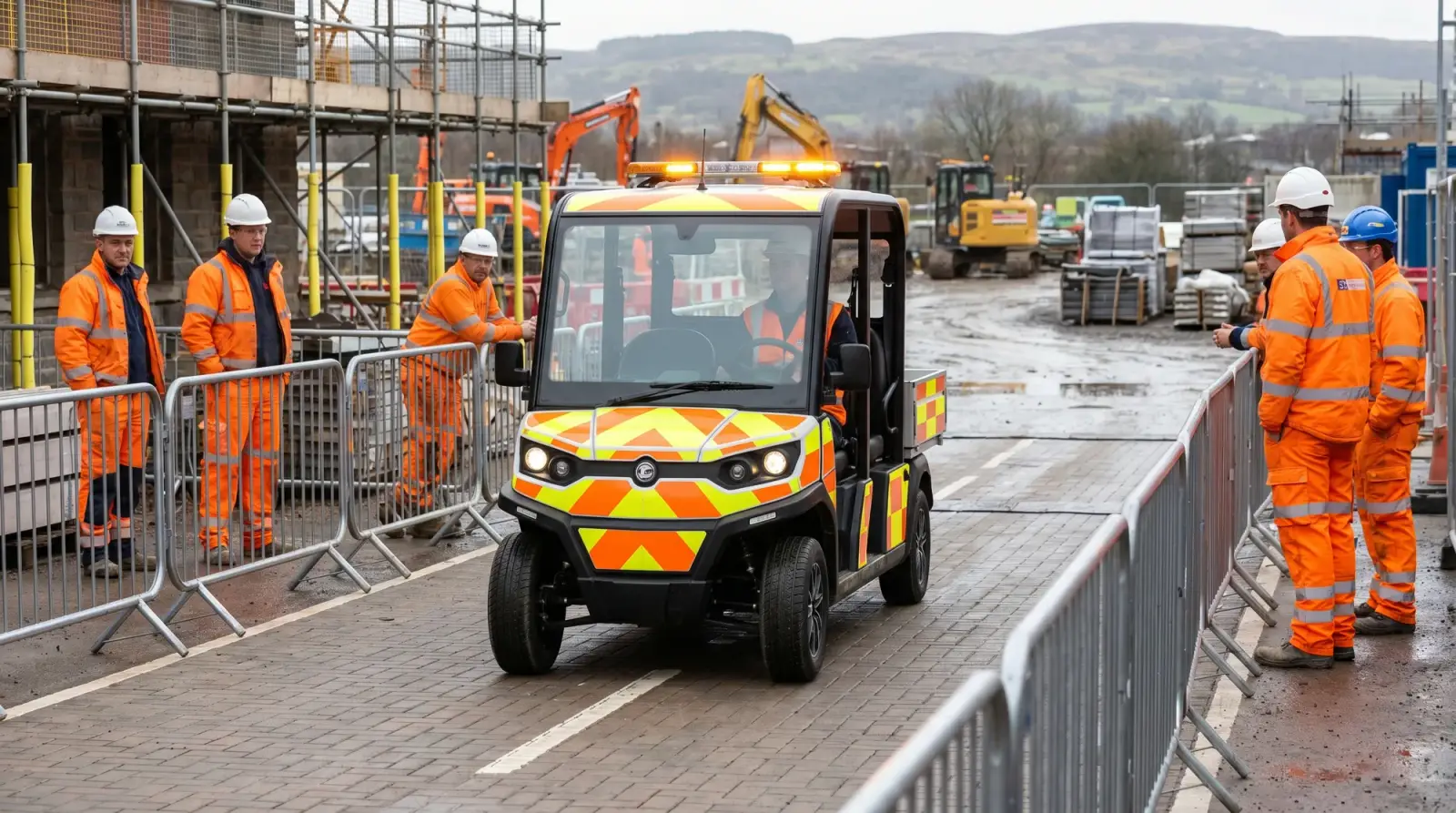
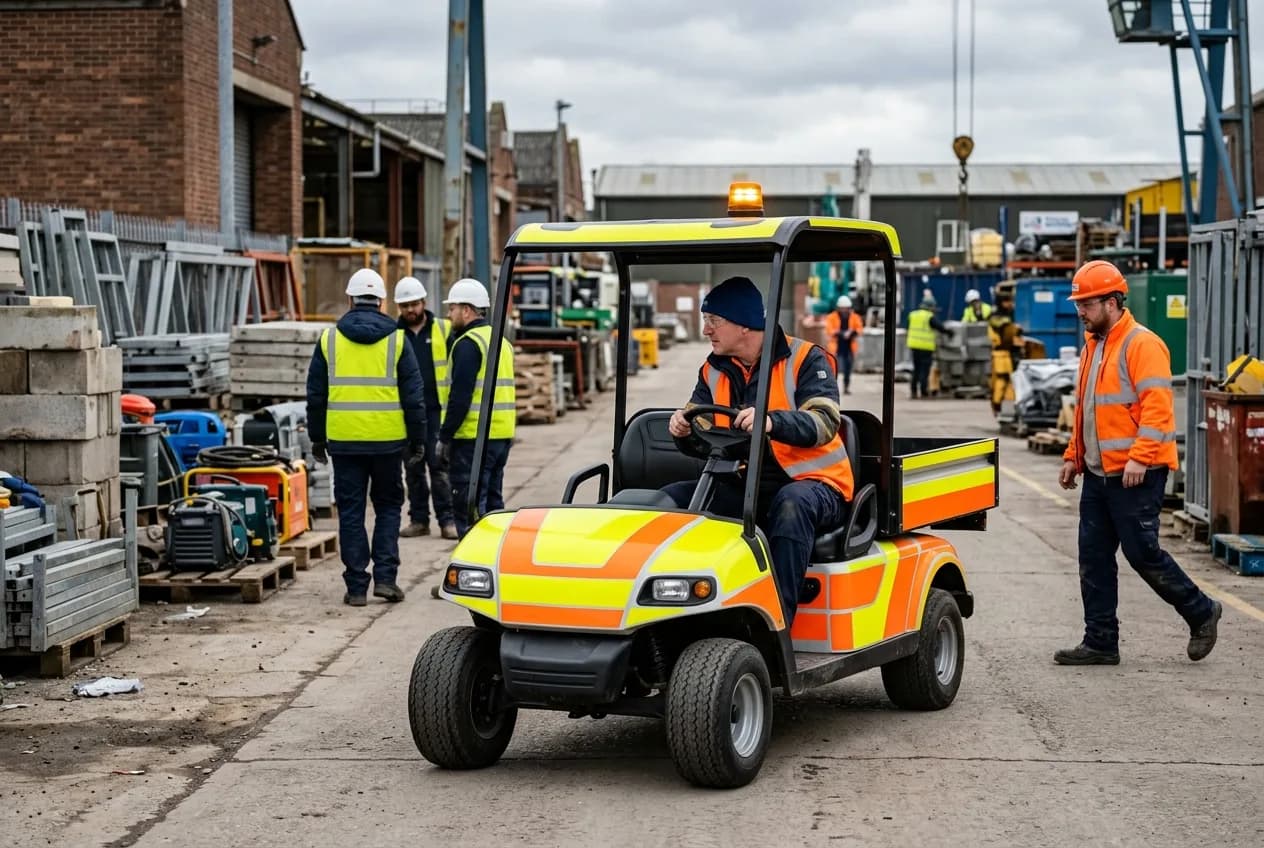
Workplace transport safety is partly about the driver seeing people, and partly about people seeing the vehicle. A buggy helps with the first through its sight lines. For the second, you can specify it to be seen: high-visibility livery, beacons, marker lights and, because an electric vehicle is so quiet, a reversing alarm or a sounder where a site needs one. The quietness is a genuine benefit near aircraft, indoors or at night, but it does mean people may not hear the vehicle coming, so making it visible and, where appropriate, audible matters.
Fit it into the risk assessment, don't bolt it on
The way to introduce any site vehicle is through the risk assessment rather than around it. Map the routes the vehicle will actually use, the points where it crosses a walkway, the times of day people are about, and who is allowed to drive it and on what training. A buggy used on agreed routes by trained drivers, at a controlled speed, is part of a safe system. The same buggy used anywhere, by anyone, at whatever speed, is not. The vehicle does not change; the system around it does.
- 01
Separate first
Identify where people and vehicles can be kept fully apart with walkways, barriers and gates, and do that before anything else.
- 02
Define the routes
For the areas that must be shared, set the vehicle routes, crossing points, speed limits and one-way flows clearly on the ground.
- 03
Spec the vehicle to suit
Choose a low-speed, high-visibility buggy and specify lighting, beacons and any audible warning the site needs.
- 04
Train and review
Authorise and train drivers, brief pedestrians on the routes, and review the arrangement as the site changes.
Built for shared, busy sites
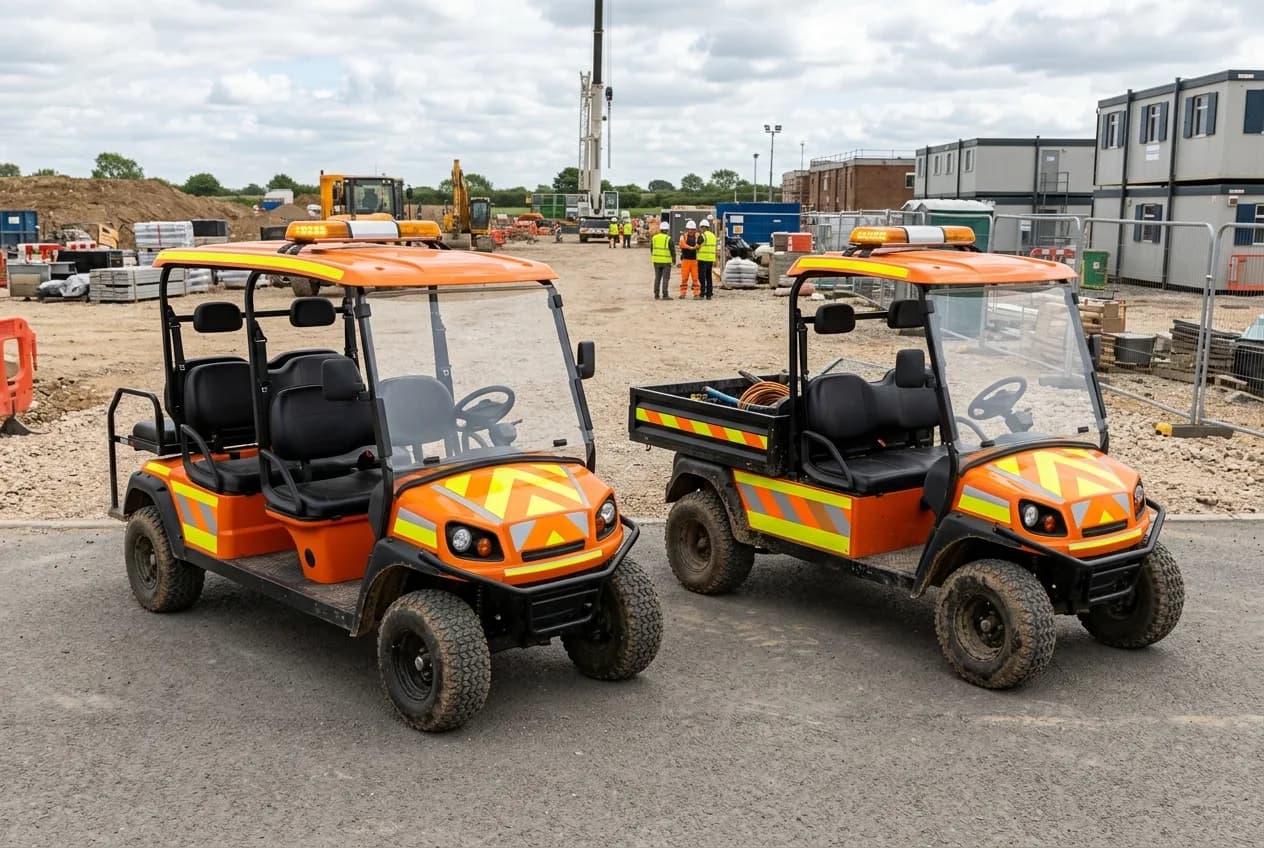
Low-speed people and utility buggies, made to order, assembled and finished in the UK, with high-visibility livery, beacons, lighting and audible warnings specified into the build to suit your site traffic plan.
Where a buggy is the wrong tool
It is worth being plain about the limits. A buggy is not a substitute for separation, and it is not the right vehicle for every job. Heavy loads, fast routes, public roads or work that genuinely needs larger plant are not buggy territory, and pretending otherwise helps no one. The case for a low-speed electric buggy is narrow and real: moving people and lighter loads, slowly and visibly, in areas where they have to share space with foot traffic. Keep it to that and it earns its place in a safe site.
Planning safer vehicle movement on your site?
Tell us your routes, the shared areas and your site speed limit, and we will recommend a low-speed, high-visibility buggy specified to support your workplace transport plan.
Frequently asked questions
Does an electric buggy make our site compliant with workplace transport rules?+
No vehicle does that on its own. Compliance comes from your risk assessment and a safe site traffic plan that separates people and plant. A low-speed, high-visibility buggy can be a sensible part of that plan, but you should follow current HSE workplace transport guidance and HSG136.
What is HSG136?+
It is the Health and Safety Executive publication covering the safe use of vehicles on premises. It sets out the principles of safe workplace transport, including separating people from vehicles and managing shared routes. Always work from the current version.
How does a buggy help separate people and plant?+
It does not separate them by itself. It is the gentler vehicle to use in the areas where people and vehicles still have to share space: controlled speed, good visibility and a quiet drive make it easier to operate carefully around people on foot.
The buggy is very quiet. Is that a safety risk?+
It can be, because people may not hear it approach. We address that by specifying high-visibility livery, beacons, marker lights and, where a site needs it, an audible warning or reversing alarm so the vehicle is both seen and heard.
Can we limit the speed of the buggy?+
Yes. Because the vehicles are built to order, we can set a sensible site speed limit so the buggy is held to it rather than relying on the driver to keep a faster vehicle slow.
Related solutions
Ready to explore what we build?
See the vehicles and the setting this applies to, or get a tailored quote built around your site.

Ready to find the right buggy?
Tell us how and where it will work and we will specify a vehicle and a tailored quote built around you. Every build comes with a 3-year warranty and a 24-hour priority call-out.
Our guides are written and reviewed by the Hawke Electric Vehicles team, the people who specify, build, deliver and support the vehicles. We focus on honest, practical advice and flag where a figure depends on the build rather than guessing.
More guides by Hawke