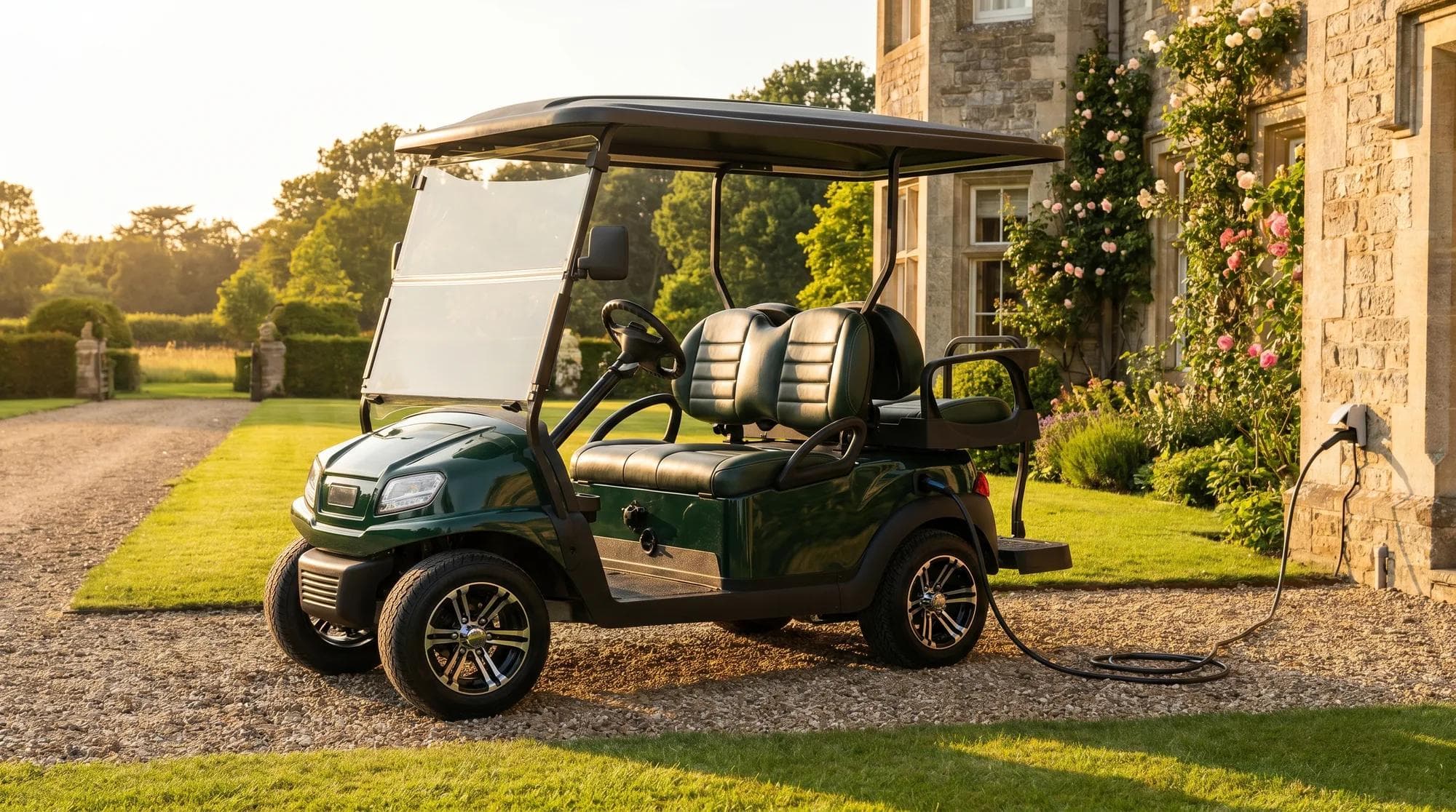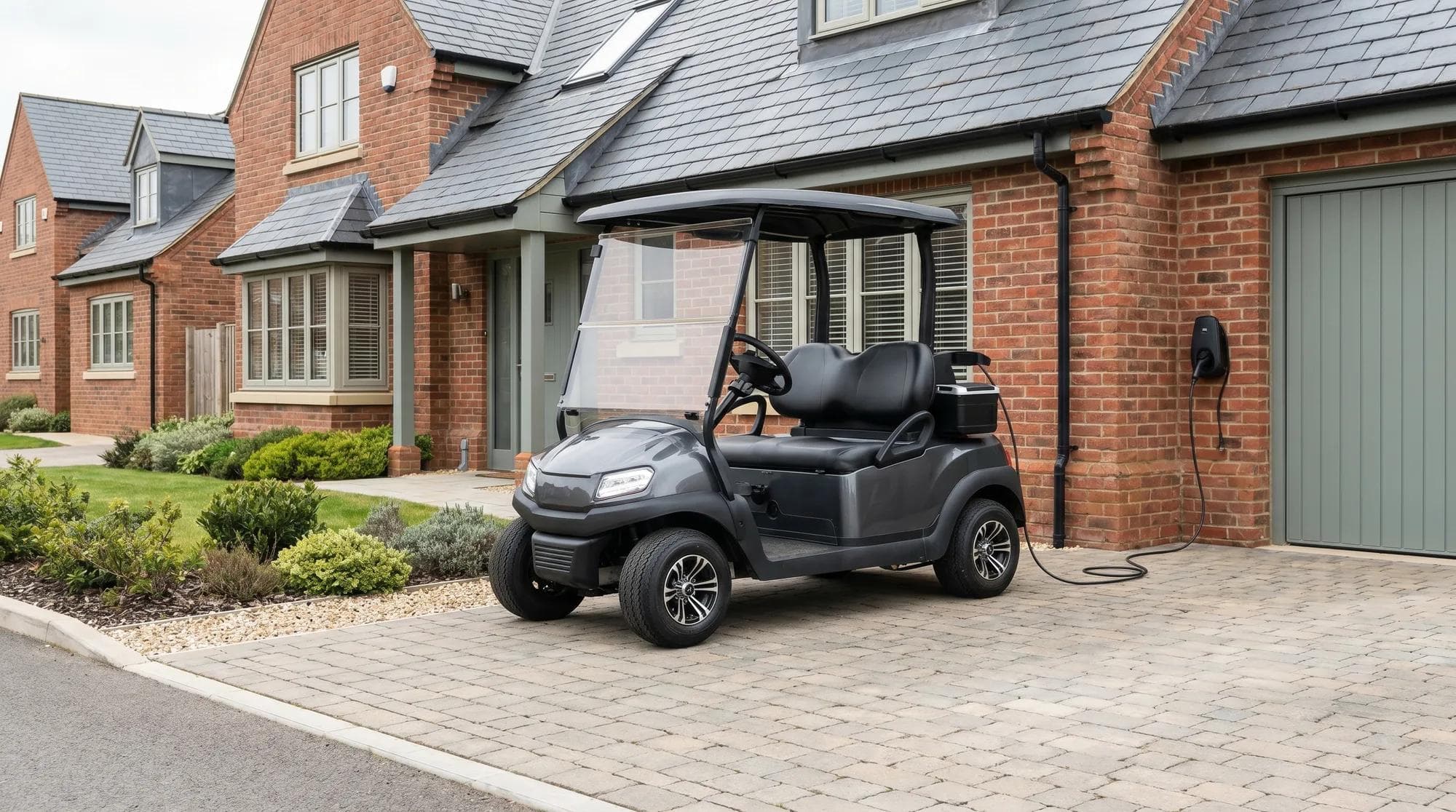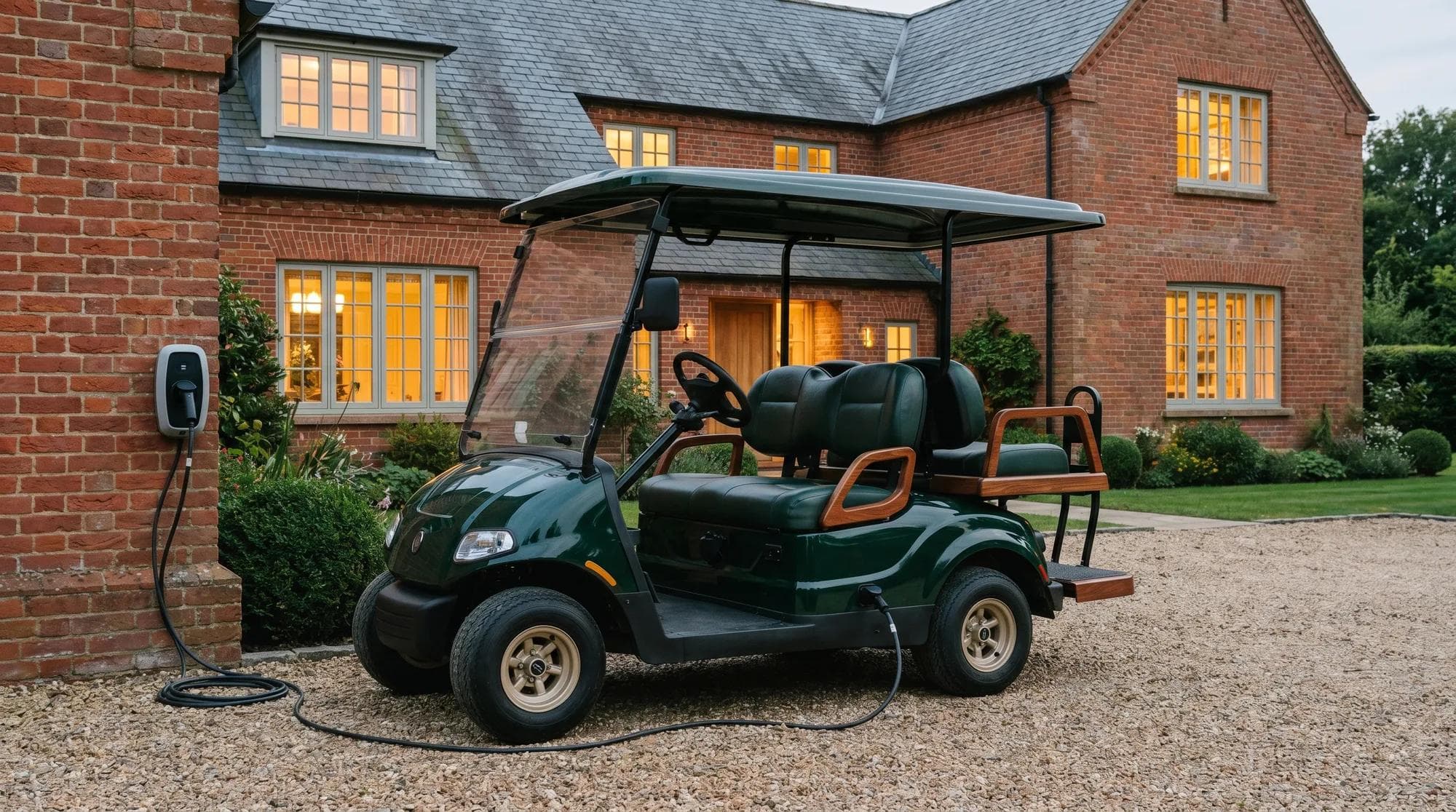
Charging a buggy is genuinely easy, and far simpler than people expect. There is no special infrastructure: the buggy comes with its own charger, you plug it into a normal supply, and it charges while you are not using it. Here is how to do it well.
- Charge from a standard supply using the buggy's own charger, usually overnight.
- A full charge costs only a few pounds at UK electricity rates.
- Charge after use; do not leave the battery standing flat.
- Lithium charges faster and tolerates partial top-ups; lead-acid prefers full cycles.
- Store the buggy charged, and keep the charger and connections dry.
How do you charge an electric golf buggy?
- 01
Plug in
Connect the buggy's own charger to a standard mains supply and to the vehicle. No special charging point is needed.
- 02
Charge
Leave it to charge, usually overnight or between uses. The charger manages the process and stops when the battery is full.
- 03
Store charged
Keep the buggy charged when it is not in use rather than leaving the battery flat, which protects its life.
How long does it take to charge?
Charging is typically done overnight, and lithium charges faster than lead-acid. The exact time depends on the battery and how flat it is, and we confirm it for your model on quotation. Because lithium tolerates partial charging, you can also top it up in a break rather than waiting for a full cycle.
What does it cost to charge a golf buggy?
A charge costs only a few pounds at UK electricity rates, a fraction of the fuel cost of a petrol vehicle, which is a large part of why electric buggies are so cheap to run. Our guide to electric versus petrol running costs sets out the full picture.
Charging safely
Use the correct charger for the buggy, keep the charger and connections dry, and charge in a ventilated space. Do not leave a damaged charger or lead in use. Looked after this way, charging is safe and routine.
Lithium vs lead-acid charging
Lithium charges faster, tolerates partial charging without harm, and is far more forgiving of an irregular routine, which suits a buggy in regular service. Lead-acid is slower and prefers a full, regular charge cycle; topping it up in snatches and running it down hard shortens its life. The full comparison is in our lithium versus lead-acid guide.
Charging made simple
Ask us about charging, battery choice and running costs for your use, and we will specify the right setup and prepare a tailored quote.
Frequently asked questions
How do you charge an electric golf buggy?+
Plug the buggy's own charger into a standard mains supply and connect it to the vehicle, usually overnight. No special charging point is needed. The charger manages the process and stops when the battery is full.
How much does it cost to charge a golf buggy?+
Only a few pounds at UK electricity rates, far less than fuelling a petrol vehicle. The exact figure depends on the battery capacity and the electricity price; we can give a realistic estimate for your model on quotation.
How long does it take to charge a golf buggy?+
Charging is typically done overnight, with lithium charging faster than lead-acid. The exact time depends on the battery and how flat it is, and lithium can also be topped up in a break rather than a full cycle.
Can you overcharge a golf buggy battery?+
A correct, matched charger manages the charge and stops when the battery is full, so routine overnight charging is safe. Use the right charger for the buggy and battery type, and keep the charger and connections dry.
Related solutions
Ready to explore what we build?
See the vehicles and the setting this applies to, or get a tailored quote built around your site.

Ready to find the right buggy?
Tell us how and where it will work and we will specify a vehicle and a tailored quote built around you. Every build comes with a 3-year warranty and a 24-hour priority call-out.
Our guides are written and reviewed by the Hawke Electric Vehicles team, the people who specify, build, deliver and support the vehicles. We focus on honest, practical advice and flag where a figure depends on the build rather than guessing.
More guides by Hawke