The battery is the single most important part of an electric golf buggy, and the one that most affects what the vehicle costs to own, but it is far from the only part worth understanding. Knowing the common wear items, when a battery needs replacing, and which accessories genuinely add value helps you spend well and keep a buggy running for years. This guide covers battery types and lifespan, replacing a pack, the parts that wear, the accessories worth fitting, and why genuine parts and proper support matter.
- The battery is the biggest cost: lead-acid lasts 3 to 5 years, lithium 8 to 10.
- Genuine parts protect performance and your warranty.
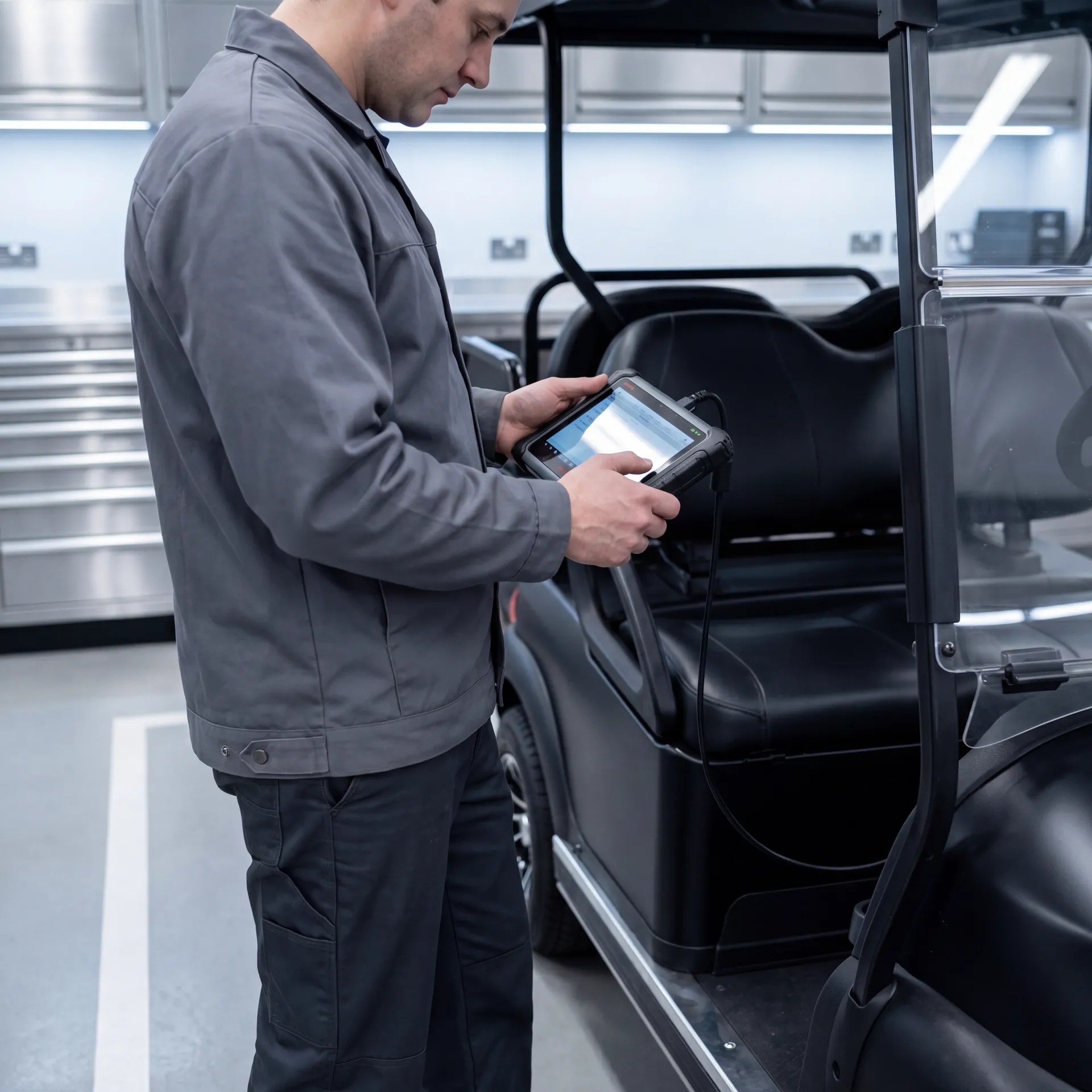
- Tyres, brakes, chargers and controllers are the common wear and repair items.
- Useful add-ons include roofs, lighting, screens and storage.
- See our lithium vs lead-acid guide for the full battery detail.
What batteries do golf buggies use?
Golf buggies run on one of two battery chemistries, and the choice shapes range, charging and lifespan. Lead-acid is the traditional option: cheaper up front, but heavier, slower to charge and shorter-lived, typically lasting three to five years. Lithium costs more initially but delivers more usable range, charges faster, tolerates partial charging, and typically lasts eight to ten years, which usually makes it the better total cost of ownership for a vehicle used regularly. For anything in daily service, lithium is almost always the stronger choice.
When does a golf buggy battery need replacing?
A battery is reaching the end of its life when range falls noticeably, charging takes longer or the charge does not hold. The two chemistries age differently, and our lithium versus lead-acid guide covers lifespan and total cost in full. Whichever you run, looking after a pack extends it: charge regularly rather than running fully flat, keep connections clean, and store the vehicle charged. When the time comes, replacing the pack restores the vehicle rather than retiring it, and it is worth using the correct battery so charging and performance match the design.
Common parts and wear items
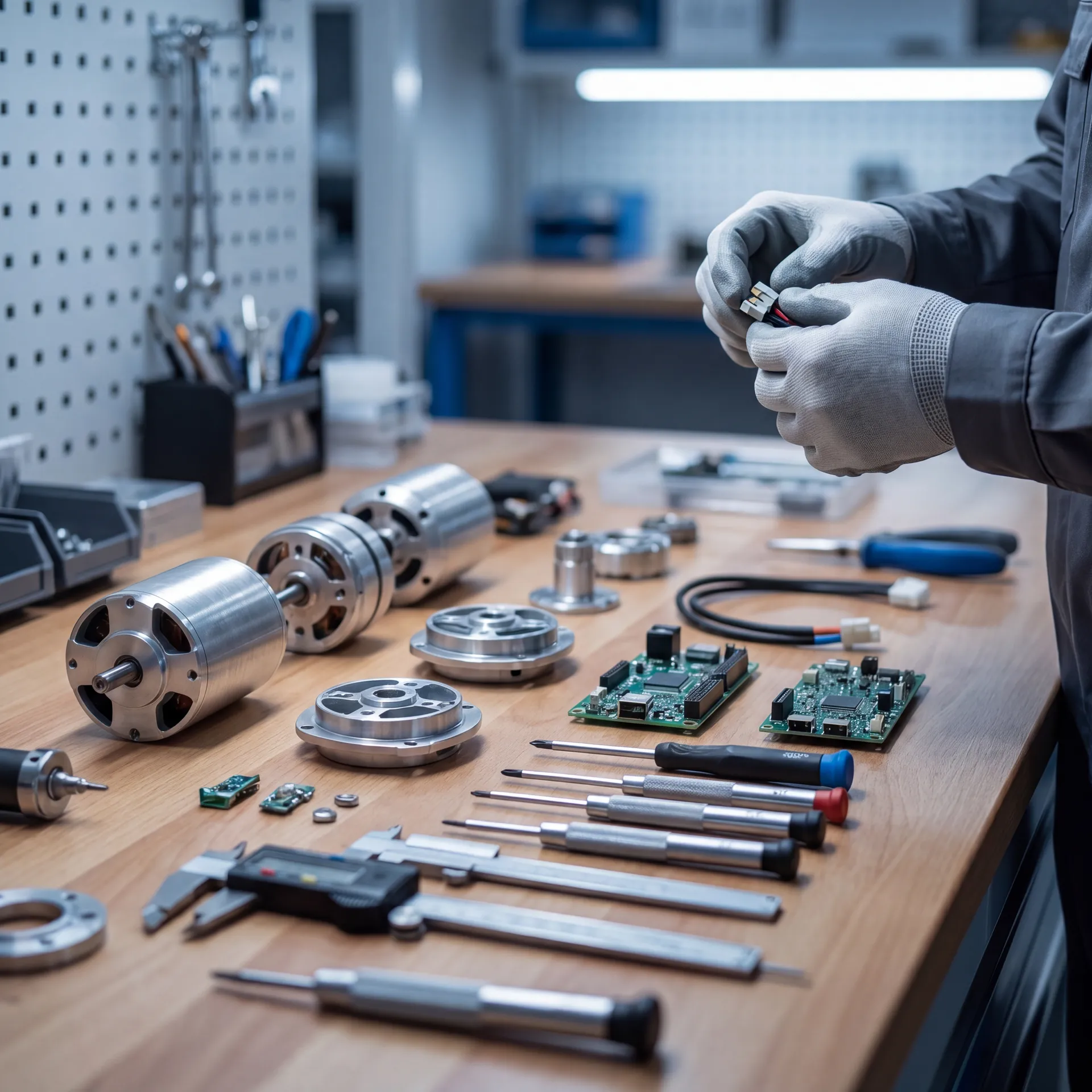
Beyond the battery, a buggy has a handful of parts that wear with use and are replaced as part of normal upkeep. None are unusual, and keeping on top of them keeps the vehicle safe and reliable.
- Tyres: wear with use and need correct pressures for range and grip
- Brakes: a safety item checked and replaced as they wear
- Charger: confirm the correct unit and replace it if it fails
- Lights and electrics: bulbs, fuses and connections
- Seats, trim and roof fittings: kept clean and attended to as they age
- Drive components: longer-lived on electric, but serviced as needed
Accessories and upgrades worth considering
The right accessories make a buggy more useful, more comfortable and more clearly yours. Some are practical, others are about finish and presentation, and many can be specified from the outset on a bespoke build rather than added later. The most worthwhile depend on how and where the vehicle is used.
- Canopy or roof for shade and shelter
- A weather enclosure to keep occupants dry in poor conditions
- Lighting for early starts, dusk and enclosed sites
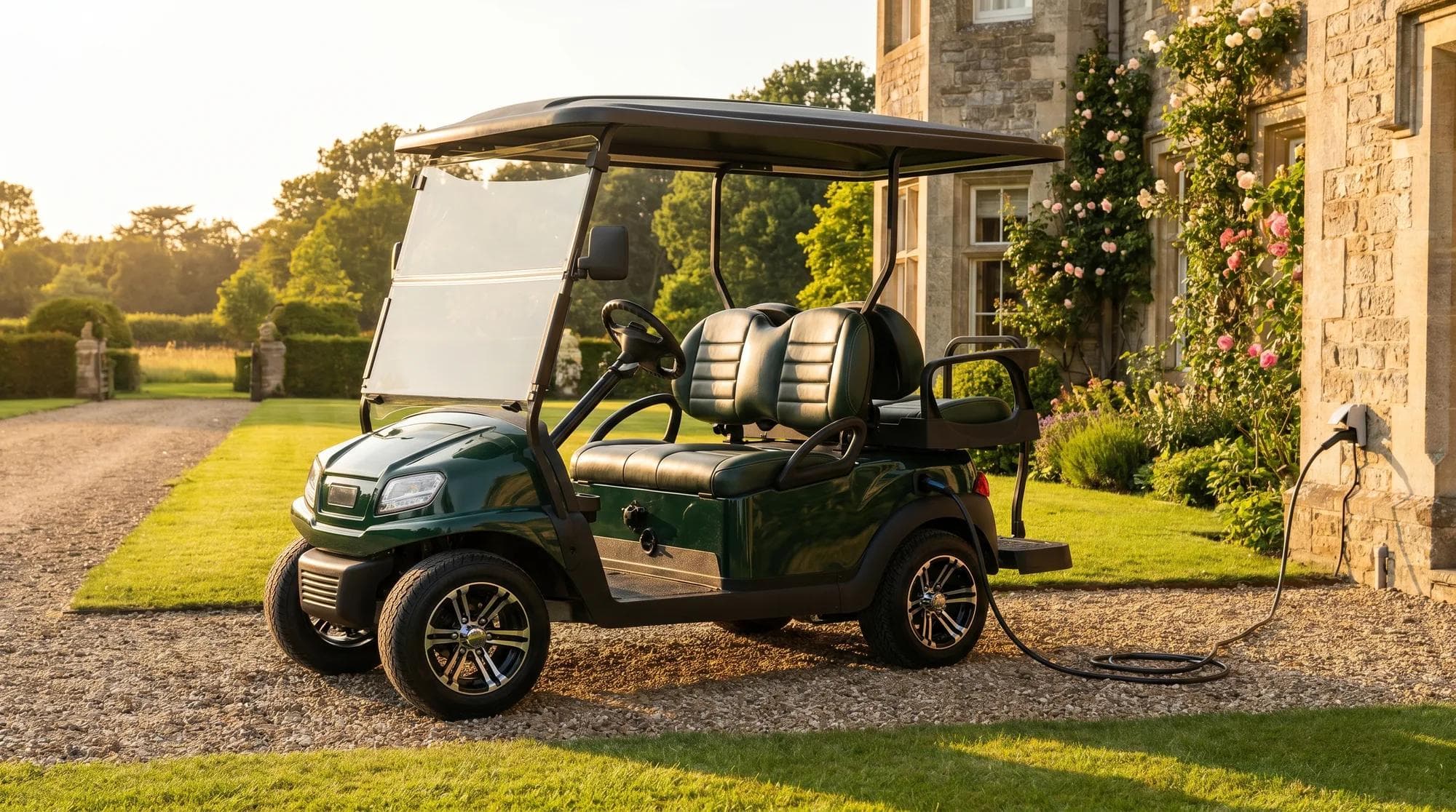
- Additional or replacement chargers for convenience
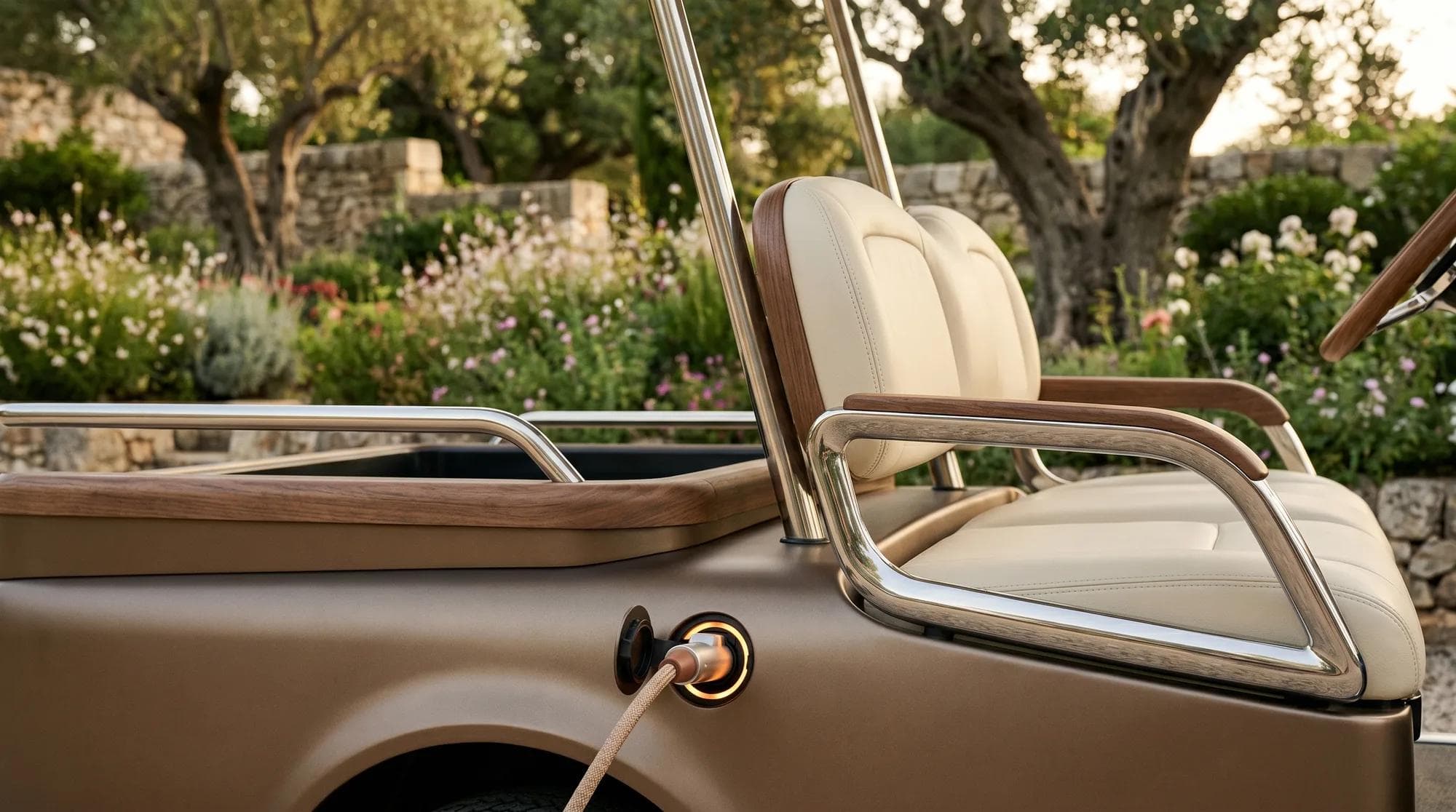
- Branding: livery, a crest or logo, and matched upholstery
- Wheels, trim and seating upgrades to lift the finish
- Practical
- Canopy, enclosure
- Presentation
- Matched roof colour
- Practical
- Lighting, spare charger
- Presentation
- Premium upholstery
- Practical
- Not applicable
- Presentation
- Livery, logo, trim
- Practical
- At build or after
- Presentation
- At build, as a matched set
| Practical | Presentation | |
|---|---|---|
| Weather | Canopy, enclosure | Matched roof colour |
| Use hours | Lighting, spare charger | Premium upholstery |
| Identity | Not applicable | Livery, logo, trim |
| Best specified | At build or after | At build, as a matched set |
Genuine parts and where support comes from
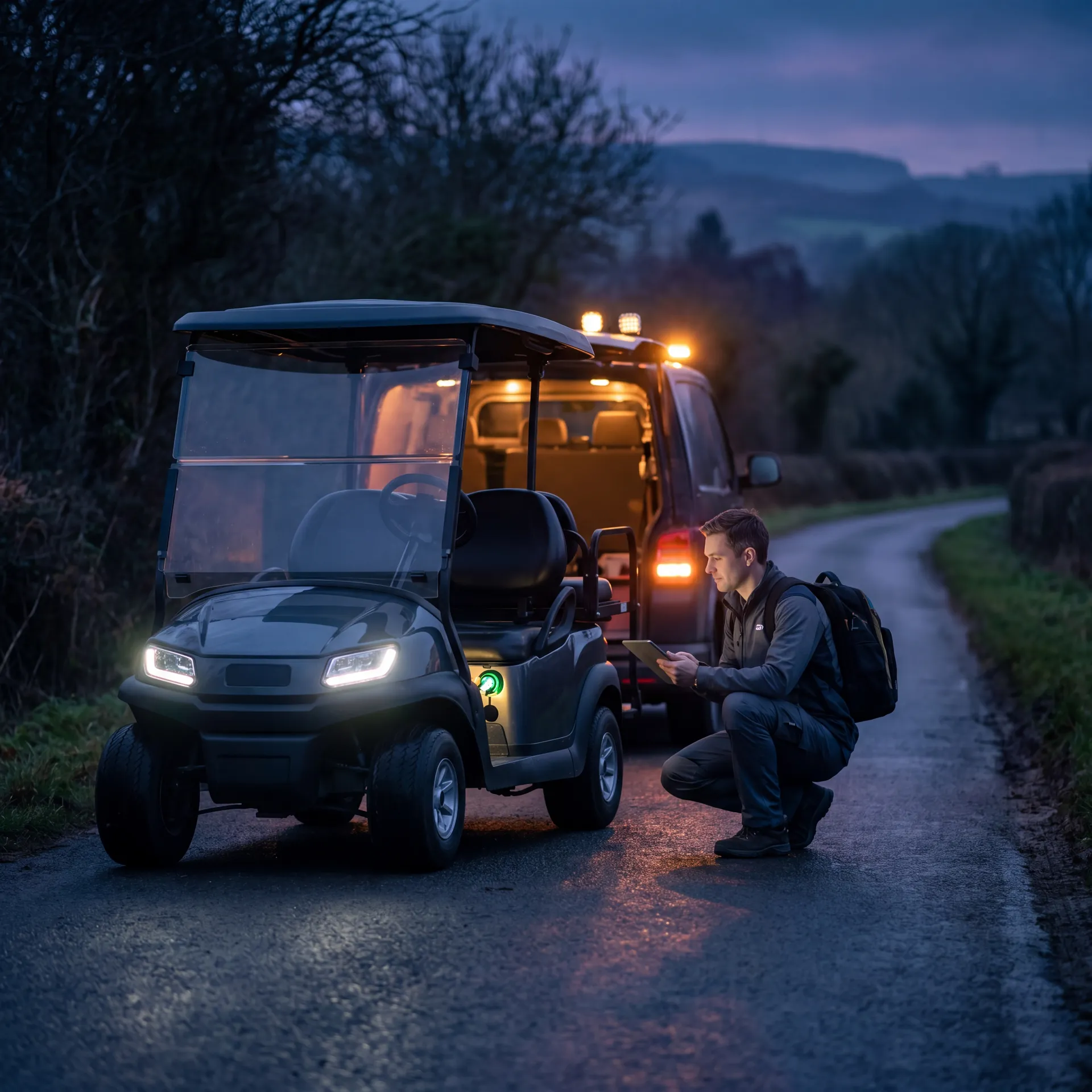
Using the correct parts keeps a buggy reliable and protects its warranty, so it is worth sourcing batteries, chargers and components through us or an approved route rather than fitting whatever fits. As a British marque building bespoke vehicles, we support what we supply: parts, servicing, a 3-year warranty on the build and a 24-hour VIP call-out, so a vehicle stays running and a fault is attended to quickly. Cheaper unbranded parts can compromise performance, safety or cover, which rarely saves money once you account for the consequences.
The right battery and genuine parts decide how long a buggy lasts. Fit correctly, support properly, and the vehicle stays reliable for years.
The clearest way to see the parts and accessories that suit your use is to configure a vehicle, where roof, lighting, branding and finish can be specified and the indicative total updates as you choose. A service plan then keeps the battery and wear items looked after once the vehicle is in use.
Specify the parts and accessories you need
Put a service plan in place for batteries and wear items, or configure a vehicle to specify the roof, lighting, branding and finish that suit your use.
Frequently asked questions
How long does a golf buggy battery last?+
Lead-acid packs typically last three to five years, while lithium packs typically last eight to ten years and hold their performance better. Charging regularly and storing the vehicle charged extends either chemistry.
Where should I buy golf buggy parts?+
Source batteries, chargers and components through us or an approved route. Using the correct genuine parts keeps the vehicle reliable and protects the warranty, whereas unbranded parts can compromise performance, safety or cover.
What accessories are worth fitting to a golf buggy?+
It depends on use. A canopy or weather enclosure, lighting for early or enclosed use, spare chargers, and branding with matched upholstery are among the most worthwhile, and many can be specified from the outset on a bespoke build.
Related solutions
Ready to explore what we build?
See the vehicles and the setting this applies to, or get a tailored quote built around your site.
Ready to find the right buggy?
Tell us how and where it will work and we will specify a vehicle and a tailored quote built around you. Every build comes with a 3-year warranty and a 24-hour priority call-out.
Our guides are written and reviewed by the Hawke Electric Vehicles team, the people who specify, build, deliver and support the vehicles. We focus on honest, practical advice and flag where a figure depends on the build rather than guessing.
More guides by Hawke