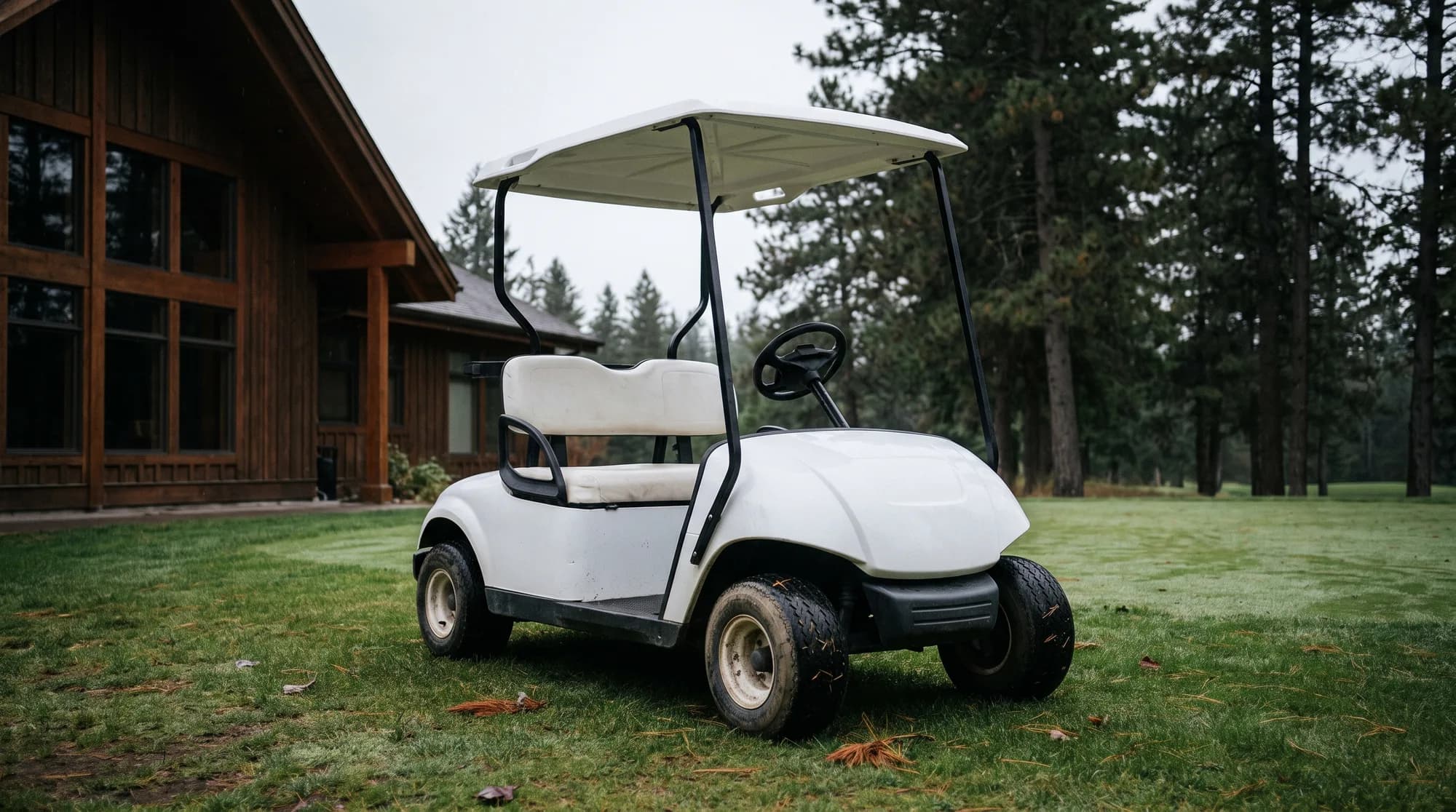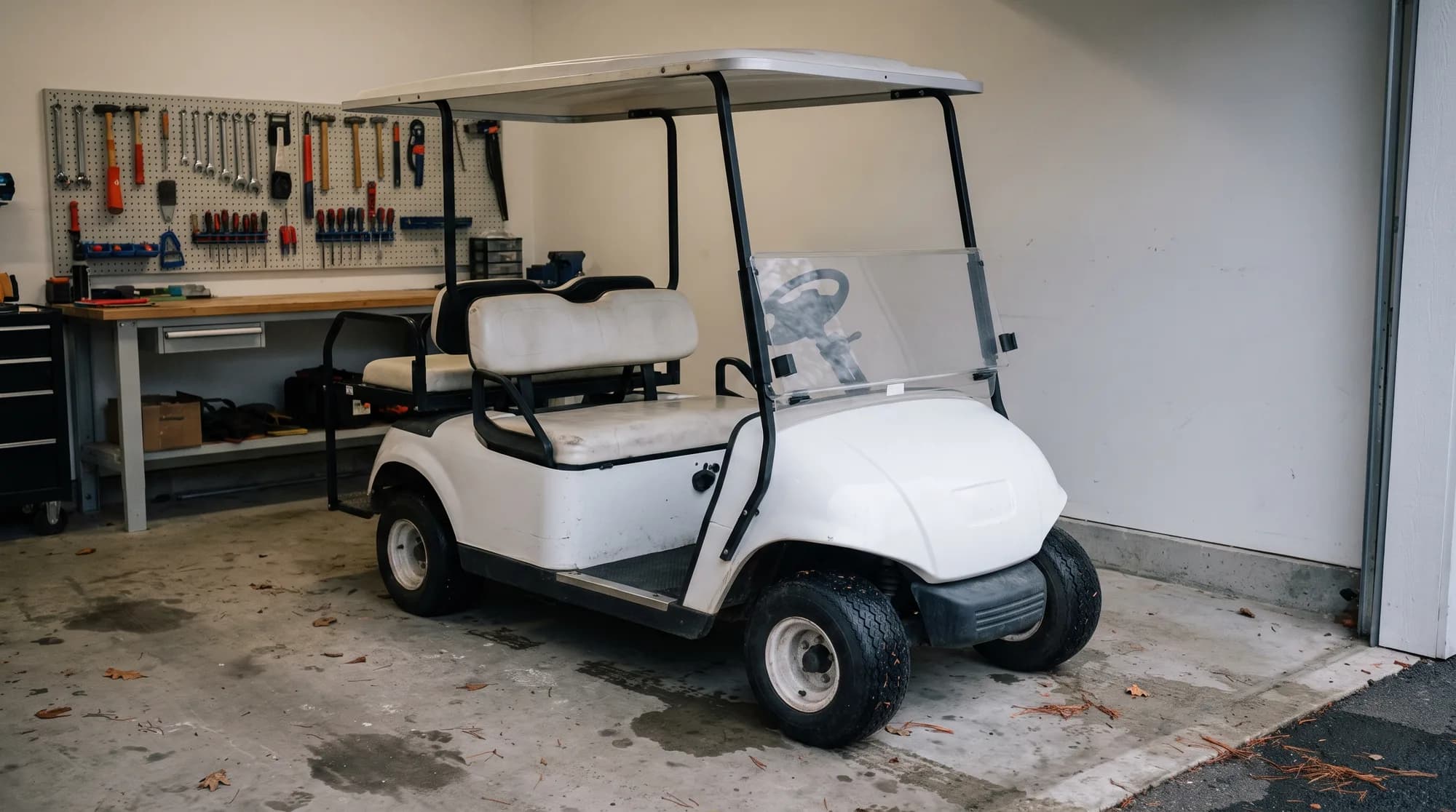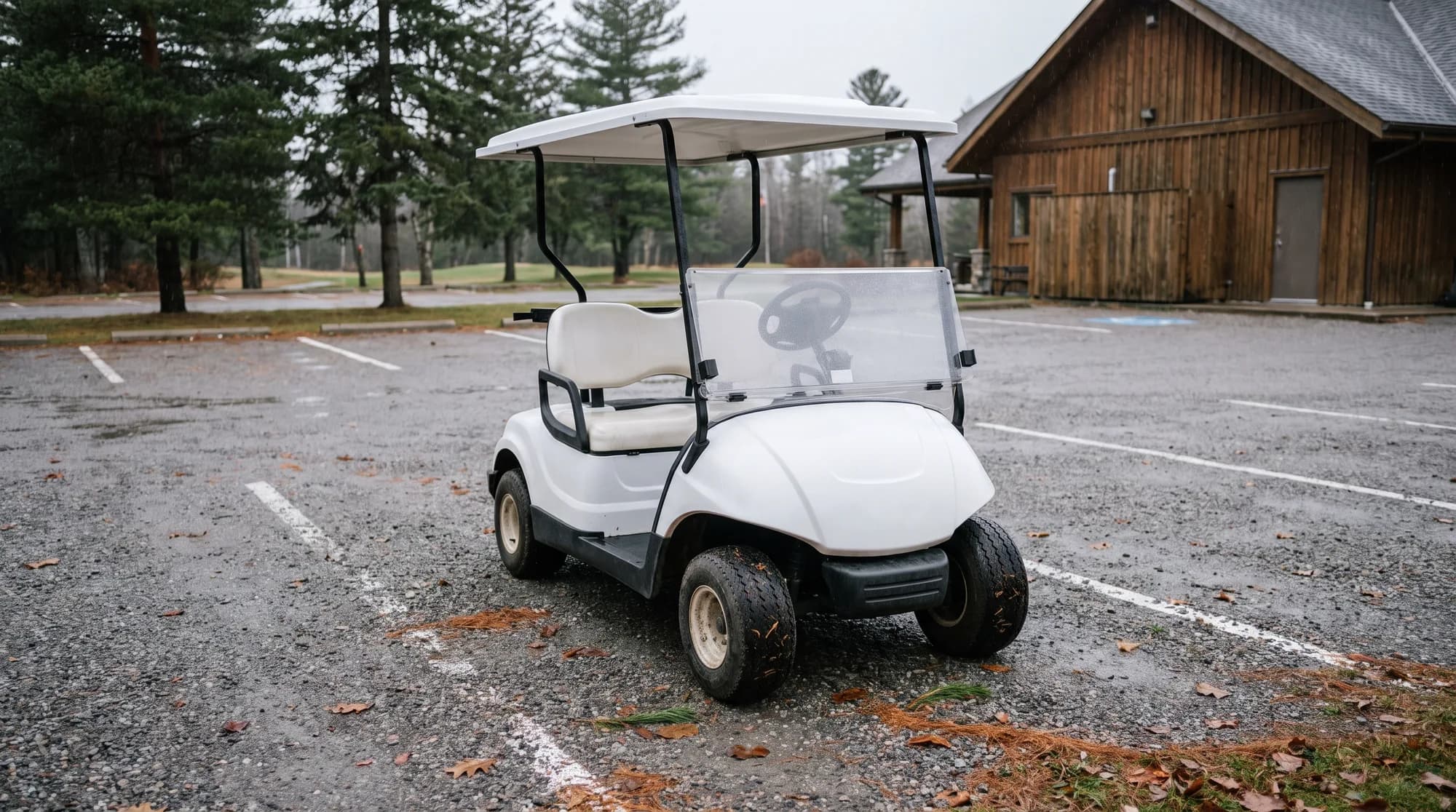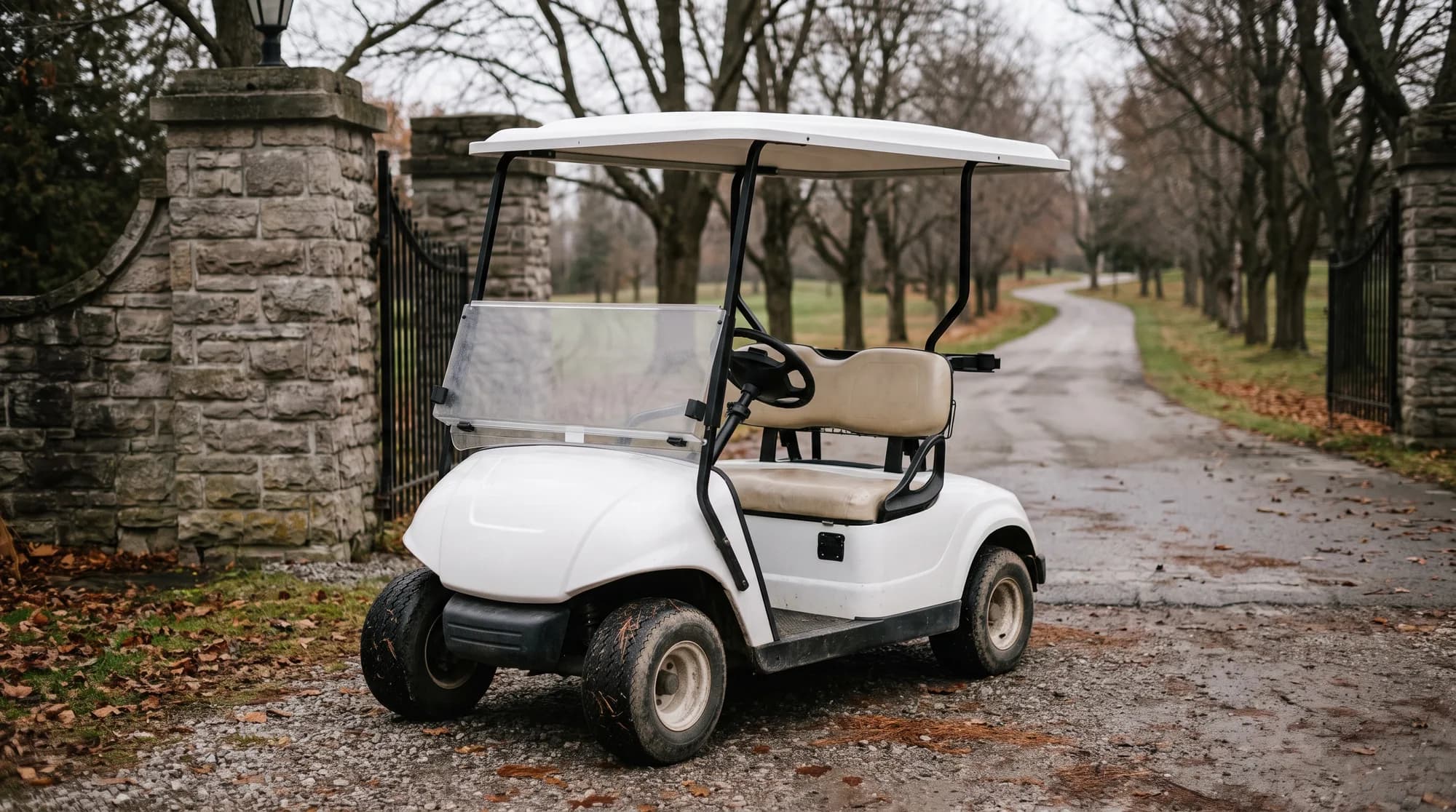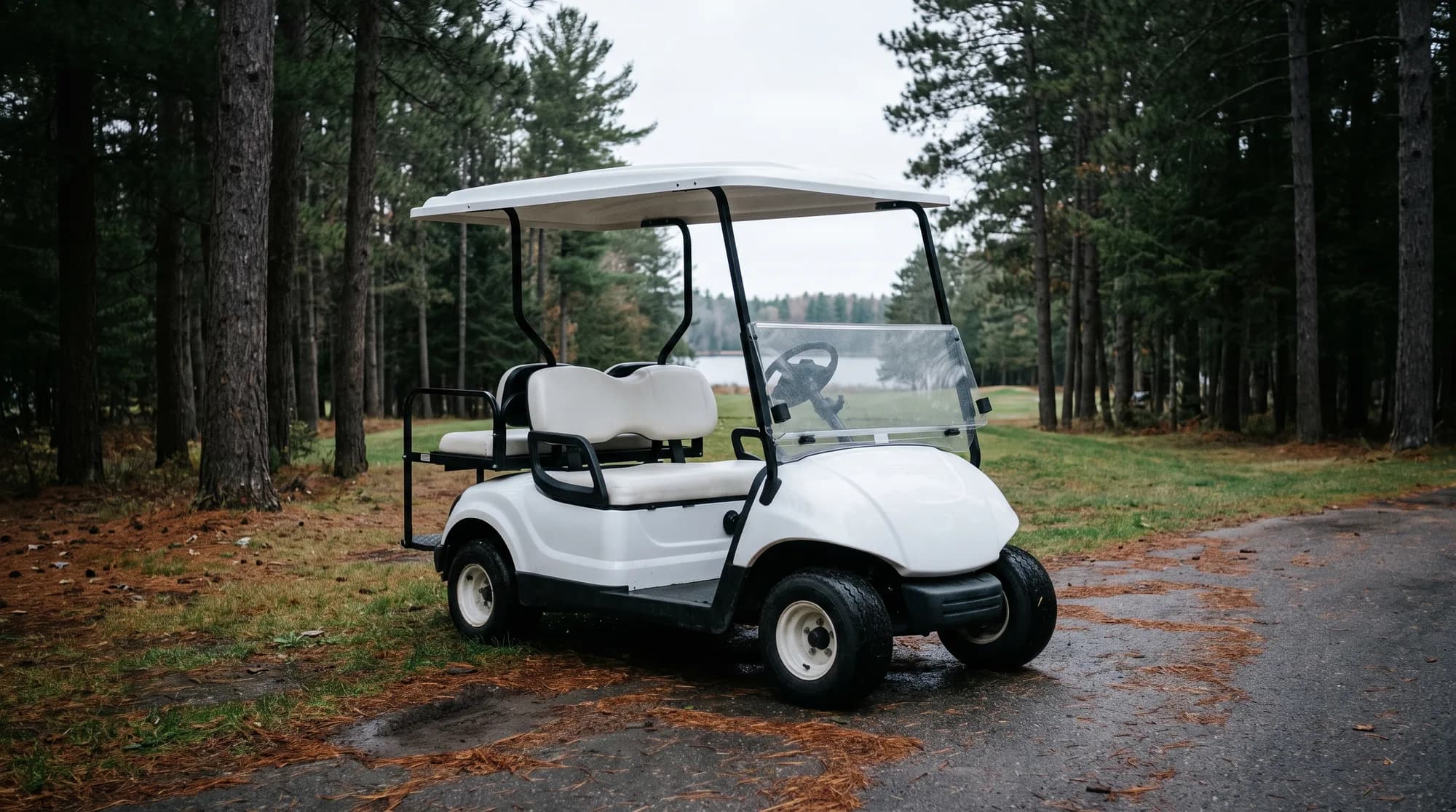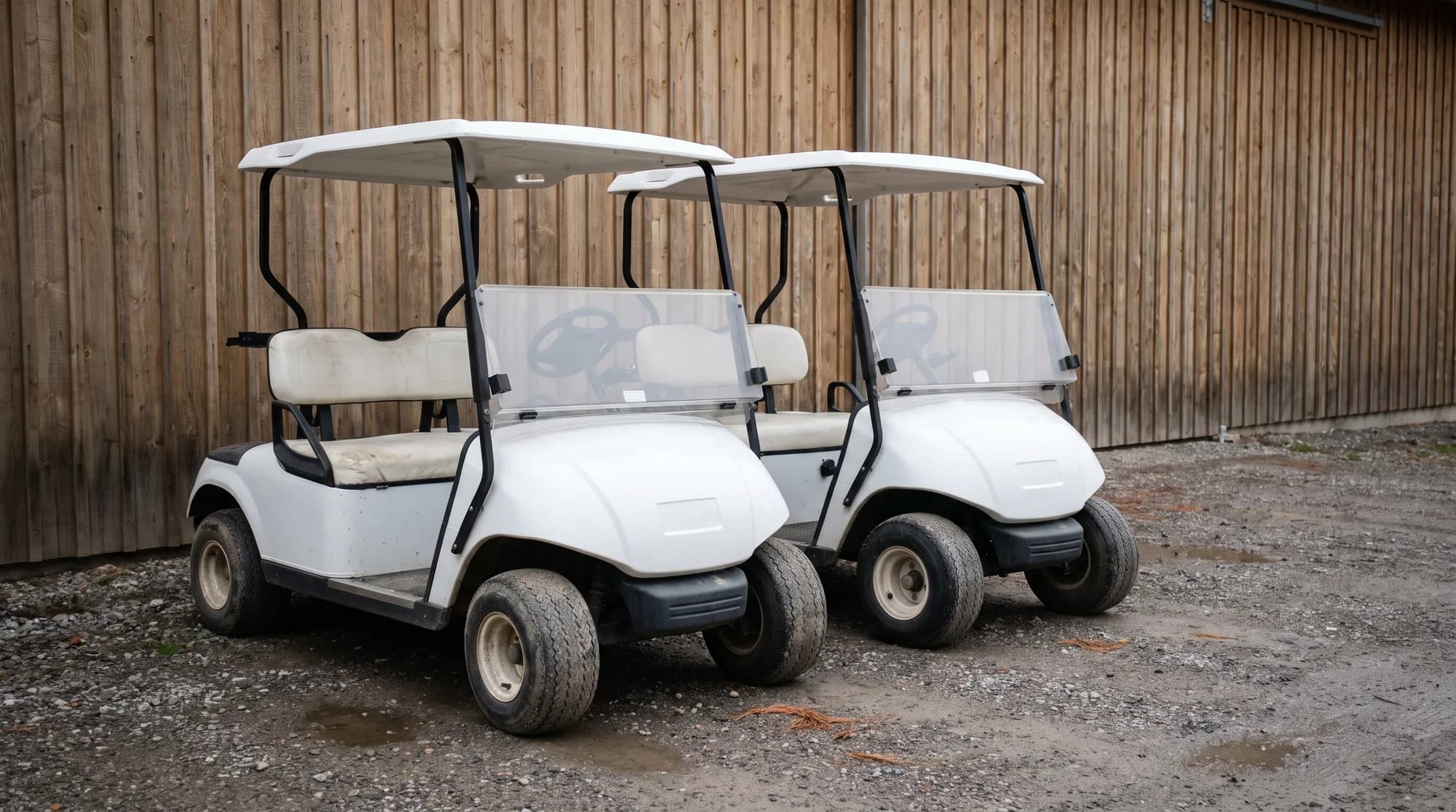
The new-versus-used question looks like a price question, and in Canada the gap is real: a refurbished ex-course cart at CA$5,000 against a new four-seater at CA$14,000 is a difference most buyers feel. But the honest comparison is not sticker against sticker. It is five years of ownership against five years of ownership, and once batteries, repairs, warranty and our climate enter the maths, the answer stops being obvious. This guide sets out the genuine case for each route, the traps specific to the Canadian used market, and a simple framework for deciding which side of the line you belong on.
- Refurbished used carts in Canada typically cost CA$4,000 to CA$7,000; comparable new carts start around CA$8,000 and run to CA$18,000 well equipped.
- The battery is the pivot: a worn lead-acid pack costs CA$1,200 to CA$2,500 to replace, which can erase the used-price advantage in one bill.
- Winter history matters in Canada; a pack stored flat in an unheated shed may have hidden freeze damage that only shows as lost range.
- New buys you warranty, current battery technology and a spec built for your use; used buys you a lower entry price and slower depreciation.
- If you buy used, insist on a range test, a charger test and the battery's age in writing before money moves.
The case for buying used
Canada has a steady supply of ex-fleet carts. Golf courses and resorts replace their fleets on a cycle, and those machines flow into the refurbished market at CA$4,000 to CA$7,000, often repainted and fitted with fresh batteries. A cart is a mechanically simple thing, an electric motor, a controller and a battery pack, so a well-refurbished example genuinely can run for years. Used carts also depreciate gently; a CA$5,500 cart kept in decent condition might sell three years later for CA$4,000, so the real cost of ownership can be very low. For a flat property, a course-only cart or a first cart you are not sure you will keep, used is a rational choice.
The case for buying new
There is one more used-market reality worth naming: the good carts sell fast and quietly. Refurbishers move their best stock to repeat customers and waiting lists, so what lingers on public listings skews toward the machines someone already inspected and declined. That does not mean listings hide nothing good, but it does mean a suspiciously cheap cart that has sat for weeks usually has a reason, and the reason usually lives in the battery bay.
New wins on three fronts that matter more in Canada than in warmer markets. First, warranty: a multi-year warranty on the battery and drivetrain removes the single largest financial risk of cart ownership. Second, chemistry: most new carts in 2026 are sold with lithium packs, which shrug off seasonal storage, charge quickly and last far longer, while the used market is still dominated by lead-acid. Third, specification: buying new means choosing seating, tires, torque and weather protection for your actual terrain rather than inheriting a course spec designed for mown grass. A cart ordered for a hilly, gravelled Muskoka property is a different build from a fairway runabout, and only the new route lets you make that choice.
The battery decides more than the badge
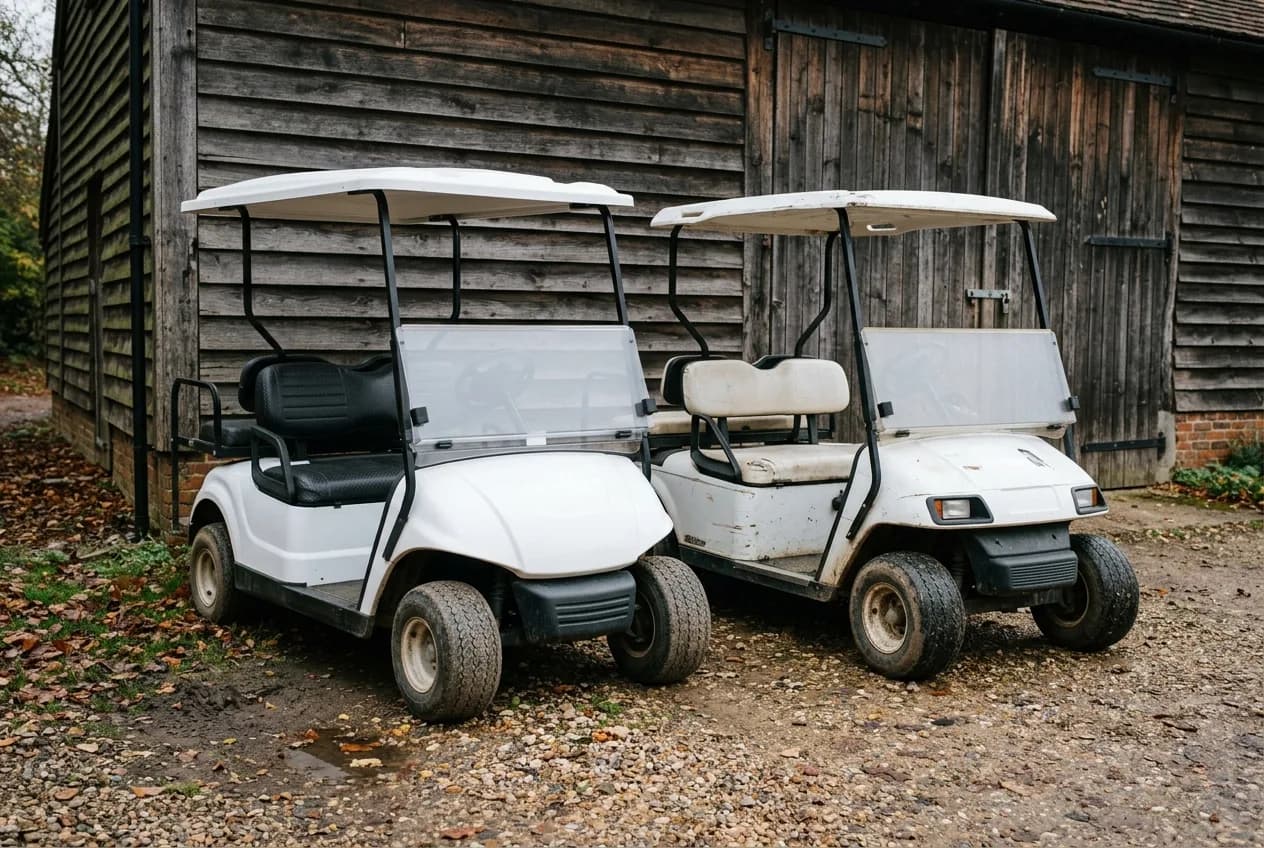
Whatever you buy, you are really buying a battery with seats. On a used cart, ask for the pack's installation date in writing. Flooded lead-acid packs in private use commonly last four to six seasons; in ex-fleet use, often less. If the pack is past year three, price the cart as if a CA$1,200 to CA$2,500 replacement is coming, because it probably is. And ask the Canadian question: where did it winter? A discharged lead-acid battery can freeze at only a few degrees below zero, while a fully charged one is safe to far lower temperatures. A pack that sat flat through a Prairie or Ontario winter may look fine and read full voltage, then collapse to half its range under load.
- New
- CA$8,000 to CA$18,000
- Used
- CA$4,000 to CA$9,000
- New
- New, usually lithium, warrantied
- Used
- Often lead-acid, age unknown
- New
- Multi-year cover
- Used
- Little or none
- New
- Built for your terrain and season
- Used
- Usually flat-course fleet spec
- New
- Steeper in early years
- Used
- Gentle, already absorbed
- New
- Low, priced into the sticker
- Used
- Concentrated in the battery
| New | Used | |
|---|---|---|
| Typical price | CA$8,000 to CA$18,000 | CA$4,000 to CA$9,000 |
| Battery | New, usually lithium, warrantied | Often lead-acid, age unknown |
| Warranty | Multi-year cover | Little or none |
| Spec fit | Built for your terrain and season | Usually flat-course fleet spec |
| Depreciation | Steeper in early years | Gentle, already absorbed |
| Risk | Low, priced into the sticker | Concentrated in the battery |
Where Canadians actually buy, and when
The used supply flows through four channels, and they are not equal. Dealer refurbishers sit at the top: you pay CA$1,000 or so more than a private sale, but the batteries are usually documented, the cart has been through a workshop and there is somewhere to bring a complaint. Course and resort fleet disposals, often through equipment auctions each fall, offer the lowest prices but sell carts exactly as the fleet ran them, which means hard hours and tired packs. Private classifieds sit in between, and quality there tracks the honesty of the seller more than anything else. Timing matters as much as channel. Spring listings are priced for demand; October listings are priced by people who do not want to store a cart all winter. If you can inspect, buy and store, the end of the season is reliably the cheapest moment in the Canadian used market.
How to inspect a used cart before you pay
- Ask for the battery installation date and brand in writing, and check the date codes stamped on the batteries themselves.
- Drive it up the steepest slope available; a tired pack shows itself under load, not on the flat.
- Watch a full charge cycle start; a charger that clicks off early or never finishes is telling you something.
- Look under the cart for frame rust, welded repairs and bent suspension arms, common on hard-used fleet carts.
- Check the controller and wiring for corrosion, which points to outdoor or damp storage.
- Ask where the cart was stored each winter and whether a battery maintainer was used.
- Confirm tire wear is even; scalloped or one-sided wear suggests alignment or axle trouble.
A simple decision framework
- 01
Define the job
Flat lawns and short runs suit almost anything. Hills, gravel, towing, snow-margin months or six-passenger family duty push you toward a newer, correctly specified machine.
- 02
Set the real budget
Take your ceiling, subtract tax, delivery and a charger, and if you are shopping used, hold back CA$2,000 as a battery contingency. What remains is your true purchase budget.
- 03
Price both routes honestly
Get a written quote for the new cart that actually fits your use, and compare it against used listings plus your contingency. The gap is often smaller than the stickers suggest.
- 04
Buy the battery, then the cart
Whichever route you choose, make the battery's chemistry, age and warranty the first line of the decision, not the last.
Frequently asked questions
Is it worth buying a used golf cart in Canada?+
Often, yes. Refurbished ex-course carts at CA$4,000 to CA$7,000 can be excellent value if the battery is young and the cart wintered indoors. The savings evaporate quickly if a CA$1,200 to CA$2,500 battery replacement arrives early.
How long do used golf cart batteries last?+
Flooded lead-acid packs typically give four to six seasons in private use, less if they were fleet-worked or stored discharged through winter. Always get the installation date in writing and test range under load.
Do new golf carts hold their value?+
They depreciate fastest in the first couple of years, then settle. Lithium-equipped carts are holding value better than lead-acid models in the current market because buyers understand the battery is the expensive part.
What should I check before buying a used cart?+
Battery age and brand, a hill test under load, a full charge cycle, frame rust, controller corrosion, tire wear and the cart's winter storage history. Any seller who cannot answer the storage question deserves extra caution.
Is a new cart better for Canadian winters?+
Generally yes, because new carts are usually lithium and can be stored part-charged for months without damage, and because you can specify weather protection from the factory. Used lead-acid carts need diligent winter care to survive.
Price the new route properly
Before you settle for a used listing, see what a new cart built to order for your property actually costs. The honest comparison might surprise you.
Related solutions
Ready to explore what we build?
See the vehicles and the setting this applies to, or get a tailored quote built around your site.
Ready to find the right buggy?
Tell us how and where it will work and we will specify a vehicle and a tailored quote built around you. Every build comes with a 3-year warranty and a 24-hour priority call-out.
Our guides are written and reviewed by the Hawke Electric Vehicles team, the people who specify, build, deliver and support the vehicles. We focus on honest, practical advice and flag where a figure depends on the build rather than guessing.
More guides by Hawke