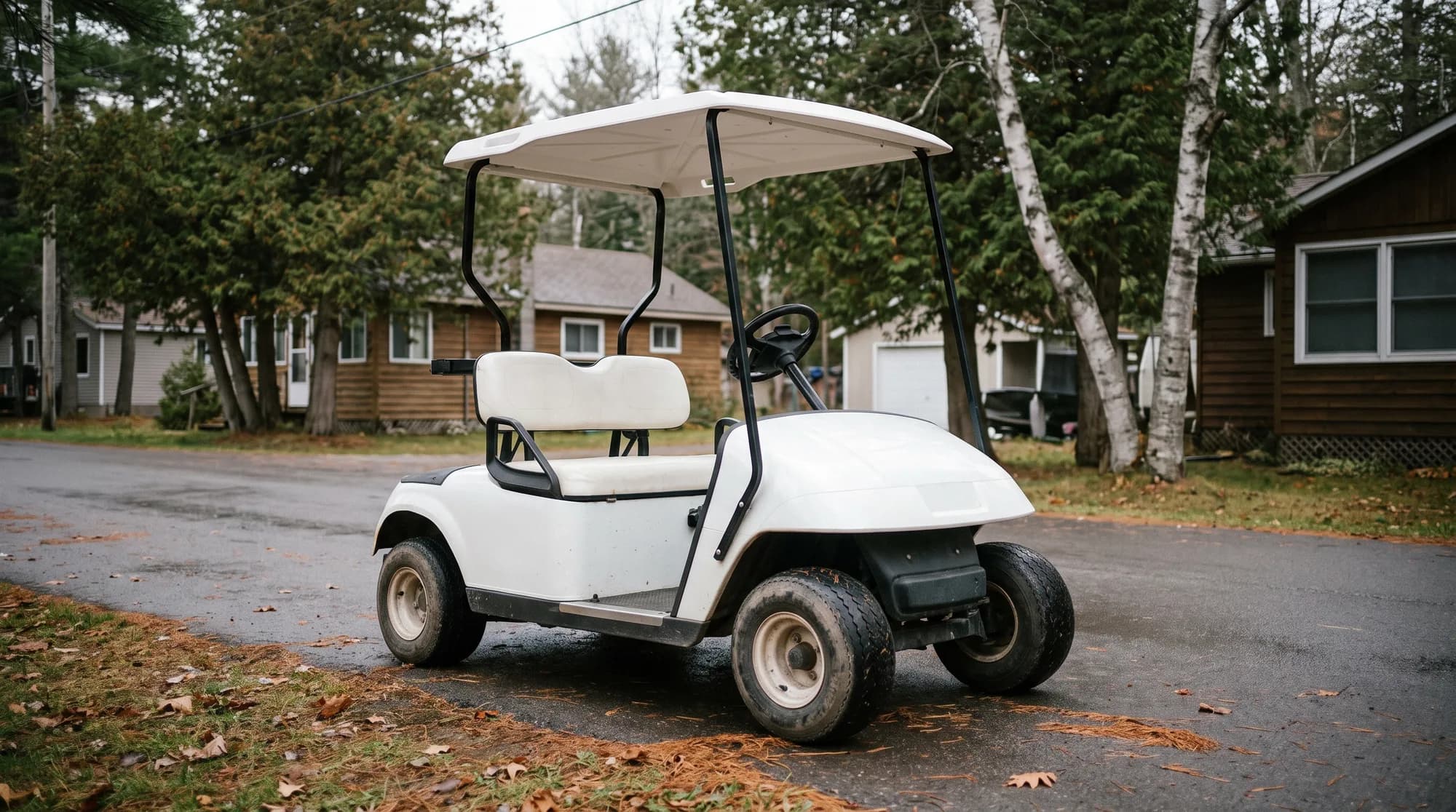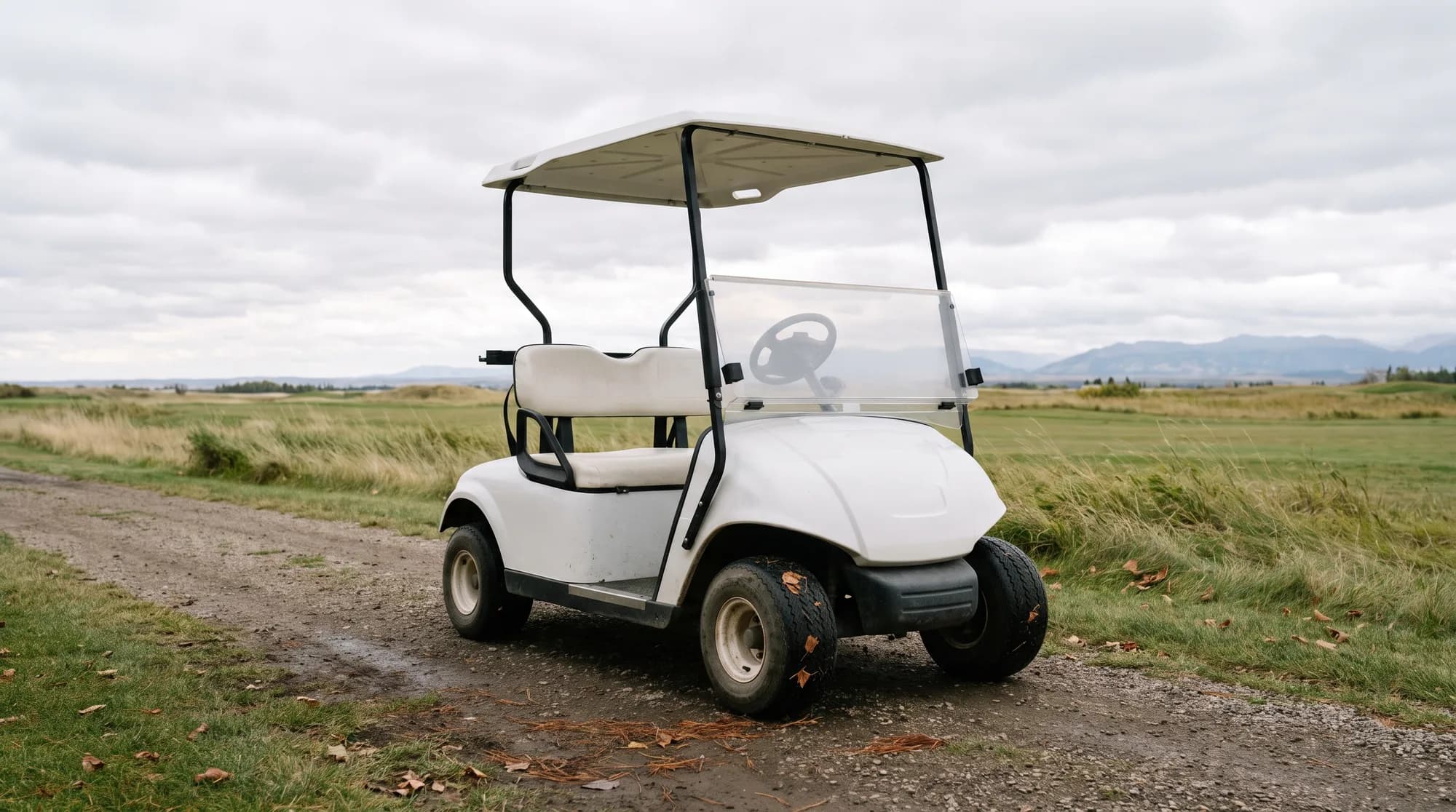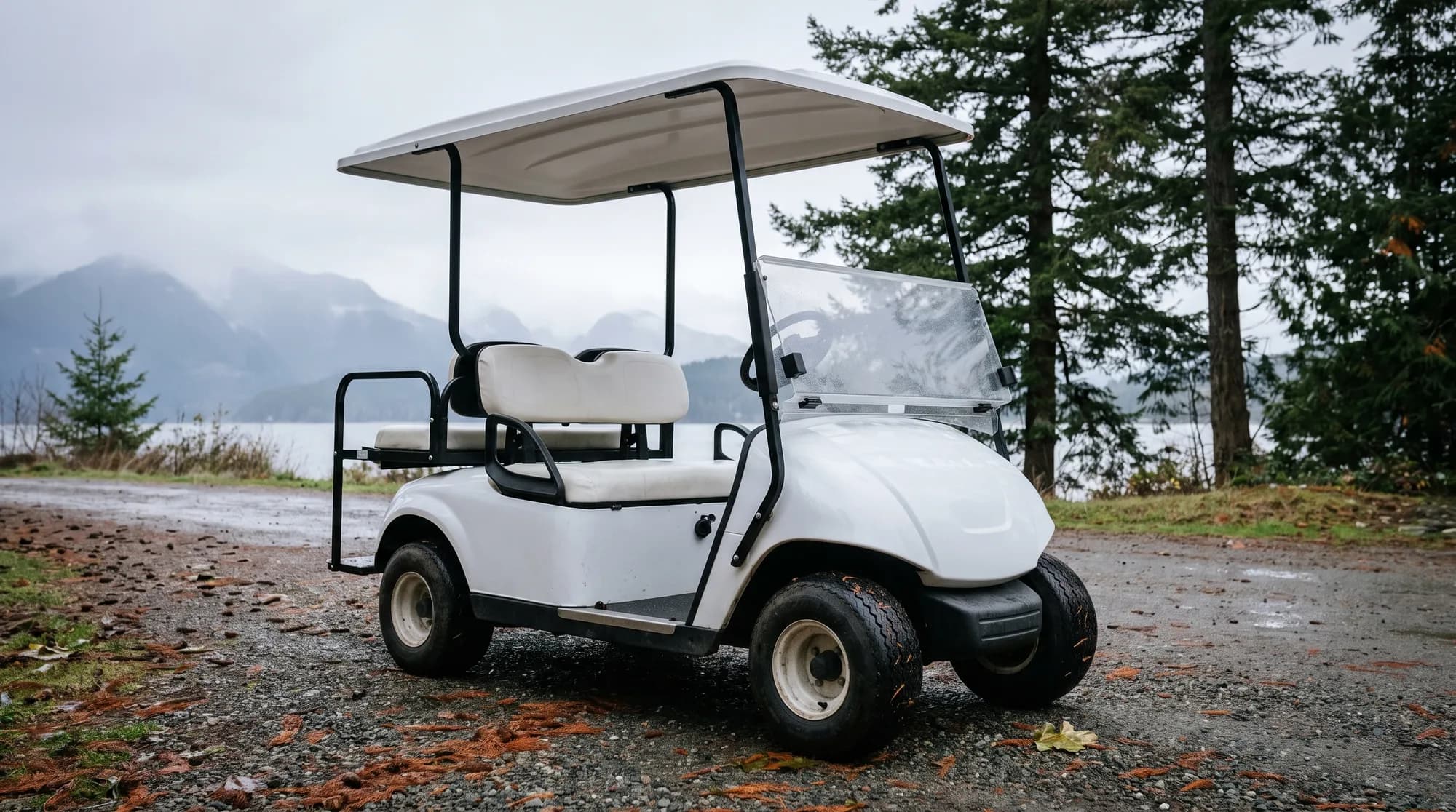
British Columbia is stricter about golf carts than most owners expect. Under the Motor Vehicle Act, an ordinary golf cart cannot normally be licensed for use on a public road, and because it cannot be licensed, it cannot be insured for road use through ICBC either. That closes the door on casually driving a cart through town. But BC has left three doors open: private property, a set of narrow golf course exemptions, and two more interesting routes, the Village of Chase's neighbourhood golf cart programme and the neighbourhood zero-emission vehicle (NZEV) category. Here is how each works in 2026.
- Ordinary golf carts cannot be licensed or ICBC-insured for general use on BC public roads.
- Narrow Motor Vehicle Act exemptions cover golf course operations, such as crossing a road between holes or moving through course parking areas where authorized.
- The Village of Chase runs BC's known neighbourhood golf cart programme: modified carts with a village permit, insurance and a valid driver's licence, daytime only.
- Neighbourhood zero-emission vehicles (NZEVs), which meet the federal low-speed vehicle standard, can be registered and driven on roads posted 40 km/h or less, and up to 50 km/h where a bylaw or permit allows.
- Private property use is unrestricted by the Motor Vehicle Act: acreages, resorts, farms and gated communities are where most BC carts live.
- Impaired driving law applies to golf carts everywhere, including private land.
The default position under the Motor Vehicle Act
BC law works backwards from insurance. To drive on a highway (which in BC means virtually any public road), a motor vehicle must be registered, licensed and insured. A golf cart is not built to the safety standards that registration requires, so it cannot complete that chain, and driving one on a public road leaves you exposed to tickets for no insurance and no registration, plus full personal liability if someone is hurt. Police in resort towns do enforce this, particularly in summer.
The Motor Vehicle Act and its regulations then carve out a small set of exemptions connected to golf courses. Carts operated by or for a course can, where authorized, cross a public road that runs through the course and move through course driveways and parking areas without registration, licence or ICBC insurance. These exemptions are deliberately narrow: they exist so an 18-hole course split by a road can function, not so members can drive home.
The Chase exception: BC's neighbourhood golf cart programme
In 2016 the province authorized a pilot allowing neighbourhood golf carts on designated local streets in two communities, the Village of Chase and the Town of Qualicum Beach. Qualicum Beach later withdrew after local opposition to the speed reductions the programme required, which tells you something about how carefully BC gates this. Chase kept going, and carts have been part of its local transport mix since 2017.
- Carts must meet the programme's vehicle and equipment requirements, which go beyond a stock course cart.
- Drivers need a valid driver's licence, insurance and an operating permit from the village.
- Operation is daytime only, on designated low-speed local streets.
- The programme applies only within the participating community; it is not a licence to drive carts elsewhere in BC.
The NZEV route: the closest thing to a street-legal cart in BC
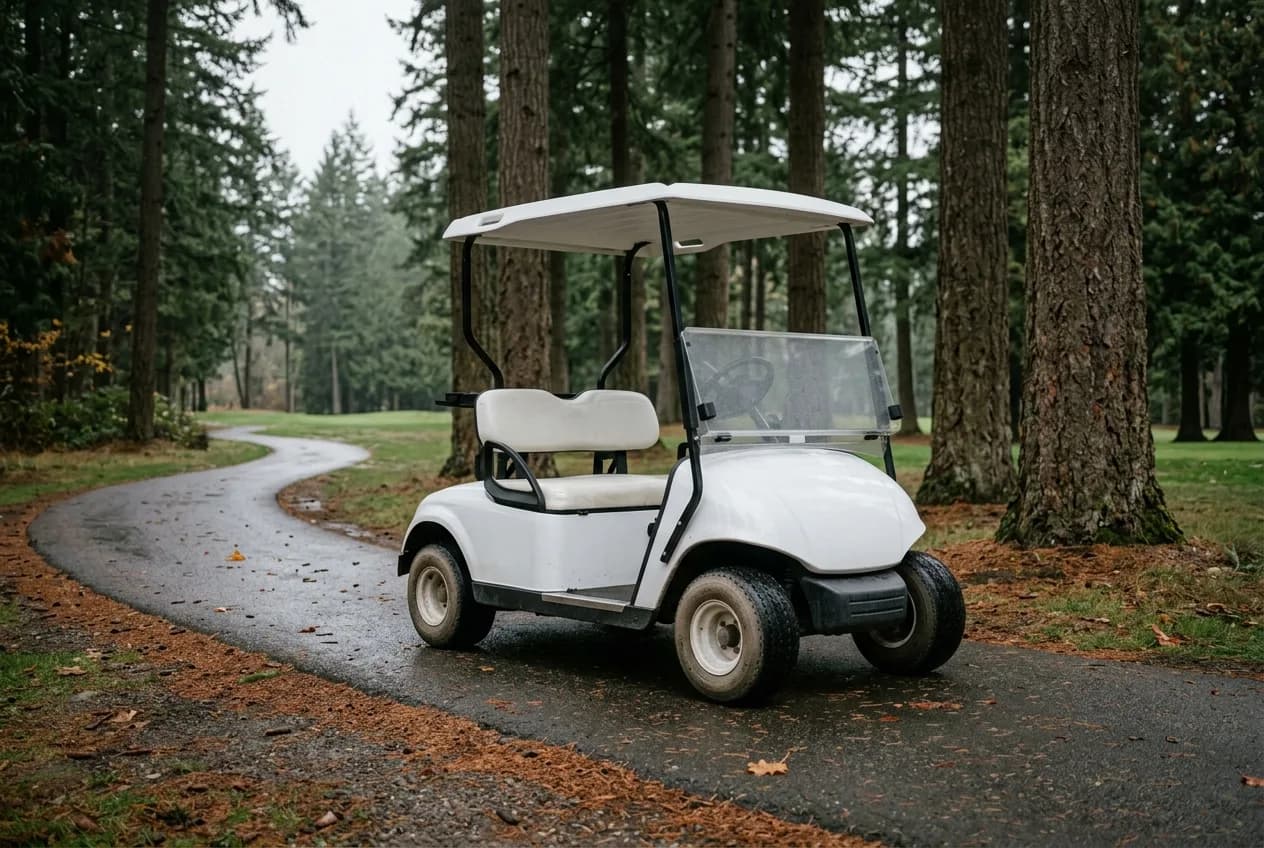
BC formally recognises neighbourhood zero-emission vehicles, a category built on the federal low-speed vehicle standard: fully electric, four wheels, a top speed between 32 and 40 km/h, and factory-fitted road equipment including seat belts, lights, mirrors and a windshield. An NZEV is a real motor vehicle in the eyes of the law, which means it can be registered, licensed and insured through ICBC, and that changes everything.
In a municipality, an NZEV can be driven on roads with a speed limit of 40 km/h or less, and on roads posted above 40 up to 50 km/h where a municipal bylaw allows it. In unorganized areas the same 40 km/h rule applies, with a road use permit able to extend that to 50 km/h roads. You need an ordinary driver's licence, and normal road rules apply. For golf communities, resorts and small towns with low-speed street networks, this is the legitimate way to get cart-style transport onto public pavement in BC.
- Ordinary golf cart
- No, except narrow course crossings
- Chase programme cart
- Designated Chase streets only
- NZEV (certified LSV)
- Roads posted 40 km/h or less, 50 with bylaw or permit
- Ordinary golf cart
- No (private land only)
- Chase programme cart
- Yes, plus village permit
- NZEV (certified LSV)
- Yes
- Ordinary golf cart
- Not possible for road use
- Chase programme cart
- Programme requirements apply
- NZEV (certified LSV)
- Yes, registered and insured
- Ordinary golf cart
- Courses, acreages, resorts
- Chase programme cart
- Local errands in Chase
- NZEV (certified LSV)
- Neighbourhood and resort transport
| Ordinary golf cart | Chase programme cart | NZEV (certified LSV) | |
|---|---|---|---|
| Public roads | No, except narrow course crossings | Designated Chase streets only | Roads posted 40 km/h or less, 50 with bylaw or permit |
| Licence needed | No (private land only) | Yes, plus village permit | Yes |
| ICBC registration | Not possible for road use | Programme requirements apply | Yes, registered and insured |
| Typical use | Courses, acreages, resorts | Local errands in Chase | Neighbourhood and resort transport |
Private property: where most BC carts actually run
None of the above applies on private land. Vineyards, farms, campgrounds, waterfront acreages and gated strata communities across BC run carts every day with no licence, registration or insurance requirement under the Motor Vehicle Act. Two practical cautions. First, strata corporations and private communities usually have their own rules about who may drive and where, and those rules are enforceable. Second, Criminal Code impaired driving provisions apply to motor vehicles on private property too, so a cart at a winery event is treated like any other vehicle by that law.
For buyers, BC's coastal climate is kind to carts, but the Interior is a different matter. If your cart winters in the Okanagan or the Kootenays, plan for proper cold storage, and if it runs a lithium pack, avoid charging it below freezing. A cart that lives at a Gulf Islands property can often work year round, which is a genuine advantage electric carts have in BC over much of Canada.
What happens if you chance it anyway
It is worth being blunt about the downside, because in resort towns the temptation is real. Driving an unlicensed, uninsured cart on a BC road invites tickets under the Motor Vehicle Act for operating without insurance and without registration, and those fines are not trivial. The larger exposure is civil: with no policy in place, an injury to a pedestrian or cyclist becomes a personal claim against you, and BC courts deal with serious injury awards in the hundreds of thousands of dollars and beyond. A five-minute drive to the boat launch is simply not worth carrying that risk uninsured. If the trip matters, the legal routes exist: do it with an NZEV, or keep the cart to private ground and use the car for the road section.
Frequently asked questions
Are golf carts street legal in BC?+
Not in general. Ordinary golf carts cannot be licensed or insured for BC public roads. The exceptions are narrow golf course crossings, the Village of Chase's neighbourhood cart programme, and registered neighbourhood zero-emission vehicles, which are a different vehicle class.
Can I insure a golf cart through ICBC?+
Not for general road use, because a standard cart cannot be licensed as a motor vehicle. NZEVs that meet the federal low-speed vehicle standard can be registered and insured through ICBC. For private land use, specialty or property-linked cover is arranged through private insurers.
What is a neighbourhood zero-emission vehicle in BC?+
A four-wheeled, fully electric vehicle built to the federal low-speed vehicle standard, with a top speed between 32 and 40 km/h and road equipment such as seat belts, lights and mirrors. Registered NZEVs can use roads posted at 40 km/h or less, or up to 50 km/h where a bylaw or permit allows.
Which BC communities allow golf carts on the street?+
The Village of Chase operates the known neighbourhood golf cart programme, requiring a permit, insurance, a valid licence and daytime operation on designated streets. Qualicum Beach joined the original pilot but later withdrew. Confirm current local rules with the municipality.
Do I need a licence to drive a golf cart on private property in BC?+
No licence or registration is required by the Motor Vehicle Act on genuinely private land. Property owners and strata corporations set their own rules, and impaired driving law still applies everywhere.
Spec a cart for BC conditions
From island acreages to Interior resorts, we build to order for the way you will actually use the cart, with straight answers on what is road legal and what is not.
Related solutions
Ready to explore what we build?
See the vehicles and the setting this applies to, or get a tailored quote built around your site.
Ready to find the right buggy?
Tell us how and where it will work and we will specify a vehicle and a tailored quote built around you. Every build comes with a 3-year warranty and a 24-hour priority call-out.
Our guides are written and reviewed by the Hawke Electric Vehicles team, the people who specify, build, deliver and support the vehicles. We focus on honest, practical advice and flag where a figure depends on the build rather than guessing.
More guides by Hawke