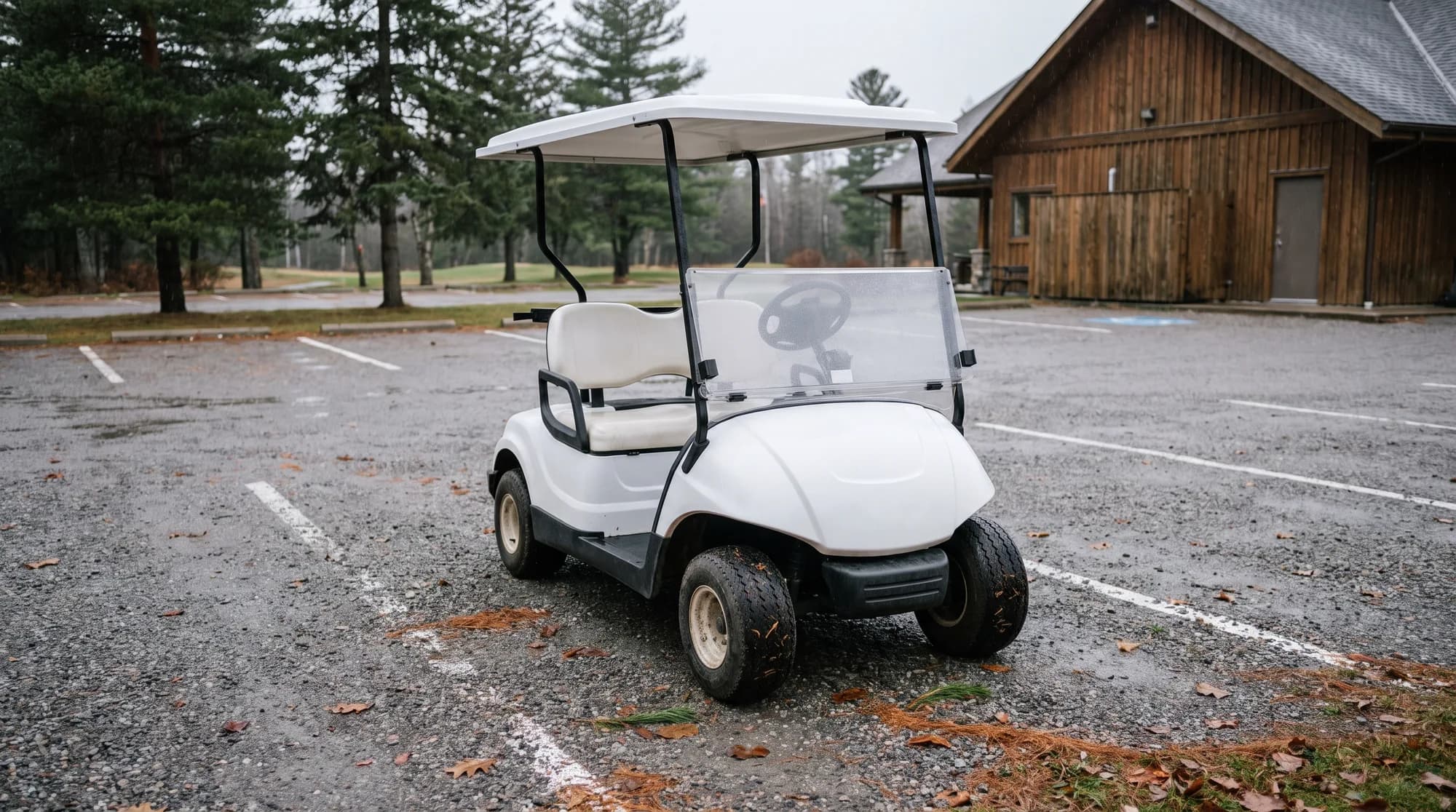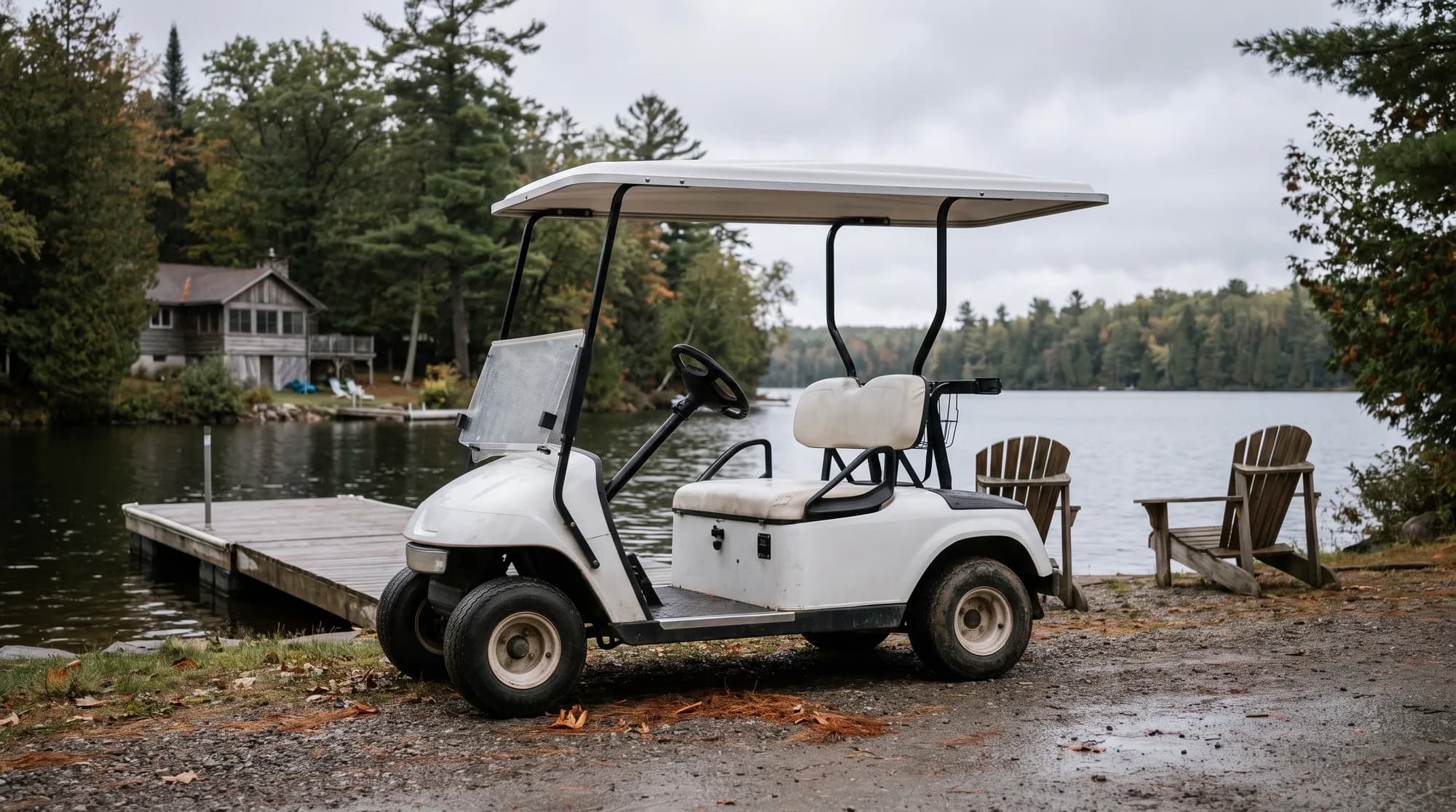
Spend a summer weekend in Muskoka, the Kawarthas, the Laurentians or the Gulf Islands and you will notice how many golf carts have nothing to do with golf. They run coolers down to the dock, haul luggage up from the parking clearing, move firewood, carry grandparents who no longer enjoy the hill, and ferry children in numbers that would horrify a fairway marshal. The cart has quietly become cottage country's workhorse. But a cottage is a harder posting than a golf course: steeper grades, loose gravel, tree roots, rain, months of storage and sometimes no grid power. This guide covers how to choose and equip a cart for Canadian cottage life, and the mistakes that show up at the end of the first season.
- Cottage duty needs property spec, not fairway spec: torque for hills, ground clearance, all-terrain tires and real cargo capacity.
- Lithium batteries suit cottages best; they tolerate irregular use, months of winter storage and charging from modest off-grid power.
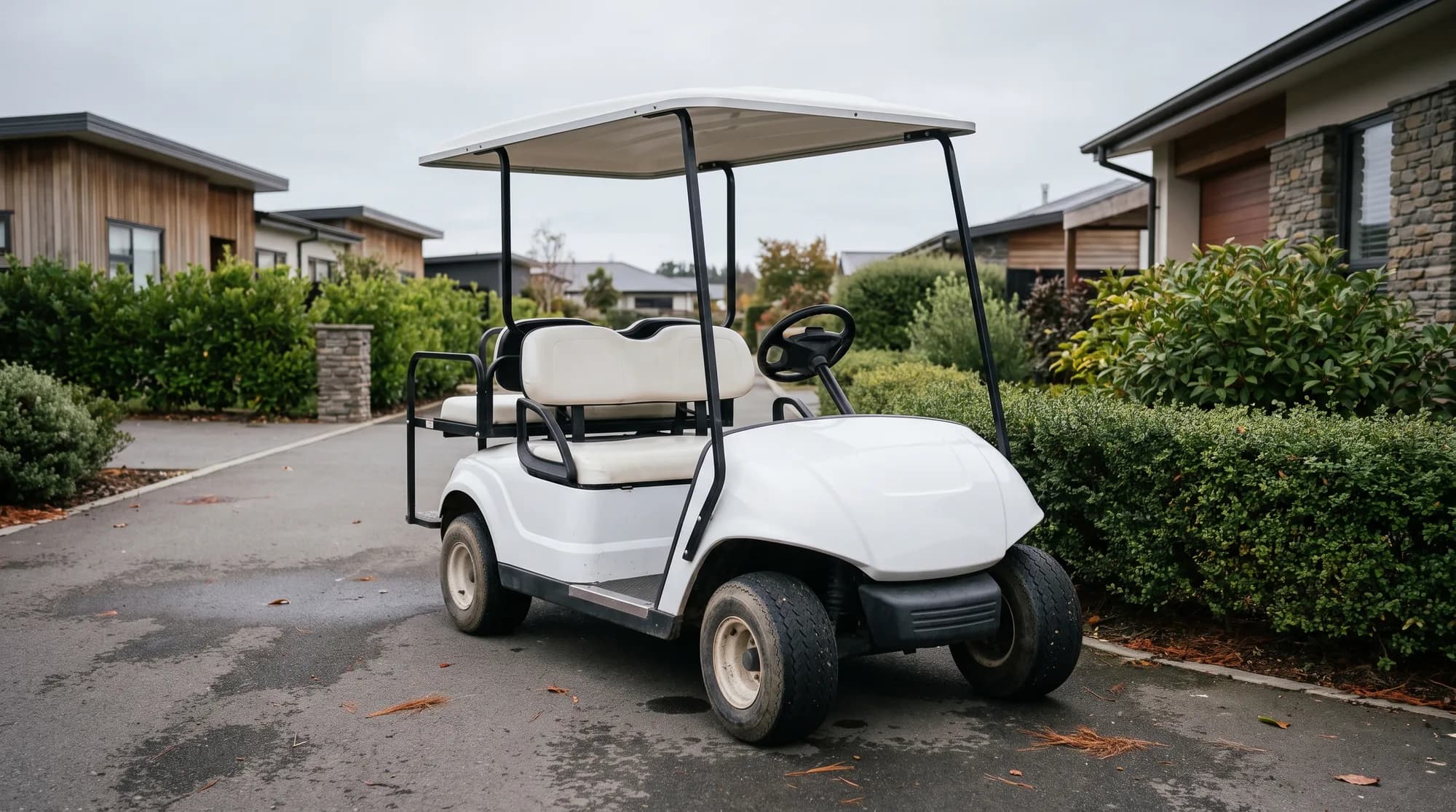
- A rear seat that flips into a cargo deck is the single most useful cottage option; six seats earn their keep when guests arrive.
- Road and trail use varies by municipality; Ontario's framework depends on your township opting in, so check locally before planning routes.
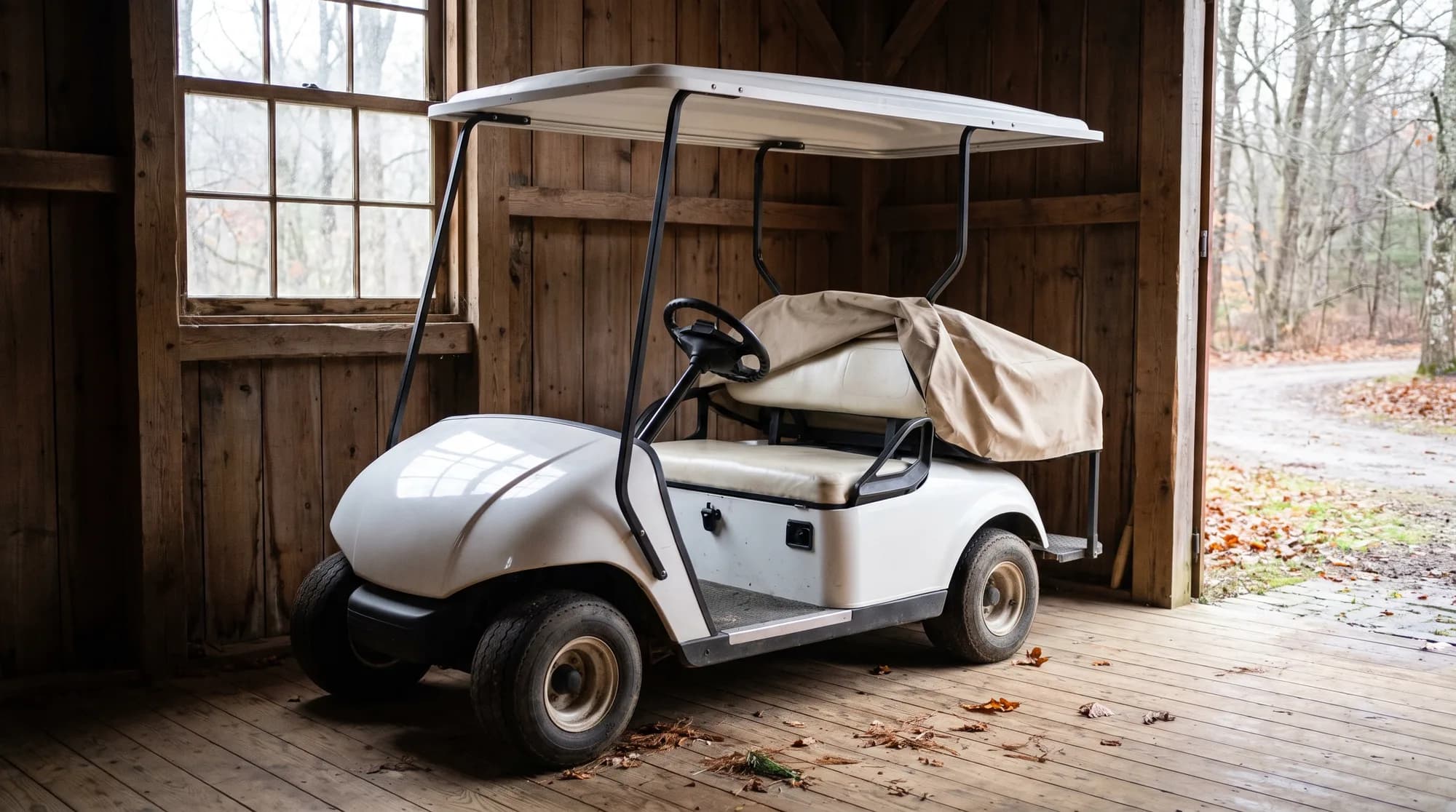
- Plan winter storage from day one: dry cover, a charge routine and mice-proofing decide how the cart looks in spring.
What cottage duty actually demands
A golf course is a manicured, nearly flat environment. A Canadian cottage lot is the opposite: a steep gravel drive, a boulder the grader missed, a soft patch near the shore and a grade to the water that tests brakes as much as motors. The cart that thrives here has a strong motor and controller, proper ground clearance, all-terrain tires and brakes you trust on a wet slope with four passengers aboard. Payload matters as much as people: a weekend's supplies for a full cottage is a serious load, and towing capacity turns the cart into the estate tractor, pulling a utility trailer of brush, water toys or firewood. Underspecify and the cart still works; it just works slowly, hot and increasingly resentfully, and its range shrinks with every hill.
The battery choice matters more at a cottage
Cottage carts live an irregular life: hammered for a long weekend, idle for two weeks, then hammered again, and finally parked for five or six months of winter. That duty cycle is unkind to lead-acid batteries, which want regular charging and steady attention, and which can suffer permanent damage if they sit discharged through a freeze. Lithium packs suit the pattern far better. They hold charge for months, tolerate partial charging without harm, and can be stored part-charged through winter with little ceremony. They are also lighter, which the hills appreciate. The premium of roughly CA$2,000 to CA$4,000 over lead-acid is real money, but at a cottage it buys the difference between a cart that is always ready and a spring ritual of testing, watering and sometimes replacing batteries.
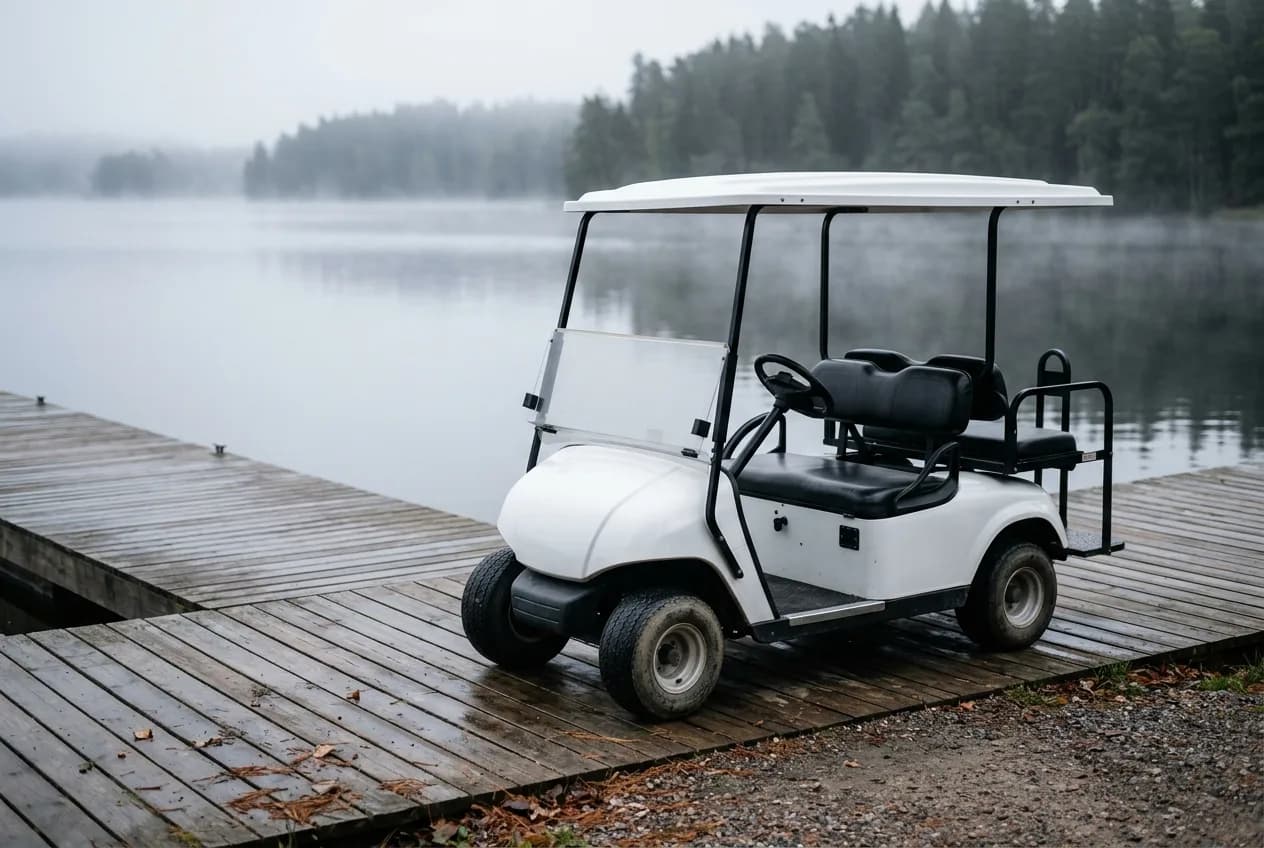
Charging when the grid is thin or absent
Most cottages can charge a cart from an ordinary outlet overnight, since a full charge is only a few kilowatt-hours. Off-grid places need slightly more thought, but a cart is one of the easier loads to serve: a modest solar array with battery storage can replenish a lithium cart over a day or two of sun, and a generator run can top one up when the weather refuses. Lead-acid packs are fussier off-grid because they want a full, uninterrupted charge cycle regularly, which is exactly what intermittent power struggles to provide. If your cottage is boat-access or solar-powered, that alone is a strong argument for lithium. Whatever the source, put the charging point under cover, on an outdoor-rated circuit, and resist the extension-cord habit; a proper outlet at the parking spot costs little and removes a genuine fire risk.
Getting it there, keeping it there
Delivery to cottage country is usually straightforward by trailer, but boat-access and island cottages need a barge, and that is worth arranging when you buy rather than improvising later; a typical cart weighs several hundred kilograms and does not step gracefully onto a floating dock. Once it is there, think about security. Carts are portable, keys are generic on many older models, and cottage country empties out midweek. A unique-key model, a wheel or pedal lock, a tracker hidden aboard and simply parking the cart out of sight from the water go a long way. Insurance for theft and liability is inexpensive relative to the machine and worth arranging alongside your cottage policy.
Shared cottages add one more wrinkle worth settling early: who maintains the machine. A cart used by three families and maintained by none ages fast. Agree on who charges it, who books the service, and whether guests drive it, and write the battery routine on a card by the key hook. The carts that last two decades in cottage country are almost never the least used ones; they are the ones with one person who considers the battery their job.
Roads, trails and the rules between properties
On your own land, the cart is your business. The moment you join a municipal road to reach the neighbours or the marina store, rules apply, and they genuinely vary. In Ontario, golf carts on public roads are only permitted where a municipality has opted into the provincial pilot framework and passed a bylaw, and many cottage townships have not. Other provinces run their own combinations of vehicle acts and local bylaws, and private road associations set their own expectations too. None of this is a reason to skip the cart; most cottage use never leaves private property and shared private lanes. It is a reason to check your township's position before you promise anyone the cart can run to the store.
The cottage cart specification, in one list
- Lithium battery with enough range to double your longest regular run.
- Hill-rated motor and controller, tested on a grade like yours before you commit.
- All-terrain tires and generous ground clearance for gravel, roots and ruts.
- Four to six seats with a rear flip deck for cargo.
- Windshield, roof and a fitted cover; an enclosure if you use the shoulder seasons.
- Outdoor-rated charging point at the parking spot, plus an off-grid charging plan if applicable.
- Security: unique key, lock, tracker, and a winter storage plan under cover.
- Confirmation of your municipality's road rules before planning any on-road routes.
Frequently asked questions
Are golf carts good for cottages?+
Extremely, when specified for the job. A cart with torque, clearance, all-terrain tires and real cargo capacity handles dock runs, luggage, firewood and guests far better than a fairway-spec machine, and electric power suits the quiet of cottage country.
Can I drive a golf cart on cottage roads in Ontario?+
Only where the municipality has opted into Ontario's pilot framework and passed a bylaw, and many cottage townships have not. Private property and private lanes are a separate matter. Check your local township before planning road use.
How do I charge a golf cart at an off-grid cottage?+
A full charge is only a few kilowatt-hours, so a solar-plus-storage setup or periodic generator runs can keep a lithium cart topped up. Lead-acid packs cope less well with intermittent charging, which is one more reason lithium suits off-grid cottages.
What size golf cart do I need for a cottage?+
For couples, a four-seater with a flip cargo deck covers most duty. Cottages that host family and guests are usually happier with six seats, and the cargo deck matters more than the seat count on supply days.
How do I store a golf cart at the cottage over winter?+
Dry and covered, ideally in a shed, with a lithium pack stored part-charged or a lead-acid pack kept on a maintainer or charged monthly. Block mice out of the wiring, and clean the cart before layup so nothing corrodes underneath.
Build a cart around your cottage
Tell us about your grade, your gravel, your guest count and your winters, and we will specify and price a cart built to order for exactly that life.
Related solutions
Ready to explore what we build?
See the vehicles and the setting this applies to, or get a tailored quote built around your site.
Ready to find the right buggy?
Tell us how and where it will work and we will specify a vehicle and a tailored quote built around you. Every build comes with a 3-year warranty and a 24-hour priority call-out.
Our guides are written and reviewed by the Hawke Electric Vehicles team, the people who specify, build, deliver and support the vehicles. We focus on honest, practical advice and flag where a figure depends on the build rather than guessing.
More guides by Hawke