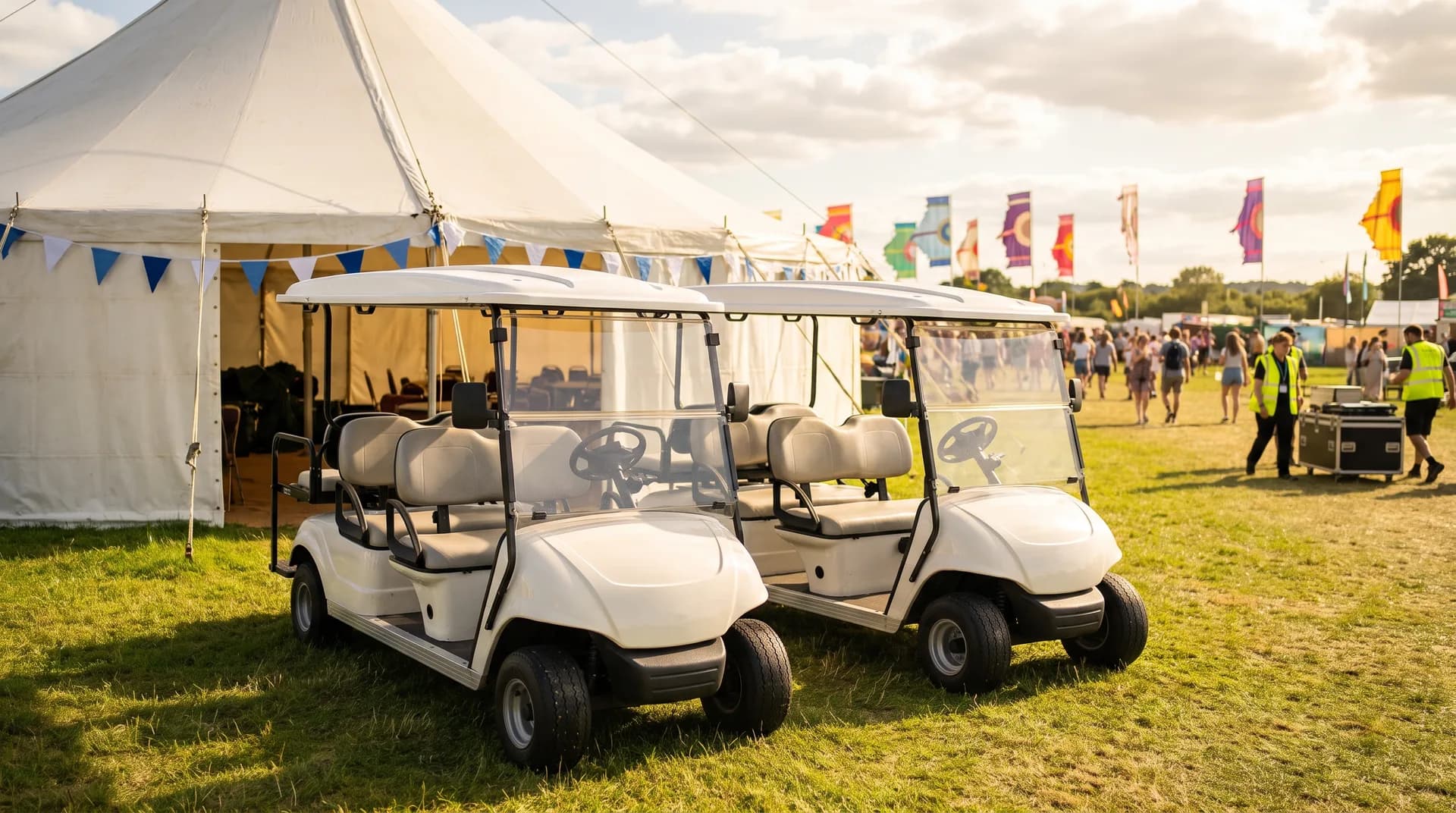
There is no single statutory rulebook for golf buggies at events: on private ground, venues and organisers set their own rules, and the safety rules that matter are the operational ones you write and enforce yourself. The good news is that the ones that work are well established. Authorise and brief every driver, treat pedestrian-dense areas as walking-pace territory, plan routes rather than letting drivers improvise, respect loading limits, charge the fleet somewhere managed, and know what you will do if something goes wrong. This guide sets those out as practical good practice for organisers, not legal advice, your venue, your insurer and your own risk assessment remain the authorities for your event, and general workplace and health-and-safety duties still apply to work activities.
- Buggy safety at events is set by the organiser and venue: write the rules down and brief them, do not assume common sense.
- A named, authorised driver list is the single most effective control, most incidents involve someone who should never have had the key.
- In crowds, walking pace is the rule, and the busiest hours may mean no buggy movements at all.
- Seats and load beds have limits: no standing passengers, no riding on cargo, nothing loose on the bed.
- Charging is part of the safety plan: a managed overnight charging point, not a cable across a walkway.
Golf buggy safety rules start with the driver
Almost every buggy problem at an event traces back to who was driving. So the first rule is a named list: specific people authorised to drive, everyone else not, and keys controlled so the list means something. Keep the bar sensible, drivers should be adults who have been shown the specific vehicle, and be guided by your hire agreement and insurer on minimum ages and any licence expectations, our guide on who can drive a hire buggy covers the detail. Then brief them, briefly: where they may drive, where they may not, walking pace near people, no passengers beyond the seats, park brake on every stop, keys out when unattended. Five minutes at the start of the event, repeated for every new driver, changes behaviour more than any signage. Volunteers and contractors count: if they drive, they get the same briefing.
Safety rules for pedestrian-dense areas
Crowds are where buggies demand the most respect. The working principles are simple: walking pace wherever people are, a horn or a polite voice rather than momentum, and never assuming a pedestrian has seen or heard you, electric buggies are quiet, which is an asset everywhere except behind a distracted visitor. Where the density is high, better organisers go further: routes that skirt the crowd rather than cross it, buggy-free windows during peak ingress and egress, and a walking escort for any movement that must pass through a packed area. Think about surfaces and light as well, wet grass, cambers, temporary trackway and unlit paths after dark all deserve slower speeds and, where you can, one-way flows that keep reversing to a minimum.
Speed, routes and loading
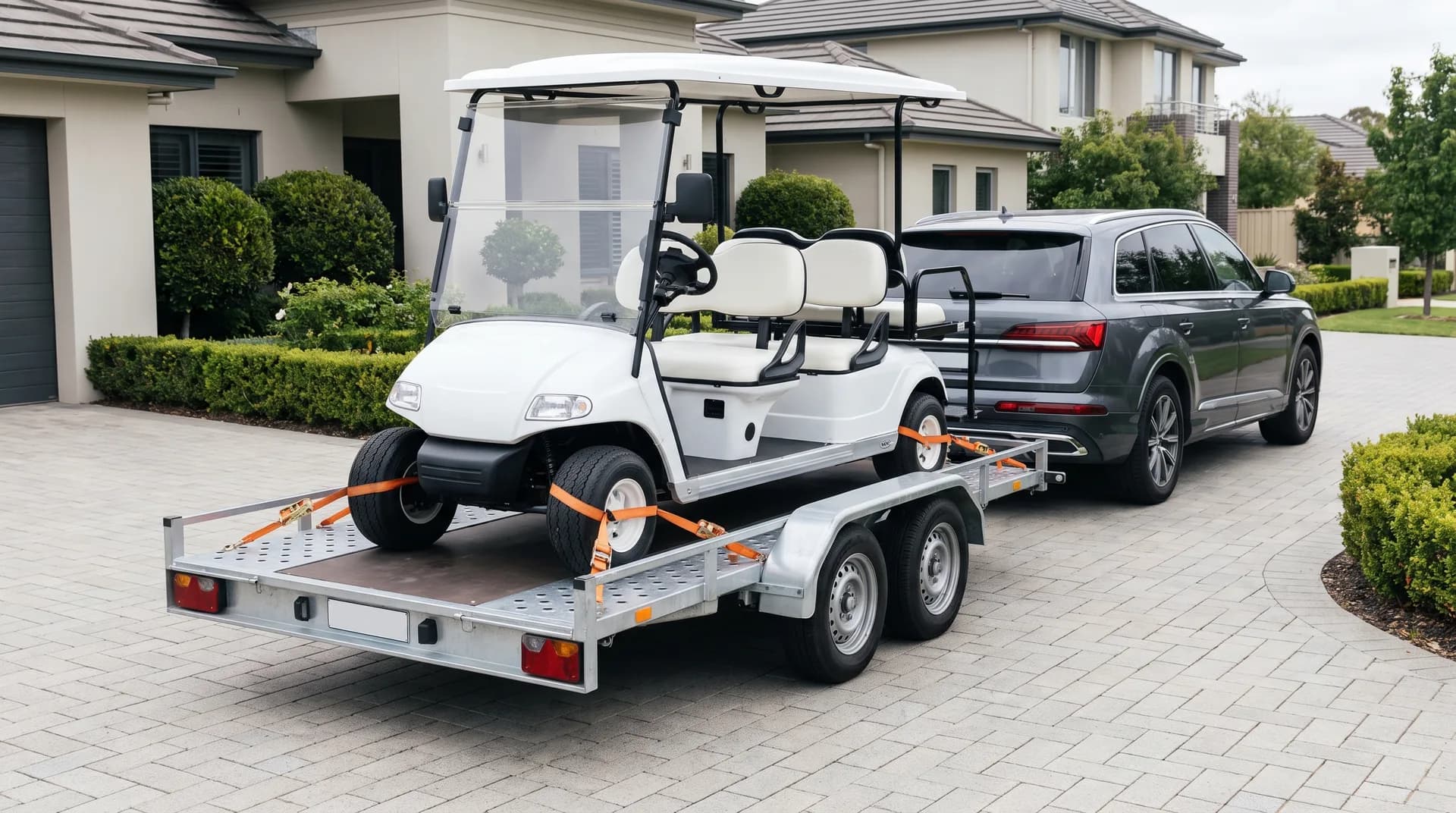
Away from the crowd, planned routes do quiet work. Map where buggies run, service roads, back-of-house corridors, the perimeter, and keep them off pinch points, steep wet slopes and pedestrian desire lines. A route plan also makes radios and scheduling easier, and it is the natural place to record no-go areas. On loading, the rules are short and non-negotiable: people ride in seats, never on load beds or laps; loads stay within the rated capacity and are secured so nothing can slide or fall; and towing only with equipment rated for it. An overloaded buggy stops poorly and tips more easily, which is exactly what you do not want near a crowd. Our guide on accidents and liability explains why the paperwork side, briefings recorded, rules written down, matters if something does happen.
- Back-of-house routes
- Normal buggy speed, conditions allowing
- Mixed areas
- Slow, ready to stop
- Crowded public areas
- Walking pace or no movements
- Back-of-house routes
- Any authorised driver
- Mixed areas
- Authorised, briefed on the area
- Crowded public areas
- Most experienced drivers only
- Back-of-house routes
- Not needed
- Mixed areas
- For reversing and blind spots
- Crowded public areas
- Walking escort for essential moves
- Back-of-house routes
- Any time
- Mixed areas
- Avoid peak flows
- Crowded public areas
- Outside peak ingress and egress
| Back-of-house routes | Mixed areas | Crowded public areas | |
|---|---|---|---|
| Speed | Normal buggy speed, conditions allowing | Slow, ready to stop | Walking pace or no movements |
| Who drives | Any authorised driver | Authorised, briefed on the area | Most experienced drivers only |
| Escort or spotter | Not needed | For reversing and blind spots | Walking escort for essential moves |
| Timing | Any time | Avoid peak flows | Outside peak ingress and egress |
Charging safely on site
An event fleet needs to charge, usually overnight, and the charging point belongs in the safety plan alongside everything else. Good practice is a designated area: level ground, weather protection for chargers and connections, cables routed so nobody trips and nothing drives over them, and a power supply confirmed as adequate with your electrician or power contractor rather than a daisy-chain of extensions. Charge away from combustible storage and sleeping areas, follow the manufacturer's guidance for the batteries you have, and make one named person responsible for plugging in, checking and unplugging the fleet. If your buggies are hired, your supplier should specify exactly what power the fleet needs, ours does, as part of event hire.
If something goes wrong
Plan for the incident you hope never happens. That means drivers know to stop, make the scene safe and report immediately; a simple form or log captures what happened, who was involved and any witnesses while memories are fresh; damage-only knocks get reported too, because near-misses are the cheapest lessons available; and someone senior reviews reports and adjusts routes or rules in response. Notify your hire supplier promptly if a hired vehicle is involved, most agreements require it, and be guided by your own insurer and, for work activities, by current health-and-safety guidance on anything reportable. For the written side of all this, our guide to golf buggy risk assessment for events sets out what a usable assessment contains, and night-time operation and lighting covers the hours when the vehicle being seen matters more than the driver seeing. None of this is onerous, and an organiser who can show a driver list, a briefing record and an incident log is in a strong position on every front.
Frequently asked questions
Are there legal speed limits for buggies at events?+
On private ground it is generally the venue and organiser who set the rules rather than a single statutory limit, so set your own: walking pace near people is the widely used standard, with normal buggy speeds kept to clear back-of-house routes. Your venue, insurer and risk assessment are the authorities for your event.
Who should be allowed to drive an event buggy?+
A named list of briefed adults, with keys controlled so the list is enforced. Follow your hire agreement and insurer on minimum ages and licence expectations, and give contractors and volunteers the same briefing as staff.
Can passengers ride on the load bed?+
No. People ride in seats only, standing riders and load-bed passengers are the classic causes of buggy injuries. Loads stay within the rated capacity and are secured.
How should we charge buggies at an outdoor event?+
In a designated, level, weather-protected area with cables routed away from walkways and vehicle routes, on a supply confirmed as adequate. Follow the manufacturer's charging guidance and give one named person responsibility for the fleet's charging.
Do these rules apply to hired buggies too?+
Yes, and your hire agreement will add its own requirements on drivers, use and incident reporting. A good supplier will help: ours briefs on the vehicles at handover and specifies the charging arrangements the fleet needs.
Plan the fleet and the rules together
Tell us about your event and site, and we will help you size the fleet, plan charging and hand over with proper driver briefings, so the buggies are an asset, not a worry.
Related solutions
Ready to explore what we build?
See the vehicles and the setting this applies to, or get a tailored quote built around your site.

Ready to find the right buggy?
Tell us how and where it will work and we will specify a vehicle and a tailored quote built around you. Every build comes with a 3-year warranty and a 24-hour priority call-out.
Our guides are written and reviewed by the Hawke Electric Vehicles team, the people who specify, build, deliver and support the vehicles. We focus on honest, practical advice and flag where a figure depends on the build rather than guessing.
More guides by Hawke