Electric carts need less maintenance than gas carts. That is true, widely repeated, and slightly misleading, because it leads owners to conclude that electric carts need no maintenance at all. They need a short list of things done consistently, and the consequences of skipping them are more expensive than the consequences of skipping most things on a gas cart. Here is what each actually requires.
- Both share the same chassis work: brakes, tires, bearings, suspension and steering.
- Gas adds a full engine schedule that nobody reminds you about.
- Electric adds battery care, which is short, easy and expensive to neglect.
- Standing damage is the most common avoidable fault on both, for different reasons.
- A cart that is used regularly needs less remedial work than one that sits.
What both carts need
- Brakes checked and adjusted, including the parking brake holding on a slope
- Tire pressures and condition, and wear pattern as a clue to alignment
- Wheel bearings, king pins and steering play
- Suspension bushings and shocks
- Lights, horn and any safety equipment fitted
- Frame and body fasteners, particularly on carts used off pavement
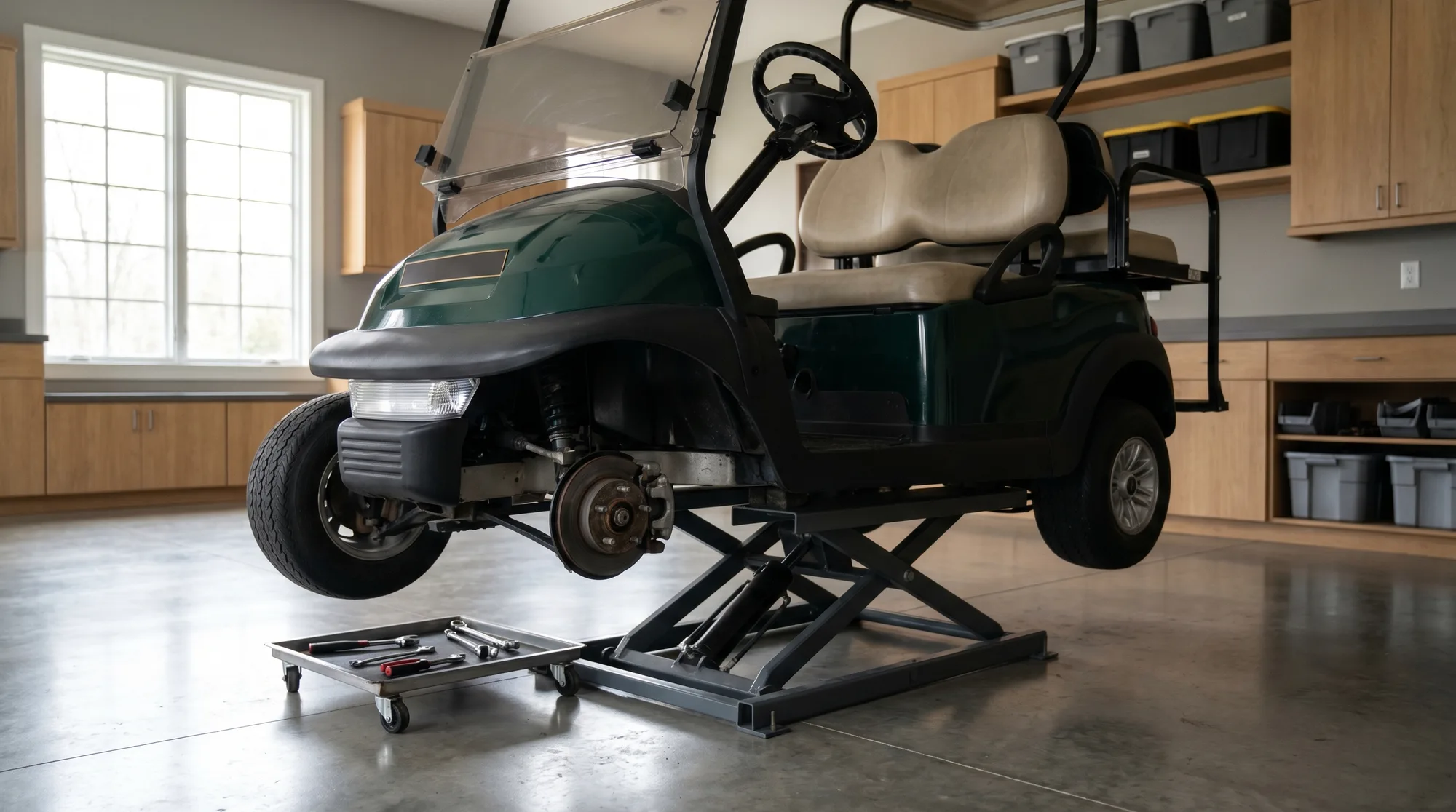
This list is identical for both types and represents most of the safety-critical work. It is also the part most commonly deferred, because a cart with tired brakes still drives and nothing announces the problem until you need to stop on a slope with passengers aboard.
What gas adds
- Roughly how often
- By hours or annually
- What happens if skipped
- Accelerated engine wear, eventually a rebuild
- Roughly how often
- Regularly, more in dusty conditions
- What happens if skipped
- Poor running, lost power, higher fuel use
- Roughly how often
- Periodically
- What happens if skipped
- Hard starting and misfires
- Roughly how often
- Periodically
- What happens if skipped
- Fuel starvation and stalling
- Roughly how often
- Inspect regularly
- What happens if skipped
- Sudden loss of drive
- Roughly how often
- As needed, more if it stands
- What happens if skipped
- Will not start, or runs badly
- Roughly how often
- Inspect
- What happens if skipped
- Noise, fumes and vibration damage
| Roughly how often | What happens if skipped | |
|---|---|---|
| Engine oil and filter | By hours or annually | Accelerated engine wear, eventually a rebuild |
| Air filter | Regularly, more in dusty conditions | Poor running, lost power, higher fuel use |
| Spark plug | Periodically | Hard starting and misfires |
| Fuel filter and lines | Periodically | Fuel starvation and stalling |
| Drive and starter belts | Inspect regularly | Sudden loss of drive |
| Carburetor | As needed, more if it stands | Will not start, or runs badly |
| Exhaust and mounts | Inspect | Noise, fumes and vibration damage |
What electric adds
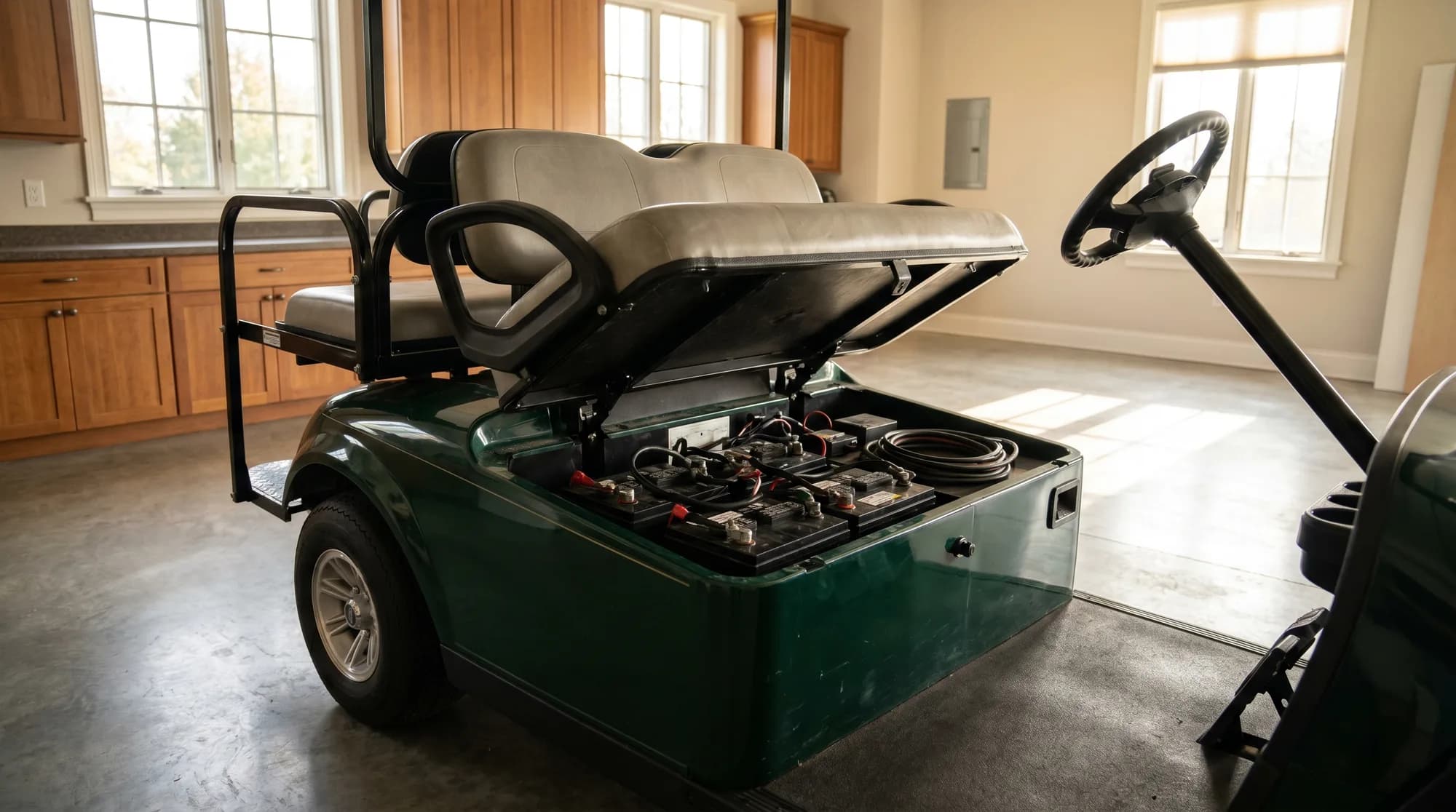
The electric list is much shorter and it is dominated by the battery pack. On lead-acid, that means checking and topping electrolyte levels with distilled water at the right point in the charge cycle, keeping terminals and interconnects clean and tight, and above all charging fully after use rather than partially and intermittently. On lithium, the routine is lighter still, but storage state of charge and avoiding prolonged deep discharge still matter. Beyond the pack, verify that the charger completes its cycle properly rather than assuming it does, and have the controller's fault codes read if the cart behaves oddly under load.
Standing damage, both types
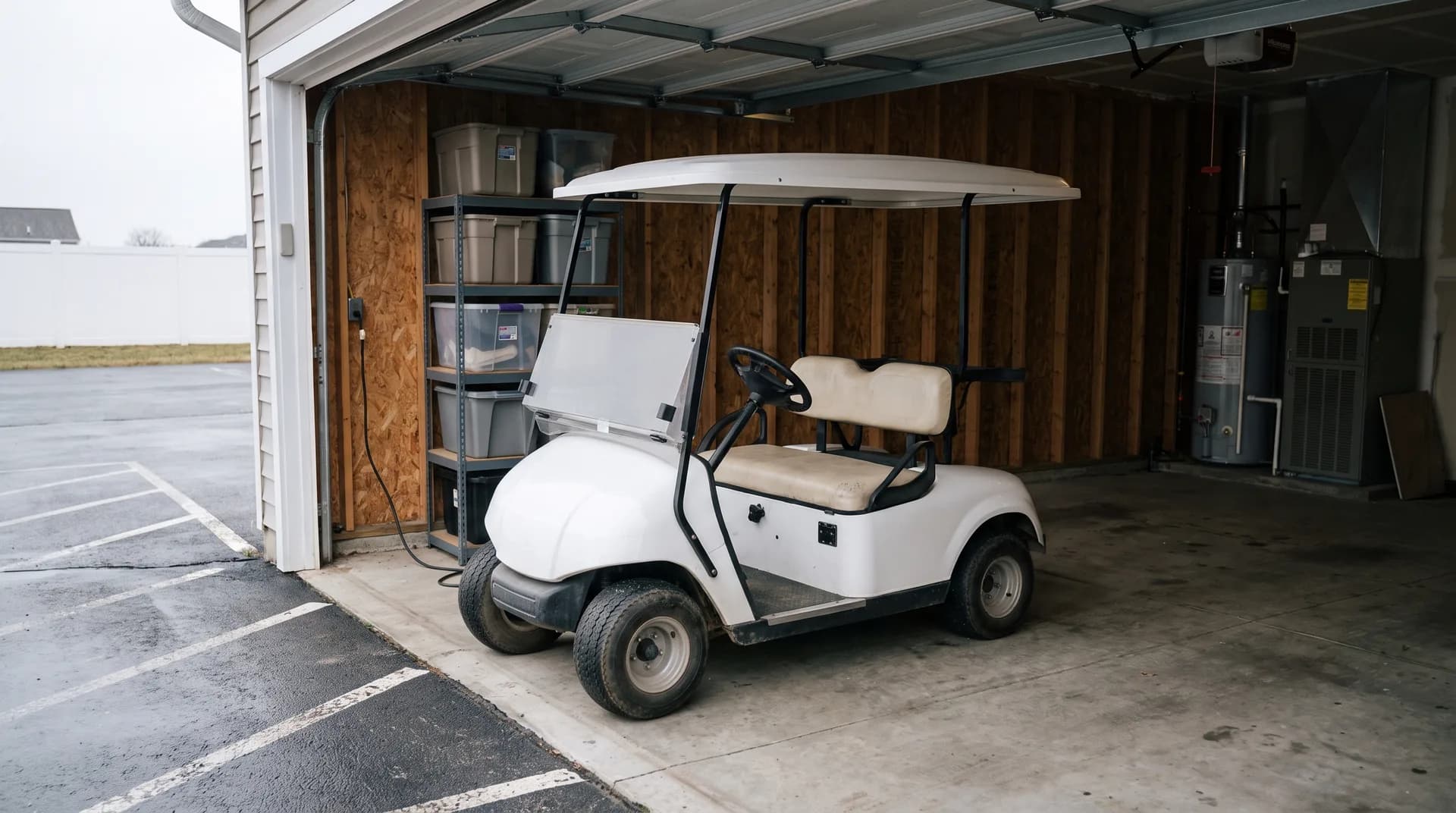
If a cart sits unused for months, both types suffer, in opposite ways. A gas cart's fuel degrades within months, gumming the carburetor and making it hard to start, which is why a stored gas cart wants either fuel stabilizer or an empty system. An electric cart's pack self-discharges, and if left low it sulfates and loses permanent capacity. In both cases the fix is planning rather than money: decide before storage what you will do, and do that thing, rather than discovering the consequence in spring.
So which is less work, honestly?
Electric, clearly, and by a wide margin in hours and in items. A gas cart has a genuine engine service schedule that must be followed to avoid expensive consequences, and an electric cart mostly wants to be charged properly and have its brakes and tires looked after. The catch is that electric's short list is unforgiving: neglect the pack and you lose capacity permanently, whereas most neglected gas items can be put right. Neither is maintenance free, and a cart that gets a proper annual service of either type will cost you less over its life than one that only gets attention when something stops working.
Frequently asked questions
Do electric golf carts need maintenance?+
Yes, but far less than gas. They need the same brakes, tires, bearings and suspension attention, plus battery care and a check that the charger completes its cycle. There is no oil, filters, plugs, belts, carburetor or exhaust.
How often should a gas golf cart be serviced?+
Follow the manufacturer's schedule by hours or annually, whichever comes first. Oil and filters, air filter, spark plug, fuel filter and belts all need periodic attention, and unlike a car nothing reminds you.
What is the most important electric golf cart maintenance?+
Charging the pack fully after use and keeping it maintained during storage. Leaving a lead-acid pack partly discharged for long periods causes permanent capacity loss that no later charging recovers.
How should I store a golf cart over winter?+
For gas, deal with the fuel, using stabilizer or emptying the system, so the carburetor does not gum up. For electric, keep the pack maintained rather than leaving it to sit flat. Both want somewhere dry and secure.
Is electric or gas less work overall?+
Electric, by a clear margin in both hours and number of items. Its short list is less forgiving though, because neglected battery care causes permanent loss where most neglected gas items can be repaired.
Rather not manage it yourself?
We offer scheduled servicing and fixed-cost maintenance so the checks actually happen instead of getting deferred until something stops working.
Related solutions
Ready to explore what we build?
See the vehicles and the setting this applies to, or get a tailored quote built around your site.

Ready to find the right buggy?
Tell us how and where it will work and we will specify a vehicle and a tailored quote built around you. Every build comes with a 3-year warranty and a 24-hour priority call-out.
Our guides are written and reviewed by the Hawke Electric Vehicles team, the people who specify, build, deliver and support the vehicles. We focus on honest, practical advice and flag where a figure depends on the build rather than guessing.
More guides by Hawke