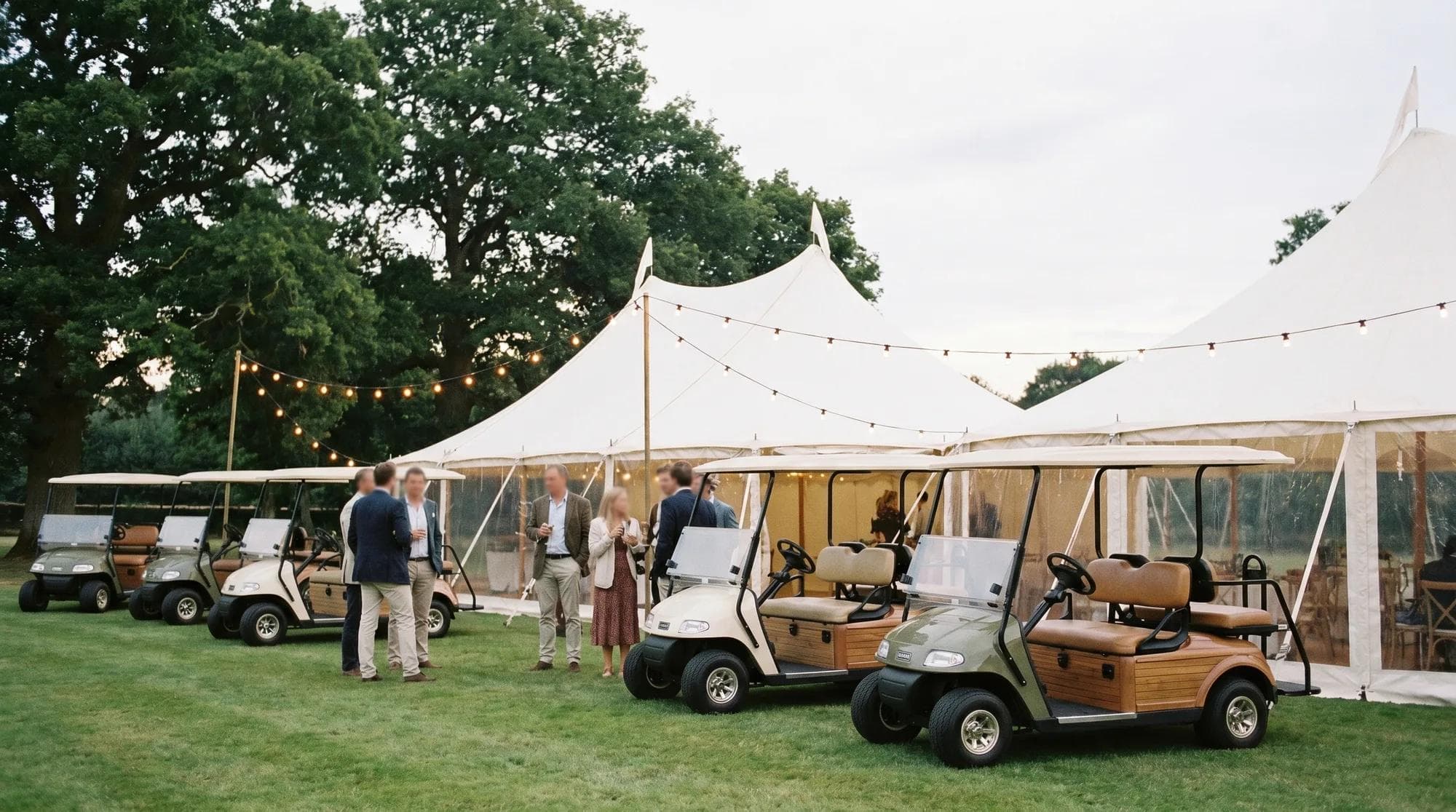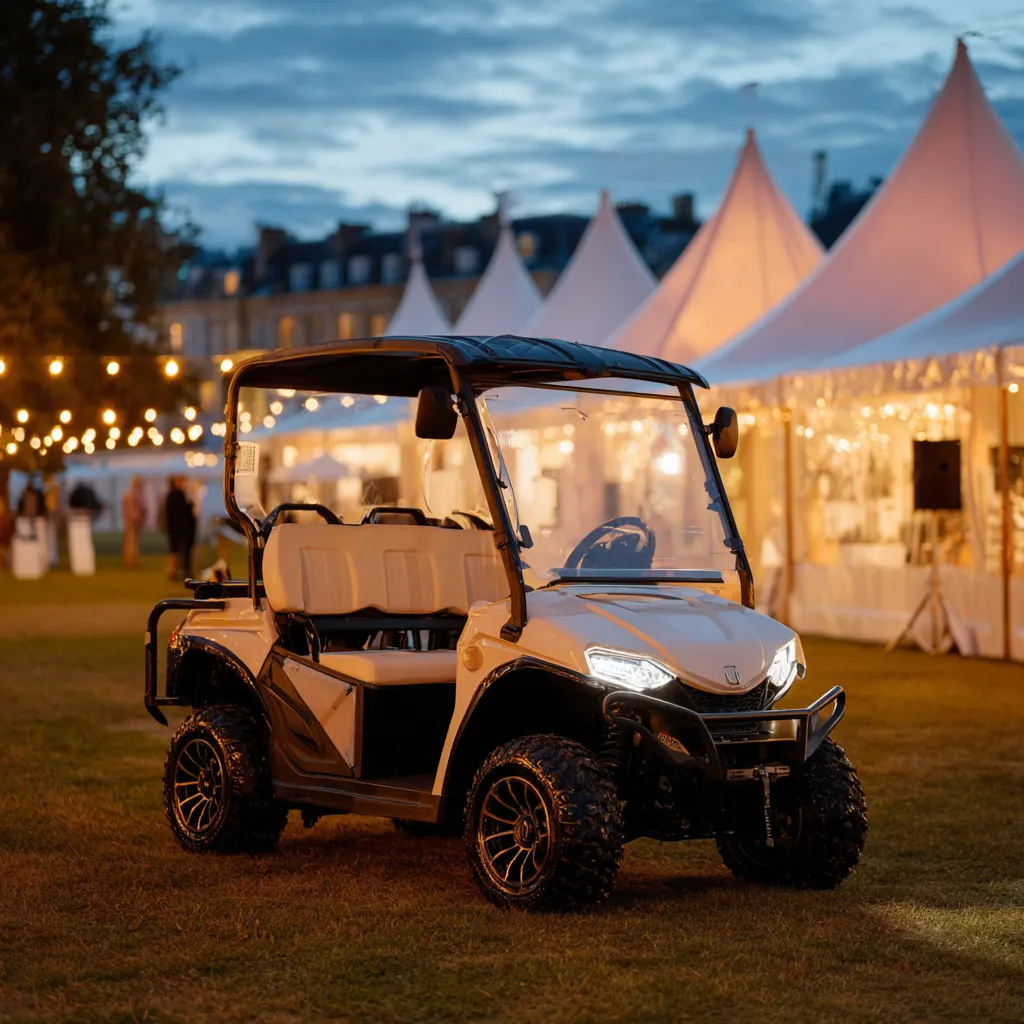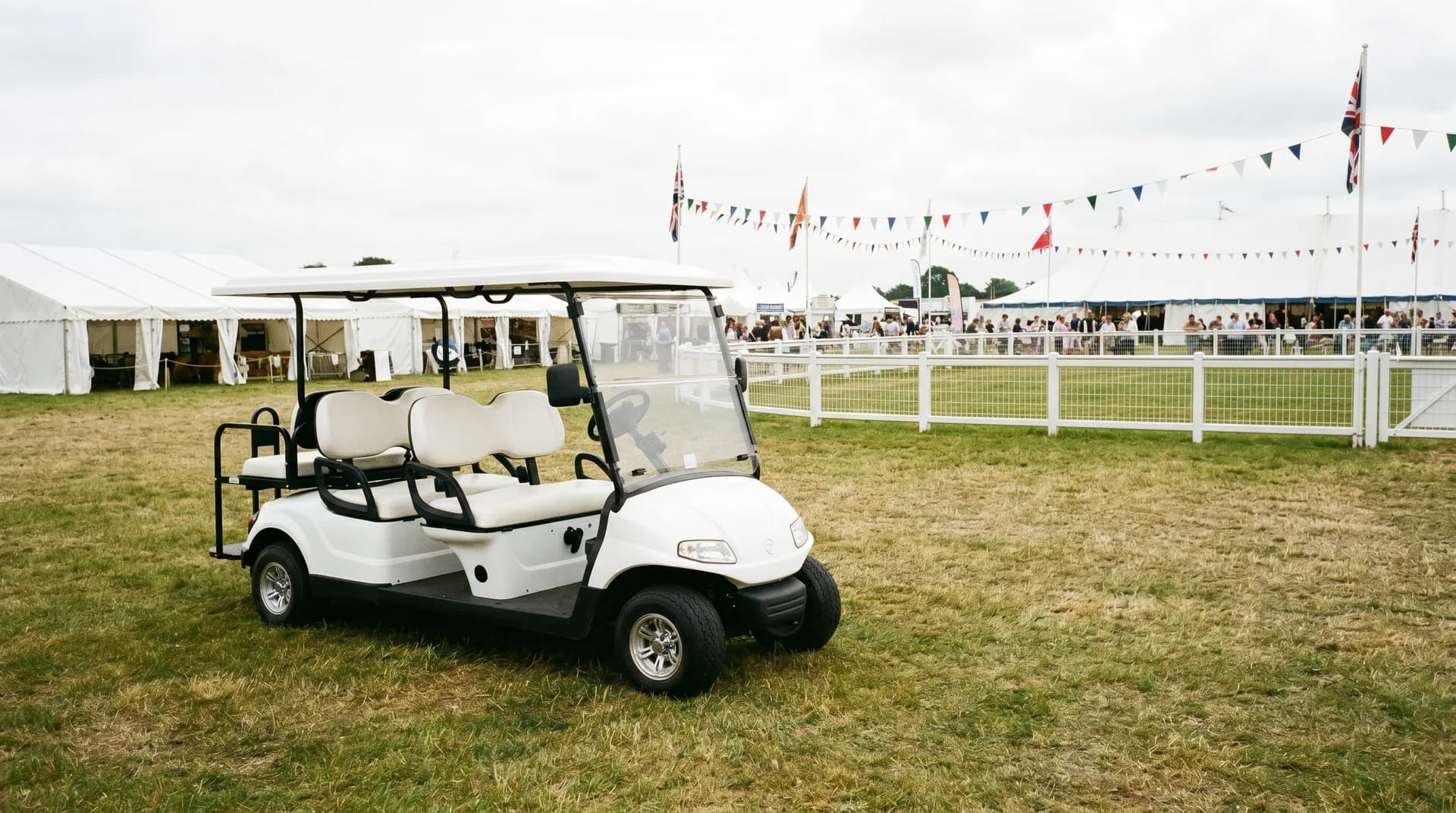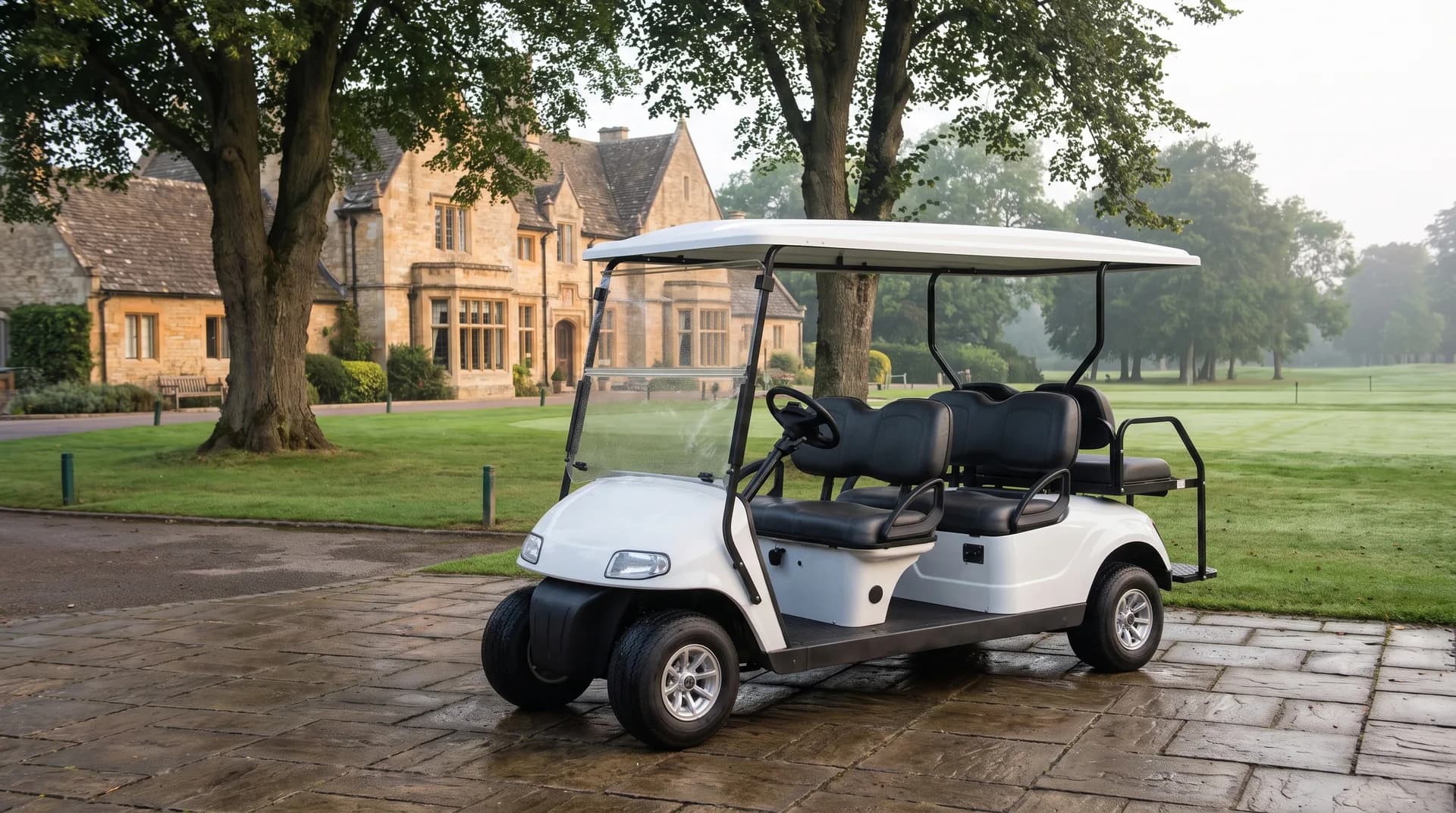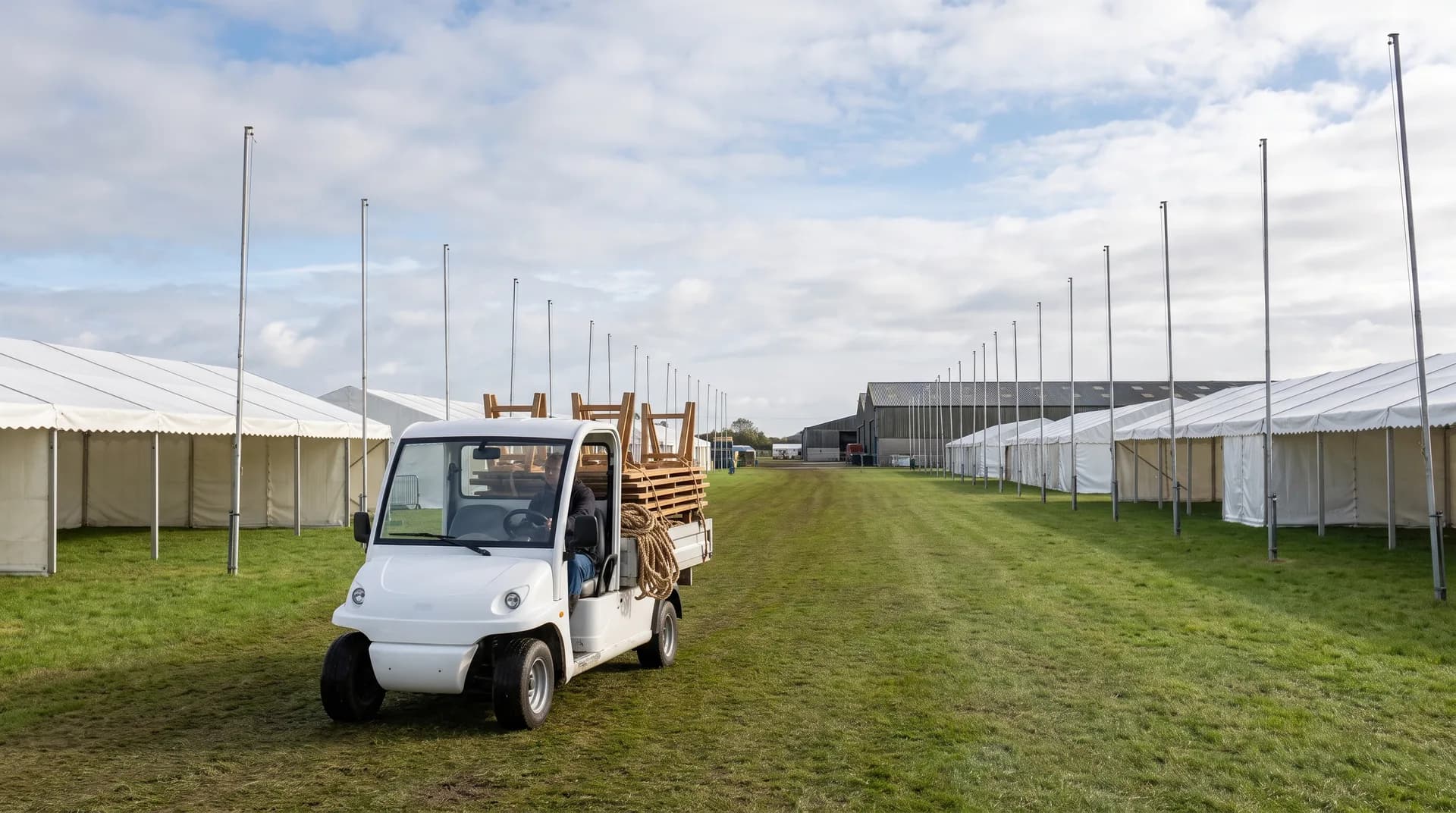
An event utility vehicle is the working half of an event fleet: the pickups, tippers, burden carriers and tow tractors that build the site, move the kit and clear the waste while the passenger buggies move the people. Most guides, including our own on hiring electric buggies for events, focus on the passenger side; this one covers the cargo side, the vehicles that do the lifting from the first fence panel of the build to the last bin run of the break. Electric suits this work unusually well: the vehicles run quietly among crowds and crew, produce no exhaust in marquees and back-of-house areas, and cost little to run across a long build week.
- The working fleet peaks at build and break, not during the show: size and schedule for those windows.
- Waste is the relentless job: bin runs continue throughout the event and a tipper transforms them.
- Tow tractors multiply capacity where routes repeat, one unit pulling several trailers.
- Electric vehicles can work among crowds and inside structures where exhaust and noise rule others out.
- Mixed fleets are normal: cargo vehicles and passenger buggies delivered, charged and managed together.
The jobs utility vehicles do at an event
Build and break are the heavy phases. Fencing, staging sections, trackway, furniture, signage and bar stock all move from the compound to their positions and back again, and a pickup or burden carrier doing that shuttling saves hours of barrowing on every run. During the show itself the work changes character: bin and waste runs become the constant, along with restocking bars and traders, moving water, running cable and fuel to generators and towers, ferrying stewarding kit, barriers, radios and signage, and responding when something breaks. A tipper earns its place on the waste cycle, emptying loose rubbish and recycling straight into skips instead of hand-unloading bag by bag, and a tow tractor earns its place wherever the same route repeats, one unit pulling a train of trailers between the compound and the arena. On big showgrounds, the same logic our showground vehicles guide sets out applies event by event.
Why electric utility vehicles suit event sites
Events are exactly the environment where electric drive stops being a preference and starts being an operational advantage. The vehicles are near-silent, so they can work behind a stage during a performance, cross a campsite at dawn and thread through a crowd without adding noise. They produce no exhaust, so they can restock inside marquees and work in back-of-house corridors where running a petrol engine would be unpleasant at best. Torque from a standstill copes with laden starts on grass and trackway ramps, and turning circles designed for paths, not roads, fit gate lines and vendor alleys. Ground pressure matters on show sites too: a compact electric vehicle on turf tyres does far less damage to a field that has to recover, or be reinstated, after the event. The main discipline electric demands in return is charging, and our guide to powering event buggies on site covers how build-week power feeds a fleet overnight.
- Pickup / burden carrier
- The all-rounder
- Tipper
- Good, tip unused
- Tow tractor
- Best for repeated routes
- Pickup / burden carrier
- Carries bagged waste
- Tipper
- Empties loose waste in seconds
- Tow tractor
- Pulls multiple waste trailers
- Pickup / burden carrier
- Ideal
- Tipper
- Works
- Tow tractor
- Good with cage trailers
- Pickup / burden carrier
- Ideal
- Tipper
- Works
- Tow tractor
- Good for volume
- Pickup / burden carrier
- The core
- Tipper
- One or two per site
- Tow tractor
- Where routes repeat
| Pickup / burden carrier | Tipper | Tow tractor | |
|---|---|---|---|
| Build and break kit moves | The all-rounder | Good, tip unused | Best for repeated routes |
| Bin and waste runs | Carries bagged waste | Empties loose waste in seconds | Pulls multiple waste trailers |
| Bar and trader restocking | Ideal | Works | Good with cage trailers |
| Cable, water and fuel moves | Ideal | Works | Good for volume |
| Typical fleet share | The core | One or two per site | Where routes repeat |
Building a mixed event fleet
Most events run cargo and passenger vehicles as one fleet, and the split matters more than the total. A workable starting point is to list the jobs, not the vehicles: how many simultaneous waste, restock and kit runs happen at peak, how many crew and guest movements need seats, and which routes repeat often enough to justify a tow tractor and trailers. Passenger buggies with their seats folded or removed can flex into light cargo work, but a laden pickup cannot become six seats, so err towards enough true cargo vehicles for the build and break, when the working fleet is busiest and the passenger fleet is quietest. The utility vehicle range covers the cargo half of that mix, from pickups to tow tractors, and hire packages routinely deliver both halves together, charged and ready, for the build-to-break window.
Practicalities: access, drivers and charging
Three details make or break the working fleet on site. First, access: measure the pinch points, gate lines, bridge ramps, vendor alleys, and match vehicle widths to them, because the shortest route only helps if the vehicle fits it. Second, drivers: agree who may drive before vehicles arrive, brief them on pedestrian priority and speed expectations, and keep keys controlled overnight, an event site full of parked vehicles and late-night crowds rewards discipline. Third, charging: overnight charging from build-week power is normally all a fleet needs, but it has to be planned, sockets where the vehicles park, a rota so everything starts the day full, and a named person who owns it. Get those three right and the working fleet disappears into the background of a smooth event, which is exactly where it belongs.
Frequently asked questions
What is an event utility vehicle?+
A compact working vehicle, typically an electric pickup, tipper, burden carrier or tow tractor, used for event logistics: building and breaking the site, waste runs, restocking, and moving cable, water and kit, as distinct from passenger buggies that move people.
Why use electric utility vehicles at an event?+
They are near-silent and produce no exhaust, so they can work among crowds, behind stages and inside marquees where petrol or diesel vehicles would be intrusive or unpleasant. They are also gentle on turf and cheap to run across a long build.
How many utility vehicles does an event need?+
Size from the jobs at peak, usually during build and break rather than the show itself. Count simultaneous kit, waste and restock runs, add a tipper for the waste cycle on larger sites, and consider a tow tractor where the same route repeats all day.
Can utility vehicles and passenger buggies come in one hire?+
Yes, and most event hires work that way: cargo vehicles and passenger buggies delivered together, charged and collected as one package for the build-to-break window.
How are event vehicles charged on site?+
Overnight from build-week power, typically standard sockets near the compound where vehicles park. Plan the sockets and a charging rota in advance so the fleet starts every day full.
Plan your event's working fleet
Tell us the site, the dates and the jobs, and we will spec the mix of pickups, tippers and tow tractors, with passenger buggies alongside if you need them.
Related solutions
Ready to explore what we build?
See the vehicles and the setting this applies to, or get a tailored quote built around your site.
Ready to find the right buggy?
Tell us how and where it will work and we will specify a vehicle and a tailored quote built around you. Every build comes with a 3-year warranty and a 24-hour priority call-out.
Our guides are written and reviewed by the Hawke Electric Vehicles team, the people who specify, build, deliver and support the vehicles. We focus on honest, practical advice and flag where a figure depends on the build rather than guessing.
More guides by Hawke