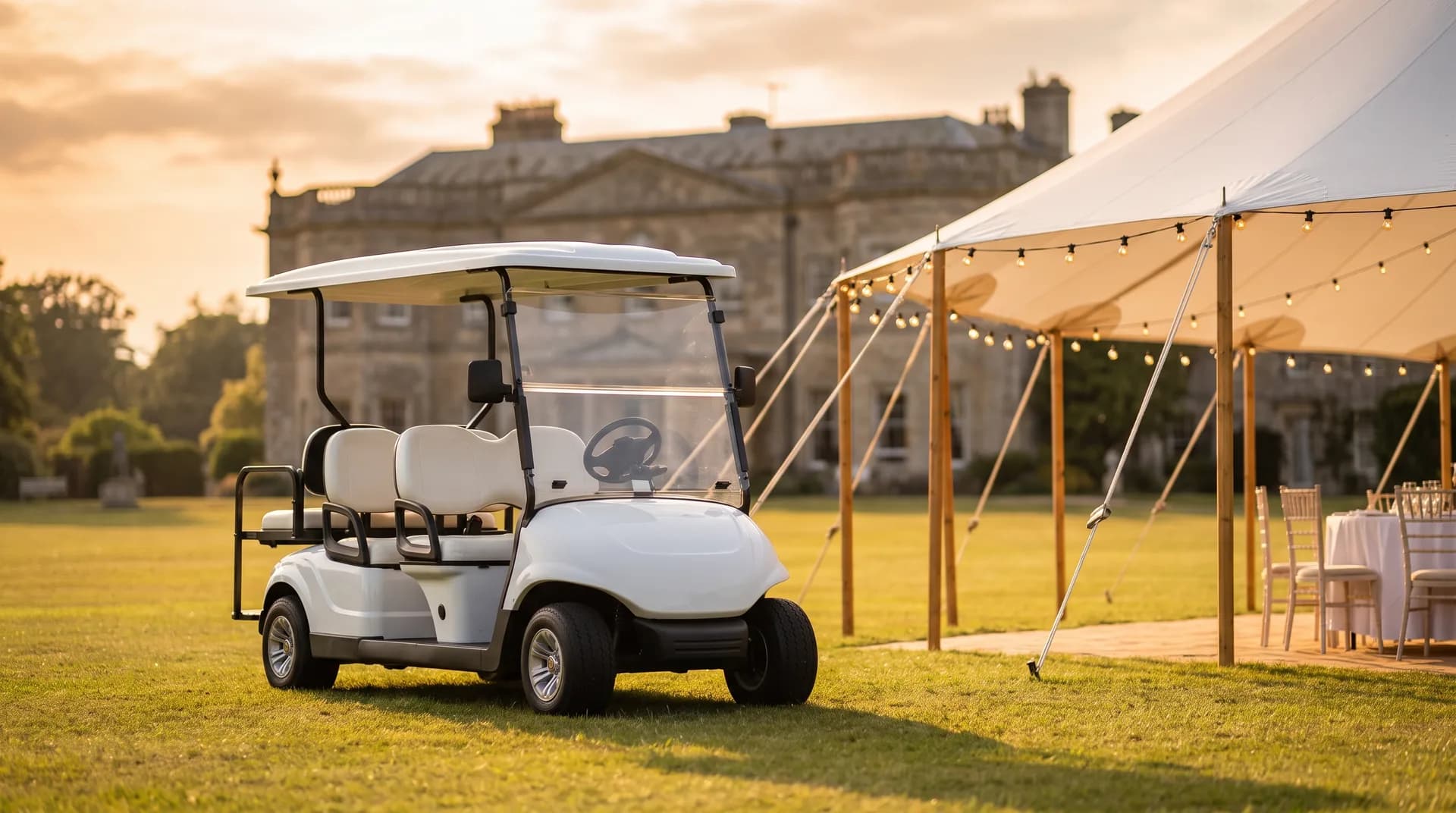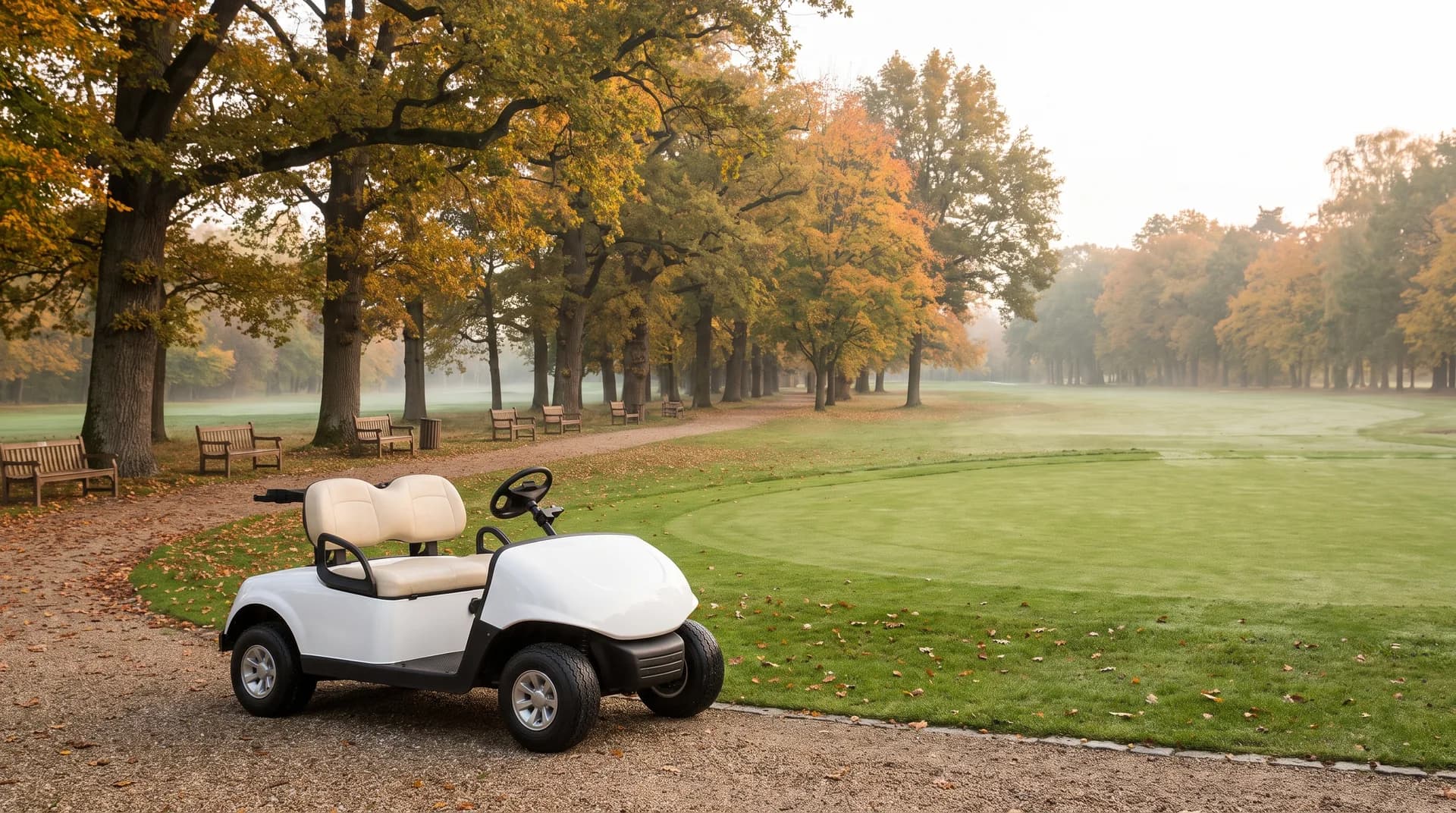
If walking eighteen holes has become the hardest part of your golf, the best golf buggy for seniors is the one you can get into easily, sit in comfortably and drive without a second thought. For most older golfers in the UK that means a compact two-seat electric buggy with a low, flat step-in, a supportive upright seat, one pedal to go and one to stop, and four wheels set well apart for stability. Our S2, from £11,500, is exactly that shape of machine, and this guide explains how to judge it and any alternative. One boundary first: this guide is about comfort and ease in general. If a medical condition or a mobility need is driving the decision, our guide for disabled golfers covers that properly, including the VAT relief rules and specialist single-seaters.
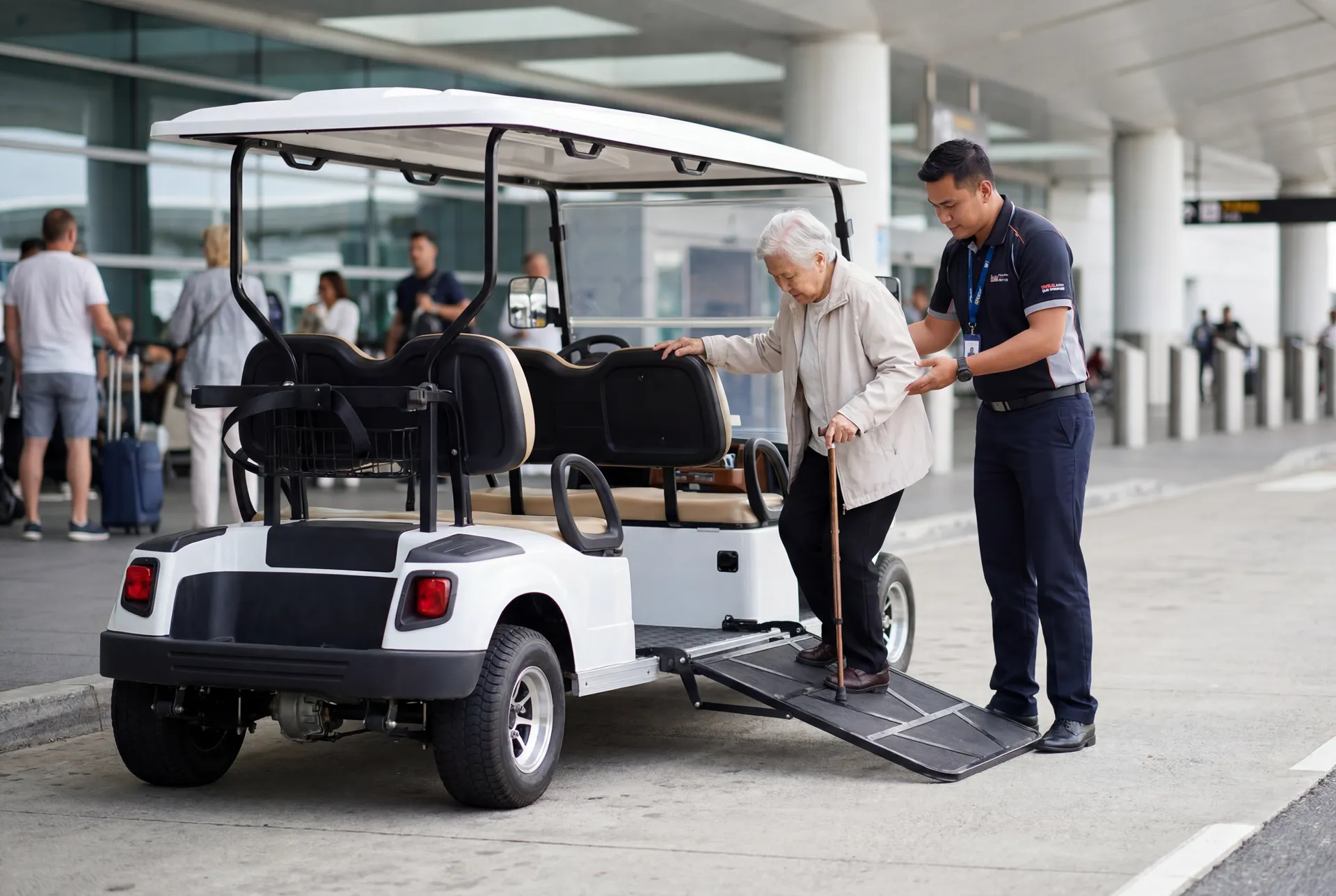
- Ease of entry matters most: look for a low flat floor, wide seat access and something to hold, not a high sill to climb over.
- A supportive, upright seat beats a sporty bucket for stiff backs and hips, and weather protection keeps you playing more of the year.
- Controls should need no learning: one pedal to go, one to stop, a simple forward and reverse switch, and a parking brake that looks after itself.
- Four wheels and a wide track are non-negotiable on slopes; light three-wheeled machines are the wrong choice.
- If lifting kit into the car is the real problem, club storage or hiring may serve you better than any purchase.
Ease of entry: the first thing to test
Getting in and out is where most machines are won or lost, because you will do it forty times a round. Look for a flat floor with no centre hump, a seat base at roughly the height of a dining chair so you sit down rather than climb up, and open access on both sides so you can always step out on the level side of a slope. The canopy supports should give you something natural to hold as you turn and sit. Test this in real shoes on real ground: swing in and out several times, on both sides, and notice whether knees and hips complain. A machine that fails this test fails the whole brief.
Seat comfort and simple controls over eighteen holes
Four hours is a long time in a bad seat. An upright backrest with real cushioning suits older backs far better than a low, reclined bucket, and a bench-style seat gives you room to shift position through the round. Weather protection deserves more weight than it gets in July: a roof and a screen, with side protection available, is the difference between playing and staying home for much of the British year. On controls, the standard is that there is nothing to learn. A key or fob, a forward and reverse switch, an accelerator that pulls away gently rather than leaping, and a brake that holds the machine on a slope without a separate lever to remember. If a salesperson needs five minutes to explain the dashboard, that is a warning, not a feature.
The best golf buggy for seniors is a stable one
Stability is the quiet safety question. Four wheels, a wide track and a low centre of gravity keep a buggy planted on wet cambers and around bunker slopes; light three-wheeled ride-on trolleys are the least stable things on the course and the wrong recommendation for anyone whose balance or bones make a slide consequential. Gentle, predictable braking downhill matters just as much, as modern electric buggies slow themselves on descents rather than running away. If your course is properly hilly, our guide to buggies for hills and wet weather goes deeper on tyres, braking and battery reserve.
Which golf buggy for seniors: our honest picks
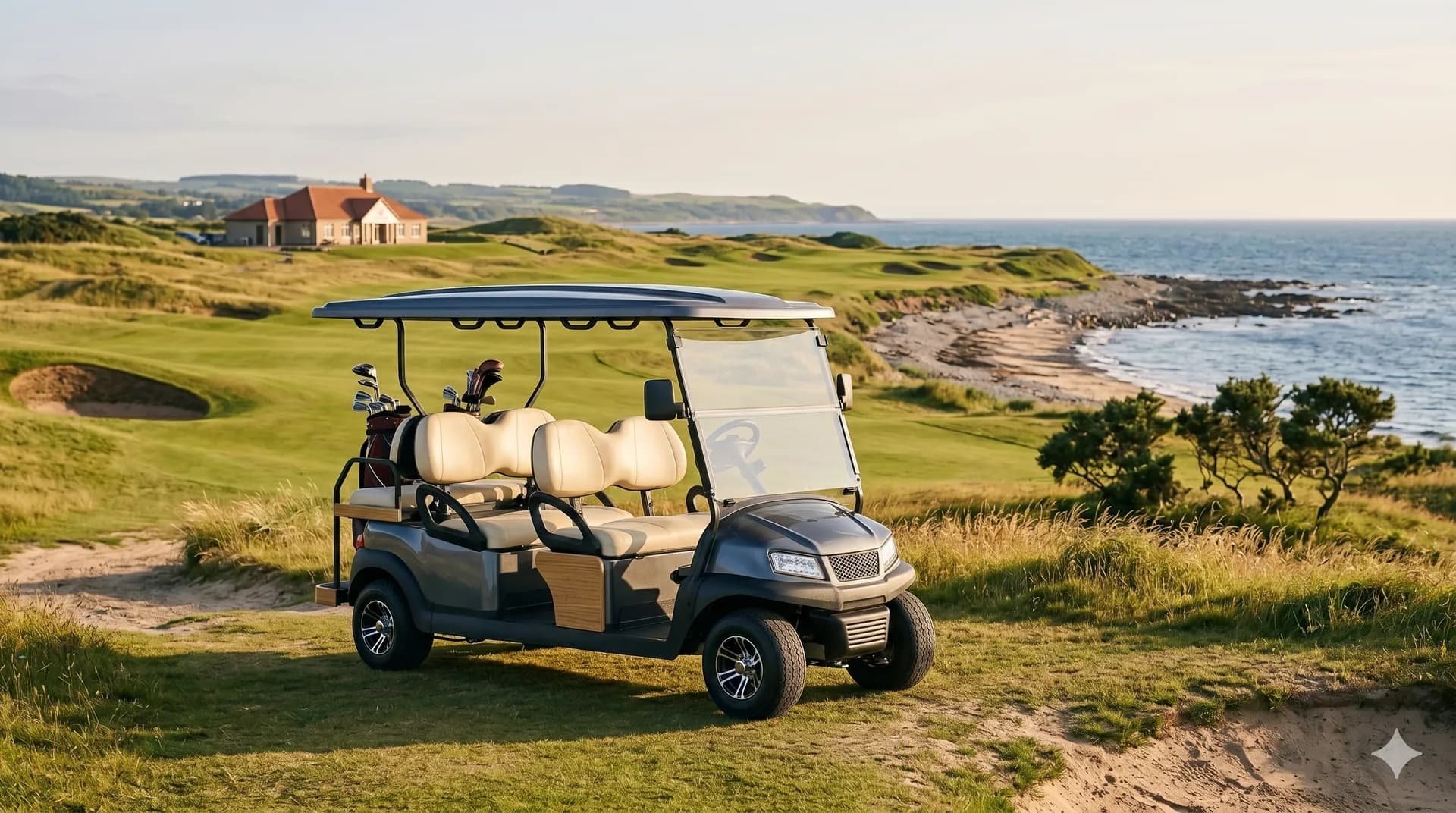
For one or two golfers and their clubs, a compact two-seater is the answer for most people, and our S2, from £11,500, is the machine we would point most older golfers at first: low step-in, upright seating, simple controls, lithium power and a proper warranty behind it. If you regularly play with a partner and want space for grandchildren, a trolley-load of kit or a dog, the S4, from £14,900, adds a second row without changing how easy the machine is to live with. You can compare both across the full electric golf buggy range, and a checked used two-seater is a sensible route to the same comfort for less.
- What good looks like
- Low flat floor, chair-height seat, open both sides
- Why it matters
- You get in and out dozens of times a round
- What good looks like
- Upright backrest, real cushioning, room to shift
- Why it matters
- Four hours in a bad seat undoes the benefit of riding
- What good looks like
- Two pedals, one switch, self-holding brake
- Why it matters
- Nothing to learn and nothing to forget on a slope
- What good looks like
- Four wheels, wide track, low centre of gravity
- Why it matters
- Wet cambers and bunker banks demand a planted machine
- What good looks like
- Roof and screen, side protection available
- Why it matters
- Keeps you playing through the British year
| What good looks like | Why it matters | |
|---|---|---|
| Entry | Low flat floor, chair-height seat, open both sides | You get in and out dozens of times a round |
| Seat | Upright backrest, real cushioning, room to shift | Four hours in a bad seat undoes the benefit of riding |
| Controls | Two pedals, one switch, self-holding brake | Nothing to learn and nothing to forget on a slope |
| Stability | Four wheels, wide track, low centre of gravity | Wet cambers and bunker banks demand a planted machine |
| Weather | Roof and screen, side protection available | Keeps you playing through the British year |
Buying, hiring and the club question
Before any money moves, settle two practical points. First, storage and permission: most private buggies live at the club, so ask about buggy shed space, waiting lists and the club's policy before you order, and our guide to taking your own buggy to the golf club walks through that conversation. Second, be honest about how the machine will travel. If the plan involves lifting anything heavy into a car boot every week, the plan will fail; store at the club, or keep hiring the club's fleet per round while you decide. And if a full buggy feels like more machine than you need, our comparison of single-seaters, ride-on trolleys and compact buggies lays out the smaller options honestly, including their stability trade-offs.
Frequently asked questions
What is the easiest type of golf buggy to get in and out of?+
A compact two-seat electric buggy with a flat floor, a seat base at roughly dining-chair height and open access on both sides. Avoid anything that makes you climb over a sill or drop into a low bucket seat, and test entry on both sides before you buy.
Are electric golf buggies hard for older people to drive?+
No. A good one has one pedal to go, one to stop, a simple forward and reverse switch and a parking brake that holds automatically. There are no gears and no clutch, and acceleration is deliberately gentle. If the controls need explaining at length, look elsewhere.
Is a two-seater or four-seater better for an older golfer?+
A two-seater like the S2 suits most people: it is lighter, easier to store and simpler to manoeuvre. Choose a four-seater if you regularly carry a partner plus family or extra kit. Both should be equally easy to get into and drive.
Should I buy a buggy or keep hiring at the club?+
If you play once a week or more and your club has storage, ownership usually pays for itself within a few seasons and guarantees you a machine on busy mornings. If you play occasionally, or storage and transport are unsolved, keep hiring while you work the sums.
Can older golfers claim VAT relief on a buggy?+
Age alone does not qualify. VAT relief applies only in narrow circumstances involving vehicles substantially and permanently adapted for disabled users, and a standard golf buggy does not meet the test. Budget on paying VAT and treat any relief as a question for HMRC guidance, not a discount to assume.
Find the buggy that keeps you playing
Tell us about your course, your storage and how you get around it today, and we will give you an honest steer on the right machine, then price it to your specification.
Related solutions
Ready to explore what we build?
See the vehicles and the setting this applies to, or get a tailored quote built around your site.
Ready to find the right buggy?
Tell us how and where it will work and we will specify a vehicle and a tailored quote built around you. Every build comes with a 3-year warranty and a 24-hour priority call-out.
Our guides are written and reviewed by the Hawke Electric Vehicles team, the people who specify, build, deliver and support the vehicles. We focus on honest, practical advice and flag where a figure depends on the build rather than guessing.
More guides by Hawke