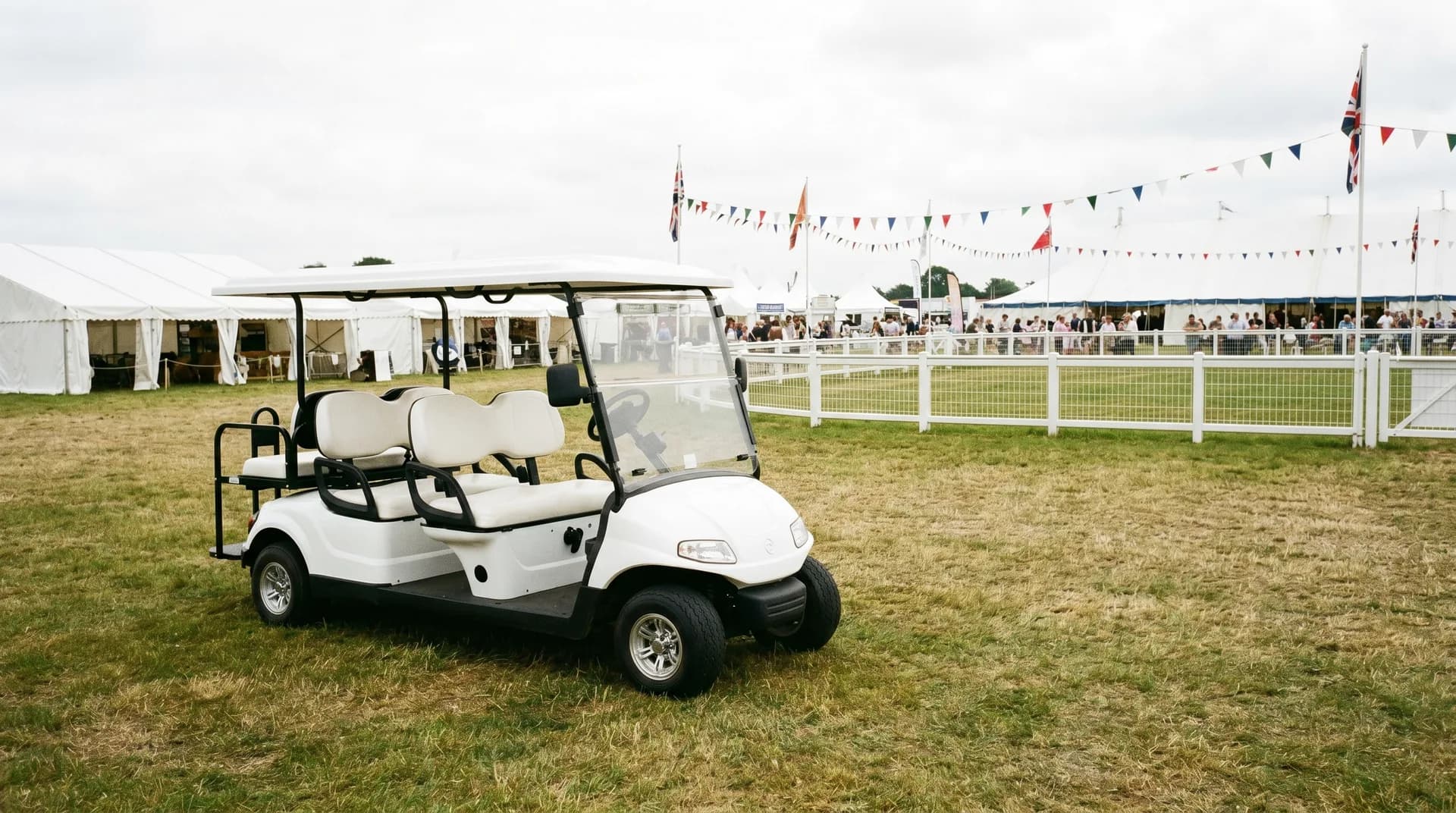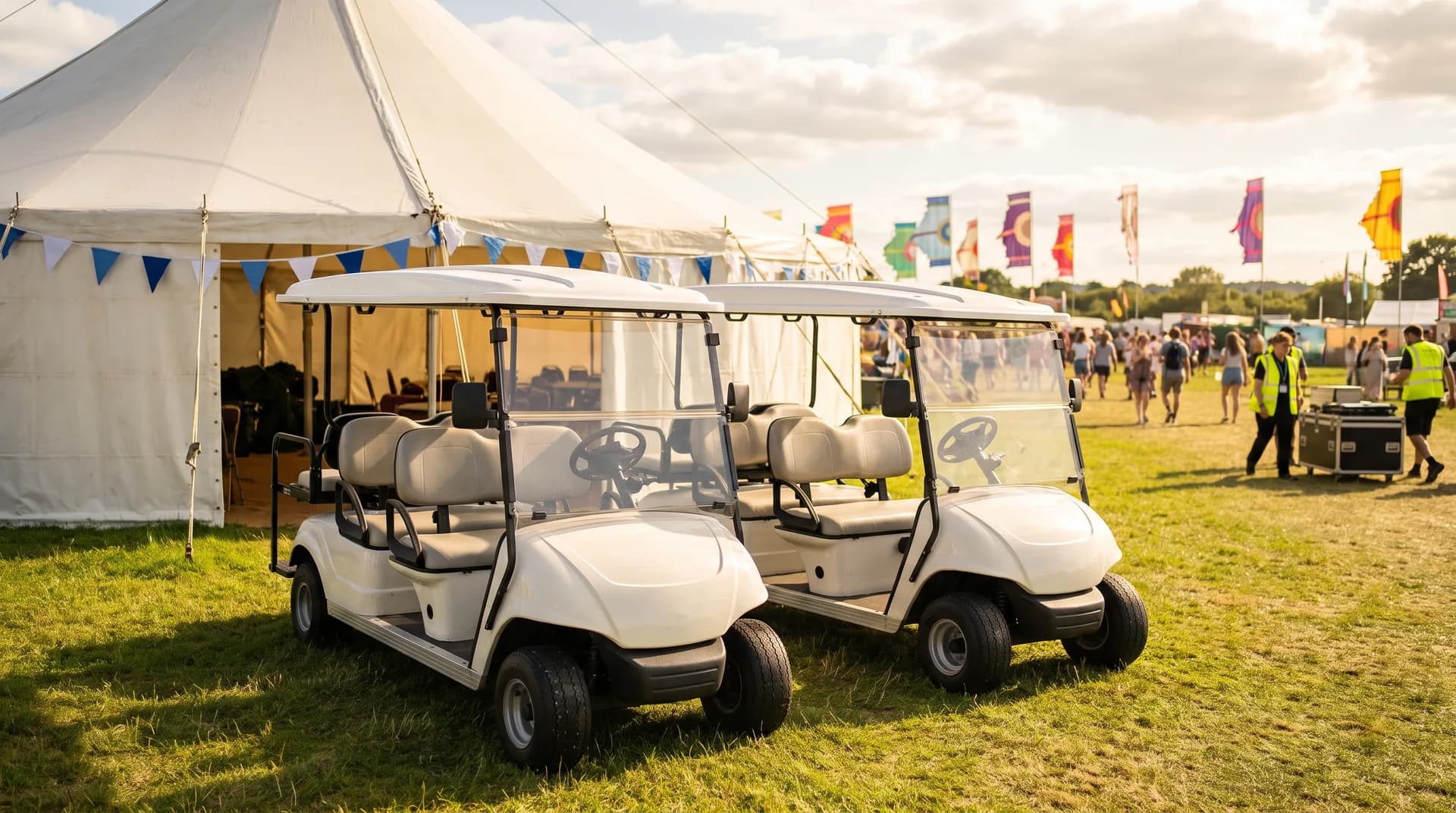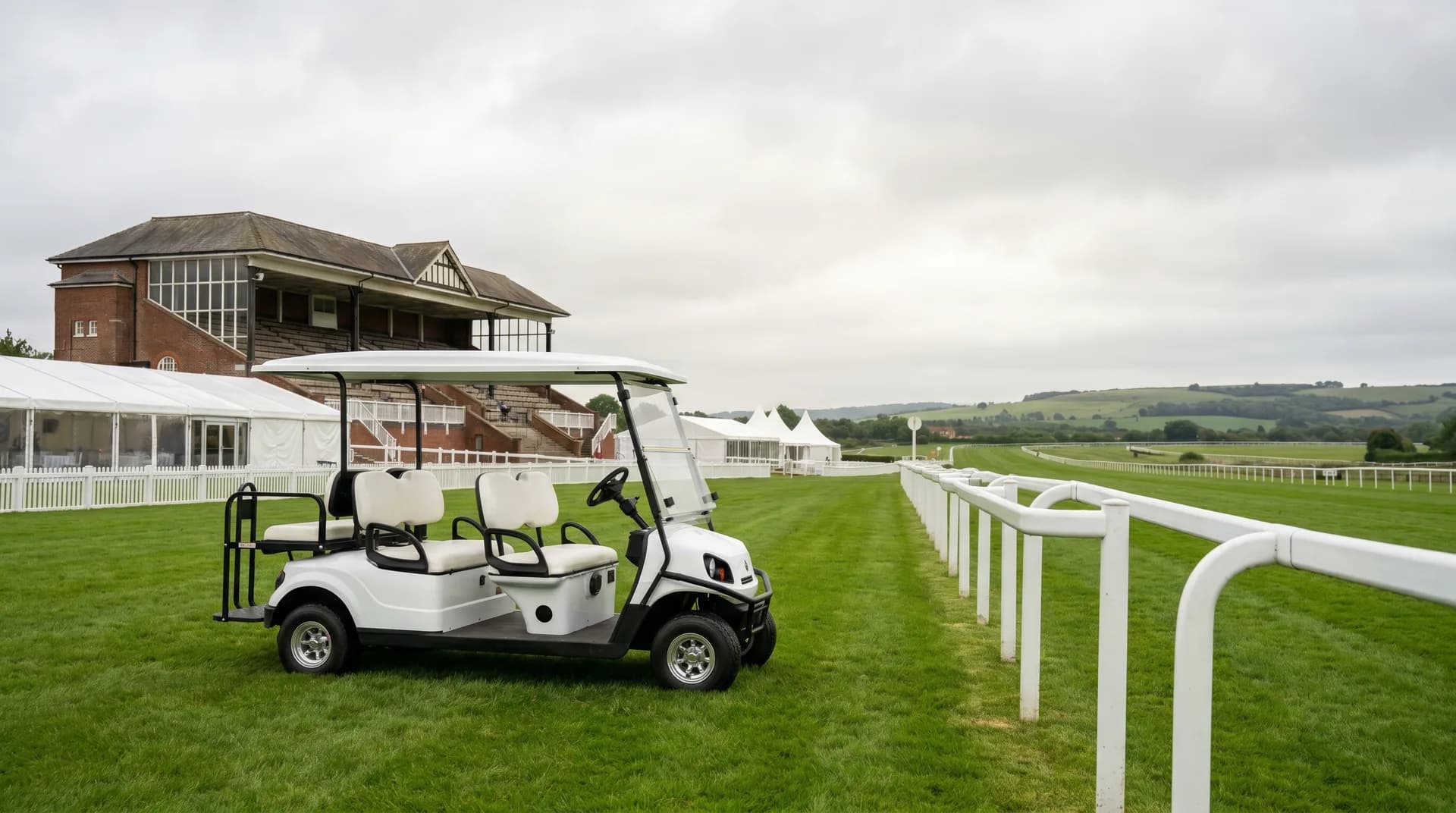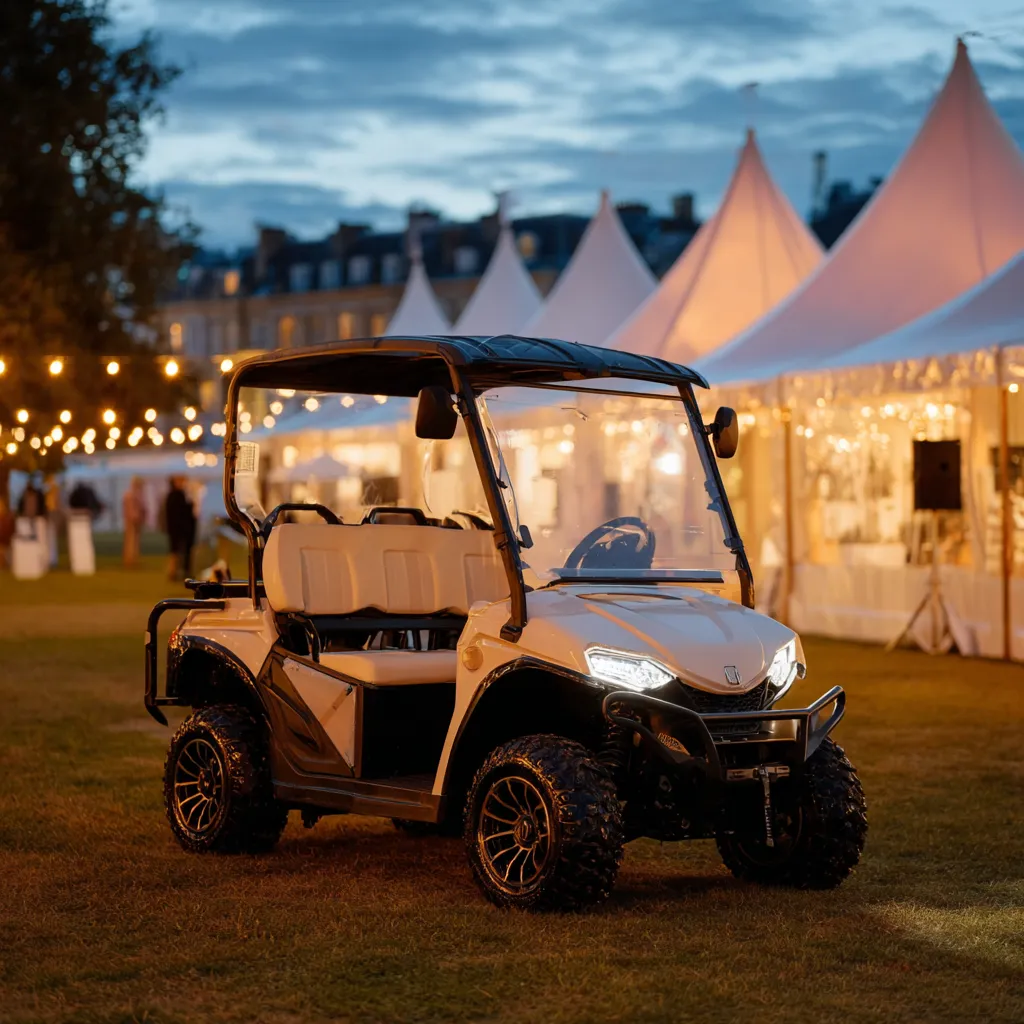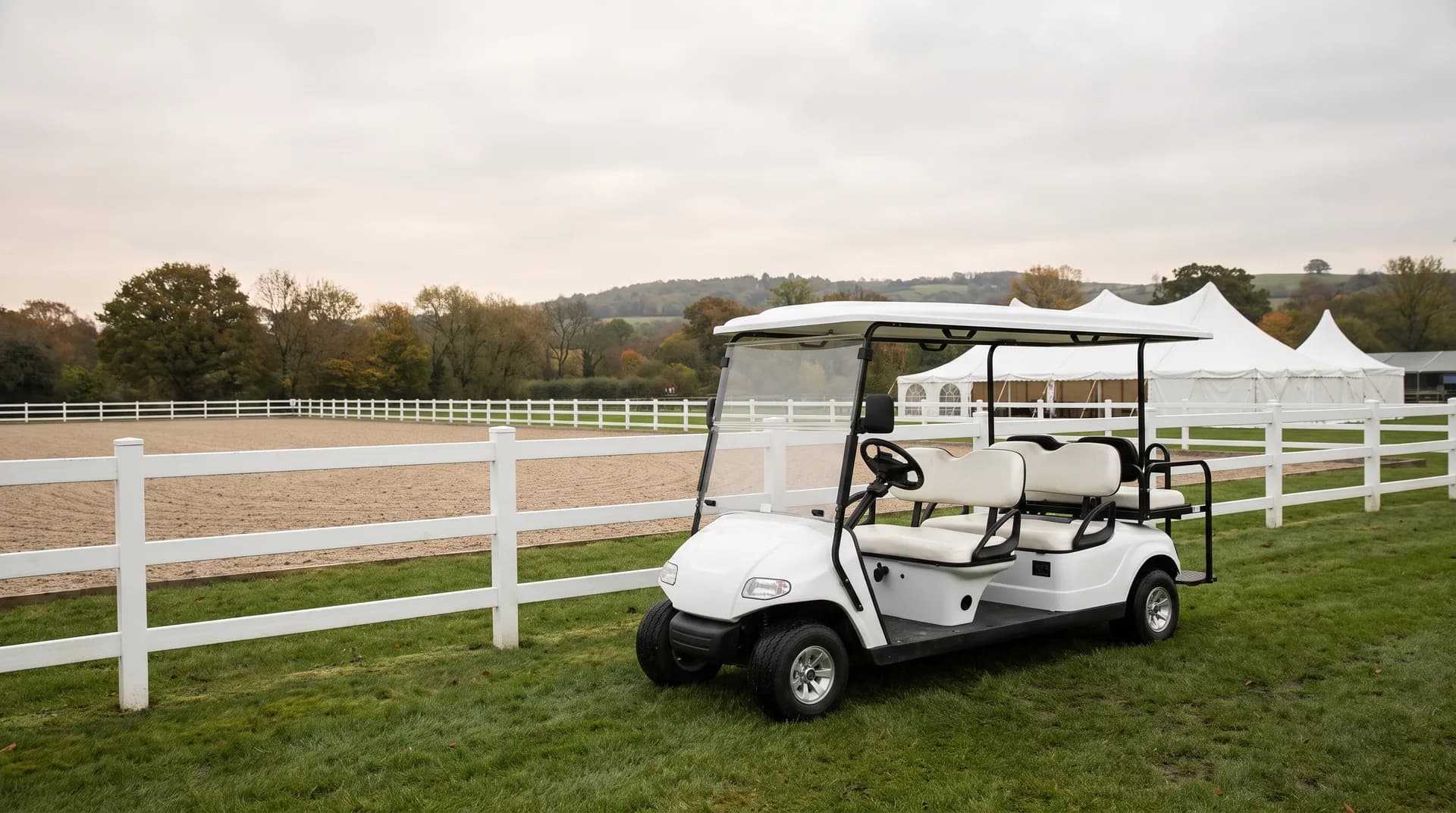
A running event is a venue stretched into a line. A 10K, a marathon or a triathlon turns a park, an estate or a closed circuit into a course several miles long, and everything the event needs, marshals, water, medics, signage, timing kit, has to move along it faster than the field does. That is the job buggy hire does. Hired electric buggies and utility vehicles give race organisers a quiet, nimble way to position people and kit along the route before the start, respond during the race and clear the course afterwards, without putting a van or a diesel truck anywhere near runners.
- Buggies move marshals, water, medics and kit along a course far faster than anyone on foot.
- Lead and sweep support works well on private land and closed circuits; anything on public roads needs the organiser's own arrangements.
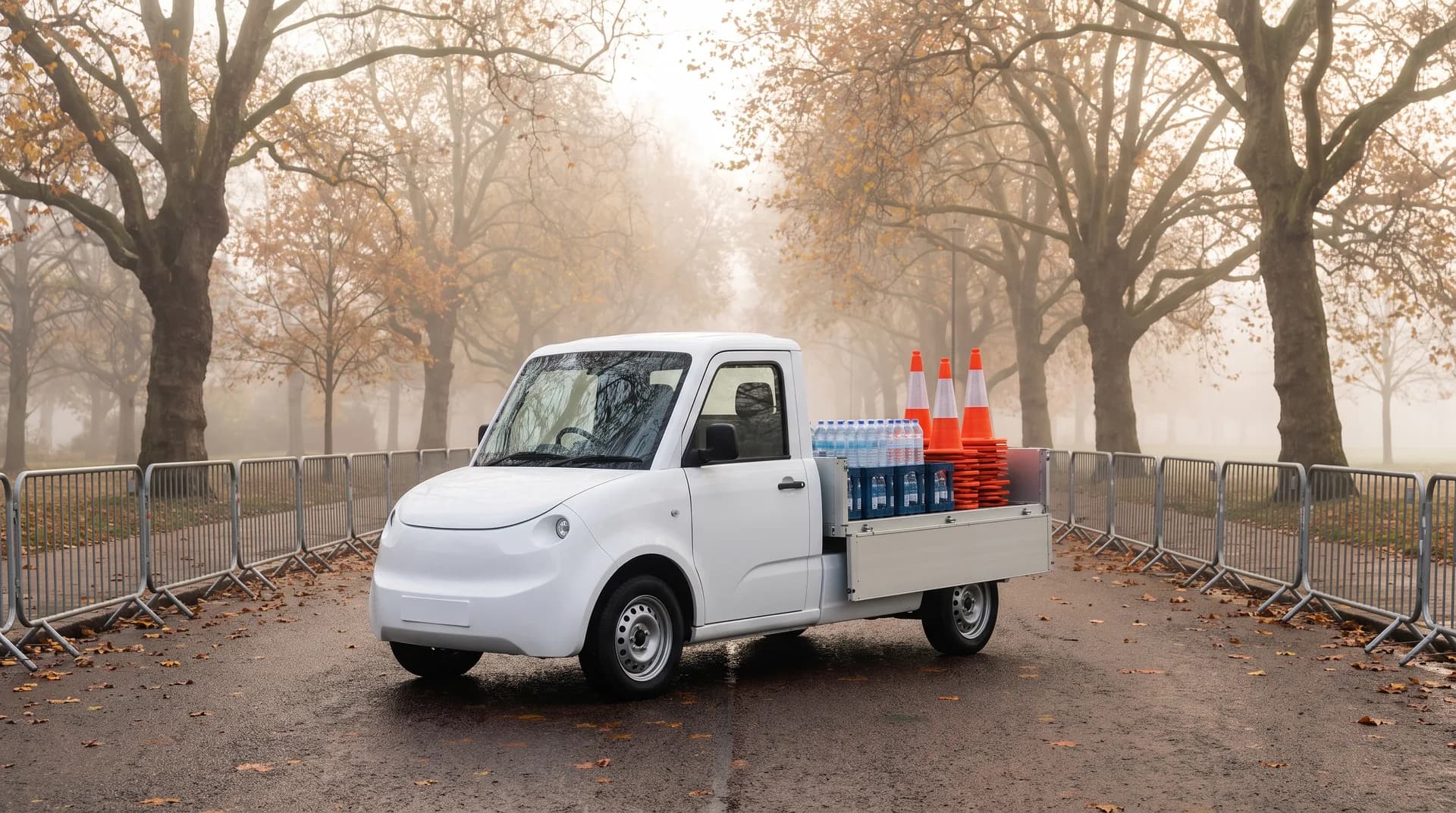
- Utility buggies with load beds handle water station restocks and finish line kit; passenger buggies move people.
- Near-silent electric vehicles suit routes that pass close to homes, especially for early starts.
- Book by role and route length, not headcount, and confirm driver rules with your hire supplier.
What marathon buggy hire actually covers
The work splits into phases. Before the gun, buggies ferry marshals to their points, drop water, cups and gels at each station, and position signage, barriers and timing mats along sections a car cannot reach. During the race they become the organiser's response fleet: restocking a water station that is running dry, moving a medic to a reported casualty, collecting a retired runner from halfway round, and shuttling officials between the start, key junctions and the finish. Afterwards they do the whole thing in reverse, sweeping the course for signage, litter and kit while the team is still fresh enough to lift it. On a triathlon the same fleet also serves transition, moving racked kit, barriers and officials between swim exit, transition and the run course.
Lead, sweep and course marshal support
On private land, estates, parkland, trails and closed circuits, buggies can work as lead and sweep vehicles, pacing ahead of the front runner to warn marshals and following the back of the field so nobody is left on the course unaccounted for. A sweep buggy that can carry a tired runner and their belongings is kinder than asking them to walk in. One honest caveat: many UK road races run on public roads under closure orders, and what support vehicles may do on those sections depends entirely on the closure, the permissions and the traffic management plan the organiser has in place. A standard hire buggy is not a road vehicle, so plan buggy roles for the private and off-road sections of your course and confirm anything involving public highway with the organiser and their traffic management contractor. Our guide on who can drive a hire buggy covers the driver side.
Water stations, medics and the finish line
Water stations are the classic use. A flatbed utility buggy carries pallets of bottled water, cups and tables out to stations at mile intervals, then tops them up mid-race as the field comes through in waves. Medical response is the higher-stakes version of the same job: a buggy gets a first aider and their kit to a casualty on a trail section in minutes, and can bring a walking casualty back to the medical tent. The finish line is its own small logistics operation, barriers, gantry parts, medal boxes, finisher bags, baggage and broadcast kit all arrive and leave by buggy on a well-run event. The comparison below shows which vehicle suits which role.
- Passenger buggy
- Marshals, officials, medics, VIPs
- Utility buggy with load bed
- Water, barriers, signage, finish line kit
- Passenger buggy
- Lead, sweep and response on private sections
- Utility buggy with load bed
- Station restocks and course build or clear
- Passenger buggy
- Two to six people
- Utility buggy with load bed
- Loads within its rated payload, plus crew
- Passenger buggy
- The larger share on race day
- Utility buggy with load bed
- One or two per event, more for big courses
| Passenger buggy | Utility buggy with load bed | |
|---|---|---|
| Best for | Marshals, officials, medics, VIPs | Water, barriers, signage, finish line kit |
| Course role | Lead, sweep and response on private sections | Station restocks and course build or clear |
| Carries | Two to six people | Loads within its rated payload, plus crew |
| Typical mix | The larger share on race day | One or two per event, more for big courses |
Why quiet matters beside residential routes
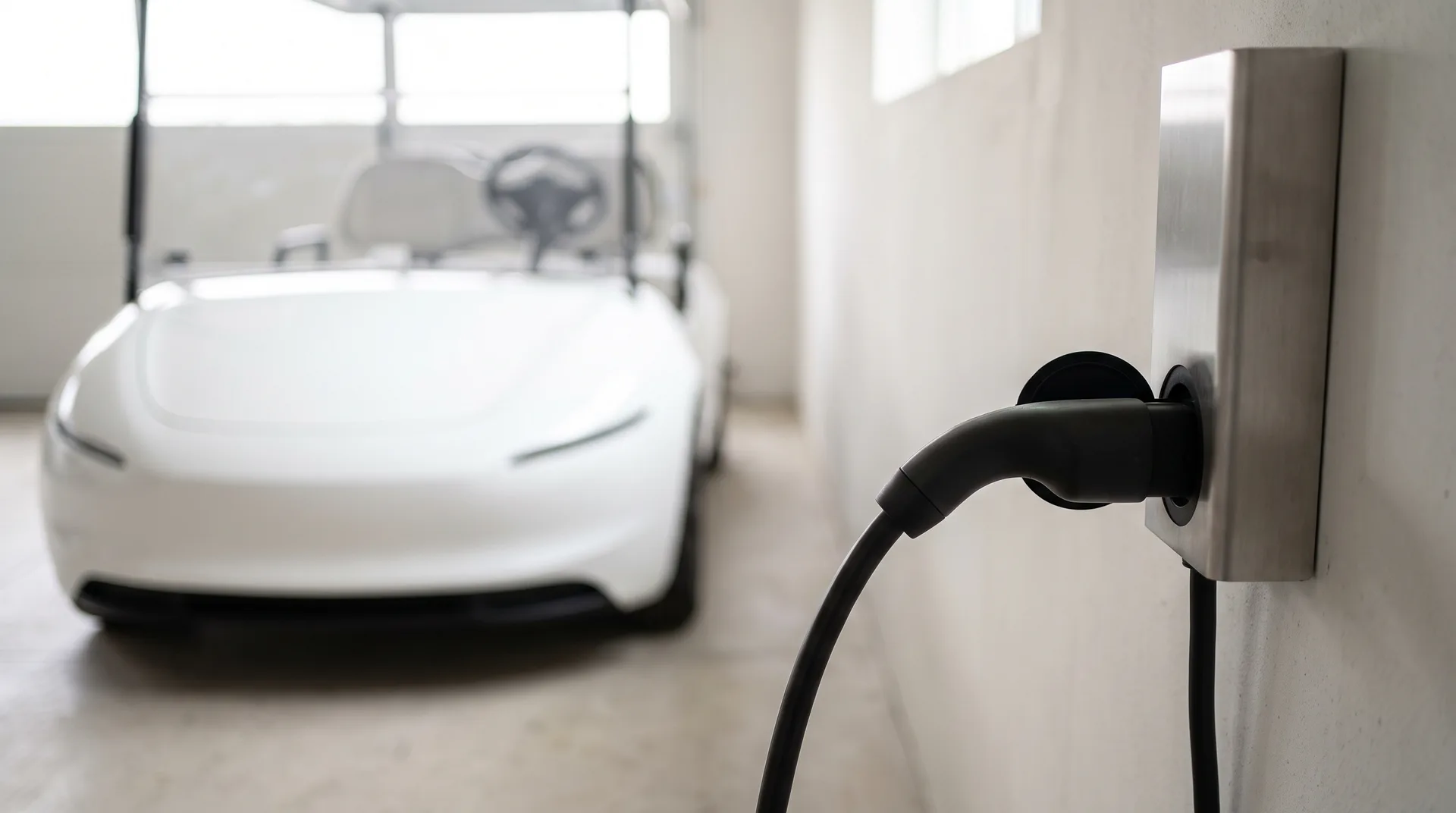
City and town races thread past houses, and most start early on a Sunday. An electric buggy is near silent at low speed, so marshals can be positioned and stations stocked at six in the morning without a convoy of engines waking a neighbourhood, which matters for the goodwill every annual event depends on. Zero tailpipe emissions also mean buggies can work close to the field, in start pens and through finish funnels, without pushing exhaust over runners who are breathing hard. For residents, runners and the event's relationship with its host community, quiet electric support vehicles are a genuinely better fit than vans and pickups.
Planning buggy hire for a running event
Size the fleet by roles and route length rather than headcount: a response buggy or two, a utility vehicle for stations and kit, and enough passenger seats to move your marshal team in reasonable time. Our guide on how many buggies your event needs works through the sizing logic, and the organiser's hire checklist covers delivery, drivers and insurance questions. Think about charging too: a single-day race rarely troubles a full battery, but a multi-day festival of running will need overnight power, which our guide on powering event buggies on site explains. For a tailored fleet and price, try the event hire calculator or tell us about your race and we will quote it.
Frequently asked questions
Can a hire buggy be the lead or sweep vehicle for a race?+
On private land and closed circuits, yes, and it works well. On public roads, even closed ones, it depends on the closure order and the organiser's traffic management plan, so confirm with the organiser before assigning buggies to any road section.
How many buggies does a running event need?+
It depends on route length and roles rather than entries. A common pattern is one or two utility vehicles for water and kit plus passenger buggies for marshals, medics and response. A short park run course needs far less than a marathon.
Can buggies carry water and heavy kit?+
Yes. Utility buggies with flatbeds or tippers are built for exactly this, and carry loads within a rated payload. Tell your supplier what you plan to move and they will match the vehicle to it.
Are electric buggies quiet enough for early starts?+
Yes, near silence at low speed is one of the main reasons organisers choose electric for routes that pass homes. Crews can set up from first light without engine noise.
Do we need special drivers for hire buggies?+
Drivers should be adults, briefed on the vehicle and the site, and covered by the arrangements agreed with your hire supplier. Requirements vary, so confirm the details when you book.
Support your race with a quiet fleet
Tell us your route, dates and roles, and we will build a hire fleet for your running event or triathlon, delivered to site.
Related solutions
Ready to explore what we build?
See the vehicles and the setting this applies to, or get a tailored quote built around your site.
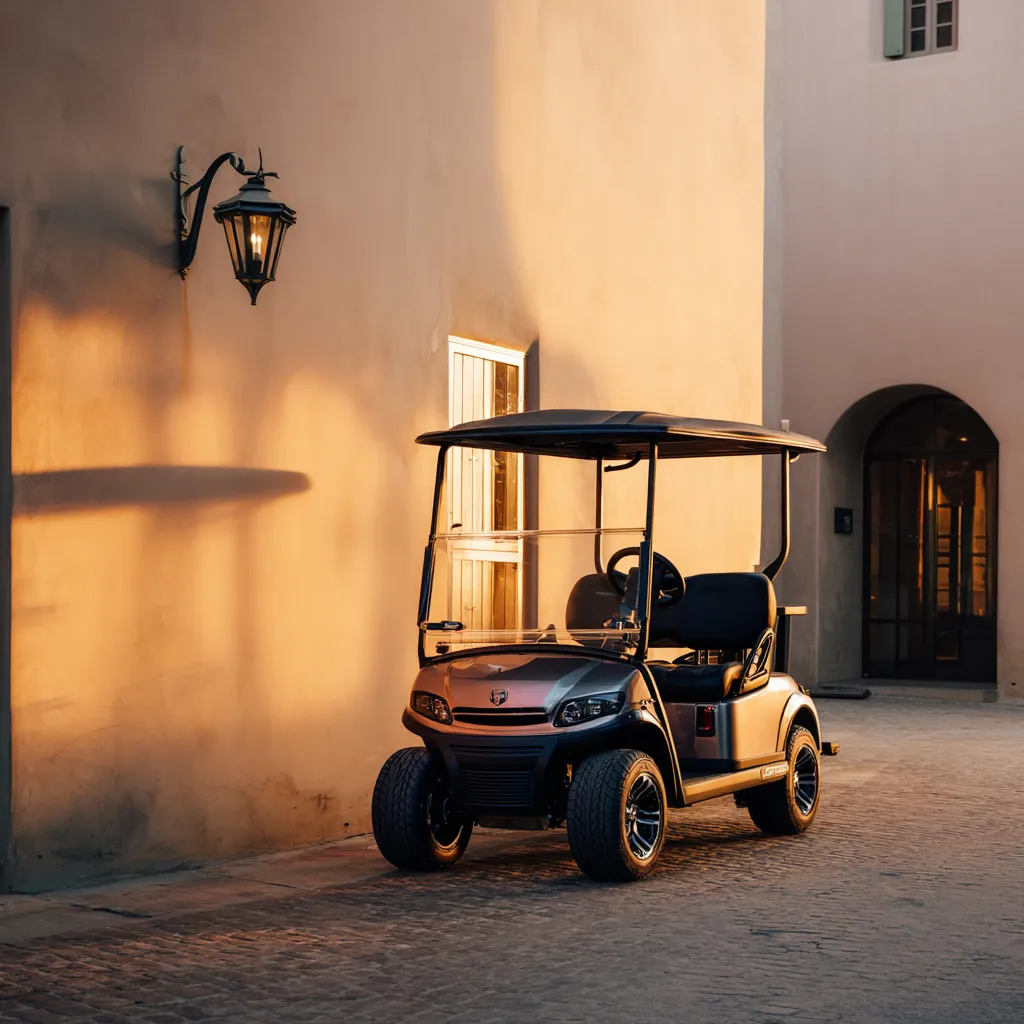
Ready to find the right buggy?
Tell us how and where it will work and we will specify a vehicle and a tailored quote built around you. Every build comes with a 3-year warranty and a 24-hour priority call-out.
Our guides are written and reviewed by the Hawke Electric Vehicles team, the people who specify, build, deliver and support the vehicles. We focus on honest, practical advice and flag where a figure depends on the build rather than guessing.
More guides by Hawke