Golf buggy battery voltage is the number on the spec sheet, 36V, 48V or 72V, that describes the electrical pressure the battery pack supplies to the motor. In plain terms, voltage is how hard the electricity pushes, and a higher-voltage system can deliver the same power with less current, which means less strain, less heat and more headroom when the buggy is working hard. That is why the market has moved over the years from 36V towards 48V as the common standard, with 72V appearing on heavier-duty machines. But voltage is one number among several, and it is widely misread: a 48V buggy is not automatically faster than a 36V one, and voltage alone tells you little about range. This guide explains what golf buggy voltage actually changes, what it does not, and how to get replacement batteries and chargers right.
- Voltage is electrical pressure: higher voltage moves the same power with less current and less heat.
- 48V is the common modern standard; 36V is typical of older buggies; 72V appears on heavier-duty machines.
- Higher voltage helps hill pulling and headroom under load; it does not by itself make a buggy faster.
- Range is set by battery capacity and conditions, not by voltage.
- Replacement packs and chargers must match the system voltage exactly.
What golf buggy battery voltage actually tells you
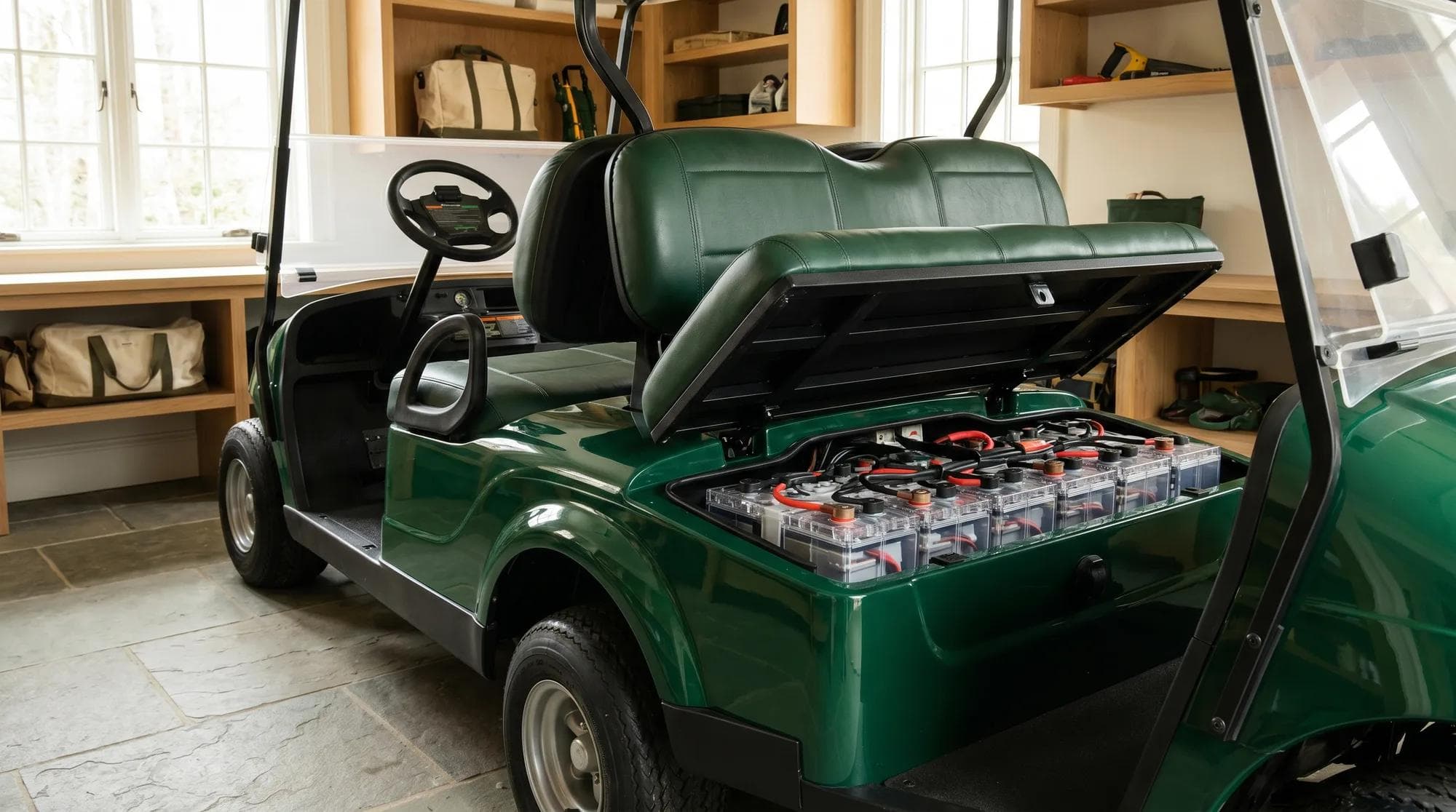
Think of the electrical system as plumbing: voltage is the water pressure, current is the flow, and power, what actually moves the buggy, is the two multiplied together. A pack is built from cells or blocks in series, and their voltages add up to the system figure: an older 36V buggy might use six 6-volt batteries, a 48V machine might use four 12-volt blocks or a single lithium pack, and so on. The practical consequence of higher voltage is efficiency under load. Delivering the same power at higher voltage needs less current, and current is what makes cables, connections and motors run hot. So a 48V system climbing a long slope with four passengers aboard works with more composure than a 36V system asked for the same job, which is why 48V became the standard as buggies grew from two-seat course machines into four, six and eight-seat workhorses, and why 72V shows up where sustained heavy work is the norm.
Why voltage alone does not equal speed
The persistent myth is that more volts means more miles per hour. In reality a buggy's top speed is set by its controller and gearing, and it is limited deliberately, because a vehicle designed for grass, paths and pedestrians is safer with a modest ceiling. Two buggies with different voltages can share the same top speed, and a well-sorted 36V buggy can be quicker than a tired 48V one. What higher voltage genuinely improves is performance under load: holding speed up a hill rather than crawling, pulling away cleanly with a full load of passengers, running cooler through a long working day. If a buggy has become sluggish, the cause is far more often an ageing pack or a fault than a voltage shortfall, and if outright speed is the question, that is a controller and specification matter, which our guide on how fast electric buggies go covers, not a reason to chase volts.
Golf buggy voltage and range are different questions
Range is decided by how much energy the pack stores, its capacity, together with terrain, load, temperature and the age of the batteries, not by the voltage figure on its own. A high-capacity 36V pack can outlast a small 48V one. Chemistry matters at least as much: lithium packs hold their voltage steadier through the day and deliver more of their stored energy usefully than lead-acid, which sags as it discharges and fades further in cold weather, a difference our lithium versus lead-acid guide explores properly. The practical reading of a spec sheet is therefore: voltage tells you about the system's muscle under load, capacity and chemistry tell you about its stamina, and you need both numbers to judge a buggy.
Matching replacement packs and chargers
When batteries need replacing, the one non-negotiable is matching the system voltage: a 48V buggy needs a 48V pack, full stop. Within that, you can choose how the voltage is made up, like-for-like blocks or a single lithium replacement, and upgrading chemistry at replacement time is common, since a lithium pack at the same voltage usually drops weight and gains usable range. What you should not do is mix old and new batteries in one pack, or mix ages and types across the series string, because the weakest block drags the rest down. The charger must match the pack too, both in voltage and in chemistry profile, as lead-acid and lithium charge differently; a mismatched charger at best undercharges and at worst damages the pack. Replacement costs and options are covered in our battery replacement cost guide, and if you would rather skip the puzzle, tell us the buggy's make and use and we will specify the right pack and charger for it.
Frequently asked questions
Is a 48V golf buggy better than a 36V one?+
For most modern use, yes: 48V systems run cooler and pull hills better under load, which is why 48V became the standard. But a healthy 36V buggy on flat ground serves perfectly well, and a 48V machine with tired batteries will still disappoint.
Does higher voltage make a golf buggy faster?+
Not by itself. Top speed is set by the controller and gearing and is limited deliberately for safety. Higher voltage improves performance under load, hills, passengers, towing, rather than the maximum speed.
Can I upgrade my buggy from 36V to 48V?+
Not by swapping batteries alone: the motor, controller, solenoid and charger are built around the system voltage, so a conversion touches most of the drivetrain. It is rarely worth it against buying the right machine; a fresh pack at the original voltage fixes most complaints.
What voltage is my golf buggy?+
Count the batteries and add their voltages: six 6-volt blocks is 36V, four 12-volt or six 8-volt blocks is 48V. The controller or charger label usually states the system voltage too.
Do I need a new charger if I switch to lithium?+
Usually yes. Lithium packs charge to a different profile than lead-acid, so they need a charger matched to both the voltage and the chemistry. Reputable lithium replacements are supplied with or specify the correct charger.
Get the right pack for your buggy
Tell us the buggy, the voltage and how it works day to day, and we will recommend the right replacement batteries and charger, or a new machine if that is honestly the better spend.
Related solutions
Ready to explore what we build?
See the vehicles and the setting this applies to, or get a tailored quote built around your site.

Ready to find the right buggy?
Tell us how and where it will work and we will specify a vehicle and a tailored quote built around you. Every build comes with a 3-year warranty and a 24-hour priority call-out.
Our guides are written and reviewed by the Hawke Electric Vehicles team, the people who specify, build, deliver and support the vehicles. We focus on honest, practical advice and flag where a figure depends on the build rather than guessing.
More guides by Hawke