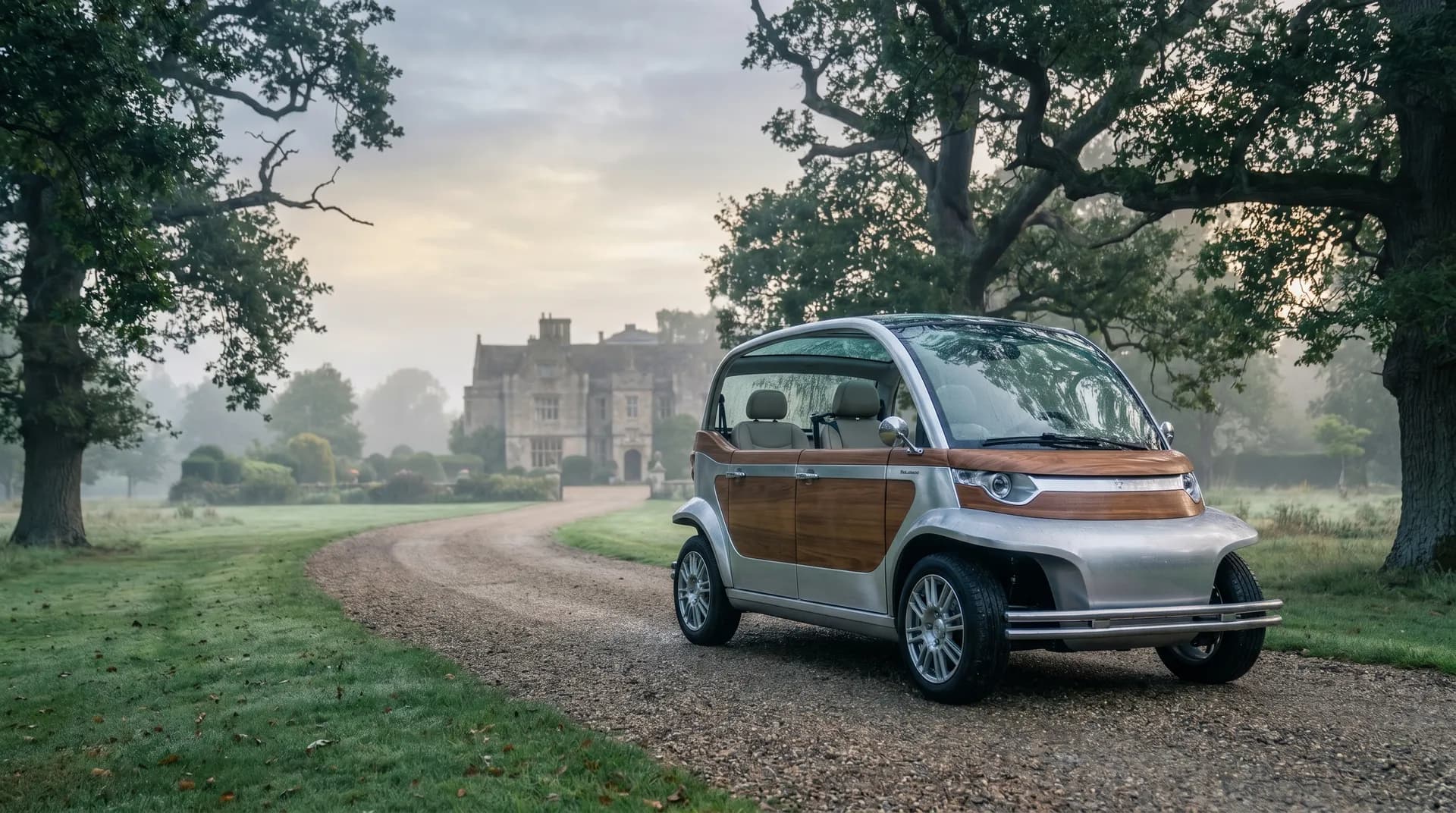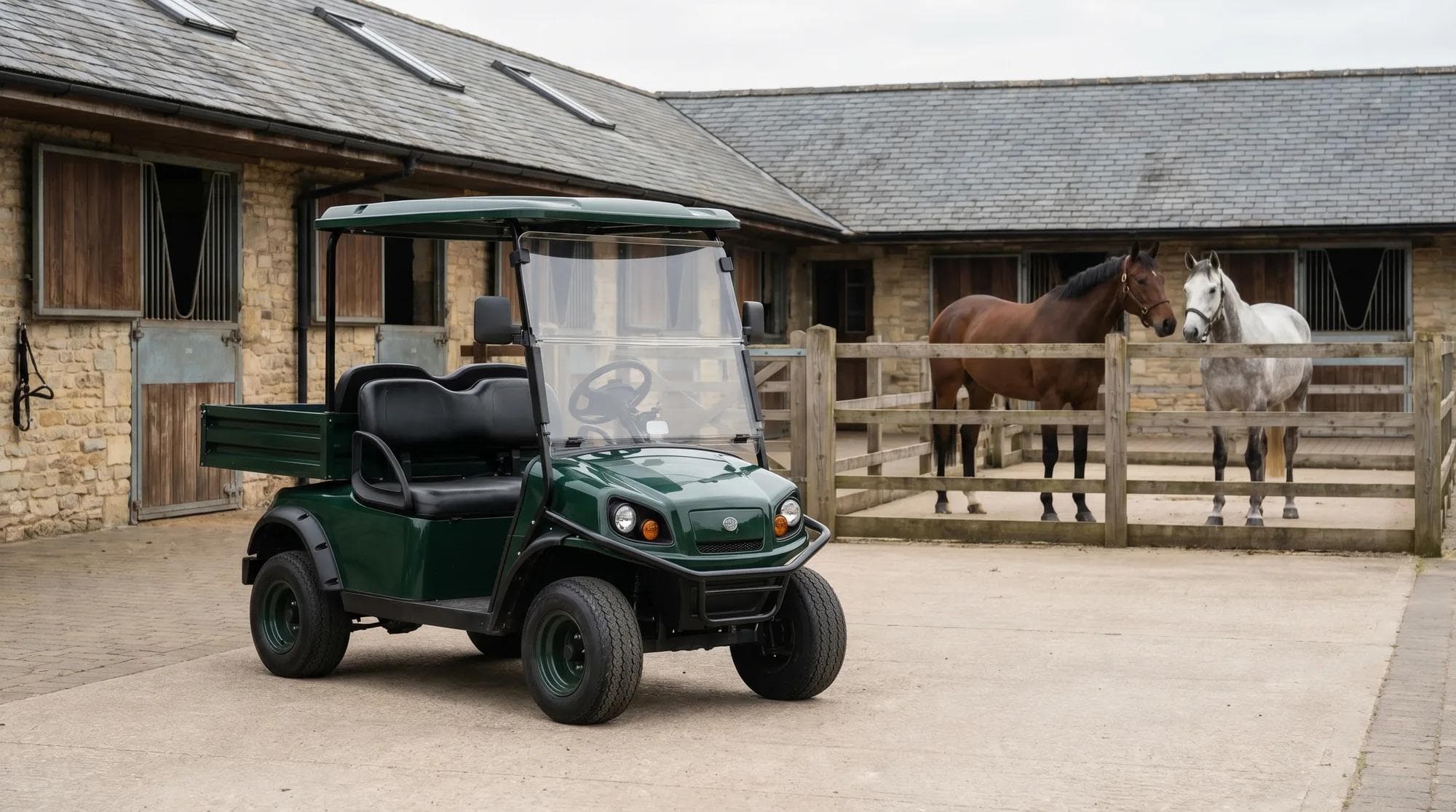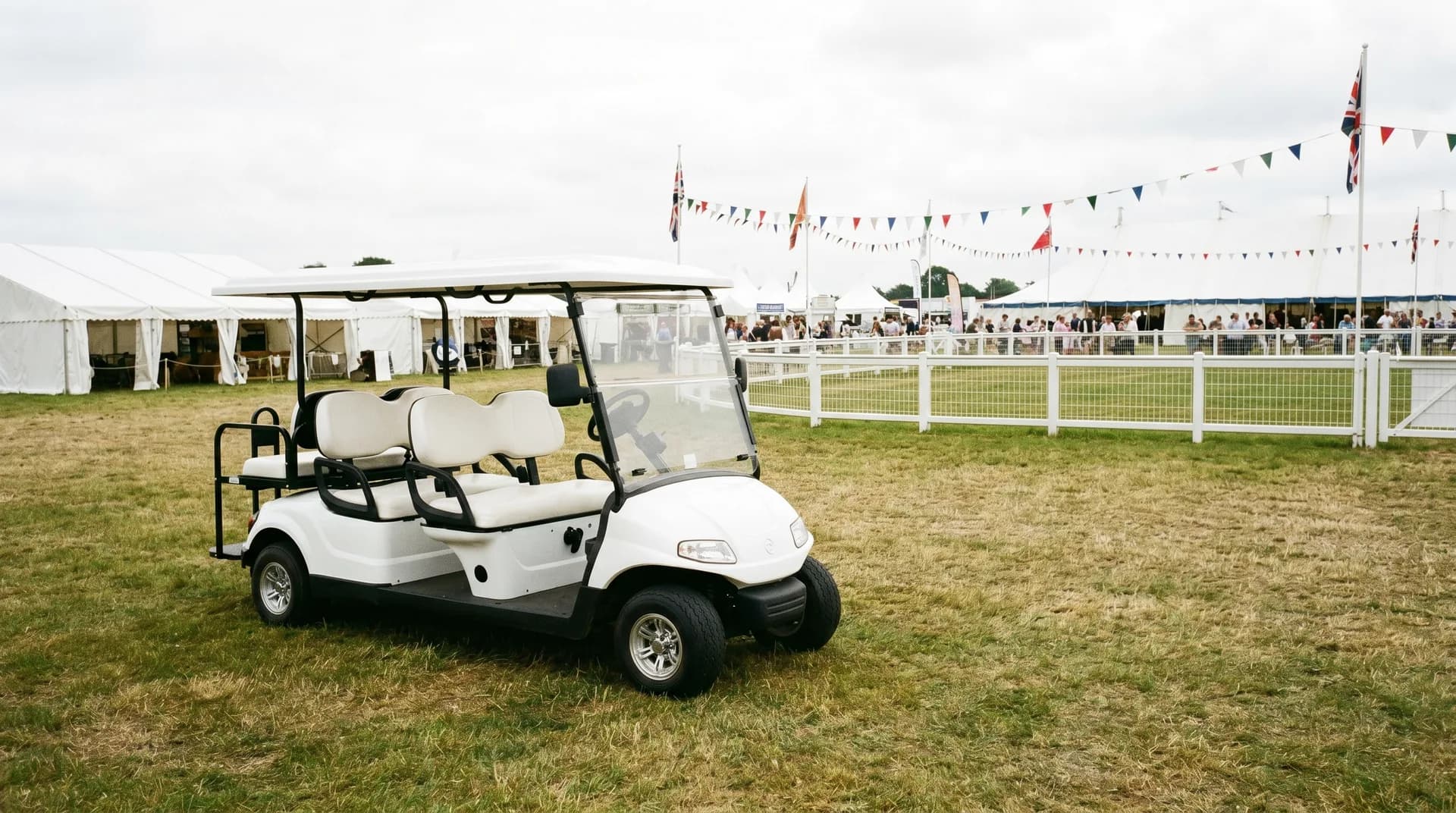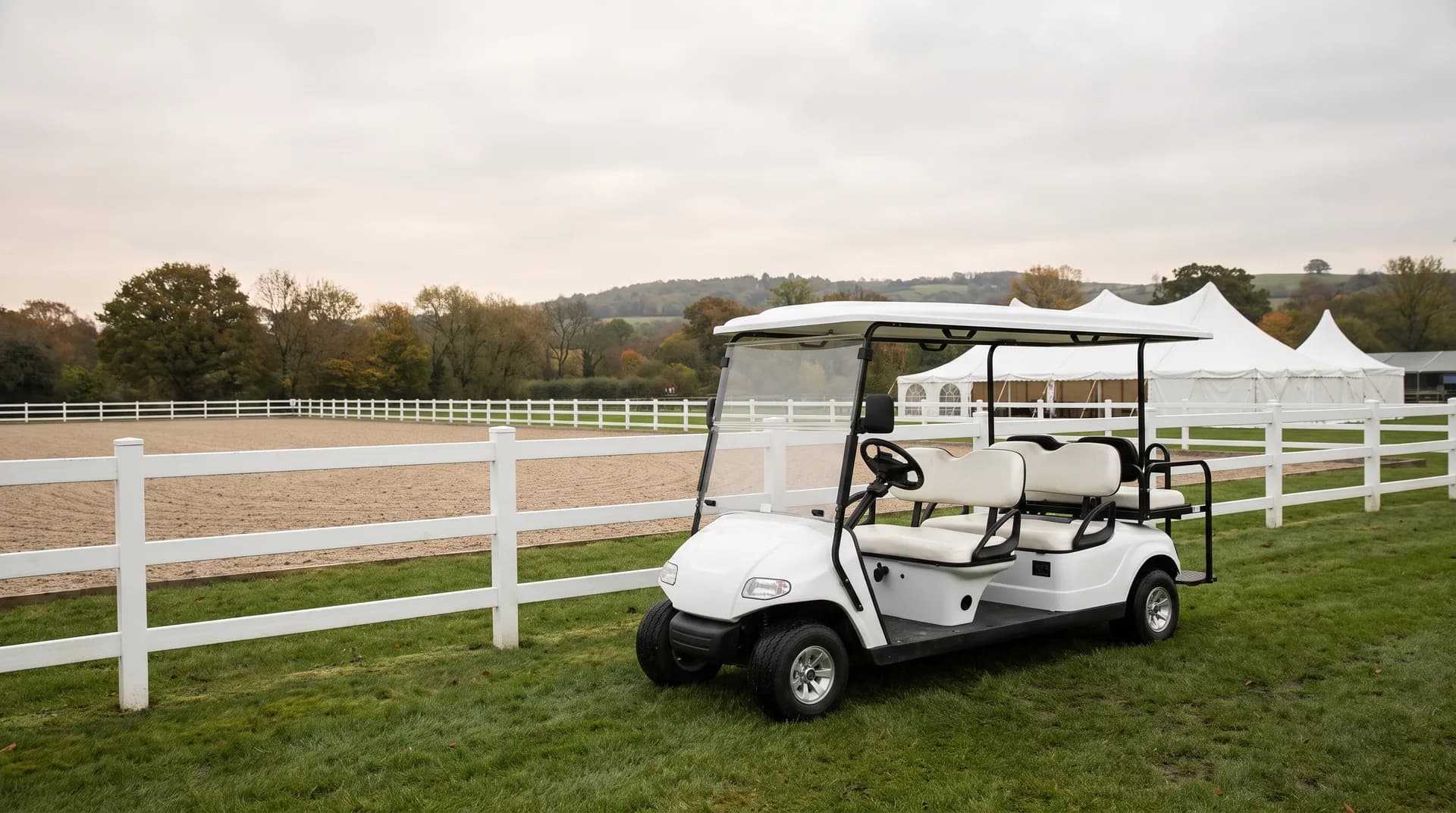
Horses and engines are a poor mix. A revving quad or a diesel pickup moving behind the warm-up ring can unsettle a horse that was perfectly calm a moment before, which is why electric buggies have become the working vehicle of choice at horse trials, county shows and showjumping fixtures. Hired for the event, they move officials, stewards, vets and kit around a large showground quickly and almost silently, and they do it without churning the turf that the whole event depends on. This guide covers what equestrian event buggy hire is used for, why quiet matters so much around horses, and how to plan a fleet for your fixture.
- Near-silent electric buggies are far less likely to startle horses than engined vehicles.
- Course walks, steward positioning and vet or farrier response are the core jobs.
- Turf-friendly tyres and light footprints protect the going that riders will judge you on.
- This guide is about event hire; for daily yard work, see our yard buggy guide.
- Size the fleet by roles: officials, response, and kit, not by visitor numbers.
What equestrian event buggy hire is for
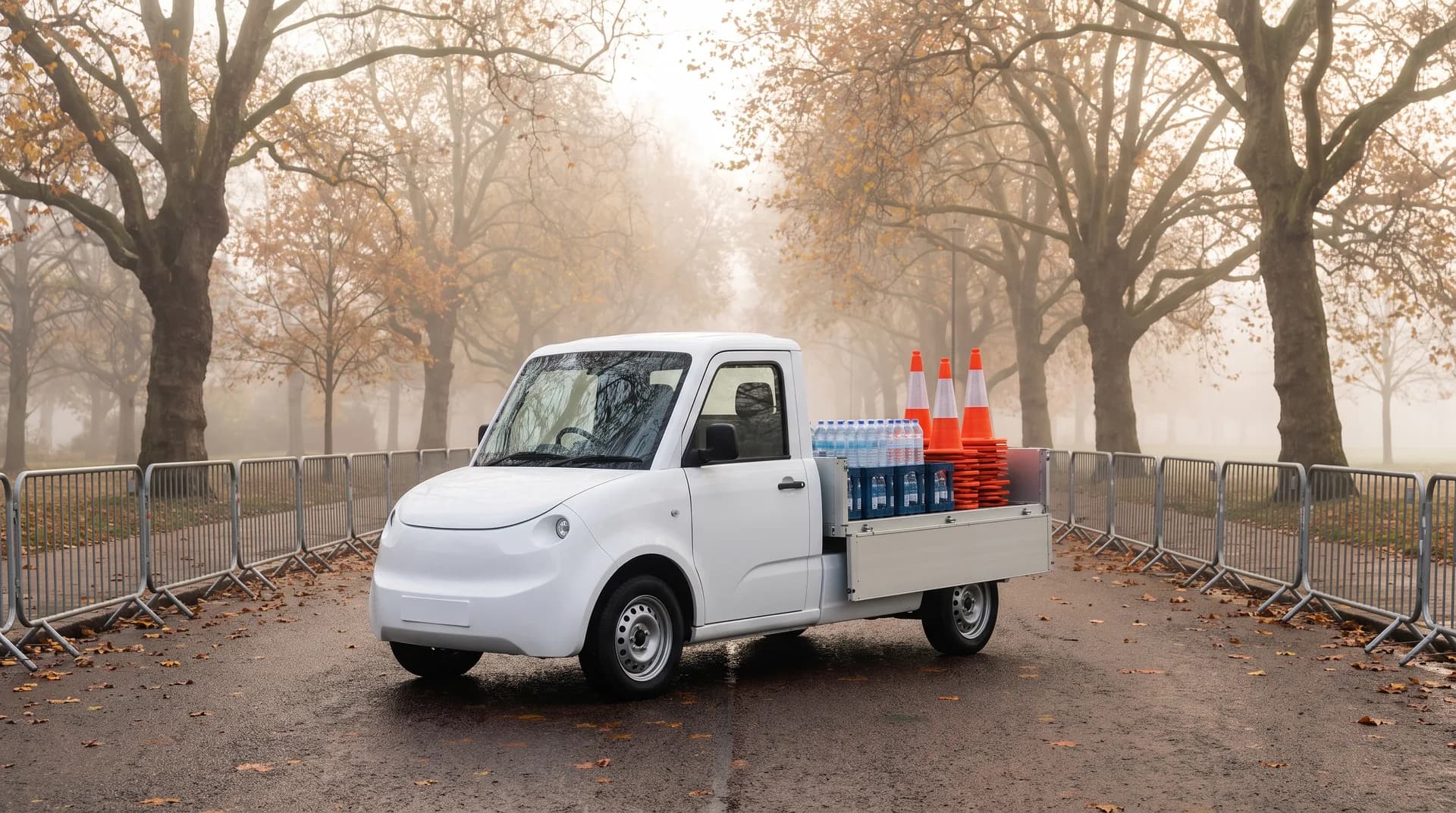
A horse trials site is big. Cross-country courses run across whole farms and parkland, and even a one-ring show fills a large field once lorry parks, stabling and trade stands are in. Hired buggies close those distances. Officials and judges get between rings and fences without a long walk in event-day mud, commentators and scorers move with their kit, and stewards reach the far end of a course in minutes rather than half an hour. On the logistics side, utility buggies carry water to stabling, feed and bedding across the lorry park, dressage boards, jump wings, flags and rope out to the course during the build, and everything back in again when the event ends.
Quiet vehicles around horses
The strongest argument for electric at an equestrian fixture is noise, or the lack of it. At low speed an electric buggy is close to silent, no engine note, no rev changes, no sudden bark when it pulls away, which is precisely the profile you want moving past warm-up arenas, stabling and the collecting ring. Horses notice sudden sounds far more than steady ones, and removing the engine removes the most common startle trigger a working vehicle brings. Riders and grooms notice the difference, and so do stewards who have to work close to horses all day. No vehicle is invisible to a horse, so sensible driving still matters: walk-pace past stabling, wide berths, and no sudden moves close to a horse being led. But starting from silence makes every one of those judgements easier.
Course walks, stewards, vets and farriers
Some jobs deserve their own mention. Course walks: designers, technical delegates and officials walk a cross-country course several times before and during an event, and a buggy turns each circuit from an hour's trudge into a few minutes' drive, which matters when a fence needs re-flagging between classes. Stewards: fence judges need positioning at the start of the day, relieving at intervals, and collecting at the end, often at fences no car should approach. Veterinary and farrier response: when a horse is injured or pulls a shoe out on course, minutes matter, and a buggy gets the professional and their kit to the fence directly, quietly, and without cutting up the ground around a distressed animal. An event that can move its vet quickly is a safer event, full stop.
Protecting the going
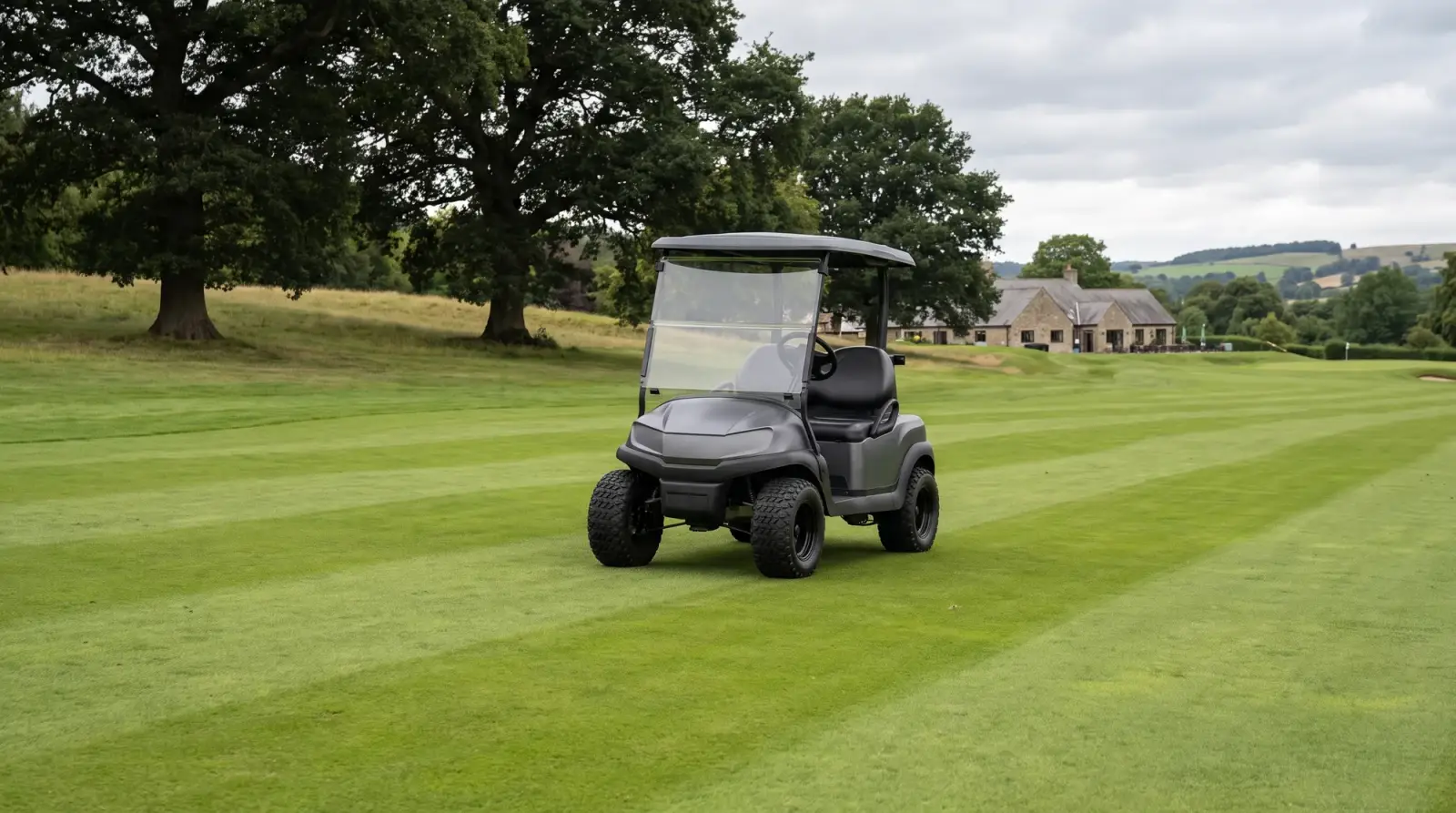
Riders judge an event on its ground, so the vehicles serving the event must not wreck it. Electric buggies are light compared with vans and pickups, spread their weight over four wheels, and can be specified with turf tyres that minimise marking on the going, the same logic golf clubs rely on every day, as our guide on whether buggies damage grass explains. Sensible routing still matters in a wet week, keep vehicles to tracks where they exist and vary lines across open turf, but a buggy fleet is about the gentlest way to run event logistics across grass.
Equestrian event buggy hire versus owning for the yard
This guide is about hiring for a fixture, a few days of intense use, sized to the event, delivered and collected. It is a different question from owning a buggy for daily equestrian life, mucking out runs, hay and water rounds, poo-picking paddocks, which our guide on the electric yard buggy for equestrian chores covers, and estates that host events year-round often end up doing both, as our equestrian estates guide sets out. For a one-off or annual event, hire wins: no storage, no maintenance, and a fleet sized to the fixture rather than the yard. Work out numbers with our guide on how many buggies your event needs, then explore buggy hire for dates and a price.
Frequently asked questions
Are electric buggies safe to use around horses?+
They are the calmest option available. Near-silent running removes the engine noise that most often startles horses, though drivers should still pass stabling and warm-up areas at walking pace and give led horses a wide berth.
Can a buggy get a vet to a cross-country fence?+
Yes, that is one of the most valued roles. A buggy carries the vet or farrier and their kit directly to the fence across grass, quickly and quietly, and can be back at the secretary's tent minutes later.
Will buggies mark the going?+
Far less than cars or pickups. They are light, and turf tyres reduce marking further. In a wet week, sensible routing and varying lines across open grass keeps the ground presentable.
How many buggies does a horse trials need?+
Size by roles: officials and course walks, steward positioning, vet and farrier response, and a utility vehicle for water, feed and course kit. A one-day show may need two or three; a multi-day trials rather more.
Should we hire or buy for our events?+
For one or two fixtures a year, hire: the fleet arrives sized to the event and leaves afterwards. Yards and estates with daily work as well often buy a yard vehicle and hire extra for event weeks.
Quiet vehicles for your fixture
Tell us your event dates, site and roles, and we will build a horse-calm hire fleet for your trials or show, delivered to the showground.
Related solutions
Ready to explore what we build?
See the vehicles and the setting this applies to, or get a tailored quote built around your site.
Ready to find the right buggy?
Tell us how and where it will work and we will specify a vehicle and a tailored quote built around you. Every build comes with a 3-year warranty and a 24-hour priority call-out.
Our guides are written and reviewed by the Hawke Electric Vehicles team, the people who specify, build, deliver and support the vehicles. We focus on honest, practical advice and flag where a figure depends on the build rather than guessing.
More guides by Hawke