The best single-seater golf buggy for you is the one that matches your course, your transport situation and the support you will need years from now, not the one with the glossiest brochure. A golfer on a flat parkland course who drives to three different clubs needs a completely different machine from a member on a hilly course with a buggy shed. This guide sets out picks by use rather than a single winner, because in the single-seater market the winner genuinely changes with the question. We have covered how to buy one step by step in our single-seater buyer's guide, and how the category compares with ride-on trolleys and compact buggies in a separate comparison; this piece is about which type of single-seater wins for which golfer.
- There is no overall winner: the right single-seater depends on terrain, transport and support.
- On any course with slopes, four wheels beat three, every time.
- If the buggy must travel in your car, weight per section matters more than headline weight.
- Dealer support is the quiet differentiator: much of this market is small specialists and imports.
- For some golfers a compact two-seater is the better answer than any single-seater.
How to judge the best single-seater golf buggy
Four criteria decide almost every purchase in this category. First, terrain: a machine that is fine on a flat nine-holer can be genuinely unsuitable on a wet hillside. Second, transportability: will the buggy live at the club, or must it dismantle into a car boot after every round? Third, stability: wheel count and track width, which the sales literature rarely leads with. Fourth, support: who supplies the controller, the charger or the warranty repair in year four? Score any candidate against those four and the field narrows quickly. Price matters too, most single-seaters sit around £2,000 to £5,000 new, but within that band the four criteria above separate the good buys from the regrets far more reliably than a few hundred pounds either way.
Pick by course terrain
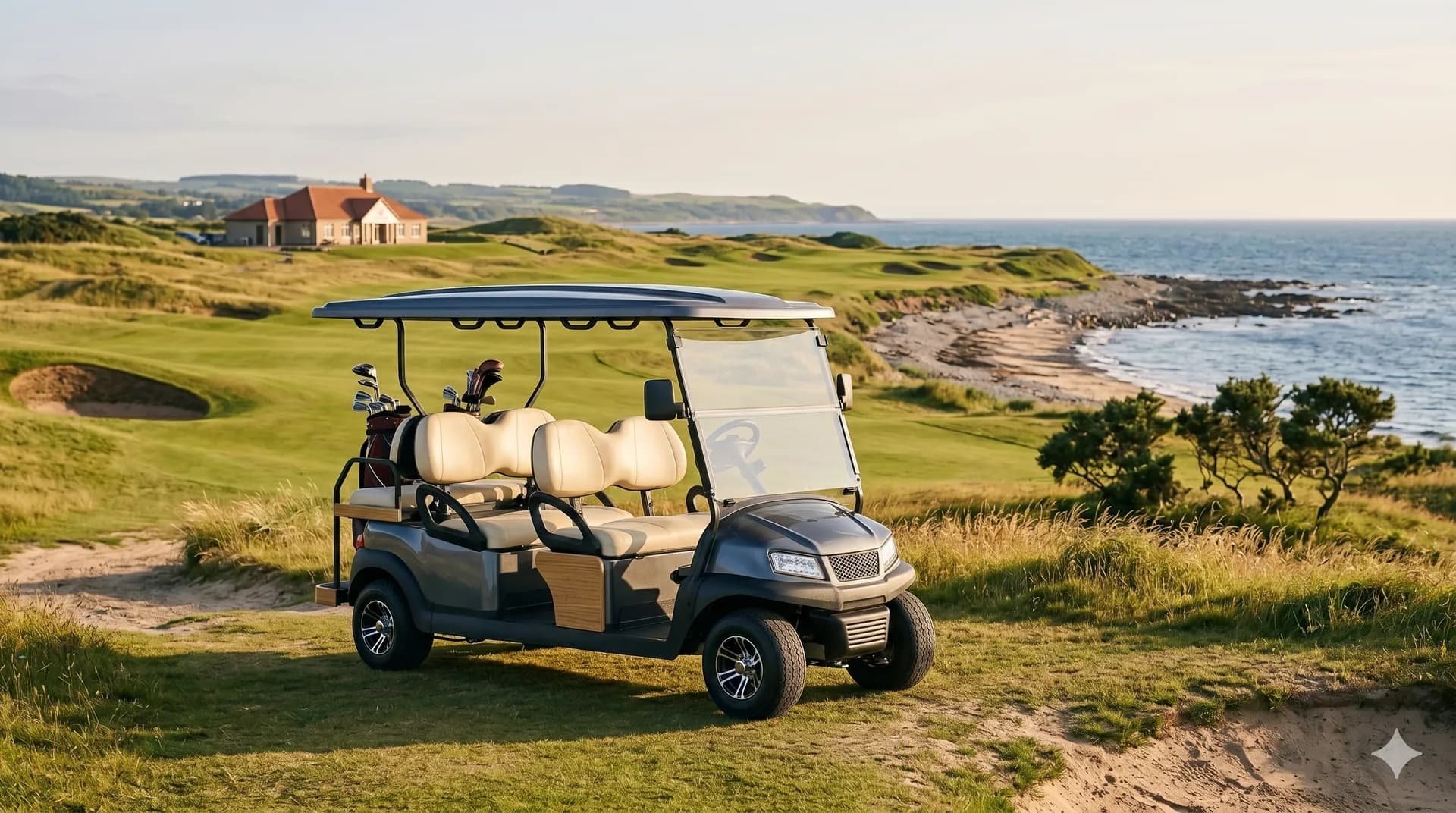
For flat parkland courses, almost any well-made single-seater will serve, so let the other criteria decide. Lighter three-wheeled designs are acceptable here, and their easier loading is a real advantage. For courses with meaningful slopes, wet fairways or cambered paths, the pick changes completely: choose a four-wheeled machine with the widest track you can find, decent tyres and a controller that brakes the motor on descents rather than freewheeling. A three-wheeler with a golfer seated high is the least planted layout in golf, and slopes are where that shows. For links courses, add wind and sand to the equation: a lower seating position and a canopy you can remove both earn their keep, and check the club actually permits private buggies before you spend anything.
Pick by transportability
If the buggy will live at your club, buy for comfort and stability and ignore weight, a heavier lead-acid machine is no burden if it never travels. If it must go in your car, the question is not what the whole buggy weighs but what the heaviest single section weighs, because that is the piece you lift. Lithium-powered single-seaters that split into three or four sections, with no section beyond what you can genuinely manage, are the pick here, and it is worth physically testing the loading before you buy rather than trusting a figure on a spec sheet. Golfers who play several courses in a season should weight this criterion above everything else: a buggy you dread loading stops being used.
Pick by support and ownership horizon
Much of the UK single-seater market is served by small specialists and private imports. Many are excellent firms, but the structural risk is real: if the one company that supports your machine stops trading, parts and warranty go with it. If you intend to rely on the buggy for your golf over many years, put supplier substance near the top of your criteria: how long they have traded, whether spares are held in the UK, and what the warranty actually covers. This is also where the category's honest limitation sits, and why some buyers step up a size.
When a two-seater beats any single-seater golf buggy
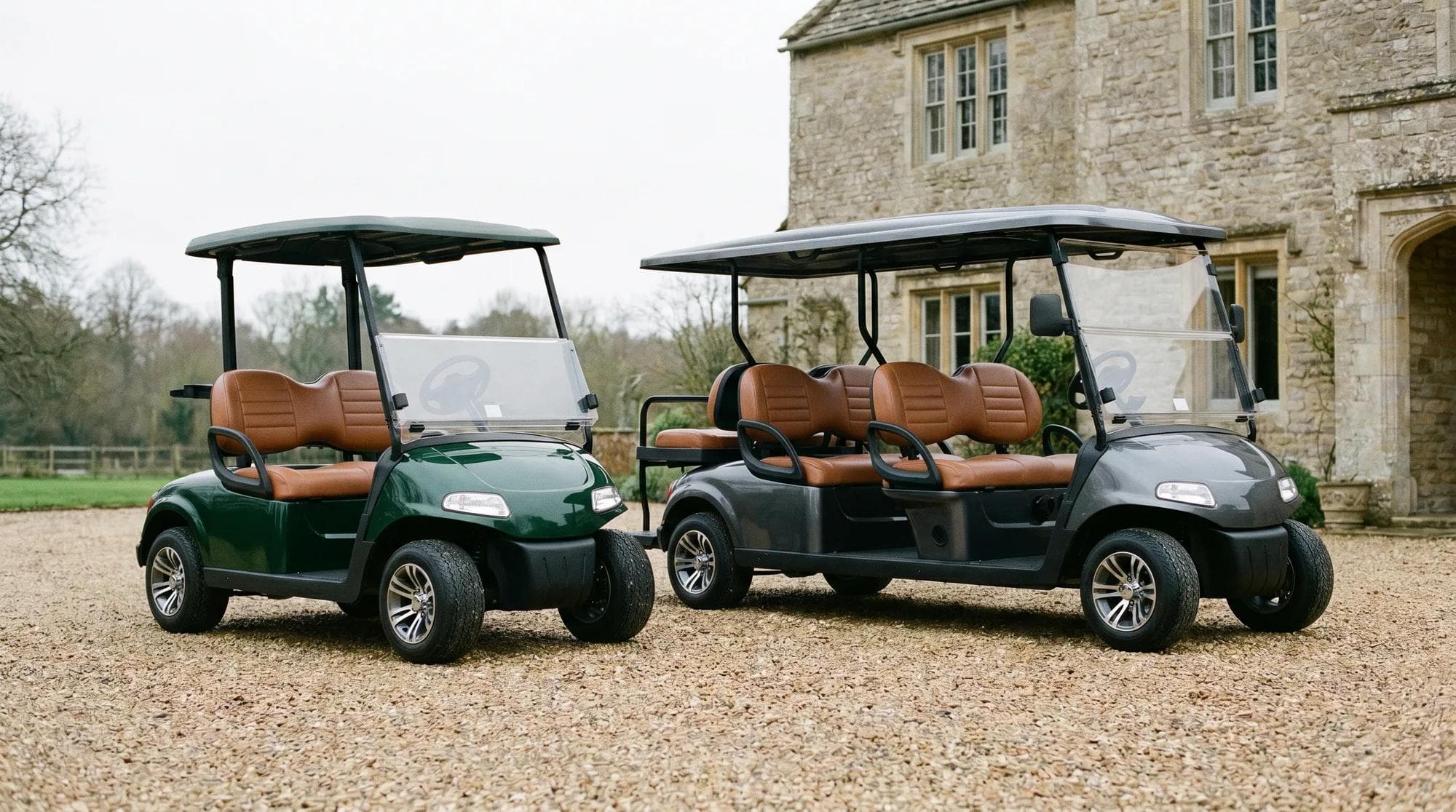
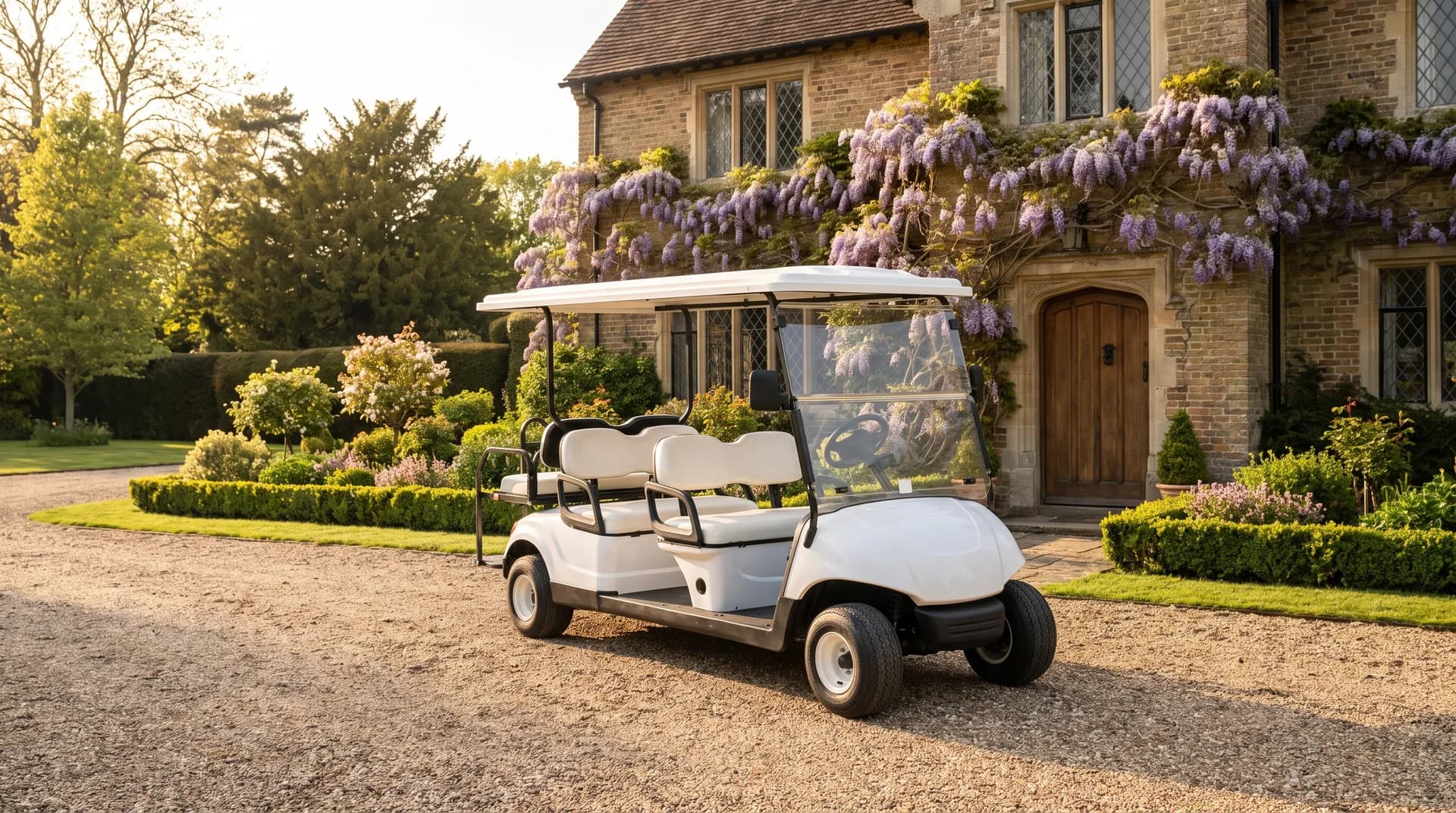
If you have storage at the club or at home, sometimes play with a partner, or simply want the most stable and comfortable machine available, a compact two-seater is often the better answer than any single-seater. A two-seater such as our S2, from £11,500 new, brings a wider track, car-style seating, proper weather protection and a dealer network with servicing and a multi-year warranty behind it. It costs more and it will not go in a boot, so it is the wrong answer for the multi-course traveller, but for the club member who wants one dependable machine for the next decade it deserves a place on the shortlist. You can see the S2 alongside the rest of the line-up in our electric golf buggy range.
- Best pick
- Any well-made single-seater, lighter designs fine
- Why
- Terrain is forgiving, so prioritise transport and price
- Watch out for
- Support quality still matters in year four
- Best pick
- Four-wheel single-seater, wide track
- Why
- Stability and controlled descent are the priority
- Watch out for
- Avoid high-perch three-wheelers
- Best pick
- Lithium model splitting into light sections
- Why
- Heaviest section decides whether it gets used
- Watch out for
- Test the lifting before buying
- Best pick
- Comfort-led choice, weight irrelevant
- Why
- Buy the seat and stability you will enjoy
- Watch out for
- Confirm shed space and any waiting list
- Best pick
- Dealer-backed machine, or a compact two-seater
- Why
- Support network outlasts small-supplier risk
- Watch out for
- Costs more up front
| Best pick | Why | Watch out for | |
|---|---|---|---|
| Flat parkland course | Any well-made single-seater, lighter designs fine | Terrain is forgiving, so prioritise transport and price | Support quality still matters in year four |
| Hilly or wet course | Four-wheel single-seater, wide track | Stability and controlled descent are the priority | Avoid high-perch three-wheelers |
| Travels in the car | Lithium model splitting into light sections | Heaviest section decides whether it gets used | Test the lifting before buying |
| Lives at the club | Comfort-led choice, weight irrelevant | Buy the seat and stability you will enjoy | Confirm shed space and any waiting list |
| Long-term reliance | Dealer-backed machine, or a compact two-seater | Support network outlasts small-supplier risk | Costs more up front |
Frequently asked questions
What is the best single-seater golf buggy in the UK?+
There is no single winner. On flat courses, a light, easily transported machine wins; on slopes, a four-wheeled model with a wide track wins; for golfers who need long-term dependability, the machine with the strongest UK support wins, and that is sometimes a compact two-seater rather than a single-seater at all.
How much should I spend on a single-seater?+
Most new single-seaters sit around £2,000 to £5,000, with used examples below that. Spend at the level that secures four wheels if your course has slopes, lithium power if you must lift sections into a car, and a supplier you believe will still be trading when you need parts.
Are three-wheeled single-seaters safe?+
On flat, dry ground they are generally fine, and their light weight helps with transport. On slopes and wet cambers a three-wheeler with a high seating position is the least stable layout available, which is why we recommend four wheels for any course with meaningful gradients.
Do golf clubs allow private single-seaters?+
Policies vary widely. Many clubs welcome them, some require proof of insurance, and a few restrict private buggies altogether or in winter. Always check with the club, and check current venue rules each season, before committing to a purchase.
Is a two-seater worth the extra over a single-seater?+
If you have storage sorted and want maximum stability, comfort and dealer support, often yes. If the buggy must travel in your car between courses, no, transportability is the single-seater's defining advantage and a two-seater cannot match it.
Not sure which way to go?
Tell us your course, your storage and how you play, and we will give you an honest steer, including when a single-seater from a specialist serves you better than anything we sell.
Related solutions
Ready to explore what we build?
See the vehicles and the setting this applies to, or get a tailored quote built around your site.
Ready to find the right buggy?
Tell us how and where it will work and we will specify a vehicle and a tailored quote built around you. Every build comes with a 3-year warranty and a 24-hour priority call-out.
Our guides are written and reviewed by the Hawke Electric Vehicles team, the people who specify, build, deliver and support the vehicles. We focus on honest, practical advice and flag where a figure depends on the build rather than guessing.
More guides by Hawke