The best 2-seater golf buggy in the UK is decided by where it will spend its life: a golfer wants turf tyres, bag racks and club acceptance, a couple on private land wants comfort, range and weather protection, and a compact site wants the smallest turning circle it can get. The 2-seater is the classic buggy layout for a reason, it is the cheapest way into a proper four-wheeled machine, the lightest on grass and the easiest to store, and our own Hawke S2 starts at £11,500 excluding VAT. To be clear on scope: this guide is about two-seat buggies. If you are shopping for a one-person mobility-led machine, that is a different market with different trade-offs, covered honestly in our single-seater buyer's guide.
- Golfers should prioritise turf tyres, bag storage and, before anything else, written permission from their club to bring a private buggy on the course.
- Couples and private-land buyers should prioritise lithium range, a comfortable bench and real weather protection over golf-specific features.
- Tight sites should measure gates and paths first: a typical 2-seater is around 1.2 metres wide, which clears openings a 4-seater or UTV cannot.
- A 2-seater with a flip deck or a pickup variant covers light carrying jobs without stepping up to a utility vehicle.
- Battery age and supplier backing decide more about the ownership experience than any brochure specification.
What the best 2-seater golf buggy gets right
Every good 2-seater, whatever the badge, gets four things right. The battery matches the use: lithium for regular use and long days, lead-acid only where budget leads and use is light. The chassis matches the ground: turf tyres and modest clearance for fairways, chunkier rubber and more clearance for estates and tracks. The weather protection matches the climate, which in the UK means a canopy and windscreen at minimum and an enclosure option if it will run through winter. And the supplier stands behind it with a warranty measured in years, UK parts and a servicing answer. Everything else, colours, wheels, screens, is preference. Get those four right and there is no bad choice; get one wrong and the cheapest buggy on the market becomes the most expensive thing in the shed.
For golfers: the traditional 2-seater
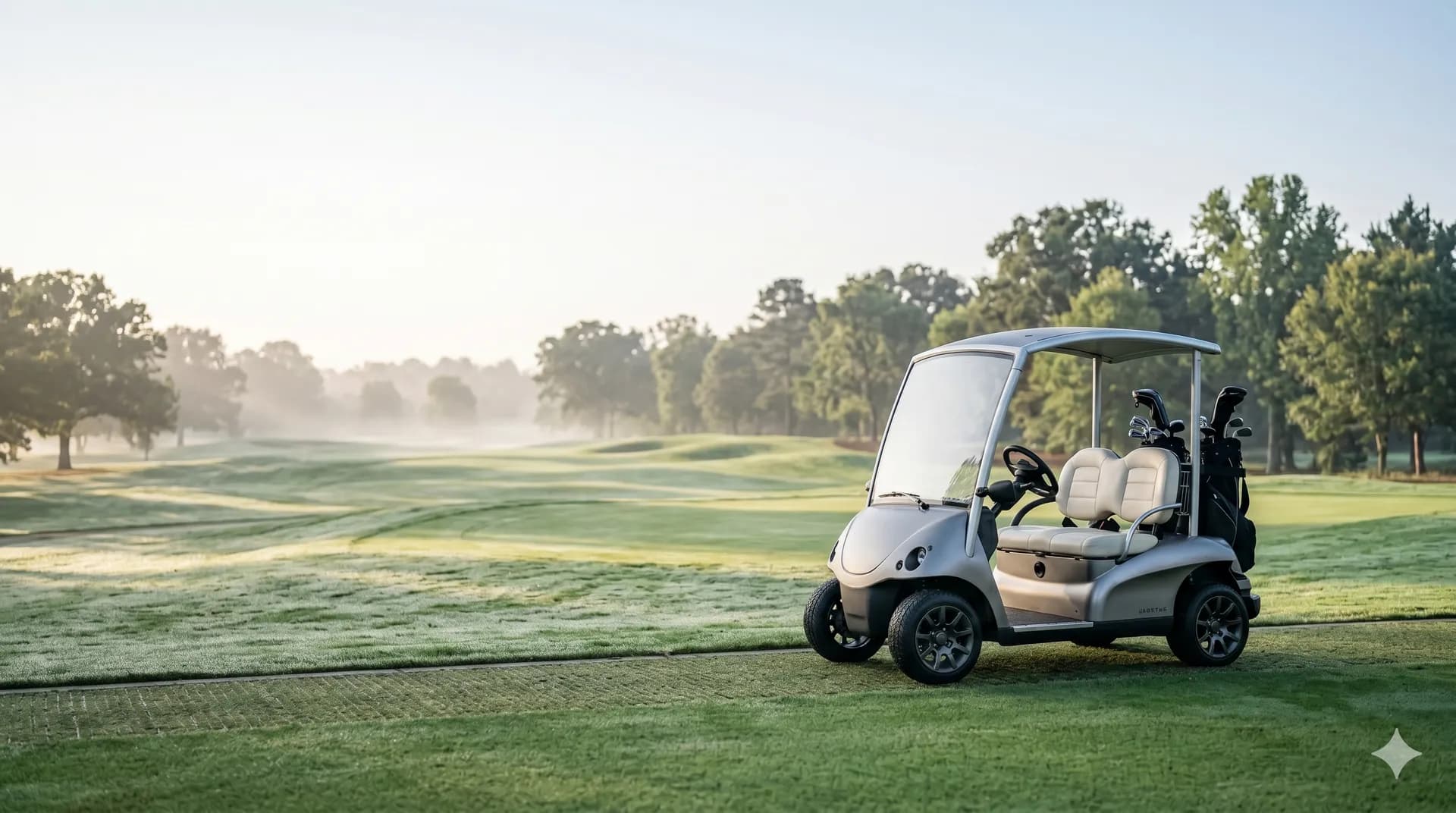
For golf, the specification is settled: turf tyres, two bags on the back, scorecard tray, and a machine light enough that the greens staff do not wince. The bigger question is not the buggy but the club, because most UK clubs have a policy on privately owned buggies covering insurance, storage and sometimes an outright waiting list for shed space. Solve that before you spend anything; our guide to taking your own buggy to the golf club explains how the conversations usually go. It is also worth being honest about frequency. At typical UK hire rates a weekly player can justify ownership within a couple of seasons, but an occasional player often cannot, and the hire versus buy guide will run you through that arithmetic without a sales agenda.
For couples and private land
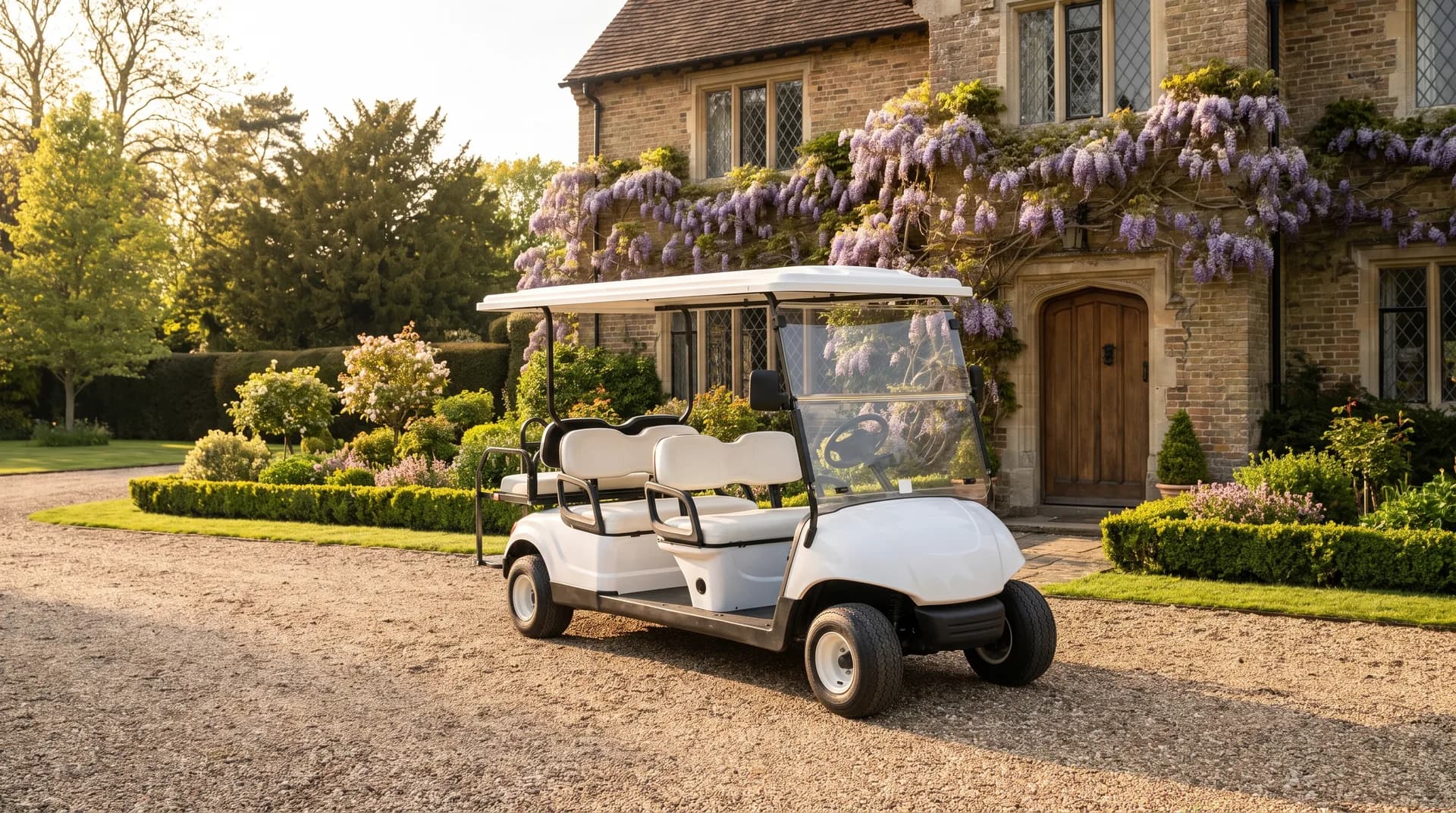
Away from the course, the 2-seater becomes personal transport, and the buying logic flips. Golf features stop mattering; range, comfort and weather protection start deciding everything. A couple using a buggy daily across a garden, smallholding or private estate should specify lithium without much debate, because the vehicle is always charged, always ready and never needs battery watering, and should sit in the seats for longer than a demo lap, because seat and suspension quality are what you notice in month six. If the buggy will also fetch logs, feed or tools, consider a flip-deck rear or step up to the S2 Pickup at £15,900 excluding VAT, which keeps the two-seat cab and adds a genuine load bed. You can compare the layouts across our 2-seater range.
For compact and tight sites
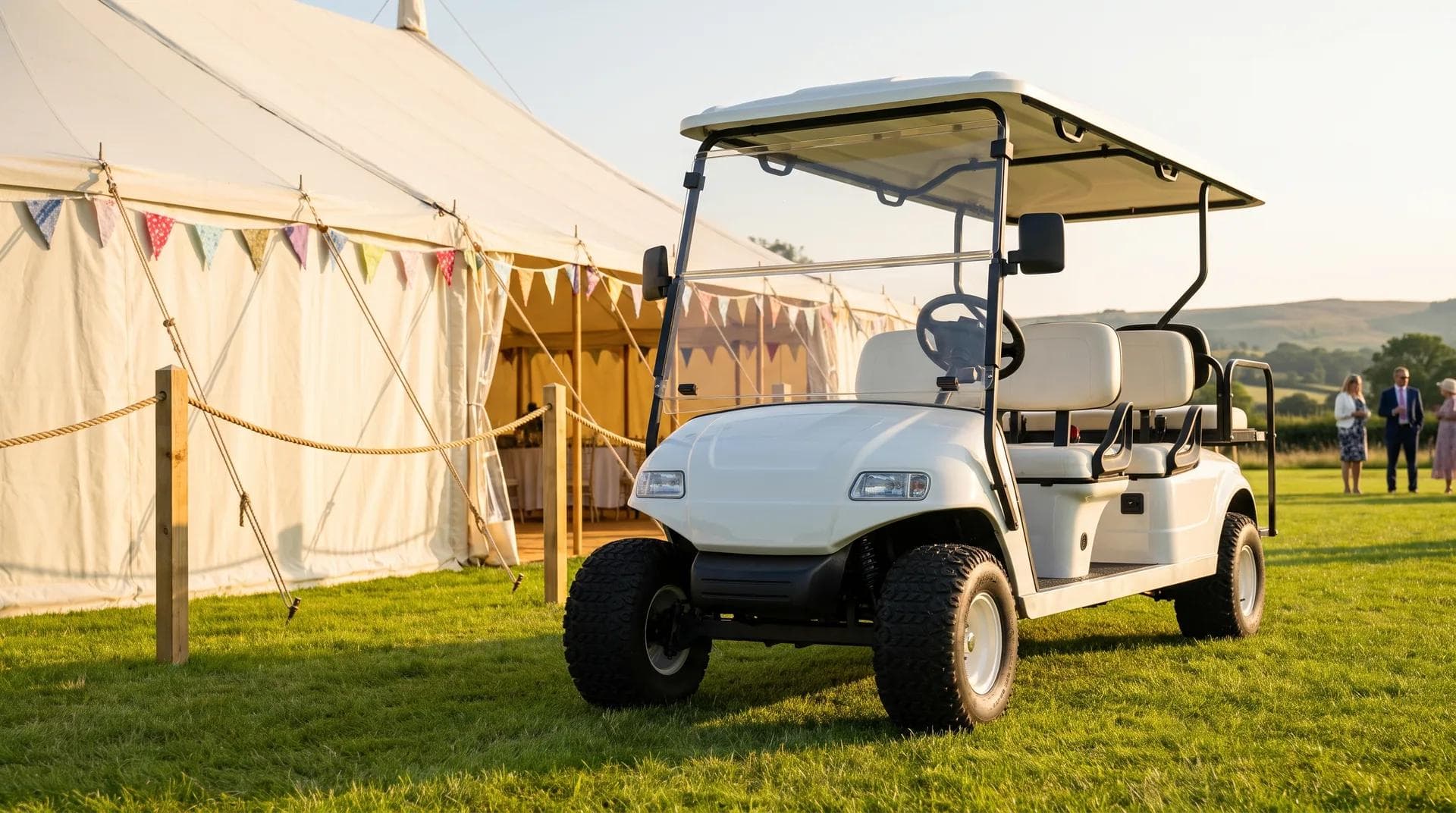
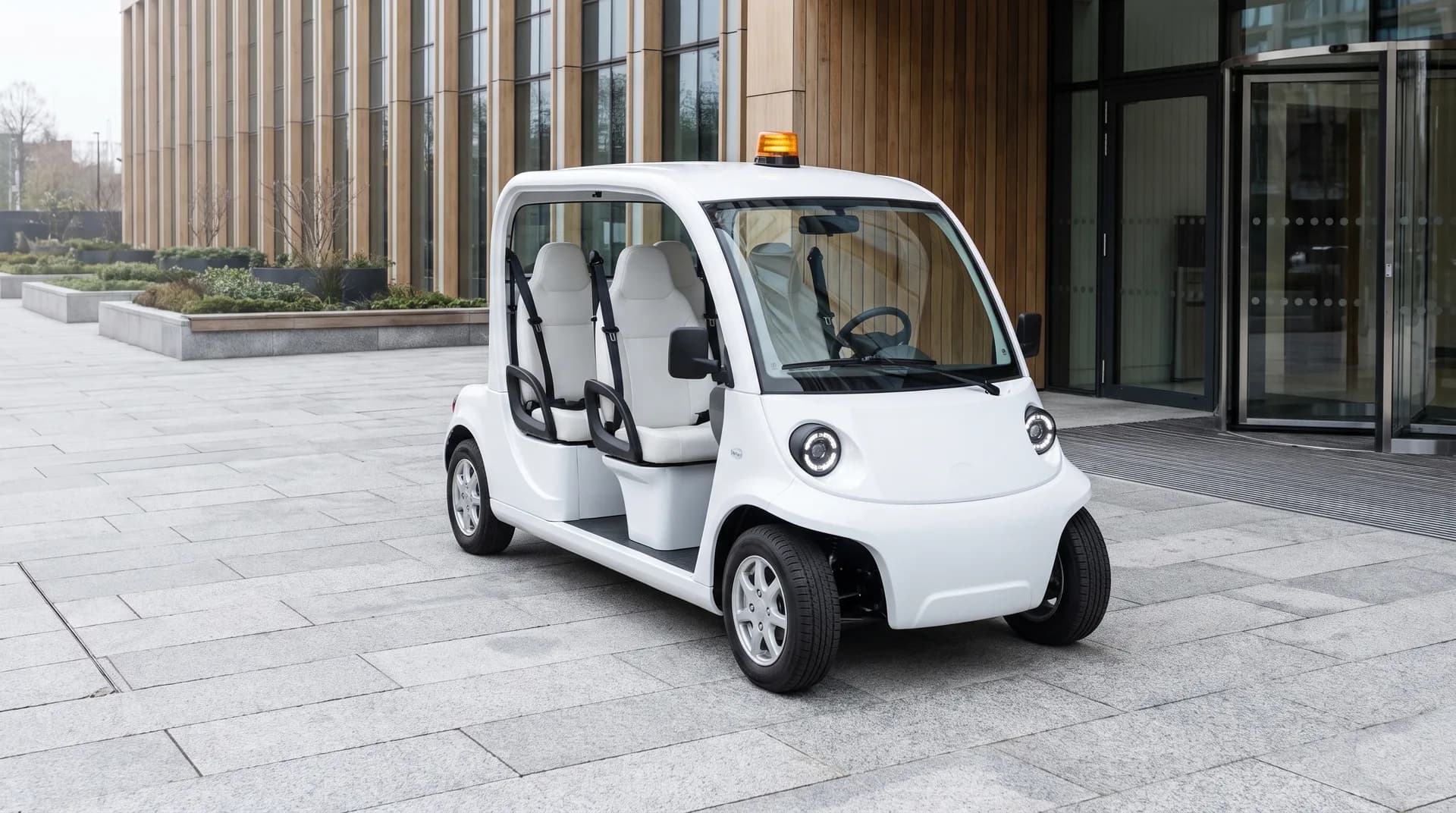
Some buyers choose a 2-seater not for budget but for geometry. Walled gardens, cemeteries, narrow venue paths, glasshouse ranges and older sites with tight gates all need the smallest stable four-wheeled footprint available, and that is the 2-seater, typically around 1.2 metres wide and under 2.5 metres long with a turning circle small enough to reverse out of trouble. Before shortlisting anything, walk the site with a tape measure and note the tightest gate, the narrowest path and the steepest ramp, then buy to those numbers. Sites like these also tend to value quiet running around visitors, which every electric buggy delivers by default.
- Golfer
- Club permission and storage
- Couple on private land
- Range and comfort
- Compact site
- Width and turning circle
- Golfer
- Turf
- Couple on private land
- All-terrain
- Compact site
- Match the paths
- Golfer
- Lithium if playing weekly
- Couple on private land
- Lithium, without much debate
- Compact site
- Lithium for all-day use
- Golfer
- Bag racks, scorecard tray
- Couple on private land
- Enclosure, flip deck
- Compact site
- Mirrors, pedestrian-safe speed
- Golfer
- Buying before the club says yes
- Couple on private land
- Underspecced weather protection
- Compact site
- Gates measured after ordering
| Golfer | Couple on private land | Compact site | |
|---|---|---|---|
| Priority one | Club permission and storage | Range and comfort | Width and turning circle |
| Tyres | Turf | All-terrain | Match the paths |
| Battery | Lithium if playing weekly | Lithium, without much debate | Lithium for all-day use |
| Useful extras | Bag racks, scorecard tray | Enclosure, flip deck | Mirrors, pedestrian-safe speed |
| Watch out for | Buying before the club says yes | Underspecced weather protection | Gates measured after ordering |
New, used or neither
New 2-seaters from established suppliers start around the low teens of thousands, ours at £11,500 excluding VAT, with a warranty and a service network behind them. The used market is genuinely worth a look at this size because ex-fleet club buggies come up regularly, but the rules are strict: battery age in writing, a drive on grass and a slope rather than a yard, and a hard look at who supports the machine afterwards. An older buggy on tired lead-acid batteries is the most common disappointment in the classifieds, since a replacement pack can cost a meaningful fraction of the vehicle's price. If the sums stay uncomfortable, per-round or seasonal hire remains a perfectly respectable answer while you decide.
Frequently asked questions
How much is a 2-seater golf buggy in the UK?+
New machines from established suppliers typically start in the low teens of thousands; the Hawke S2 starts at £11,500 excluding VAT. Used ex-club buggies commonly change hands for a few thousand pounds, with battery age explaining most of the price spread.
Can I take my own 2-seater to my golf club?+
Only with the club's agreement. Most clubs have a policy covering insurance, storage and course conditions, and some have waiting lists for buggy storage. Get written permission before buying, not after.
Are 2-seaters stable on slopes?+
A four-wheeled 2-seater with a low-slung battery is a stable platform, markedly more so than three-wheeled ride-on trolleys. Sensible driving on wet cambers still applies, as it does with any small vehicle.
What is the difference between a 2-seater buggy and a single-seater?+
A single-seater is a compact one-person machine, often bought for mobility reasons and frequently designed to dismantle into a car boot. A 2-seater is a full-format buggy: more comfort, more stability, a passenger seat and normally a dealer network behind it, but it needs storage rather than a boot.
How far will a 2-seater go on a charge?+
A healthy lithium 2-seater will comfortably cover a full day of typical private-land use or two rounds of golf. Real range depends on terrain, load and battery age, which is why battery condition is the first question on any used purchase.
Find your 2-seater
Tell us whether it is for the course, the garden or the site, and we will spec an S2 to match and quote it straight, with honest advice if a different size fits better.
Related solutions
Ready to explore what we build?
See the vehicles and the setting this applies to, or get a tailored quote built around your site.
Ready to find the right buggy?
Tell us how and where it will work and we will specify a vehicle and a tailored quote built around you. Every build comes with a 3-year warranty and a 24-hour priority call-out.
Our guides are written and reviewed by the Hawke Electric Vehicles team, the people who specify, build, deliver and support the vehicles. We focus on honest, practical advice and flag where a figure depends on the build rather than guessing.
More guides by Hawke