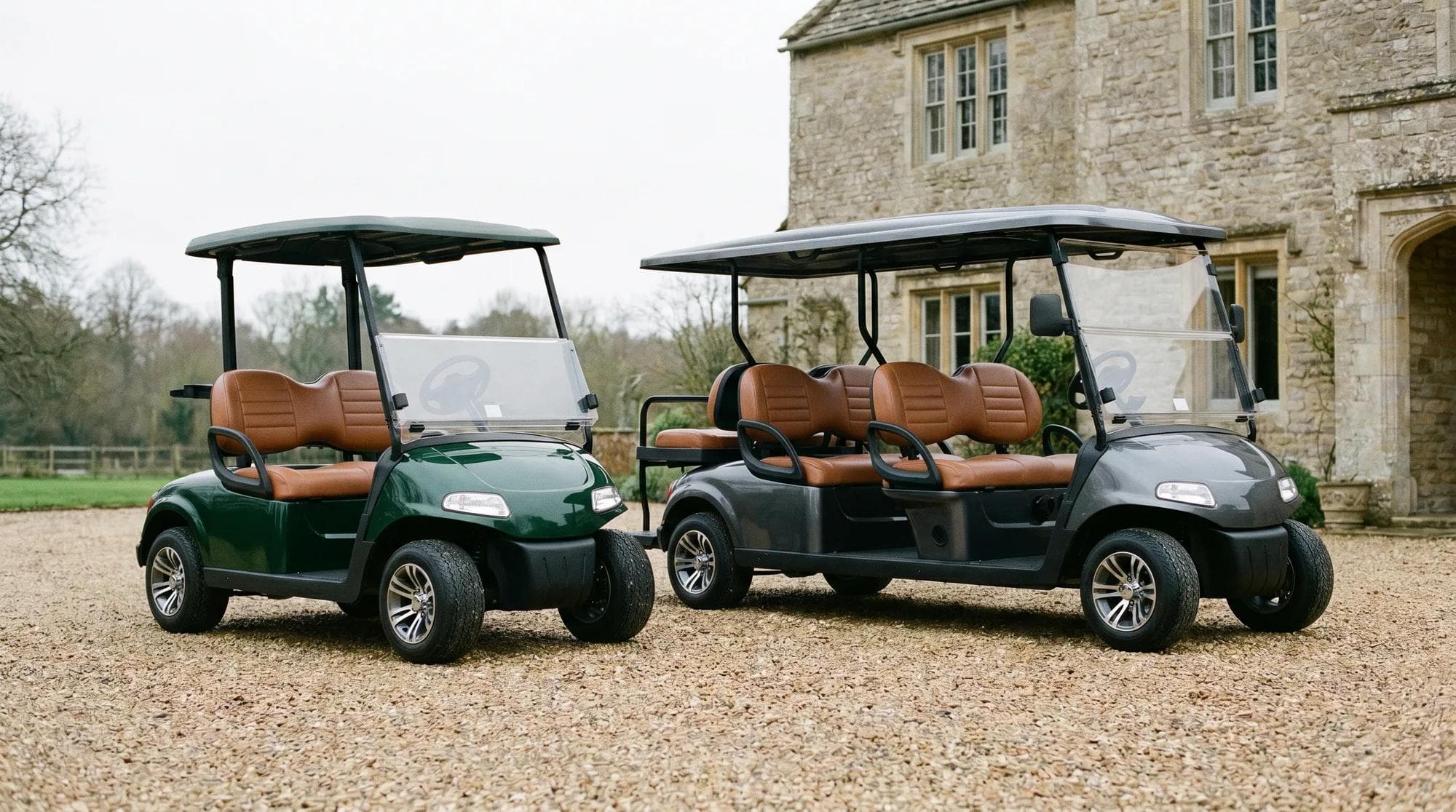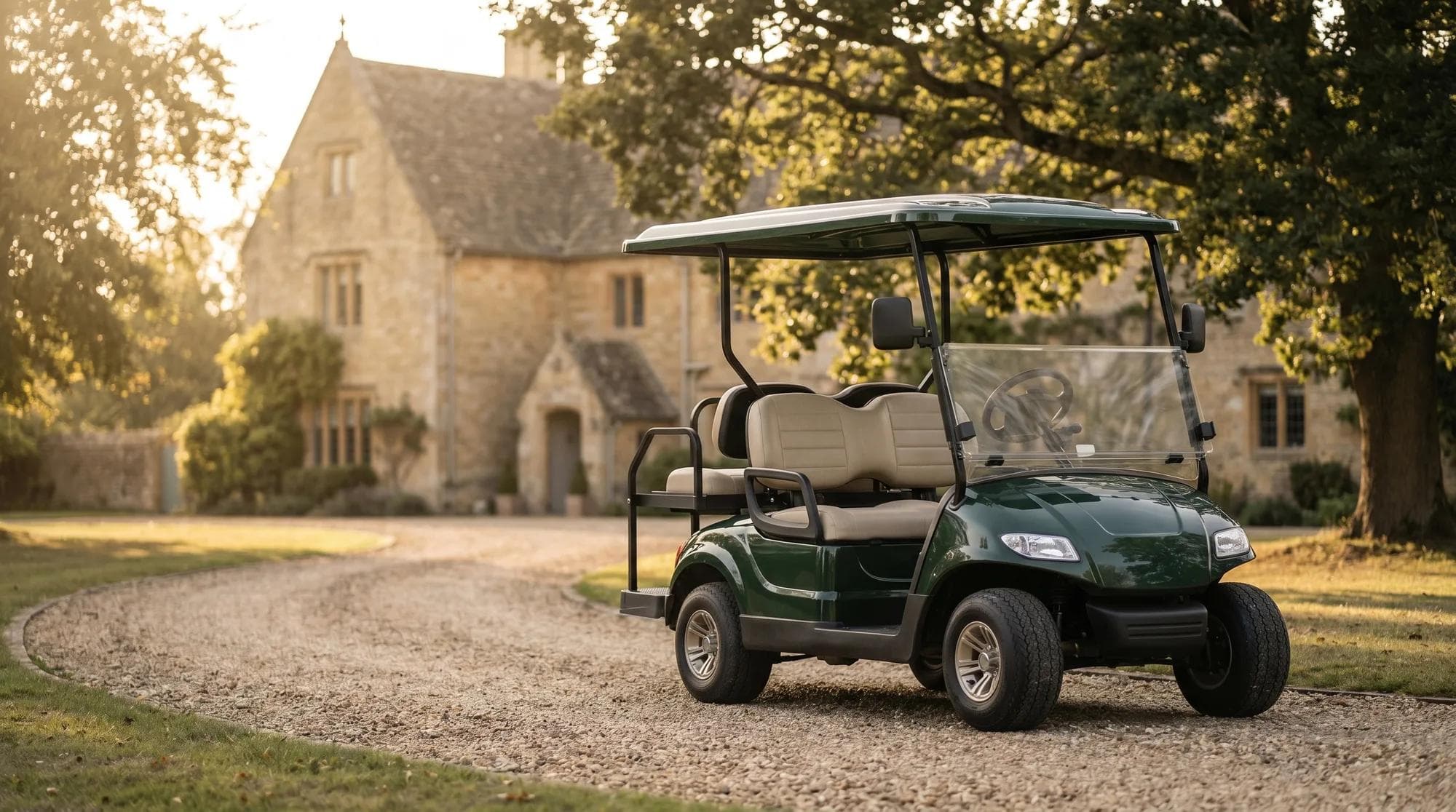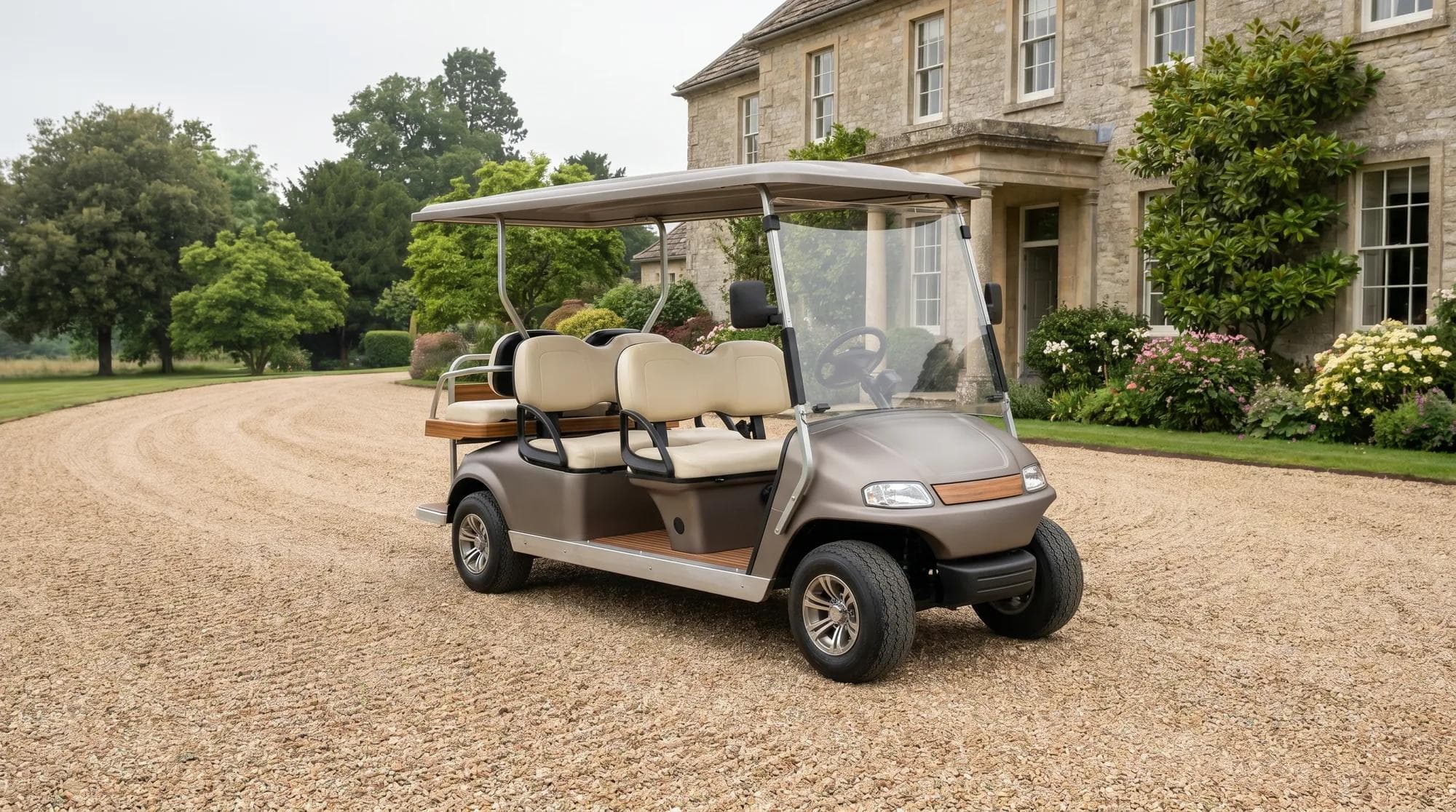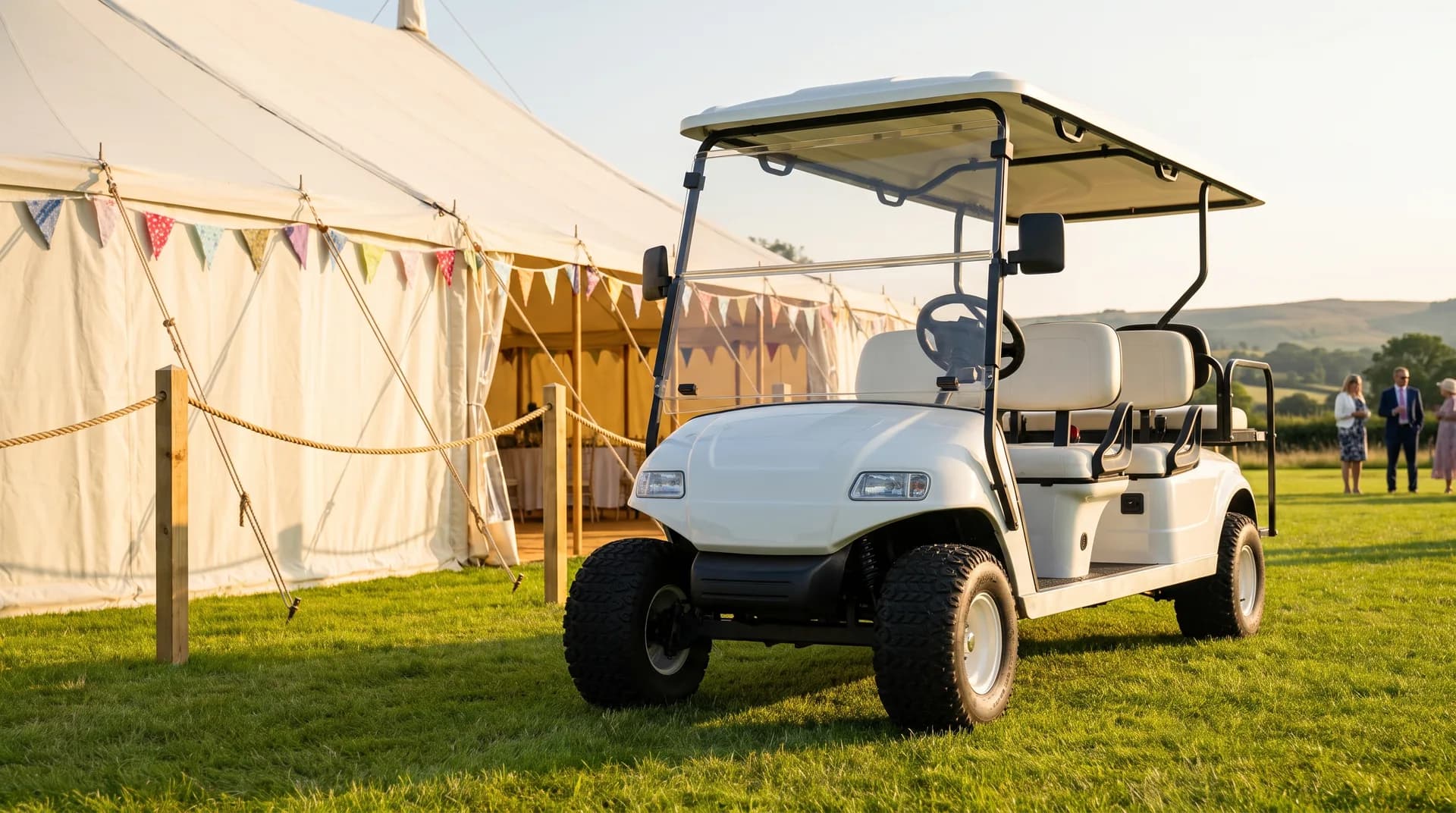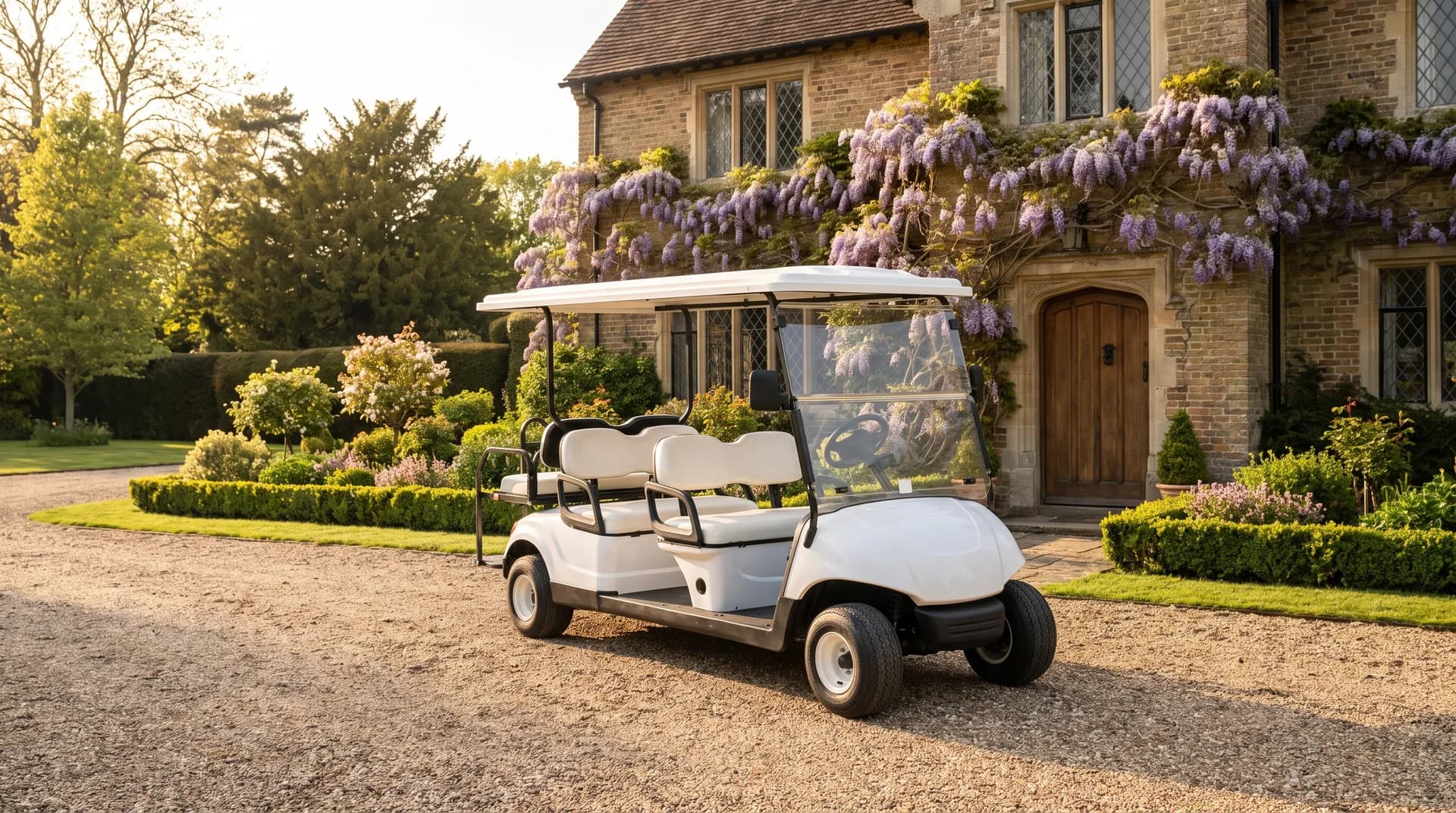
An electric buggy is not just for golf clubs and resorts; a growing number are bought for private homes with large gardens, land or a long drive, where they quietly earn their keep every day. Carrying people between the gate and the house, guests around the garden, tools and logs across the ground, and family members who find the distances hard, a buggy turns a big property from a walk into a pleasure. This guide covers what one is genuinely useful for at home, and how to choose well. To be clear, these are multi-seat vehicles for moving people and loads around a property, not mobility aids.
- Genuinely useful on any property where distances add up: drive, garden, paddock, outbuildings.
- Carries guests, family, tools, logs and shopping quietly and cleanly.
- On private land, buggies are generally free of the requirements road use brings.
- Choose the size and tyres for your ground, as you would for any site.
- A well-built buggy with proper support lasts for many years of home use.
What a buggy is useful for at home
The uses are practical and daily: meeting visitors at the gate and bringing them up a long drive, carrying shopping and luggage from the car, moving tools, logs and garden materials, giving a less mobile family member the run of the grounds again, and simply enjoying the property together. Owners are often surprised how quickly it becomes the most-used vehicle they own. The quiet matters at home too, as our guide on quiet electric vehicles for private estates explores.
Private land keeps it simple
On your own private land, a buggy is generally free of the licensing and registration requirements that public-road use brings, which is what makes home ownership so straightforward: charge it from a normal socket, drive it on your own ground, and enjoy it. If you would ever need to cross or use a public road, that is a separate legal question we advise on honestly; see our road-legal guide and confirm your position before any road use.
Choosing well for a home
The choice works the same as for any site: seats for the people you will actually carry, a cargo option if you will move tools and materials, tyres for your ground, gravel, lawn or paddock, and weather protection for year-round use. Our guides on what size you need and the full buyers guide walk through the decisions, and we specify the vehicle to your property at the survey.
Frequently asked questions
Can I use an electric golf buggy at home?+
Yes, and many owners do: on any property where the distances add up, a buggy carries people, tools and shopping quietly and cleanly. On your own private land it is generally free of the requirements that public-road use brings.
Do I need a licence for a buggy on my own land?+
On private land, generally not; the licensing and registration requirements apply to public-road use, which is a separate legal question to confirm before any road driving. See our road-legal guide for the position.
What is a buggy useful for on a private property?+
Meeting guests at the gate, carrying shopping and luggage up a long drive, moving tools, logs and garden materials, and giving less mobile family members the run of the grounds. It quickly becomes the most-used vehicle on the property.
How do I charge it at home?+
From a normal domestic socket, usually overnight in a garage or outbuilding. No special infrastructure is needed for home use.
Which buggy suits a private home?+
It depends on your people, loads and ground: a compact two-seater for tight paths, a four-seater all-rounder, or a cargo option for garden work, on tyres for your surfaces. We specify to your property at the survey.
Find the right buggy for your home
Tell us about your property and how you would use it, and we will specify the right buggy and prepare a proper quote.
Related solutions
Ready to explore what we build?
See the vehicles and the setting this applies to, or get a tailored quote built around your site.

Ready to find the right buggy?
Tell us how and where it will work and we will specify a vehicle and a tailored quote built around you. Every build comes with a 3-year warranty and a 24-hour priority call-out.
Our guides are written and reviewed by the Hawke Electric Vehicles team, the people who specify, build, deliver and support the vehicles. We focus on honest, practical advice and flag where a figure depends on the build rather than guessing.
More guides by Hawke