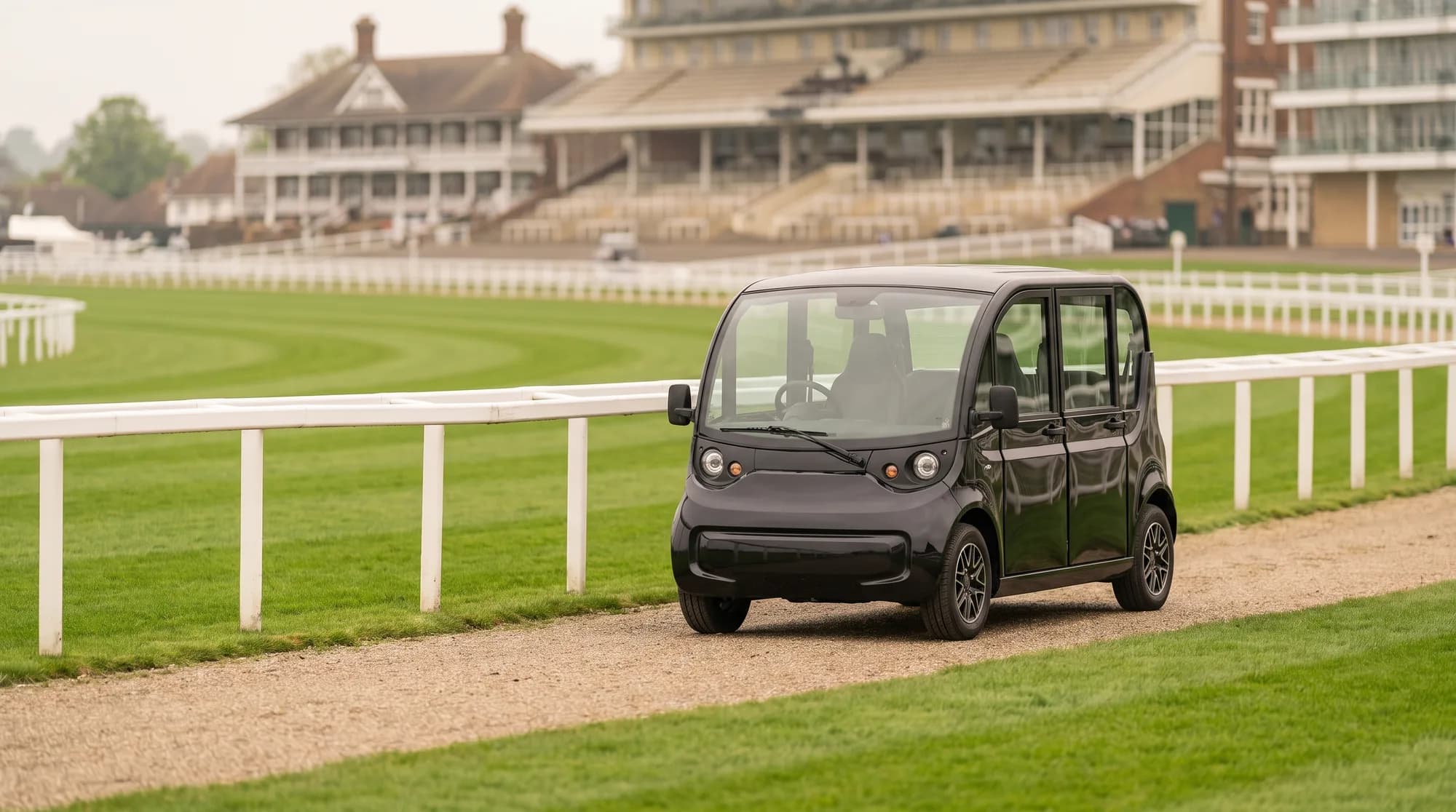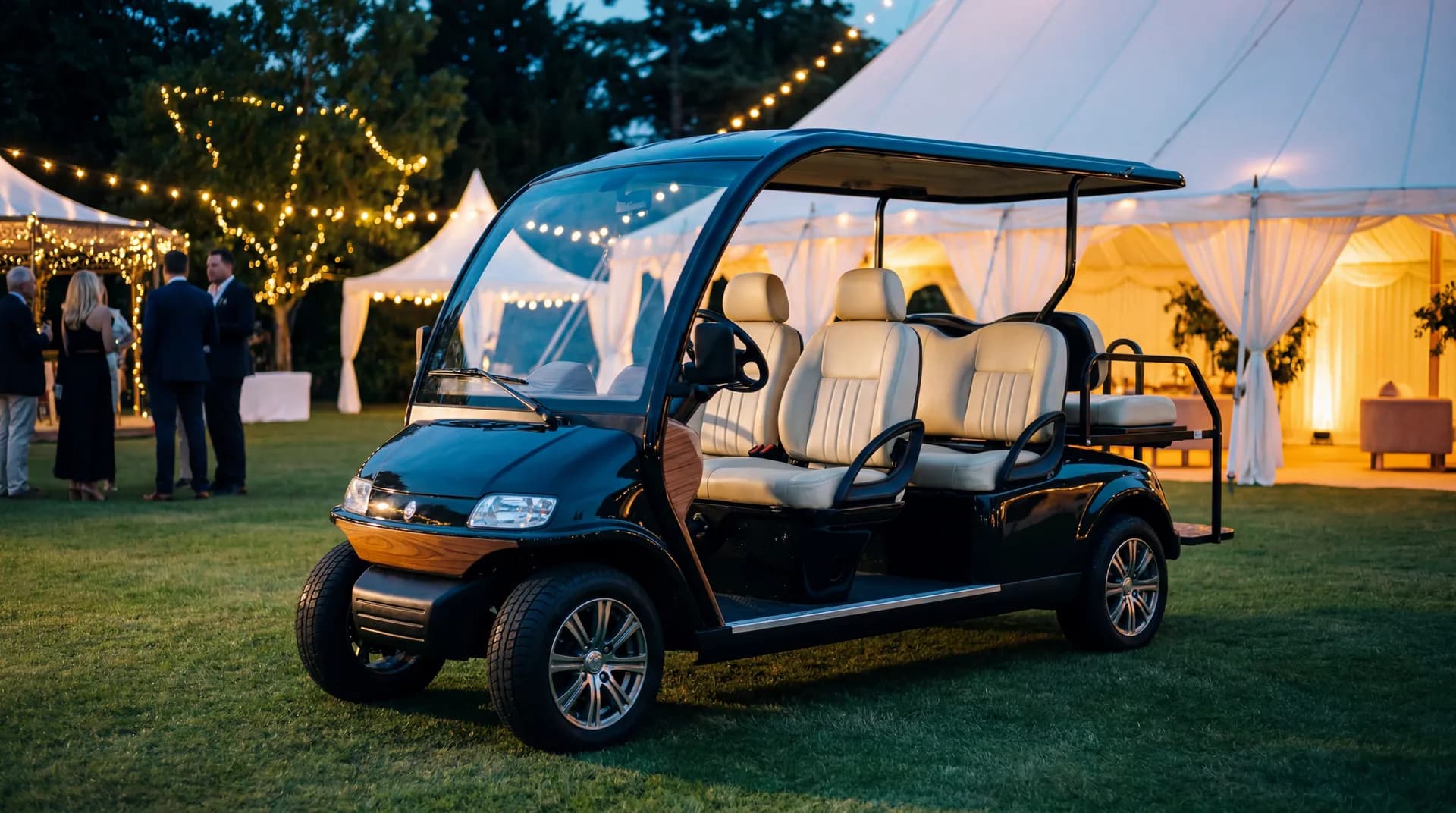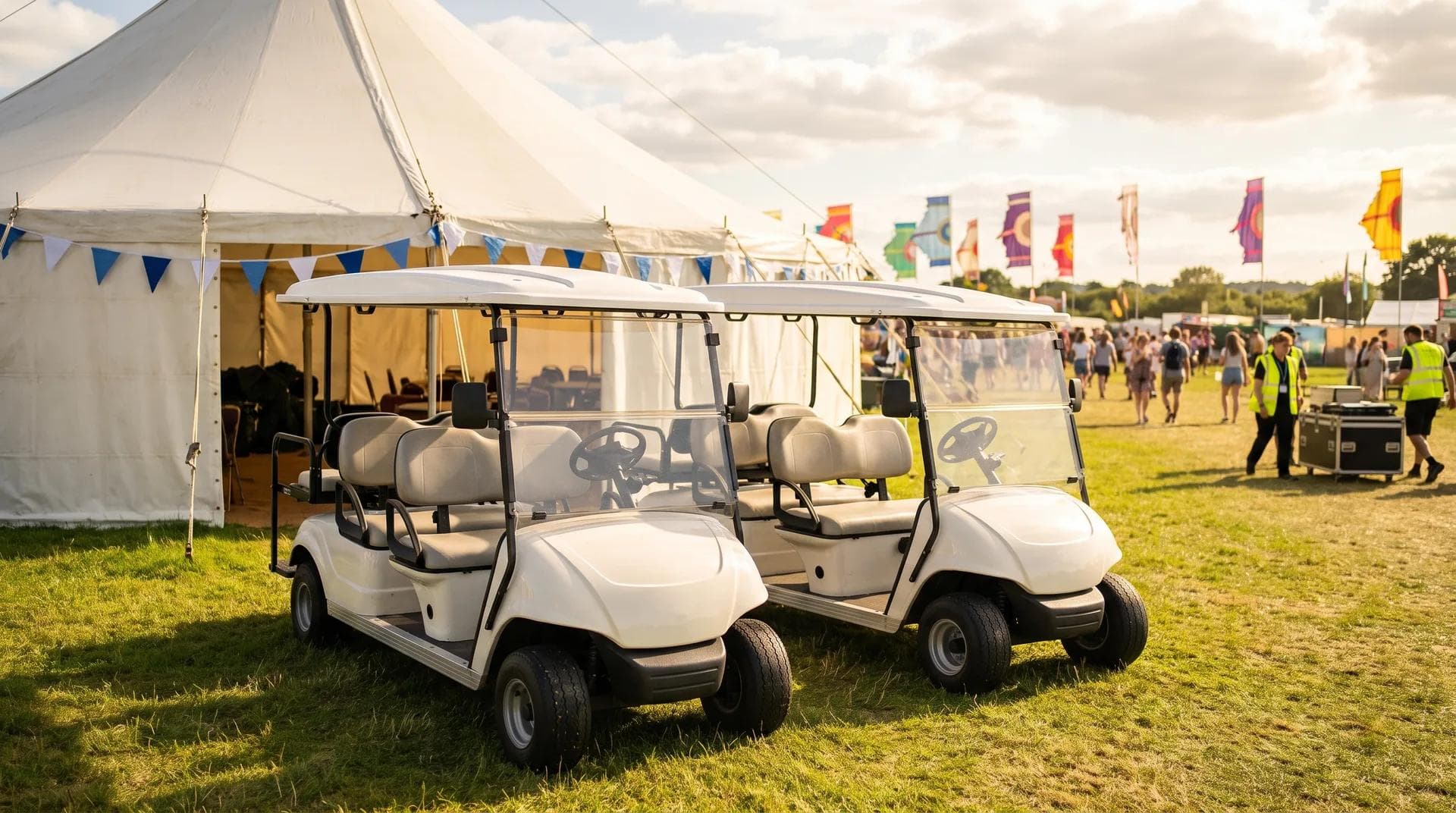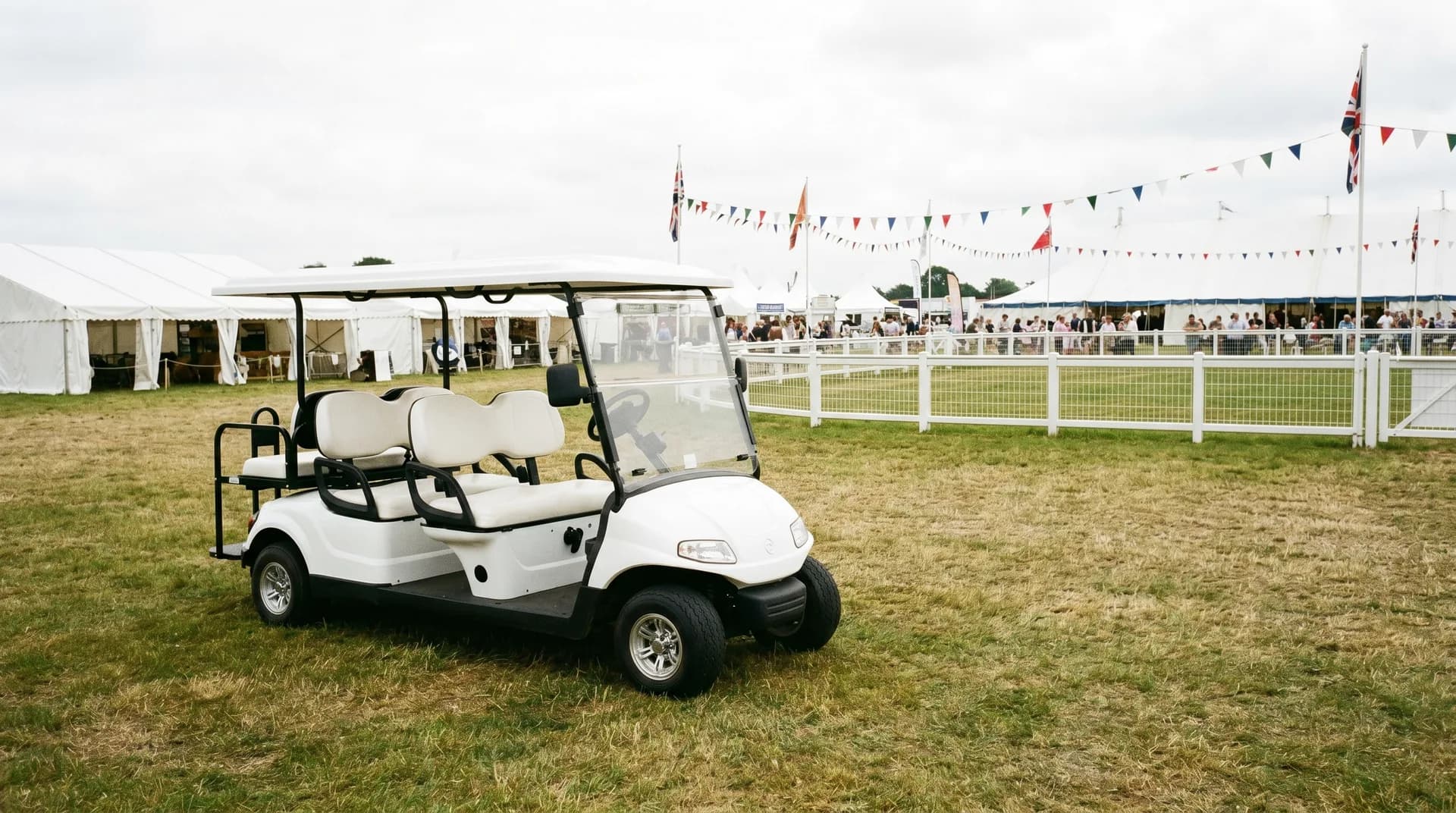
Racecourse buggy hire in the UK is priced on four things: how many vehicles you need, how long you need them, what mix of vehicles the jobs demand, and what sits on top, such as drivers, branding and out-of-hours delivery. Day rates vary with vehicle size, season and distance, so no honest supplier quotes a flat menu price without knowing your fixture list. We have written a general guide to event buggy hire cost; this one is specifically about racecourses, because a racecourse is not a one-off event. It is a venue with a fixture calendar, recurring operational jobs between meetings, and a peak-season squeeze on hire fleets that rewards early booking. Understanding how the pricing is built lets you shape the enquiry to get the best value from it.
- Racecourses hire buggies for officials, vets, guests with limited mobility, media and estate rounds, and each job suits a different vehicle.
- The big cost drivers are fleet size, fixture days versus a season-long arrangement, vehicle mix and extras such as drivers and branding.
- Per-day cost falls as hire length grows, so a season deal usually beats booking the same fixtures one by one.
- Delivery and collection are real line items, and tight race-day access windows can add to them.
- The racing calendar concentrates demand, so festival weeks and summer fixtures should be booked months out.
What racecourses hire buggies for
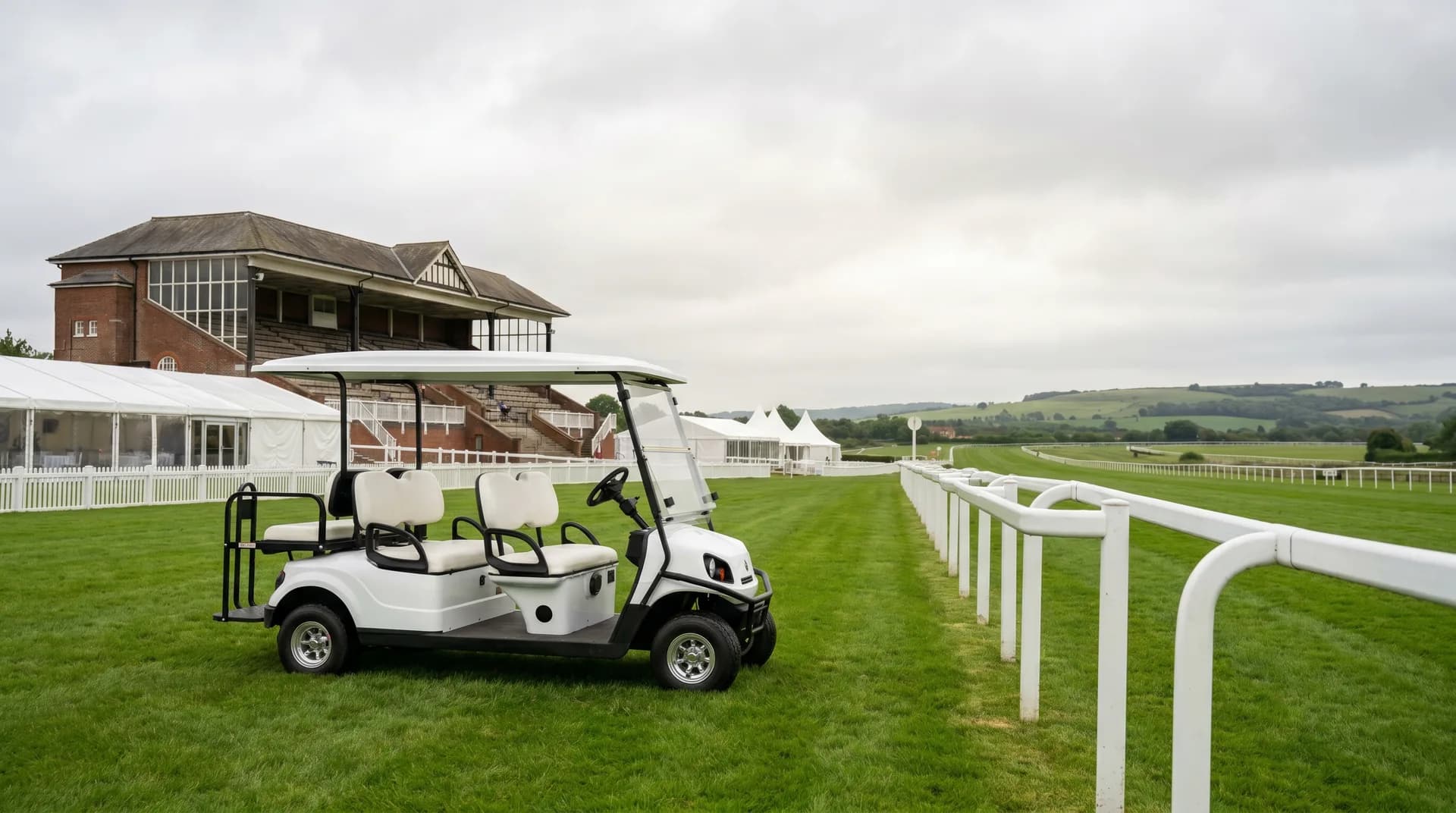
The jobs are more varied than people expect, and they shape the fleet. Race-day officials, stewards and groundstaff need quick transport around a site that can stretch well over a mile end to end. Veterinary teams need to reach any point on the track quickly, often with kit aboard, so a utility vehicle or a buggy with a load bed earns its keep. Guests with limited mobility are a growing part of the brief: shuttling racegoers from car parks and gates to enclosures is often the single biggest vehicle count on a big day, and multi-seat buggies do that work well. Television, press and photographers move heavy equipment to fixed positions before racing and between races. And between fixtures the estate still runs: maintenance rounds, rail and irrigation checks, and moving materials, which is where a hired utility vehicle can stay on after the meeting. Our guide to electric buggies for racecourses covers the vehicle side in depth.
What drives racecourse buggy hire cost
Fleet size comes first: a two-buggy hire for a midweek meeting and a fifteen-vehicle fleet for a festival week are different undertakings, though the per-vehicle rate improves as the count rises. Hire length is second, and it is where racecourses differ from one-off events: hiring for six separate fixture days is priced differently from one continuous season hire, because every separate hire carries its own delivery, collection, preparation and checking. Vehicle mix is third: passenger buggies, six and eight-seat shuttles and utility vehicles carry different rates, and most racecourse fleets need a blend. Then come the extras. Supplied drivers turn a vehicle hire into a staffed service and are priced accordingly. Branding, from simple panels to full course livery, adds a setup cost that spreads better over a season than a single day. Finally, delivery distance and access windows matter: racecourses often require vehicles in place the day before racing and off site quickly afterwards, and tight or out-of-hours windows add transport cost. Day rates vary with vehicle size, season and distance, and the event buggy hire calculator gives an instant indication for your dates.
Fixture days vs a full season
- Per-fixture hire
- Day rate per vehicle, per fixture
- Season-long hire
- Negotiated rate across the whole period
- Per-fixture hire
- Charged on every hire
- Season-long hire
- Once in, once out
- Per-fixture hire
- Highest, especially in peak weeks
- Season-long hire
- Falls significantly with duration
- Per-fixture hire
- No vehicles on site
- Season-long hire
- Fleet available for estate work
- Per-fixture hire
- Rarely worth the setup cost
- Season-long hire
- Setup cost spreads across the season
- Per-fixture hire
- Courses with a handful of meetings
- Season-long hire
- Busy calendars and summer-long schedules
| Per-fixture hire | Season-long hire | |
|---|---|---|
| How it is priced | Day rate per vehicle, per fixture | Negotiated rate across the whole period |
| Delivery and collection | Charged on every hire | Once in, once out |
| Per-day cost | Highest, especially in peak weeks | Falls significantly with duration |
| Between fixtures | No vehicles on site | Fleet available for estate work |
| Branding | Rarely worth the setup cost | Setup cost spreads across the season |
| Best for | Courses with a handful of meetings | Busy calendars and summer-long schedules |
The arithmetic usually favours the season for any course racing regularly through the summer. Repeated delivery and collection is pure cost that a continuous hire removes, the negotiated rate is lower, and the fleet becomes an estate asset between meetings rather than an empty space in the yard. Per-fixture hire still makes sense for courses with a short or scattered calendar, or for topping up a core fleet on the two or three biggest days of the year, which is a common and sensible hybrid.
Drivers, branding and the extras worth having
Supplied drivers are worth considering for guest shuttle work on big days, where a steady, insured, briefed driver removes a staffing headache and a risk in one line. For officials and estate work, self-drive with a simple familiarisation is the norm, and who may drive is worth settling early against the supplier's licence and minimum-age terms, ideally when drivers are nominated rather than on delivery morning. Branding is a judgement call: on a season hire, course-liveried shuttles look intentional and help racegoers identify official transport, while for one meeting, magnetic panels or simple signage do the job without the setup cost. Weather enclosures earn their money at jump meetings through the winter months, and are a cheap addition relative to the misery they prevent.
Booking around the racing calendar
Hire fleets and racing peak at the same time. The summer flat season, festival weeks and bank holiday fixtures concentrate demand for multi-seat buggies from racecourses, festivals and shows simultaneously, so the vehicles you want are scarcest exactly when you need them. For a festival week or any fixture in the busy season, enquire three to six months out; for a quiet midweek meeting in the shoulder months, a few weeks is usually workable. Booking the whole season in one conversation, even with delivery staged, secures both availability and the better rate. If you are earlier in the planning, our guide to how event buggy hire works walks through the process end to end, and our racecourse buggy hire page covers what we supply.
Frequently asked questions
How much does racecourse buggy hire cost per day?+
There is no single figure: day rates vary with vehicle size and type, season, hire length, distance and extras such as drivers or branding. A short hire in a peak week costs the most per day; a season-long arrangement costs the least. The event hire calculator gives an instant indication for your dates and fleet.
Is it cheaper to hire for the season than per fixture?+
Usually, for any course with a reasonably busy calendar. A season hire removes repeated delivery and collection charges, attracts a lower negotiated rate, and leaves the fleet available for estate work between meetings.
Can hired buggies be branded in course colours?+
Yes. Options range from simple signage and magnetic panels to fuller livery. Branding carries a setup cost, so it makes most sense on longer hires where it spreads across many race days.
Do suppliers provide drivers for race days?+
Many do, ours included. Staffed shuttles suit guest and accessibility transport on big days, while officials and estate teams typically self-drive after a familiarisation. Driver provision is priced separately from the vehicle.
How far ahead should a racecourse book?+
Three to six months for festival weeks and peak summer fixtures, when demand across racecourses, festivals and shows is at its height. Quieter midweek meetings can often be covered at a few weeks' notice, but the vehicle mix narrows late.
Price a race-day or season fleet
Tell us your fixture list, the jobs the vehicles will do and how many people they move, and we will build an honest quote for a single meeting or the whole season.
Related solutions
Ready to explore what we build?
See the vehicles and the setting this applies to, or get a tailored quote built around your site.

Ready to find the right buggy?
Tell us how and where it will work and we will specify a vehicle and a tailored quote built around you. Every build comes with a 3-year warranty and a 24-hour priority call-out.
Our guides are written and reviewed by the Hawke Electric Vehicles team, the people who specify, build, deliver and support the vehicles. We focus on honest, practical advice and flag where a figure depends on the build rather than guessing.
More guides by Hawke