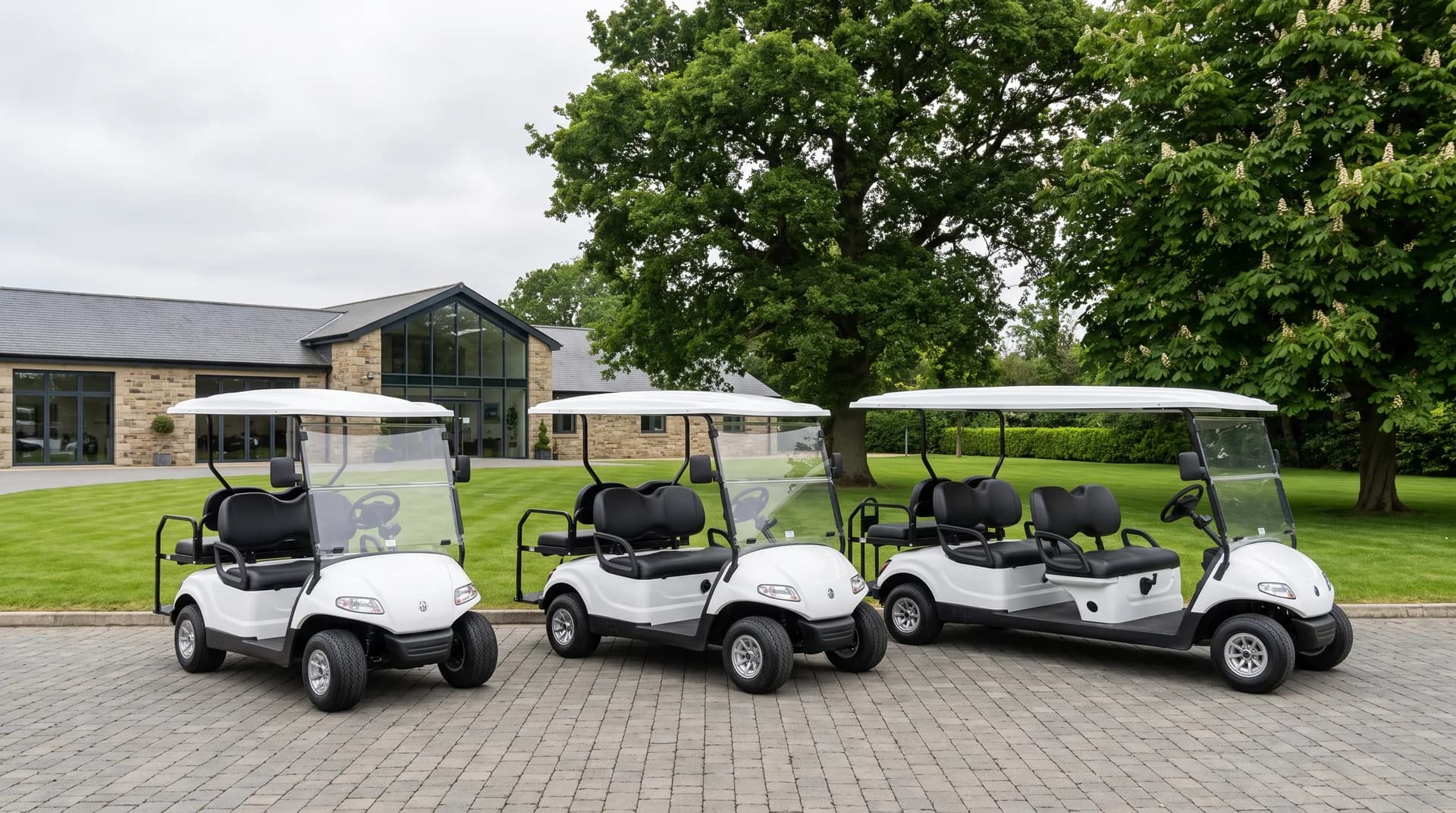
In the UK you can buy a golf buggy through five main routes: a specialist dealer or supplier, an ex-club or fleet disposal, an auction, an online marketplace, or a direct import. A specialist supplier is the route that comes with a warranty, parts and a service network behind the machine; the other four trade some or all of that protection for a lower headline price. None of them is wrong, but they suit different buyers, and the biggest mistakes we see are people paying dealer-grade money through a route that carries auction-grade risk. This guide walks through each route honestly, compares them side by side, and sets out what a good supplier should actually provide, so you can judge whether the saving on a cheaper route is real once support is priced in.
- Specialist dealers cost more up front but include warranty, parts supply and servicing, which is where the long-term value sits.
- Ex-club and fleet disposals can be honest value, but the machines have worked hard and batteries are the usual weak point.
- Auctions and marketplaces are sold-as-seen territory: budget for a battery and a service on top of the hammer price.
- Importing directly can look cheap until freight, duty and the absence of any UK support are counted.
- Whatever the route, judge the supplier as hard as the machine: warranty terms, parts availability and who turns up when it stops.
Where to buy a golf buggy: the five routes compared
The honest comparison is less about price and more about what happens after the money changes hands. A dealer stands behind the machine for years; an auctioneer's obligation ends when the hammer falls. The table below sets out how the routes differ on the things that matter over a period of ownership rather than on day one.
- Specialist dealer
- Highest up front
- Ex-club, auction or fleet sale
- Mid to low
- Marketplace or direct import
- Lowest headline, extras hidden
- Specialist dealer
- Multi-year, in writing
- Ex-club, auction or fleet sale
- Rarely, sometimes short
- Marketplace or direct import
- Usually none enforceable in the UK
- Specialist dealer
- Prepared and inspected
- Ex-club, auction or fleet sale
- Working life unknown, batteries tired
- Marketplace or direct import
- Sold as seen, photos only
- Specialist dealer
- Built in
- Ex-club, auction or fleet sale
- You arrange your own
- Marketplace or direct import
- You arrange your own, parts may be scarce
- Specialist dealer
- Low
- Ex-club, auction or fleet sale
- Moderate, battery-led
- Marketplace or direct import
- Highest
| Specialist dealer | Ex-club, auction or fleet sale | Marketplace or direct import | |
|---|---|---|---|
| Typical price level | Highest up front | Mid to low | Lowest headline, extras hidden |
| Warranty | Multi-year, in writing | Rarely, sometimes short | Usually none enforceable in the UK |
| Condition assurance | Prepared and inspected | Working life unknown, batteries tired | Sold as seen, photos only |
| Parts and service network | Built in | You arrange your own | You arrange your own, parts may be scarce |
| Overall risk | Low | Moderate, battery-led | Highest |
Where to buy a golf buggy new: specialist dealers and suppliers
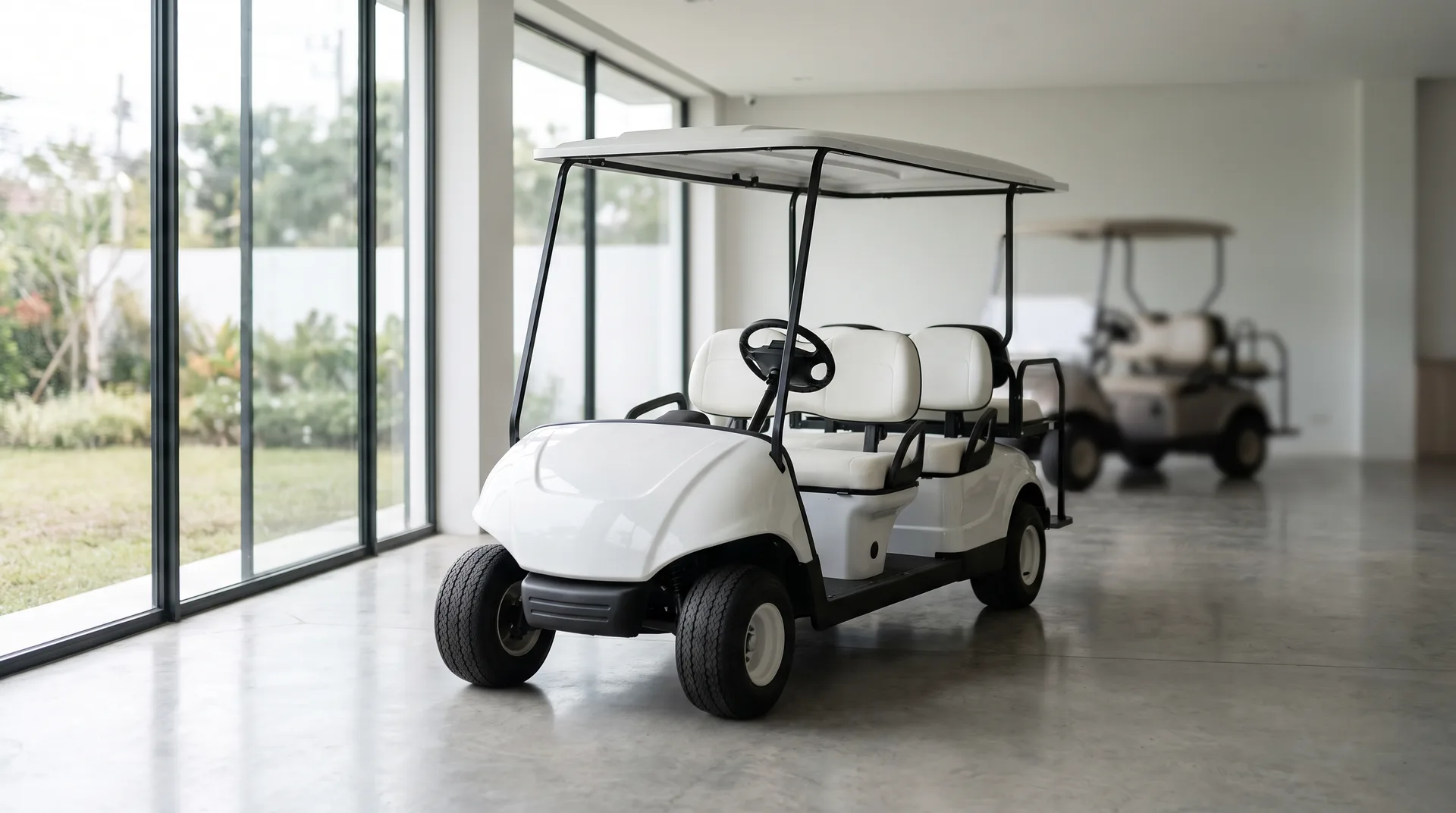
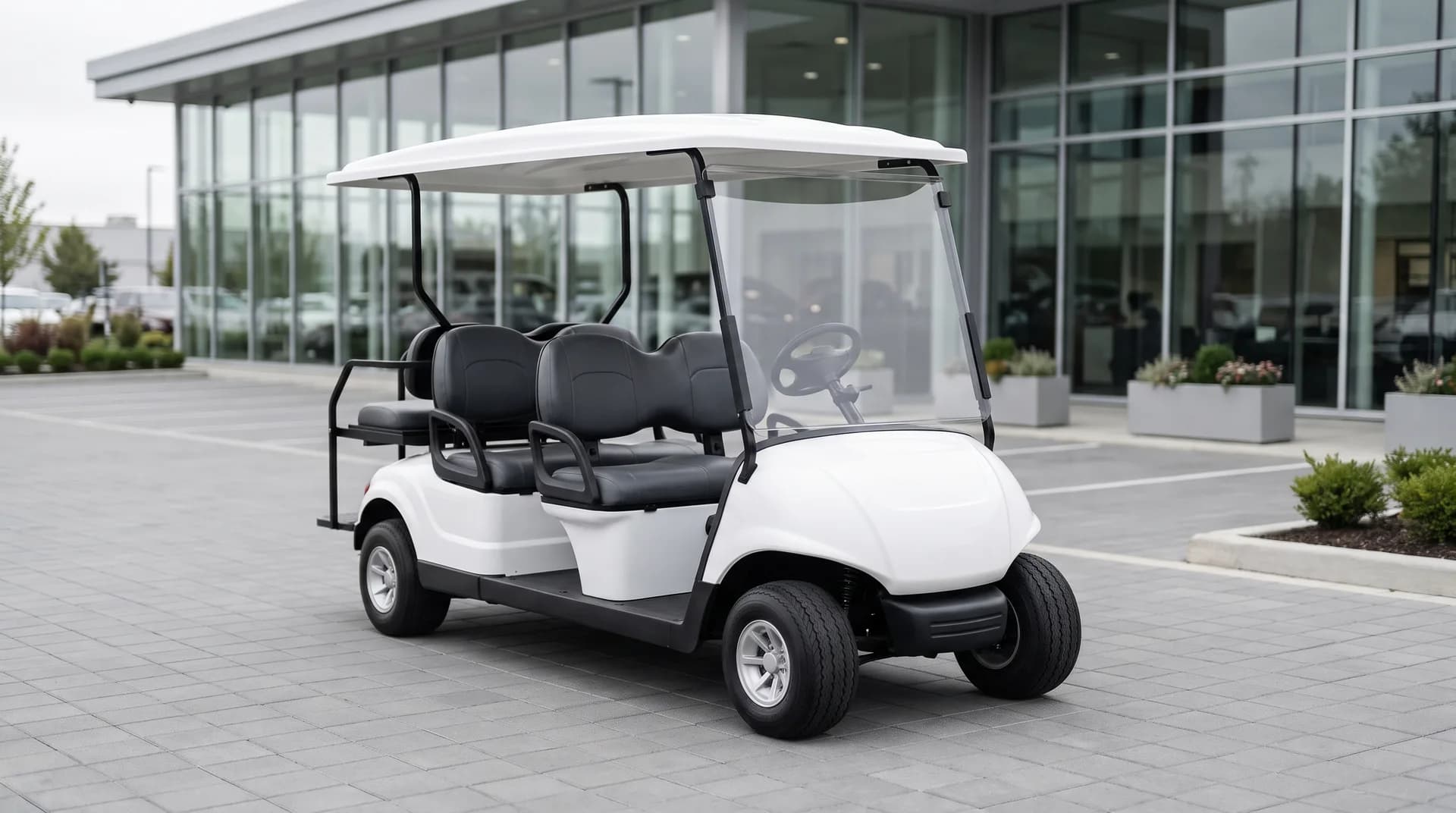
A specialist supplier sells you a machine that has been specified for your use, prepared before handover and backed by a written warranty, with parts on the shelf and engineers who know the vehicle. That is what the extra money buys, and for anyone who will depend on the buggy, for their golf, their site or their business, it is usually the right trade. New buggies through this route are quote-based because specification moves the price, but as a guide our own range starts from £11,500 for the two-seat S2 and £14,900 for the four-seat S4. Our guide to choosing a supplier sets out the questions that separate a genuine dealer from a box-shifter, and our dealer guide explains how the UK supplier landscape fits together.
The second-hand routes: ex-club stock, auctions and marketplaces
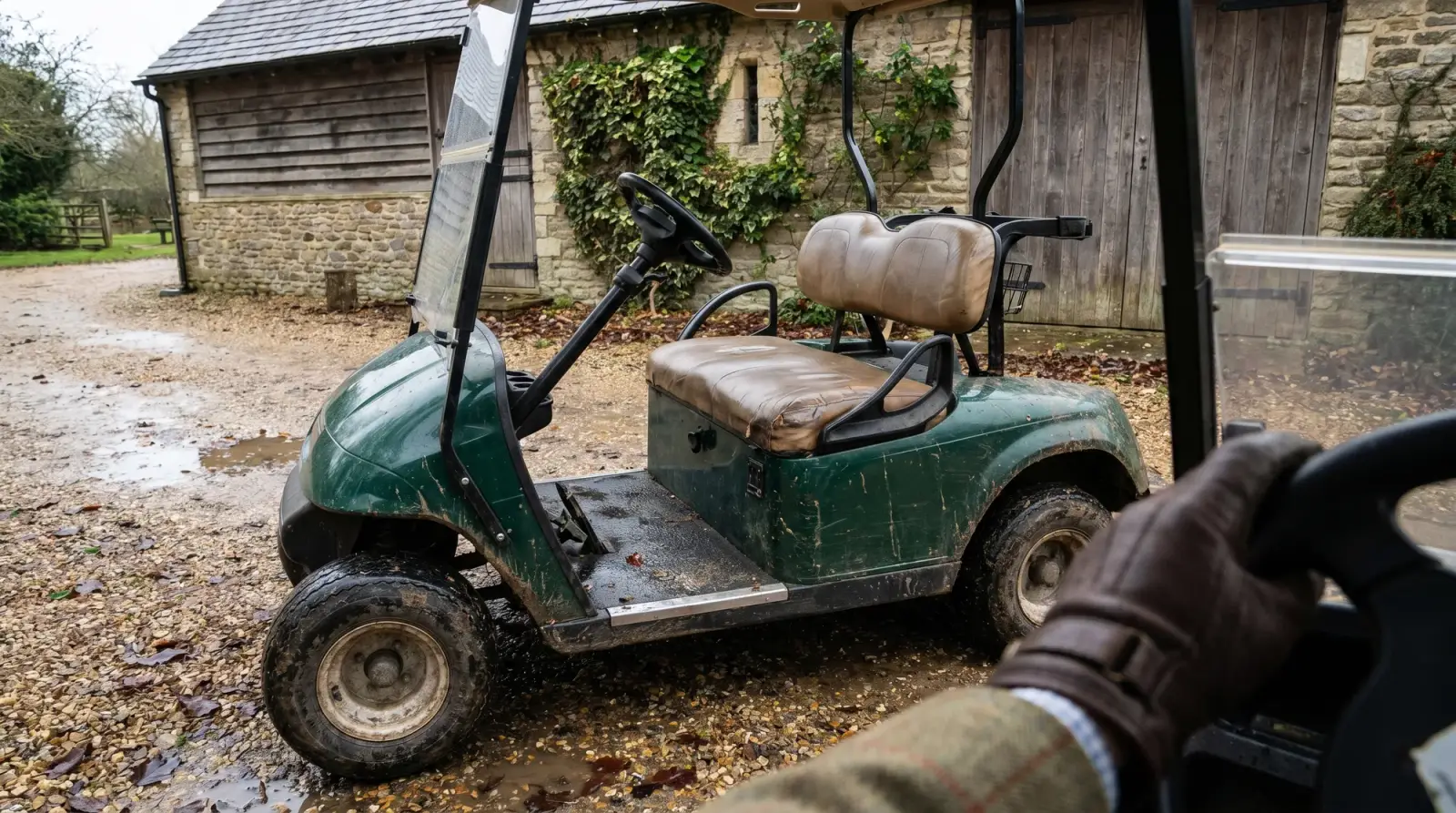
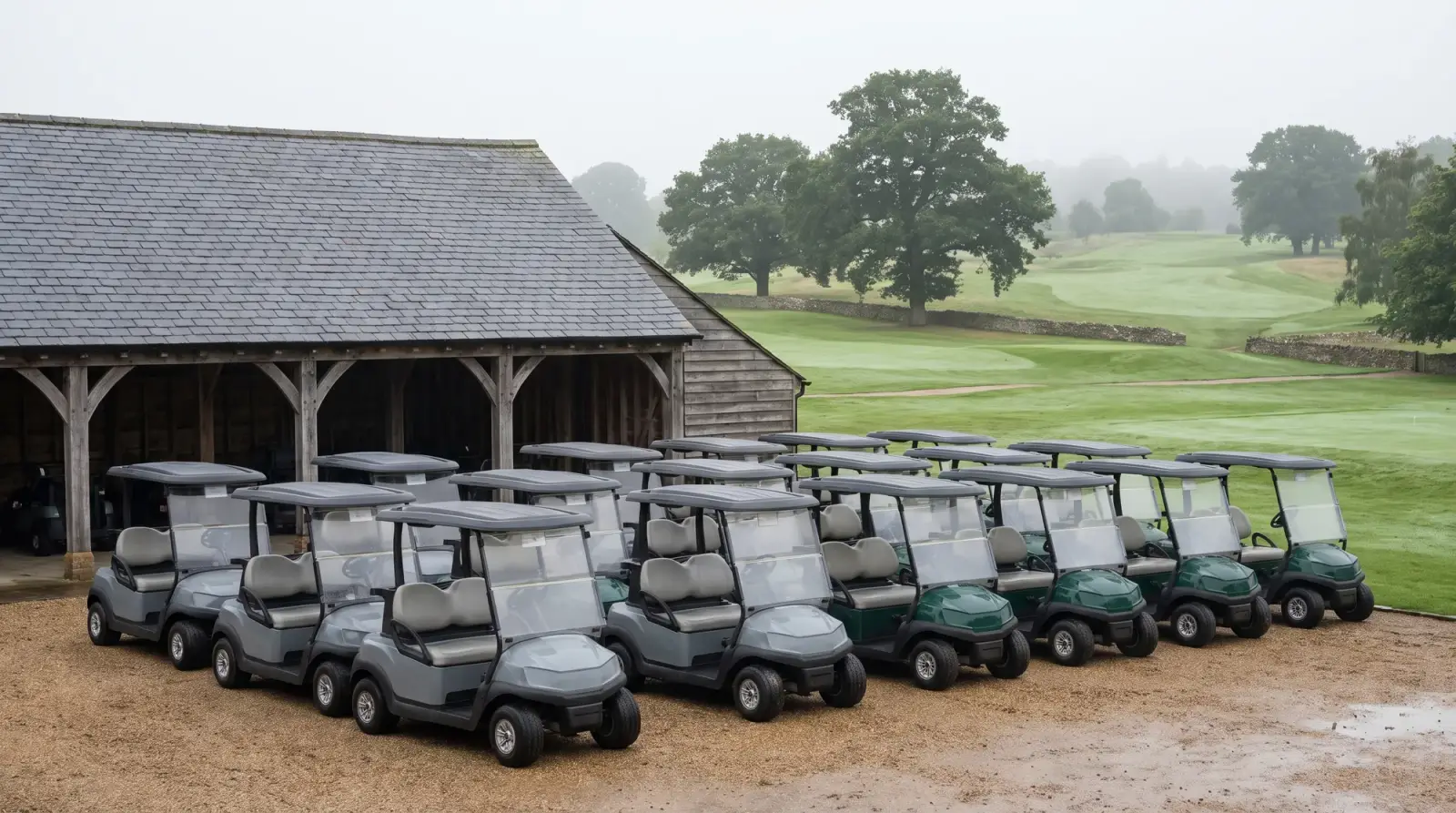
Ex-club and fleet disposals are the most honest corner of the used market: the machines are real, their history is knowable, and clubs replace fleets on a cycle rather than because everything is broken. The catch is that fleet buggies work hard, and the batteries in particular are often near the end of their life, so price a replacement pack into any offer, our ex-club buying guide covers the checks. Auctions move the same stock with less information and no comeback: you bid on photographs, pay fees on top of the hammer, and own whatever turns up. Marketplaces such as the classifieds sit somewhere between, with private sellers of variable knowledge and honesty; our used buying guide gives a full inspection checklist. All three routes can produce a bargain. All three can produce a machine that needs a four-figure battery within a season.
Importing one yourself
Direct import, usually from a large overseas marketplace, offers the lowest sticker prices of all, and the longest list of ways to lose the saving. Freight, import duty and VAT arrive on top of the price, specifications may not match UK expectations, and if anything fails there is no UK warranty, no parts counter and no engineer who knows the machine. Some buyers do it with eyes open and accept the risk; for most, the total cost after shipping and the first repair lands close to what an established route would have charged with support included.
What a good supplier actually provides
Whichever route you lean towards, use the dealer standard as your benchmark, because it is what you are giving up when you buy elsewhere. A good supplier provides a written multi-year warranty and honours it without argument; holds parts, batteries, chargers, controllers, tyres, rather than ordering them when you call; runs or arranges a service network so the machine is maintained where it lives; and gives straight answers on specification before you buy rather than after. They will also take your use seriously: a buggy for a hilly course, a wet estate or a busy venue is a different specification from a flat-course runabout. If a seller can offer none of that, the price needs to be low enough to fund it all yourself. You can see how a supported route looks in practice on our buggies for sale page.
Frequently asked questions
Where is the cheapest place to buy a golf buggy in the UK?+
Auctions and direct imports have the lowest headline prices, but both are sold-as-seen with no UK warranty, so budget for batteries, repairs and parts on top. Once those are counted, the gap to a supported route is usually much smaller than the sticker suggests.
Are ex-golf-club buggies worth buying?+
Often, yes. The history is knowable and clubs sell on a replacement cycle. The machines have worked hard, though, and batteries are the common weak point, so inspect carefully and price a replacement pack into your offer.
Should I buy a golf buggy online without seeing it?+
It is the highest-risk way to buy. Photographs hide tired batteries, worn controllers and accident damage. If distance buying is unavoidable, favour sellers who allow inspection, ask for evidence of battery age, and treat any refusal as an answer.
What should a golf buggy supplier provide?+
A written warranty measured in years, parts held in stock, a servicing arrangement, honest specification advice for your ground and use, and support after delivery. Those are the things that separate a supplier from a seller.
How much does a new golf buggy cost in the UK?+
New buggies are quote-based because specification drives the price. As a guide, our range starts from £11,500 for the two-seat S2, £14,900 for the four-seat S4 and £18,900 for the six-seat S6.
Buy it once, with support behind it
Tell us what the buggy is for and where it will work, and we will specify and price the right machine, with warranty, parts and servicing included rather than extra.
Related solutions
Ready to explore what we build?
See the vehicles and the setting this applies to, or get a tailored quote built around your site.
Ready to find the right buggy?
Tell us how and where it will work and we will specify a vehicle and a tailored quote built around you. Every build comes with a 3-year warranty and a 24-hour priority call-out.
Our guides are written and reviewed by the Hawke Electric Vehicles team, the people who specify, build, deliver and support the vehicles. We focus on honest, practical advice and flag where a figure depends on the build rather than guessing.
More guides by Hawke