A working studio lot is a small town, and most of the day is spent crossing it. Crew walk between stages, the prop store sits at the far end, talent needs collecting from the green room, and the kit always seems to be in the wrong place. A studio buggy turns those long walks into short, quiet runs. The reason to go electric on a lot isn't just running cost. It's the silence near a live stage, and the fact that one vehicle can work from the first call to the wrap without leaving fumes anywhere.
What does a studio buggy actually do all day?
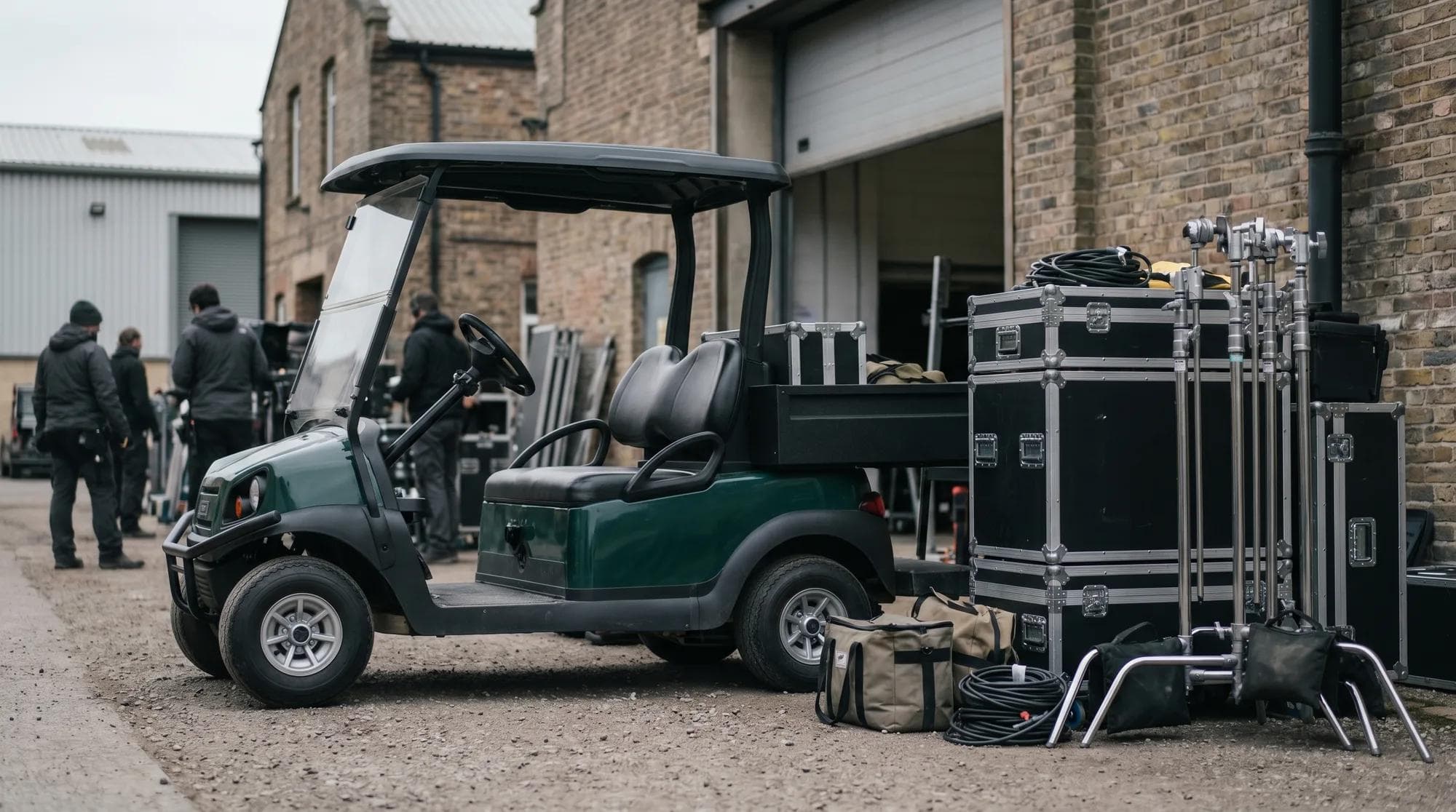
On a busy lot, very little of the work is glamorous and all of it is constant. The buggy ferries grips and sparks with their bags between stages. It shuttles a director and DOP from the production office to set. It carries flight cases of camera kit, lighting and sound gear that nobody wants to wheel across half a mile of tarmac. And it collects talent and visiting clients from the gate. The pattern is short, frequent trips across a large fixed site, often on a tight schedule, with the load changing every hour.

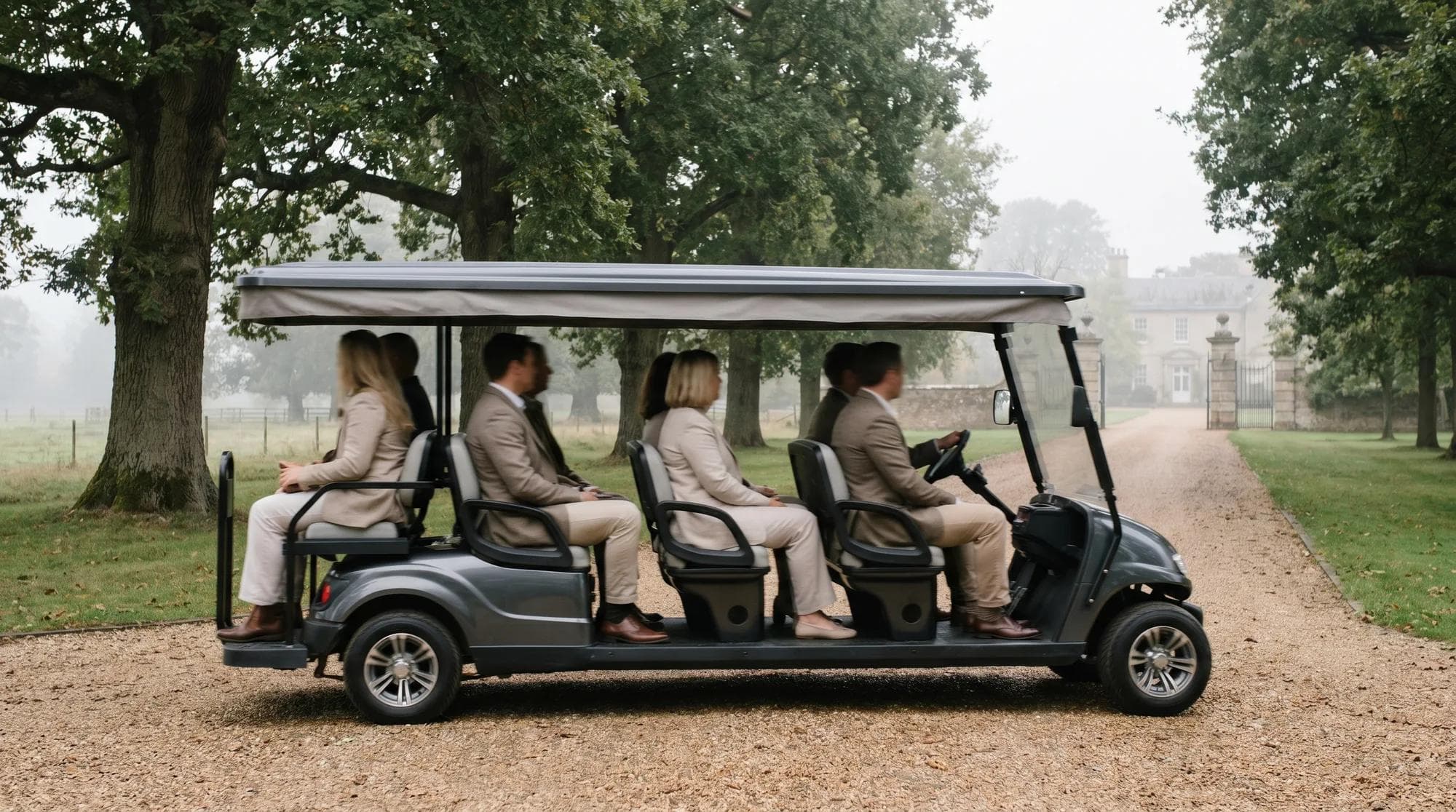
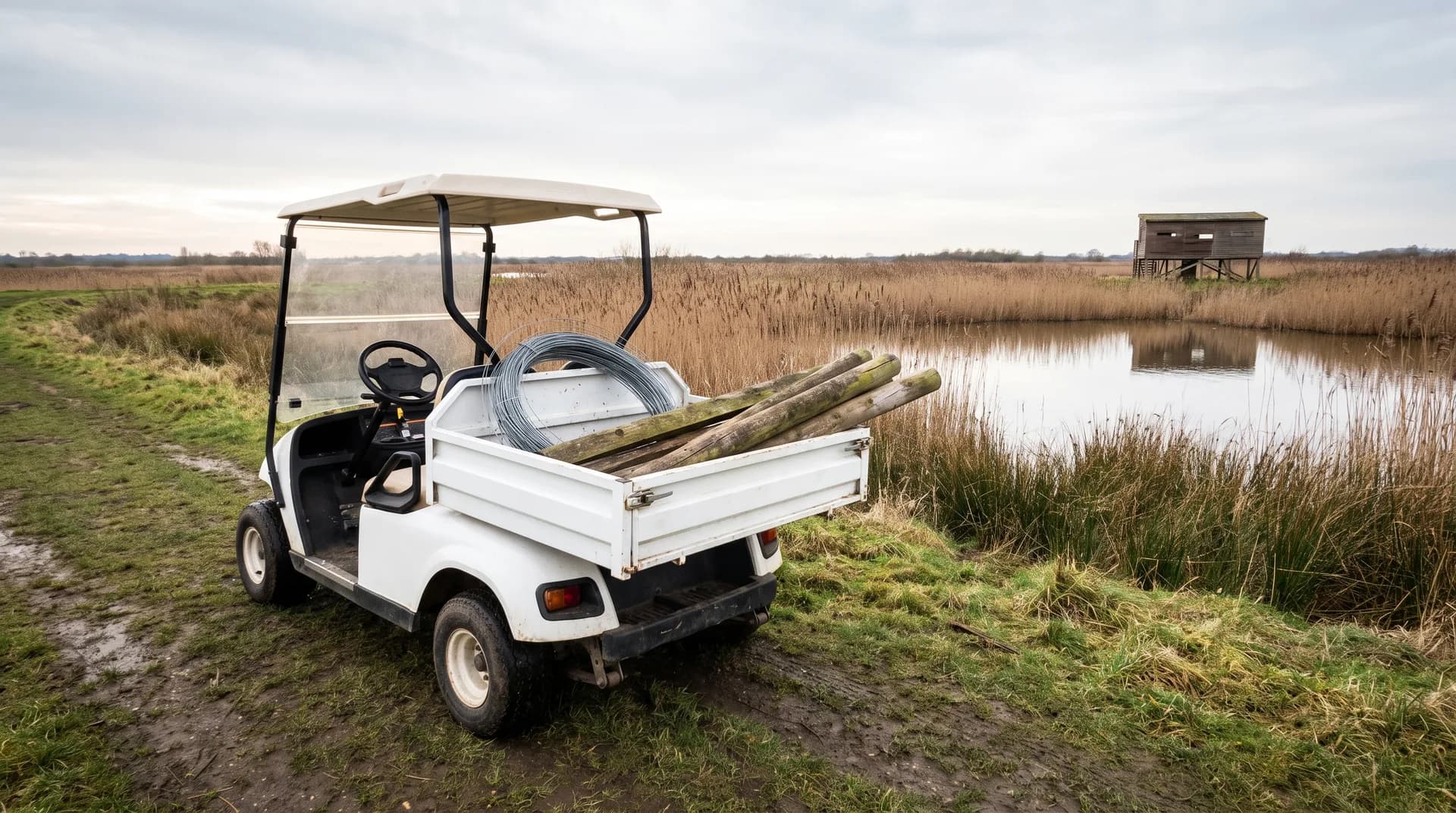
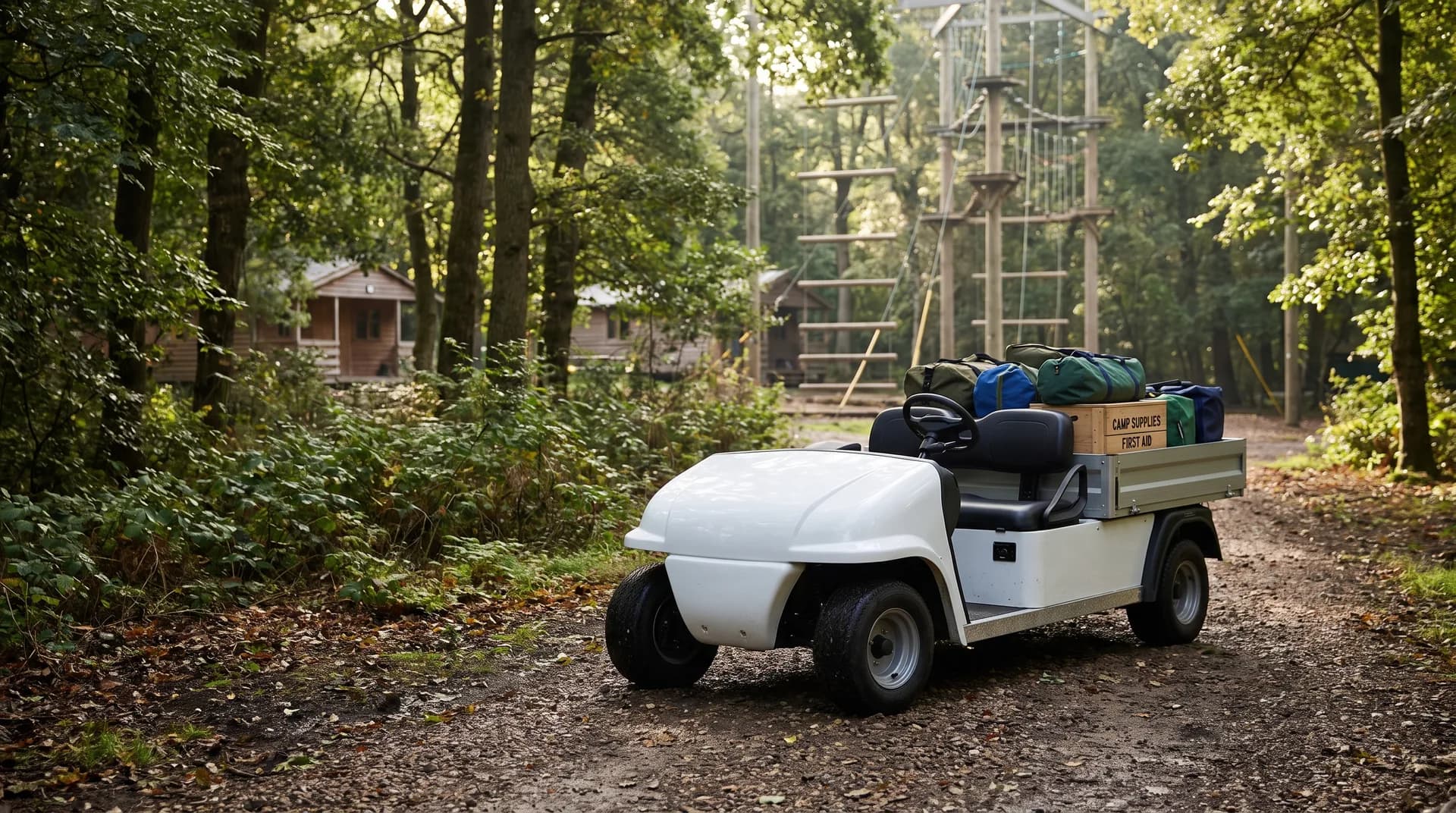
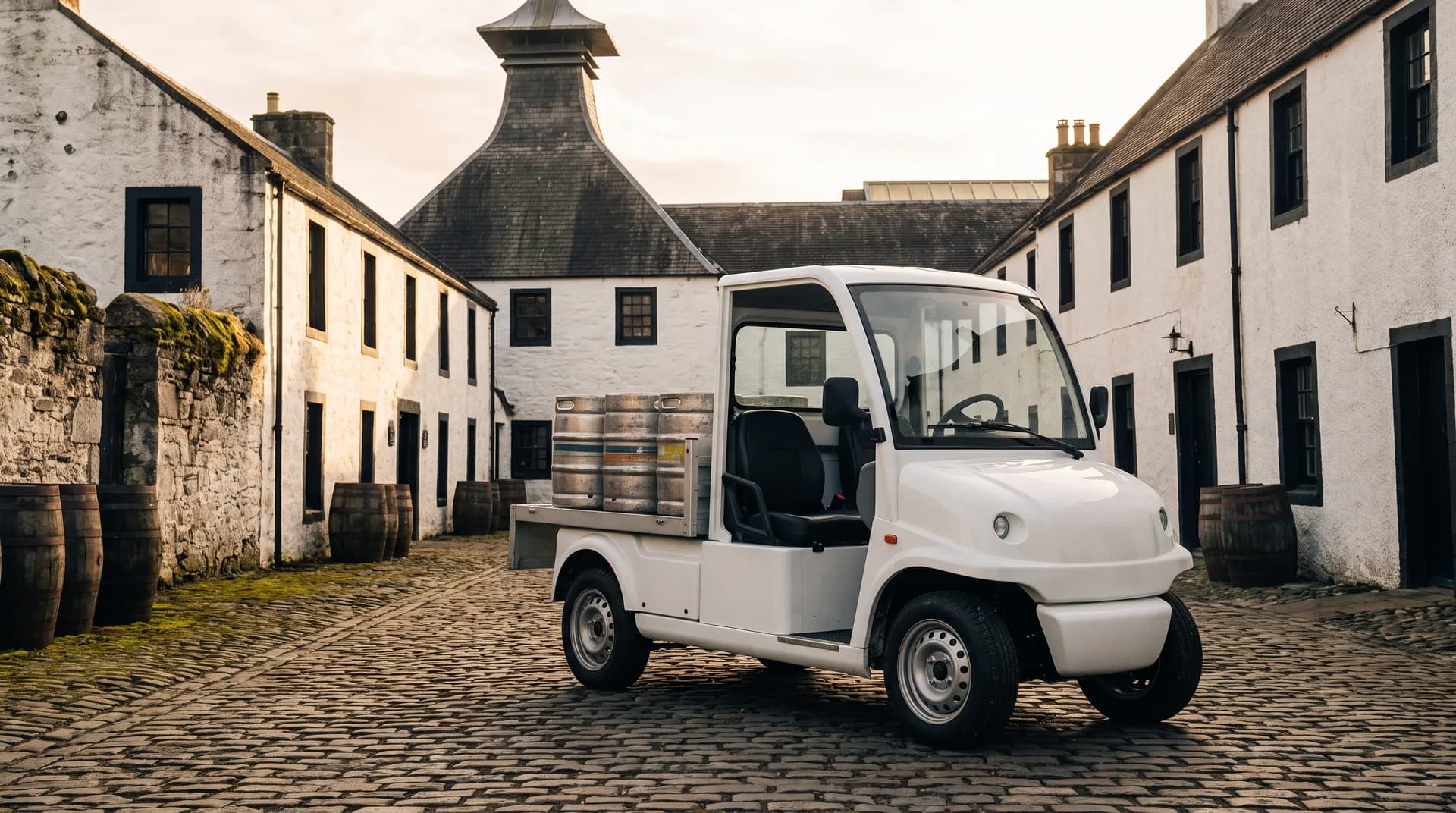
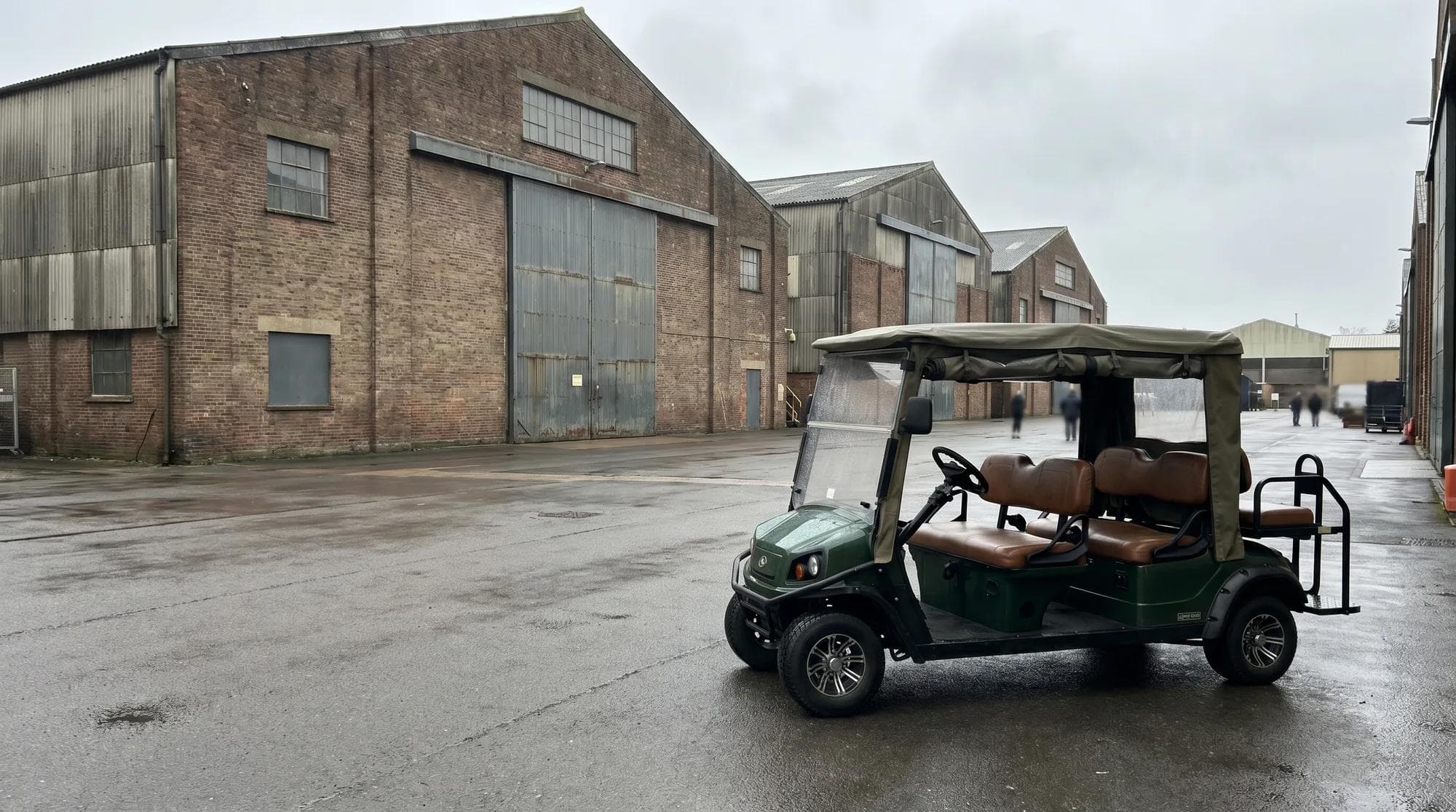
That mix is why one size rarely covers a whole operation. A four seater handles people. A utility model with a flat bed earns its keep moving cases and set dressing. Larger sites often run both, or a six or eight seater when the job is shuttling a full unit. For a broader look at moving groups around a site, our people movers and shuttles guide walks through how to match seats to the run.
Why does quiet operation matter on a lot?
Sound stages are built to keep noise out, but a lot of studio work happens outside them, on backlot streets, in yards, and right outside the stage doors. A petrol buggy idling near a live take is a problem. An electric one isn't. There's no engine note, no exhaust, and nothing to ruin a sound recordist's day if a vehicle rolls past while the red light is on. For a studio where a single noise hit can mean a reset, that near-silence is the whole point.
On a lot, the quietest vehicle is the one that never has to stop for the sound department.
There's a cleaner side to it too. No exhaust means a buggy can run right up to a stage door, or even inside a large workshop or warehouse space, without filling it with fumes. That flexibility is hard to match with petrol, and it's a big part of why studios move to electric for ground transport in the first place.
Will one buggy last a full shooting day?
This is the question that decides whether the fleet works or frustrates. Studio days are long, often twelve hours or more, and the buggy is moving for most of them. The honest answer is that all-day duty comes down to two things: the battery, and your charging routine. Lithium is the sensible choice for this kind of use. It holds up to constant short trips, charges faster, and crucially you can top it up in gaps without harming it, which a lead-acid pack doesn't love. Our lithium versus lead-acid guide sets out the trade-off in full.
If a single vehicle can't realistically cover your busiest days, the answer is usually a second buggy rather than a bigger battery. Two vehicles let you stagger charging, cover two ends of the lot at once, and keep working if one needs attention. We'll talk through real-world range for your site and conditions when you enquire, rather than quoting a flat-track figure that won't match a loaded buggy doing stop-start runs all day.
Should a studio hire or buy?
It depends on how often the lot is busy. A studio with steady, year-round activity will get more from owning a fleet specified for the site, branded, the right mix of people and cargo vehicles, and always on hand. A facility that works in bursts, or a production renting space for a single shoot, is often better off with short-term hire that covers the run and goes back when the build wraps. There's no shame in either; they solve different problems.
- Hire
- Single shoots, busy bursts, trying it out
- Buy
- Steady year-round use across the lot
- Hire
- Low, per project
- Buy
- Higher, but it's yours
- Hire
- Limited
- Buy
- Full custom fleet branding
- Hire
- Booked for the term
- Buy
- On hand every day
- Hire
- Adds up if used often
- Buy
- Lowest for regular use
| Hire | Buy | |
|---|---|---|
| Best for | Single shoots, busy bursts, trying it out | Steady year-round use across the lot |
| Up-front cost | Low, per project | Higher, but it's yours |
| Branding | Limited | Full custom fleet branding |
| Availability | Booked for the term | On hand every day |
| Long-run cost | Adds up if used often | Lowest for regular use |
Plenty of operations do both: own a core pair of buggies for daily site work, then hire extra for a big production that brings a larger unit on site. If you're weighing a single shoot rather than the lot itself, our guide to hiring electric buggies for events covers the short-term side, and the film and TV sector page shows how we work with productions.
How is a studio lot different from a location shoot?
A lot is a fixed, known site you control. That changes everything about ground transport. You can install charging where it suits you, you know the distances and the surfaces, and the same vehicles work the same routes day after day. A location shoot is the opposite: a new place each time, no infrastructure, and a fleet that has to arrive, work and leave. If your job is the moving production rather than the lot, our electric buggies for film and TV guide is the one to read. This page is about the lot itself.
Specifying a studio fleet
Start with the site and the work, not the spec sheet. How big is the lot, and how far is the longest regular run? How many people and how much kit move at once on a busy day? Where can a charge point go? Do you need a flat bed for cases and set dressing, seats for crew, or both? Answer those and the right mix more or less picks itself. You can see the full line-up on the range page, from the four seater Hawke S4 for crew to the Hawke S2 Pickup utility for kit, with six and eight seaters for shuttling a unit.
Build a studio fleet around your lot
Tell us your site, your busiest day and how you'll charge, and we'll specify the right mix of buggies and a tailored quote. Every build comes with a 3-year warranty and a 24-hour VIP call-out.
Frequently asked questions
What is the best electric buggy for a film studio?+
For a studio lot, most operations want a mix: a four seater for crew and talent, and a utility model with a flat bed for cases, camera kit and set dressing. Lithium batteries suit the long days. The right blend depends on your busiest day and the size of the lot, so specify around the site and the work it has to do.
Are electric buggies quiet enough to use near sound stages?+
Yes, and that's a big reason studios choose them. An electric buggy has no engine note and no exhaust, so it can run on backlot streets and right up to stage doors without risking a sound take. A petrol vehicle idling near a live recording is the problem electric ground transport is built to solve.
Will a buggy last a full shooting day?+
With a lithium battery and a sensible charging routine, yes. Studio days are long, so the trick is opportunity charging: top up in the natural breaks between setups rather than relying on one overnight charge. If your busiest days are too much for one vehicle, a second buggy is usually a better answer than a larger battery.
Should we hire or buy buggies for our studio?+
Buy if the lot is busy year-round and you want a branded fleet on hand every day; it gives the lowest long-run cost and a build specified for your site. Hire if you work in bursts or need vehicles for a single production. Many studios own a core fleet and hire extra for big shoots.
Can studio buggies carry heavy camera and lighting kit?+
A utility model with a flat bed is built for exactly that: flight cases, lighting, sound gear and set dressing. Be honest about your heaviest regular load when you specify, so the buggy is sized for the busiest day rather than the average one. We'll match the payload to the work when you enquire.
Ready to find the right buggy?
Tell us how and where it will work and we will specify a vehicle and a tailored quote built around you. Every build comes with a 3-year warranty and a 24-hour priority call-out.
Our guides are written and reviewed by the Hawke Electric Vehicles team, the people who specify, build, deliver and support the vehicles. We focus on honest, practical advice and flag where a figure depends on the build rather than guessing.
More guides by Hawke