On a production, distance eats the day. Unit base sits one place, the set sits another, and between them is a long walk that a runner makes forty times before lunch. A film set buggy closes that gap. It carries crew, kit and talent across a backlot, studio lot or location quietly and cleanly, and because it's electric, it does it without an engine note bleeding into the sound mix. This guide looks at the jobs a production buggy actually does, and at the choice between hiring and buying.
Why electric, not petrol, on a film set?
Two reasons, and the first is sound. The whole point of a vehicle on set is that it moves things between takes without becoming a problem during them. A petrol buggy idling near a live set is a real headache for the sound recordist, and a moving one is worse. An electric buggy is near silent, so it can creep right up to the edge of a shot, drop a piece of kit and slip away while the camera is still rolling on the other side of the lot.
The second reason is fumes. You don't want exhaust drifting through catering, past the talent in make-up, or into a tented set where the air doesn't move. Electric produces nothing at the tailpipe, so it works happily indoors, on a sound stage, or nose to tail with crew in a tight unit base. It's also quick to charge between setups and has very little to service, which on a schedule with no slack is worth more than it sounds.
What does a production buggy do on set?
More than you'd think. Once a unit has one, it rarely stops moving. The work falls into three broad jobs.
- Crew transport. Moving the camera, grip, lighting and sound teams between unit base, set and parking, plus the steady stream of runner journeys that otherwise burn the day.
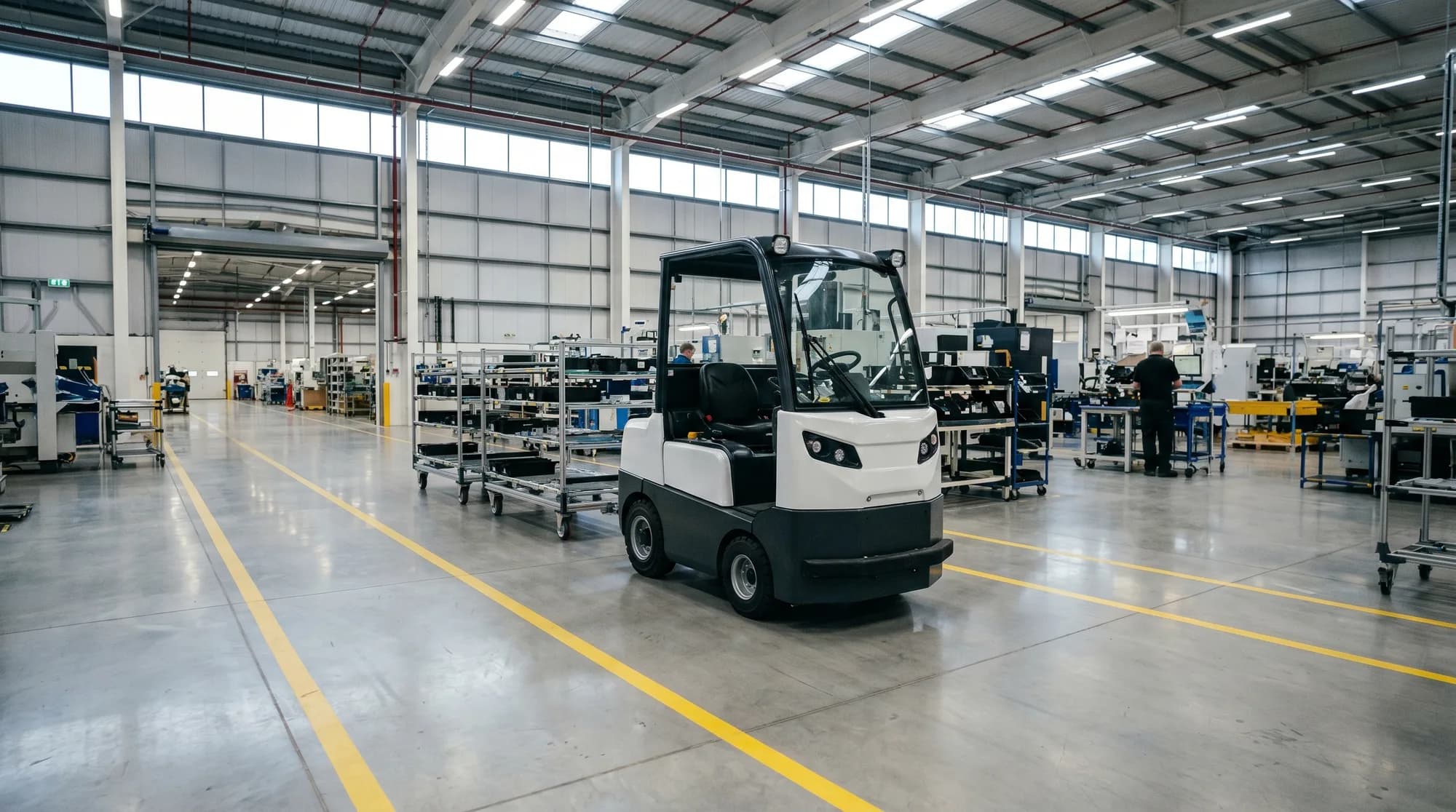
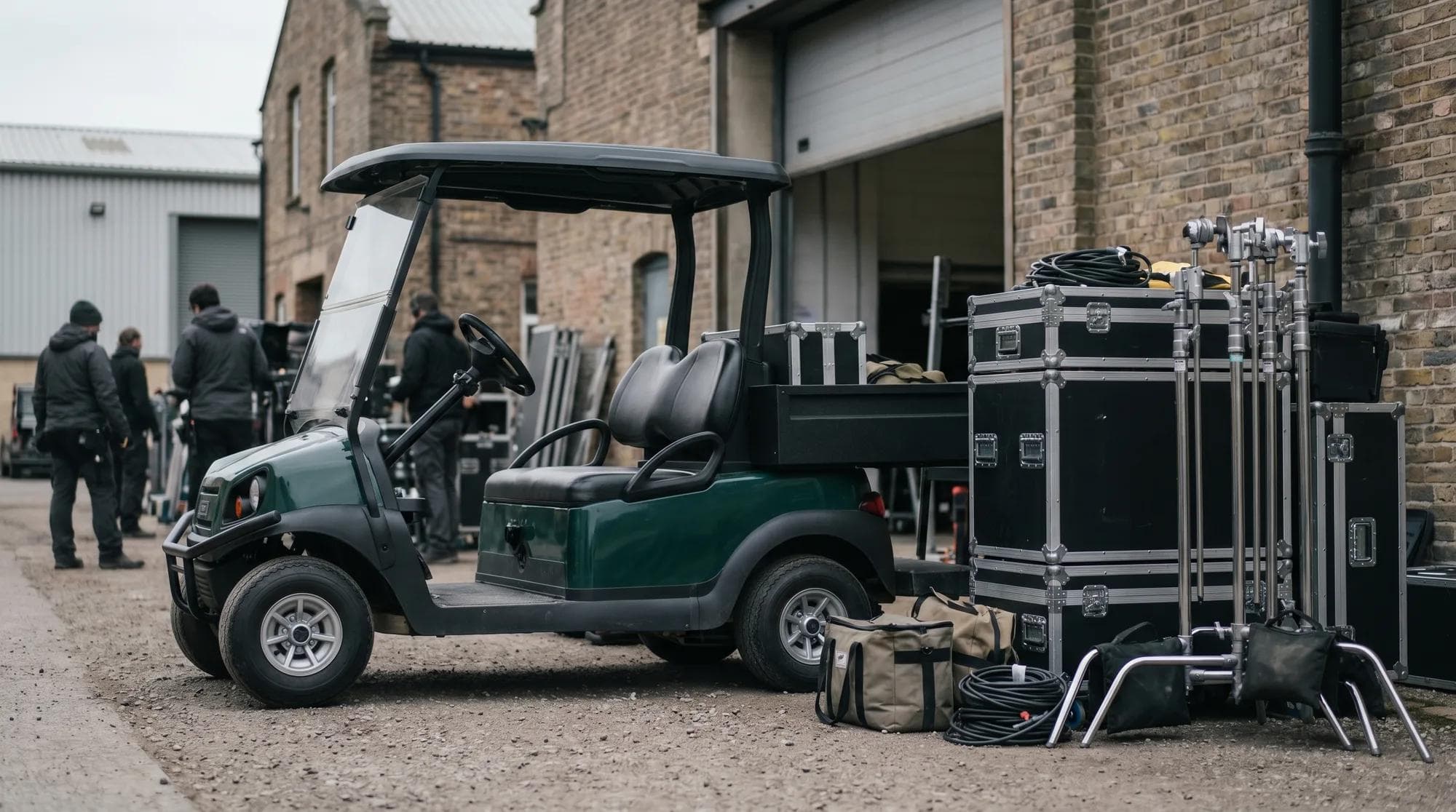
- Equipment and kit transport. Carrying flight cases, lighting stands, sandbags, monitors and the hundred other things that have to travel from the truck to the floor and back.
- Talent transport. Bringing actors from their trailers or make-up to set in comfort and out of the weather, on time and without a long walk in costume.
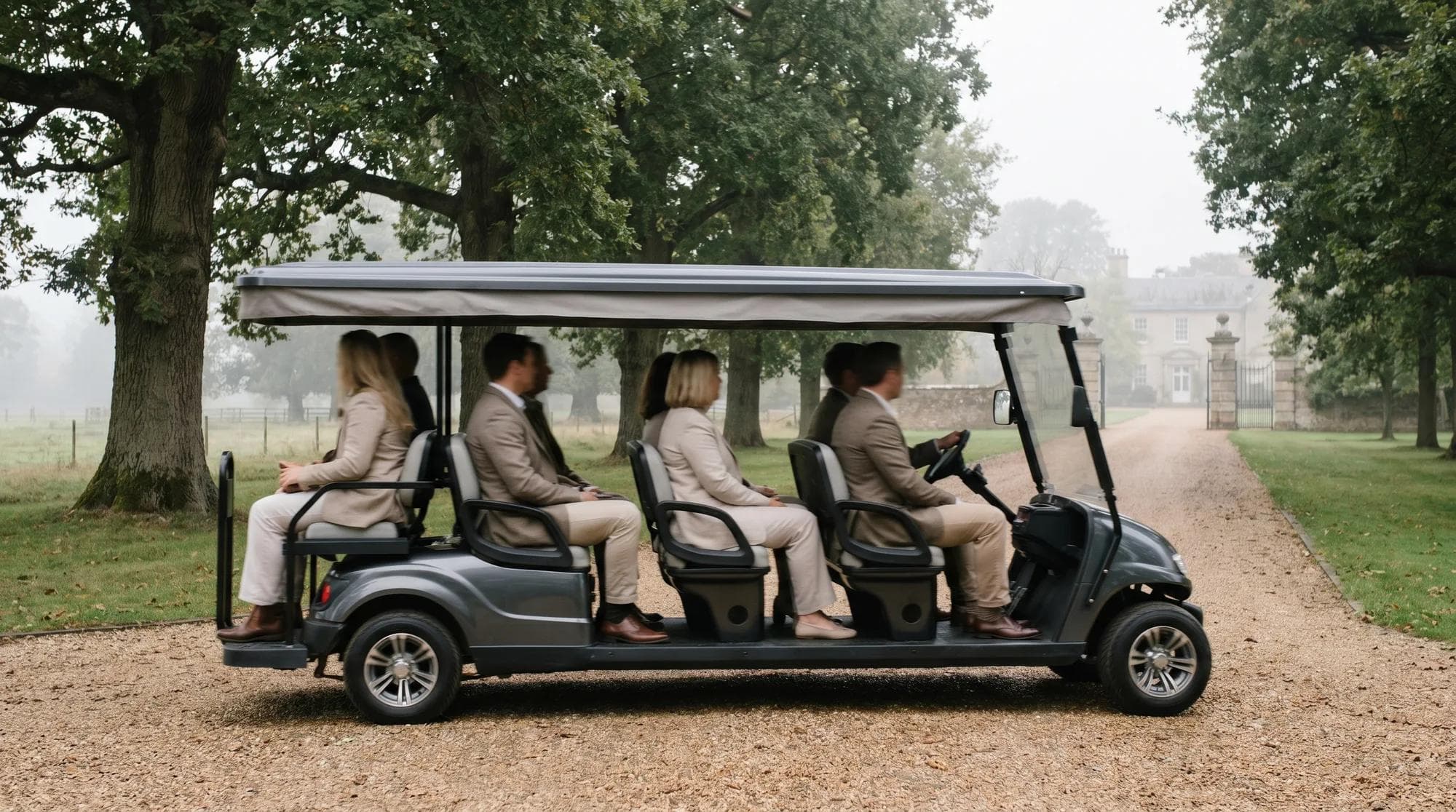
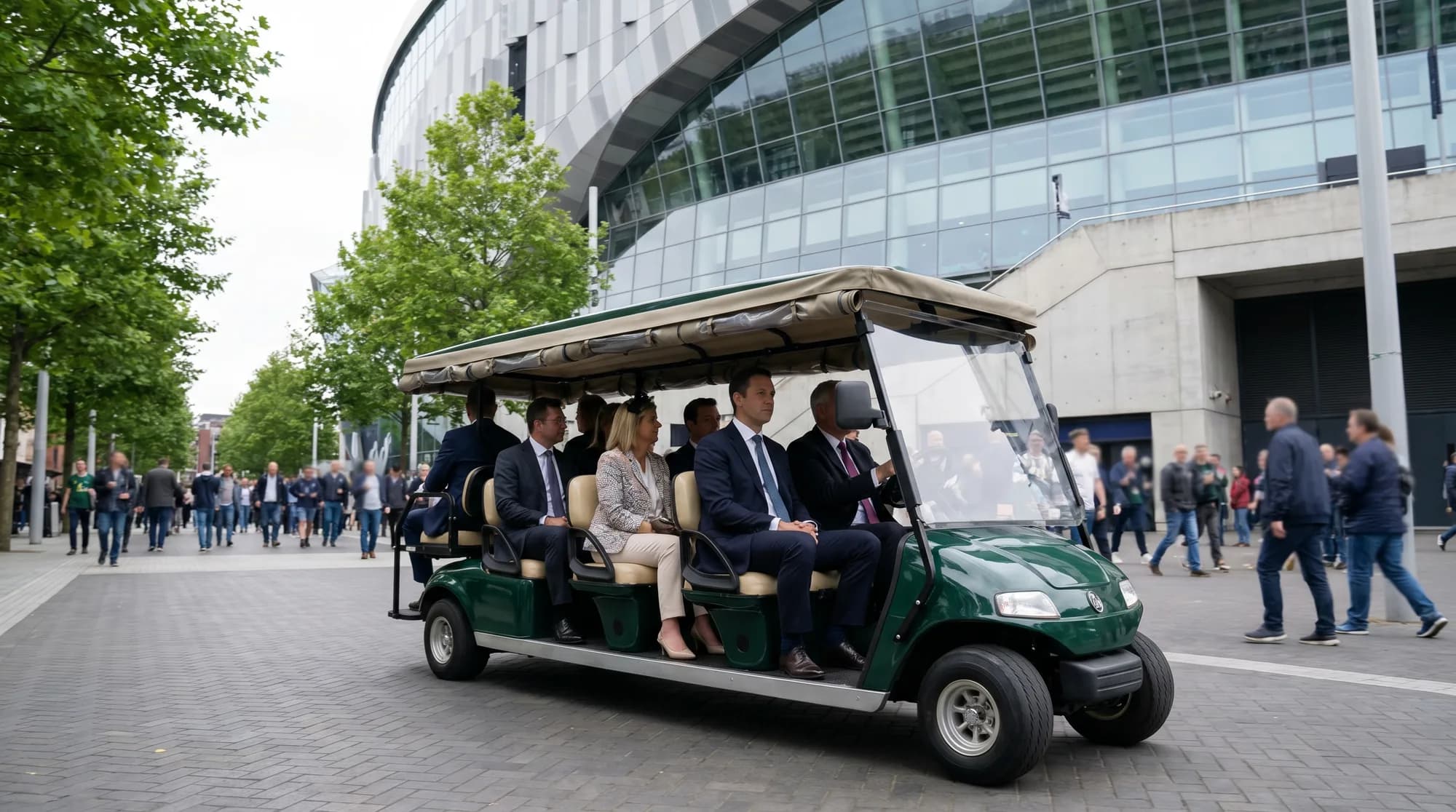
A utility model earns its keep on the kit runs, with a flat bed for cases and the payload to tow a trailer of stands across a location. A passenger model is better for crew and talent, with proper seats, a roof and a screen. Plenty of productions run both, or a people mover shuttle for moving the whole camera team in one trip.

Talent transport: comfort and discretion
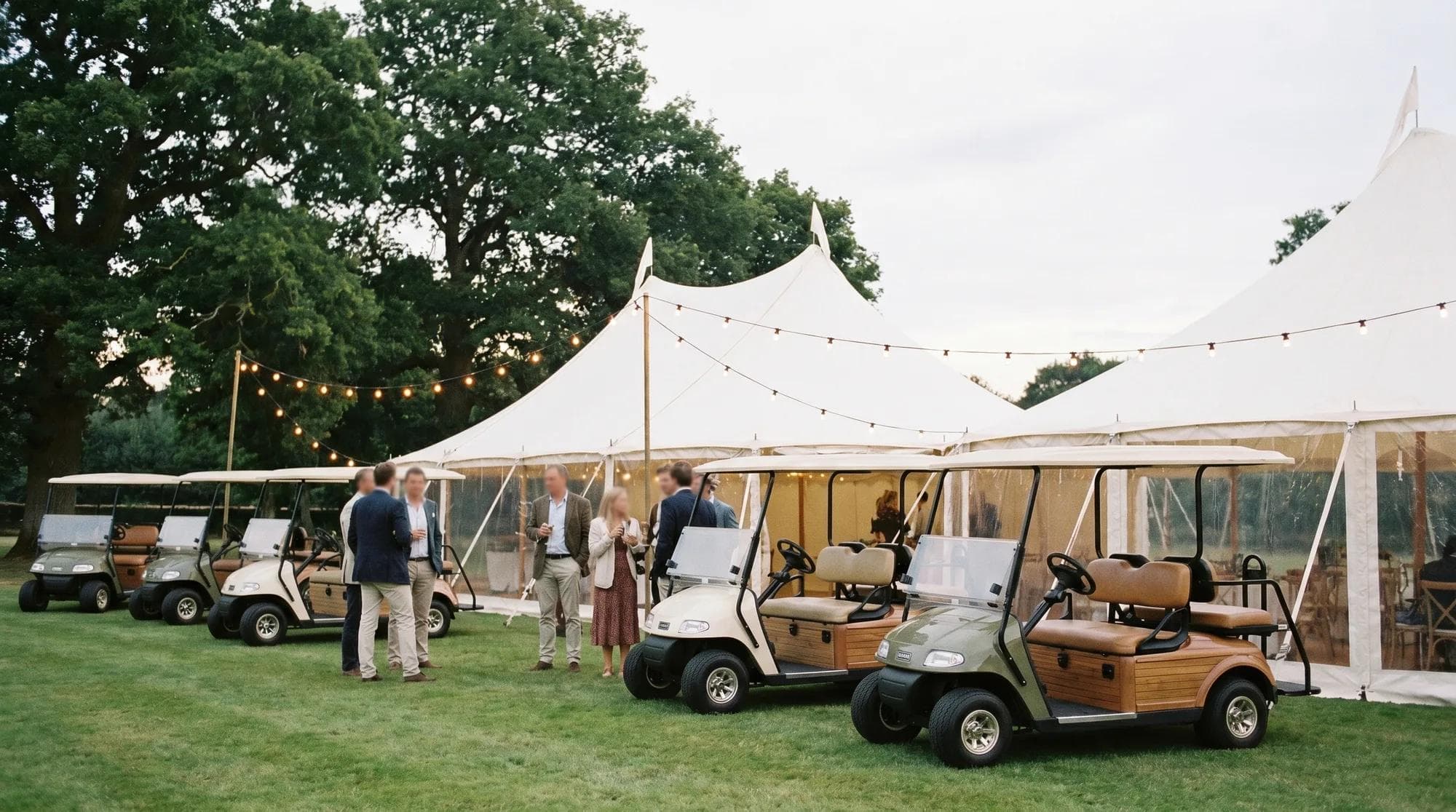
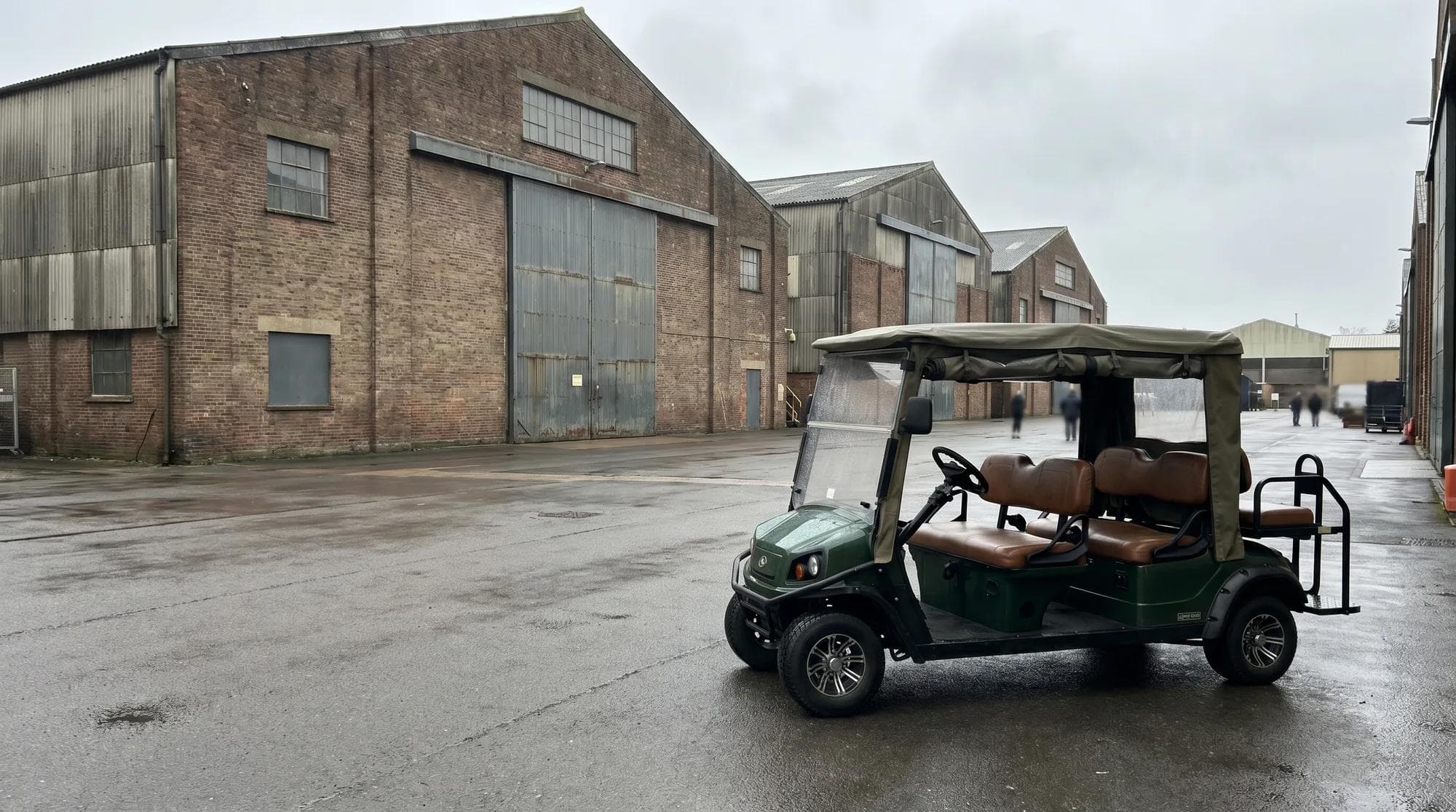
Moving talent is its own job. An actor in full costume and make-up doesn't want a muddy walk across a location, and a make-up artist doesn't want their work undone by the weather before the first take. A weather-protected passenger buggy with a roof and side screens solves that. It's discreet, it's dry, and it gets people to the floor calm rather than flustered. On larger productions, a matched, branded fleet also looks the part, and we offer custom fleet branding on every build so the buggies can carry the studio's livery.
On set, a buggy that creeps to the edge of a shot, drops its kit and slips away while the camera rolls is worth its weight in schedule.
Which size buggy for a production?
It depends on the job. Kit runs want payload, crew and talent runs want seats. Here's how the range lines up for production work.
- Best for
- Quick runner journeys and a single passenger
- Best for
- Small crew runs and talent transport
- Best for
- Kit, flight cases, sandbags and towing
- Best for
- Moving a full team in one trip
- Best for
- Shuttle runs across a big lot or location
- Best for
- Camera platforms, custom racking, anything specified
| Best for | |
|---|---|
| Two seater (the Hawke S2) | Quick runner journeys and a single passenger |
| Four seater (the Hawke S4) | Small crew runs and talent transport |
| Utility (the Hawke S2 Pickup) | Kit, flight cases, sandbags and towing |
| Six seater (the Hawke S6) | Moving a full team in one trip |
| Eight seater (the Hawke S8) | Shuttle runs across a big lot or location |
| Bespoke | Camera platforms, custom racking, anything specified |
If a buggy will carry kit most days, the utility Hawke S2 Pickup is the workhorse. If it's mainly crew and talent, a four or six seater suits better. And if you have a particular need, a low camera tracking platform, custom racking for cases, a specific load deck, a bespoke build handles it. You can see the full line-up on our range page.
Hire or buy a film set buggy?
This is the real question for most productions, and it comes down to how often you shoot. A single feature or a one-off shoot rarely justifies owning a fleet. Hire it for the run of the production, use it hard, hand it back. A studio, a recurring series or a busy production company that's on a lot most weeks of the year is a different case: owning the fleet works out cheaper over time, and the vehicles are specified and branded exactly how you want them.
- Hire
- One-off shoots, single features, short runs
- Buy
- Studios, recurring series, busy production companies
- Hire
- Lower, per project
- Buy
- Higher, then yours
- Hire
- Generic or temporary
- Buy
- Full custom fleet livery
- Hire
- Subject to the diary
- Buy
- Always on the lot
- Hire
- Adds up with frequent use
- Buy
- Cheaper if used often
| Hire | Buy | |
|---|---|---|
| Best for | One-off shoots, single features, short runs | Studios, recurring series, busy production companies |
| Up-front cost | Lower, per project | Higher, then yours |
| Branding | Generic or temporary | Full custom fleet livery |
| Availability | Subject to the diary | Always on the lot |
| Over a year | Adds up with frequent use | Cheaper if used often |
Our honest take: if you're shooting most of the year, buy and brand a core fleet. If your production calendar is occasional or you need extra vehicles for a peak, hire. Many studios do both, owning a base fleet and topping up with hire for big builds. We offer both, so see buggy hire for short-term needs, or talk to us about a fleet to own.
Lithium or lead-acid for set work?
For a vehicle running long shoot days, this decides your reliability and running cost. Lead-acid is cheaper to buy but heavier, slower to charge and shorter-lived. Lithium costs more up front and gives you more range, faster top-ups and a service life of roughly eight to ten years. A production day is exactly where lithium wins, because you can splash in a partial charge over a quiet stretch and keep the buggy working through a twelve-hour call. Our lithium versus lead-acid guide lays out the trade-off.
How to buy or hire from us
Every vehicle is built to order, so it starts with a conversation rather than a checkout. Tell us the production, how the unit moves, what you carry and whether you want to hire or own, and we'll specify the right buggy or fleet, confirm a tailored price and arrange delivery, in the UK or on location worldwide. Every build comes with a 3-year warranty and a 24-hour VIP call-out, we offer custom fleet branding.
Specify a buggy for your production
Tell us how your unit moves and what you carry, and we'll specify the right film set buggy or fleet, to hire or to own, with a tailored quote built around you.
Frequently asked questions
What is a film set buggy used for?+
It moves crew, kit and talent around a studio lot, backlot or location. Typical jobs are carrying the camera, grip and lighting teams between unit base and set, transporting flight cases and equipment from the trucks, and bringing actors from their trailers to the floor in comfort and out of the weather.
Why use an electric buggy on a film set rather than petrol?+
Sound and fumes. An electric buggy is near silent, so it can move kit close to a live set without spoiling a take, and it produces nothing at the tailpipe, so it works indoors, near catering and around talent. It's also quick to charge between setups and has very little to service.
Should I hire or buy a buggy for a production?+
For a one-off shoot or a single feature, hiring for the run of the production usually makes sense. For a studio, a recurring series or a busy production company on a lot most weeks, owning a branded fleet works out cheaper over time. Many studios own a core fleet and hire extras for peaks.
Are production buggies road legal in the UK?+
As supplied they're built for private land such as a studio lot or closed location, not public roads. If any part of a route uses or crosses a public road, even briefly, that counts as road use and needs a vehicle built and registered to a much higher standard. Flag any road crossing before you commit.
Can production buggies be branded for a studio or production?+
Yes. We offer custom fleet branding on every build, so buggies can be wrapped in a studio's livery or a production's branding. A matched, branded fleet looks organised on the lot and reads well to visitors and financiers walking the unit.
Ready to find the right buggy?
Tell us how and where it will work and we will specify a vehicle and a tailored quote built around you. Every build comes with a 3-year warranty and a 24-hour priority call-out.
Our guides are written and reviewed by the Hawke Electric Vehicles team, the people who specify, build, deliver and support the vehicles. We focus on honest, practical advice and flag where a figure depends on the build rather than guessing.
More guides by Hawke