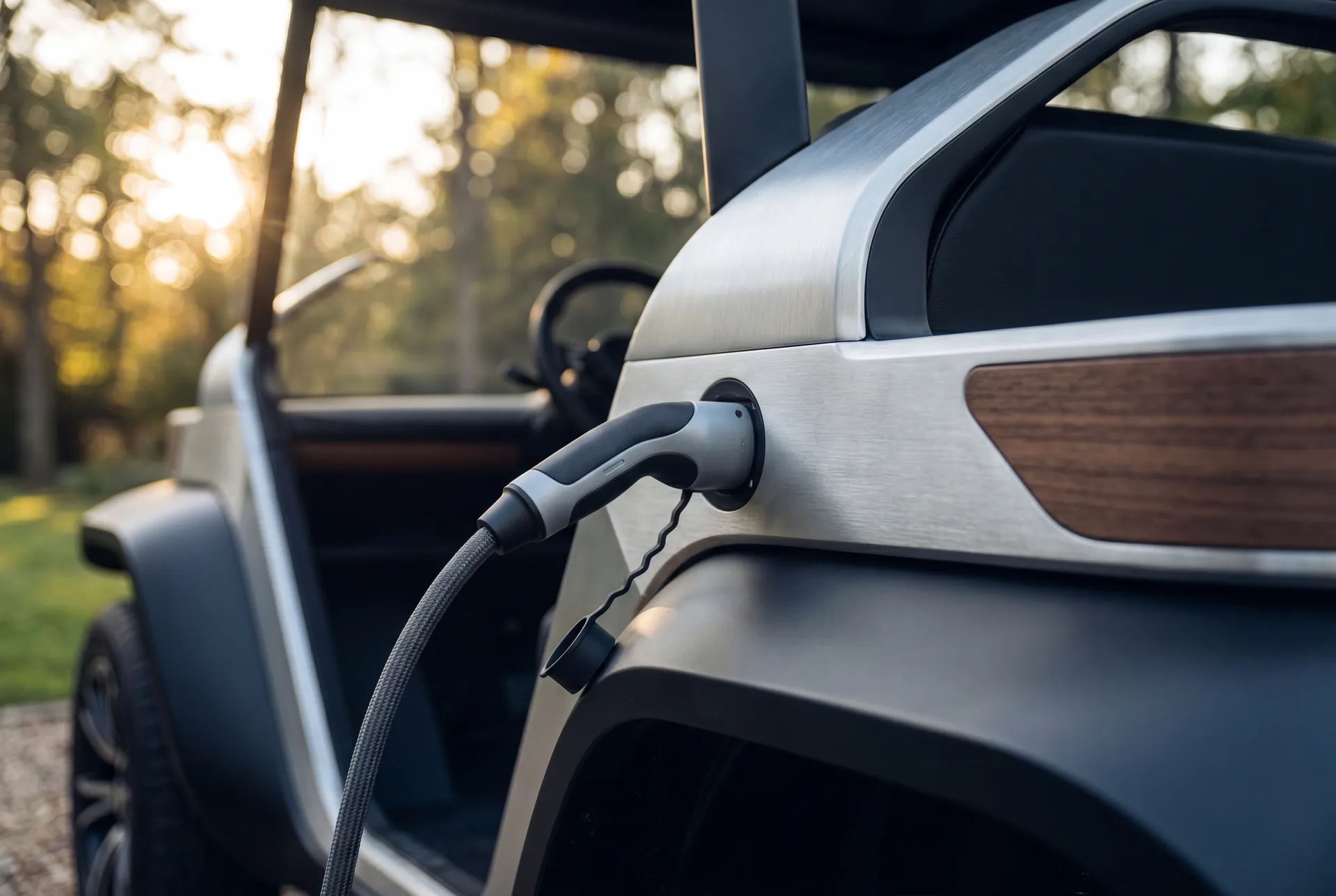
A tow tractor is a compact, powered vehicle designed to pull wheeled loads behind it rather than carry them on board. An operator hitches one or more trailers, trolleys or carts to a draw-bar at the rear, then drives the load to where it needs to be. Because the tractor tows instead of lifting or stacking, it moves large volumes of material across a site quickly, repeatedly and with very little effort from the driver.
- A tow tractor pulls wheeled loads on a draw-bar; it does not lift or stack them like a forklift.
- Tow tractor, tug and tugger all describe the same class of vehicle; a burden carrier is the load-carrying cousin.
- They are rated by draw-bar pull and gross towed load, not by a lifting payload.
- One tractor can haul a train of several trolleys, replacing many separate forklift or hand trips.
- Electric tugs suit indoor and mixed-use sites: no fumes, low noise, strong low-speed torque and low running cost.
- Size the tractor to your heaviest fully loaded train, your gradients and your floor surface, then add headroom.
What a tow tractor actually does
The core job is horizontal movement. A tow tractor takes loads that already sit on wheels, such as trailers, roll cages, dollies or purpose-built trolleys, and pulls them from one point to another. The classic use is a tugger train: several trolleys coupled in a line behind a single tractor, so one driver delivers parts to multiple stations in a single loop.
This is a different task from a forklift, which lifts a load off the ground, carries it a short distance and places or stacks it. A tow tractor rarely lifts anything. Instead it excels at distance, repetition and volume: the further and more often goods need to travel across a site, the more a tug earns its keep.
Tow tractor vs tug vs burden carrier vs forklift
The terminology overlaps, and different industries favour different words for near-identical machines. It helps to separate the pulling vehicles from the carrying vehicles, and both of those from lifting equipment.
- What it does
- Pulls trailers or trolley trains behind it on a draw-bar. Same vehicle, different names.
- What it does
- Carries a load on its own deck or bed, and can often tow as well. A load platform rather than a puller.
- What it does
- Lifts, carries short distances and stacks loads on forks. Vertical handling, not distance haulage.
- What it does
- Moves people around a site rather than goods, though many share the same platform.
| What it does | |
|---|---|
| Tow tractor / tug / tugger | Pulls trailers or trolley trains behind it on a draw-bar. Same vehicle, different names. |
| Burden carrier | Carries a load on its own deck or bed, and can often tow as well. A load platform rather than a puller. |
| Forklift | Lifts, carries short distances and stacks loads on forks. Vertical handling, not distance haulage. |
| Personnel carrier | Moves people around a site rather than goods, though many share the same platform. |
How tow tractors are rated
This is where buyers most often go wrong. A forklift is rated by payload, the weight it can lift. A tow tractor is not, because it does not carry the load. Two figures matter instead.
- Draw-bar pull: the pulling force the tractor can exert at the hitch, usually expressed as a force. It tells you whether the tractor can start and keep a loaded train moving, especially on a slope or a poor surface.
- Gross towed load: the total weight of everything behind the draw-bar, including the trailers or trolleys themselves plus their contents. This is the number your train must stay under.
- Gradeability: the incline the tractor can pull a rated load up. Ramps, loading docks and yard slopes quickly expose an undersized machine.
Electric tugs vs diesel and LPG
Traditionally many tugs ran on diesel or LPG. For a growing number of sites, an electric tow tractor is now the more practical choice, and indoors it is often the only sensible one.
- Electric
- No exhaust fumes, so it is suited to warehouses, factories and other enclosed spaces.
- Diesel / LPG
- Emits fumes; needs ventilation and can be restricted indoors.
- Electric
- Delivers full torque from a standstill, which helps start a heavy train smoothly.
- Diesel / LPG
- Torque builds with engine speed, so pull-away can be less immediate.
- Electric
- Quiet, which matters in shared and public spaces.
- Diesel / LPG
- Louder, adding to site noise.
- Electric
- Lower energy cost per hour and fewer moving parts to service.
- Diesel / LPG
- Higher fuel cost and more routine engine maintenance.
- Electric
- Recharges on shift breaks or overnight; lithium options top up opportunistically.
- Diesel / LPG
- Refuels quickly but depends on fuel deliveries and storage.
| Electric | Diesel / LPG | |
|---|---|---|
| Indoor use | No exhaust fumes, so it is suited to warehouses, factories and other enclosed spaces. | Emits fumes; needs ventilation and can be restricted indoors. |
| Torque | Delivers full torque from a standstill, which helps start a heavy train smoothly. | Torque builds with engine speed, so pull-away can be less immediate. |
| Noise | Quiet, which matters in shared and public spaces. | Louder, adding to site noise. |
| Running cost | Lower energy cost per hour and fewer moving parts to service. | Higher fuel cost and more routine engine maintenance. |
| Refuelling | Recharges on shift breaks or overnight; lithium options top up opportunistically. | Refuels quickly but depends on fuel deliveries and storage. |
The trade-off to plan for is charging. An electric tug needs a charging routine that fits the shift pattern, and battery choice matters: lithium tolerates frequent partial top-ups and suits intensive multi-shift work, while lead-acid remains a cost-effective option for lighter single-shift duty. Hawke offers both, so the tractor can be matched to how hard the site actually runs it.
Where tow tractors earn their keep
Tow tractors pay back fastest wherever the same goods travel the same routes many times a day. Typical settings include:
- Warehousing and distribution: replenishing pick faces and running goods between receiving, storage and dispatch as trolley trains.
- Manufacturing and assembly: line-side delivery of parts and kits to workstations on a timed milk-run, feeding just-in-time production.
- Airports, hospitals and large venues: baggage dollies, catering carts, laundry and supply trains moving long distances across a campus.
- Waste and grounds rounds: collecting bins or materials on a circuit and towing them back to a central point.
- Retail and events: moving stock, staging and equipment behind the scenes without the fumes or bulk of a forklift.
The common thread is distance and repetition. If loads only need lifting and stacking in one spot, a forklift is the right tool. If they need moving across a site again and again, a tow tractor does it with far fewer trips and far less labour.
How to size a tow tractor
Sizing is a short, practical exercise. Work through it before you compare models, and you will avoid both an underpowered machine and paying for capacity you never use.
- 01
Total your heaviest train
Add the weight of every trailer or trolley plus its maximum load. That gross towed load is the figure the tractor must comfortably exceed.
- 02
Map the route
Note the longest run, the steepest gradient, any ramps or dock lips, and the floor surface. Slopes and rough or damp floors demand more draw-bar pull.
- 03
Set the duty cycle
Estimate hours per shift and number of shifts. Heavy multi-shift use points towards lithium batteries and a higher-rated tractor.
- 04
Add headroom
Choose a tractor whose rated draw-bar pull and gross towed load sit clearly above your worst-case train, so it is not working flat out every trip.
- 05
Match the hitch and controls
Confirm the coupling suits your trolleys, and consider operator features such as easy mounting, good visibility and simple, forgiving controls for all-day use.
Looking for an electric tow tractor?
Hawke builds premium electric tow tractors, configured and branded to your specification and backed by UK-wide servicing, parts and a 24-hour priority call-out. Tell us your loads, routes and shift pattern and we will size the right machine.
Need to carry as well as pull?
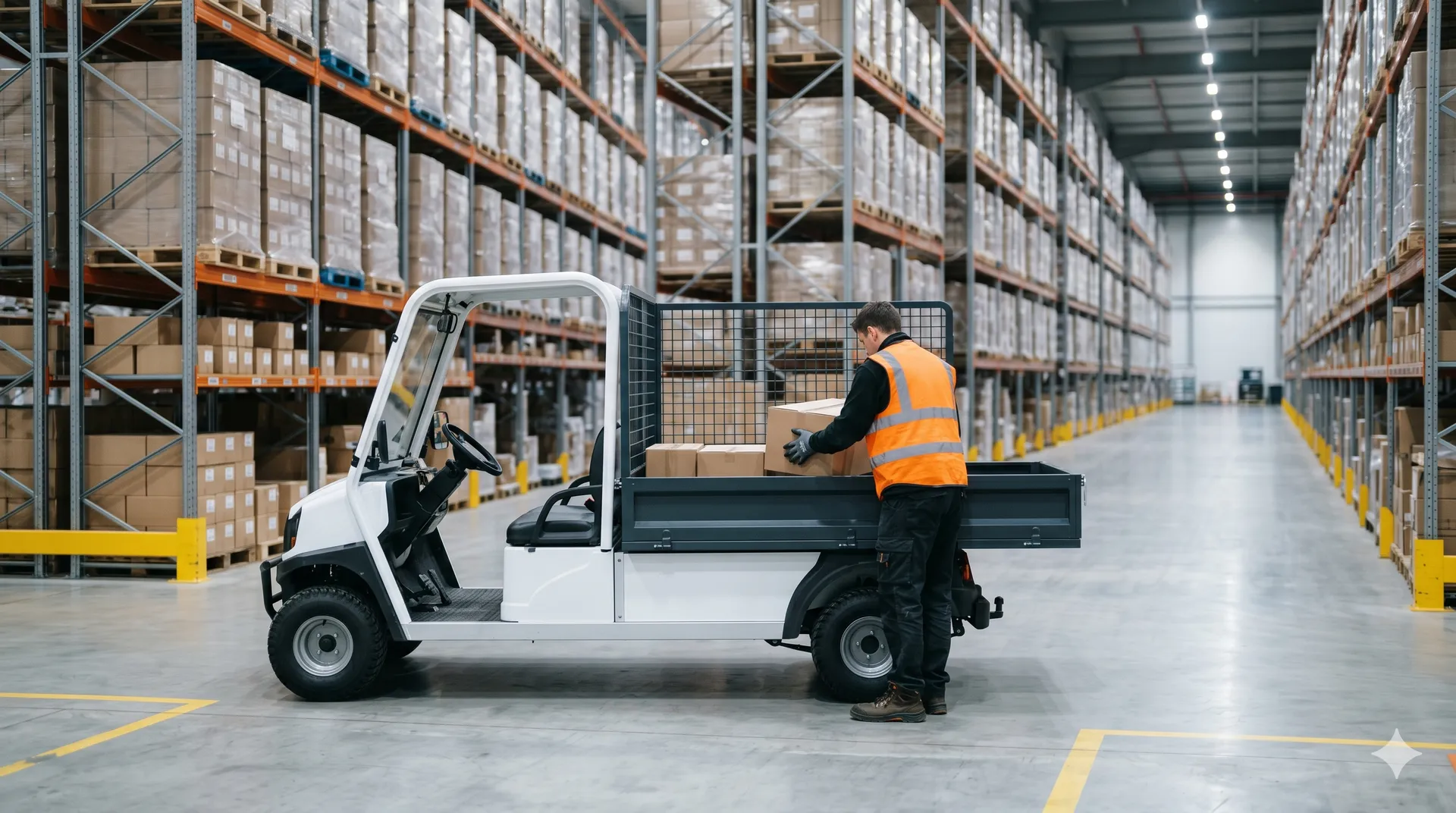
A burden carrier adds a load deck to the towing job, so the vehicle both carries and hauls. It is often the better fit where goods need to ride on board between stops.
Frequently asked questions
What is a tow tractor used for?+
It is used to pull wheeled loads across a site, most often as a trolley train delivering parts, stock or supplies along a fixed route. It replaces many separate trips with one driver hauling several trailers at once.
What is the difference between a tug and a tow tractor?+
There is no meaningful difference. Tug, tugger and tow tractor all describe the same class of vehicle whose primary job is to pull loads on a draw-bar. Industries simply favour different names.
Is a tow tractor the same as a forklift?+
No. A forklift lifts a load and stacks it over short distances, working vertically. A tow tractor pulls loads that are already on wheels across longer distances and does not lift anything.
How is a tow tractor rated?+
By draw-bar pull, the force it can exert at the hitch, and by gross towed load, the total weight it can safely pull. It is not rated by payload, because the load rides on the trailers rather than on the tractor.
Are electric tow tractors suitable for indoor use?+
Yes, and they are usually the preferred choice indoors. They emit no exhaust fumes, run quietly and deliver strong torque from a standstill, which makes them well suited to warehouses, factories and other enclosed spaces.
Related solutions
Ready to explore what we build?
See the vehicles and the setting this applies to, or get a tailored quote built around your site.
Ready to find the right buggy?
Tell us how and where it will work and we will specify a vehicle and a tailored quote built around you. Every build comes with a 3-year warranty and a 24-hour priority call-out.
Our guides are written and reviewed by the Hawke Electric Vehicles team, the people who specify, build, deliver and support the vehicles. We focus on honest, practical advice and flag where a figure depends on the build rather than guessing.
More guides by Hawke