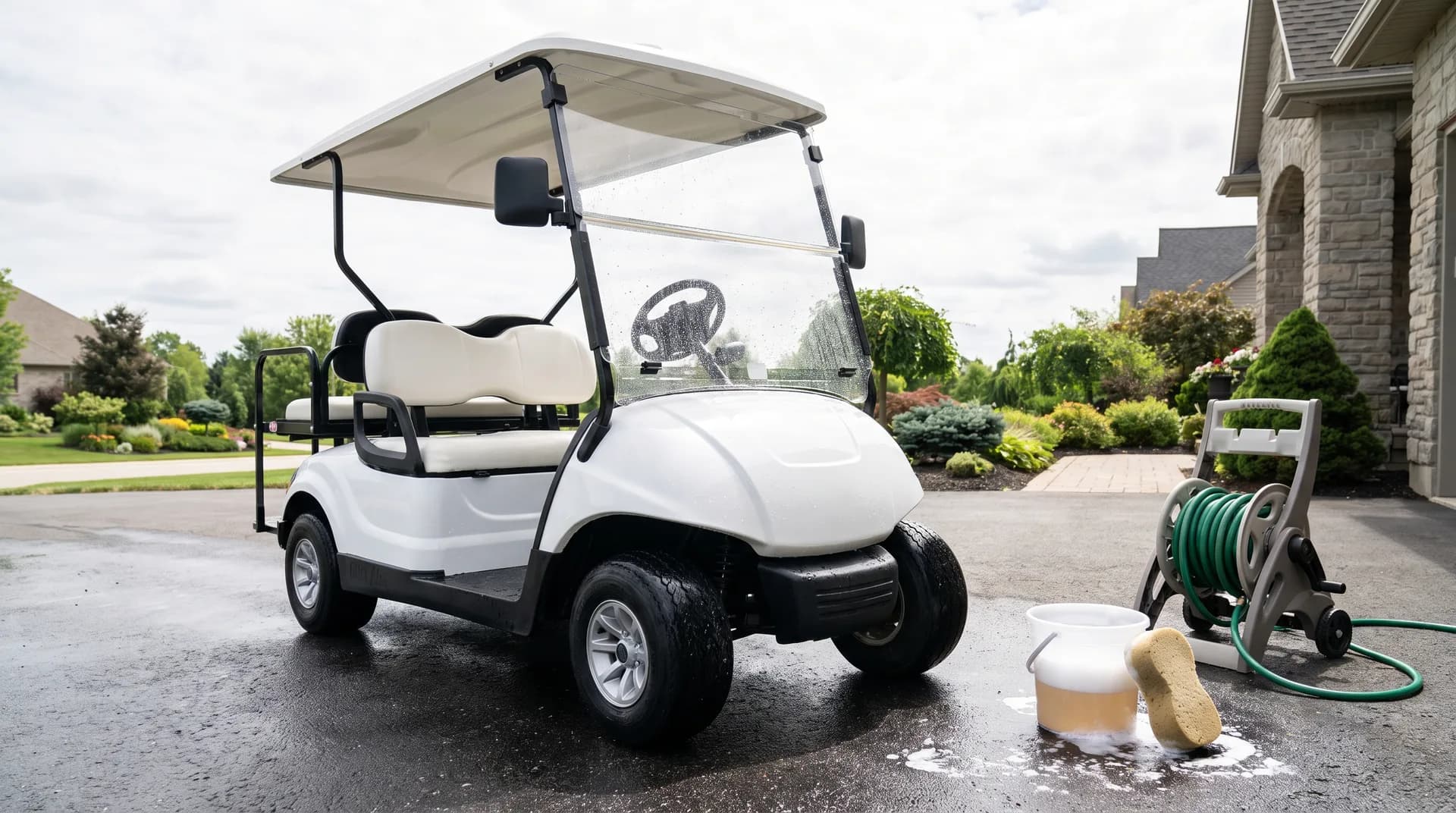
Keeping an electric buggy clean is not just about looks, though a well-kept buggy does read as part of a well-run operation. Clean bodywork and seats last longer, and keeping grime off the moving parts helps the vehicle work. The one thing to get right is care around the battery and electrics, which do not mix with a careless jet wash. This guide sets out how to clean an electric buggy safely and well.
- Use a bucket, mild soap and a soft brush or cloth for bodywork and seats.
- Keep high-pressure water away from the battery, motor, controller and connectors.
- Rinse gently, do not blast electrical areas or the charge port.
- Dry the seats and let the vehicle dry before charging or covering.
- Regular gentle cleaning beats an occasional heavy one.
Bodywork and seats
For the bodywork, a bucket of water with a mild car soap, a soft brush or sponge and a rinse does the job, just as it would on a car. Seats depend on the material: wipe vinyl with a mild cleaner, and treat any fabric or leather to its own suitable product. Avoid harsh solvents that can dull or crack finishes. A soft cloth and a little patience keep a buggy looking its best.
The important part: the electrics
This is where an electric buggy differs from washing a car. High-pressure water and electrics do not mix, so keep a jet wash well away from the battery compartment, the motor and controller, the wiring connectors and the charge port. A gentle hose or a bucket and cloth is safer than a pressure washer around these areas. If in doubt, keep water away from anything electrical and clean it with a damp cloth instead. Follow any guidance for your specific vehicle.
Underneath and the wheels
Mud and grass build up underneath and around the wheels, especially on grounds and estate use, and clearing it keeps the vehicle working and looking cared for. A gentle rinse and a brush clears most of it; again, keep strong jets away from any electrical or sealed components. Once clean, let the buggy dry before charging or putting a cover on, so moisture is not trapped against it.
Frequently asked questions
How do I clean an electric golf buggy?+
Use a bucket of water with mild car soap, a soft brush or sponge for the bodywork and seats, and rinse gently. The key difference from a car is keeping high-pressure water away from the battery, motor, controller, connectors and charge port.
Can I use a pressure washer?+
With great care, and never aimed at the battery, motor, controller, wiring connectors or charge port. A gentle hose or a bucket and cloth is safer around all electrical areas. If in doubt, keep water away from anything electrical.
How do I clean the seats?+
According to the material: wipe vinyl with a mild cleaner, and use a suitable product for fabric or leather. Avoid harsh solvents that can dull or crack the finish, and dry the seats afterwards.
Should I clean underneath?+
Yes, especially after grounds or estate use, to clear mud and grass from around the wheels and underbody. Keep strong jets away from electrical or sealed parts, and let the vehicle dry before charging or covering.
How often should I clean it?+
Regular light cleaning keeps a buggy looking its best and protects the finish and moving parts better than an occasional heavy wash. Clean it whenever it needs it, and always let it dry before charging.
Keep your buggy at its best
Ask us about care and servicing for your buggy or fleet, and we will set out how to keep it looking and working its best, and quote to your setting.
Related solutions
Ready to explore what we build?
See the vehicles and the setting this applies to, or get a tailored quote built around your site.

Ready to find the right buggy?
Tell us how and where it will work and we will specify a vehicle and a tailored quote built around you. Every build comes with a 3-year warranty and a 24-hour priority call-out.
Our guides are written and reviewed by the Hawke Electric Vehicles team, the people who specify, build, deliver and support the vehicles. We focus on honest, practical advice and flag where a figure depends on the build rather than guessing.
More guides by Hawke