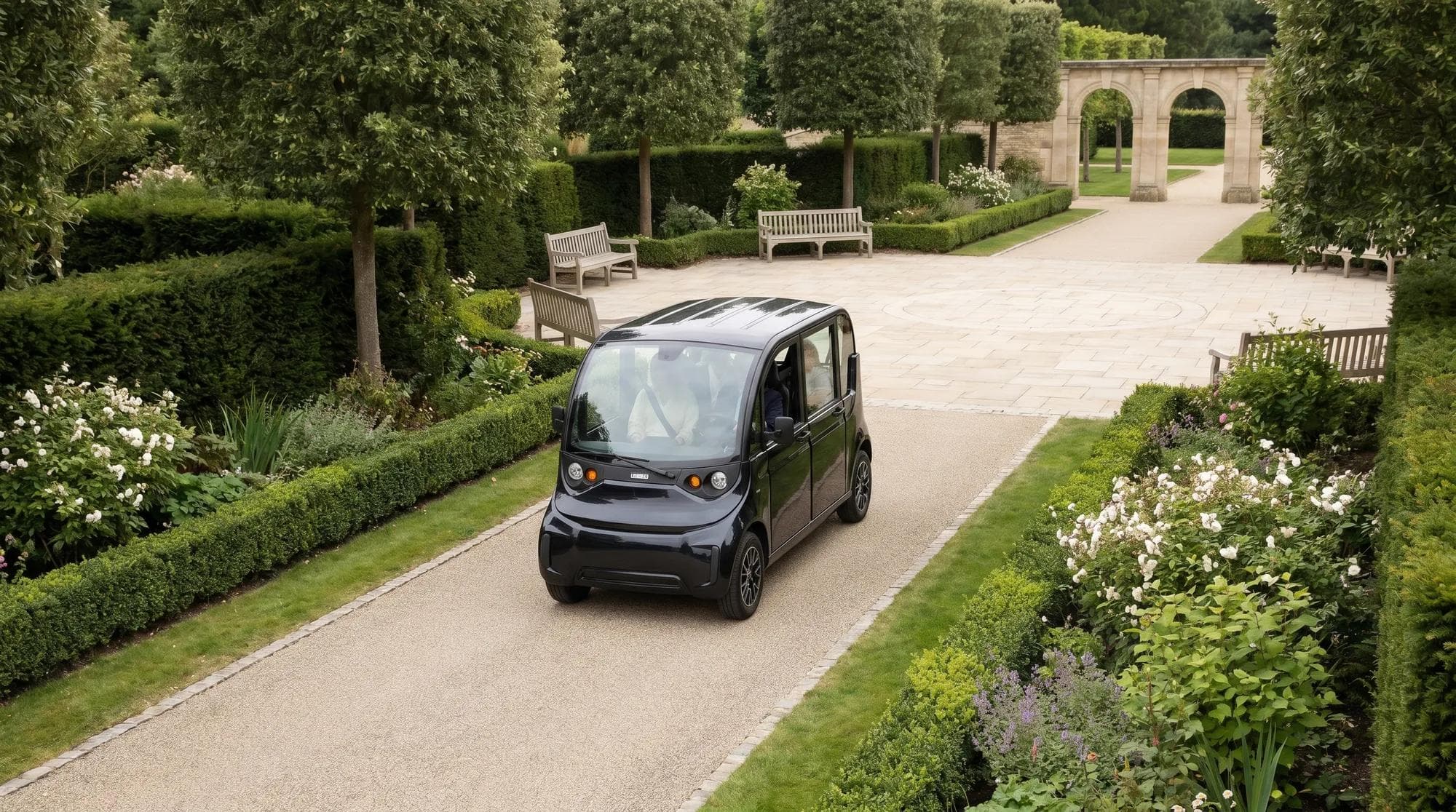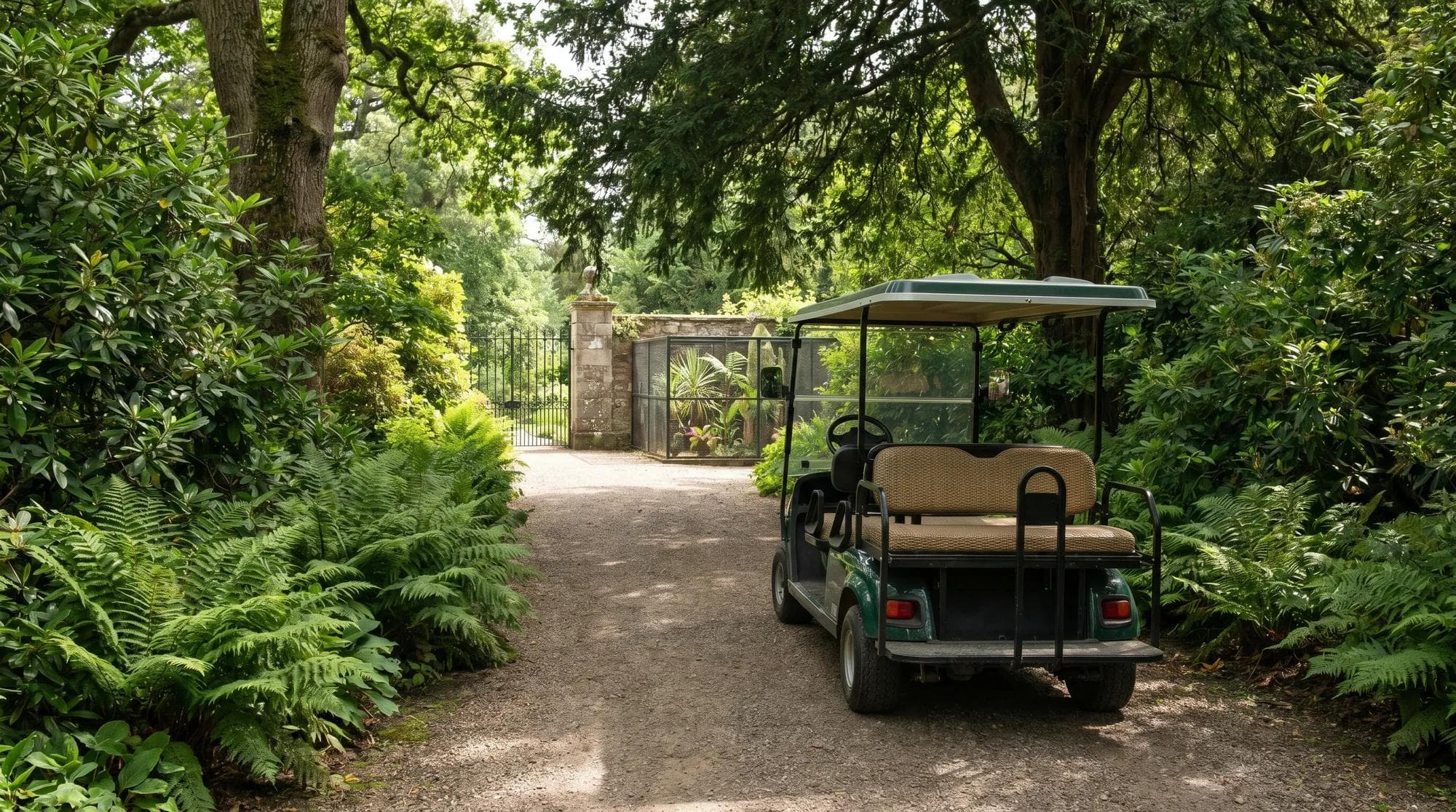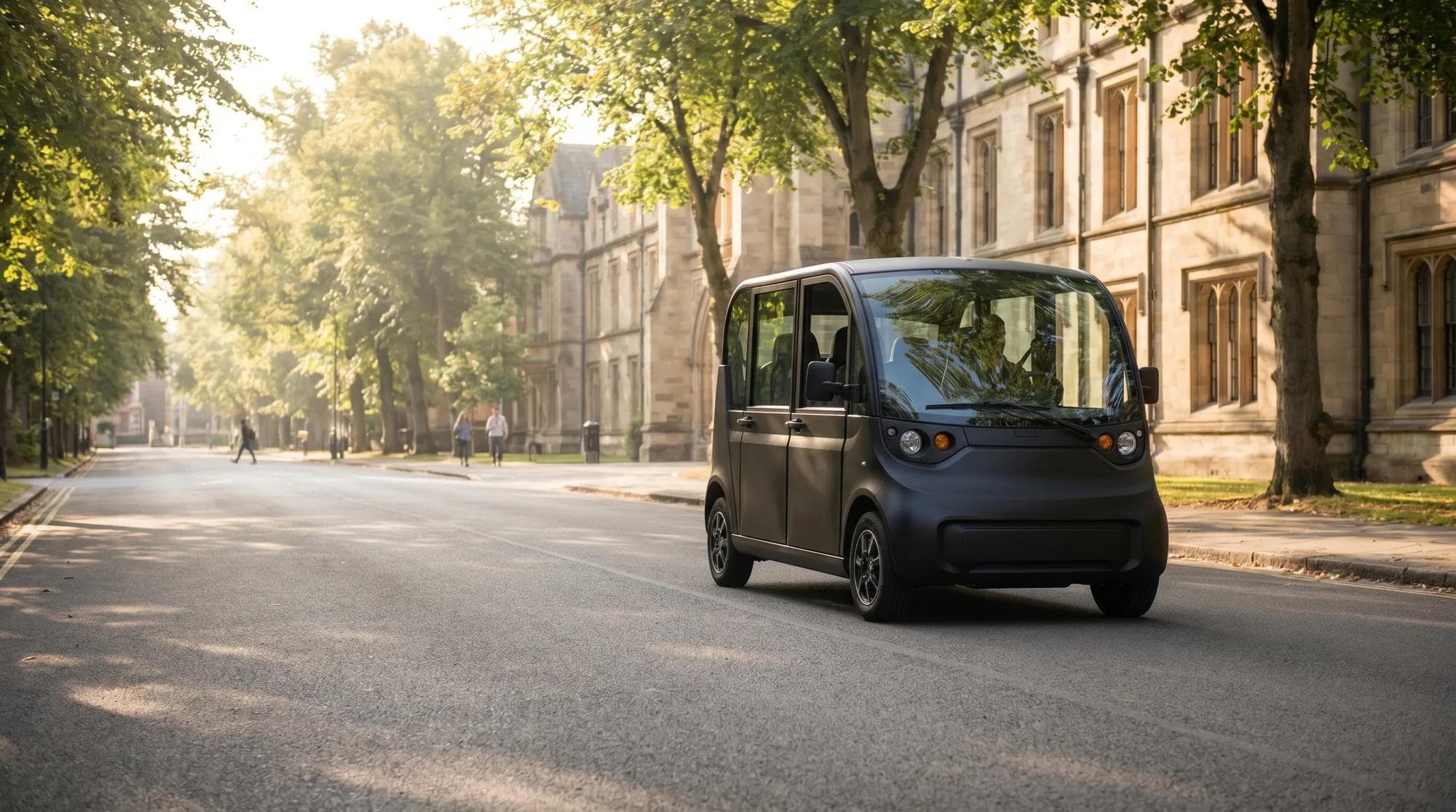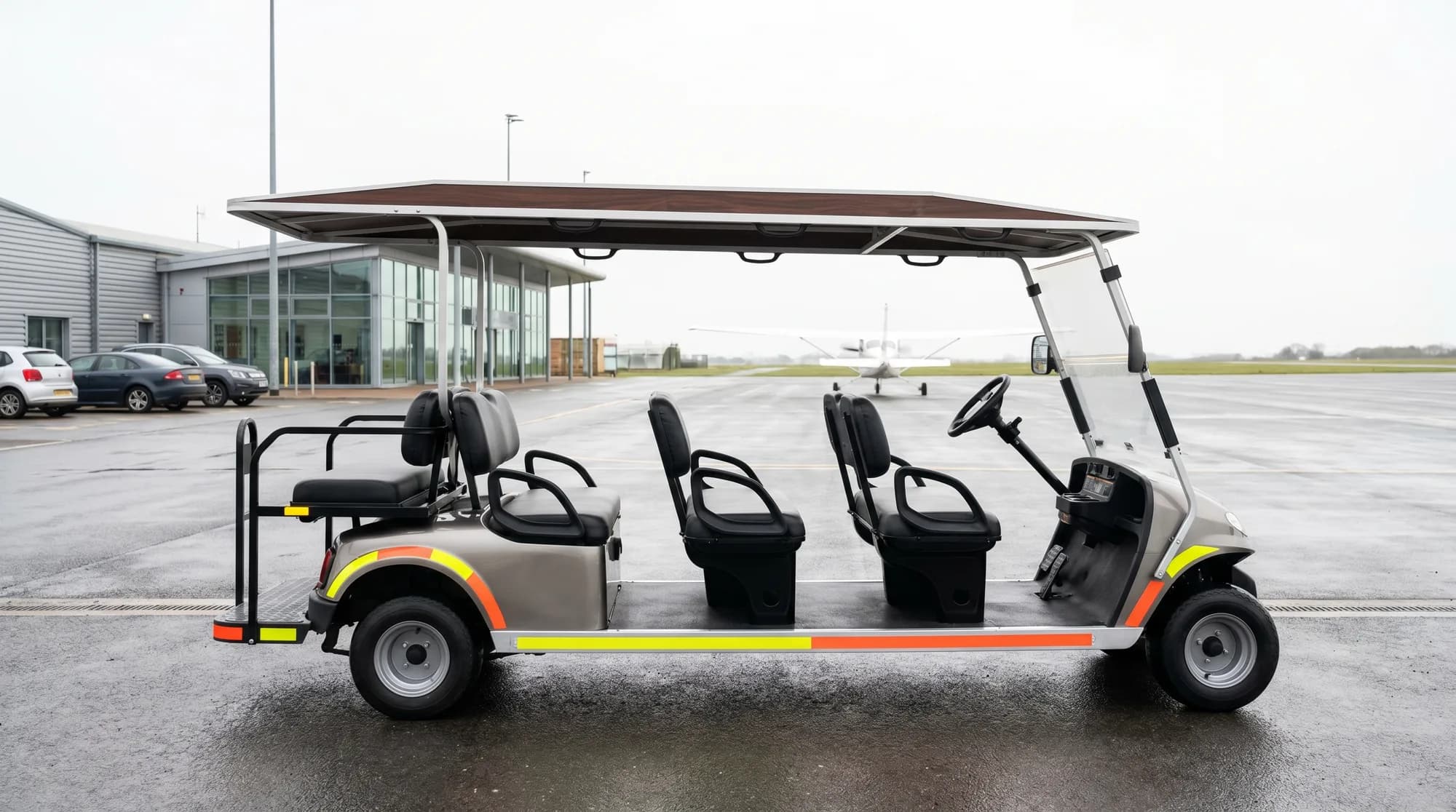
- Utility vehicles theme parks and resorts run are the back-of-house fleet: waste, maintenance, landscaping, deliveries and general logistics, all kept out of the guest's eyeline.
- The brief is different from passenger transport. Here it is about payload, a usable load bed, and a build that takes daily hard work across a large site.
- Electric suits this work well: quiet enough to operate near guests, no fumes in busy pedestrian areas, and far cheaper to run than petrol or diesel.
- Match the vehicle to the task rather than buying one type for everything. A waste round, a tool run and a landscaping job all want different setups.
- Size the fleet and the charging around real daily routes, so vehicles work the operating day and charge overnight without queueing for a socket.
Walk around any large resort or attraction before the gates open and you see a different place. Bins are being emptied, flower beds tidied, a fault on a ride being fixed, pallets of stock moving from a service yard to a dozen outlets. None of that happens on foot. Behind every site that moves guests well sits a second fleet that moves everything else, and it is the one guests are never meant to notice.
These are the utility and service vehicles, and they do the unglamorous work that keeps a resort standing up. This guide is about that fleet rather than the passenger one: what the jobs actually are, why electric has become the sensible default for them, and how to spec and size a fleet that earns its keep across a big site every single day.
The fleet guests are never meant to see
Passenger transport gets the attention because guests experience it. The service fleet is judged by its absence: when it works, the site simply looks clean, runs smoothly and never seems to be under repair. That only happens because a steady stream of small work vehicles is moving people, tools and material around all day, often in the quiet hours before opening and after close.
On a site measured in hundreds of acres, doing that on foot is not an option. A maintenance technician who has to walk to a fault and back, carrying tools both ways, loses most of the day to walking. A waste crew on foot covers a fraction of the bins. The utility fleet exists to turn those long walks into short, loaded drives, so the people doing the work spend their time on the work.
Match the vehicle to the job
The mistake is to buy one vehicle and expect it to do everything. "Utility vehicle" covers several quite different jobs, and the right setup is different for each. It pays to map the tasks first, then spec the fleet around them.
- Waste and cleaning: a load bed sized for bags, bins or a tipping body, running constant loops between collection points and the compactor.
- Maintenance and engineering: room for tools, parts and a technician or two, getting to a fault quickly with everything needed on board.
- Landscaping and grounds: capacity for soil, plants, mowers and arisings, often over softer ground around beds and verges.
- Deliveries and logistics: moving stock and supplies from the service yard to outlets, kitchens and stores throughout the day.
Our guide to electric buggies for zoos and gardens covers the grounds-keeping end of this in more detail, because a botanic collection or animal habitat puts its own demands on a work vehicle.
Payload and load bed: the numbers that matter
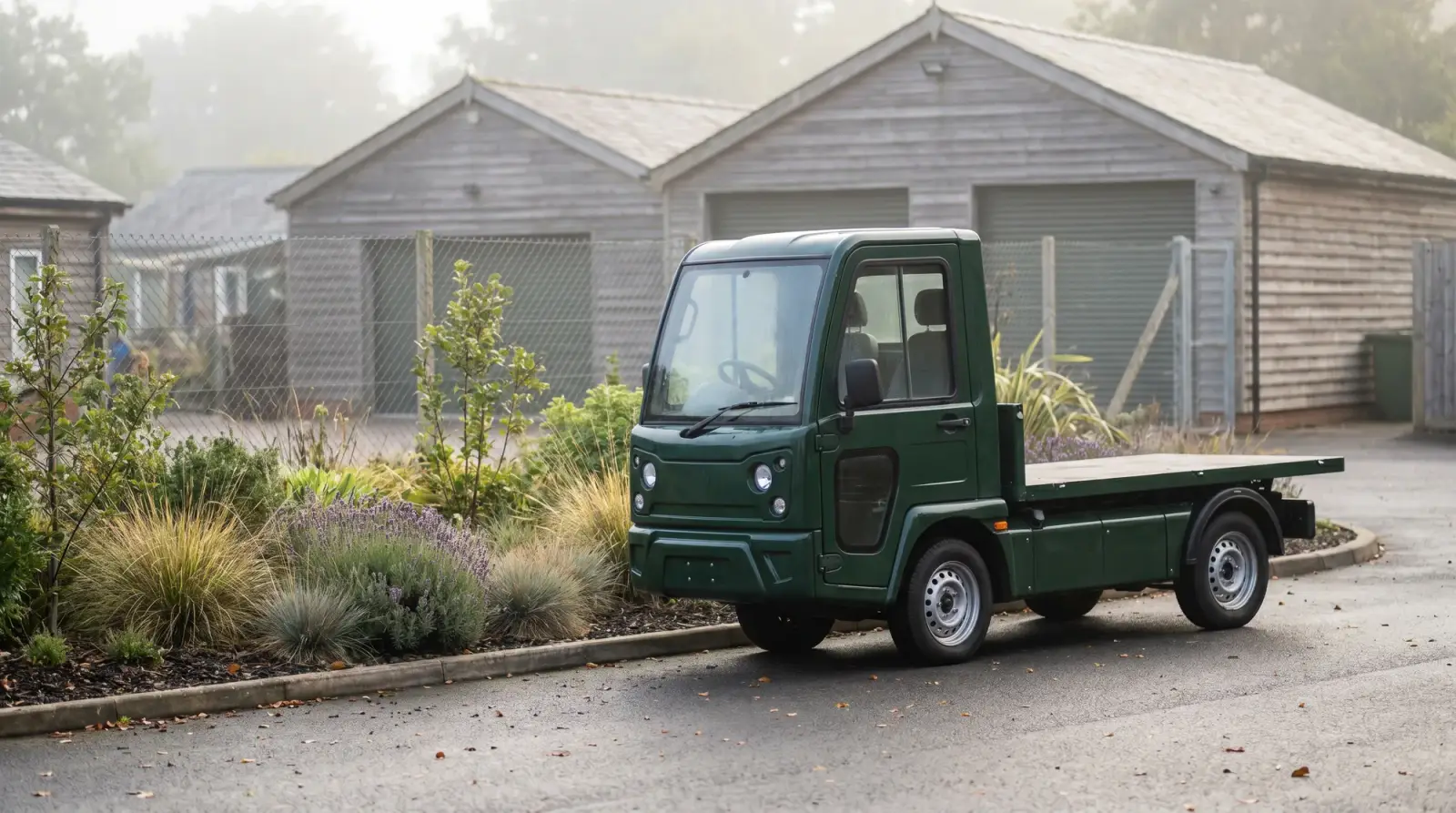
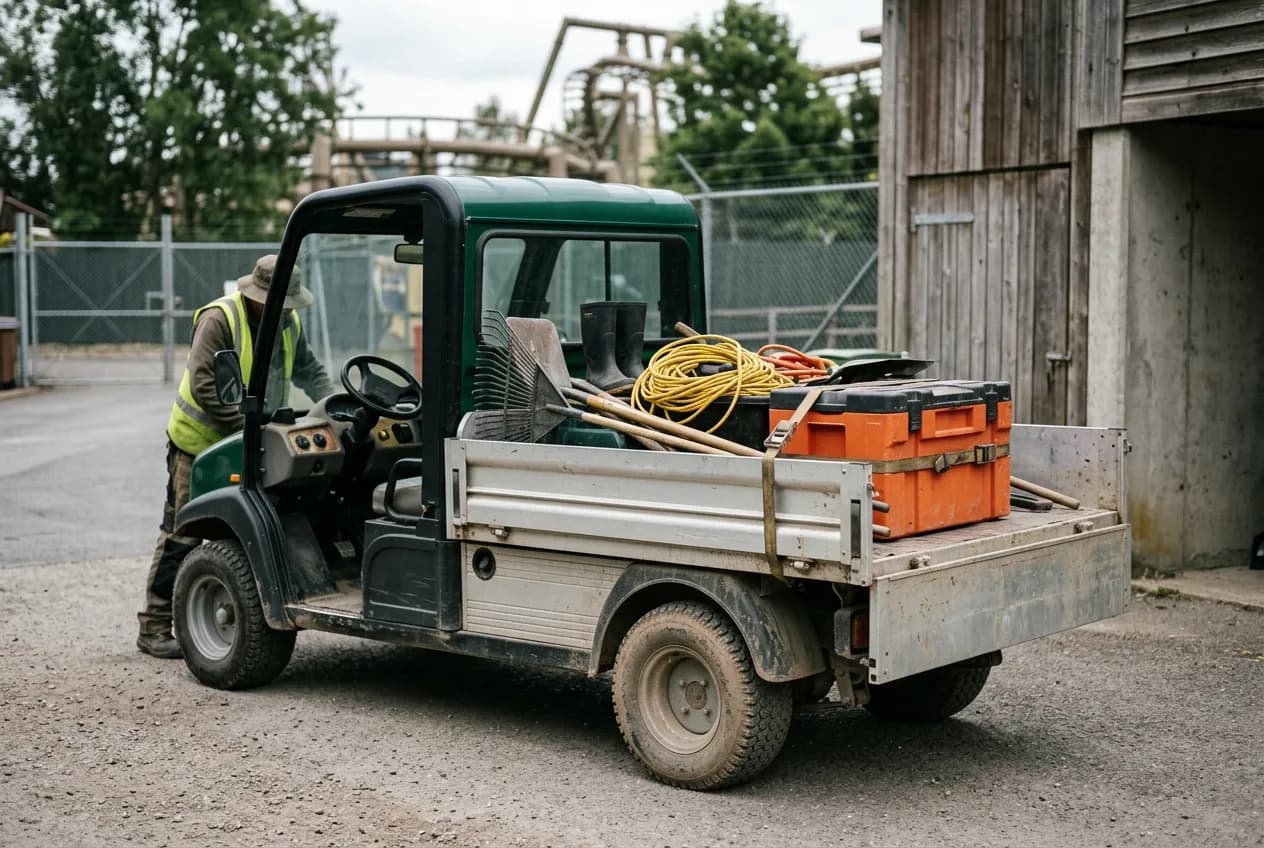
For passenger vehicles the key questions are seats and ride comfort. For utility vehicles they are payload, bed size and how the load is handled. A vehicle rated for a person and a toolbox is no use to a waste crew shifting heavy bins all day, and a fixed flat bed is awkward where a tipping body would empty in seconds. Be honest about the heaviest, bulkiest loads the vehicle will actually carry, then spec to that rather than the average.
Think too about how the load is secured and accessed. Drop sides, a tail that folds, lashing points and a flat floor all make a real difference to how quickly a crew can load and unload, which over a shift adds up to a lot of saved time.
Why quiet and clean matters out the back too
It is tempting to assume that, because the service fleet works away from guests, noise and fumes do not matter. They do. Service roads run close to queues, outdoor dining and quiet show areas, and the boundary between front and back of house is rarely a solid wall. A diesel utility vehicle idling beside a busy path puts engine noise and exhaust exactly where guests are standing.
An electric utility vehicle removes both problems. It runs near-silent, so a waste round before opening does not wake a campsite or a nearby hotel, and a maintenance crew can work close to guests without intruding. It produces no exhaust at the point of use, which matters in enclosed yards, plant rooms and busy pedestrian zones. For a fleet that runs the same loops hour after hour, the running-cost case is just as strong.
Charging and duty cycle, planned together
The most common planning mistake is to count vehicles and forget the charging. The right way round is to map the duty cycle first: how many hours each vehicle works, the distance per shift, and where the downtime sits. From there you size the battery, the chargers and the number of vehicles together, so the fleet runs the operating day and tops up overnight. Skip that step and you end up with work vehicles queueing for a socket at the busiest moment.
- 01
List the routes
Write down each recurring job, where it goes, how far, and how many hours a day it runs.
- 02
Size to the peak
Work out the busiest window, when waste, deliveries and maintenance overlap, and make sure the fleet covers it.
- 03
Match battery to distance
Spec the battery to the real daily distance per vehicle, with headroom for the heaviest days, not the average one.
- 04
Plan the charge points
Put chargers where vehicles naturally rest, so topping up fits the shift rather than fighting it.
Work vehicles built to order
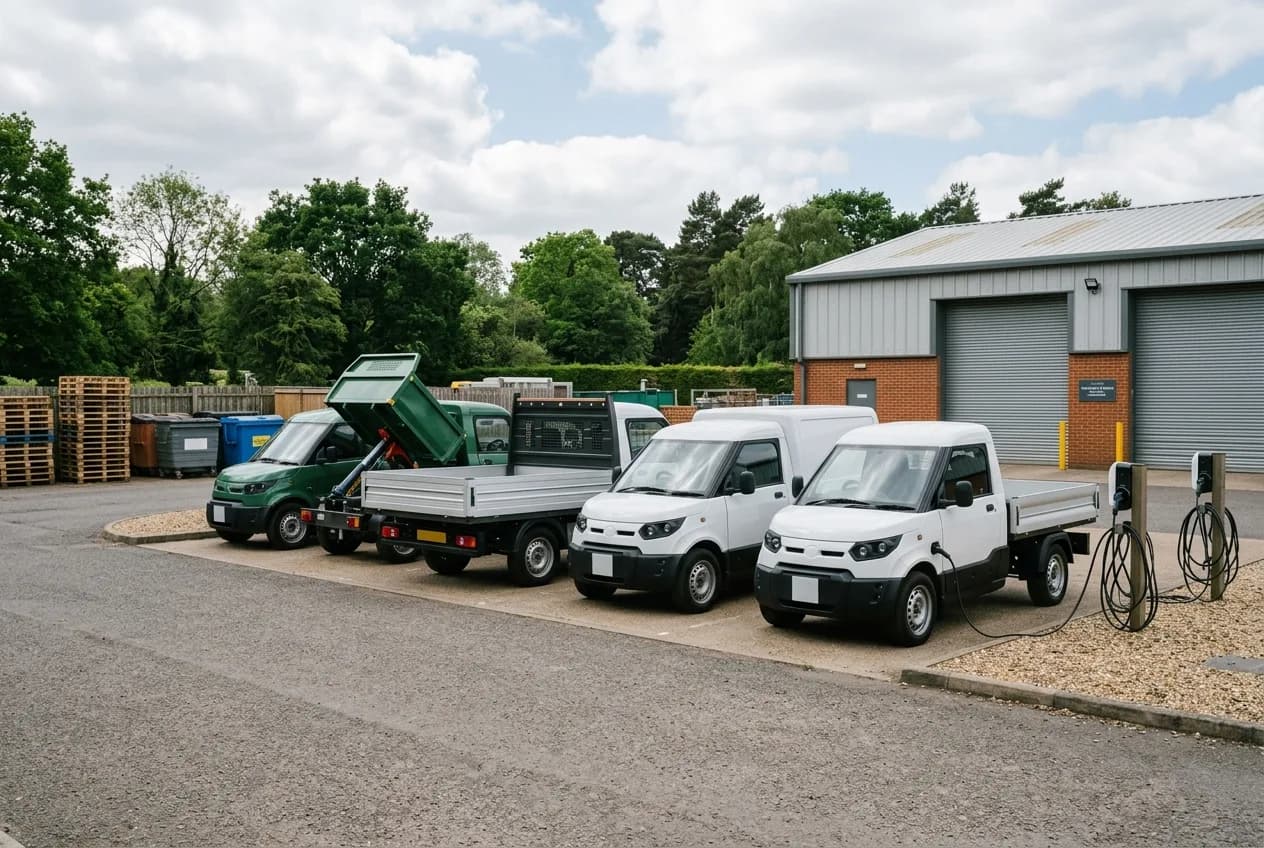
Flat beds, tipping bodies, drop sides and crew space, specced to the job and built to take daily hard use across a large site, branded as your own.
One supplier for the whole site
There is a quiet advantage in having the passenger and service fleets come from the same place. The same site might run people-movers out front and a fleet of utility vehicles out back, all electric, all charged overnight, all liveried and supported together. That keeps parts, servicing and the support arrangement simple, and it means one team understands how the whole operation moves. You can see the spread of builds across the range, or request a quote with your site and your tasks.
Planning a back-of-house fleet?
Tell us the site, the jobs and the loads, waste, maintenance, landscaping, deliveries, and we will recommend the right mix of utility vehicles, branded as your own and built to order, assembled and finished in the UK.
Frequently asked questions
What is the difference between a utility vehicle and a passenger buggy?+
A utility vehicle is built to carry loads rather than people. It has a real load bed or tipping body, an honest payload rating and a build geared to daily work, where a passenger buggy is tuned for seats and ride comfort.
Can one utility vehicle cover waste, maintenance and deliveries?+
It can cover several light tasks, but a busy site usually runs a small mix. A tipping body suits waste, a flat bed with crew space suits maintenance, and a larger bed suits deliveries. We help you map the jobs and spec the right mix.
Are electric utility vehicles powerful enough for heavy loads?+
Yes. Electric drivetrains deliver strong torque from a standstill, which suits loaded, stop-start work. The key is sizing the battery and the vehicle to the heaviest realistic load and the daily distance.
Will a work vehicle last a full shift on one charge?+
Sized correctly, yes. We match the battery to the daily distance and duty cycle so vehicles run the operating day and charge overnight, with headroom for the busiest days.
Can service vehicles be branded?+
Yes. Every vehicle is built to order, so colour, livery and a logo are specified into the build, keeping the back-of-house fleet consistent with the rest of the operation.
Related solutions
Ready to explore what we build?
See the vehicles and the setting this applies to, or get a tailored quote built around your site.

Ready to find the right buggy?
Tell us how and where it will work and we will specify a vehicle and a tailored quote built around you. Every build comes with a 3-year warranty and a 24-hour priority call-out.
Our guides are written and reviewed by the Hawke Electric Vehicles team, the people who specify, build, deliver and support the vehicles. We focus on honest, practical advice and flag where a figure depends on the build rather than guessing.
More guides by Hawke