A six-seater is where a golf buggy stops being a small vehicle. Typical 6 seater golf buggy dimensions run to around 3.5 to 4 metres in length, 1.2 to 1.4 metres in width and roughly 2 metres in height with the canopy fitted, with weights commonly in the region of 600 to 900 kilograms depending on battery chemistry and specification. Exact figures vary by model, so always work from the datasheet of the machine you are buying, but those ranges are the honest planning envelope, and they have real consequences for gates, paths, storage, trailers and turning room. This guide works through each one. For the equivalent figures across two-, four- and eight-seat machines, see our full golf buggy dimensions guide; this one goes deep on the six-seat size specifically.
- Plan around roughly 3.5 to 4 m long, 1.2 to 1.4 m wide and about 2 m tall with canopy; confirm exact figures on the model datasheet.
- Width clears most double gates and vehicle entrances but not a standard single pedestrian gate.
- Length is the figure that catches people out, affecting trailers, storage bays and turning room.
- Expect roughly 600 to 900 kg depending on battery type, which matters for trailers and towing capacity.
- Measure your tightest gate, your storage space and your trailer bed before ordering, in that order.
Typical 6 seater golf buggy dimensions at a glance
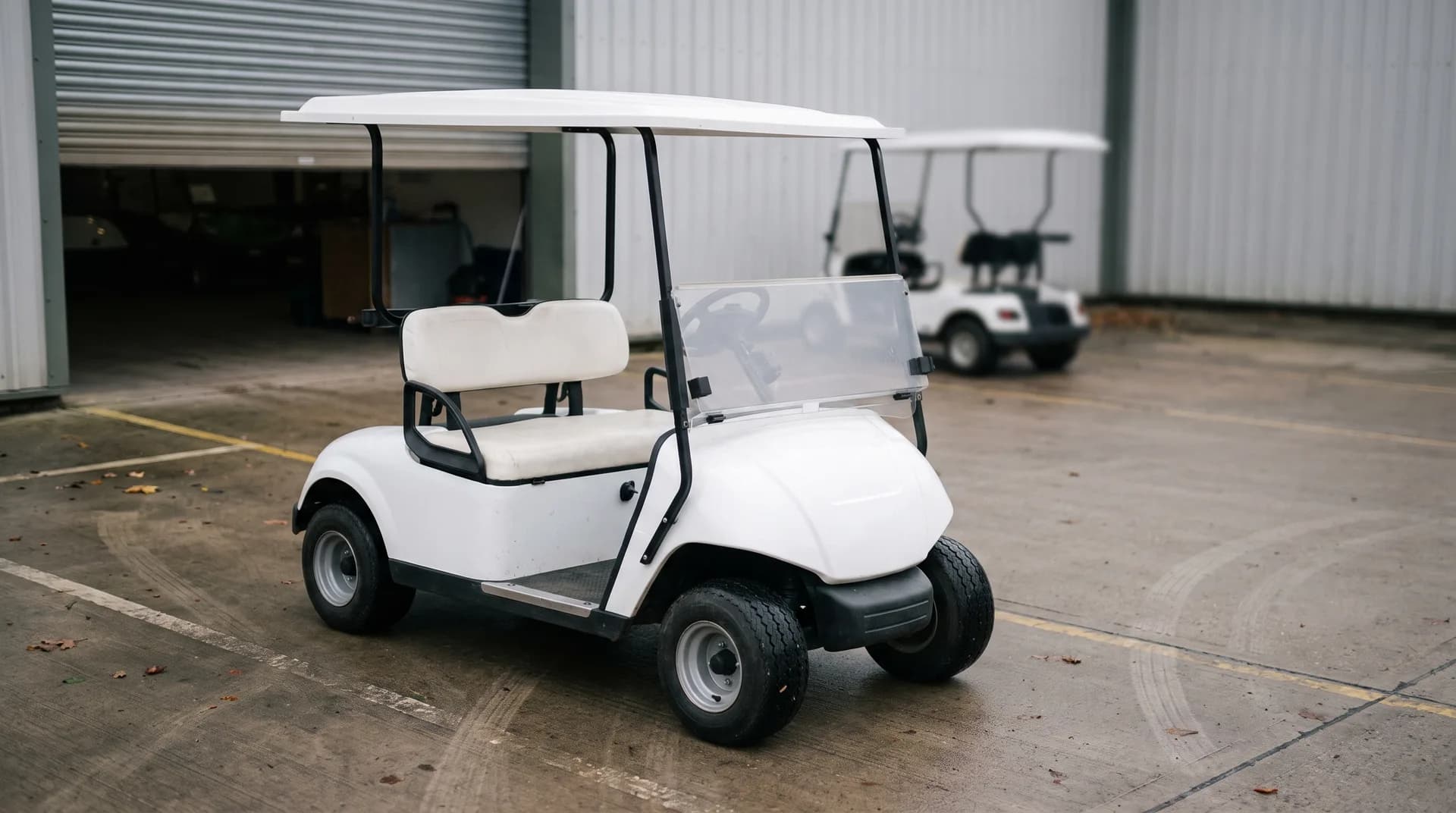
Six-seaters are, in essence, stretched four-seaters: manufacturers extend the wheelbase to add a third row, so width and height stay close to the smaller models while length grows by roughly a metre. That is why the width range, around 1.2 to 1.4 metres, looks familiar if you know two-seat machines, while the length, around 3.5 to 4 metres, is the number that changes your planning. Height with a fitted canopy is typically around 2 metres, which matters for barn doors, container storage and low car park entries. Within those ranges, rear-facing back rows tend to shorten a machine slightly compared with three forward rows, and accessories such as cargo boxes or ball washers can add length beyond the quoted figure.
- 2 seater
- Around 2.4 to 2.8 m
- 4 seater
- Around 2.9 to 3.4 m
- 6 seater
- Around 3.5 to 4 m
- 2 seater
- Around 1.2 m
- 4 seater
- Around 1.2 to 1.4 m
- 6 seater
- Around 1.2 to 1.4 m
- 2 seater
- Around 1.8 to 2 m
- 4 seater
- Around 2 m
- 6 seater
- Around 2 m
- 2 seater
- Roughly 300 to 500 kg
- 4 seater
- Roughly 450 to 700 kg
- 6 seater
- Roughly 600 to 900 kg
| 2 seater | 4 seater | 6 seater | |
|---|---|---|---|
| Length | Around 2.4 to 2.8 m | Around 2.9 to 3.4 m | Around 3.5 to 4 m |
| Width | Around 1.2 m | Around 1.2 to 1.4 m | Around 1.2 to 1.4 m |
| Height with canopy | Around 1.8 to 2 m | Around 2 m | Around 2 m |
| Weight | Roughly 300 to 500 kg | Roughly 450 to 700 kg | Roughly 600 to 900 kg |
Gates, paths and doorways: will it fit?
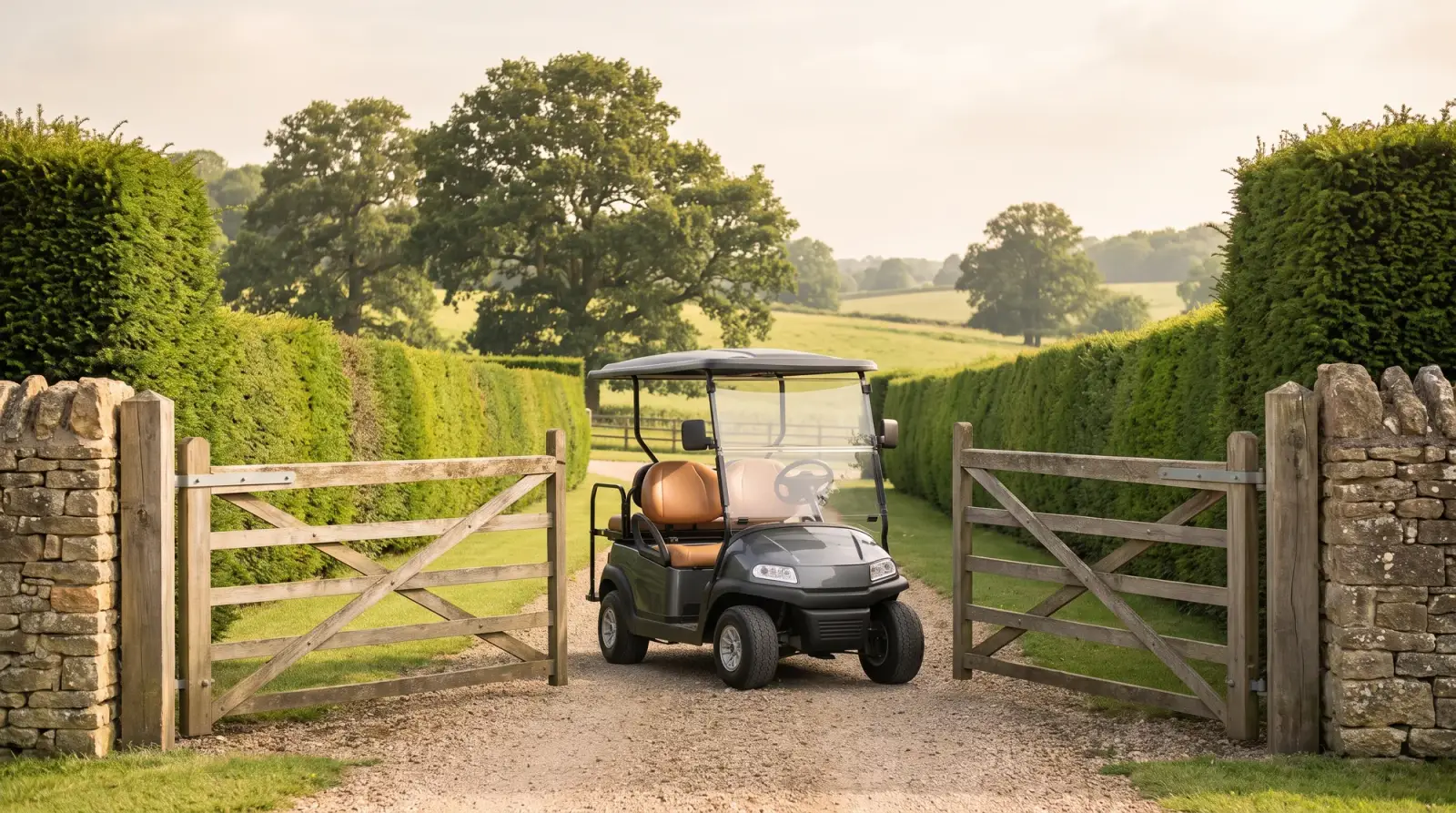
Width is the make-or-break figure for daily routes. At 1.2 to 1.4 metres, a six-seater passes comfortably through field gates, double gates and vehicle entrances, but it will not fit through a standard single pedestrian gate, and garden paths built for wheelbarrows leave no margin. Walk the vehicle's intended routes with a tape measure and note the single tightest pinch point, gatepost to gatepost at the narrowest, because that is the number that decides the purchase. Allow a sensible working margin on each side rather than buying to the millimetre, and remember height: an archway or barn lintel that clears a person easily may still catch a two-metre canopy.
Turning circles and the space to manoeuvre
The stretched wheelbase that creates the third row also widens the turning circle, so a six-seater needs meaningfully more room to turn than the two-seaters most people learn on. Manufacturers quote turning radius on the datasheet and figures vary usefully between models, so compare them if your site is tight. In practice, the vehicle needs generous room for a U-turn on a path or track, and three-point turns become routine in yards and courtyards where a two-seater would simply swing round. If your site is a network of narrow paths with tight junctions, test-drive on site before committing, and consider whether two smaller machines serve the routes better than one long one.
Weight, trailers and getting it there
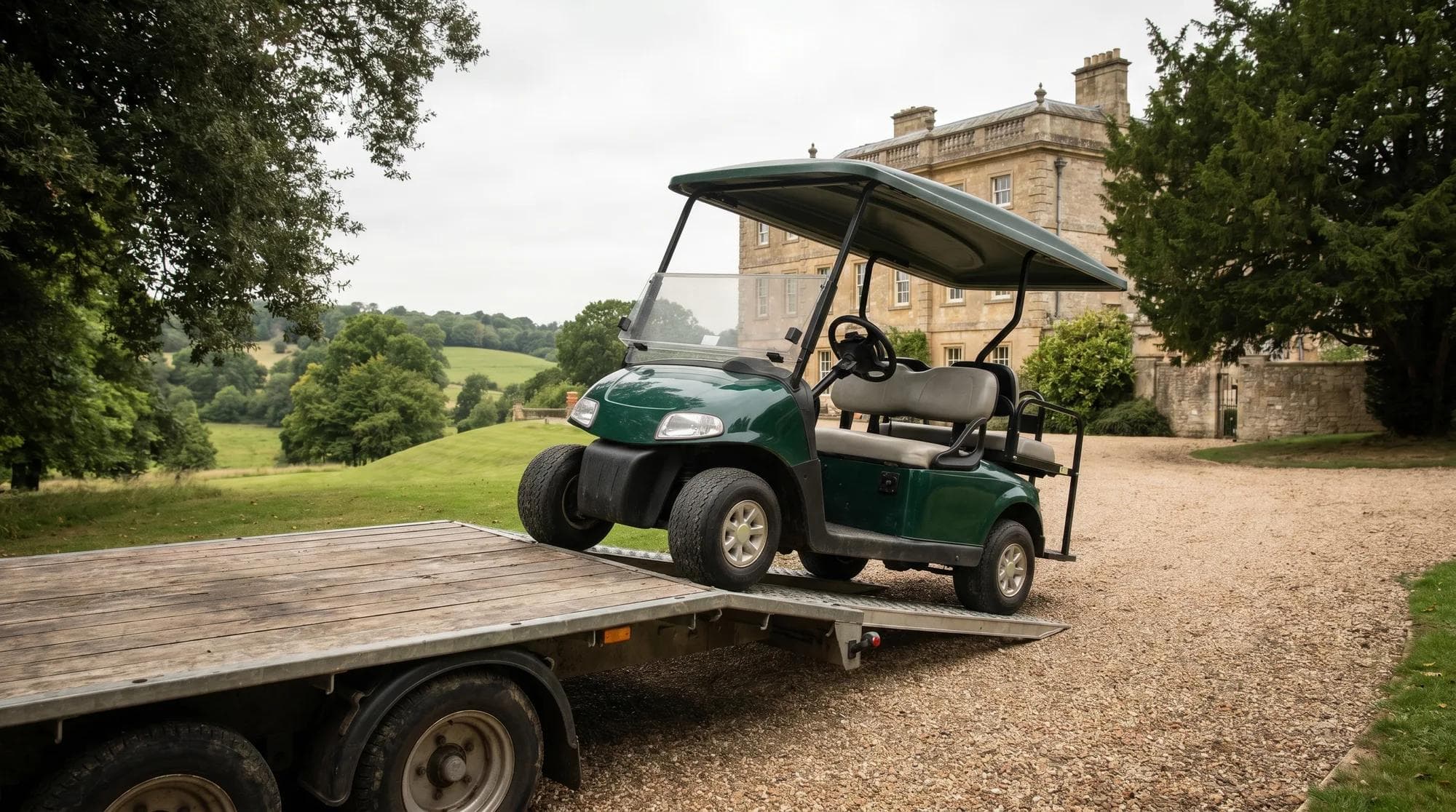
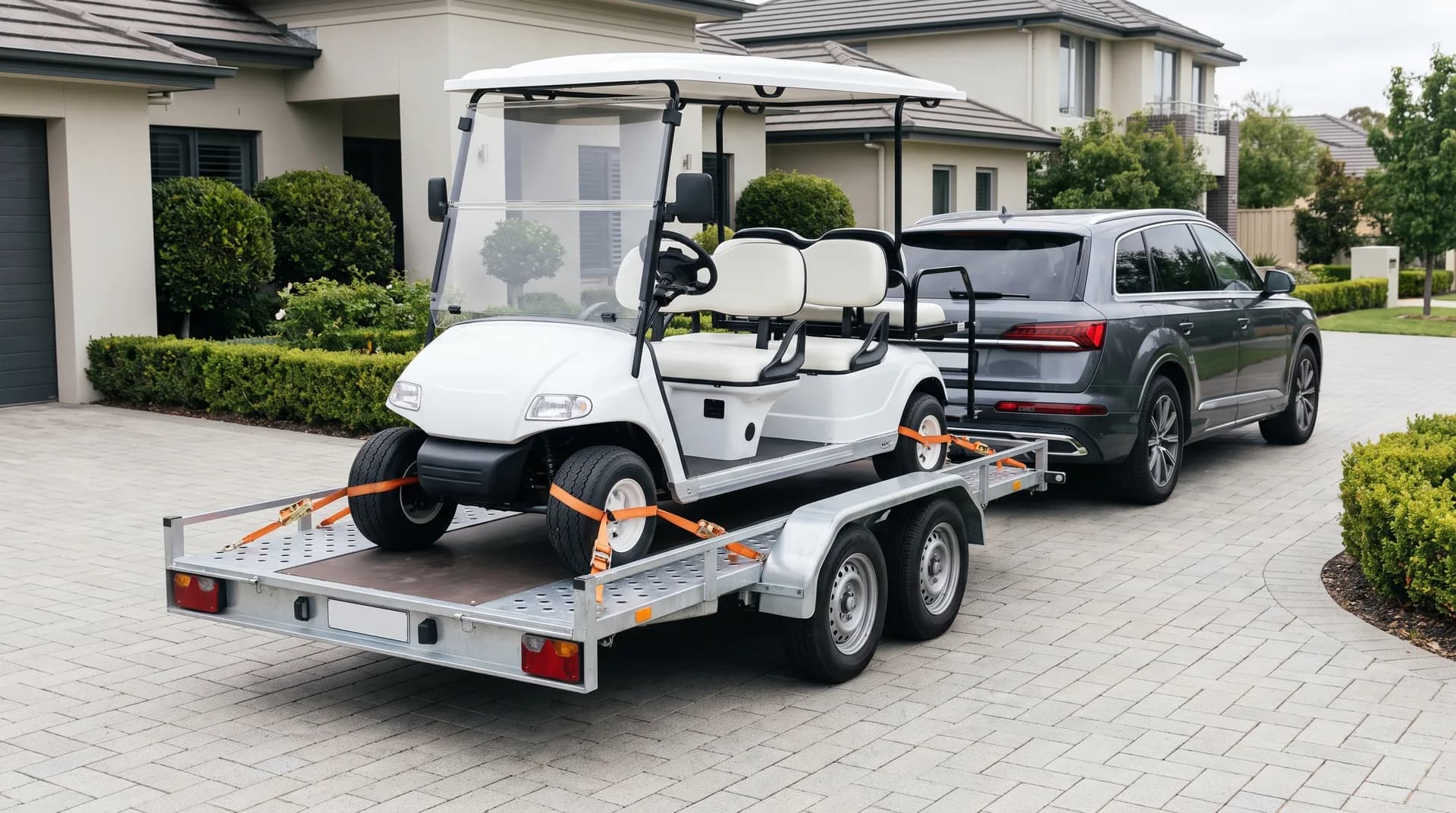
At roughly 600 to 900 kilograms, a six-seater sits at the point where transport needs planning. The buggy's weight plus a trailer typically lands well over a tonne, so check your tow vehicle's rated towing capacity and your driving licence's trailer entitlement before assuming you can move it yourself, and make sure the trailer bed actually accommodates the length, a bed under about 4 metres leaves no room for straps and ramps around a full-size six-seater. Battery chemistry moves the figure meaningfully: lithium packs are substantially lighter than lead-acid equivalents, which helps both towing sums and soft ground. Our guides on buggy weight and transporting a buggy cover the detail, and delivery by the supplier is the simple answer when the sums get awkward.
Storage: the space a 6 seater golf buggy needs
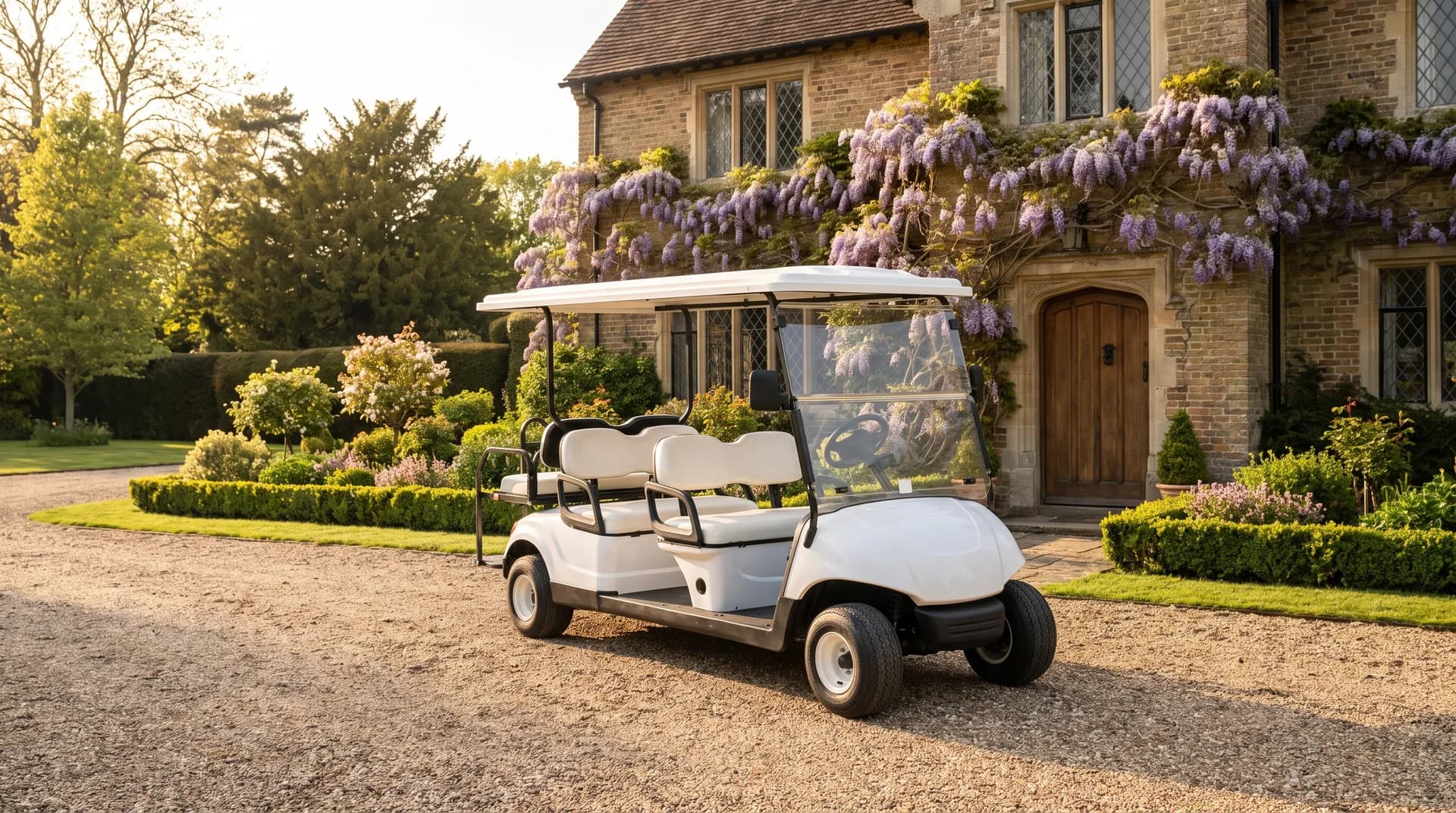
Storage is where the length bites hardest. A machine around 4 metres long needs a bay deeper than many domestic garages once you allow walking room, and it needs a doorway wider and taller than the buggy plus margin, with a socket within reach for charging. Before ordering, measure the intended space against the datasheet figures plus comfortable clearance, check the approach, since a buggy that fits the shed but cannot turn into it does not fit, and think about the surface, as a dry, level, ventilated space is what battery life wants. If the numbers are tight, this is another argument for comparing models: within our 6-seater range, from £18,900 for the S6, footprints differ enough to matter, and we will happily check your measurements against a specific machine before you commit.
Frequently asked questions
How long is a 6 seater golf buggy?+
Typically around 3.5 to 4 metres, roughly a metre longer than a four-seater, because the wheelbase is stretched to fit the third row. Exact length varies by model and rear-row layout, so confirm on the datasheet.
How wide is a 6 seater golf buggy?+
Usually around 1.2 to 1.4 metres, similar to smaller buggies since only the length is stretched. That clears double gates and vehicle entrances comfortably but not a standard single pedestrian gate.
How much does a 6 seater buggy weigh?+
Commonly in the region of 600 to 900 kilograms depending on battery chemistry and specification, with lithium models substantially lighter than lead-acid equivalents. Check the datasheet figure before planning towing.
Will a 6 seater fit on a standard car trailer?+
Often not comfortably. You need a trailer bed that accommodates around 4 metres of vehicle plus strapping room, a tow vehicle rated for the combined weight, and the right licence entitlement. Supplier delivery is the simple alternative.
How much storage space should I allow?+
Measure the datasheet length and width plus comfortable clearance on all sides, with a doorway wider and taller than the buggy and a charging socket in reach. Check the approach and turning room into the space, not just the space itself.
Check the numbers against a real machine
Send us your gate, storage and trailer measurements and we will check them against specific six-seat models, then price the right one for your site.
Related solutions
Ready to explore what we build?
See the vehicles and the setting this applies to, or get a tailored quote built around your site.

Ready to find the right buggy?
Tell us how and where it will work and we will specify a vehicle and a tailored quote built around you. Every build comes with a 3-year warranty and a 24-hour priority call-out.
Our guides are written and reviewed by the Hawke Electric Vehicles team, the people who specify, build, deliver and support the vehicles. We focus on honest, practical advice and flag where a figure depends on the build rather than guessing.
More guides by Hawke