Petrol golf buggy exhaust smoke: what it means
Written by the Hawke Electric Vehicles Service Team
Quick answer
The colour of the exhaust smoke tells you where to look on a petrol golf buggy. Blue or grey smoke means the engine is burning oil, black smoke means the fuel mixture is too rich, and thin white smoke on a cold start is usually harmless condensation that clears as the engine warms. Match the colour to the cause below, and check the simple things first, such as the oil level and the air filter, before assuming the worst.
Tools needed
- The engine manual for your model
- Dipstick or oil level check
- Basic spanners
- Clean rags
- Compression tester where available
Parts needed
- Air filter if dirty
- Spark plug if fouled
- Engine gaskets or rings if worn
Confirm the symptom
This guide covers visible smoke from the exhaust of a petrol buggy. First note the colour, when it appears, and whether it clears. Smoke only for the first few seconds of a cold start that then clears is often normal; smoke that continues once the engine is warm, or appears under load or on acceleration, points to a fault. Look at the smoke in daylight against a plain background to judge the colour honestly.
If the engine is also running rough, surging or backfiring, those symptoms have their own guides that overlap with a rich mixture. If the engine will not start or start-and-dies, see those guides instead. Come back here to read what the smoke colour is telling you.
What the colour means
| Cause | How common | How to confirm | Fix |
|---|---|---|---|
| Blue or grey smoke: burning oil | common | Check the oil level and whether smoke worsens on acceleration | |
| Black smoke: fuel mixture too rich | common | Check the air filter, choke and spark plug colour | |
| White smoke on cold start: condensation | very common | Watch whether it clears as the engine warms up | |
| Overfilled engine oil | common | Check the oil is not above the full mark on the dipstick | |
| Worn rings, valve guides or a gasket fault | occasional | Compression test and inspection where blue smoke persists |
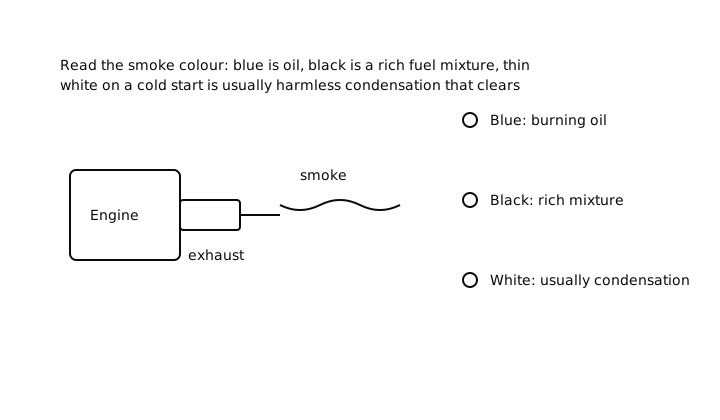
Blue or grey smoke: burning oil
Blue or grey smoke means oil is getting into the combustion chamber and burning. The simple causes are an overfilled oil level or oil finding its way in through the breather; the more serious causes are worn piston rings or valve guides that let oil past into the cylinder. Start with the oil level, because overfilling is common and easily corrected.
1Check the oil level first
With the buggy level and the engine cool, check the oil on the dipstick or level plug. Confirm it is at the correct mark and not overfilled, because too much oil can be pushed past and burned.
ExpectedOil at the correct level; oil above the full mark is likely the cause and should be drained back to the correct level before anything else
2See whether blue smoke persists warm
If the level is correct, run the engine briefly and watch whether the blue smoke continues once warm and worsens on acceleration.
ExpectedBlue smoke that persists warm and worsens on acceleration points to worn rings or valve guides, which is an engine repair rather than an adjustment
Black smoke: rich fuel mixture
Black smoke is unburnt fuel, which means the mixture is too rich. The common causes are a blocked or dirty air filter starving the engine of air, a choke that is stuck on, or a carburettor that is flooding. These are the first things to check because they are simple and cheap.
3Check the air filter, choke and plug
Inspect the air filter and clean or replace it if dirty, confirm the choke returns fully to the off position when warm, and look at the spark plug colour. A sooty black plug confirms a rich mixture.
ExpectedA clean air filter, a choke that closes off fully, and a plug that is a light tan rather than sooty black; a dirty filter, stuck choke or black plug is the cause
White smoke: usually condensation
Thin white smoke that appears on a cold start and clears as the engine warms is usually harmless condensation and moisture burning off, and it needs no action. White smoke that is thick, persistent and does not clear is less common on an air-cooled engine and can indicate a more serious internal fault, so treat persistent white smoke as worth investigating.
4Watch whether the white smoke clears
Start from cold and watch the white smoke as the engine warms through the first minute or two of running, without over-running the engine.
ExpectedWhite smoke that thins and clears as it warms is normal condensation; thick white smoke that persists warm needs proper investigation
When to book an engineer
Book an engineer if blue smoke persists after the oil level is correct, if black smoke continues once the filter, choke and plug are sorted, or if you see thick, persistent white smoke. Worn rings, valve guides and internal faults need a compression test and engine work, and a persistently rich engine wastes fuel and fouls the plug. An engineer can test compression, diagnose the cause and carry out the repair or carburettor work needed.
Common questions
What does blue smoke from my buggy exhaust mean?
Blue or grey smoke means the engine is burning oil. Check the oil level first, because overfilling can push oil past to be burned. If the level is correct and the blue smoke persists warm and worsens on acceleration, it usually means worn piston rings or valve guides, which is an engine repair.
Why is my buggy blowing black smoke?
Black smoke is unburnt fuel from a mixture that is too rich. The common causes are a dirty air filter starving the engine of air, a choke stuck on, or a flooding carburettor. Check and clean the air filter, confirm the choke closes off when warm, and read the spark plug colour, which will be sooty black if the mixture is rich.
Is white smoke from a golf buggy exhaust bad?
Usually not. Thin white smoke on a cold start is normally condensation burning off and clears as the engine warms, which needs no action. Thick white smoke that persists once the engine is warm is less common on an air-cooled engine and can point to a more serious internal fault worth investigating.
Can too much engine oil cause smoke?
Yes. An overfilled engine can push oil past into the combustion chamber, where it burns and produces blue or grey smoke. This is a common and easily fixed cause, so always check the oil is at the correct level and not above the full mark before assuming worn engine parts.
Is it safe to run a smoking buggy?
A brief check to see the smoke colour is fine in a ventilated space, but running a smoking engine hard is not wise until you know the cause. Burning oil and a rich mixture both foul the engine and waste fuel, and persistent white smoke can signal a fault. Diagnose the colour and fix the cause rather than running on.
Did this fix it?
Every guide is written from manufacturer service documentation and workshop practice, then reviewed before publication. Read how we write and review our repair guides.