Petrol golf buggy surging or hunting idle: fixes
Written by the Hawke Electric Vehicles Service Team
Quick answer
A petrol golf buggy that surges, hunts or rhythmically rises and falls at idle is almost always running lean, and the usual cause is a partly blocked carburettor idle circuit, an air leak on the intake side, or stale fuel. Start by ruling out fuel age, then look for unmetered air being drawn in past a gasket or hose before you touch the carburettor mixture.
Tools needed
- Screwdriver set
- Carburettor cleaner
- Safety glasses
- Work gloves
Parts needed
- Fresh fuel
- Inline fuel filter
- Intake and carburettor gaskets
- Carburettor service kit
Confirm the symptom
Surging, hunting or a rhythmic rise and fall in engine speed at idle is the pattern this guide covers. It sounds like the engine repeatedly trying to speed up and slow down on its own, and it usually clears or changes once the throttle is opened.
If instead the engine will not start at all, read the guide on a petrol buggy that will not start. If it starts and immediately stalls, or misfires and stumbles under load rather than at idle, those are related but different fuel and ignition faults. Surging that is worst at idle and eases off throttle is the classic lean-mixture symptom this guide diagnoses.
What causes it
| Cause | How common | How to confirm | Fix |
|---|---|---|---|
| Stale fuel gumming the carburettor | very common | Check fuel age and smell it for a varnish odour | |
| Partly blocked idle or pilot circuit in the carburettor | very common | Symptom eases with light throttle and returns at idle | |
| Air leak at the intake gasket, manifold or a hose | common | Idle changes when you pinch a hose or block suspected leak points | |
| Blocked fuel filter or restricted fuel supply | common | Inspect the inline filter and confirm steady fuel flow | |
| Idle mixture or idle speed out of adjustment | occasional | Compare current settings against the handbook baseline | |
| Governor linkage sticking or worn | occasional | Check the governor linkage moves smoothly with no slack |
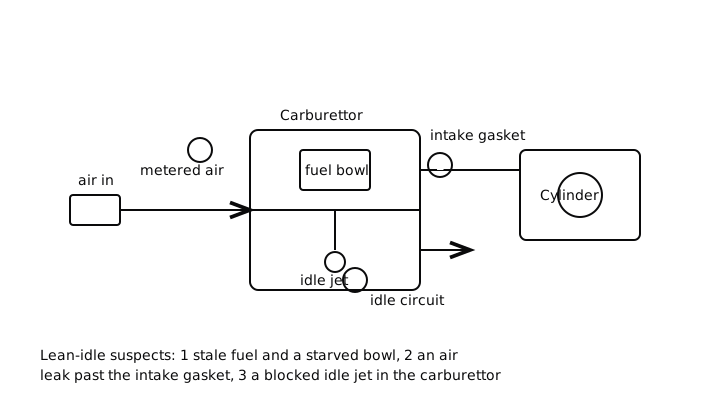
Stale fuel gumming the carburettor
Stale fuel is the first thing to rule out because it causes so many carburettor faults. As petrol ages it leaves a varnish that narrows the tiny idle passages inside the carburettor, and those passages are what feed the engine at low speed, so the effect shows up first as surging at idle.
1Check the fuel age and smell
Work out how long the fuel has been in the tank and smell it at the filler.
ExpectedFresh fuel smells sharp and clean; a sour, varnish smell means the fuel is stale and probably fouling the carburettor
Drain stale fuel into an approved container, refill with fresh, and run the engine to see if the surge clears. If fresh fuel improves it but the surge remains, the varnish has already settled in the carburettor and it needs cleaning.
A partly blocked idle circuit in the carburettor
The idle or pilot circuit is a set of very fine passages that meter fuel when the throttle is closed. Even a small deposit narrows them, leans the mixture and produces the hunting you hear. The telltale sign is that the surge is worst at idle and settles once you open the throttle a little and the main circuit takes over.
2Confirm the idle circuit is the source
Start the engine, let it settle and note the surge at idle, then hold a small, steady amount of throttle.
ExpectedThe surge is strongest at idle and smooths out with light throttle, which points squarely at the idle circuit
A partly blocked idle circuit usually needs the carburettor removing and cleaning, with the idle jet and passages cleared. This is a common job but a delicate one, and the small parts are easy to lose or damage, so if you are not confident stripping a carburettor it is worth booking an engineer.
An air leak on the intake side
Any air that gets into the engine without passing through the carburettor leans the mixture, and a small leak leans it most at idle when airflow is low. Common leak points are the gasket between the carburettor and the manifold, the manifold to the engine, and any breather or vacuum hose that has hardened or split.
3Test for an intake air leak
With the engine idling and surging, briefly pinch or cover suspect hoses one at a time and watch the idle. Do not spray flammable cleaner near a running hot engine to hunt leaks.
ExpectedIf blocking a hose or pressing on a gasket changes the idle, you have found the leak; a cracked hose or failed gasket is the fix
Replace a split hose or a failed gasket with the correct part and retest. Do not seal a leak with tape or sealant as a permanent fix, because an intake leak affects running across the range, not just at idle.
A blocked fuel filter or restricted supply
If the carburettor cannot draw fuel fast enough, the level in its bowl falls and the mixture leans, which can also show up as surging. A partly blocked inline filter is the usual restriction.
4Inspect the inline fuel filter
Find the inline filter and check that it is not dark, clogged or starved of fuel.
ExpectedFuel visible and flowing, filter clean; a discoloured or dry filter should be replaced with the correct type
Idle mixture or idle speed out of adjustment
If the carburettor is clean and there is no air leak, the idle mixture or idle speed may simply be off, sometimes after a previous repair. These settings vary by engine, so use the baseline in your handbook rather than a figure from another model, and change one thing at a time.
Adjusting idle mixture and speed to a specification is fiddly work and easy to get wrong, so if the handbook figures do not settle the idle, hand it to an engineer who can set it against the manufacturer method.
A sticking or worn governor linkage
Many petrol buggy engines use a mechanical governor to hold engine speed, and if its linkage sticks or has worn slack, the governor can chase the speed up and down and cause a slow surge. Check that the linkage moves smoothly with no lost motion. Worn governor parts are engineer work, so this sits last on the list.
When to book an engineer
Book an engineer if fresh fuel and a clean filter do not settle the idle, if the carburettor needs stripping and cleaning, if you find an intake leak you cannot cure with a gasket or hose, or if the idle mixture and governor need setting to specification. A surging idle is a classic lean-mixture puzzle, and a technician can pin down which cause it is without fitting parts on a guess.
Common questions
Why does my buggy idle up and down on its own?
A rhythmic rise and fall at idle is the classic sign of a lean idle mixture. The most common causes are a partly blocked carburettor idle circuit, stale fuel, or an air leak on the intake side letting in unmetered air. It usually smooths out as soon as you open the throttle.
Will fresh fuel fix a surging idle?
Sometimes. If stale fuel has only just started to gum the carburettor, draining it and refilling with fresh fuel can clear the surge. If the varnish has already settled in the fine idle passages, fresh fuel helps but the carburettor still needs cleaning.
Is it safe to drive a buggy that surges at idle?
It will usually drive, because the fault is worst at idle and eases under throttle, but a lean mixture makes the engine run hot and can point to an air leak that will get worse. It is better to diagnose it than to keep using it, and any hesitation under load means you should stop and investigate.
How do I find an intake air leak safely?
With the engine idling, briefly pinch or cover suspect breather and vacuum hoses one at a time and watch whether the idle changes. Avoid spraying flammable carburettor cleaner around a hot running engine to find leaks, because of the fire risk. A leak that changes the idle tells you which hose or gasket to replace.
Did this fix it?
Every guide is written from manufacturer service documentation and workshop practice, then reviewed before publication. Read how we write and review our repair guides.