Petrol golf buggy won't start: causes and fixes
Written by the Hawke Electric Vehicles Service Team
Quick answer
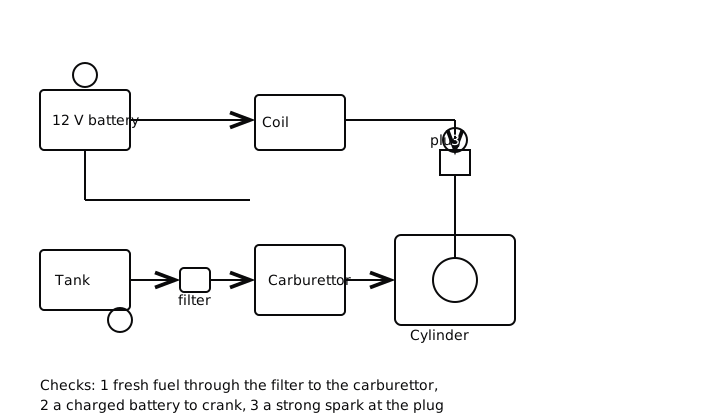
A petrol golf buggy that will not start almost always lacks one of three things: fuel reaching the engine, spark at the plug, or a charged starter battery to crank it. Begin by listening for whether the engine turns over at all. A silent no-crank points to the battery, its connections or a safety switch, while a healthy crank that never fires points to fuel or spark.
Tools needed
- Digital multimeter
- Spark plug spanner
- Spare spark plug
- Safety glasses
- Work gloves
Parts needed
- Fresh fuel
- Spark plug of the correct type
- Inline fuel filter
Confirm the symptom
This guide covers a petrol buggy that will not start from the key or ignition switch. The single most useful thing you can tell at the start is whether the engine cranks, so turn the key and listen.
If the engine turns over steadily but never catches, the starting system is fine and the fault is fuel or spark; stay on this guide. If you hear only a click or nothing at all when you turn the key, the engine is not cranking and the cause is the starter battery, its connections or a safety switch, covered in the sections below. If the engine starts and then dies within a few seconds, that is a separate fault path around fuel starvation and idle circuits rather than a true no-start.
What causes it
| Cause | How common | How to confirm | Fix |
|---|---|---|---|
| Empty tank or stale fuel | very common | Check the fuel level and smell the fuel for a varnish odour | |
| Flat or poorly connected starter battery | very common | Measure the 12 V battery and check the terminals for corrosion and tightness | |
| No spark at the plug | common | Remove the plug, earth it against the block and crank to watch for a spark | |
| Blocked fuel delivery, filter or carburettor | common | Check the inline filter and whether fuel reaches the carburettor | |
| Safety interlock: seat, brake, ignition or Tow/Run switch | common | Confirm the switch is in Run and the interlocks are made | |
| Choke not operating on a cold engine | occasional | Check the choke closes when cold and opens as the engine warms | |
| Loss of compression or engine mechanical fault | occasional | Rule out fuel and spark first, then have compression checked |
An empty tank or stale fuel
The most common reason a petrol buggy will not start is the simplest one, and it is worth ruling out before anything else. Check the fuel level directly rather than trusting a gauge, because gauges on these vehicles are often unreliable.
Fuel that has sat for months goes stale. The lighter fractions evaporate and leave a varnish that gums up the carburettor jets, so a buggy that ran fine last season can refuse to start after winter. Stale fuel has a sour, off smell. If in doubt, drain the old fuel into an approved container for disposal and refill with fresh, then try again.
1Confirm there is fresh fuel in the tank
Look into the tank or use the filler to confirm liquid fuel is present, and smell it for the varnish odour that marks stale fuel.
ExpectedA tank with fresh, clean-smelling fuel; a dry tank or a stale, sour smell is your answer
A flat or poorly connected starter battery
Petrol buggies still carry a 12 volt battery to run the starter and ignition, and a flat or badly connected battery is the usual reason the engine will not crank. A single click when you turn the key, or dash lights that dim heavily, both point here.
2Measure the 12 V starter battery
Set a multimeter to DC volts and read across the battery posts with everything switched off.
ExpectedA healthy 12 V battery reads about 12.6 to 12.7 V rested; below about 12.2 V it is discharged and may not crank the engine
3Check the terminals and earth
Inspect both battery terminals and the earth strap to the engine for corrosion or looseness, and wiggle them by hand.
ExpectedClean, tight terminals; green or white powder, or a terminal that moves, adds resistance and can stop the starter turning
Clean corroded terminals, tighten them and try again. If the battery is flat, charge it and retest; a battery that will not hold a charge needs replacing.
No spark at the plug
If the engine cranks strongly but never fires, spark is the first thing to check because it is quick and definitive. A fouled, worn or oil-wet spark plug is a frequent cause, as is a plug lead that has worked loose.
4Test for spark
With the engine cool, remove the spark plug, reconnect it to its lead, hold the plug body firmly against clean bare metal on the engine using insulated pliers, and crank the engine while watching the electrode.
ExpectedA crisp blue spark jumping the gap each time the engine turns; a weak yellow spark or none at all points to the plug, lead, coil or ignition switch
A plug with a black sooty or oily tip can be cleaned and refitted as a test, but a plug in poor condition is cheap to replace with the correct type. If a new, correctly gapped plug still gives no spark, the fault is further back in the ignition and is engineer work.
Blocked fuel delivery, filter or carburettor
Fuel has to travel from the tank through a filter and, on many buggies, a pump, before it reaches the carburettor. A blocked inline filter or a carburettor gummed up by stale fuel will starve the engine even with a full tank.
5Check the inline fuel filter
Find the small inline filter in the fuel line and look at the fuel in it and its colour.
ExpectedFuel visibly present and the filter not dark or clogged; a dry or heavily discoloured filter needs replacing with the correct type
A carburettor blocked by varnish usually needs cleaning or an overhaul, which is a common job but a fiddly one. If fuel reaches the carburettor and there is good spark but the engine still will not run, book an engineer to clean or rebuild the carburettor rather than spraying starting fluid repeatedly, which can mask the real fault.
A safety interlock or switch in the wrong position
Petrol buggies use interlocks so the engine only starts under safe conditions. Depending on the model these can include a seat switch, a brake or neutral requirement, the ignition or key switch and, on many models, a Tow/Run switch. Any one of these in the wrong state can give a dead no-start with no other symptom.
6Confirm the switches and interlocks
Set the Tow/Run switch to Run, make sure the key or ignition switch is fully on, sit in the seat or press the seat switch, and follow any brake or neutral requirement in the handbook.
ExpectedWith every interlock satisfied the engine cranks; if it now cranks, a switch was the cause
The choke on a cold engine
A cold engine needs a richer mixture, which the choke provides. If the choke does not close when cold, a cold engine can be very hard to start even with good fuel and spark, and if the choke sticks closed a warm engine floods and will not start either.
Check that the choke control moves freely and that the choke closes for a cold start and opens as the engine warms. A choke that is seized or out of adjustment is a carburettor job.
Loss of compression or a mechanical fault
If fuel, spark and the starting system all check out and the engine still will not start, the fault may be a loss of compression from worn valves, a blown head gasket or a broken part in the valve train. This is uncommon and needs a compression test and an engineer to confirm, so it sits last on the list for good reason.
When to book an engineer
Book an engineer if there is good fuel and good spark but the engine still will not run, if the carburettor needs cleaning or rebuilding, if the choke is seized, or if the checks point to compression or the ignition system behind the plug. Chasing a petrol no-start by fitting parts at random is expensive, and a technician with a compression tester and the right knowledge will find the true cause quickly.
Common questions
Why does my petrol buggy click but not turn over?
A single click with no cranking almost always means the 12 V starter battery is flat or a battery connection is loose or corroded. Measure the battery, which should read about 12.6 V rested, and clean and tighten the terminals and the earth strap to the engine before you suspect the starter itself.
Can old petrol stop a buggy starting?
Yes. Fuel left for months goes stale and leaves a varnish that gums up the carburettor jets, so a buggy that ran last season can refuse to start after storage. Stale fuel smells sour. Drain it into an approved container and refill with fresh fuel.
How do I know if the problem is fuel or spark?
Listen to how it cranks. An engine that turns over strongly but never fires is missing fuel or spark, not battery power. Test for spark first because it is quick, then check that fresh fuel is reaching the carburettor through the filter.
Is it safe to use starting fluid?
Use it sparingly if at all. A brief start on starting fluid tells you the ignition works and the fault is fuel delivery, but repeated use can mask the real problem and, used carelessly near a hot engine, it is a fire risk. Fix the fuel supply rather than relying on it.
Did this fix it?
Every guide is written from manufacturer service documentation and workshop practice, then reviewed before publication. Read how we write and review our repair guides.