Golf buggy horn not working: causes and fixes
Written by the Hawke Electric Vehicles Service Team
Quick answer
A golf buggy horn that will not sound usually comes down to a blown fuse, a poor earth at the horn, a worn or stuck horn button, or the horn itself having failed. Check the fuse first, then confirm the horn has a good earth and power when the button is pressed, because most horn faults are a supply or earth problem rather than the horn. If it has power and earth but stays silent, the horn has failed.
Tools needed
- Digital multimeter
- The wiring diagram for accessories
- Contact cleaner
- Screwdriver
- A test lead or jumper wire
Parts needed
- Fuse of the correct rating
- Horn button or switch if worn
- Replacement horn if failed
Confirm the symptom
This guide covers a horn that does not sound at all, or sounds weak or intermittent, when you press the button. Press it a few times and listen for any click or buzz from the horn, which tells you whether it is getting some power. Note whether other accessories on the same supply, such as lights, still work, because that points to whether the fault is shared or specific to the horn.
If the lights and other accessories are also dead, the fault is more likely in the shared accessory supply or the voltage reducer, so see the lights not working and voltage reducer guides. If only the horn is affected, work through the causes below. Come back here for a horn that is silent while other accessories are fine.
What causes it
| Cause | How common | How to confirm | Fix |
|---|---|---|---|
| Blown accessory fuse | very common | Check the horn or accessory fuse for continuity | |
| Poor earth at the horn | common | Check the horn earth point for a clean, tight connection | |
| Worn or stuck horn button | common | Check the button passes power only when pressed | |
| Failed horn | common | Jumper power and earth straight to the horn | |
| Broken wire or corroded connector | occasional | Trace continuity along the horn feed and earth |
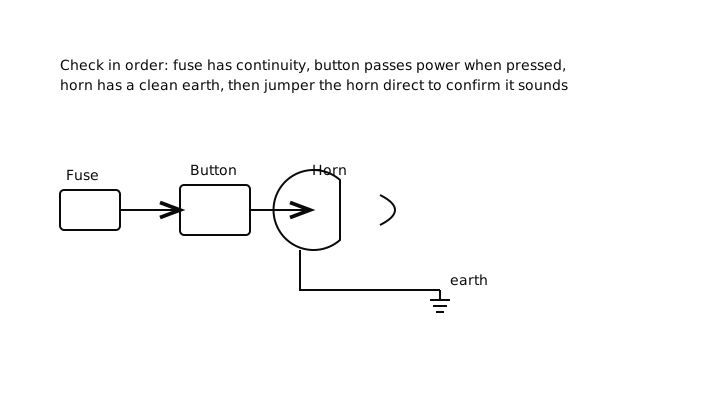
Blown accessory fuse
The horn is protected by a fuse, often shared with other accessories. A blown fuse is the most common reason a horn goes silent, and it is the quickest thing to check. If it has blown, find out why before simply replacing it, because a repeated blow means a short.
1Check the horn fuse
Find the accessory fuse for the horn on the wiring diagram, pull it, and check it for continuity with the multimeter or by eye. Replace a blown fuse with the correct rating and test again.
ExpectedA fuse with continuity is good; a blown fuse that keeps blowing points to a short in the circuit to trace
Poor earth at the horn
A horn needs a clean earth as well as a power feed. The horn earth is often a ring terminal on the frame that corrodes or works loose, which silences or weakens the horn even though power is present.
2Check the earth connection
Locate the horn earth point, clean the terminal and its contact face, and make sure it is tight. Then, with the button pressed, check for a good earth at the horn with the multimeter.
ExpectedA clean, tight earth and a good earth reading at the horn; a poor or missing earth found here is the fault
Worn horn button or failed horn
If the fuse and earth are good, the fault is either the button not passing power or the horn itself. Test them in that order, because a button is cheaper and easier than a horn and is a common wear point.
3Test the button, then jumper the horn
Check the horn button passes power only when pressed. If the button feeds power correctly but the horn is silent, briefly jumper power and a good earth straight to the horn terminals.
ExpectedA button that switches power confirms the button; a horn that stays silent with power and earth jumpered straight to it has failed and needs replacing
Broken wire or corroded connector
If power reaches the button but not the horn, or the earth is fine but no supply arrives, a broken wire or a corroded connector between the fuse, button and horn is the cause. Trace the feed with the wiring diagram.
4Trace the feed and earth
Use the wiring diagram to check continuity along the horn feed from the fuse through the button to the horn, and along the earth, cleaning any corroded connectors you find.
ExpectedContinuity all the way along the feed and earth; a break or corroded connector located here is the fault to repair
When to book an engineer
A horn is a simple circuit, so most owners can fix it, but book an engineer if the fuse keeps blowing and you cannot find the short, if the horn is fed through a voltage reducer that is itself faulty, or if you would rather not trace accessory wiring. Where a horn is required for how and where you use the buggy, it is worth restoring promptly. An engineer can trace the circuit and fit the fuse, button or horn as needed.
Common questions
Why has my golf buggy horn stopped working?
The most common reasons are a blown accessory fuse and a poor earth at the horn, followed by a worn horn button or a failed horn. Check the fuse first, then the earth, because most horn faults are a supply or earth problem rather than the horn itself. Only condemn the horn once it has power and earth but stays silent.
How do I test a golf buggy horn?
Once you have confirmed the fuse and earth, briefly jumper power and a good earth straight to the horn's two terminals. If it sounds, the horn is fine and the fault is upstream in the button or wiring. If it stays silent with power and earth applied directly, the horn has failed and needs replacing.
Is the horn powered by the main batteries?
On most electric buggies the horn runs from the accessory supply, which is often a lower voltage feed from a voltage reducer rather than the full traction pack. That means an accessory fuse or the reducer can be involved. Identify the correct accessory circuit on the wiring diagram before testing.
Do I legally need a horn on my buggy?
Whether a horn is required depends on where and how the buggy is used, and the rules vary by location and by whether it is used on any public land. If a horn is needed for your use, treat a failed one as something to fix rather than leave. Check the rules that apply to you.
My horn sounds weak, what does that mean?
A weak or strained horn usually means a poor earth or a voltage drop from a corroded connection, rather than a failed horn. Clean and tighten the earth and the connectors in the feed, and check the supply voltage at the horn. A horn given clean power and earth should sound at full strength.
Guided check
Diagnose it step by step
Answer a few questions and we will point you at the most likely cause.
Question 1 of 3
Are all the lights and accessories dead, rather than just one?
Did this fix it?
Every guide is written from manufacturer service documentation and workshop practice, then reviewed before publication. Read how we write and review our repair guides.