Range is the question every electric golf cart buyer in Canada asks, and it deserves a straight answer rather than a brochure number. The honest answer is a range of ranges: a healthy lead-acid cart typically covers roughly 25 to 40 kilometres on a full charge, and a lithium cart roughly 50 to 80 kilometres, with premium large-capacity packs going further. Where you land inside those bands depends on temperature, terrain, load and battery age, and in Canada the temperature part matters more than anywhere the brochures are written. This guide gives the real figures, explains what cold does to them, and shows how to stretch every charge.
- Typical real-world range: roughly 25 to 40 km for lead-acid, 50 to 80 km for lithium, on flat ground in mild weather.
- Cold cuts range meaningfully. Expect around 10 to 20 percent less near freezing, and 30 to 50 percent less for lead-acid in deep cold.
- Hills, headwinds, soft ground, extra passengers and towing all subtract range. A loaded four-seater climbing cottage-country hills can halve the flat-ground figure.
- Battery age is the silent thief. A lead-acid pack in season four or five may deliver half its original range even in summer.
- For most Canadian uses, a daily route under 15 km, even an aging lead-acid cart is fine. Range anxiety mostly matters for large properties, campgrounds and cottage roads.
- Lithium holds its range advantage best in exactly the conditions Canada supplies: cold mornings and hilly ground.
The baseline numbers, honestly stated
A standard fleet-style cart carries a 48-volt battery system driving a motor that sips roughly 100 to 150 watt-hours per kilometre depending on speed, terrain and load. Feed that from a conventional lead-acid pack, where you can only use part of the rated capacity without shortening its life, and you get the familiar 25 to 40 kilometre real-world band. Swap in a lithium pack, which offers more usable capacity for the same nominal size and does not sag as it discharges, and 50 to 80 kilometres becomes normal, with big packs on premium builds exceeding that. These are moving distances. A golf round of 18 holes involves roughly 8 to 12 kilometres of driving, which is why even a tired cart completes a round, and why range questions really belong to property, cottage and community use.
What Canadian cold does to range
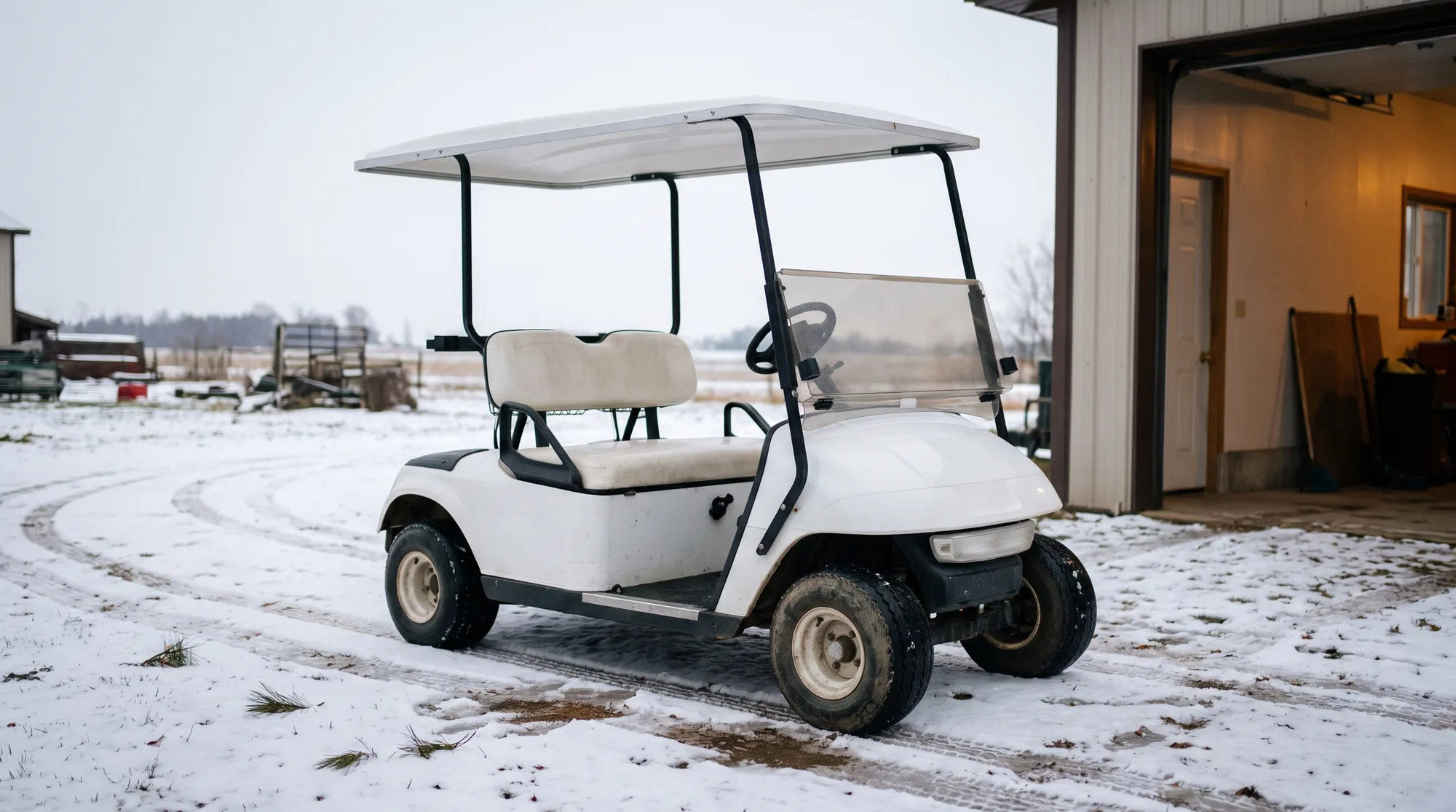
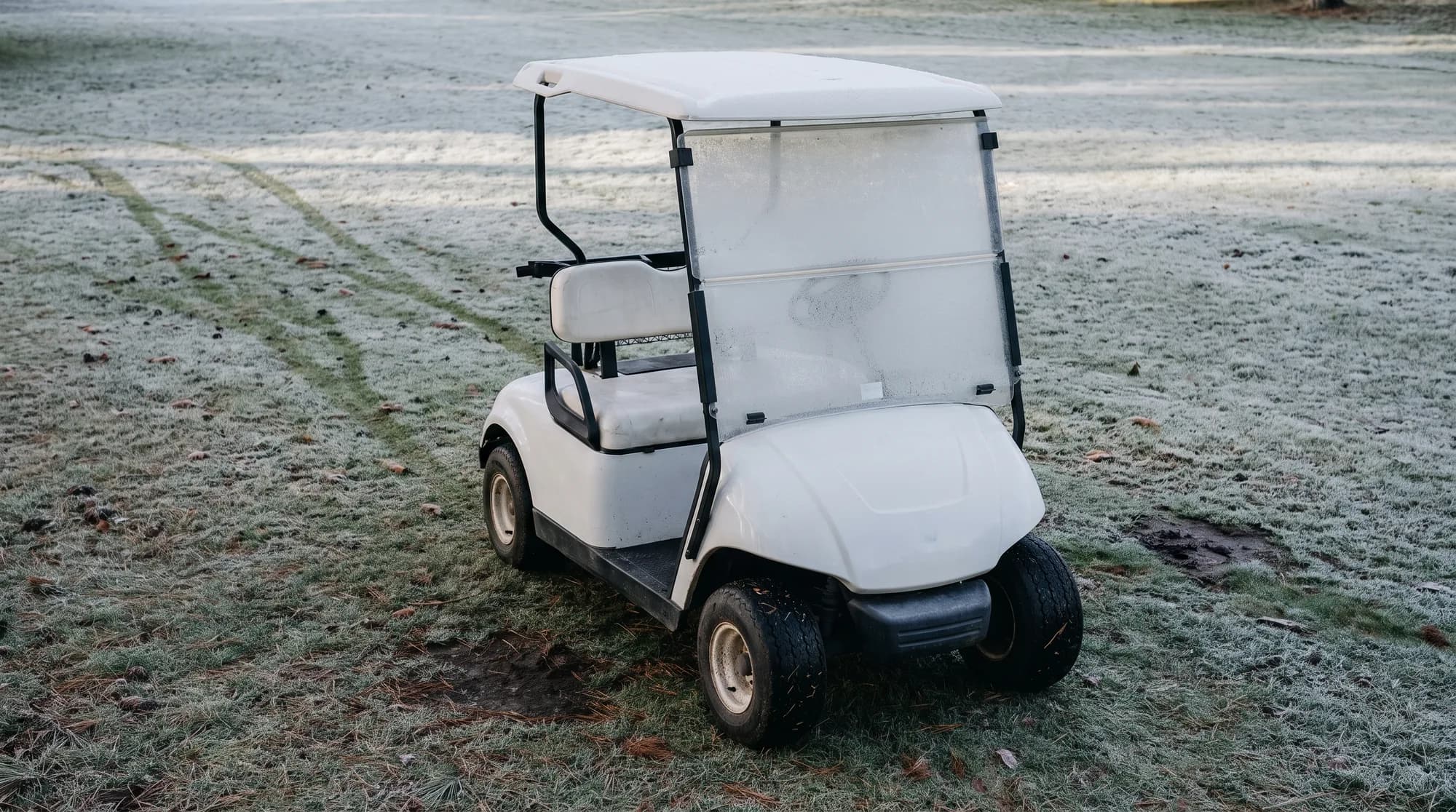
Batteries are chemistry, and chemistry slows in the cold. At around freezing, expect a cart to give up roughly 10 to 20 percent of its mild-weather range. Push into a proper cold snap and the two chemistries part company. A lead-acid pack at minus 18 degrees Celsius can deliver only around half of its rated capacity, and its voltage sags harder under load, so the cart feels sluggish long before it stops. Lithium loses noticeably less usable capacity when discharging in the cold, which is one of its quiet advantages in Canada, though it comes with its own rule: lithium must never be charged below freezing, and a good battery management system will block charging until the pack warms. If you regularly drive in winter, plan your range around the cold-day figure, not the July one, and read our guide to golf cart batteries in cold weather before choosing a chemistry.
Where the cart sleeps changes the winter numbers as much as the thermometer does. A battery is a thermal mass, and a cart that spends the night in a garage at 5 degrees starts the day with most of its capacity intact, then only cools slowly during a morning of use. The same cart cold-soaked overnight at minus 15 in an open shed starts the day already handicapped. Owners who use their carts through Canadian winters consistently report that warm storage, even barely heated storage, is worth more real range than any driving technique. If winter range matters to you, treat a plug near a warm parking spot as part of the vehicle spec.
The other range thieves
- Terrain: sustained hills are the biggest single factor after temperature. Cottage-country grades can cut range by a third or more compared with flat ground.
- Load: each additional passenger adds meaningful draw, and towing a trailer or clubs adds more. A six-seater working hard uses far more energy per kilometre than a two-seater cruising.
- Speed: pushing a cart at its top speed uses disproportionately more energy than cruising a few kilometres per hour slower.
- Surface: soft grass, sand, gravel and snow all add rolling resistance compared with pavement.
- Tire pressure: underinflated tires quietly tax every kilometre. Check monthly, and remember pressures drop as temperatures fall.
- Battery age: capacity fades every season, faster for lead-acid that has been stored poorly. Range you had in year one is not range you have in year four.
How much range do you actually need?
Most buyers overestimate their daily distance. A cart shuttling between a cottage, a dock and a neighbour might log 5 kilometres a day. A large rural property or campground loop might reach 15 to 25. A community where the cart is genuine daily transport can push past 30. Map your real week, take the biggest day, then double it as a margin for cold weather, detours and battery aging. If that number sits comfortably inside the lead-acid band, a well-maintained lead-acid cart will serve, and our cost guide for Canada covers the price difference. If it presses against the band, or your winters are serious, lithium stops being a luxury and becomes the practical choice. It is the difference between planning your day around the cart and simply using it.
Stretching the charge
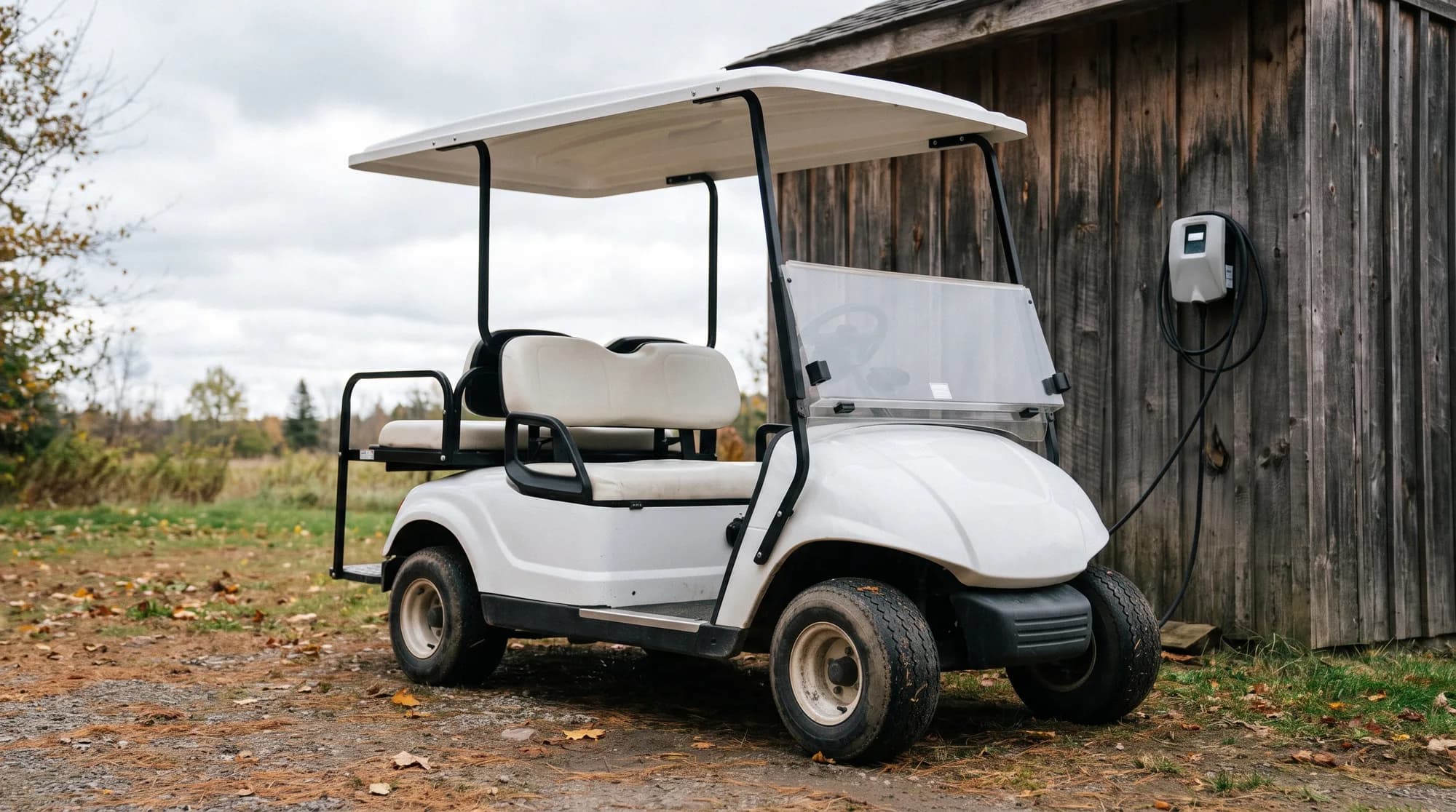
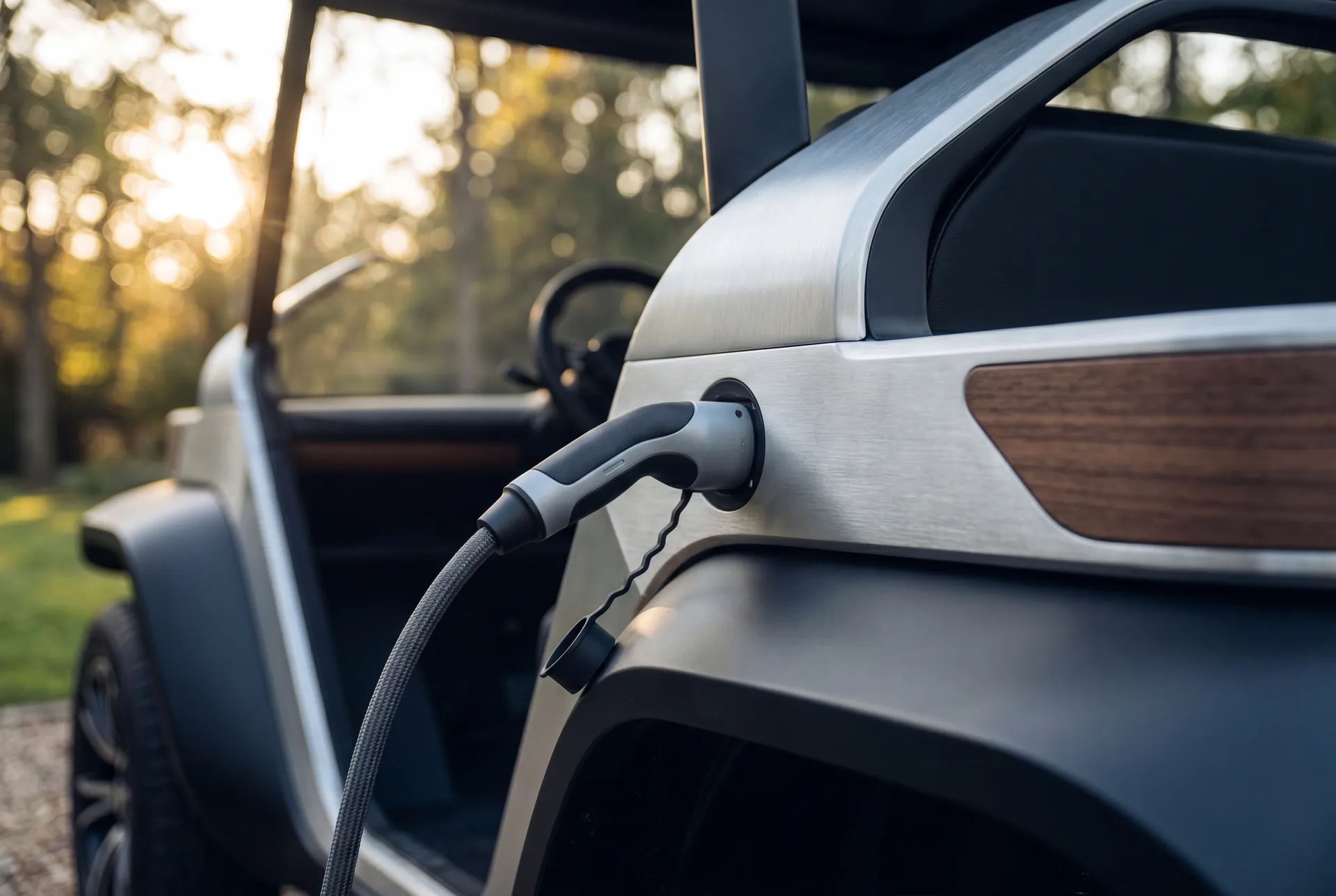
You cannot cheat physics, but you can stop wasting range. Keep tires at specification and check them as the seasons turn. Charge fully and correctly, following our golf cart charging guide, because a partly charged lead-acid pack both travels less and ages faster. Store the cart warm in winter if you can, since a battery that starts the day at 5 degrees inside a garage outperforms one soaked to minus 15 in a shed. Remove unused weight, drive smoothly rather than flat-out, and service the brakes so nothing drags. Together these habits are worth real kilometres, often the difference between a cart that just makes the loop and one that does it with margin.
Spec the range around your property
Tell us your distances, terrain and winters, and we will recommend a battery and build that covers them with margin, priced in CAD.
Frequently asked questions
How far can a 48V golf cart go on one charge?+
A healthy 48-volt lead-acid cart typically covers roughly 25 to 40 kilometres in mild weather, while a 48-volt lithium cart commonly manages 50 to 80 kilometres. Cold, hills, load and battery age all reduce those figures.
How much range does a golf cart lose in winter?+
Expect roughly 10 to 20 percent less range near freezing. In deep cold a lead-acid pack can lose 30 to 50 percent of its usable capacity, while lithium loses noticeably less when discharging, though it cannot be charged below freezing.
Is lithium worth it just for range?+
If your typical day fits easily inside a lead-acid cart's range, not necessarily. If you run long distances, hilly ground or cold winters, lithium's larger usable capacity, steadier power and lighter weight usually justify the premium over the pack's life.
Does driving slower really extend golf cart range?+
Yes. Energy use rises sharply with speed, so cruising a few kilometres per hour below maximum, accelerating gently and avoiding repeated hard stops can add a meaningful margin to a day's driving.
Why has my golf cart's range dropped since last year?+
Battery aging is the usual cause, accelerated by winters spent partly discharged. Test each battery, check tire pressures and charging behaviour, and if the pack is several seasons old, budget for replacement rather than chasing the symptom.
Related solutions
Ready to explore what we build?
See the vehicles and the setting this applies to, or get a tailored quote built around your site.
Ready to find the right buggy?
Tell us how and where it will work and we will specify a vehicle and a tailored quote built around you. Every build comes with a 3-year warranty and a 24-hour priority call-out.
Our guides are written and reviewed by the Hawke Electric Vehicles team, the people who specify, build, deliver and support the vehicles. We focus on honest, practical advice and flag where a figure depends on the build rather than guessing.
More guides by Hawke