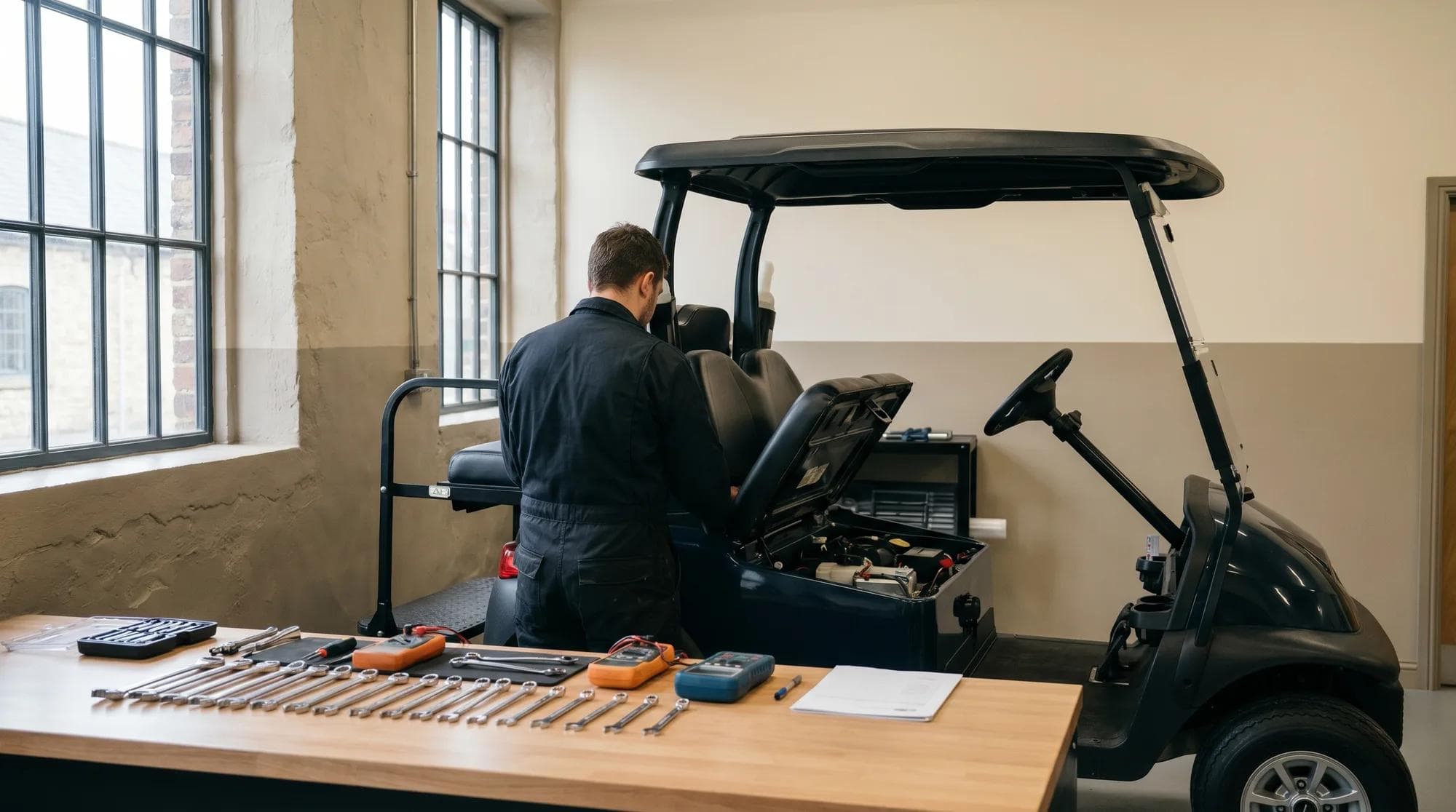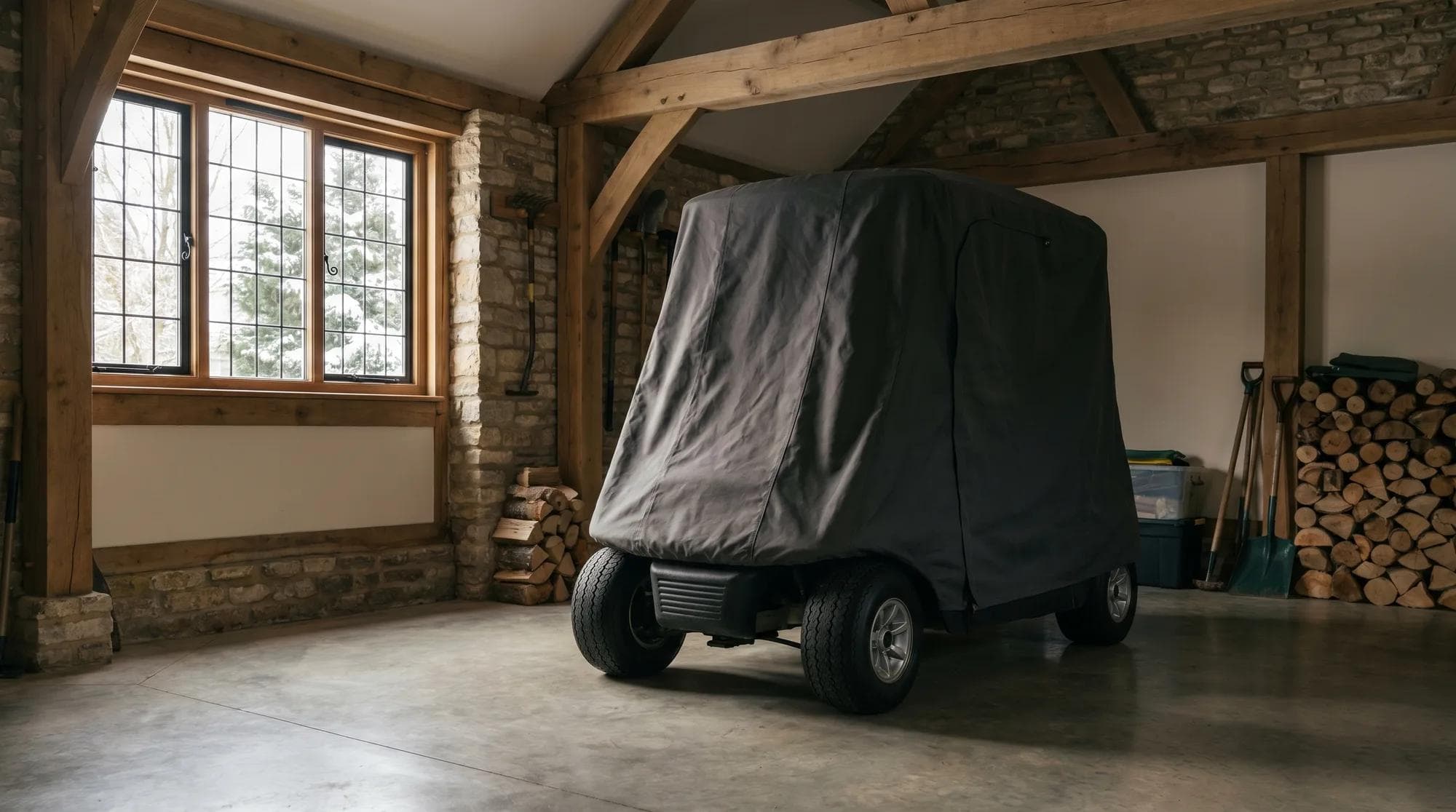
A buggy that's put away properly in November starts the new season as if nothing happened. One that's left dirty, flat and damp can cost you a battery, a set of seized brakes or a morning of fiddling before it'll move. Getting golf buggy winter storage right isn't complicated, but it does reward a bit of method. Here's the full routine we'd follow, from the final clean to the first drive of spring.
Why golf buggy winter storage matters
Most buggy problems that show up in spring were made in autumn. Cold, damp and weeks of standing still are hard on batteries, brakes and tyres, and a buggy left in the open takes the worst of all three. The fix is mostly prevention: spend an hour or two before the weather turns, then keep half an eye on things over the colder months. It pairs neatly with our winter battery care guide, which goes deeper on the part that suffers most in the cold.
Step one: clean and dry the buggy
Start with a proper clean. Grass, mud and grit hold moisture against the bodywork and underside, and moisture is what causes corrosion over a long stand. Wash it down, get into the wheel arches and under the seats, then let it dry fully before it goes away. A buggy put under a cover while still wet is asking for trouble.
- Wash the body, wheels and underside, then rinse off salt or fertiliser residue.
- Dry everything thoroughly, including seats, footwells and any storage areas.
- Wipe down the battery tray and terminals so they go into winter clean and dry.
- Lightly lubricate any pivots or hinges the maker recommends, then wipe off the excess.
Step two: battery care and charging
The battery is the part most likely to be ruined by a careless winter, so it earns its own step. The rule is simple: don't leave it sitting flat. A lead-acid pack left discharged in the cold can sulphate and lose capacity for good, sometimes in a single season. Lithium is far more forgiving, but it still shouldn't be left fully flat for months. Charge the buggy fully before storage, then keep it topped up.
How you keep it topped up depends on the battery and the maker's advice. Some owners give a full charge every few weeks; others use a suitable maintenance charger left connected, where the maker allows it. Lead-acid likes a full charge each time rather than small top-ups; lithium is happy with the occasional boost. Either way, charge in a dry, ventilated space and follow the guidance for your pack. We've set out the cold-weather detail in the battery winter care guide.
Step three: tyres, brakes and the handbrake
Tyres lose a little pressure as they sit, and a soft tyre under load can develop a flat spot over a long stand. Set them to the recommended pressure before storage and check them once or twice over winter. If you can, move the buggy a few feet now and then so the same patch of tyre isn't taking the weight for months.
Brakes deserve a thought too. Brake the buggy on a long, damp stand and the shoes or pads can stick to the drum or disc. The usual advice is to leave the parking brake off and chock the wheels instead, on level ground, so nothing seizes. If your buggy must be parked on a slope or the maker says otherwise, follow their guidance, but for most buggies, handbrake off plus chocks is the safer winter setup.

Step four: cover it in a dry, ventilated space
Where the buggy spends winter matters as much as how you prep it. A dry, ventilated garage, barn or outbuilding is ideal. Avoid anywhere damp, and avoid sealing the buggy up airtight, since trapped moisture causes more harm than a little cold air. Park it out of direct draughts from open doors if you can.
Use a breathable cover made for the job rather than a plastic sheet. A breathable cover keeps dust and drips off while letting moisture escape; plastic traps condensation against the bodywork and seats. If the buggy has to live outside, a proper waterproof but breathable cover and a hard standing off the wet ground are the minimum, though indoors is always better.
- Do this
- Dry, ventilated garage or barn
- Avoid this
- Damp shed or open ground
- Do this
- Fully charged, topped up over winter
- Avoid this
- Left flat for months
- Do this
- Breathable, fitted cover
- Avoid this
- Plastic sheet that traps damp
- Do this
- Handbrake off, wheels chocked
- Avoid this
- Parking brake left on for months
- Do this
- Inflated to spec, moved occasionally
- Avoid this
- Soft, left on one spot all winter
| Do this | Avoid this | |
|---|---|---|
| Location | Dry, ventilated garage or barn | Damp shed or open ground |
| Battery | Fully charged, topped up over winter | Left flat for months |
| Cover | Breathable, fitted cover | Plastic sheet that traps damp |
| Brakes | Handbrake off, wheels chocked | Parking brake left on for months |
| Tyres | Inflated to spec, moved occasionally | Soft, left on one spot all winter |
A buggy put away clean, charged and covered starts the season as if nothing happened.
Step five: periodic checks through winter
Storage isn't quite fit and forget. A quick look every few weeks catches small problems before they grow. Check the battery is holding charge and top it up as needed. Glance at the tyre pressures, move the buggy a little if you can, and make sure no damp is getting in under the cover. Five minutes now and then is far cheaper than a flat battery or a seized brake in March.
- Check and top up the battery charge every few weeks per the maker's advice.
- Look over tyre pressures and reseat the buggy on a fresh patch of tyre.
- Lift the cover and check for any condensation, leaks or signs of damp.
- Make sure rodents haven't taken an interest in cables or seats.
Recommissioning in spring
When the season comes round, don't just whip the cover off and drive. Give the buggy a once-over first. Charge it fully, check the tyre pressures, take the chocks away and test the brakes gently before you trust them at speed. Look over the cables, connectors and lights, and listen for anything that doesn't sound right on the first slow roll. If something feels off, our maintenance checklist walks through a full seasonal inspection, and the common faults guide covers the usual suspects if it won't behave.
Treat that spring check as the mirror image of your autumn routine. Clean, charge, set the tyres, test the brakes, and you'll be back in service with no nasty surprises. Looking after a buggy this way is most of what keeps it reliable for years, and it's the sort of care we build into every vehicle, backed by a 3-year warranty and a 24-hour VIP call-out. There's more on day-to-day care across our ownership pages.
Planning ahead for your buggy?
Caring for a buggy you own, or specifying a new one? Tell us how and where you'll use it and we'll set out the right battery, charging and care for your season. Start with a tailored quote.
Frequently asked questions
How do you store a golf buggy over winter?+
Clean and fully dry the buggy, charge the battery and keep it topped up, set the tyres to the right pressure, leave the handbrake off with the wheels chocked, then cover it with a breathable cover in a dry, ventilated space. Check on it every few weeks.
Should I leave my golf buggy battery on charge over winter?+
Don't leave it flat. Charge it fully before storage, then keep it topped up, either with a full charge every few weeks or a suitable maintenance charger where the maker allows. Lead-acid prefers full charges; lithium copes with the occasional top-up.
Should the handbrake be on or off for winter storage?+
For most buggies on level ground, leave the parking brake off and chock the wheels instead, so the brakes can't stick to the drum or disc over a long damp stand. If you must park on a slope or the maker advises otherwise, follow their guidance.
Can I store a golf buggy outside in winter?+
Indoors in a dry, ventilated space is always better. If it has to live outside, use a waterproof but breathable cover and keep it off the wet ground on hard standing. Outdoor storage works, but it's harder on the battery, brakes and bodywork.
What cover should I use to store a buggy over winter?+
Use a breathable cover made for buggies rather than a plastic sheet. A breathable cover keeps off dust and drips while letting moisture escape, whereas plastic traps condensation against the body and seats and can cause corrosion.
What should I do before driving a stored buggy in spring?+
Charge it fully, check tyre pressures, remove the chocks, and test the brakes gently at low speed before trusting them. Look over cables, connectors and lights, and follow the maintenance checklist for a full inspection before you head out properly.
Related solutions
Ready to explore what we build?
See the vehicles and the setting this applies to, or get a tailored quote built around your site.

Ready to find the right buggy?
Tell us how and where it will work and we will specify a vehicle and a tailored quote built around you. Every build comes with a 3-year warranty and a 24-hour priority call-out.
Our guides are written and reviewed by the Hawke Electric Vehicles team, the people who specify, build, deliver and support the vehicles. We focus on honest, practical advice and flag where a figure depends on the build rather than guessing.
More guides by Hawke