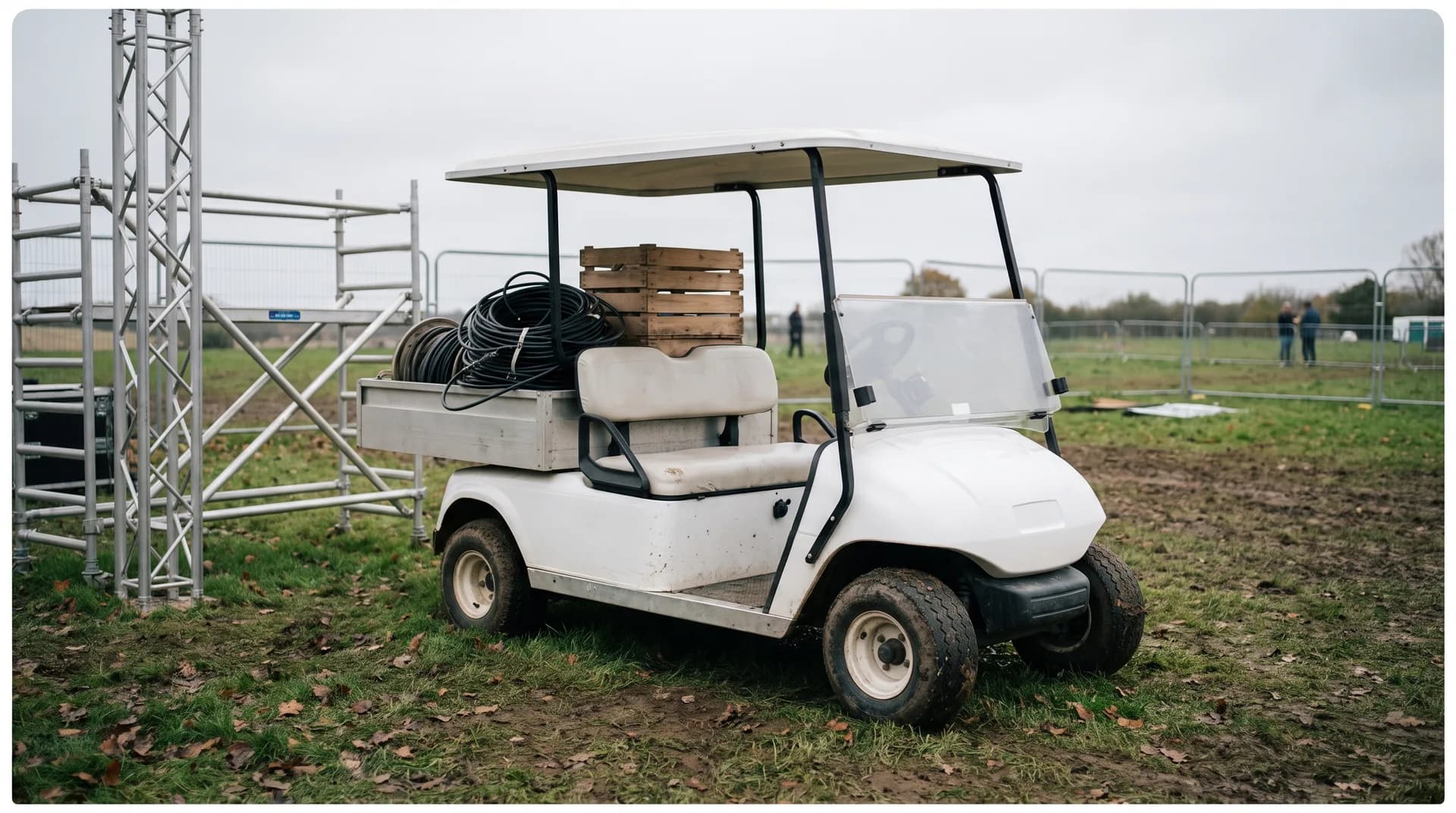
The show is two days. The build is ten, and the derig is four, and on most large outdoor events that fortnight of work is where a buggy fleet earns its keep hardest. During the show, buggies move guests at predictable peaks along a fixed route. During build and derig they run continuously, in every direction, carrying crew, tools, cable, water, radios and the person who has to be at the far gate in four minutes. It is the most demanding phase of the hire and the one most often left out of the budget, because the transport line in the spreadsheet was written against event days. This guide covers what the build fleet actually does, how to specify it, and how to price it without discovering the gap in week two.
- Build and derig usually run the fleet harder than the show itself: longer hours, more journeys, heavier loads.
- Budget the hire period from first delivery to final collection, not from the event days.
- Crew transport and kit moving are different jobs; a passenger buggy is a poor cargo vehicle and the reverse is also true.
- Ground is at its worst during build and derig, before trackway goes down and after it comes up.
- Overnight charging, secure storage and key control matter more on a long build than on a single show day.
What an event build buggy hire fleet actually does
Three distinct jobs, and confusing them is the classic specification error. Crew transport is the first: heads of department, site managers, riggers and technicians who need to cross a hundred-acre site repeatedly and whose time is the most expensive thing on the build. A four-seater with a small load space suits this, and every hour of walking it removes is an hour of skilled labour recovered. Kit and consumables moving is the second: cable drums, tools, fencing components, water, PPE, radios. This wants a utility platform with a proper load area, not a passenger buggy with things balanced on the back seat. Site management and safety is the third, the roving presence that needs to be anywhere quickly, often with a radio and sometimes with a first aider aboard. Specify by job rather than by seat count, and the fleet ends up smaller and more useful, which is the same principle our guide for event management companies applies across a season.
The hire period problem
Hire is counted from delivery to collection, so a build fleet is by definition a long hire, and that is the single most important budget line to get right. An event with a ten-day build, a two-day show and a four-day derig is a sixteen-day hire at minimum, and often longer once you allow for the fleet arriving before the crew and leaving after the last lorry. The good news is that long hires price far better per day than repeated short ones, because delivery and collection happen once, and the daily rate typically softens with duration. Our weekend hire guide explains that arithmetic. The practical move is to quote the whole period from the start rather than extending twice, since a planned sixteen-day hire is almost always better value than a two-day hire extended in a panic.
- What it covers
- HODs and technicians crossing site
- What it needs
- 4 seats, small load space, weather protection
- Common mistake
- Sizing to passenger peaks rather than continuous use
- What it covers
- Cable, tools, fencing, water
- What it needs
- A proper load bed or cargo box, payload headroom
- Common mistake
- Loading a passenger buggy and calling it a utility
- What it covers
- Roving presence, radios, safety
- What it needs
- Fast, agile, always available
- Common mistake
- Letting it get borrowed for kit runs
- What it covers
- Crew welfare runs, medical access
- What it needs
- Reliable, protected from reassignment
- Common mistake
- Assuming it can wait until show days
| What it covers | What it needs | Common mistake | |
|---|---|---|---|
| Crew transport | HODs and technicians crossing site | 4 seats, small load space, weather protection | Sizing to passenger peaks rather than continuous use |
| Kit and consumables | Cable, tools, fencing, water | A proper load bed or cargo box, payload headroom | Loading a passenger buggy and calling it a utility |
| Site management | Roving presence, radios, safety | Fast, agile, always available | Letting it get borrowed for kit runs |
| Accessibility and welfare | Crew welfare runs, medical access | Reliable, protected from reassignment | Assuming it can wait until show days |
Ground is at its worst during build and derig
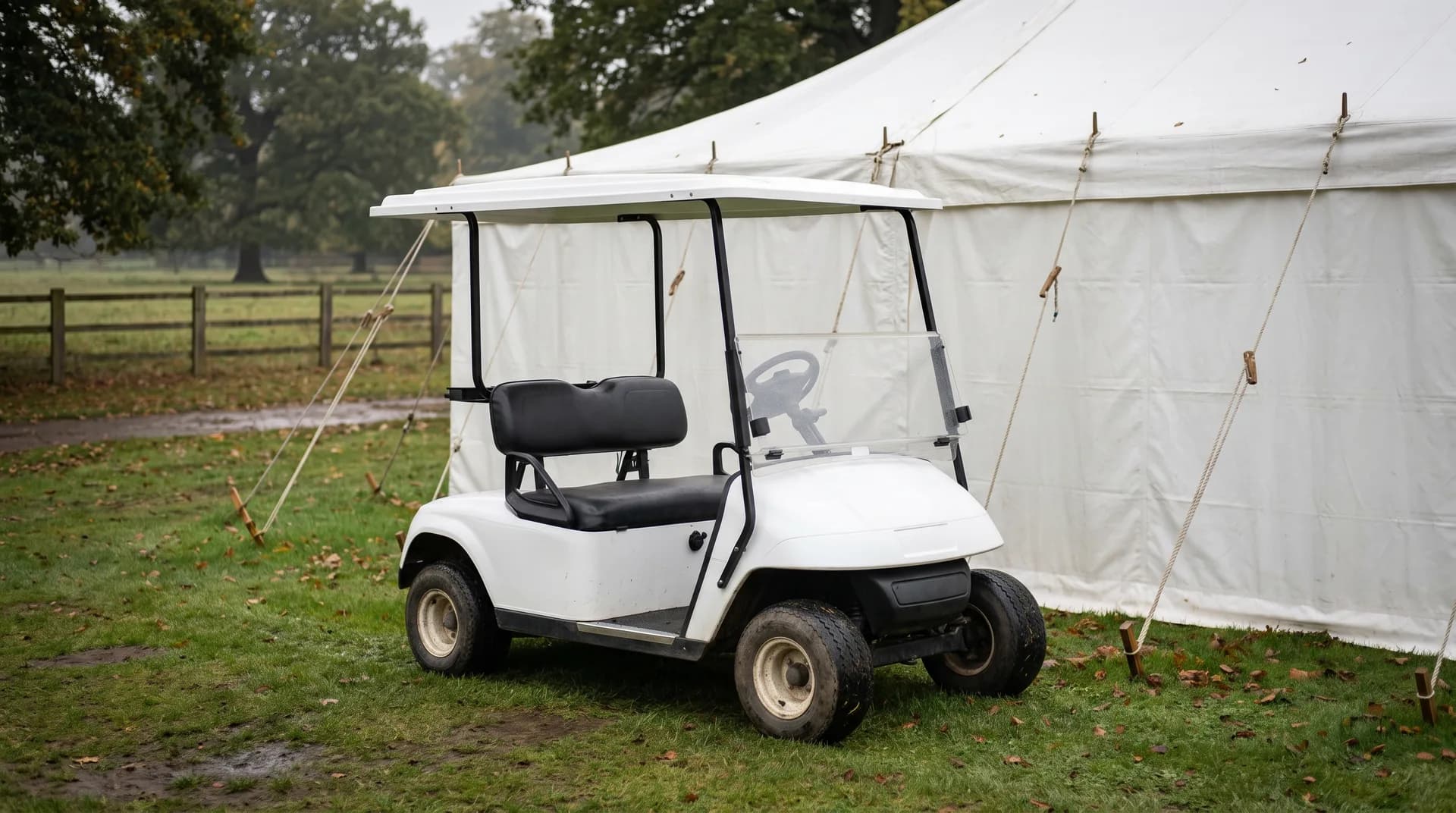
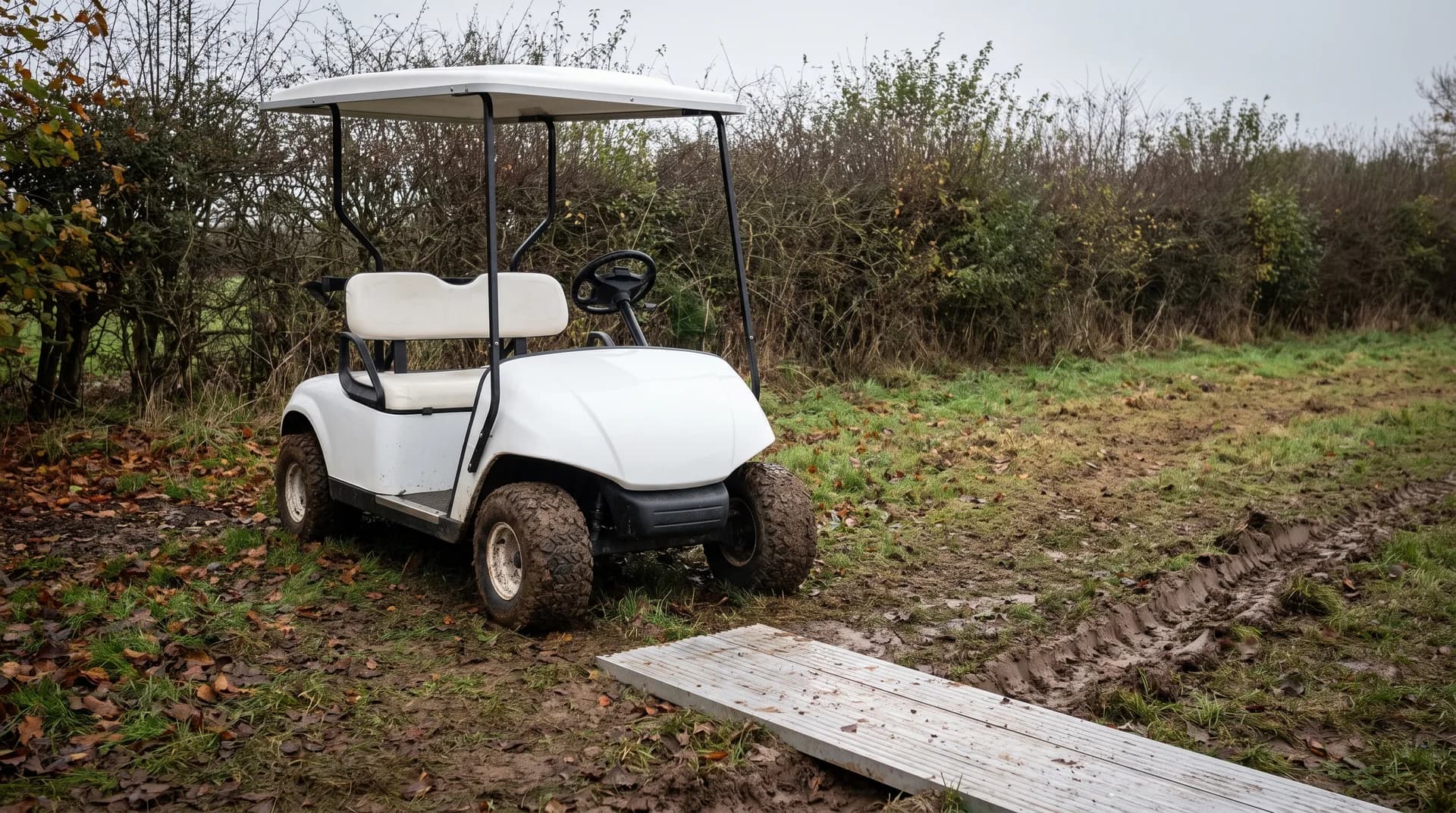
This surprises people every year. During the show the site has trackway, matting, dressed routes and a dry crust from a week of good management. During build, none of that exists yet; during derig, it has just been lifted, and every heavy vehicle on site has spent a fortnight churning what remains. Add a wet week and the build fleet is working on the worst ground the site will see. Specify for that rather than for show-day conditions: appropriate tyres, sensible route planning around the worst areas, and an honest conversation with your supplier about what the field does when it rains. Our guide to ground conditions and site access covers the specification choices, and it is worth reading before you sign anything, not after the first recovery.
Long hours, night working and charging
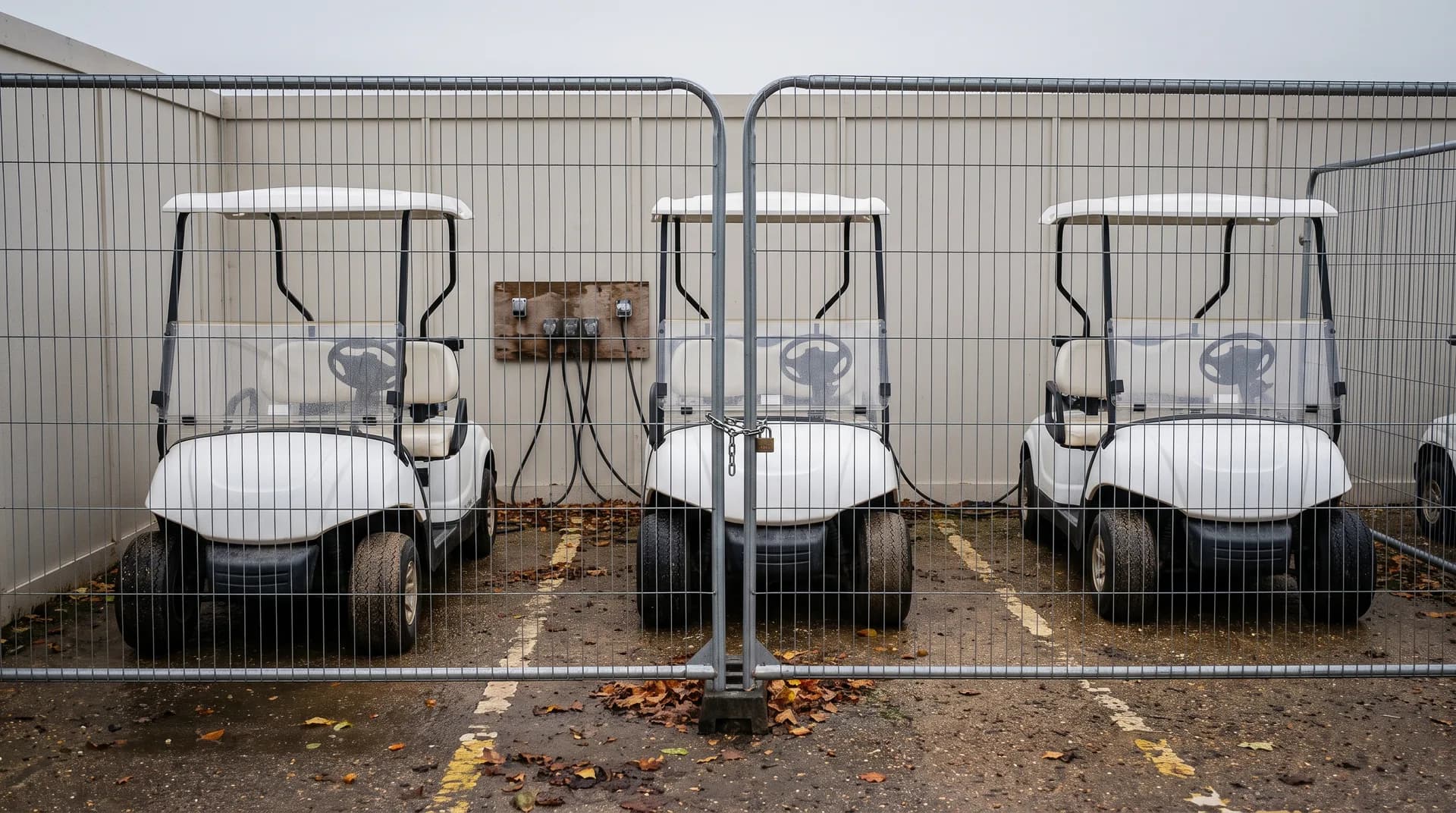
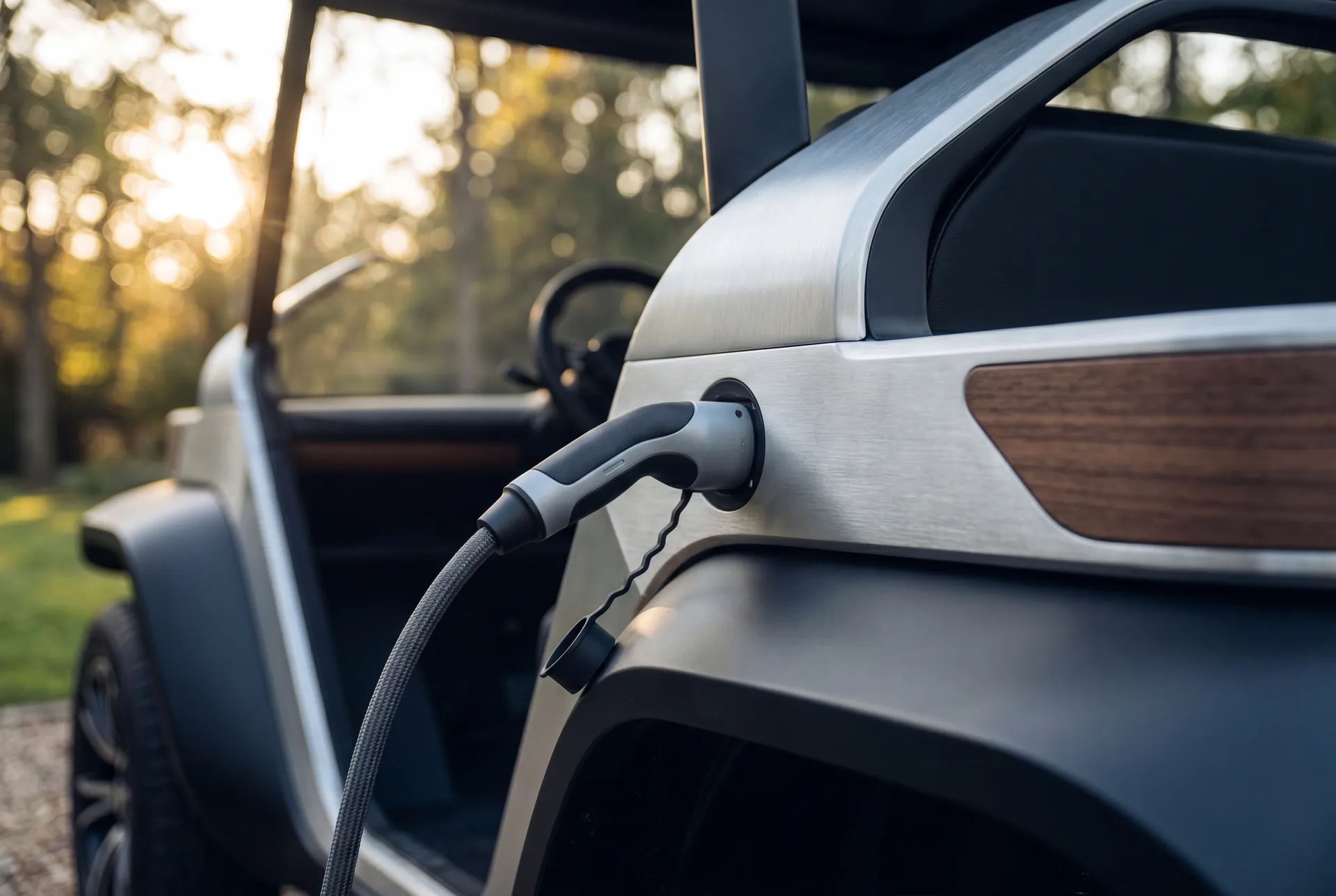
Build and derig run to different hours from the show, often starting before dawn and continuing under floodlight, and that changes three things about the fleet. Charging becomes a genuine operation rather than an afterthought: a buggy that runs sixteen hours a day needs a disciplined overnight charge, a designated charging area with enough sockets, and someone whose actual job it is to plug them in. Lighting matters, because crew move around a dark site among vehicles, and a buggy that is invisible at five on a January afternoon is a hazard; our night-time hire guide covers the specification. And security matters more than on a show day, because a build site is quiet at three in the morning and a buggy is a portable, valuable thing. Key control and a secure compound are not paranoia; they are the difference between a fleet and an incident report, as our security and overnight storage guide sets out.
Pricing the build fleet into your budget
Four numbers turn this from a guess into a line you can defend. The full hire period, first delivery to final collection, including the days either side of the crew. The fleet by job, split between passenger and utility rather than expressed as a single seat count. The site distances, because a hundred-acre site and a ten-acre site need different fleets for the same crew. And the hours, because a fleet running sixteen-hour days has different charging and support needs from one running eight. Give a supplier those four and you will get a quote you can put in front of a production accountant. If you would rather sanity check the figure first, the event buggy hire calculator gives an instant indication, and when you are ready we will price the whole build in one hire quote. Long builds are the norm on the events we serve most often, from festivals to film and TV productions.
Frequently asked questions
Do you need buggies during event build and derig?+
On any large site, yes, and usually more than during the show. Build and derig involve continuous crew movement across the whole site plus constant kit moving, and the time saved for skilled crew is normally the largest single justification for the fleet.
How long should a build and derig buggy hire be?+
From the first delivery to the final collection, which typically means the fleet arrives before the crew and leaves after the last lorry. An event with a ten-day build, two show days and a four-day derig is a sixteen-day hire at minimum, and it is far better value quoted as one period than extended twice.
What buggies suit event crew and kit moving?+
Two different vehicles. Crew transport wants passenger seats with a small load space and weather protection. Kit moving wants a utility platform with a real load bed and payload headroom. Loading a passenger buggy with cable drums is the classic and expensive mistake.
Is the ground worse during build than during the show?+
Usually, yes. Trackway and matting are not down yet during build and have been lifted by derig, and every heavy vehicle on site has been working the same ground for a fortnight. Specify tyres and vehicles for build conditions rather than show-day conditions.
How do you charge buggies during a long site build?+
Treat it as an operation: a designated charging area with enough sockets, chargers that stay with the fleet, and a named person responsible for plugging in every night. A fleet running sixteen-hour days will not survive an ad-hoc approach to charging.
Price the build, not just the show
Give us the full build and derig period, the site distances and the split between crew and kit, and we will quote the whole fleet as one hire.
Related solutions
Ready to explore what we build?
See the vehicles and the setting this applies to, or get a tailored quote built around your site.

Ready to find the right buggy?
Tell us how and where it will work and we will specify a vehicle and a tailored quote built around you. Every build comes with a 3-year warranty and a 24-hour priority call-out.
Our guides are written and reviewed by the Hawke Electric Vehicles team, the people who specify, build, deliver and support the vehicles. We focus on honest, practical advice and flag where a figure depends on the build rather than guessing.
More guides by Hawke