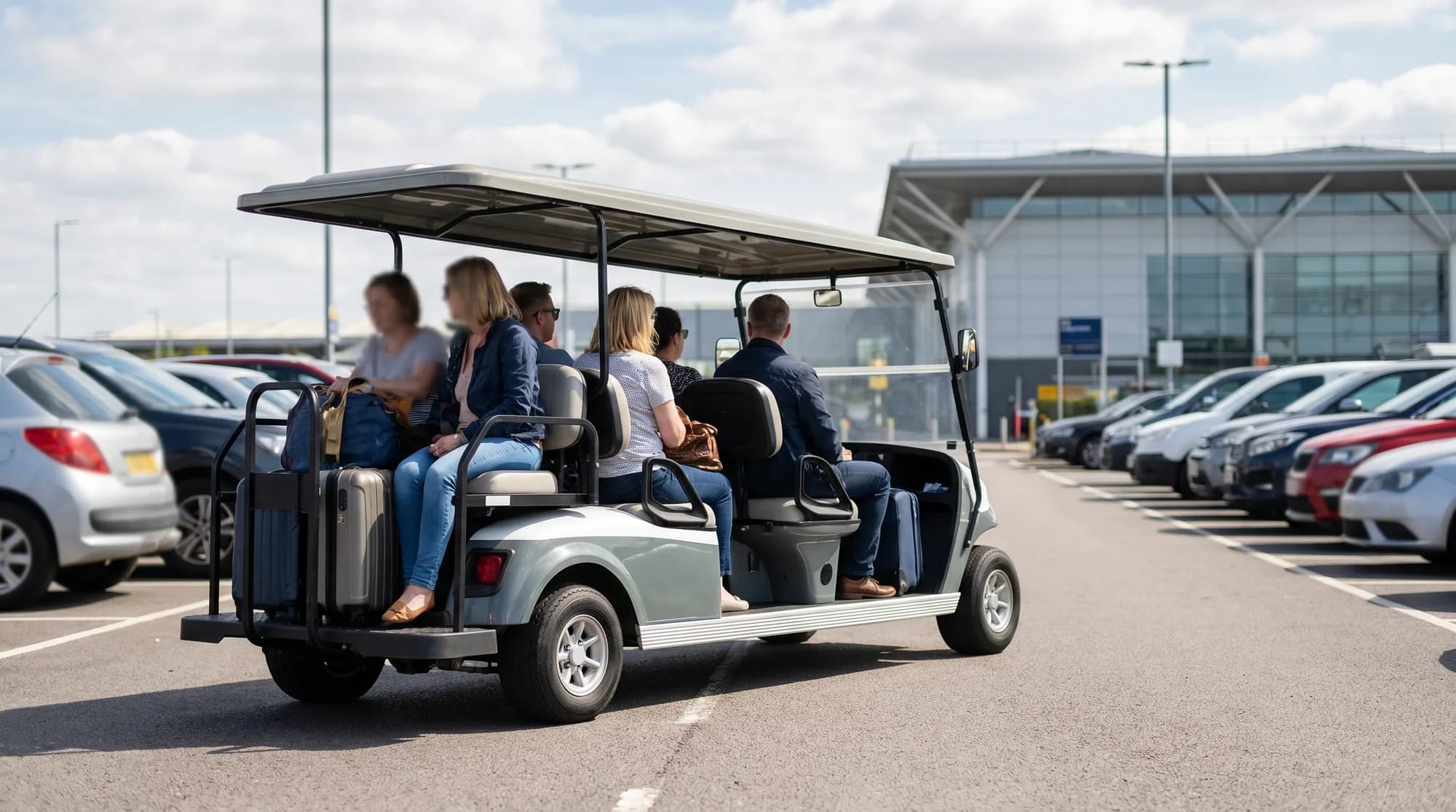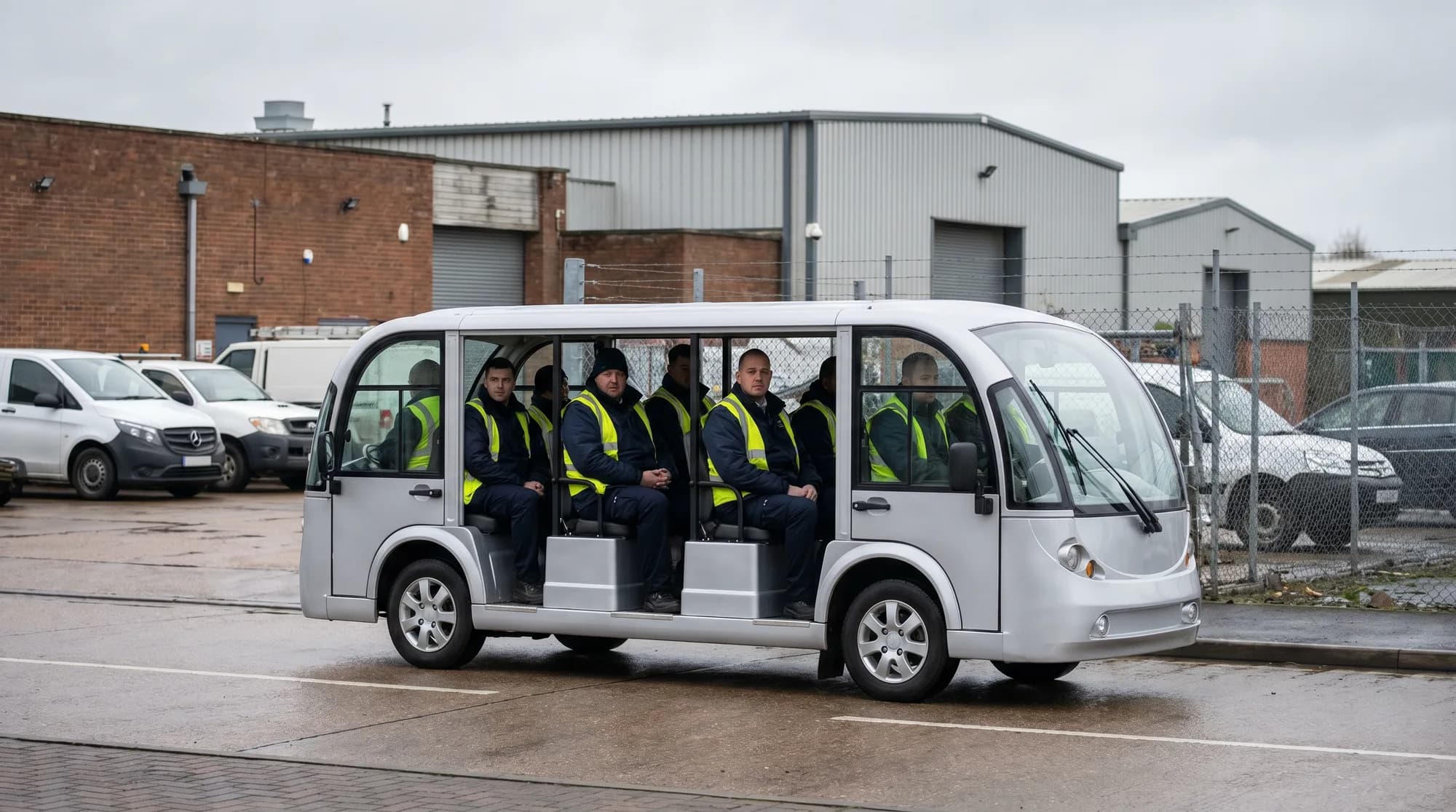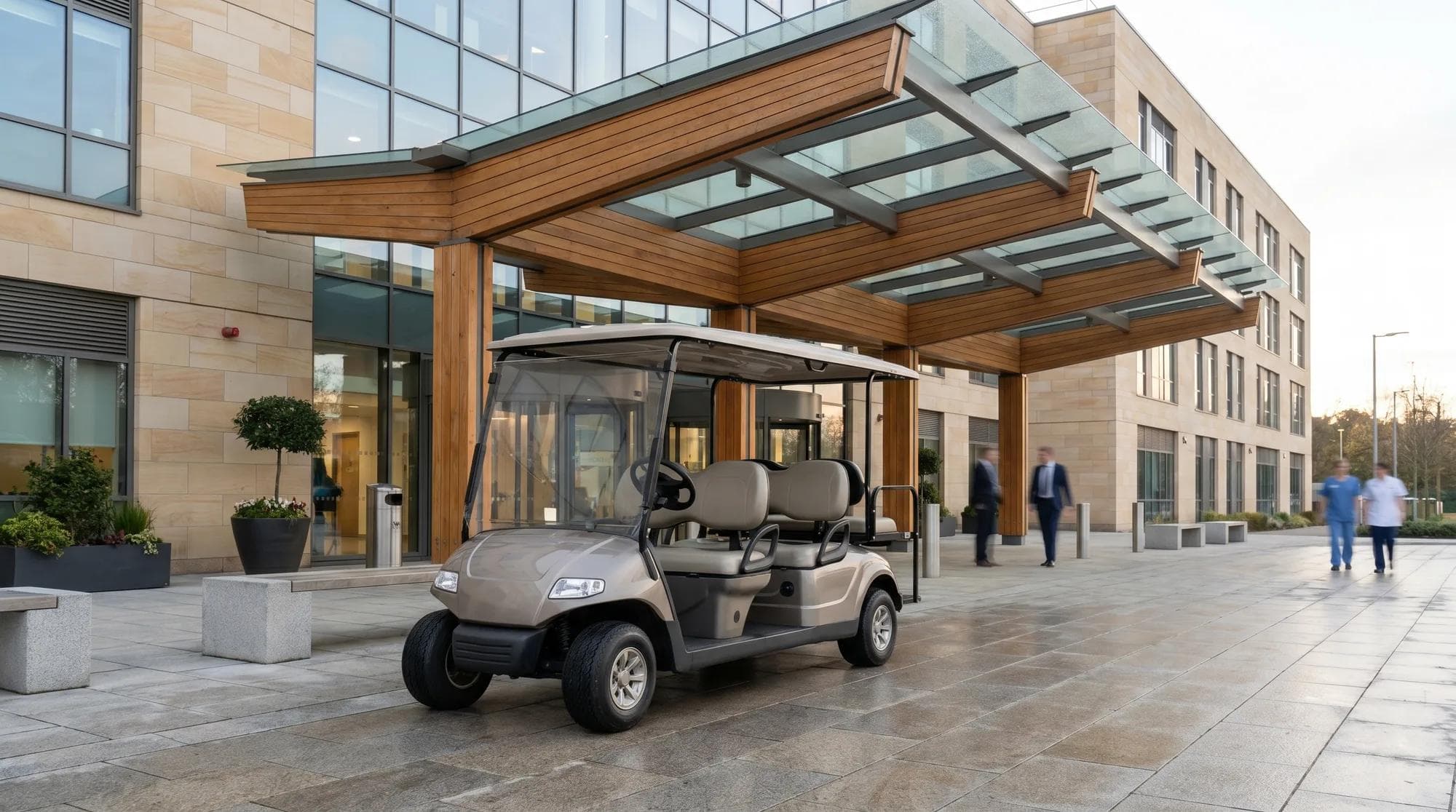
Big hospital sites are tiring to cross. The distance from a car park to a ward can be several hundred metres, often outdoors, sometimes uphill. For someone who's frail, recovering or anxious about an appointment, that walk is a real barrier. A hospital buggy bridges that gap. It carries patients and visitors gently between entrances, clinics and wards, and the same vehicle can move laundry, meals and waste behind the scenes when it isn't needed for people.
What does a hospital buggy actually do?
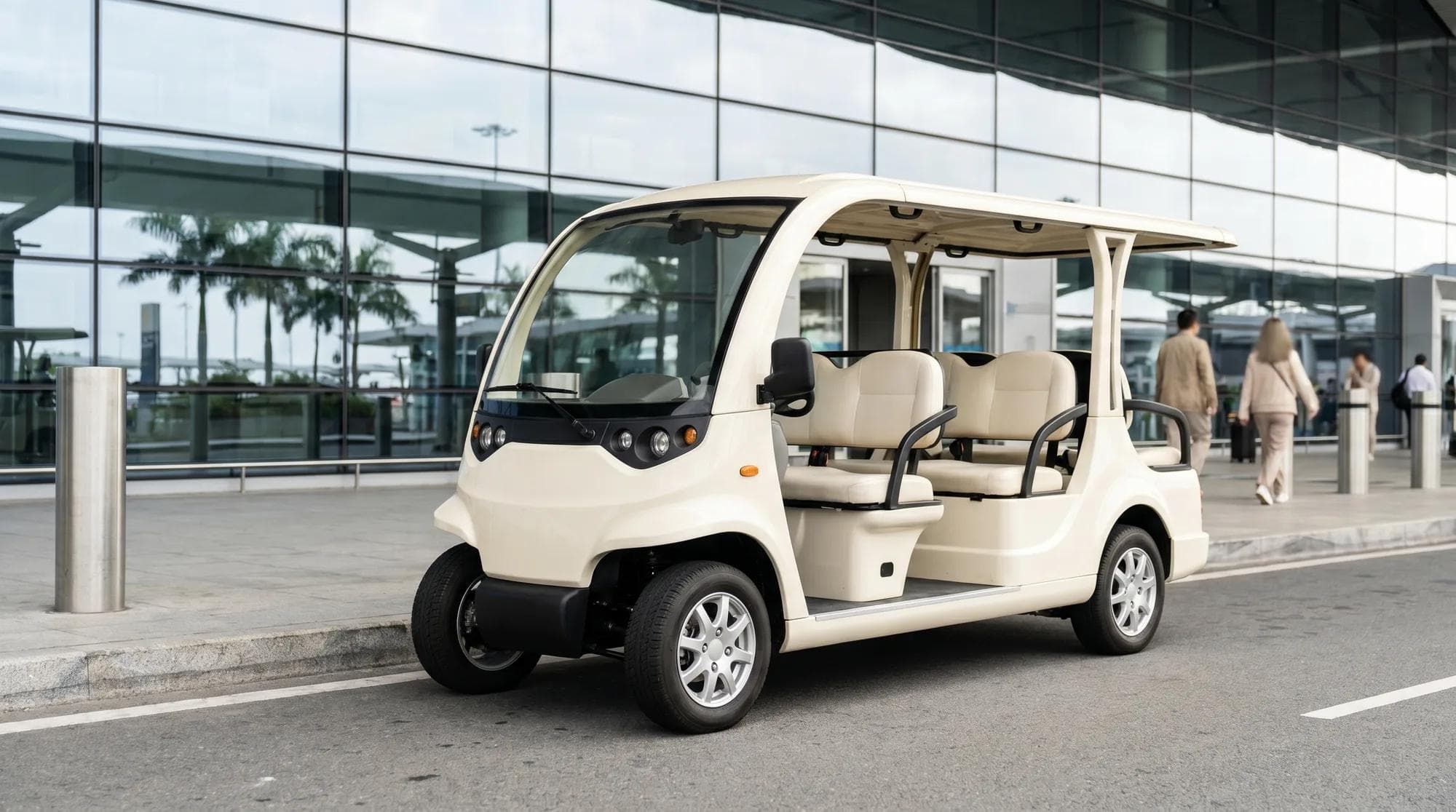
Its first job is patient transport across the site. Someone arrives at the main entrance, can't easily walk to the clinic, and a buggy takes them there comfortably. It's the same on the way out, when people are sore or tired and a long walk back to the car feels like too much. A patient buggy turns a daunting journey into a short, calm ride.
Many UK hospitals already run a volunteer buggy service for exactly this reason. It's become a familiar part of how large trusts help people get around. We mention that as market context, not as a claim: we're a new dealer and don't yet have hospital clients. What we can do is build the right vehicle for the job, then stand behind it.

Accessibility and dignity come first
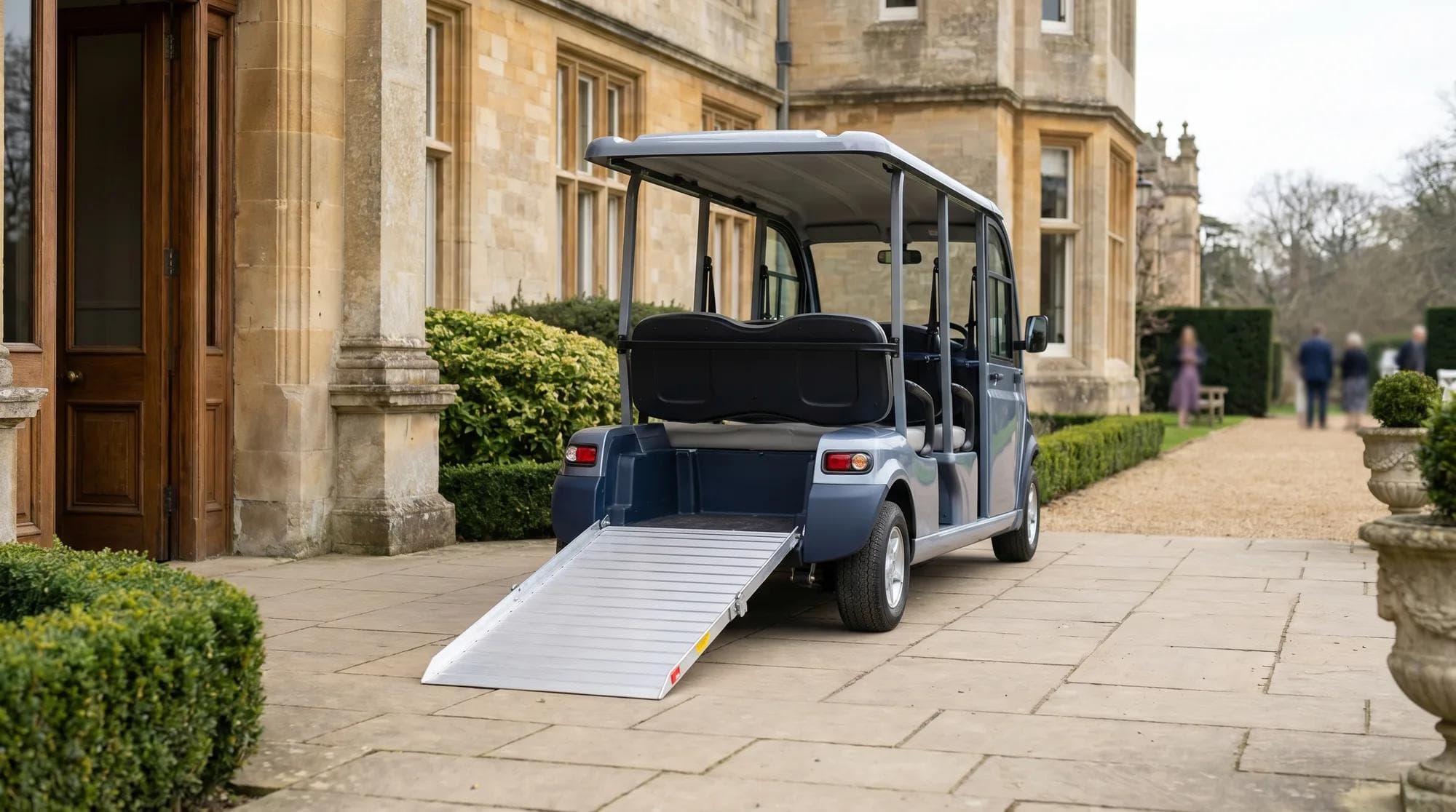
Getting on and off matters more than almost anything else on a healthcare site. A low step, a steady handhold and seats at a sensible height make a buggy usable for people who can't manage a high climb. For passengers who use a wheelchair, a flat or ramped layout that lets them stay seated removes the awkward, undignified business of transferring. Our accessible and wheelchair-friendly buggy guide goes into the layout choices in more detail, and the same thinking sits behind our accessible PRM transport work for passengers with reduced mobility.
Dignity is in the details. A gentle ride, somewhere to rest a bag or a stick, a roof and side protection against rain, and a driver who isn't rushing. None of that is complicated, but it's the difference between a service people feel grateful for and one they feel like a burden using. We'd always specify for comfort first on a vehicle that carries patients.
Why quiet operation matters in a clinical setting
Hospitals are stressful enough without engine noise and fumes. An electric buggy runs almost silently, so it won't add to the din near entrances, outpatient areas or ward windows. There's no exhaust either, which keeps the air clean around doorways where people gather and where, frankly, you really don't want petrol fumes drifting indoors.
Quiet helps the passenger too. A calm, near-silent ride is reassuring for someone who's nervous, and it makes conversation easy if they need to ask the driver something. On a site built around recovery and care, the buggy should be the thing nobody notices, not the thing that wakes a ward.
On a site built around recovery, the buggy should be the thing nobody notices, not the thing that wakes a ward.
One fleet, patients and logistics both
The same vehicles that carry people can earn their keep moving things. A utility buggy, our Hawke S2 Pickup, is built for the load-carrying side: clean and dirty laundry between blocks, meal trolleys to outlying wards, waste and recycling to collection points, and parts or stores for the estates team. It saves staff long walks pushing trolleys across a site, and it keeps service traffic off the main pedestrian routes.
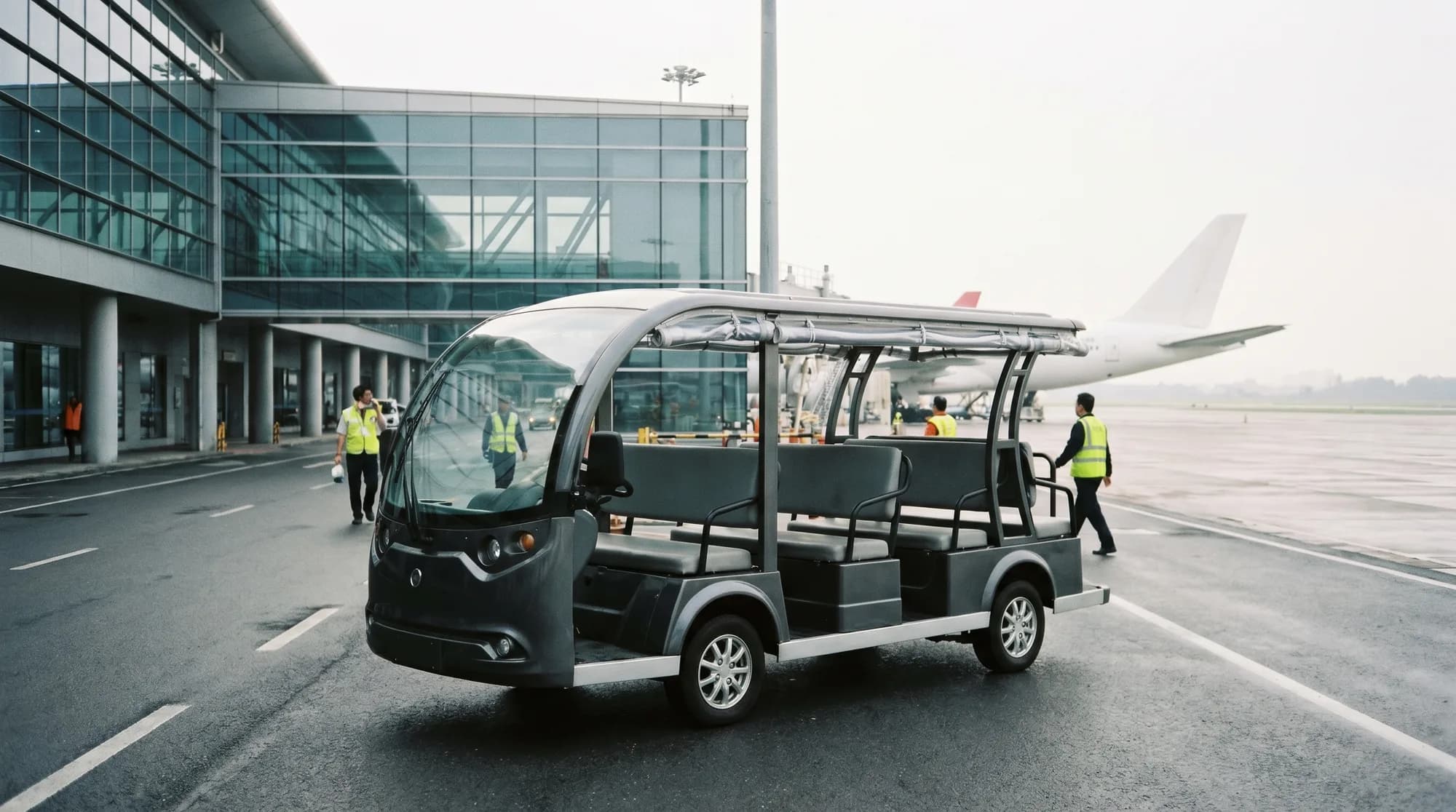
Most trusts end up wanting a mix: a couple of passenger buggies for the front-of-house patient service, plus one or two utility vehicles for logistics. If the patient side is really a regular shuttle between fixed points, our electric people movers and shuttles guide covers seat counts and how to run a service. Building them as one matched fleet keeps charging, servicing and spares simple, and means staff only learn one set of controls.
- Patient and visitor transport
- Moving less-mobile people across the site
- Utility and logistics
- Moving laundry, meals, waste and stores
- Patient and visitor transport
- Comfort, easy access, dignity
- Utility and logistics
- Load space, durability, easy cleaning
- Patient and visitor transport
- Seats, low step or wheelchair access, roof
- Utility and logistics
- Flat bed or cargo box, the Hawke S2 Pickup utility
- Patient and visitor transport
- Entrances, car parks, clinics, ward routes
- Utility and logistics
- Service roads, between blocks, back of house
| Patient and visitor transport | Utility and logistics | |
|---|---|---|
| Main job | Moving less-mobile people across the site | Moving laundry, meals, waste and stores |
| Priority | Comfort, easy access, dignity | Load space, durability, easy cleaning |
| Typical layout | Seats, low step or wheelchair access, roof | Flat bed or cargo box, the Hawke S2 Pickup utility |
| Where it runs | Entrances, car parks, clinics, ward routes | Service roads, between blocks, back of house |
If your needs don't fit a standard layout, that's normal for a hospital site. Our bespoke service builds the vehicle around your routes, your access points and your infection-control requirements, including wipe-clean surfaces and the seating arrangement you need.
Reliability, cleaning and warranty
A patient service has to turn up every day, so reliability isn't optional. Every vehicle we build comes with a 3-year warranty and a 24-hour VIP call-out, which matters most on a site that can't simply park a job for a week while it waits for a part. If a buggy is part of how patients reach their appointments, it needs proper support behind it.
Cleaning is the other everyday concern. Healthcare sites have infection-control standards, so surfaces that wipe down easily and seating that doesn't trap dirt are worth specifying from the start. Set your cleaning protocol with your infection-prevention team, and we'll build the vehicle to suit it rather than fight it.
Charging and storage
Electric buggies charge from a standard supply, usually overnight, so a vehicle that's worked all day is ready for the morning round. The practical question is where. You'll want a covered, secure spot near a socket, ideally close to where the buggies start their day, so drivers aren't walking miles to fetch them. A simple, sheltered charging bay keeps a fleet protected and the batteries in good health.
How to get the right setup for your site
Every hospital site is different, so we start with how yours works: the distances people travel, the access points, the gradients, the mix of patient and logistics jobs, and your cleaning and accessibility requirements. From there we specify the seat count, layout, roof and finish, and put together a matched fleet. You can see the full range for a sense of the options, or go straight to a tailored quote and we'll work it through with you.
Specify a hospital buggy fleet around your site
Tell us about your site, your patient transport routes and your logistics needs, and we'll specify a buggy or matched fleet built to suit, with a 3-year warranty and 24-hour VIP call-out behind it. Every vehicle is built to order.
Frequently asked questions
What is a hospital buggy used for?+
Mainly to carry less-mobile patients and visitors across a large site, from car parks and entrances to wards and clinics, so they don't face a long, tiring walk. The same vehicles can also move laundry, meals, waste and stores between buildings, which keeps service trolleys off the main pedestrian routes.
Can a hospital buggy carry someone in a wheelchair?+
Yes, if it's specified that way. A flat or ramped layout lets a passenger stay in their wheelchair rather than transfer, which is more dignified and safer for many people. Layout choices like this are covered in our accessible and wheelchair-friendly buggy guide, and we build them to order.
Are electric buggies quiet enough for a clinical setting?+
They're close to silent and produce no exhaust fumes, which suits the calm of a hospital and keeps the air clean near entrances and ward windows. That quiet is reassuring for nervous passengers and means the buggy doesn't disturb people who are resting or recovering.
Is a hospital buggy a medical device?+
No. It's a comfortable way to move people and supplies across a site, not a medical device, an ambulance or a replacement for a hospital wheelchair service. How and when patients are moved should be decided by your clinical and accessibility teams as part of your own transport policy.
How are hospital buggies charged and stored?+
They charge from a standard supply, usually overnight, so a vehicle that's worked all day is ready the next morning. The practical need is a covered, secure bay near a socket and close to where the service starts its day, which protects the fleet and keeps the batteries healthy.
Do you supply hospitals already?+
We're a new dealer and don't yet have hospital clients, so we won't pretend otherwise. Many UK hospitals run volunteer buggy services, which shows the demand is real, and we can build the right vehicle for the job with a 3-year warranty and 24-hour VIP call-out behind it.

Ready to find the right buggy?
Tell us how and where it will work and we will specify a vehicle and a tailored quote built around you. Every build comes with a 3-year warranty and a 24-hour priority call-out.
Our guides are written and reviewed by the Hawke Electric Vehicles team, the people who specify, build, deliver and support the vehicles. We focus on honest, practical advice and flag where a figure depends on the build rather than guessing.
More guides by Hawke