- An event day turns a stadium or arena into a small town for a few hours, with surge demand that the rest of the week never sees.
- Most of the movement is not spectators but the people who make the event happen: VIPs and hospitality, media and crew, catering and kit.
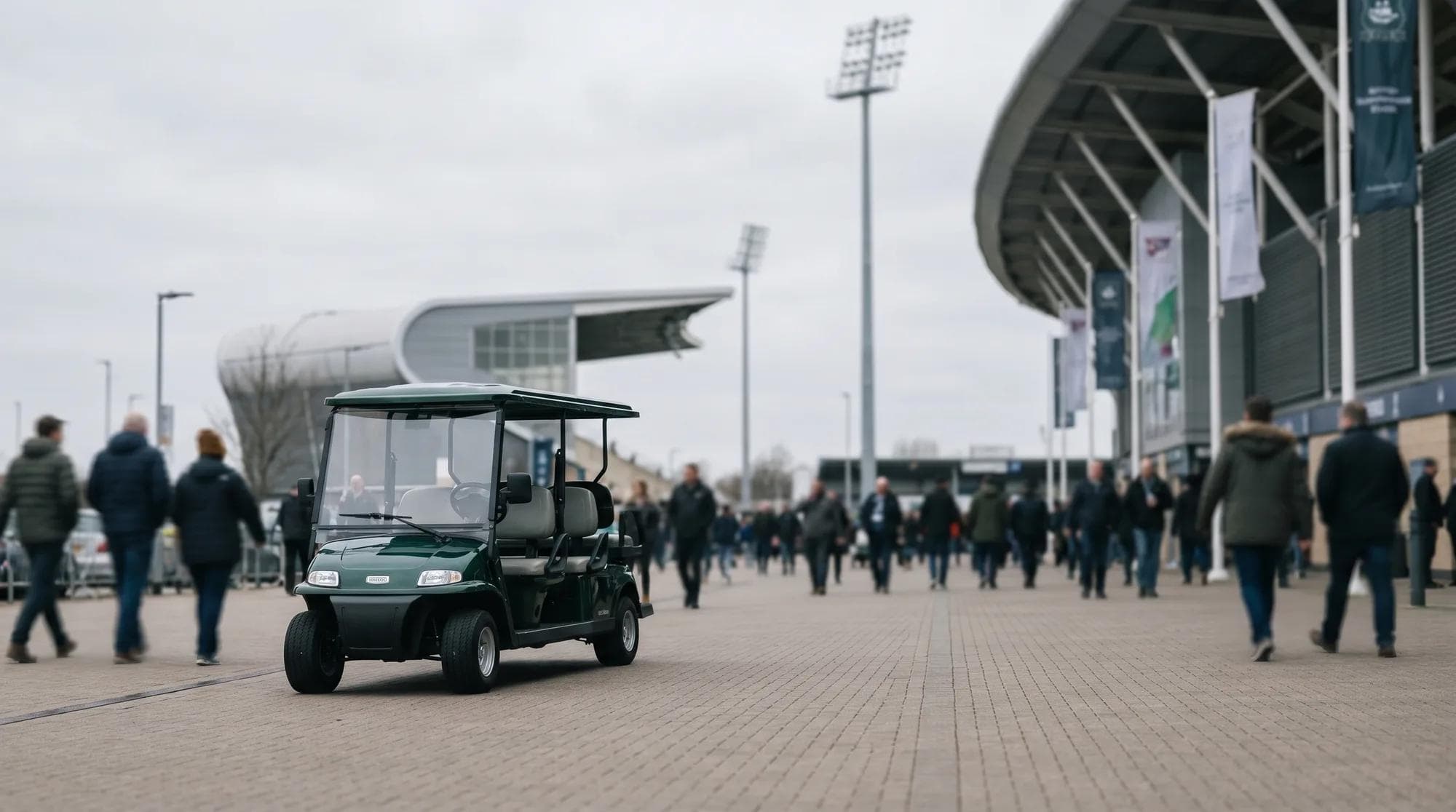
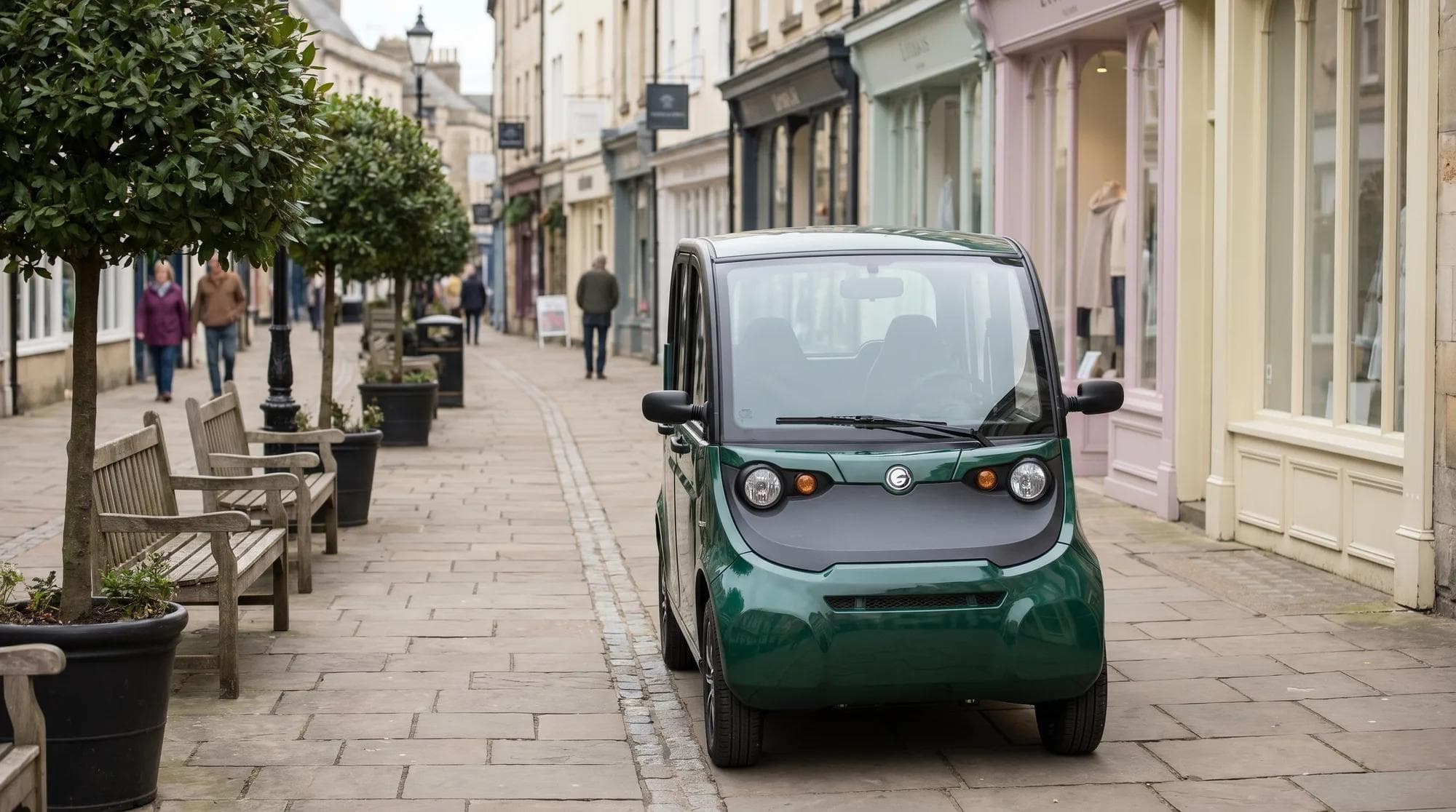
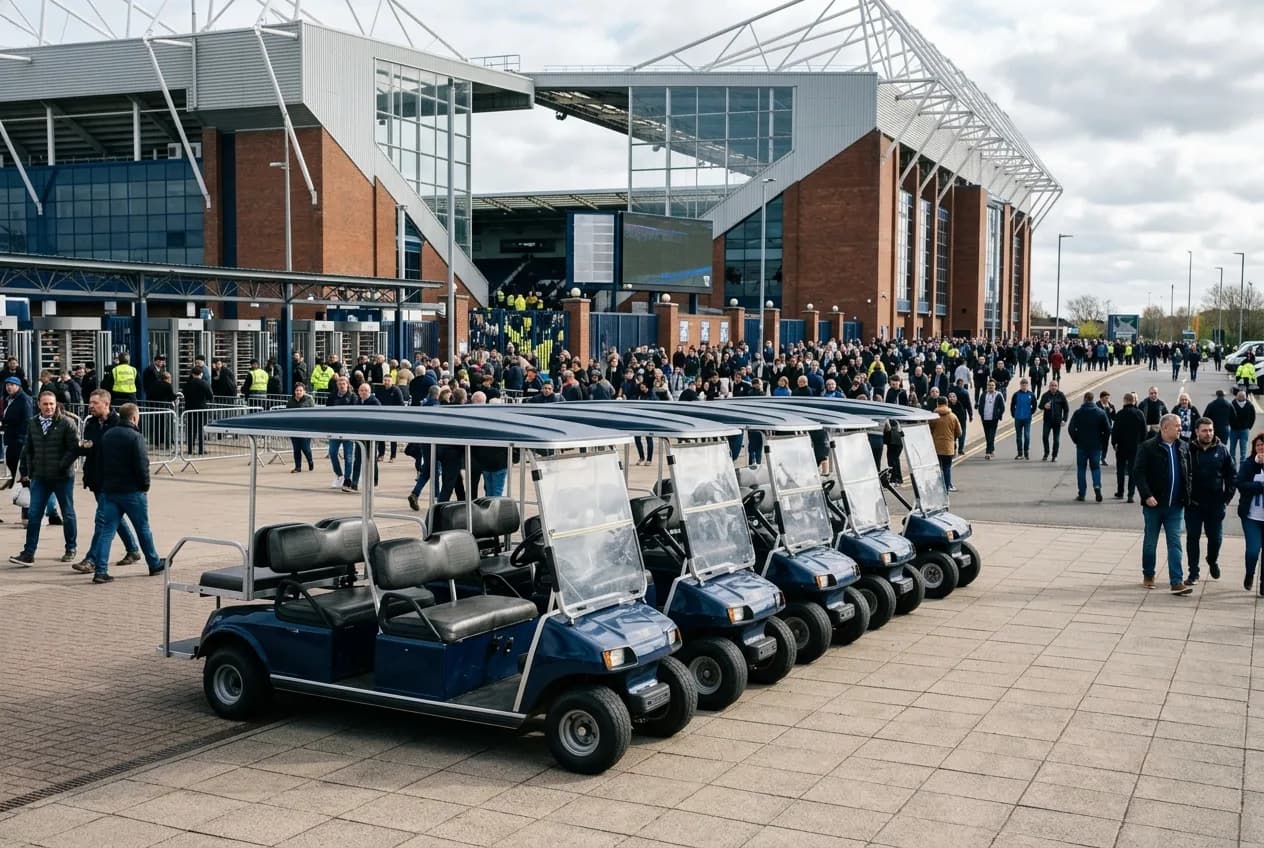
- Quiet electric buggies suit a concourse full of people far better than anything with an engine, which is why venues run them front and back of house.
- Accessible transport for spectators is a duty and an opportunity, and it works best built into the everyday fleet rather than bolted on.
- Plan around the peaks, the arrival hour and the final whistle, because that is when the transport either holds up or falls over.
For most of the week a stadium is quiet. Then on event day it becomes one of the busiest places in the city for a few hours: tens of thousands of spectators, hundreds of staff, broadcasters, sponsors, caterers and a logistics operation that has to assemble and disappear in a single afternoon. The transport challenge is that surge. Everything has to move at once, through crowded concourses, and then it has to do it all again in reverse at the final whistle.
What surprises people is how little of that movement is spectators in vehicles. The crowd mostly walks. The vehicles are working behind and around them: moving VIPs to hospitality, getting a camera crew and their kit to a gantry, ferrying catering to a far stand, and carrying spectators who cannot manage the distance on foot. This guide looks at how event-day transport actually breaks down, and why quiet electric buggies have become the default tool for it.
Why event-day transport is a surge problem
The thing that defines stadium event transport is that demand is not steady. It spikes hard in the two hours before kick-off and again the moment the event ends, with relative calm in between. A fleet sized for the quiet middle will be swamped at the peaks, and a fleet sized only for the peak sits idle most of the day. The job is to plan for the surge without buying vehicles you barely use, which usually means a flexible fleet that can switch tasks as the day moves through its phases.
It also means the vehicles have to share space with crowds. A stadium concourse on event day is wall to wall with people, and a vehicle moving through that has to be slow, predictable and quiet. This is the single biggest reason venues choose electric: a near-silent buggy can work close to the public without the noise and fumes that make an engine a problem in a packed concourse.
VIPs and hospitality: the transfers that get noticed
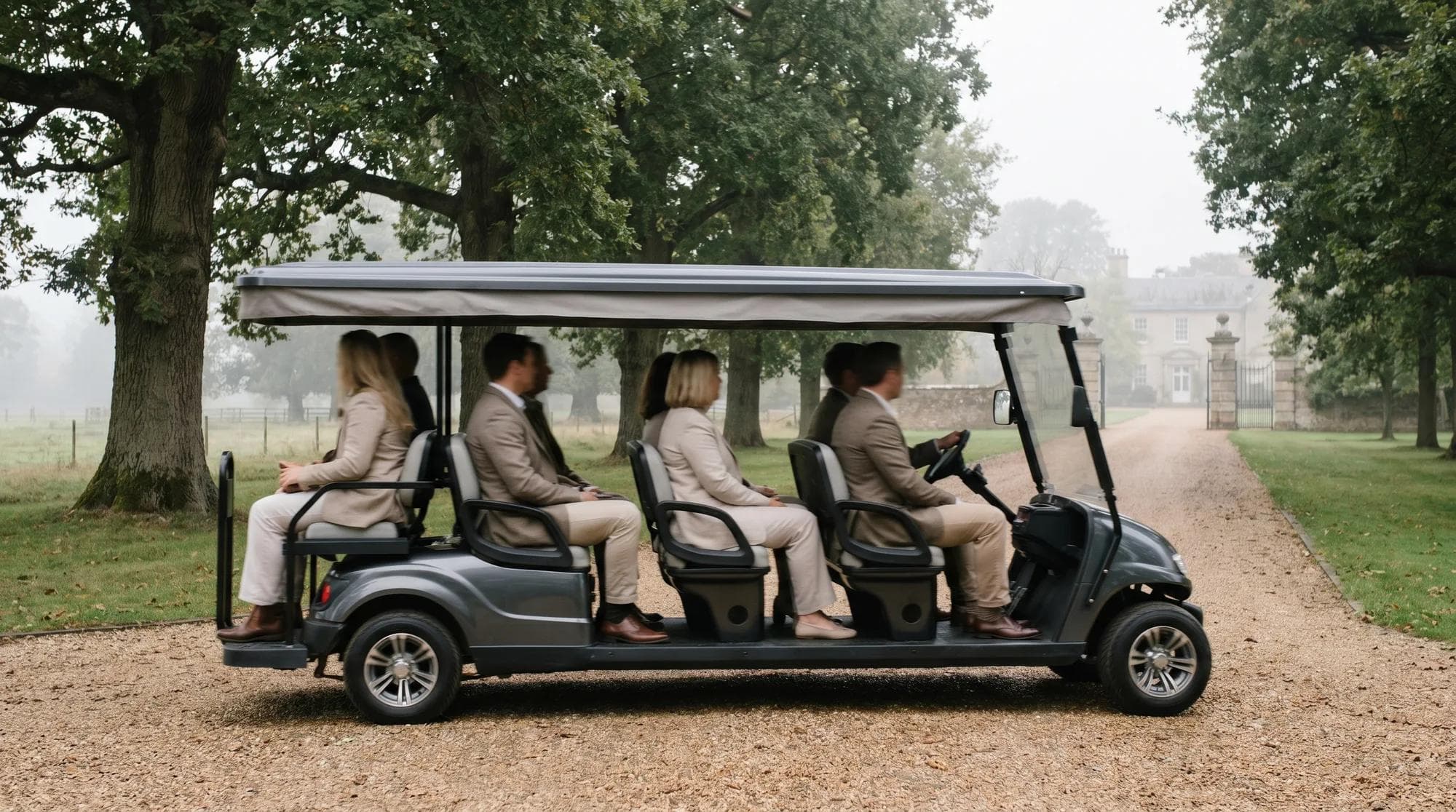
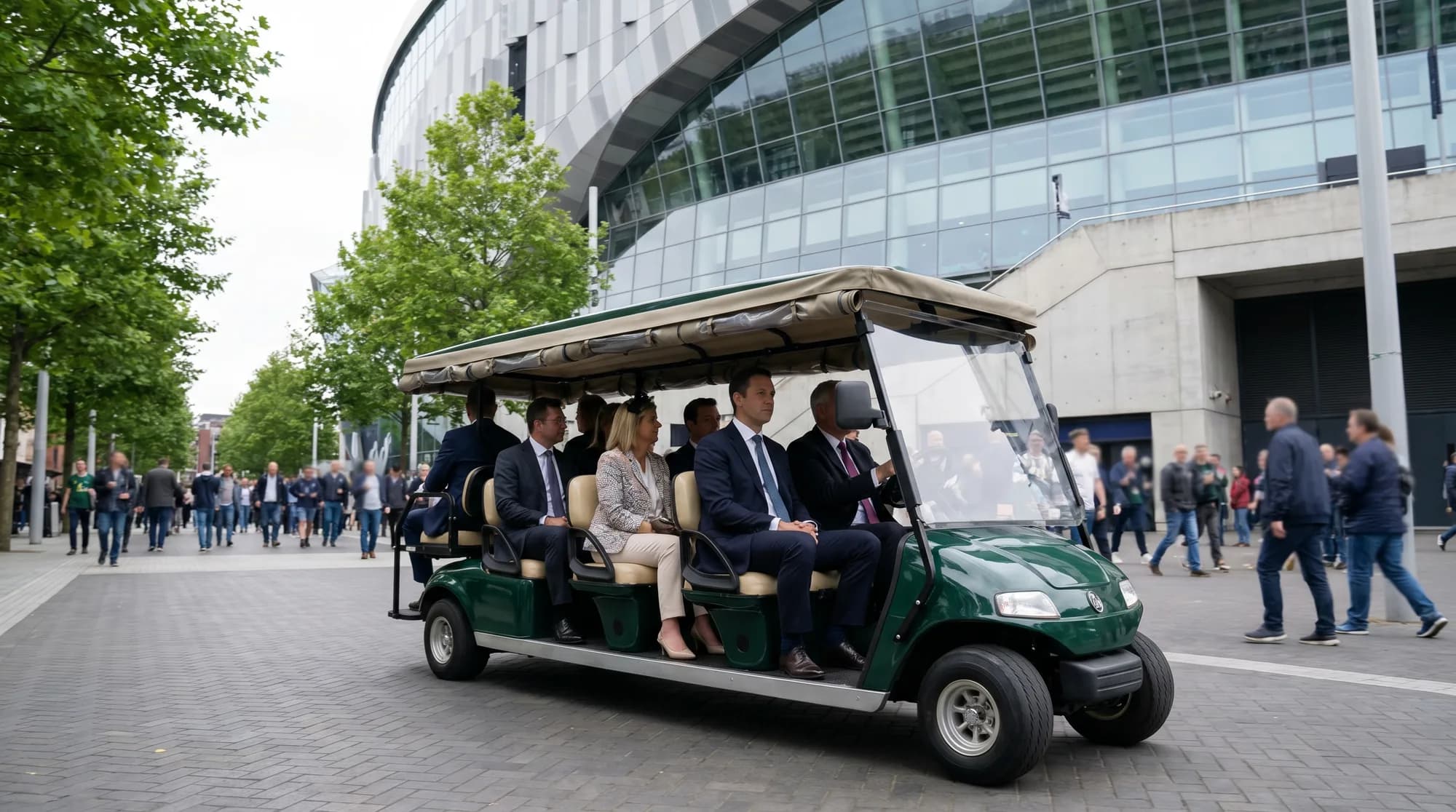
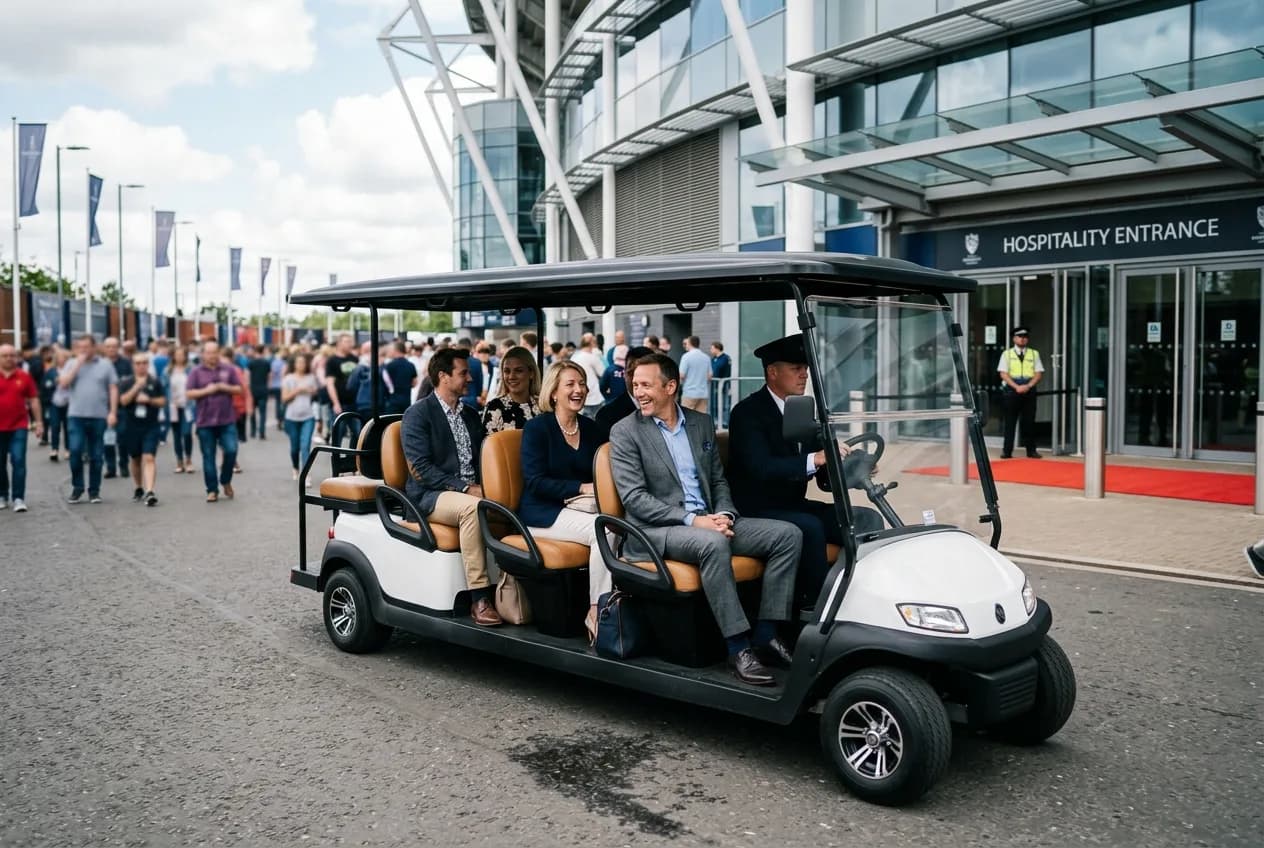
Hospitality is where a venue earns a large part of its event-day revenue, and the transport around it is part of the product. Sponsors, directors and corporate guests expect a smooth transfer from the car park or a side entrance to their suite, often on a tight schedule and frequently in front of cameras. A clean, quiet, well-presented electric buggy does that job and looks the part, where a noisy engine or a long walk would undercut the whole premium feel.
These transfers are short but they matter out of proportion to their distance. A guest who is met and moved smoothly forms a good impression before they have sat down. Because we build to order, a hospitality buggy can be finished to match the venue, with comfortable seating and weather protection, so it reads as part of the brand rather than hired equipment.
Media, crew and the people who run the event
Behind the spectators sits a workforce that has to move constantly. Broadcast crews carry cameras and cabling to gantries and pitchside positions. Stewarding supervisors cross the site to manage their teams. Production, medical and operations staff need to get from one end of the bowl to the other quickly when something needs attention. None of that works well on foot in a stadium the size of a small town, and a vehicle that can carry a few people plus their gear keeps the whole operation moving.
- Broadcast and press: moving crews and heavy camera kit to fixed positions before and during the event.
- Stewarding and security: getting supervisors across the site fast as crowds build and disperse.
- Operations and medical: rapid movement to wherever an incident or a problem needs a response.
- Turnaround crews: resetting the venue between sessions on a multi-event day, against the clock.
Kit, catering and the logistics behind the stands
Feeding a full stadium is a logistics operation in itself. Food, drink, stock and waste move constantly between service yards, kitchens and the dozens of outlets around the concourse, and they have to do it without getting tangled in the spectator flow. A small electric utility vehicle with a real load bed handles this cleanly: it carries the payload, it threads through back-of-house routes quietly, and it does not leave a diesel engine idling next to a food stand.
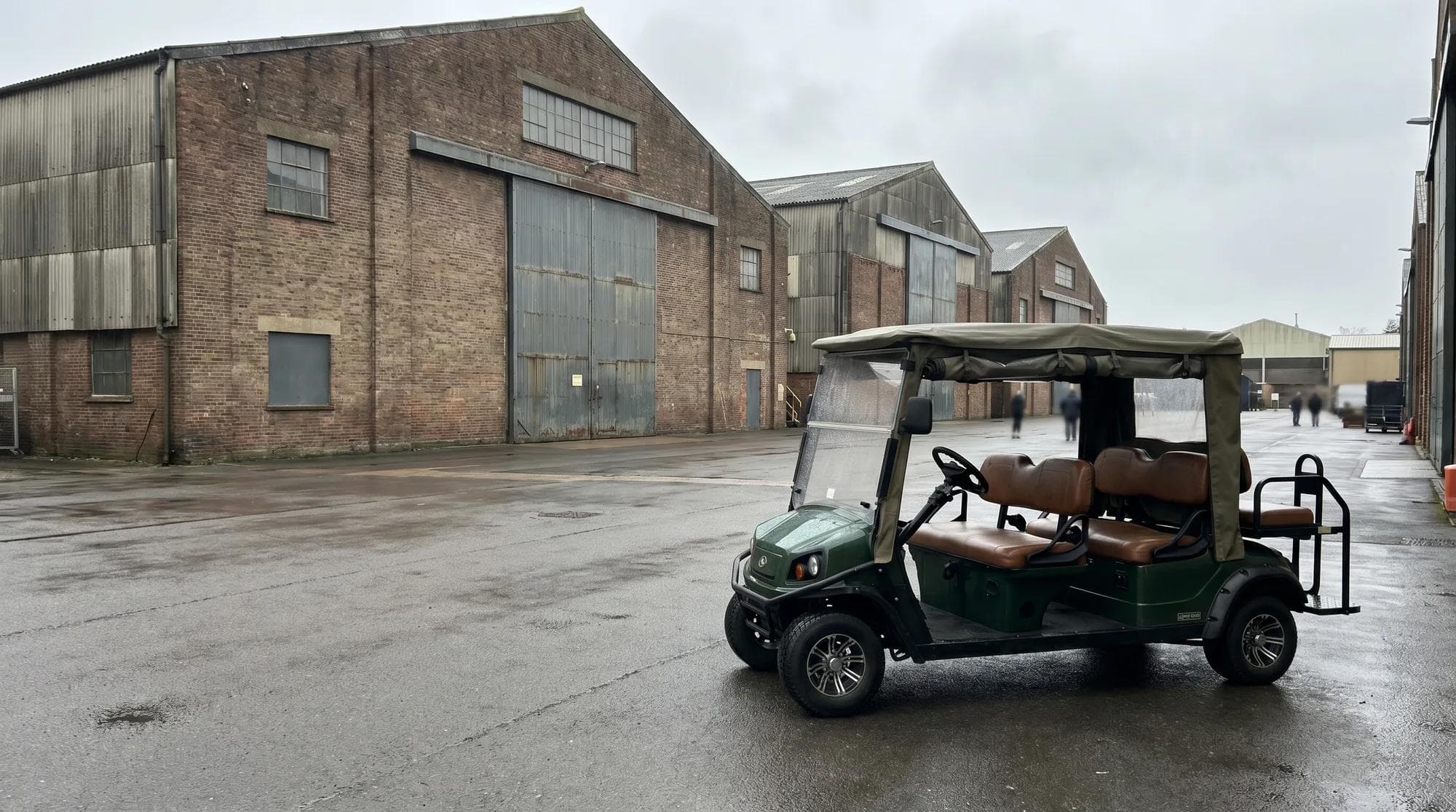
The same vehicles cover set-up and breakdown. Staging, barriers, signage and equipment all have to be placed before doors open and cleared afterwards, often overnight. A utility buggy that can shift kit around the bowl saves a great deal of carrying, and on a tight turnaround that time is the difference between being ready and not.
Explore the range
From two seats to eight, plus utility and bespoke builds, every vehicle is made to order, assembled and finished in the UK and branded as your own.
Accessible transport for spectators
The spectators who most need a lift are often the ones a venue serves worst on a busy day. A guest who uses a wheelchair or cannot walk far still has to get from an accessible parking bay or a drop-off point to their seating area, sometimes a long way across a packed site. Building accessible vehicles into the event-day fleet, so a wheelchair user can board and travel with their companions on the same service as everyone else, turns that from a problem into a non-event. It is also a clear reasonable adjustment under the Equality Act, and it is the kind of detail spectators talk about afterwards. Our guide to shuttle solutions for venues goes further on planning this at scale.
Specifying a fleet that flexes with the day
Because event demand moves in phases, the most useful fleet is one that can change roles through the day. The same passenger buggies that run VIP transfers before kick-off can help clear the site afterwards. A utility vehicle that carried catering at set-up can move waste at the end. Planning the mix around your venue, its distances and its peaks is the real work, and it is worth doing before you fix on numbers. Our guide to electric people-movers and shuttles covers the passenger side in more detail.
- 01
Map the event day
Set out the peaks, the routes and the tasks from set-up to breakdown, so the fleet is sized to real demand.
- 02
Split passenger and utility
Decide where you need seats for people and where you need a load bed for kit, and how many of each.
- 03
Build in accessibility
Specify accessible vehicles into the everyday fleet so spectator provision holds up at the peak, not just on paper.
- 04
Brand and charge
Finish the vehicles to match the venue, and plan overnight charging so the whole fleet is ready for doors open.
Planning transport for a stadium or arena?
Tell us the venue, the distances and the kind of events you run. We will recommend the right mix of passenger and utility vehicles, with accessible options built in, branded as your own and built to order, assembled and finished in the UK.
Frequently asked questions
Why electric rather than petrol for a stadium?+
A stadium concourse is full of people on event day. A near-silent electric buggy can work close to the public with no fumes and little noise, where an engine would be intrusive and unpleasant in a packed space.
Can the same vehicles do VIP transfers and back-of-house work?+
A flexible fleet can switch roles through the day. Passenger buggies handle hospitality transfers at the peaks, while utility vehicles move catering and kit; some venues spec both to the same finish.
How do you size a fleet for surge demand?+
By planning around the two peaks, arrival and the final whistle, rather than the quiet middle. We work through your routes, distances and turnaround times to find a fleet that holds up at the busiest hour without sitting idle the rest of the day.
Can spectators in wheelchairs use the transport?+
Yes, if you specify accessible vehicles. They let a wheelchair user board and travel with their companions on the same service as everyone else, which is both a legal duty and a far better experience.
Can the vehicles carry our venue branding?+
Yes. Every vehicle is built to order, so colours, livery and signage are part of the build, which matters most on the hospitality transfers guests actually see.
Related solutions
Ready to explore what we build?
See the vehicles and the setting this applies to, or get a tailored quote built around your site.
Ready to find the right buggy?
Tell us how and where it will work and we will specify a vehicle and a tailored quote built around you. Every build comes with a 3-year warranty and a 24-hour priority call-out.
Our guides are written and reviewed by the Hawke Electric Vehicles team, the people who specify, build, deliver and support the vehicles. We focus on honest, practical advice and flag where a figure depends on the build rather than guessing.
More guides by Hawke