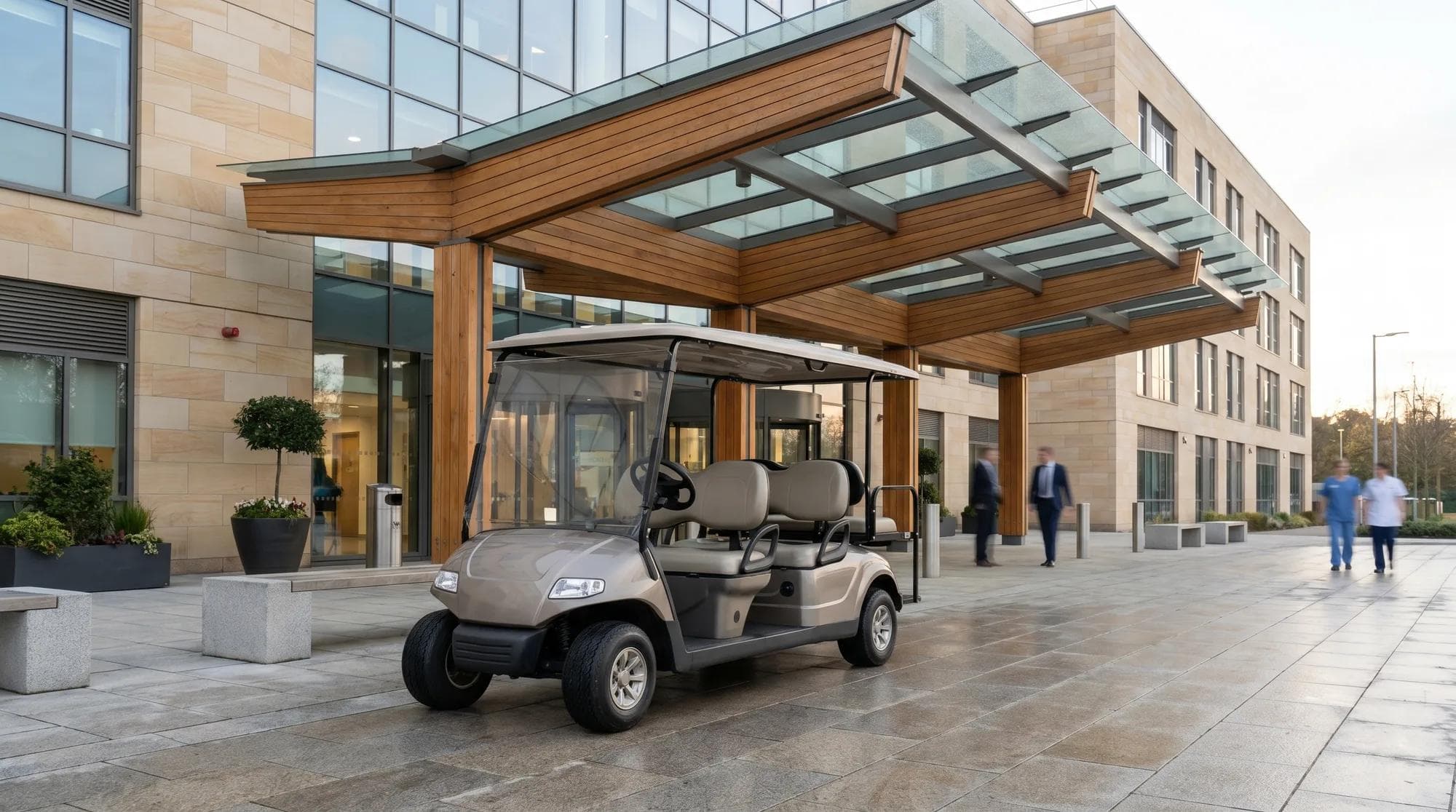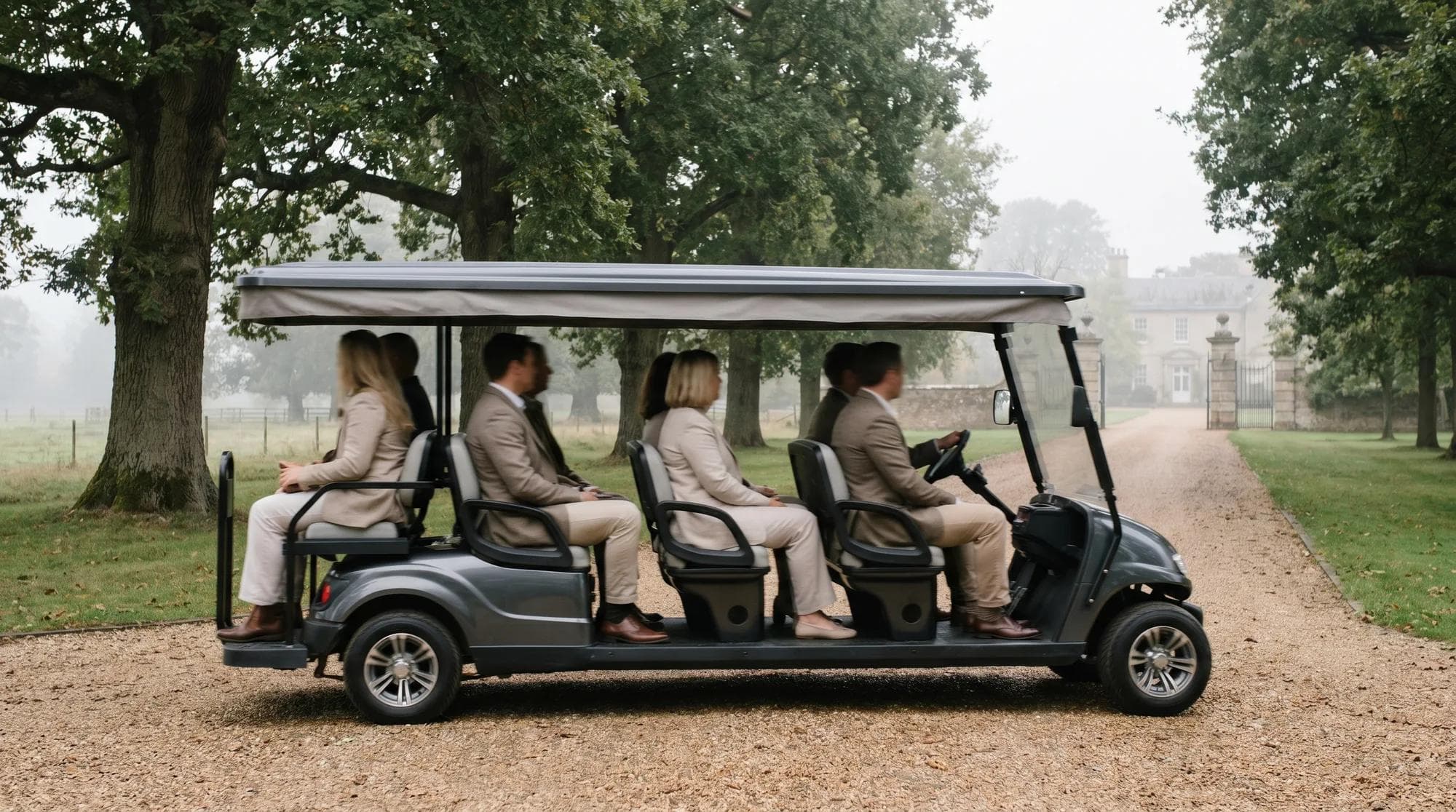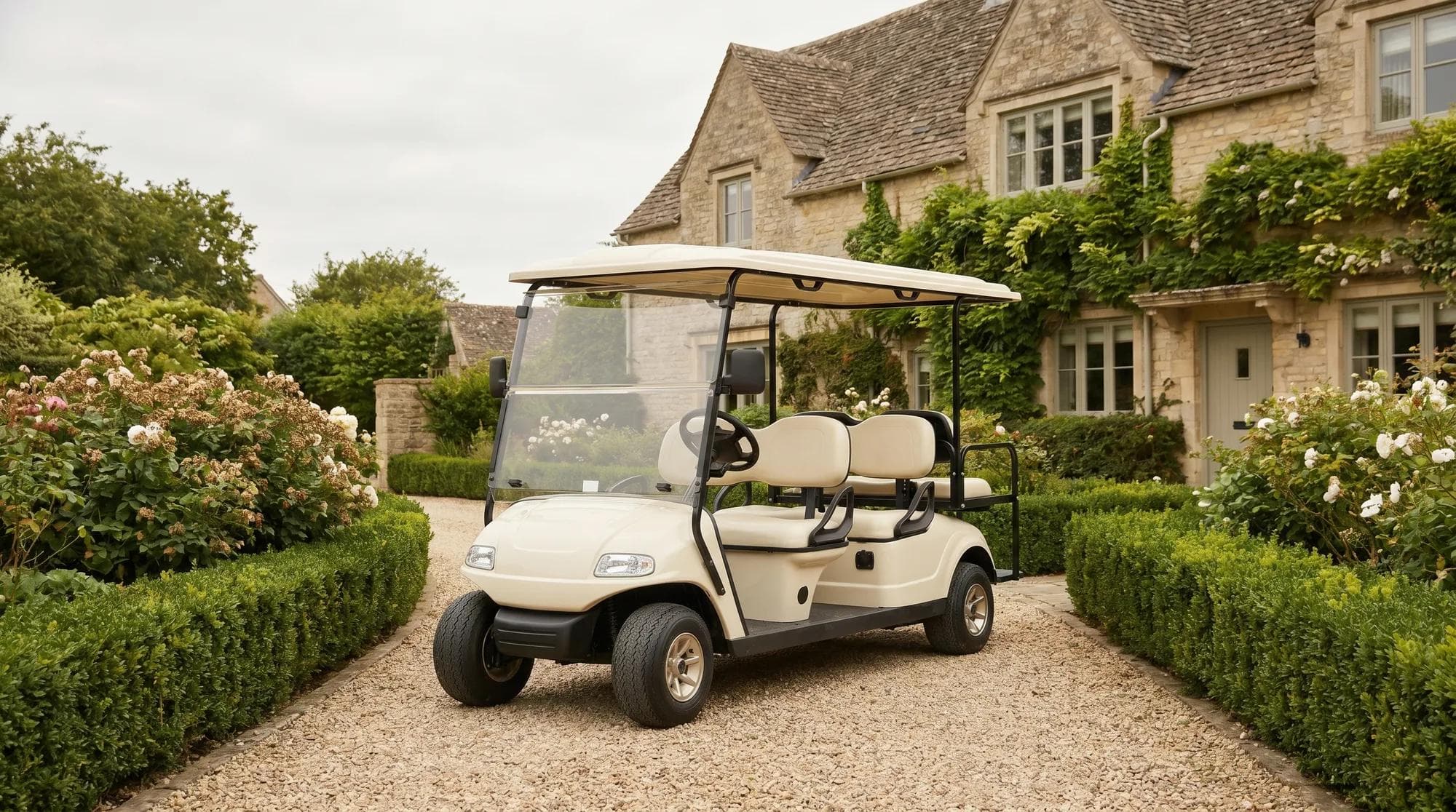
Retirement villages and larger care settings can spread across acres. The walk from a resident's room to the gardens, the cafe or a waiting visitor's car can be long, and for someone who tires easily it can be enough to keep them indoors. A care home buggy bridges that gap. It carries residents gently around the grounds at their own pace, and when it isn't needed for people, the same vehicle can move laundry, shopping and grounds equipment between buildings.
What does a care home buggy actually do?
Its first job is helping residents get around. Someone wants to sit in the gardens, visit a friend in another wing, or meet family at the entrance, and a short ride makes that easy when a walk wouldn't be. It works both ways too. A resident who's enjoyed an afternoon outside but is tired by the end of it can be brought back comfortably rather than pushing on when they've had enough.
The wider point is independence. A buggy lets residents say yes to more: a turn around the grounds in good weather, a trip to the on-site shop, a moment by the pond. For people whose world can shrink to a single room, that's worth a great deal. We're a new dealer and don't yet have care clients, so we won't pretend otherwise. What we can do is build the right vehicle and stand behind it.

Accessibility and dignity come first
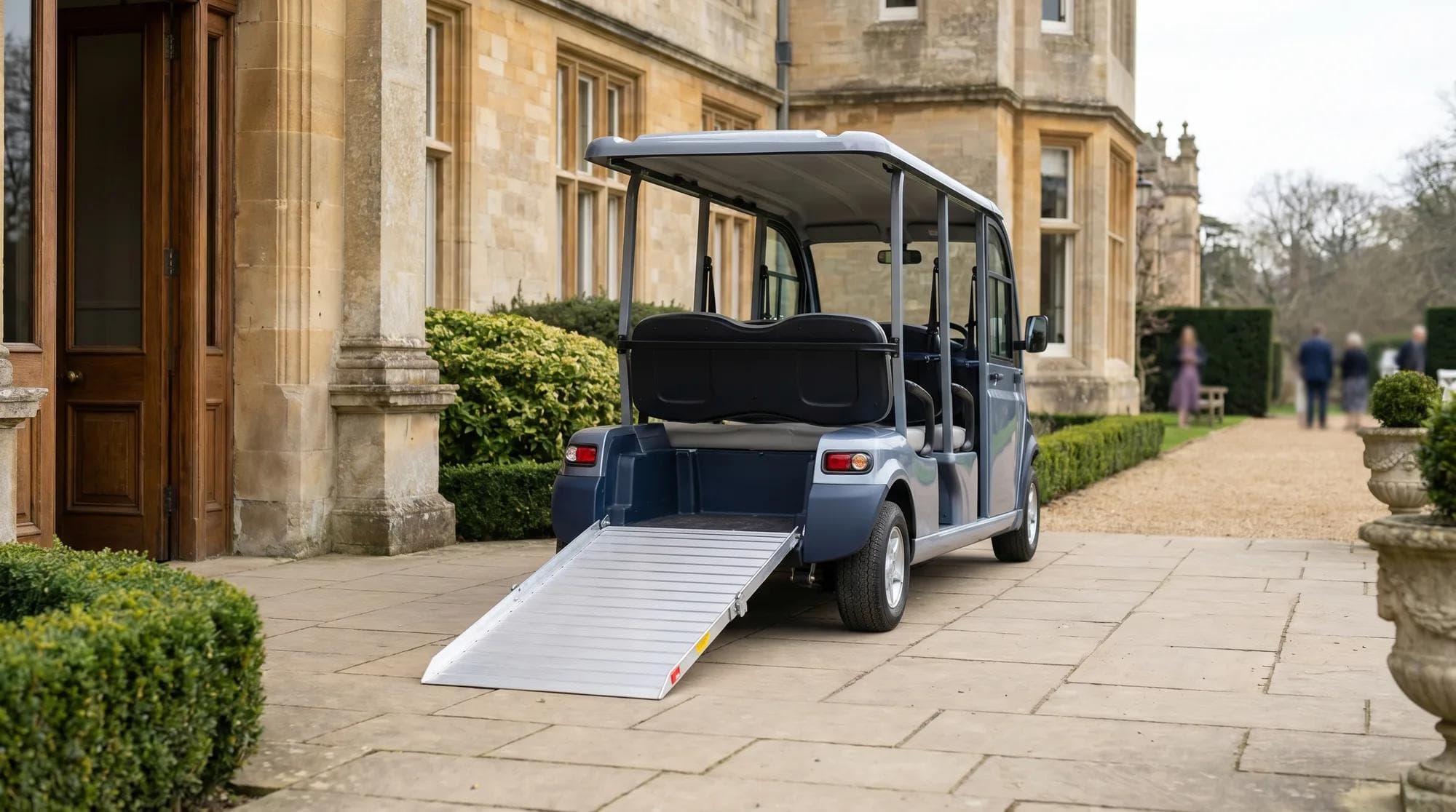
Getting on and off matters more than almost anything else here. A low, step-free entry, a steady handhold and a seat at a sensible height make a buggy usable for someone who can't manage a high climb. For residents who use a wheelchair, a flat or ramped layout that lets them stay seated removes the awkward business of transferring. Our accessible and wheelchair-friendly buggy guide covers the layout choices in more detail.
Dignity is in the small things. A gentle ride, somewhere to rest a bag or a stick, a roof and side screens against rain and wind, and a driver who isn't rushing. None of that is complicated, but it's the difference between a service a resident feels glad of and one that makes them feel like a nuisance. On a vehicle that carries residents, we'd always specify for comfort and ease of access first.
Why quiet operation matters in a care setting
A care home or village should feel calm, and engine noise works against that. An electric buggy runs almost silently, so it won't intrude on residents' rooms, the gardens or quiet lounges. There's no exhaust either, which keeps the air clean around doorways and seating areas where people gather, and means no fumes drifting near open windows on a warm day.
Quiet helps the passenger too. A calm, near-silent ride is reassuring for someone who's anxious, and it makes conversation easy if a resident wants to chat or ask the driver to slow down. In a place built around comfort, the buggy should be the thing nobody minds, not the thing that disturbs an afternoon nap.
In a place built around comfort, the buggy should be the thing nobody minds, not the thing that disturbs an afternoon nap.
One fleet, residents and grounds both
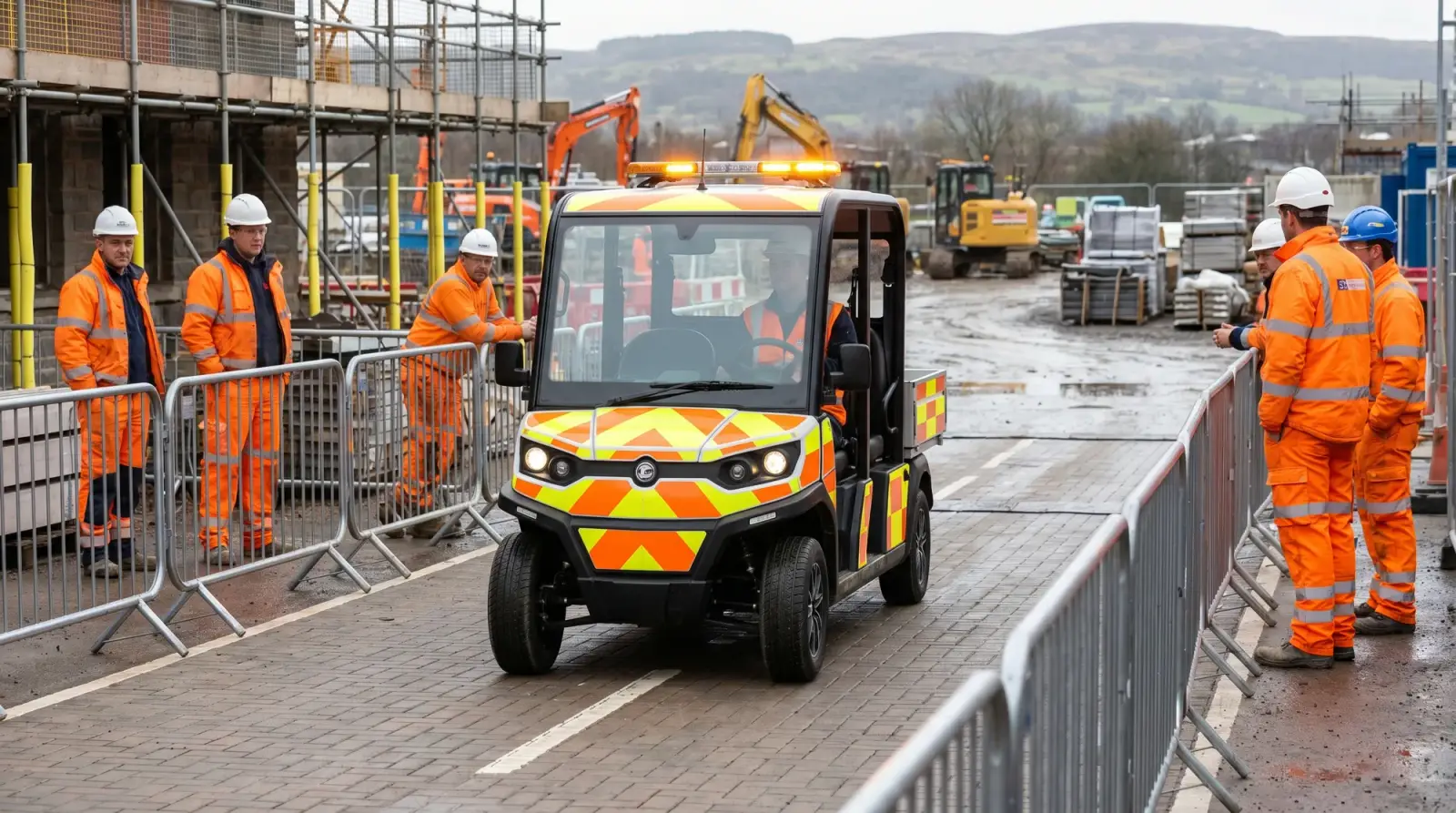
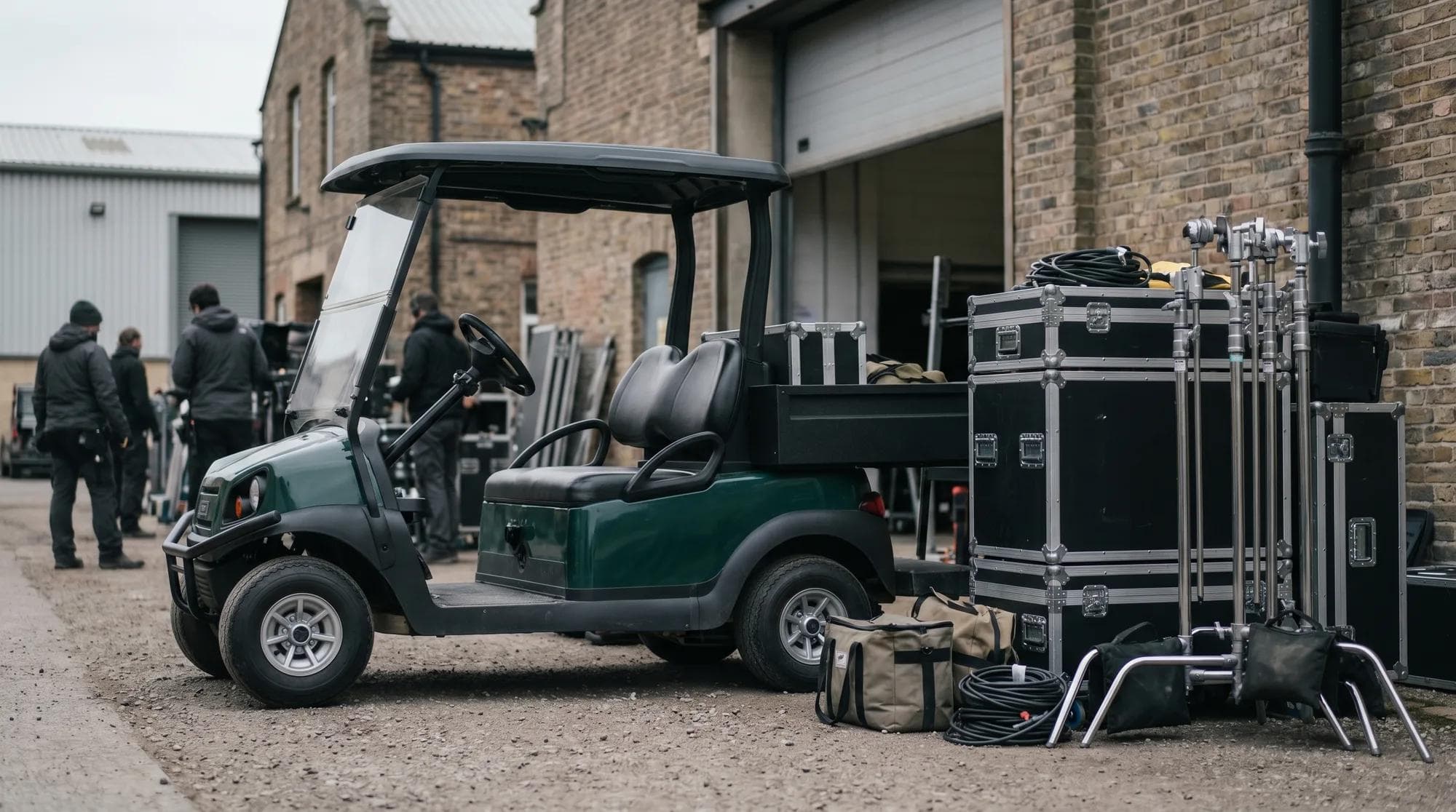
The vehicles that carry residents can also earn their keep moving things. A utility buggy, our Hawke S2 Pickup, is built for the load-carrying side: laundry between buildings, shopping and stores to the right wing, garden waste to the collection point, and tools for the grounds team. It saves staff long walks pushing trolleys, and keeps service runs off the paths residents use most.
Most operators end up wanting a mix: a passenger buggy or two for residents and visitors, plus a utility vehicle for the grounds and logistics. Building them as one matched fleet keeps charging, servicing and spares simple, and means staff only learn one set of controls. If your needs don't fit a standard layout, our bespoke service builds the vehicle around your routes, your access points and your seating requirements.
- Resident and visitor transport
- Moving residents gently around the grounds
- Grounds and logistics
- Moving laundry, shopping, waste and tools
- Resident and visitor transport
- Comfort, step-free access, dignity
- Grounds and logistics
- Load space, durability, easy cleaning
- Resident and visitor transport
- Seats, low or ramped entry, roof and screens
- Grounds and logistics
- Flat bed or cargo box, the Hawke S2 Pickup utility
- Resident and visitor transport
- Gardens, paths, between wings, car park
- Grounds and logistics
- Service routes, between buildings, grounds
| Resident and visitor transport | Grounds and logistics | |
|---|---|---|
| Main job | Moving residents gently around the grounds | Moving laundry, shopping, waste and tools |
| Priority | Comfort, step-free access, dignity | Load space, durability, easy cleaning |
| Typical layout | Seats, low or ramped entry, roof and screens | Flat bed or cargo box, the Hawke S2 Pickup utility |
| Where it runs | Gardens, paths, between wings, car park | Service routes, between buildings, grounds |
Safety on a site full of people
A care setting is busy with people on foot, some unsteady, some with limited sight or hearing, so a buggy here is driven gently and slowly by design. Good all-round visibility for the driver, sensible speed for shared paths, and a calm, predictable way of moving all matter more than outright pace. Because the vehicle is so quiet, it's worth thinking about how pedestrians are made aware of it, and who's allowed to drive it, as part of your own safety procedures.
Reliability, cleaning and warranty
If residents come to rely on the buggy for getting around, it needs to turn up every day. Every vehicle we build comes with a 3-year warranty and a 24-hour VIP call-out, which matters most on a site that can't simply leave a service unavailable for a week waiting on a part. Reliable support behind the vehicle is part of what you're paying for.
Cleaning is the other everyday concern. Care settings have their own hygiene standards, so surfaces that wipe down easily and seating that doesn't trap dirt are worth specifying from the start. Set your cleaning routine with the team responsible for it, and we'll build the vehicle to suit it rather than work against it.
Charging and storage
Electric buggies charge from a standard supply, usually overnight, so a buggy that's worked all day is ready for the morning. The practical question is where. You'll want a covered, secure spot near a socket, ideally close to where the buggies start their day, so staff aren't walking the length of the grounds to fetch them. A simple, sheltered charging bay keeps the fleet protected and the batteries in good health.
How to get the right setup for your site
Every care home and retirement village is different, so we start with how yours works: the distances residents travel, the access points, the gradients, the mix of resident and grounds jobs, and your hygiene and accessibility requirements. From there we specify the seat count, the entry and seating, the roof and finish, and put together a matched fleet. Many of the same considerations apply on healthcare sites, so our hospital and healthcare buggy guide is a useful read alongside this one. You can also see the full range for a sense of the options, or go straight to a tailored quote and we'll work it through with you.
Specify a care home buggy fleet around your site
Tell us about your grounds, how residents move around them and your logistics needs, and we'll specify a buggy or matched fleet built to suit, with a 3-year warranty and 24-hour VIP call-out behind it. Every vehicle is built to order.
Frequently asked questions
What is a care home buggy used for?+
Mainly to help residents get around large grounds with dignity, from their building to the gardens, dining room, on-site shop or visitor car park, when a long walk would be too tiring. The same vehicle can also carry laundry, shopping, waste and grounds tools between buildings, keeping service runs off the paths residents use.
Can a care home buggy carry someone in a wheelchair?+
Yes, if it's specified that way. A flat or ramped layout lets a resident stay in their wheelchair rather than transfer, which is safer and more dignified for many people. These layout choices are covered in our accessible and wheelchair-friendly buggy guide, and every vehicle is built to order.
Are electric buggies quiet enough for a care setting?+
They're close to silent and produce no exhaust fumes, which suits the calm of a care home or retirement village and keeps the air clean near doorways and seating areas. That quiet is reassuring for anxious passengers and means the buggy doesn't disturb residents who are resting.
Is a care home buggy a medical device?+
No. It's a comfortable way to move people and supplies around a site, not a medical device or a prescribed mobility aid. Who travels, when and with what support should be decided by your care team and sit within your own policies and risk assessments.
How are care home buggies charged and stored?+
They charge from a standard supply, usually overnight, so a buggy that's worked all day is ready the next morning. The practical need is a covered, secure bay near a socket and close to where the day starts, which protects the fleet and keeps the batteries healthy.
Do you supply care homes already?+
We're a new dealer and don't yet have care clients, so we won't pretend otherwise. What we can do is specify the right vehicle for your grounds and your residents, built to order, with a 3-year warranty and a 24-hour VIP call-out behind it.

Ready to find the right buggy?
Tell us how and where it will work and we will specify a vehicle and a tailored quote built around you. Every build comes with a 3-year warranty and a 24-hour priority call-out.
Our guides are written and reviewed by the Hawke Electric Vehicles team, the people who specify, build, deliver and support the vehicles. We focus on honest, practical advice and flag where a figure depends on the build rather than guessing.
More guides by Hawke