Assisting Passengers of Reduced Mobility well is both a duty and a mark of a good operation. The vehicles matter as much as the people who staff them: a dignified, comfortable, reliable transfer is what a passenger remembers, and the right specification is what makes that possible. This guide sets out what accessible airport vehicles need, the difference between airside and landside use, and how to plan a fleet that runs all day.
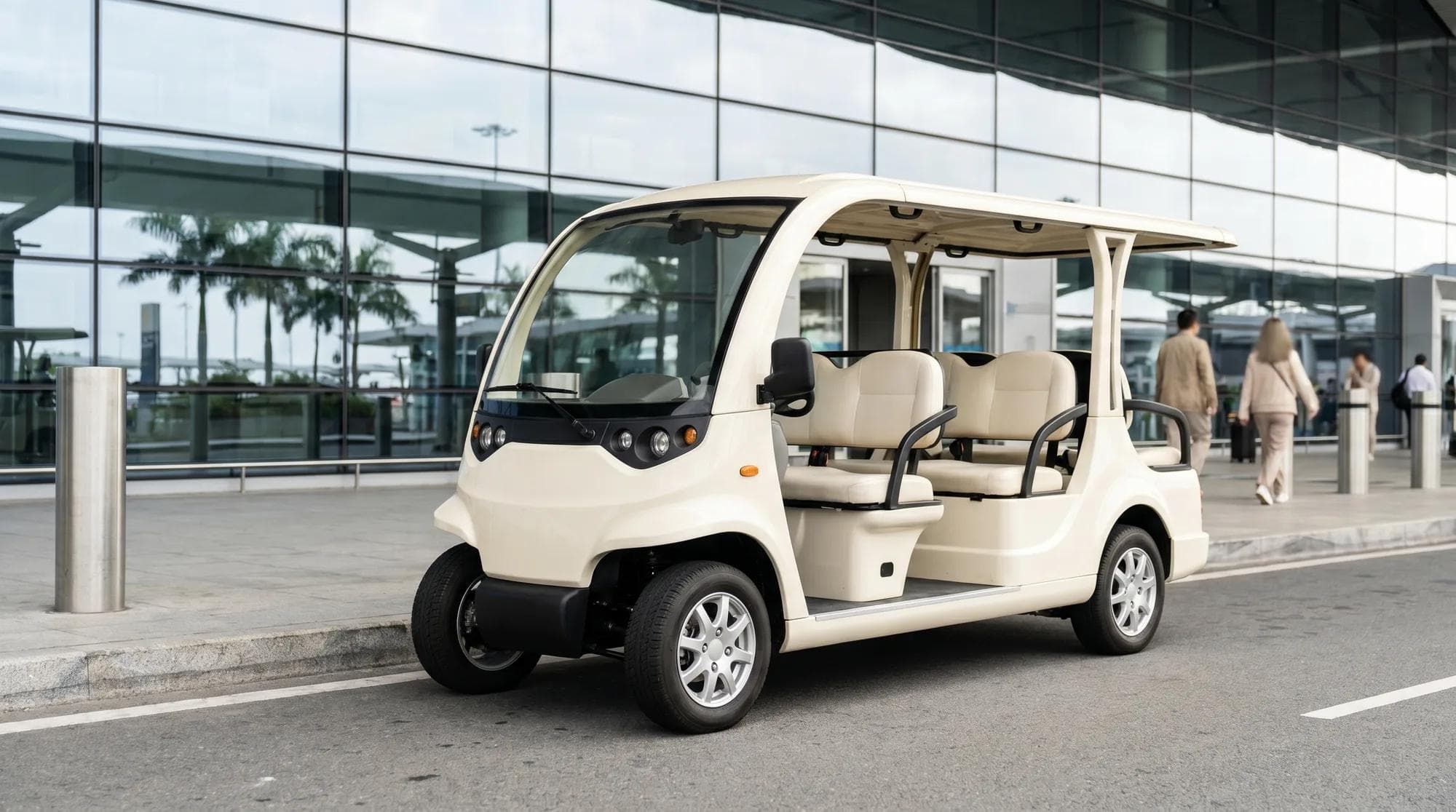
- Electric buggies suit outdoor and apron passenger transport across an airport.
- For indoor, step-free PRM transport, a purpose-built PRM vehicle is often the better fit.
- Airports and airlines owe a duty to assist passengers with reduced mobility under EC Regulation 1107/2006, retained in UK law.
- Dignity, safety and reliability matter as much as capacity.
- We advise honestly on where a buggy fits and where it does not.
PRM transport and why it matters
Passengers of Reduced Mobility include wheelchair users, passengers who can walk only short distances, and those who simply cannot manage the long concourses and gate changes a modern airport demands. Assistance is a passenger's right and a measure of how well an operation cares for the people moving through it. The journey is often long and stressful, so a vehicle that boards with dignity, carries the passenger comfortably and arrives reliably at the gate makes a real difference to how the airport is experienced.
What accessible vehicles need
An accessible PRM vehicle is specified around the passenger, not adapted as an afterthought. Wheelchair access, secure positioning and comfortable space for a companion are the essentials, alongside boarding that preserves the passenger's dignity rather than making a difficulty of it.
- Wheelchair access with a ramp or lift
- Assisted, dignified boarding at a comfortable height
- Secure wheelchair positioning with proper restraint
- Comfortable, clear space for a companion or carer
- Easy seated access for ambulant passengers with reduced mobility
- Smooth, stable ride over concourse and apron surfaces
Airside and landside use
Airport PRM movement happens in two distinct environments, and they ask slightly different things of a vehicle. Landside, in check-in halls, arrivals and car parks, vehicles move passengers between the kerb, desks and security, often through busy public space. Airside, beyond security, vehicles run the length of the terminal to gates and, in some operations, out onto the apron. Airside in particular rewards near-silent, zero-emission vehicles, because air quality and noise count in enclosed and crowded spaces, and the same qualities suit busy landside halls. Specifying a fleet means knowing where each vehicle works and matching it to that environment.
- Landside
- Halls, arrivals, car parks
- Airside
- Concourses, gates, apron
- Landside
- Manoeuvrability in public space
- Airside
- Quiet, clean, long-run reliability
- Landside
- Kerb to security
- Airside
- Security to gate and back
- Landside
- Yes
- Airside
- Strongly
| Landside | Airside | |
|---|---|---|
| Setting | Halls, arrivals, car parks | Concourses, gates, apron |
| Priority | Manoeuvrability in public space | Quiet, clean, long-run reliability |
| Passengers | Kerb to security | Security to gate and back |
| Electric suits it | Yes | Strongly |
Passenger comfort and dignity
Comfort is not a luxury in PRM transport, it is the point. A stable, smooth ride matters most to passengers who are frail or in pain, weather protection keeps them comfortable on exposed stretches, and a calm, unhurried boarding preserves dignity. Clear space for a companion means a passenger need not travel alone, and a vehicle that is easy for staff to operate keeps the focus on the passenger rather than the machine. These details are what turn a functional transfer into a genuinely good one.
Why electric suits the airport
Near-silent, zero local emissions and easy to operate, electric vehicles are well suited to the enclosed and busy environments of an airport, where air quality and noise count for passengers and staff alike. Quiet running is calmer for anxious passengers, and clean operation is essential where vehicles run indoors and close to crowds. Electric drivetrains also have far fewer moving parts than petrol, so the fleet is more reliable and simpler to keep running through long operating hours.
Reliability through the day
PRM demand is constant and often peaks with banks of arrivals and departures, so vehicles must run all day with charging planned around shift patterns. Lithium suits this, tolerating top-up charging between movements so vehicles stay available, and a service plan with our 24-hour VIP call-out keeps a fault from taking a vehicle out of service when passengers are waiting. We specify and support fleets for exactly that pattern of all-day, peak-driven use.
How it works in practice
On a busy morning, a bank of arrivals brings several passengers needing assistance at once. Airside, quiet wheelchair-accessible vehicles carry them and their companions the length of the terminal to baggage and arrivals, boarding at a comfortable height with the wheelchair secured. Landside, vehicles move other passengers from the kerb through check-in to security. A peak-sized fleet, charged in lulls and backed by call-out cover, means no passenger waits longer than they should.
A dignified, comfortable, reliable transfer is what a passenger remembers. The vehicle makes it possible.
Tell us how your operation moves passengers, airside, landside or both, and we will help specify accessible vehicles and a fleet sized and supported for all-day use.
Specify accessible airport vehicles
Tell us how you move passengers and we will help specify wheelchair-accessible vehicles and a fleet sized for all-day use. Request a tailored quote.
Frequently asked questions
What makes a buggy wheelchair accessible?+
Access by ramp or lift, secure wheelchair positioning with proper restraint, dignified boarding at a comfortable height, and clear space for a companion. These are best specified into the vehicle from the build rather than added later.
Why is electric better for airside use?+
Near-silent, zero-emission running suits enclosed terminals and crowded concourses where air quality and noise count, and electric drivetrains are more reliable through long operating hours with fewer moving parts.
How do you keep PRM vehicles available all day?+
Size the fleet for peak demand, use lithium so vehicles top up between movements, and back the fleet with a service plan and 24-hour VIP call-out so a fault does not leave passengers waiting.
Related solutions
Ready to explore what we build?
See the vehicles and the setting this applies to, or get a tailored quote built around your site.

Ready to find the right buggy?
Tell us how and where it will work and we will specify a vehicle and a tailored quote built around you. Every build comes with a 3-year warranty and a 24-hour priority call-out.
Our guides are written and reviewed by the Hawke Electric Vehicles team, the people who specify, build, deliver and support the vehicles. We focus on honest, practical advice and flag where a figure depends on the build rather than guessing.
More guides by Hawke